
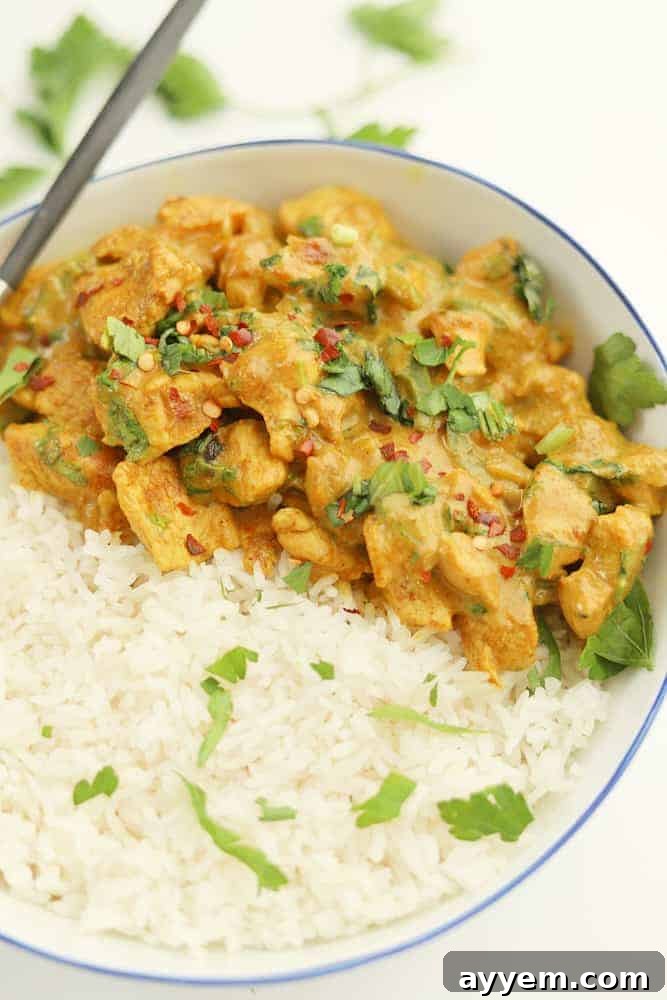
Prepare to delight your senses and warm your soul with our incredibly flavorful Thai Coconut Curry Chicken. This beloved dish features succulent, tender chicken pieces gently simmered in a rich, creamy coconut curry sauce. It masterfully balances vibrant spicy notes with savory undertones, creating a symphony of flavors that is both comforting and exotic. Beyond its exquisite taste, this recipe is naturally dairy-free and wonderfully versatile, making it effortlessly adaptable for vegan preferences. It’s the ultimate crowd-pleaser, perfect for transforming any chilly evening into a cozy culinary escape.
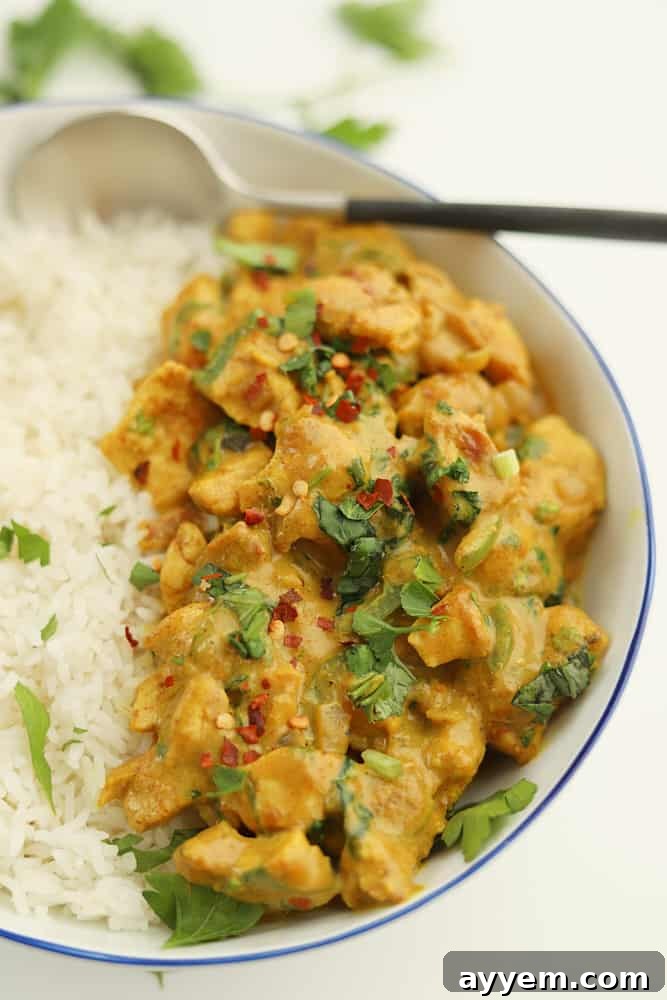
Mastering Thai Coconut Curry Chicken: A Flavorful Journey
Welcome to the vibrant world of Thai cuisine, where every dish is an adventure in flavor, aroma, and texture. Today, we’re diving deep into the creation of a truly magnificent meal: Thai Coconut Curry Chicken. This recipe isn’t just about cooking; it’s about bringing the warmth and exotic tastes of Thailand right into your kitchen. Whether you’re a seasoned chef or a home cook looking for a new favorite, this guide will walk you through crafting a curry that’s both authentic in spirit and incredibly satisfying.
Understanding Curry: More Than Just a Spice Blend
The term “curry” is a culinary umbrella, broadly referring to a variety of saucy, spiced dishes found across Asia, and notably, India and Southeast Asia. While often associated primarily with Indian cuisine, where it typically describes a gravy or sauce accompanying meat or vegetables, the concept has evolved significantly as it traveled across continents. Curries are characterized by their complex blend of spices, which vary dramatically by region and even by individual family recipes, resulting in an incredible diversity of flavors and aromas.
Thai Curry vs. Indian Curry: A Distinctive Flavor Profile
It’s crucial to distinguish between Thai curry and its Indian counterpart. While both are rich in flavor, their foundations and aromatic profiles are quite different. Indian curries often rely on powdered spices like cumin, coriander, turmeric, and garam masala, building deep, earthy flavors often enriched with yogurt or cream.
Thai curries, on the other hand, are typically made with fresh ingredients pounded into a paste, such as lemongrass, galangal (a cousin of ginger), kaffir lime zest and leaves, cilantro roots, and fresh chilies. Coconut milk forms the creamy base for most Thai curries, providing a luxurious texture and a subtle sweetness that balances the heat. This particular dish, Thai Coconut Curry Chicken, firmly belongs to the Thai tradition, showcasing the bright, fragrant, and slightly spicy notes that are hallmarks of Thai cooking. The combination of fresh aromatics and the rich creaminess of coconut milk creates a truly unforgettable experience that is both comforting and invigorating.
Why You’ll Love This Thai Coconut Curry Chicken Recipe
This isn’t just another dinner recipe; it’s an invitation to a flavorful experience. Here’s why our Thai Coconut Curry Chicken stands out as a must-try:
- Unforgettable Flavor: The balance of creamy coconut, aromatic spices, and a hint of heat from the jalapeños creates a truly addictive flavor profile.
- Healthy & Wholesome: Packed with lean protein from chicken, healthy fats from coconut milk, and beneficial spices, this dish is as good for you as it is delicious. It’s naturally dairy-free, catering to various dietary needs without compromising on taste.
- Quick & Easy: Despite its gourmet taste, this curry is surprisingly simple to prepare, making it a perfect weeknight meal that comes together in under an hour.
- Customizable: Whether you prefer more heat, less spice, or want to load it with extra vegetables, this recipe is incredibly adaptable to your preferences.
- Versatile Serving Options: It pairs beautifully with a variety of bases, from classic jasmine rice to healthier alternatives like cauliflower rice or quinoa.
What to Serve with Your Thai Coconut Curry Chicken
While the chicken coated in its luscious curry sauce is undeniably the star, pairing it with the right accompaniment elevates the meal to new heights. The goal is to choose a base that perfectly complements the rich flavors of the curry, absorbing the sauce and adding a satisfying heartiness to each bite.
Classic Choices: Rice Varieties
- Jasmine Rice: This is arguably the most traditional and perfect pairing for Thai curries. Jasmine rice is a long-grain variety renowned for its distinctive fragrant aroma and soft, slightly sticky texture when cooked. Its delicate floral scent beautifully complements the robust flavors of the coconut curry, and its fluffy grains are excellent at soaking up every drop of that irresistible sauce. For best results, rinse the rice thoroughly before cooking to remove excess starch, ensuring a perfectly light and separate grain.
- Brown Rice: For those seeking a healthier, more fibrous option, brown rice is an excellent choice. It offers a slightly nutty flavor and chewier texture that provides a lovely contrast to the creamy curry. Brown rice also adds more whole grains and nutrients to your meal, making it even more wholesome.
Low-Carb and Nutrient-Dense Alternatives
- Cauliflower Rice: If you’re following a low-carb diet or simply want to boost your vegetable intake, cauliflower rice is an outstanding substitute. It’s made by pulsing cauliflower florets in a food processor until they resemble rice grains. When lightly sautéed, it develops a texture similar to rice and readily absorbs the vibrant flavors of the curry, making it an almost indistinguishable, yet healthier, base.
- Quinoa: This ancient grain (technically a seed) is a powerhouse of nutrition. Quinoa is a complete protein, rich in fiber, and offers a delightful subtly nutty flavor and slightly chewy texture. It provides a substantial and healthy base that adds significant nutritional value to your curry dish, making it incredibly filling and satisfying.
Additional Accompaniments to Enhance Your Meal
Beyond the main base, consider these additions for a more comprehensive and delightful dining experience:
- Steamed or Sautéed Vegetables: Lightly steamed broccoli florets, snap peas, bell pepper strips, or a handful of fresh spinach can add extra color, texture, and nutrients to your meal. They provide a refreshing crunch and balance the richness of the curry.
- Fresh Herbs: A generous sprinkle of fresh cilantro and basil is not just a garnish; it adds a burst of freshness and enhances the aromatic complexity of the curry.
- Lime Wedges: A squeeze of fresh lime juice just before serving can brighten the flavors of the curry, adding a zesty tang that cuts through the richness and invigorates the palate.
- Naan Bread or Roti: While not traditionally Thai, if you love to scoop up every last bit of sauce, a soft piece of naan bread or roti can be a delicious addition.
Making Thai Coconut Curry Vegan: A Delight for Plant-Based Eaters
One of the many beauties of this Thai Coconut Curry recipe is its inherent adaptability for vegan diets. Since the base already uses rich, creamy coconut milk instead of dairy, you’re already halfway there! The transition to a plant-based version is incredibly simple and yields a dish that is just as flavorful and satisfying.
The Perfect Chicken Substitute: Cauliflower
To make this recipe entirely vegan, the primary step is to substitute the chicken with a hearty plant-based alternative. Cauliflower florets are our top recommendation and an excellent choice for this curry. Here’s why:
- Texture: When cooked, cauliflower florets become tender yet retain a pleasant bite, mimicking the satisfying texture of chicken in a saucy dish.
- Nutrient Density: Cauliflower is packed with vitamins, minerals, and fiber, adding a healthy boost to your meal.
- Flavor Absorption: Its neutral flavor profile makes it a fantastic sponge for the rich, aromatic curry sauce, ensuring every floret is bursting with taste.
To prepare cauliflower for the vegan curry, simply cut a head of cauliflower into bite-sized florets. You can either roast them lightly before adding them to the curry for a deeper flavor and slightly firmer texture, or simply add them directly to the simmering sauce, allowing them to cook until tender-crisp.
Other Fantastic Vegan Additions
While cauliflower is excellent, feel free to explore other plant-based proteins and vegetables to customize your vegan Thai coconut curry:
- Tofu: Firm or extra-firm tofu, pressed to remove excess water and then cubed and pan-fried until golden, adds a substantial protein component. It absorbs flavors beautifully.
- Chickpeas or Lentils: Canned chickpeas or cooked green/brown lentils can be added directly to the curry for an easy protein and fiber boost.
- Sweet Potatoes: Cubed sweet potatoes add a lovely sweetness and creamy texture to the curry. They are also rich in vitamins and fiber.
- Mushrooms: Sliced cremini or shiitake mushrooms add an umami depth and a meaty texture that complements the curry sauce beautifully.
- Bell Peppers and Zucchini: For extra color and crunch, add sliced bell peppers (any color) and zucchini rounds during the last few minutes of simmering.
A note on curry paste for vegans: While this recipe uses curry powder, if you ever opt for a pre-made Thai curry paste in other recipes, always check the ingredient list to ensure it doesn’t contain shrimp paste or other animal products, as some traditional Thai pastes do.
Essential Ingredients for a Perfectly Balanced Thai Coconut Curry
The magic of this Thai Coconut Curry Chicken lies in the harmony of its ingredients. Each component plays a vital role in building the layered flavors that make this dish so captivating.
- Chicken Breasts: Boneless, skinless chicken breasts, cut into 1-inch cubes, ensure even cooking and tender results. For a richer flavor, you could also use chicken thighs.
- Full-Fat Coconut Milk: This is the heart of our curry, providing its signature creaminess and subtle sweetness. Full-fat coconut milk is essential for that luxurious texture and depth of flavor; avoid light versions for this recipe if possible.
- Aromatics (Red Onion, Garlic, Fresh Ginger): These three form the foundational flavor base. Sautéing them releases their pungent aromas and sweetens the onions, creating a fragrant backdrop for the curry. Fresh ginger is particularly key for that distinctive warm, slightly peppery kick often found in Thai cuisine.
- Jalapeño: Provides a manageable level of heat. You can adjust the quantity (or remove the seeds) based on your spice preference. For more heat, you could also add a pinch of red chili flakes.
- Curry Powder: While Thai curries often use fresh pastes, this recipe simplifies things with curry powder, a blend of ground spices like turmeric, coriander, cumin, and fenugreek. It provides a warm, earthy flavor that integrates beautifully with the coconut milk.
- Fresh Herbs (Basil & Cilantro): Added at the very end, these fresh herbs brighten the entire dish with their vibrant, aromatic notes. They are crucial for that fresh, authentic Thai finish.
- Olive Oil, Salt, and Pepper: Basic seasonings and cooking oil to bring everything together.
How to Make Thai Coconut Curry Chicken: Step-by-Step Guide
Crafting this delicious Thai Coconut Curry Chicken is a straightforward process, breaking down into a few simple steps. Follow these instructions carefully to ensure a flavorful and perfectly cooked meal.
- Prepare the Chicken: In a medium-sized bowl, combine the cubed boneless, skinless chicken breasts with 1 teaspoon of kosher salt, 1/2 teaspoon of black pepper, and 1 teaspoon of curry powder. Toss everything together thoroughly until the chicken pieces are evenly coated with the seasonings. This initial seasoning helps to build flavor from the start.
- Brown the Chicken: Heat 1 tablespoon of olive oil in a large, deep skillet or cast-iron pan over medium-high heat. Once the oil is shimmering, add the seasoned chicken in batches. It’s crucial not to overcrowd the skillet, as this can steam the chicken instead of browning it. Cook each batch for 2-3 minutes, stirring occasionally, until the chicken is lightly browned on the outside and just cooked through. The browning process (Maillard reaction) adds a significant depth of flavor. Remove the browned chicken from the skillet and set it aside on a plate.
- Sauté the Aromatics: Add the remaining 1 tablespoon of olive oil to the same skillet (no need to clean it; the fond left from the chicken will add flavor). Reduce the heat to medium-low. Add the diced red onion and cook for about 2 minutes, stirring until it begins to soften and become translucent.
- Build the Flavor Base: To the softened onions, add the diced jalapeño, 1 teaspoon of kosher salt, 1/2 teaspoon of black pepper, 2 tablespoons of curry powder, minced garlic, and minced fresh ginger. Stir continuously for about 1 minute. You’ll notice the spices “blooming” – becoming incredibly fragrant – this is a key step to release their full aroma and flavor. Be careful not to burn the garlic and ginger.
- Simmer the Curry: Pour in the entire can (13.5 ounces) of full-fat coconut milk. Stir everything together well, scraping up any browned bits from the bottom of the pan to incorporate all the flavors. Bring the mixture to a gentle simmer, then reduce the heat to medium-low, cover the skillet, and let it cook for 10 minutes. This simmering time allows the flavors to meld and deepen, creating a harmonious sauce.
- Combine and Finish: After 10 minutes, uncover the skillet. Return the browned chicken pieces to the curry sauce. Stir them in, ensuring they are well coated. Continue to simmer for another 2-3 minutes, allowing the chicken to fully absorb the curry flavors and heat through. Finally, stir in the fresh basil and chopped cilantro. The heat of the curry will slightly wilt the herbs, releasing their vibrant aroma.
- Serve and Enjoy: Your Thai Coconut Curry Chicken is now ready! Serve it immediately over a bed of fluffy jasmine rice, wholesome quinoa, or light cauliflower rice. Garnish with a little extra fresh cilantro or basil, and perhaps a wedge of lime for an optional zesty finish. Enjoy this comforting and intensely flavorful meal!
*Vegan Tip: For a delicious vegan version, substitute the chicken with cauliflower florets. Add them in step 5 along with the coconut milk and simmer until tender-crisp. You can also add other vegetables like sweet potatoes or tofu for extra heartiness.
Common Questions about Thai Coconut Curry Chicken
The true secret to an exceptional curry, whether Thai or Indian, lies in the freshness and quality of your ingredients, especially the spices and aromatics. Using fresh ginger, garlic, and vibrant herbs makes an immense difference compared to dried or pre-minced alternatives. Beyond fresh ingredients, the technique of “blooming” your spices and aromatics—sautéing them gently in oil until fragrant before adding liquids—is crucial. This process awakens their essential oils, deepening their flavor and aroma and creating a richer, more complex curry base. Layering flavors effectively and balancing the sweet, sour, salty, and spicy notes (especially in Thai cuisine) also contributes significantly to a truly memorable curry.
Chicken curry recipes are incredibly diverse, reflecting various regional culinary traditions. This specific Thai Coconut Curry Chicken recipe features tender chicken pieces simmered in a rich, creamy sauce made from full-fat coconut milk. The aromatic foundation includes diced red onion, minced garlic, and fresh ginger. For spice and heat, we use curry powder and diced jalapeños, which can be adjusted to your preference. The dish is beautifully finished with a generous garnish of fresh cilantro and basil, adding a bright, herbaceous note that perfectly complements the rich sauce. Other common chicken curries might use tomatoes, yogurt, or other vegetable additions.
Chicken curry, particularly this Thai Coconut Curry Chicken, can be a remarkably healthy dish when prepared with wholesome ingredients. It provides a good source of lean protein from the chicken, which is essential for muscle growth and repair. Coconut milk, while calorie-dense, contains medium-chain triglycerides (MCTs) that are easily metabolized and can offer energy benefits. The abundant spices like ginger, turmeric (a common component of curry powder), and garlic are known for their anti-inflammatory, antioxidant, and metabolism-boosting properties. To maximize its health benefits, pair it with whole grains like brown rice or quinoa, or a low-carb option like cauliflower rice, and load it with additional vegetables such as spinach, bell peppers, or broccoli. Moderation is key, as with any rich dish, but overall, it’s a nutrient-dense and flavorful meal option.
While it’s challenging to pinpoint a single “most important” spice, as the magic of curry lies in the synergy of many, fresh ginger is undoubtedly a critical component in this Thai Coconut Curry. Its pungent, warm, and slightly sweet flavor provides a signature note that is characteristic of many Thai and Southeast Asian dishes. Beyond ginger, the curry powder itself, which is a blend of spices like turmeric, coriander, and cumin, is essential for defining the overall “curry” flavor. In Thai cuisine specifically, aromatics like lemongrass and galangal (though not explicitly in this recipe’s “curry powder” blend) are also considered foundational for their unique citrusy and earthy notes. Ultimately, the balance and quality of all the spices used, along with fresh garlic, collectively create the dish’s irresistible depth and complexity.
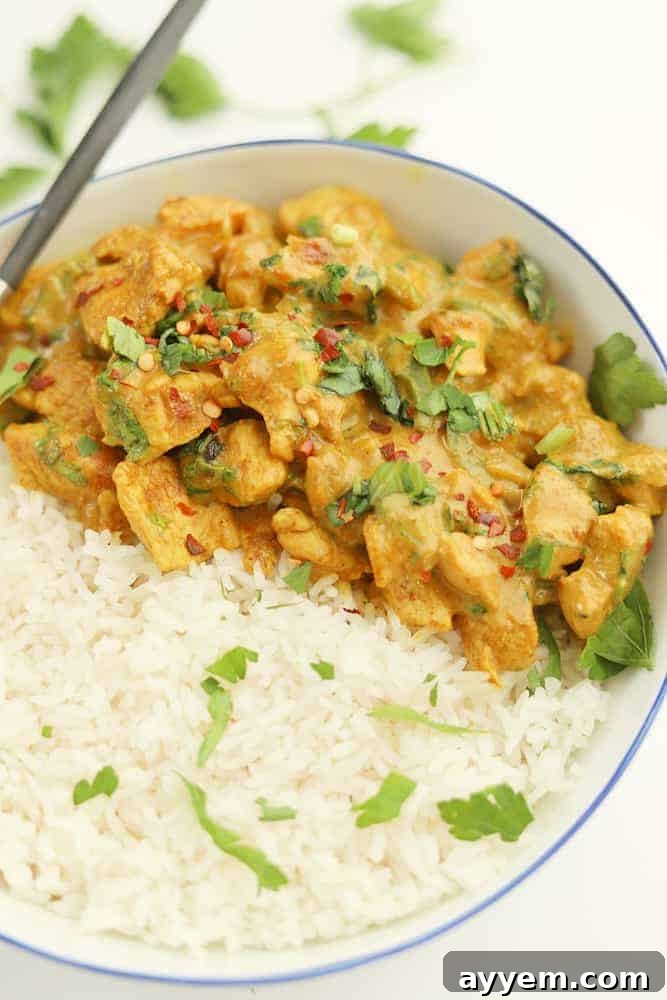
Thai Coconut Curry Chicken
Food Dolls
4
servings
20
20
40
Ingredients
-
3-4
boneless skinless chicken breasts
cut in 1 inch cubes *See notes for vegan option -
1
teaspoon
kosher salt -
1/2
teaspoon
pepper -
1
teaspoon
curry powder -
1/2
red onion
diced -
1
jalapeño
diced (adjust quantity based on desired spiciness) -
1
teaspoon
kosher salt
or more to taste -
1/2
black pepper -
2
Tablespoons
curry powder -
1
can
(13.5 ounces) full-fat coconut milk -
2
cloves
garlic
minced -
2
teaspoons
fresh ginger
minced -
1/2
cup
fresh basil
chopped -
1
cup
loosely packed cilantro
chopped -
2
Tablespoons
olive oil
divided
Instructions
-
In a medium bowl, combine the chopped chicken, 1 teaspoon salt, 1/2 teaspoon pepper, and 1 teaspoon curry powder. Mix well to coat the chicken evenly.
-
Heat 1 tablespoon of olive oil in a deep skillet or cast-iron pan over medium-high heat. Add the chicken in batches, frying quickly for 2 to 3 minutes until lightly browned and just cooked through. Avoid overcrowding the skillet to ensure proper browning. Remove the chicken to a separate plate and set aside.
-
Add the remaining 1 tablespoon of olive oil to the same skillet. Add the diced onions and cook for 2 minutes until softened. Then, add the diced jalapeños, 1 teaspoon salt, 1/2 teaspoon black pepper, 2 tablespoons curry powder, minced garlic, and minced ginger. Stir for 1 minute until the aromatics are fragrant. Pour in the full-fat coconut milk and stir to combine. Cover the skillet and simmer over medium-low heat for 10 minutes, allowing the flavors to meld. Once the sauce has simmered, add the reserved chicken back into the skillet along with the fresh basil and cilantro. Stir to combine and simmer for an additional 2-3 minutes to heat the chicken through and integrate the fresh herbs.
-
Serve the Thai Coconut Curry Chicken warm over your choice of jasmine rice, brown rice, quinoa, or cauliflower florets for a delicious vegan option. Enjoy!
Nutrition
Serving:
1
serving
|
Calories:
370
kcal
|
Carbohydrates:
7
g
|
Protein:
21
g
|
Fat:
30
g
|
Saturated Fat:
20
g
|
Polyunsaturated Fat:
1
g
|
Monounsaturated Fat:
7
g
|
Trans Fat:
0.01
g
|
Cholesterol:
54
mg
|
Sodium:
1279
mg
|
Potassium:
652
mg
|
Fiber:
2
g
|
Sugar:
1
g
|
Vitamin A:
528
IU
|
Vitamin C:
10
mg
|
Calcium:
55
mg
|
Iron:
5
mg
Nutrition information is automatically calculated and should be used as an approximation.
Like this recipe?
Please leave a comment below and share your thoughts!