
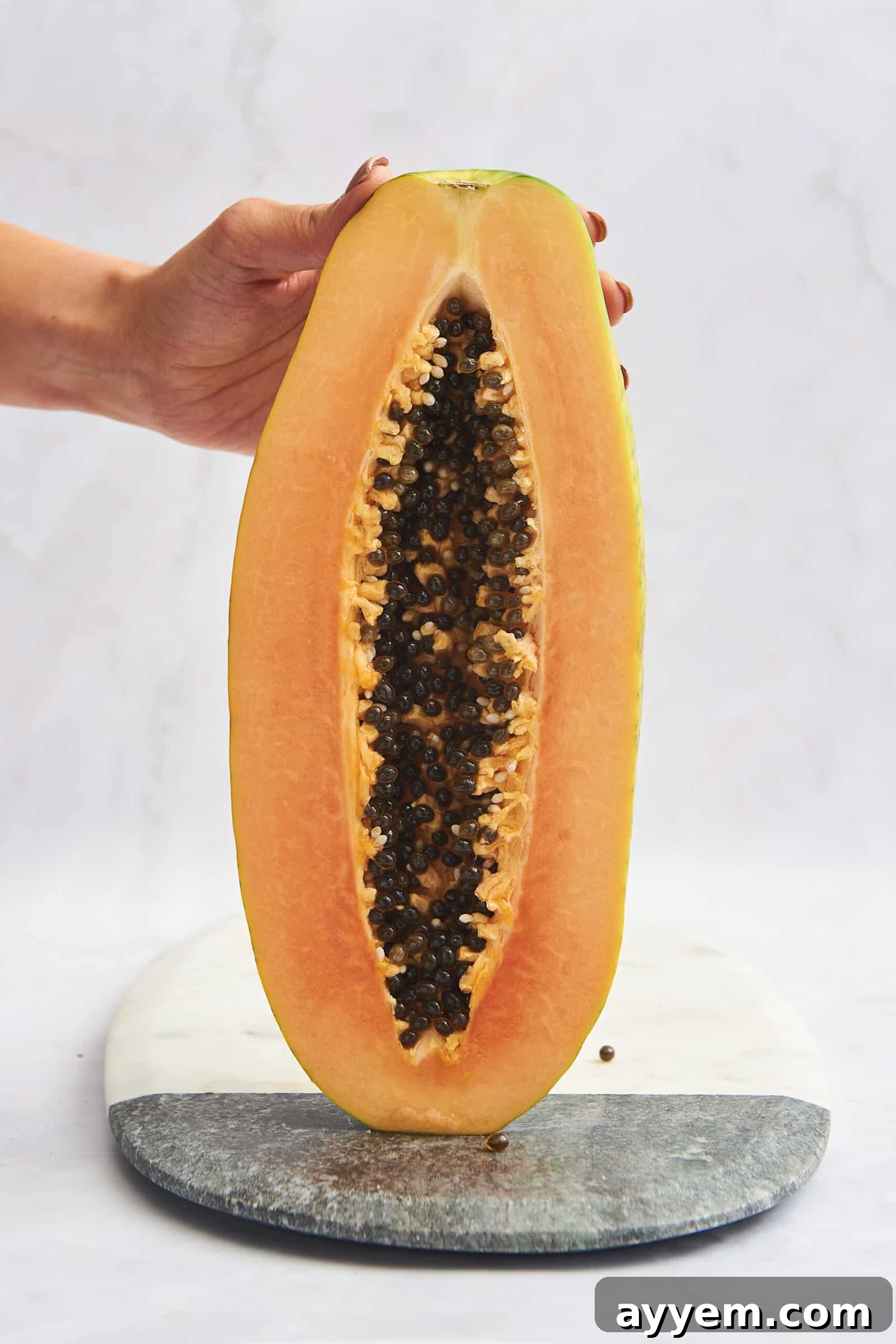
Welcome to the ultimate guide to mastering papaya! This tropical fruit, celebrated for its vibrant color, sweet flavor, and impressive nutritional profile, can be a delightful addition to your diet. However, for many, knowing how to select the perfect ripe papaya, expertly cut it, and store it to maintain its peak freshness remains a mystery. Fear not! This comprehensive article will unlock all the secrets to handling papaya like a true professional. Get ready to discover the simple steps to prepare this luscious fruit, along with creative and delicious ways to enjoy its unique taste and abundant health benefits.
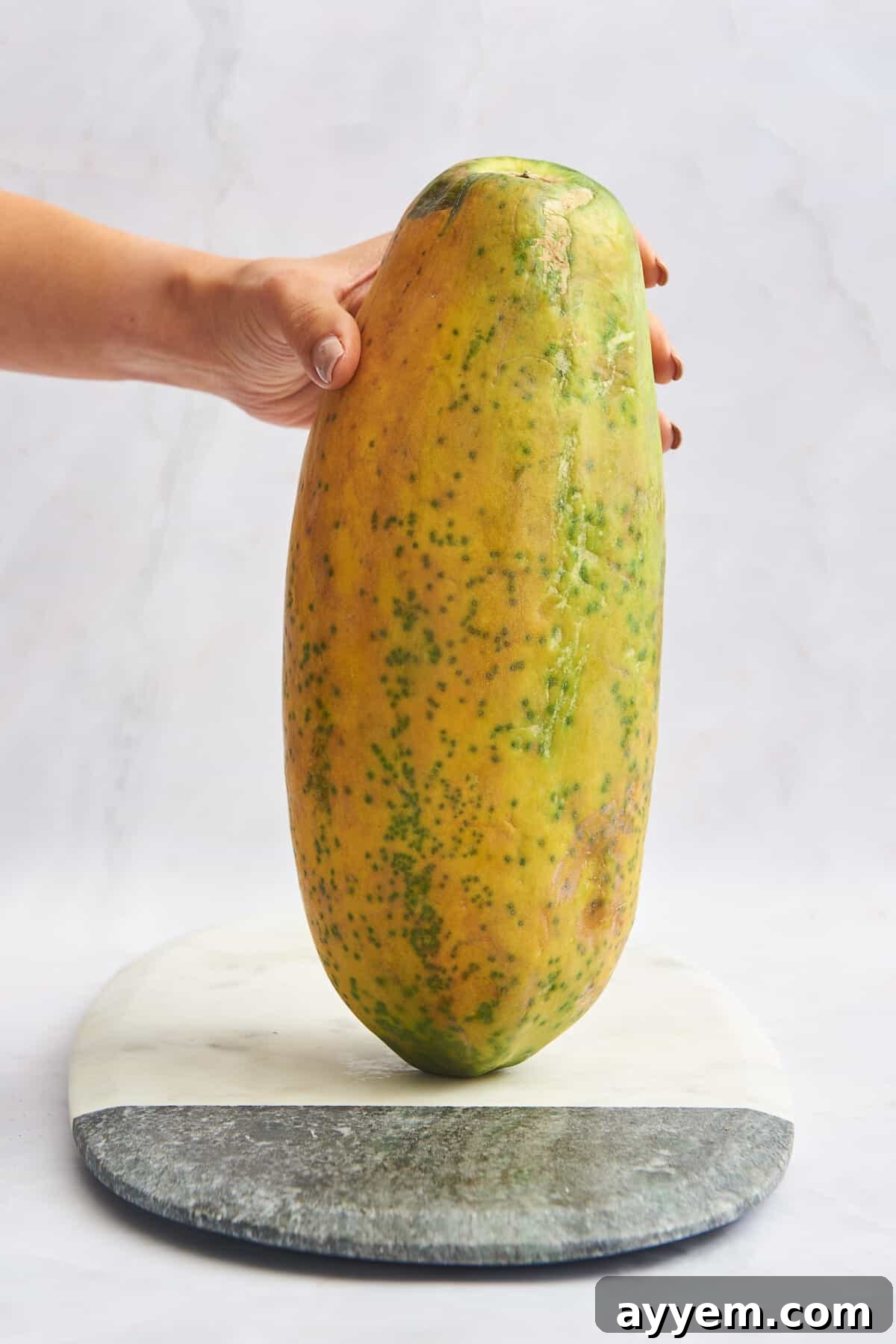
How to Choose a Ripe Papaya: A Guide to Perfect Sweetness
Selecting a perfectly ripe papaya is the first crucial step to enjoying its sweet, tropical flavor. For newcomers to this exotic fruit, identifying one that’s ready to eat can seem a bit daunting. However, with a few simple tips, you’ll be able to spot the ideal papaya every time. The most reliable indicators are the fruit’s skin color, its texture, and, later, its aroma.
Visual Cues: Color is Key
Begin by examining the papaya’s skin. An unripe papaya will typically have a pale green or entirely green skin and will feel firm, almost hard, to the touch. While some green papayas are used in savory dishes (like Thai green papaya salad), for sweet consumption, you’ll want to avoid these.
As papayas mature and ripen, their skin undergoes a beautiful transformation. The green hues slowly give way to shades of yellow and bright orange. A perfectly ripe papaya will display a predominant yellow or orange color, with only hints of green remaining, usually near the stem. The more yellow or orange, the riper and sweeter the fruit is likely to be. Look for a uniform color change across the entire surface of the fruit.
The Touch Test: Feeling for Sweetness
Beyond color, the texture of the papaya is an excellent indicator of ripeness. Gently press the skin with your thumb. A ripe papaya should feel slightly soft to the touch, much like a ripe avocado or peach. It shouldn’t be rock hard, nor should it be mushy. A subtle give is precisely what you’re looking for, indicating the flesh inside is tender and juicy. If it feels too firm, it likely needs more time to ripen.
The Aroma Test: A Scent of Sweetness
A less common but very effective method for judging ripeness is to smell the fruit. A ripe papaya will emit a faint, sweet, and pleasant tropical aroma from its stem end. If there’s no scent, it’s probably not fully ripe. If the scent is strong, fermented, or sour, it might be overripe.
What About Underripe Papayas?
Don’t worry if you accidentally pick an unripe papaya with mostly green skin. You can ripen it at home! Simply place it on your kitchen counter at room temperature. To speed up the process, you can put it in a paper bag with a banana or apple, as these fruits release ethylene gas, a natural ripening agent. Check it daily, and within a few days, it should transition to that beautiful yellow-orange color and tender texture.
Identifying Overripe Papaya
While ripeness is desirable, overripeness is not. You’ll know you’ve waited too long if your papaya begins to feel excessively soft or mushy, develops large dark spots or bruises on the skin, and potentially emits an overly fermented or off-putting odor. The flesh of an overripe papaya tends to be bland, mealy, or watery, losing its desirable texture and vibrant flavor. Always aim for that perfect balance of color, slight softness, and sweet aroma for the best eating experience.
How to Cut a Papaya: Step-by-Step for Effortless Enjoyment
The thought of cutting a papaya can be intimidating if you’ve never tackled one before, but it’s surprisingly simple and quick! With just a few basic kitchen tools and a little confidence, you’ll be slicing and dicing this tropical delicacy in no time. The key is to work safely and systematically to get the most out of your fruit.
Essential Tools You’ll Need:
Before you begin, gather these items:
- A sharp chef’s knife: Essential for clean cuts and safety.
- A sturdy cutting board: To provide a stable surface and protect your countertops.
- A vegetable peeler (optional, but highly recommended): For efficiently removing the skin. A paring knife can also be used.
- A large spoon: Perfect for scooping out the seeds and pulp.
Step-by-Step Papaya Cutting Guide:
- Prepare the Papaya: Trim Both Ends
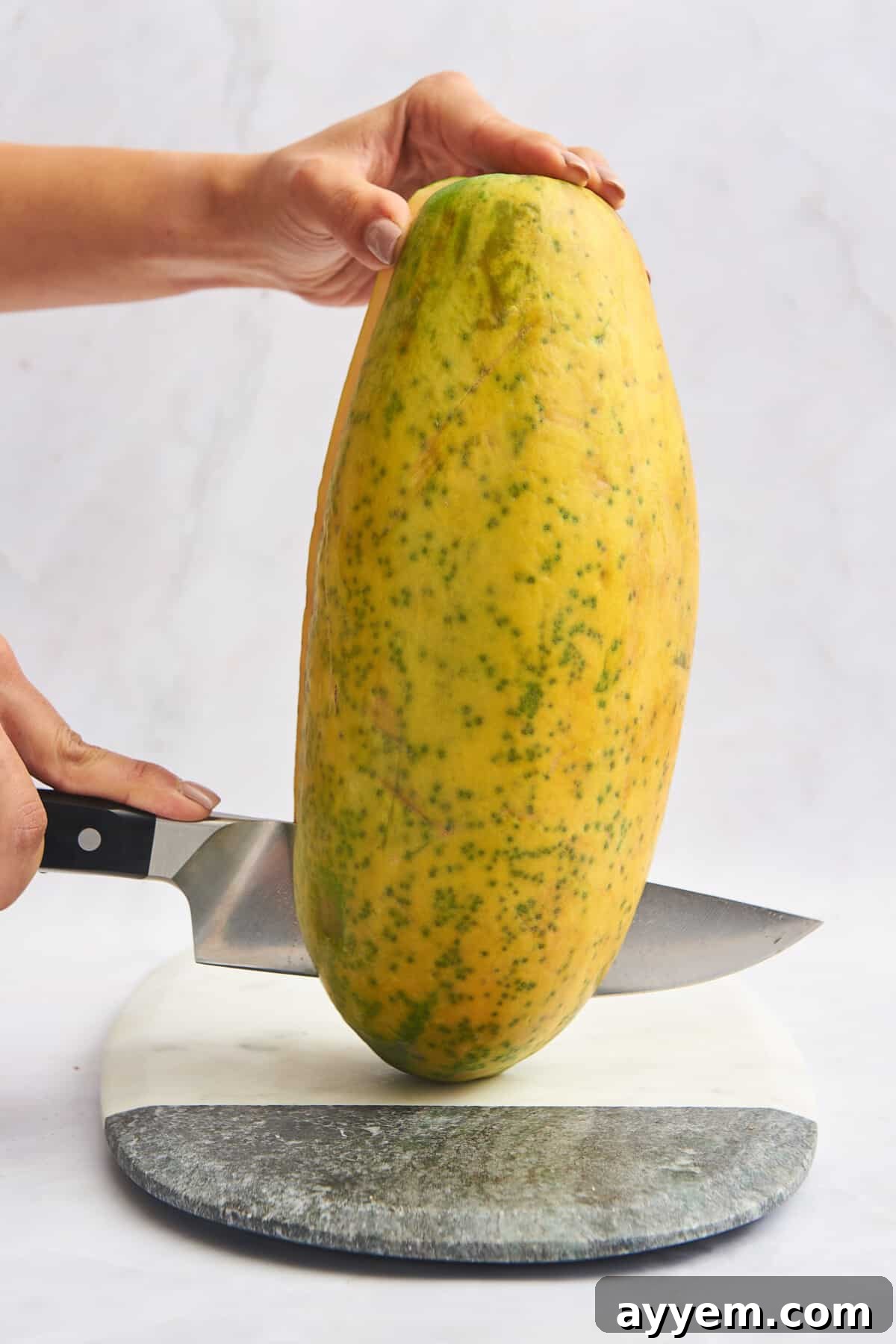
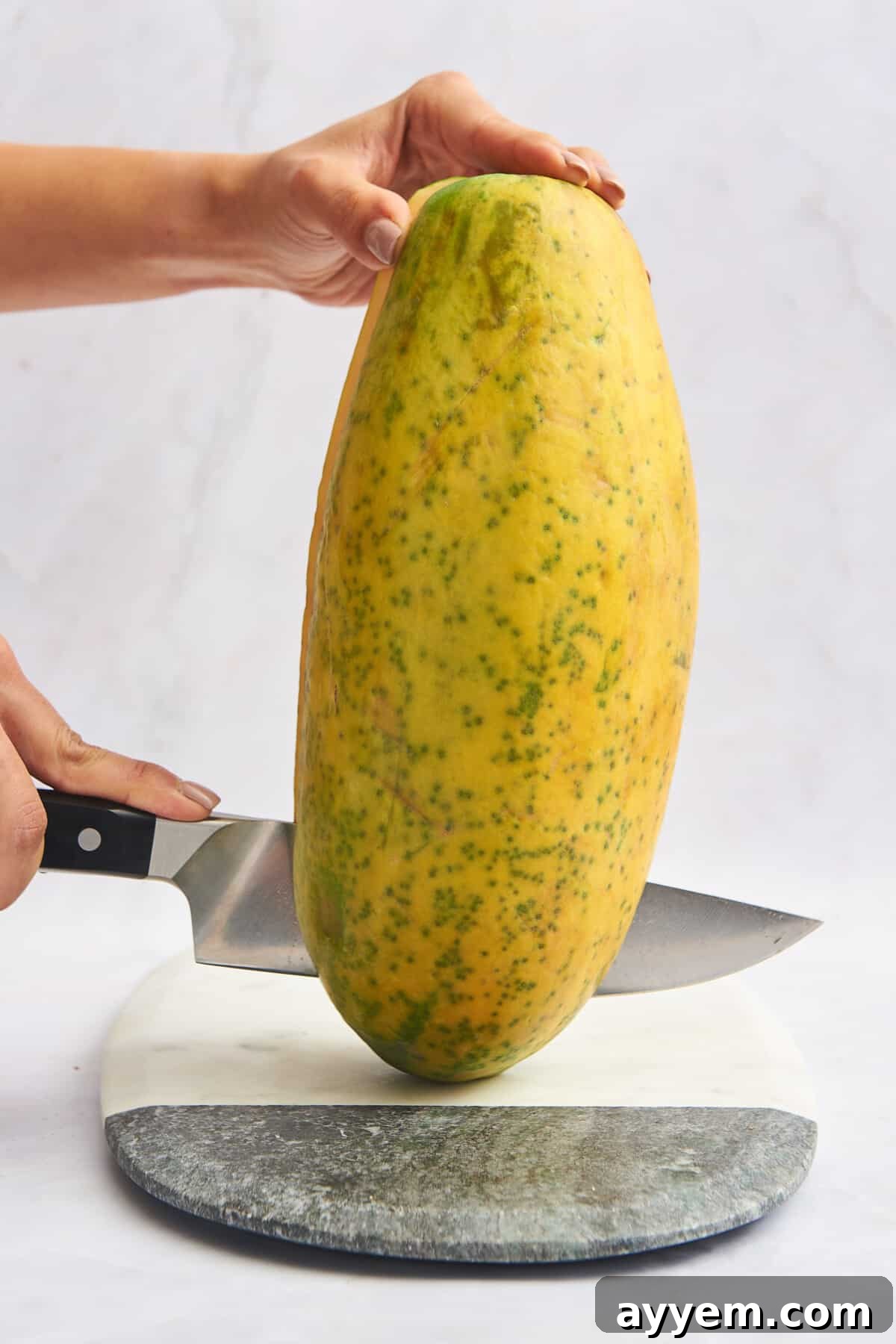
Place the papaya horizontally on your cutting board. Using your sharp knife, carefully trim off about half an inch from both the top (stem end) and the bottom (blossom end) of the fruit. This creates two flat surfaces, allowing the papaya to sit stably on your cutting board. Stability is key for safe and even cuts. - Slice the Papaya in Half Lengthwise
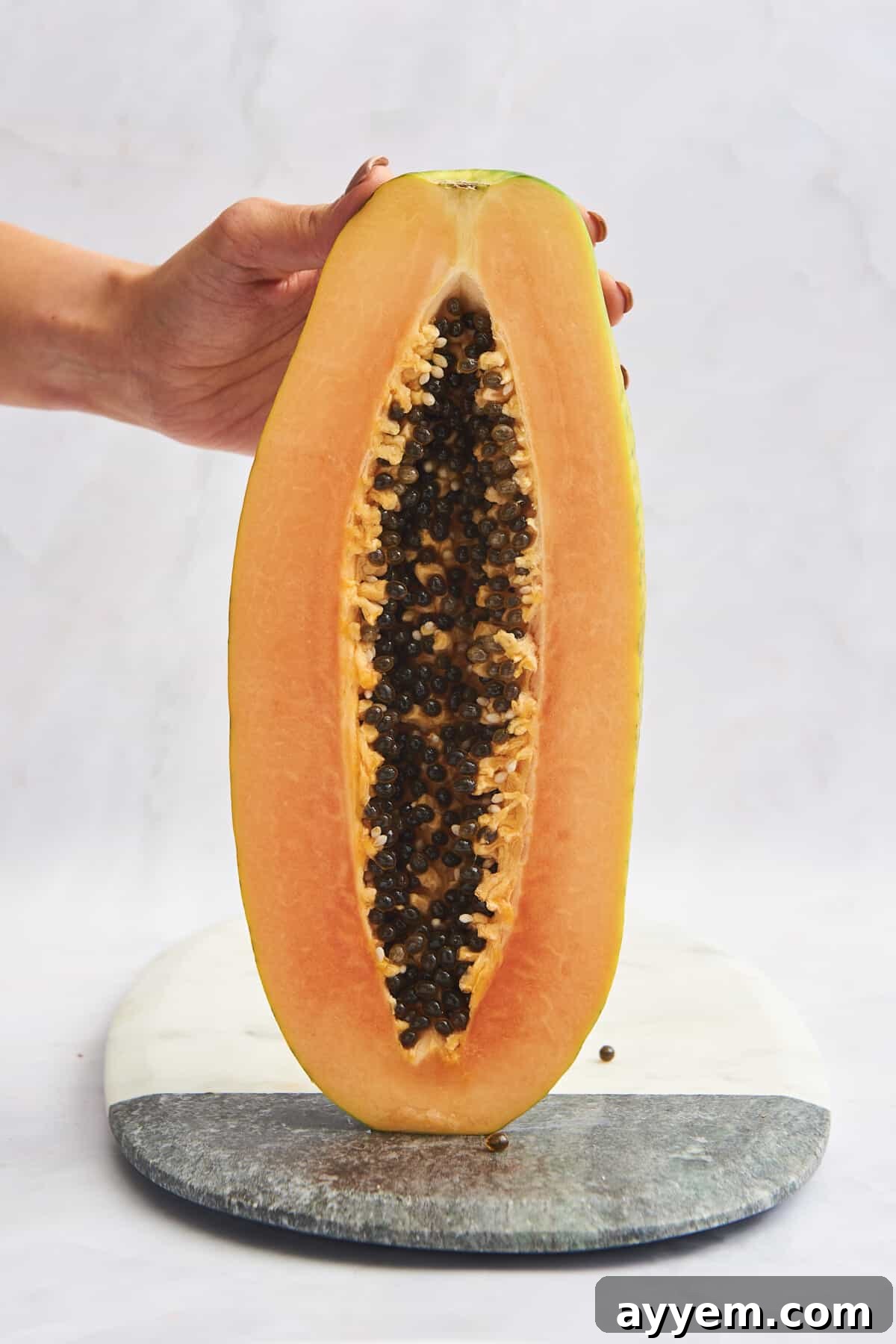
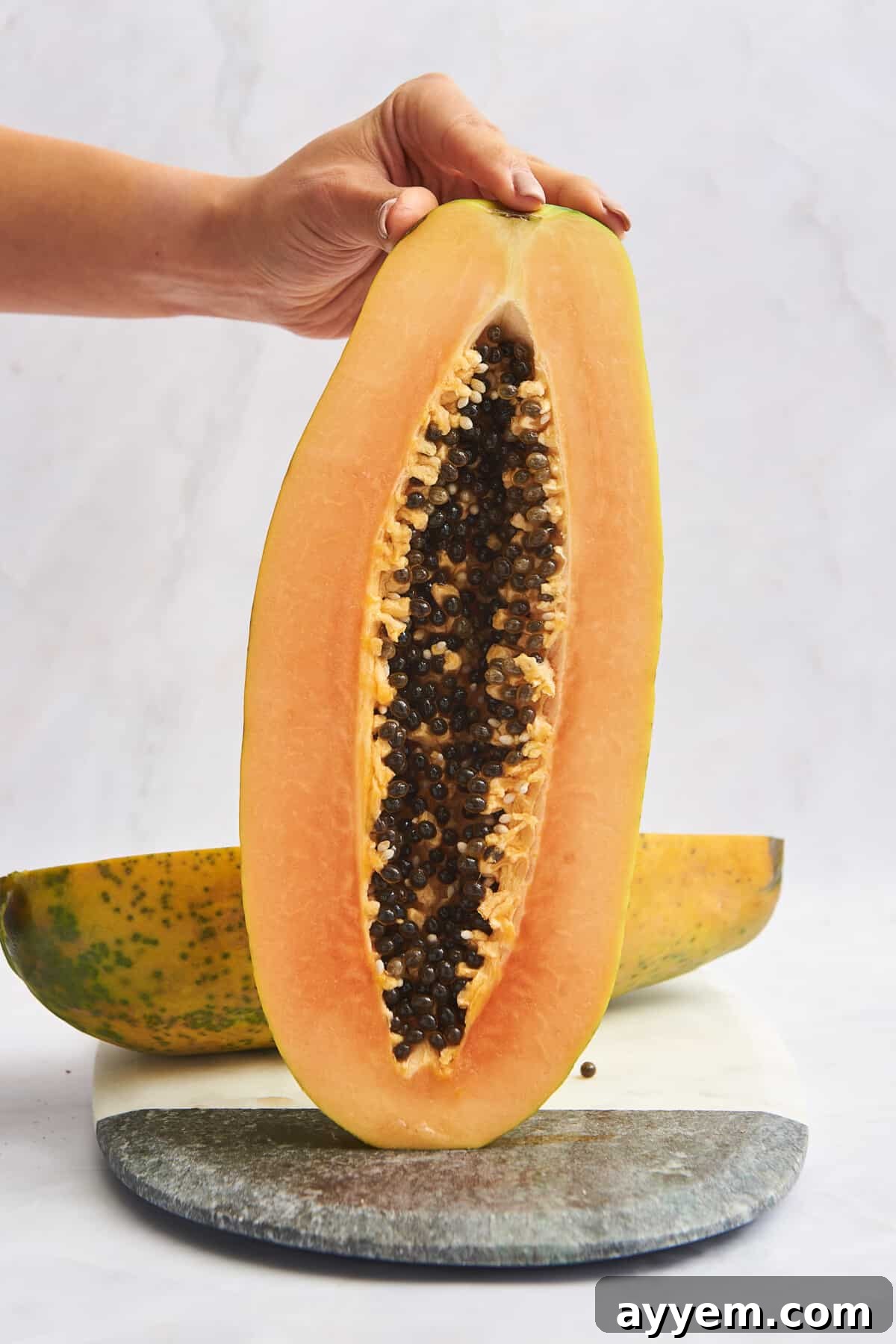
Stand the trimmed papaya upright on one of its flat ends. With a firm grip, use your sharp knife to slice the papaya in half lengthwise, from top to bottom. You’ll reveal the vibrant orange or reddish-orange flesh and the characteristic black seeds within. - Remove the Seeds and Stringy Pulp
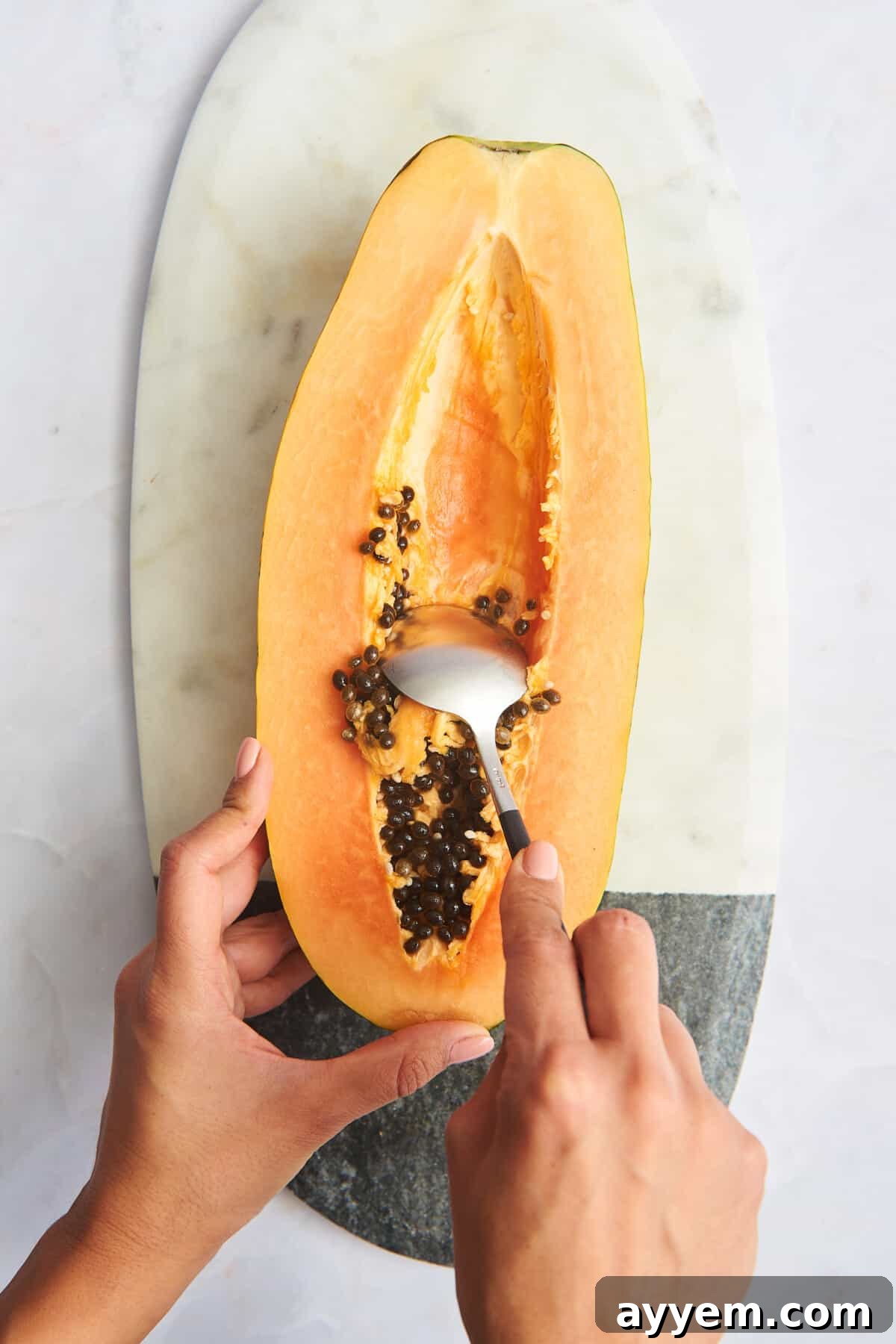
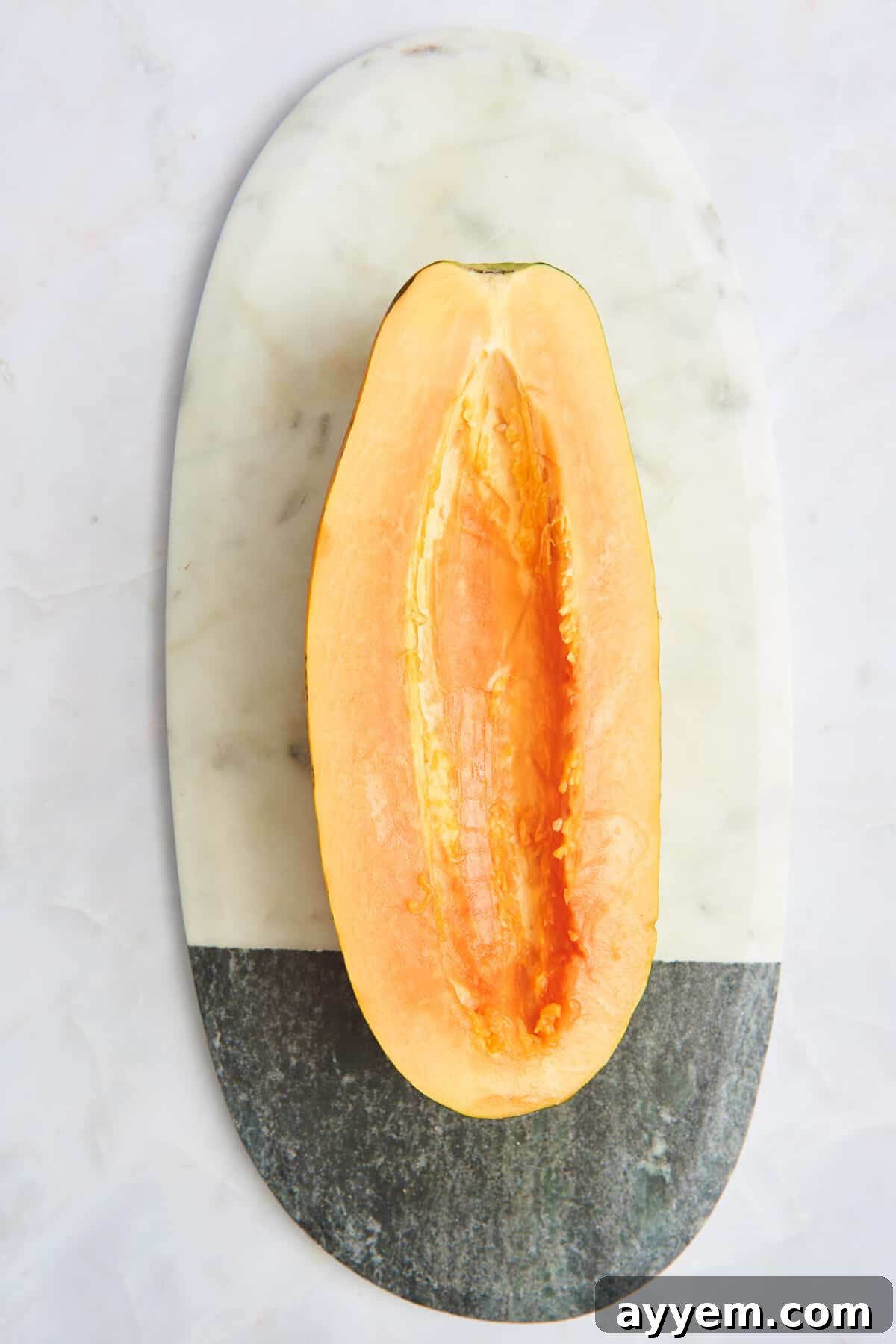
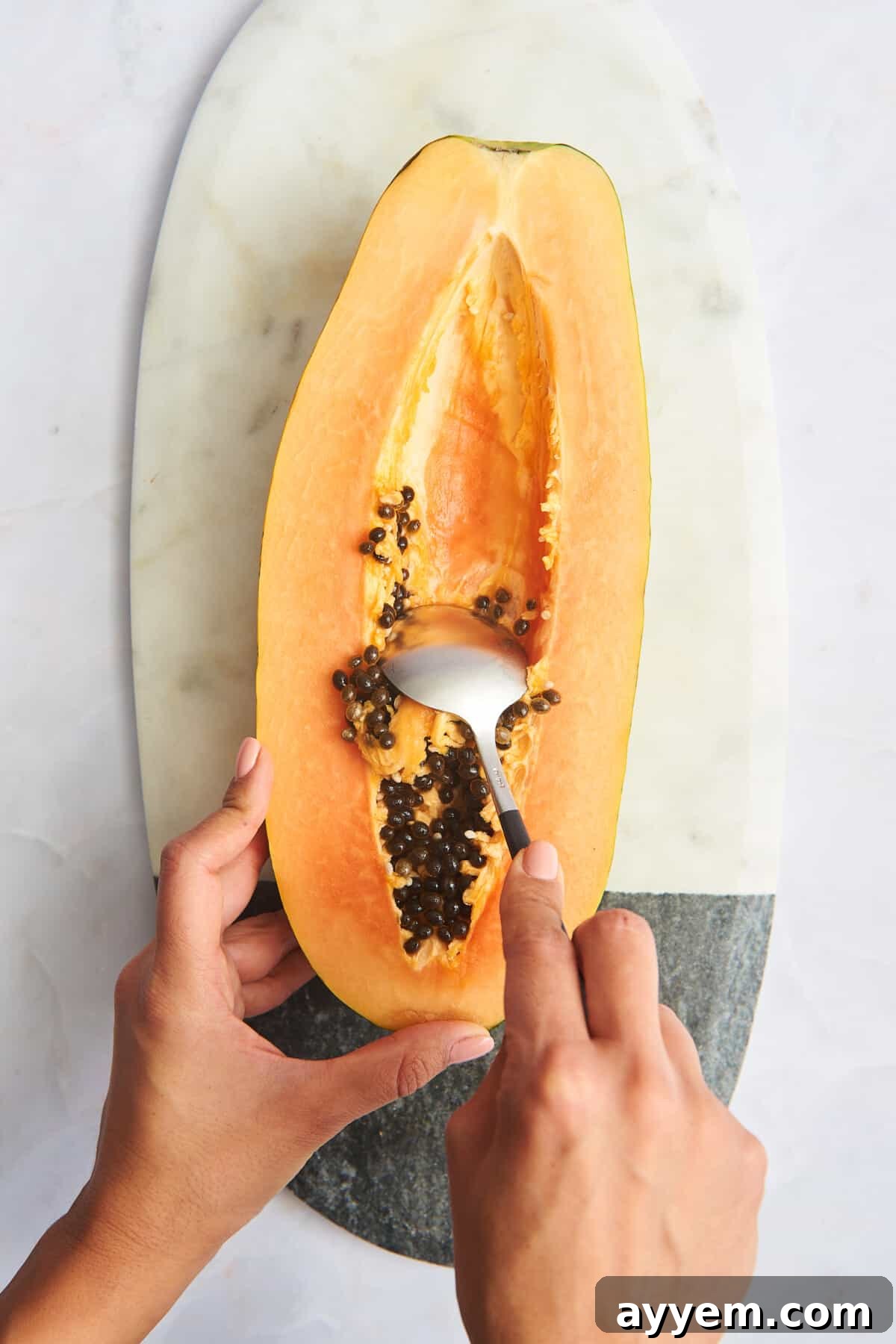
Once halved, lay each papaya half cut-side up on the cutting board. You’ll notice numerous shiny, black seeds clustered in the center cavity, often surrounded by a light, stringy membrane or pulp. Using a large spoon, gently scoop out all the seeds and the surrounding pulp. Be careful not to dig too deep and remove too much of the edible flesh. While papaya seeds are technically edible (though bitter), they are typically discarded to enhance the fruit’s texture and flavor. - Peel Off the Skin
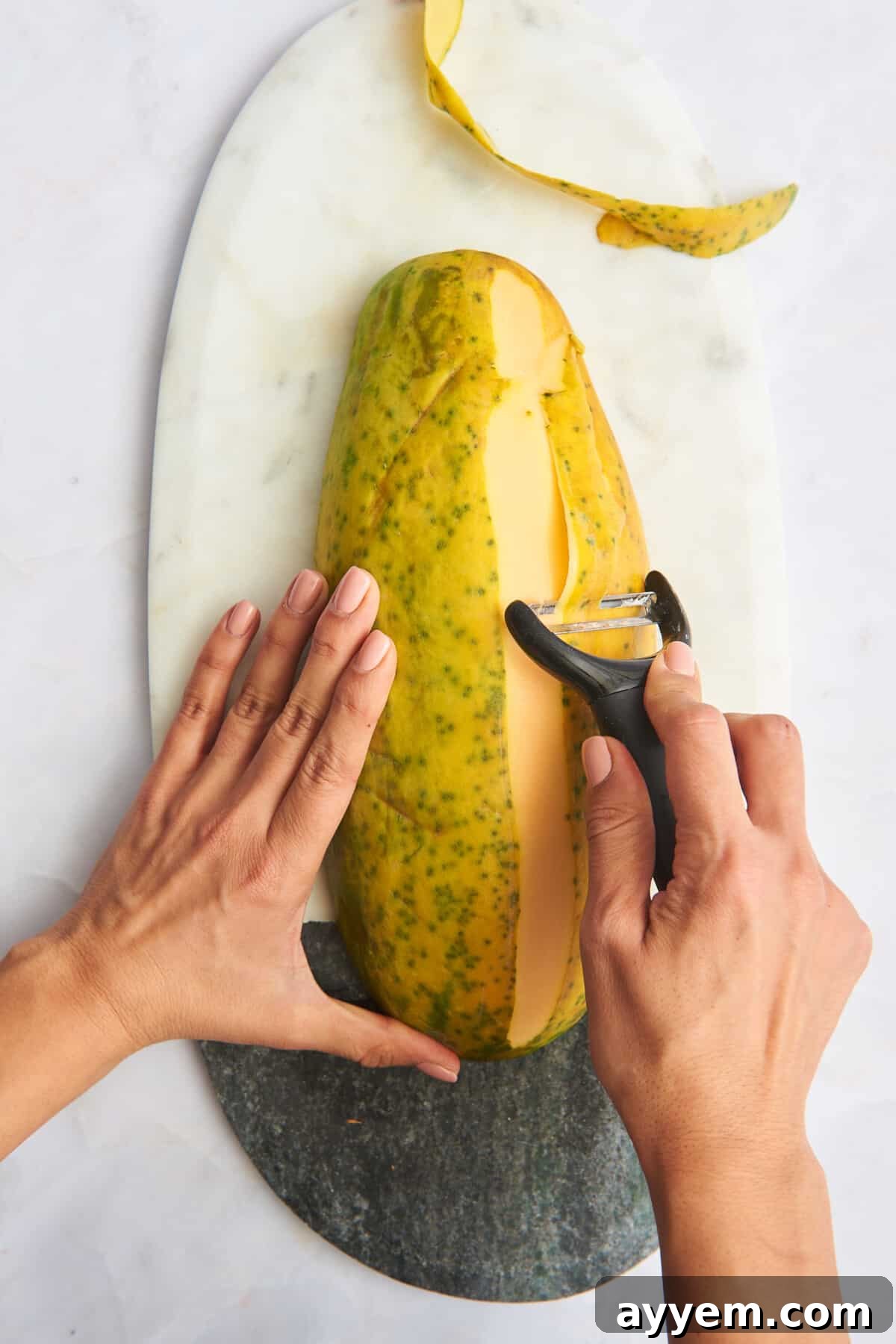
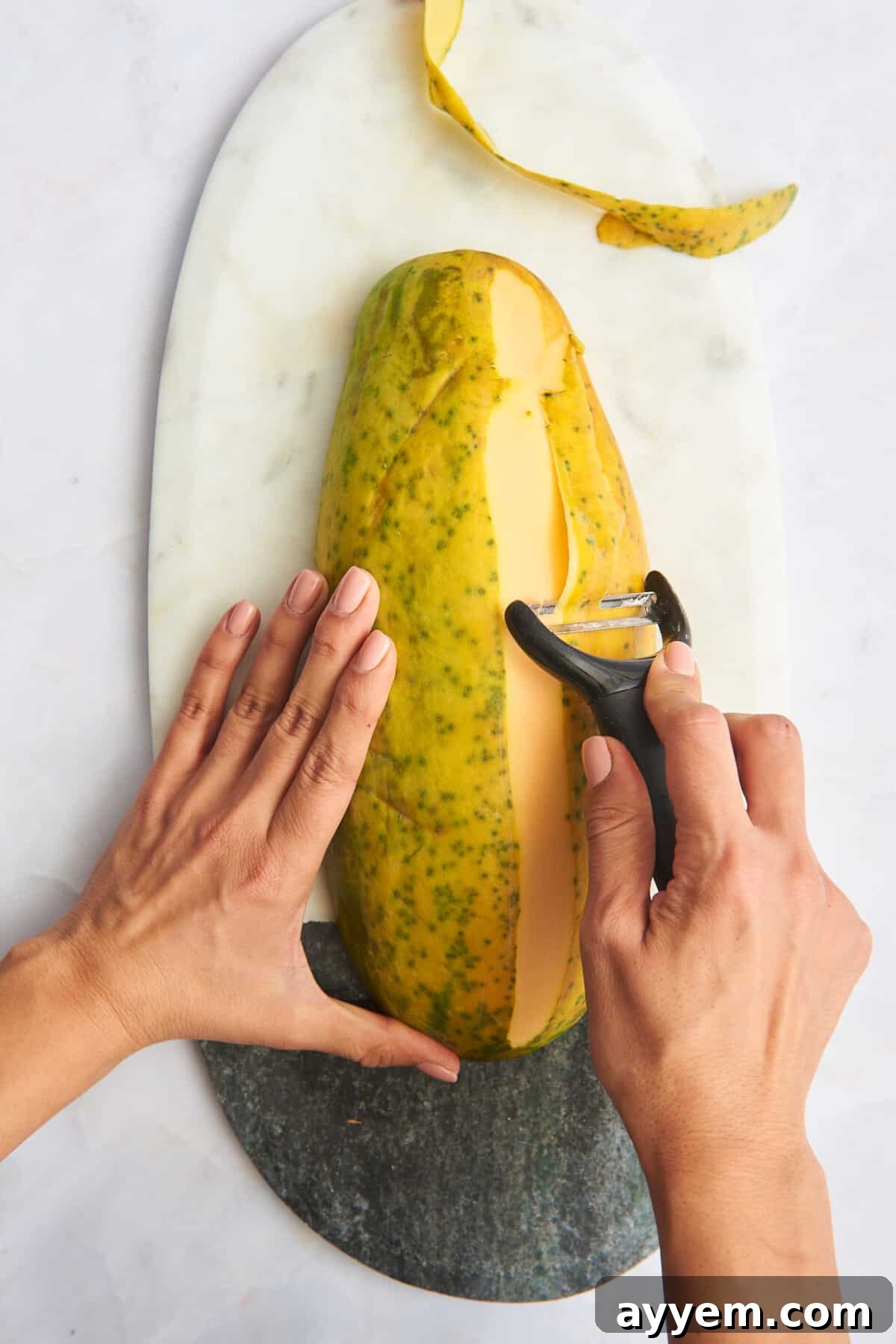
Now that the papaya halves are clean, it’s time to remove the skin. You have two main options:- Using a Vegetable Peeler: This is often the easiest and most efficient method. Hold one papaya half firmly and use a vegetable peeler to carefully peel away the skin, working from top to bottom. The peeler will remove thin strips, minimizing waste.
- Using a Knife: If you don’t have a peeler, or prefer using a knife, place a papaya half cut-side down on the board. Carefully slide your knife between the flesh and the skin, working downwards in strips to remove the peel. This method requires a bit more practice to avoid removing too much flesh.
Remember, papaya skin contains latex and is generally not consumed.
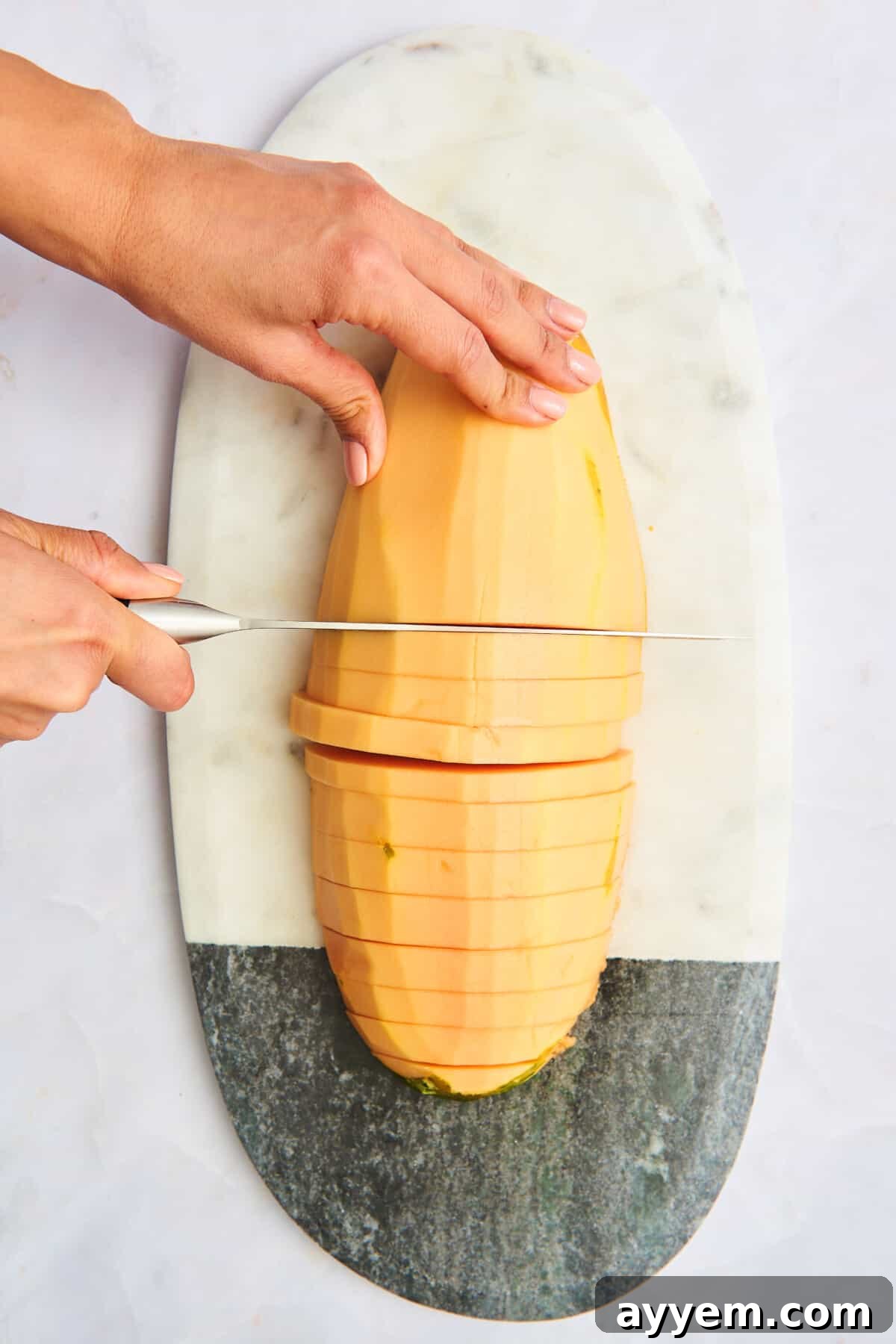
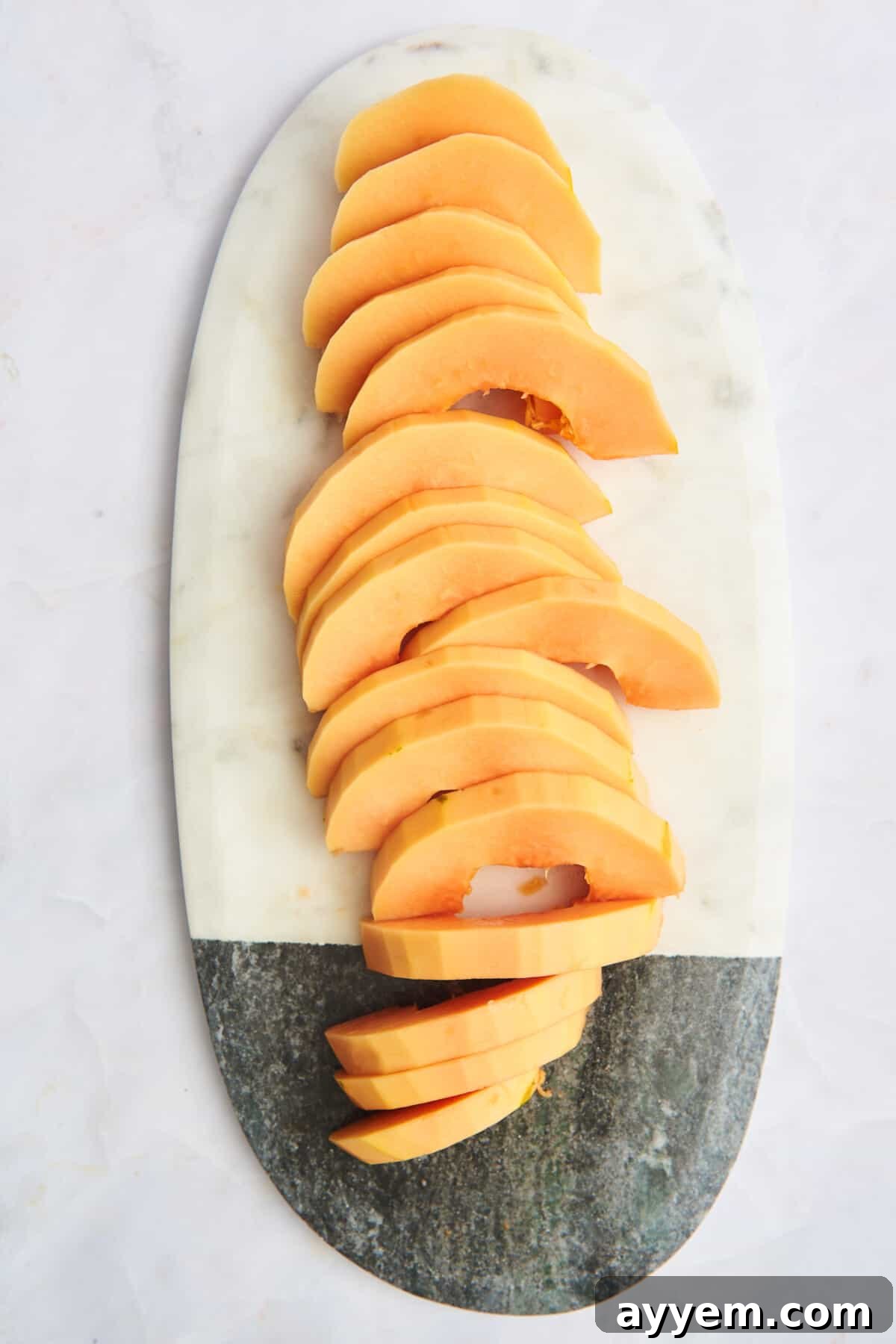
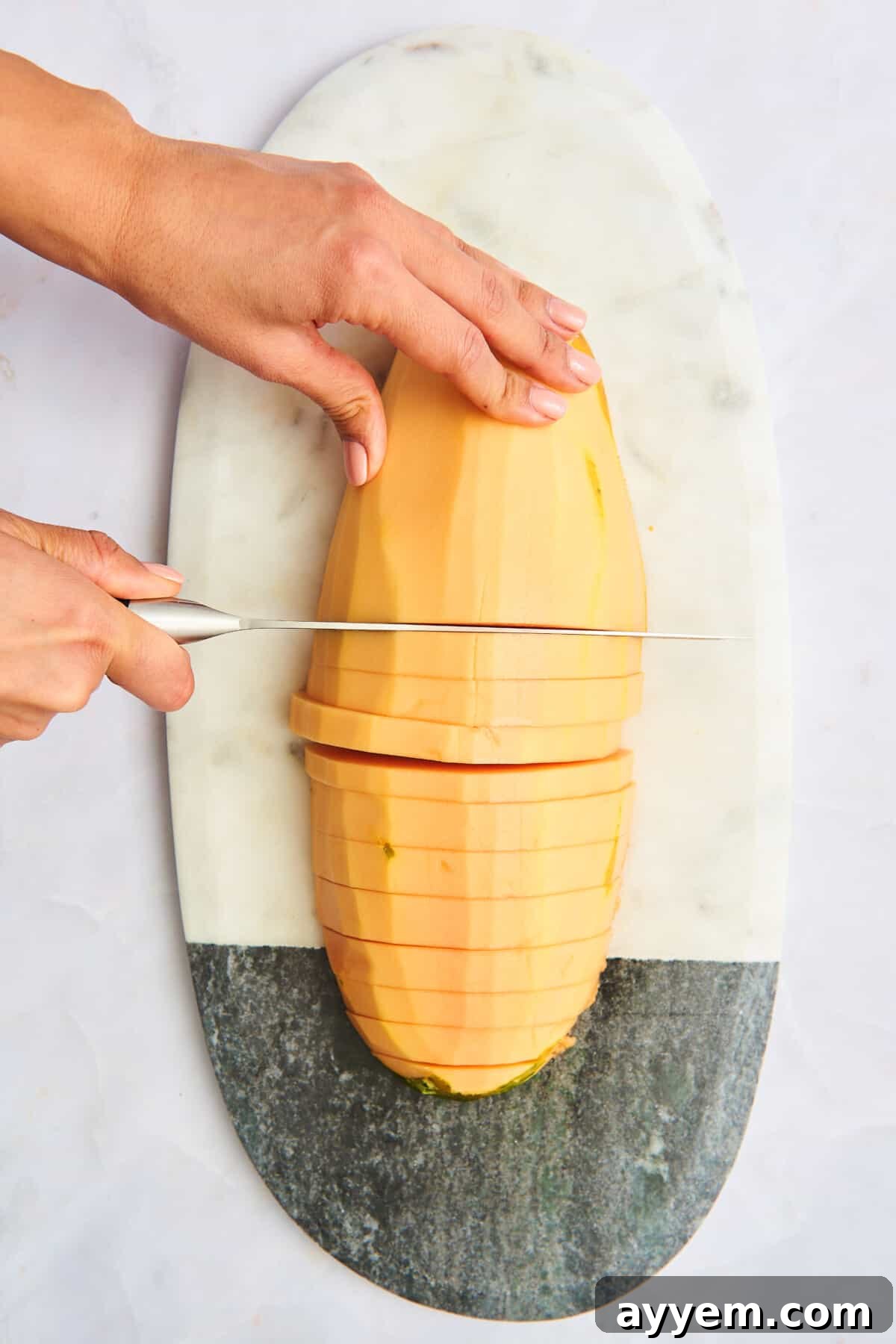
- Cut into Long Strips
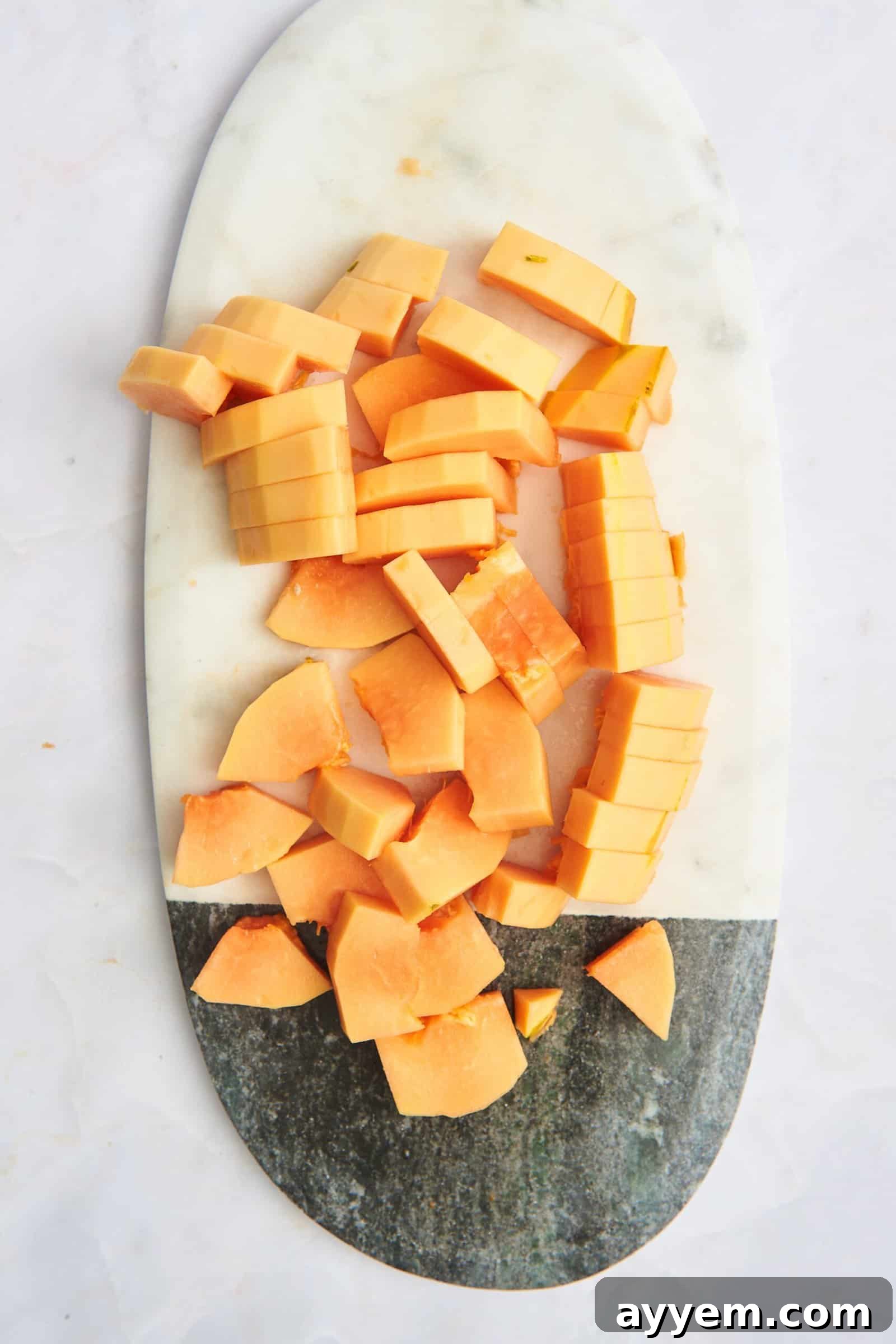
With the skin removed, place each peeled papaya half on the cutting board. Slice each half lengthwise into long, even strips, about 1/2 to 1 inch thick. The number of strips will depend on the size of your papaya and your desired thickness. - Create Bite-Sized Cubes
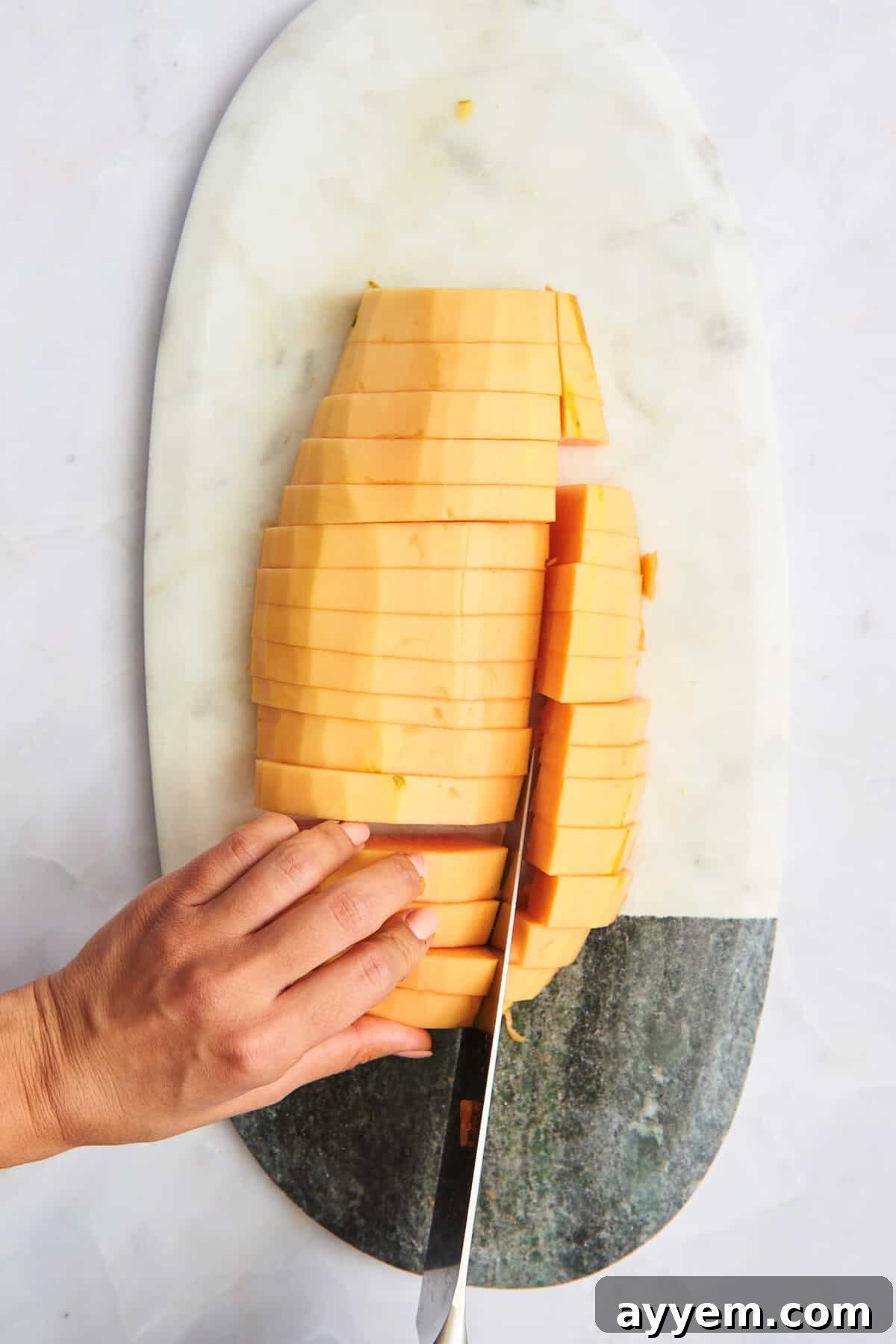
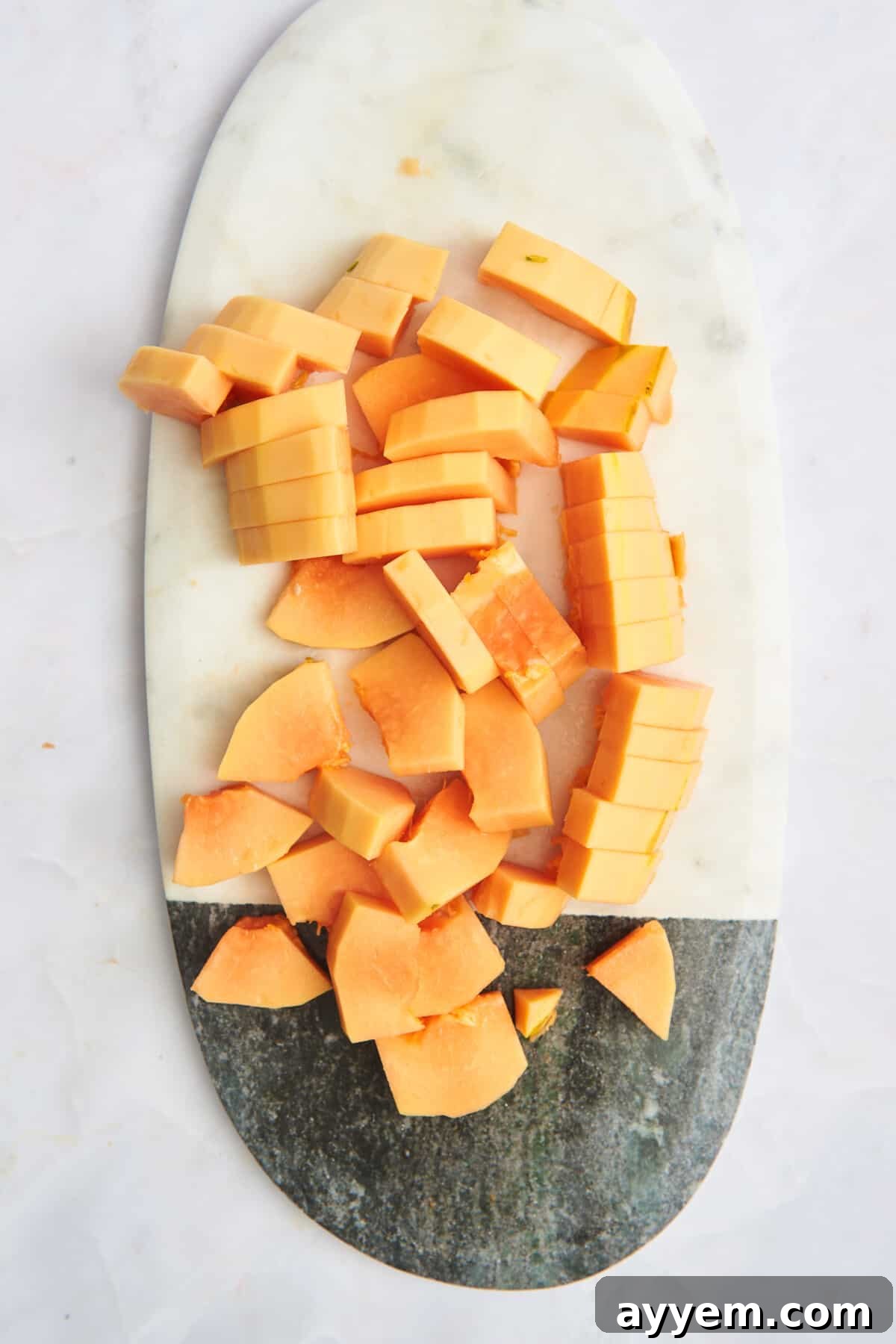
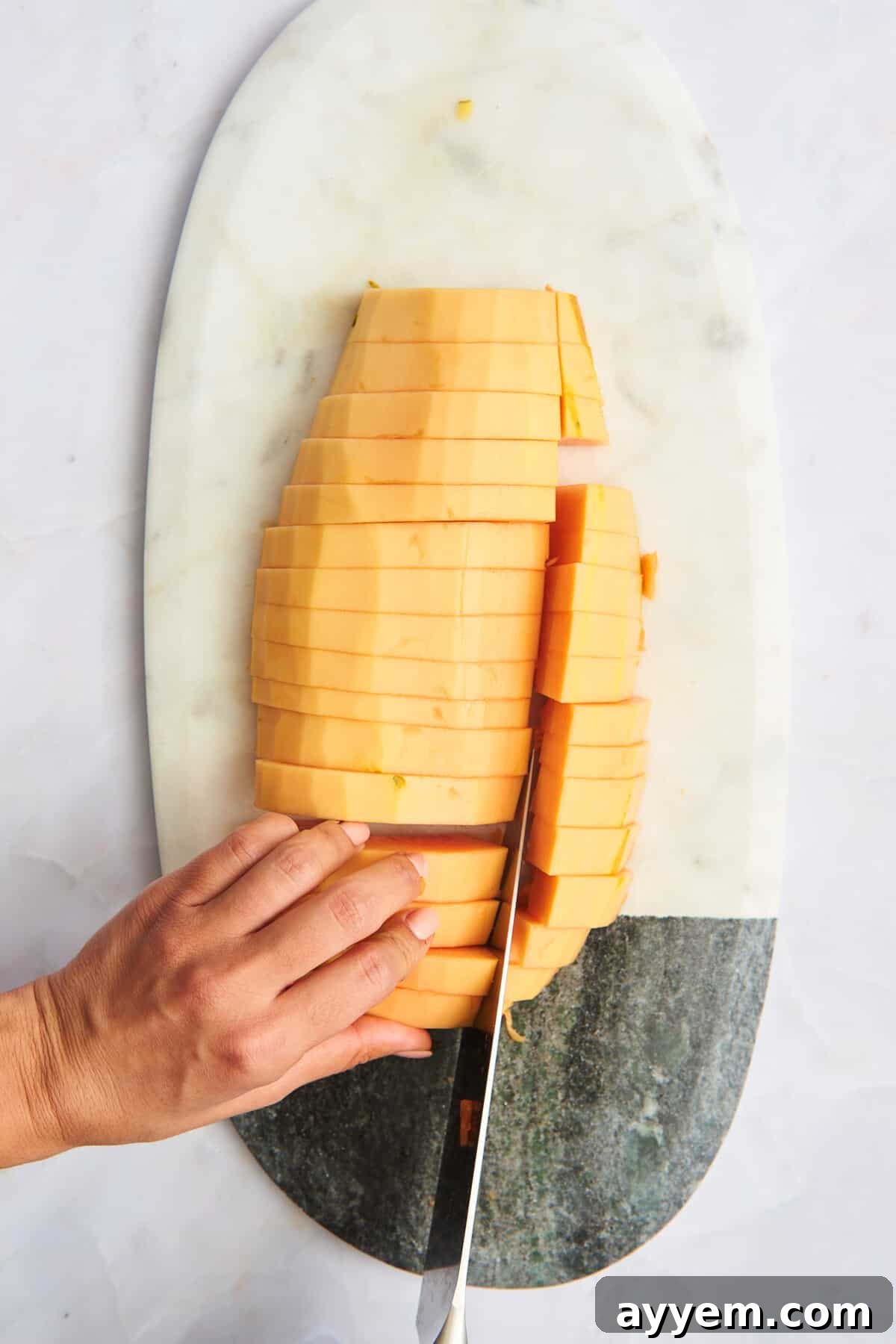
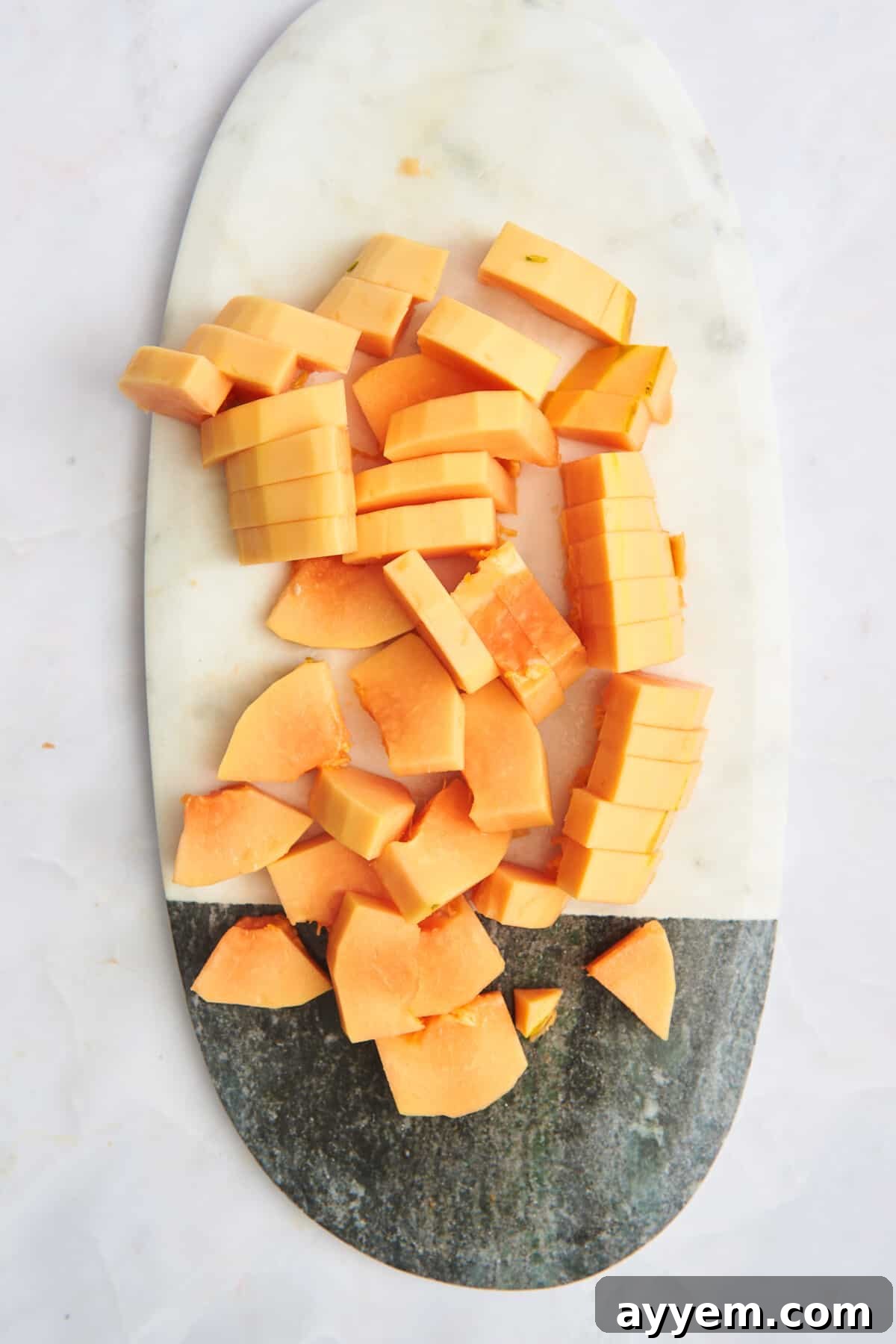
Gather the papaya strips and rotate them 90 degrees. Now, slice again width-wise to create uniform, bite-sized cubes. This is the most common and versatile way to serve papaya, perfect for snacking, salads, or smoothies. - Enjoy Your Freshly Cut Papaya!
Your perfectly cut papaya cubes are now ready to be enjoyed. Store any unused portions as described in the storage section below.
How to Serve Papaya: Delicious Ways to Enjoy This Tropical Gem
Once you’ve mastered how to cut a papaya, the possibilities for enjoying this versatile tropical fruit are endless. Its naturally sweet, subtly musky flavor, often described as a cross between a melon and a mango or peach, makes it a fantastic ingredient in both sweet and savory applications.
The Classic Pairing: A Splash of Lime Juice
The most popular and arguably the best way to serve fresh papaya is with a simple squeeze of fresh lime juice. The acidity of the lime cuts through the papaya’s natural sweetness, brightening its flavor and adding a refreshing tang. Some people also find that lime juice helps to neutralize a slight musky odor that some papayas can have, enhancing the fruit’s clean, sweet taste.
Versatile Culinary Uses:
Beyond the simple lime pairing, papaya shines in a multitude of dishes:
- Fruit Medleys and Salads: Papaya cubes are a vibrant and flavorful addition to any fruit salad. Combine them with other tropical fruits like mango, pineapple, kiwi, and berries for a refreshing and nutritious treat.
- Green Salads: For a unique twist, incorporate papaya into savory green salads. Its sweetness pairs beautifully with bitter greens, nuts, goat cheese, and a light vinaigrette. It adds both flavor and an interesting texture.
- Salsas: Papaya forms an excellent base for fresh, vibrant salsas. Mix finely diced papaya with red onion, cilantro, jalapeño, lime juice, and a pinch of salt. This tropical salsa is perfect with grilled fish, chicken, or as a topping for tacos.
- Smoothies and Juices: Papaya blends seamlessly into smoothies, adding natural sweetness and creaminess. Combine it with yogurt, milk (dairy or non-dairy), other fruits like banana or berries, and a touch of honey or maple syrup for a healthy and delicious breakfast or snack. It’s also fantastic in fresh juices, either on its own or mixed with orange, pineapple, or passion fruit.
- Breakfast Bowls: Elevate your morning routine by adding papaya to your oatmeal, yogurt parfaits, or acai bowls. Its soft texture and sweet flavor make it a wonderful topping.
- Desserts: Papaya can be used in simple desserts. Serve it chilled with a scoop of vanilla ice cream or sorbet, or incorporate it into tarts and custards.
- Marinades: The enzyme papain found in papaya is a natural meat tenderizer. Incorporate pureed unripe papaya (which has higher papain content) into marinades for tougher cuts of meat.
Experiment with these suggestions to discover your favorite way to enjoy the incredible taste and texture of fresh papaya!
How to Store Papaya for Maximum Freshness
Proper storage is essential to extend the life of your papaya and preserve its delicious flavor and tender texture. Whether your papaya is unripe, perfectly ripe, or already cut, different methods will ensure you get the most out of your fruit.
Storing Unripe Papayas:
- If your papaya is green or mostly green and firm, it’s not yet ready to eat. Store it on your kitchen counter at room temperature, away from direct sunlight.
- To accelerate ripening, place the unripe papaya in a paper bag with an apple or banana. These fruits release ethylene gas, a natural ripening agent, which will help the papaya turn yellow and soften within a few days. Check daily for desired ripeness.
Storing Ripe, Uncut Papayas:
- Once a papaya reaches its ideal ripeness (yellow or orange skin, slightly soft to the touch, and fragrant), you can store it in the refrigerator to slow down further ripening.
- Place the whole, ripe papaya in the crisper drawer of your refrigerator. It will stay fresh for up to 2-3 days. Storing it in the fridge immediately after it ripens helps maintain its sweetness and texture longer than if left on the counter.
Storing Cut Papayas:
- After cutting a papaya, its delicate flesh is exposed to air, which can lead to oxidation and a quicker decline in quality.
- Transfer papaya cubes or slices to an airtight container. This will protect the fruit from absorbing odors from other foods in the refrigerator and prevent moisture loss.
- Store the airtight container in the fridge for up to 3 days. While it might last a bit longer, the flavor and texture are best within the first two days.
- A common tip is to add a squeeze of lime or lemon juice over the cut papaya before storing. The acidity can help prevent browning and keep the fruit looking and tasting fresh.
Can I Freeze Cut Papaya?
Yes, absolutely! Freezing cut papaya is an excellent way to preserve it for longer periods, especially if you have an abundance of ripe fruit or want to have it readily available for smoothies and other recipes. Freezing can extend its usability for several months.
How to Freeze Papaya:
- Prepare and Cut: Start with a ripe papaya. Wash it thoroughly, then follow the instructions above to cut it into bite-sized cubes or chunks.
- Single-Layer Freeze: This is a crucial step to prevent the papaya pieces from clumping together into one large block. Arrange the papaya cubes in a single layer on a baking sheet lined with parchment paper. Ensure the pieces are not touching each other.
- Pre-freeze: Place the baking sheet with the papaya into the freezer. Let it freeze for 2-4 hours, or until the pieces are solid.
- Transfer to Storage: Once the papaya cubes are frozen solid, transfer them from the baking sheet into a freezer-safe, sealable bag or an airtight container. Remove as much air as possible from the bag to prevent freezer burn.
- Store: Label the bag or container with the date. Frozen papaya can be stored for up to eight months. For best quality, try to use it within 3-6 months.
Uses for Frozen Papaya:
Frozen papaya is perfect for smoothies, smoothie bowls, purees, or even as a refreshing addition to cold beverages. It’s generally not recommended for dishes where a fresh, firm texture is desired, as freezing can slightly alter the fruit’s consistency once thawed.
Common Questions About How to Cut and Enjoy Papaya
The taste of papaya is unique and can vary slightly depending on the variety, its ripeness, and even where it was grown. Generally, papaya is described as a refreshing, sweet, and tropical fruit. Many find its flavor profile to be a delightful cross between a sweet melon (like cantaloupe) and hints of mango or peaches. Some varieties might have a slightly musky undertone, which can be beautifully balanced with a squeeze of lime juice.
Technically, papaya seeds are edible and have a peppery, slightly bitter taste, often used as a substitute for black pepper in some cuisines. However, for most common preparations, we recommend discarding them. Their hard texture and strong, often unpleasant, bitter flavor can detract from the sweet, smooth flesh of the fruit.
It’s generally recommended to peel the papaya after you have sliced it in half and scooped out the seeds. This method makes it much easier to handle the fruit and peel away the skin efficiently, especially with a vegetable peeler. Trying to peel a whole, round papaya can be cumbersome and less safe.
No, papaya skin is not typically eaten. It contains latex, which can cause digestive upset or allergic reactions in some individuals. Always remove the skin before consuming the fruit.
Yes, absolutely! Raw papaya is not only delicious but also incredibly nutritious. It’s an excellent source of dietary fiber, vitamin C, and vitamin A, supporting immune health, good vision, and digestive regularity. Additionally, papaya contains a powerful enzyme called papain, which has been linked to numerous health benefits, including reducing inflammation, aiding digestion, and potentially easing muscle soreness after exercise. Enjoying raw papaya is a fantastic way to harness these health advantages.
Eating papaya in the morning can be a fantastic way to kickstart your day. Its high fiber and water content can help stimulate and regulate digestion, promoting bowel regularity and preventing stomach discomfort throughout the day. The natural enzymes like papain can also aid in breaking down food, making it easier on your digestive system. Plus, its vitamins and antioxidants provide an immediate energy boost and support overall well-being.
More Kitchen Guides for Culinary Confidence
Expand your kitchen skills with these helpful guides:
- How to Cut a Tomato (3 Ways)
- How to Cook Quinoa (3 Ways)
- How to Store Parsley
- How to Cook a Whole Chicken
How to Cut a Papaya
Food Dolls
4 servings
10 mins
10 mins
Learn how to cut a papaya, how to choose a ripe one, how to keep it fresh, and the best ways to enjoy this sweet, tropical fruit!
Ingredients
- 1 papaya
Instructions
-
Use a sharp knife to trim both ends off the fruit.

-
Slice the papaya in half lengthwise.
-
Use a spoon to scoop out the seeds and stringy pulp in the center.
-
Use a vegetable peeler to remove the skin.
-
Cut each half of the fruit lengthwise into long strips.
-
Rotate the papaya, and slice again width-wise to create bite-sized cubes.
-
Store in an airtight container in the fridge for up to 3 days.
Equipment
Nutrition
Serving: 1 serving | Calories: 33kcal | Carbohydrates: 8g | Protein: 0.4g | Fat: 0.2g | Saturated Fat: 0.1g | Polyunsaturated Fat: 0.04g | Monounsaturated Fat: 0.1g | Sodium: 6mg | Potassium: 138mg | Fiber: 1g | Sugar: 6g | Vitamin A: 722IU | Vitamin C: 46mg | Calcium: 15mg | Iron: 0.2mg
Nutrition information is automatically calculated, so should only be used as an approximation.