
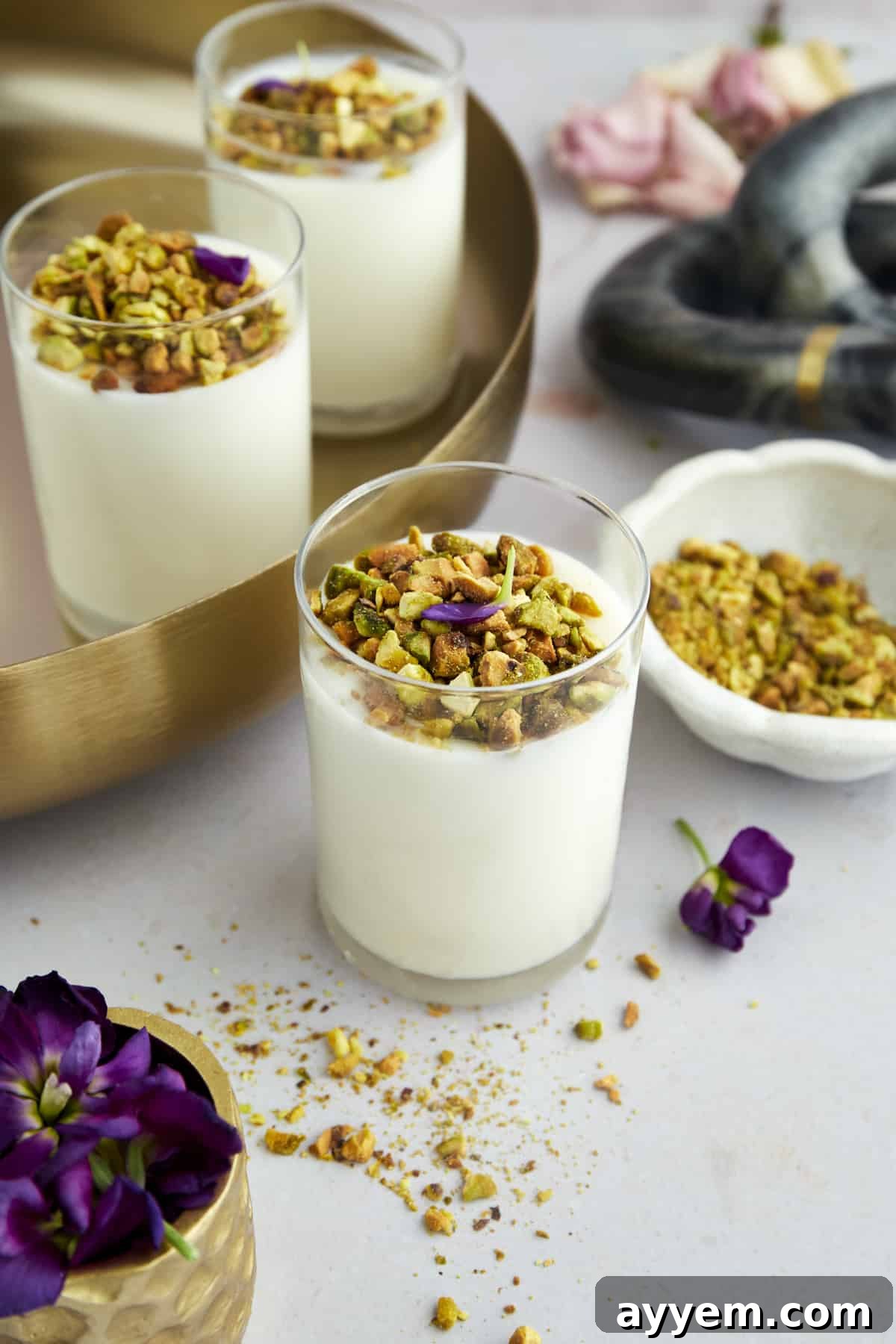
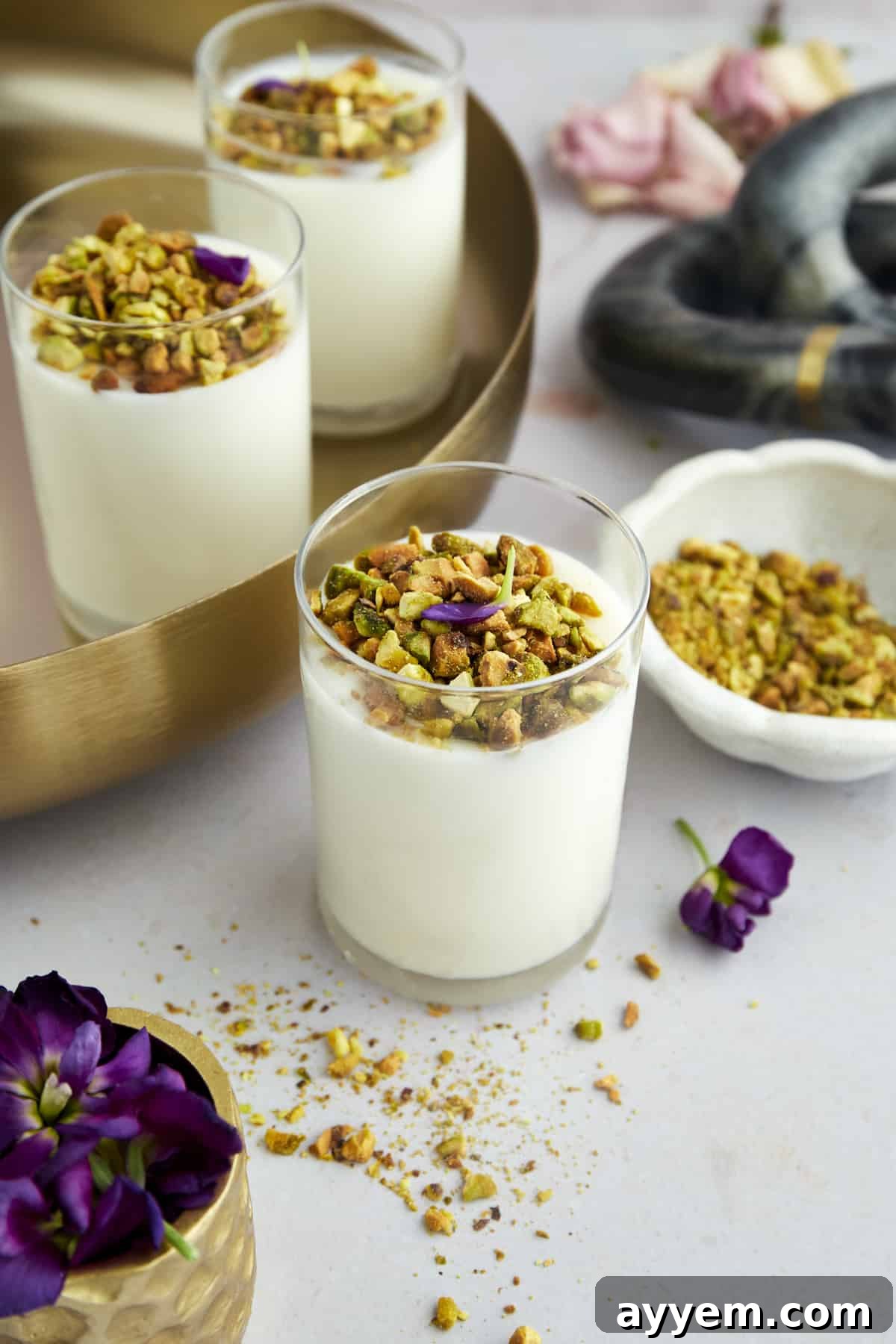
Mahalabia, also known as Muhallebi, is an exquisitely silky, creamy, and subtly sweet Middle Eastern dessert that captivates palates across the globe. Often compared to a luxurious milk pudding, this timeless treat is crafted from a handful of pantry staples, making it surprisingly quick and effortless to prepare. Served in charming individual portions, each spoonful promises a truly crave-worthy experience that delights the senses.
This beloved dessert holds a special place in Middle Eastern culture, frequently gracing tables during significant celebrations and daily meals alike. It’s particularly cherished during the holy month of Ramadan, offering a soothing and satisfying end to a day of fasting when served at Iftar. While it pairs beautifully with robust savory dishes like chicken shawarma and Moroccan harira soup, Mahalabia is far too delicious to be confined to special occasions; its comforting appeal makes it a year-round favorite in countless households.
Discovering Mahalabia: The Essence of Middle Eastern Milk Pudding
Mahalabia, or Muhallebi as it’s known in many regions, is a staple dessert found throughout the Middle East, particularly in countries like Turkey, Syria, and Lebanon. While its exact origins are debated, with some historians tracing its roots back to the Sasanian Empire in Persia, its enduring popularity is undeniable. Over centuries, various adaptations have emerged, each bearing the unique culinary signature of its region, yet all maintaining the core essence of a simple, comforting, and remarkably luscious milk pudding.
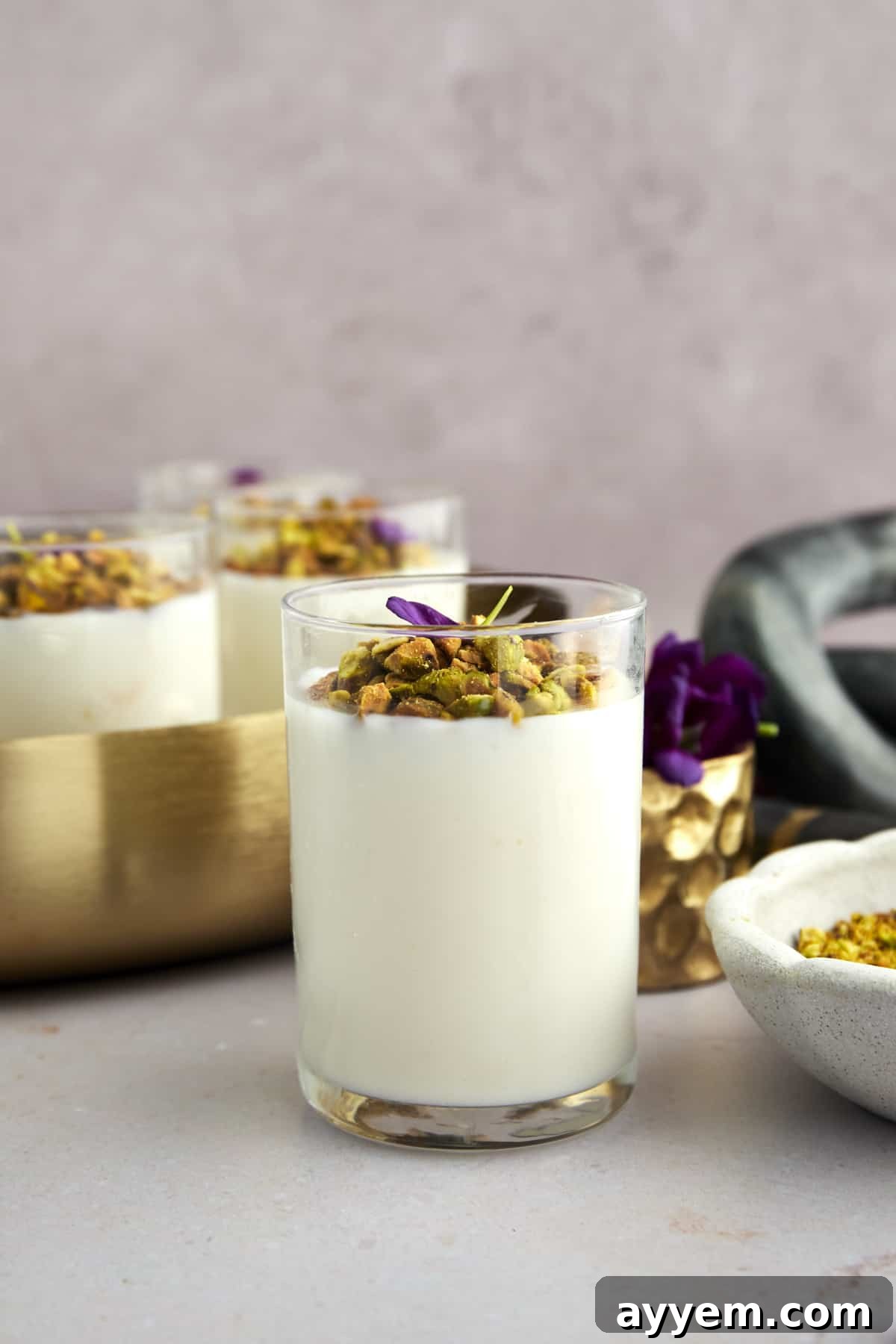
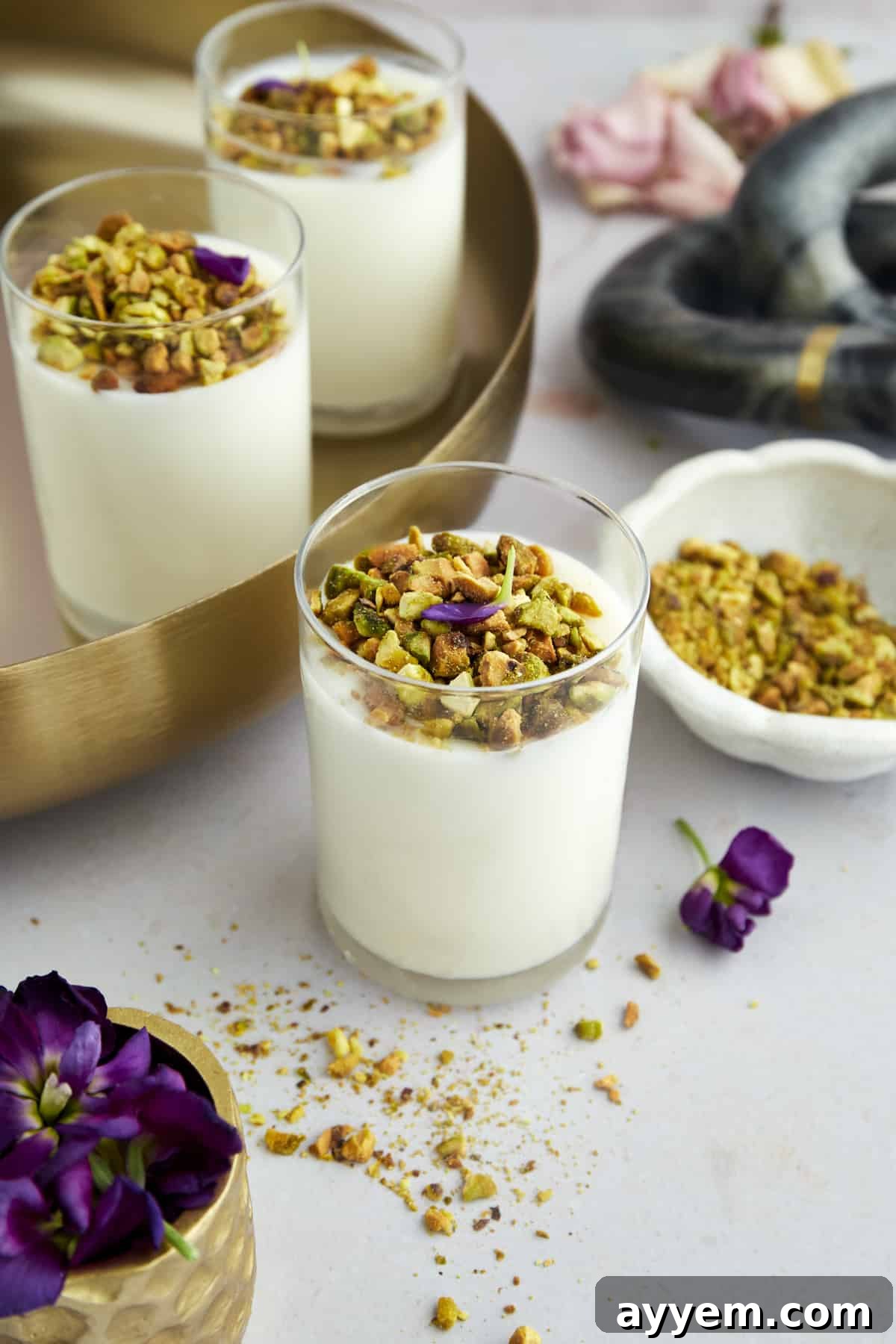
At its heart, Mahalabia is an exercise in culinary simplicity. It typically relies on just four to five fundamental ingredients to achieve its characteristic sweet flavor and exquisitely silky texture. These modest components, when combined with care, transform into an indulgent dessert that feels far more complex than its ingredient list suggests. Traditionally, Mahalabia is presented in elegant individual cups, often adorned with a variety of beautiful garnishes such as finely chopped nuts, a dusting of cinnamon, or delicate edible flowers. This presentation elevates the dessert from a simple pudding to a feast for both the eyes and the palate.
Its significance extends beyond mere taste, deeply intertwining with cultural and religious practices. During Ramadan, Mahalabia is a common fixture at Iftar, the evening meal that breaks the daily fast. Its light, refreshing nature and gentle sweetness make it an ideal treat after a long day of abstinence. However, its irresistible taste ensures it’s enjoyed far beyond this sacred month, making regular appearances at family gatherings, celebrations, and as an everyday delight. Many families have their own cherished recipes, passed down through generations, each with a slight tweak that makes it uniquely theirs.
What Does Mahalabia/Muhallebi Taste Like?
At its very core, Mahalabia offers a flavor profile that is both simple and profoundly satisfying. It’s characterized by a delicate sweetness and a rich creaminess, serving as a versatile canvas that readily absorbs and enhances complementary flavors. In its most classic form, and as featured in this recipe, vanilla takes center stage, imparting a gentle yet distinct aroma and taste that is wonderfully neutral and universally appealing.
Beyond vanilla, the world of Mahalabia flavors is vast and exciting. Many variations incorporate bright citrus notes, often through the infusion of orange blossom water or rose water, which lend an ethereal, floral fragrance that is truly intoxicating. Others prefer a warmer, more aromatic profile, achieved by adding spices like cinnamon or cardamom. These additions introduce a subtle kick and an added layer of complexity that transforms the pudding into a unique sensory experience. Some regional versions even include mastic, a resin with a unique pine-like flavor, or a hint of saffron for a touch of luxury and vibrant color. The beauty of Mahalabia lies in its adaptability, allowing you to tailor its taste to your personal preferences and explore a spectrum of exquisite flavors.
Essential Ingredients for Your Mahalabia
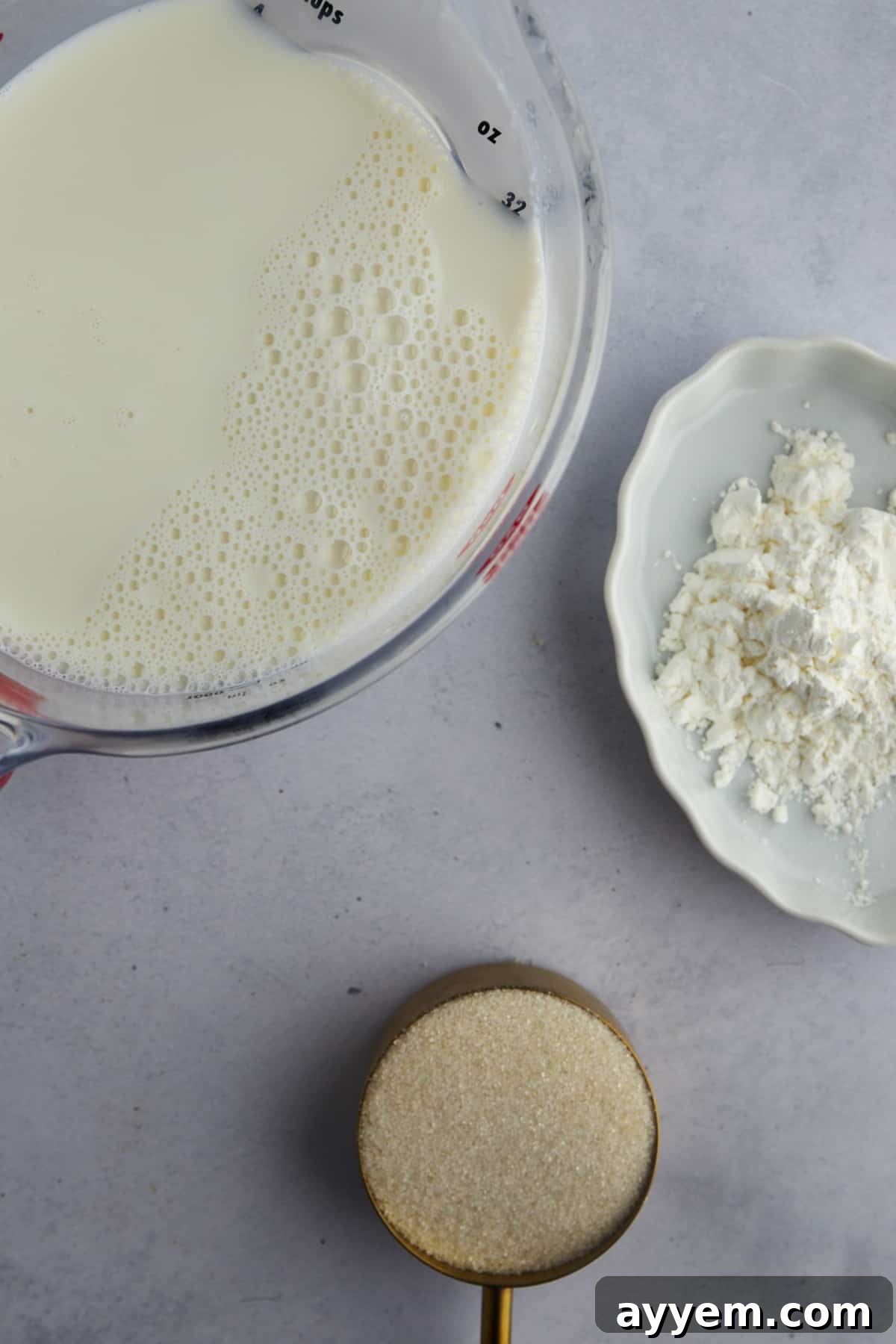
Preparing this exquisite Mahalabia dessert is remarkably straightforward, requiring only a handful of common ingredients to achieve a truly drool-worthy result. The beauty lies in the simplicity and the quality of these components. Here’s a detailed look at what you’ll need to create this indulgent Middle Eastern milk pudding:
- Whole Milk: This is the fundamental building block of Mahalabia, providing the smooth base and contributing significantly to its rich, creamy taste. The fat content in whole milk is crucial for achieving that characteristic velvety texture and deep flavor. We strongly advise against substituting it with reduced-fat or skim milk, as doing so will compromise both the desired consistency and the luxurious taste profile of the final dessert.
- Heavy Whipping Cream: To elevate the richness and add an extra layer of decadence, heavy whipping cream is indispensable. It works in tandem with the whole milk to create an exceptionally creamy and indulgent pudding that melts in your mouth. This ingredient is key to achieving that truly luxurious mouthfeel.
- Granulated Sugar: As a dessert, sweetness is essential. Granulated sugar provides the perfect level of sweetness, transforming the milk base into a delightful treat. You can adjust the amount slightly to suit your preference, but the quantity specified ensures a balanced and satisfying sweetness without being cloyingly sweet.
- Cornstarch: This is arguably the most crucial ingredient for achieving the correct consistency. Cornstarch acts as a thickening agent, giving the Mahalabia its pudding-like texture. Without it, your mixture would remain a thin, milky soup. The precise measurement of cornstarch is vital for that perfect, spoonable consistency – not too runny, not too firm.
- Vanilla Extract and/or Vanilla Bean Paste: Vanilla is often the primary flavoring agent in classic Mahalabia, contributing a delicate yet profound aroma and taste. For an intensely aromatic and visually appealing result, using both high-quality vanilla extract and vanilla bean paste is recommended. The paste provides those beautiful specks of vanilla bean, signaling a premium flavor. However, if you prefer a milder flavor or wish to keep the ingredient list shorter, either one will suffice beautifully. Always opt for pure vanilla for the best results.
Can Muhallebi Be Made Dairy-Free?
While the traditional Mahalabia recipe relies heavily on dairy for its signature richness and creamy texture, it is indeed possible to adapt it for a dairy-free diet. The recipe structure is quite forgiving, allowing for the use of various plant-based milks. However, it’s important to set expectations regarding the final taste and texture.
For the closest approximation to the authentic experience, we highly recommend using full-fat dairy milk. Its natural fat content and specific protein structure contribute uniquely to the pudding’s luxurious mouthfeel and rich flavor. When opting for dairy-free alternatives, full-fat versions of almond milk, oat milk, or coconut milk (from a carton, not canned coconut cream for this recipe, as it can be too heavy) are your best bets. Look for unsweetened varieties to maintain control over the dessert’s overall sweetness. Coconut milk, in particular, can impart a subtle coconut flavor, which some might enjoy but is not traditional. While these alternatives will yield a delicious pudding, they may result in a slightly different consistency and flavor profile compared to the classic dairy version.
Crafting Your Perfect Mahalabia: A Step-by-Step Guide
Prepare yourself for an incredibly simple yet rewarding culinary journey. This classic Middle Eastern dessert is celebrated not only for its delightful taste but also for its remarkable ease of preparation. It comes together in a single pot, requiring minimal effort and just minutes of active cooking time, leaving you free to enjoy its sweet sensation. Follow these steps for a flawless Mahalabia every time:
- Form a Silky Slurry: Begin by combining a portion of the whole milk (specifically, ½ cup) with the cornstarch in a separate measuring cup or small bowl. Whisk these two ingredients thoroughly until they are completely dissolved and no lumps remain. The goal is to create a smooth, slightly thickened slurry. This crucial step prevents the cornstarch from clumping when added to the hot milk, ensuring a perfectly smooth pudding.
- Combine Ingredients in a Pot: In a medium-sized heavy-bottomed pot, combine the remaining whole milk, heavy whipping cream, the cornstarch slurry you just prepared, and the granulated sugar. Stir or whisk gently to ensure all ingredients are well-mixed before applying heat. A heavy-bottomed pot is recommended to prevent scorching.
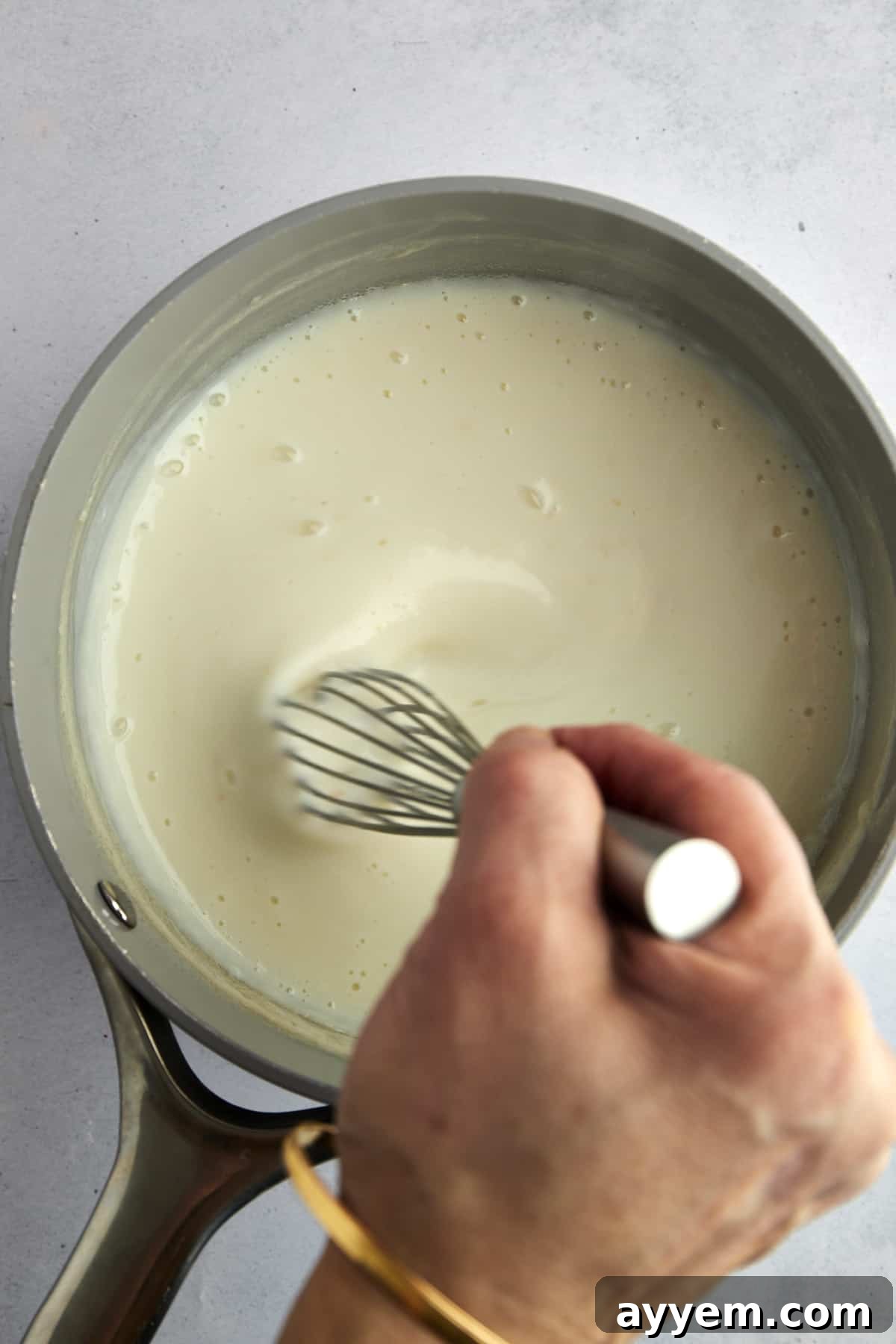
- Bring to a Gentle Boil: Place the pot over medium heat. Continue whisking the mixture gently but consistently to prevent any solids from sticking to the bottom. Gradually increase the heat to medium-high. Bring the mixture to a gentle boil, ensuring it bubbles softly. The continuous whisking is vital during this stage to encourage even thickening and to prevent lumps from forming.
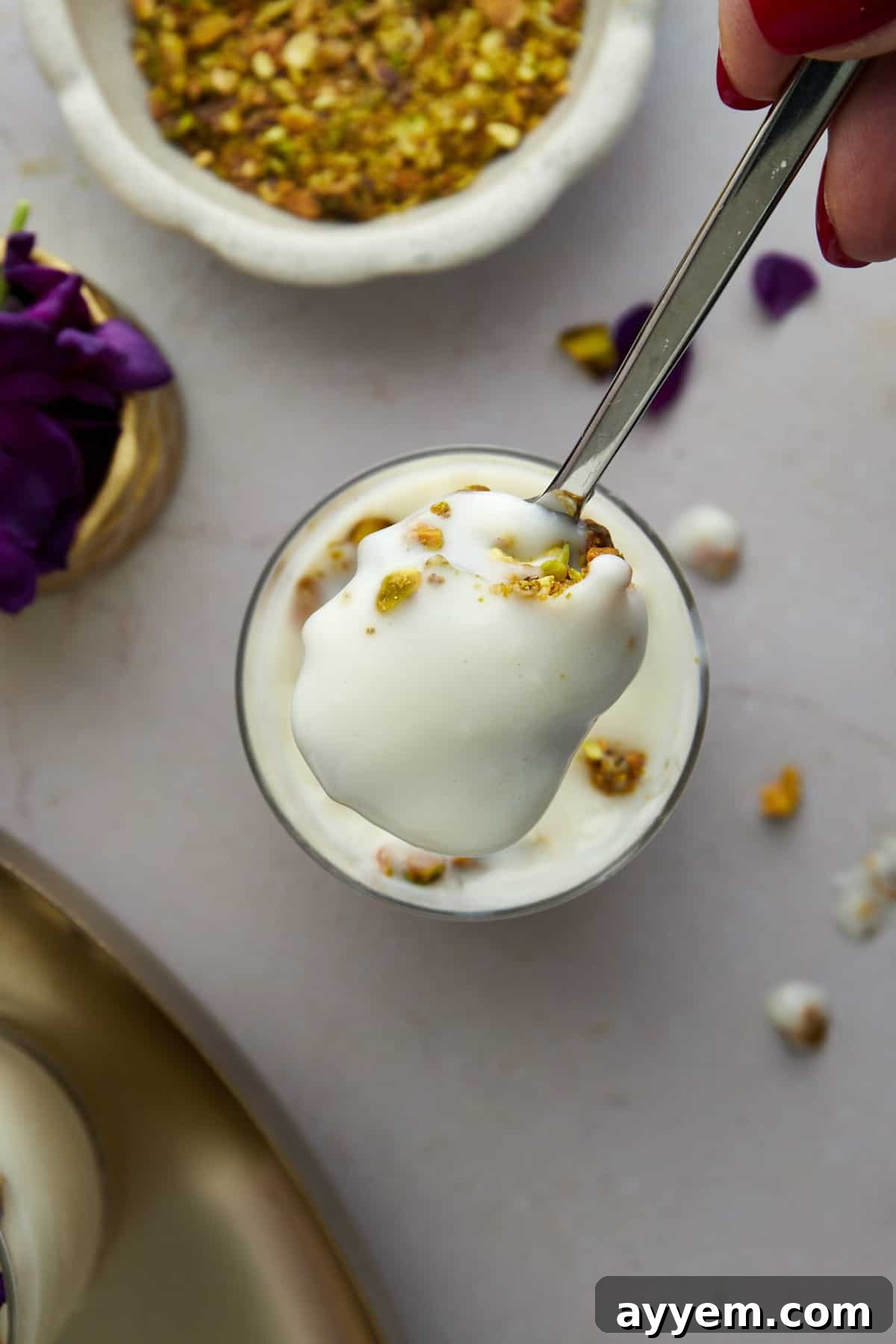
- Thicken and Flavor: As the mixture reaches a boil and heats through, you will notice it gradually beginning to thicken, transforming into a rich, luscious pudding. Continue to whisk for another 1-2 minutes after it starts thickening to ensure it reaches the desired consistency. Once it has thickened to a custard-like texture, immediately remove the pot from the heat. Stir in the vanilla extract and/or vanilla bean paste until fully incorporated. The residual heat will help distribute the vanilla flavor beautifully.
- Chill to Perfection: Carefully divide the warm Mahalabia mixture into individual serving bowls or ramekins. Allow them to cool slightly at room temperature before transferring them to the refrigerator. Chill for at least 1-2 hours, or until thoroughly set and perfectly cold. This chilling process is essential not only for firming up the pudding but also for enhancing its refreshing taste and silky texture.
Elevating Your Mahalabia: Flavorful Customizations
While the vanilla-infused Mahalabia is a classic for a reason, this versatile dessert truly shines when customized with additional flavors. The possibilities are endless, allowing you to create unique variations that tantalize your taste buds and impress your guests. Here are some of our favorite ways to add a twist to your Mahalabia:
- Cardamom: For a warm, aromatic twist, add a pinch of ground cardamom during the cooking process. Its distinctive, spicy-sweet notes are a hallmark of Middle Eastern desserts and pair wonderfully with the creamy base.
- Orange Blossom Water: A few drops of orange blossom water, added along with the vanilla at the end of cooking, will infuse your Mahalabia with a delicate, intoxicating floral aroma. It’s a classic Middle Eastern flavor that evokes freshness and elegance.
- Rose Water: Similar to orange blossom water, rose water offers a beautiful, slightly sweet floral essence. Use sparingly, as a little goes a long way to impart a romantic and exotic touch to your pudding.
- Cinnamon: A dash of ground cinnamon can be stirred into the mixture for a comforting, spicy warmth, or simply sprinkled on top as a garnish. It adds a lovely depth of flavor, especially when paired with nuts.
- Almond Extract: For a nutty, slightly bitter-sweet flavor, a small amount of almond extract can be added. It complements the creamy base beautifully and is a popular choice in many dessert recipes.
- Coconut Extract: If you enjoy tropical notes, a touch of coconut extract can transform your Mahalabia into a more exotic treat, especially delicious when garnished with toasted coconut flakes.
- Mastic (Mastiha): For a truly authentic and unique Middle Eastern flavor, incorporate a tiny amount of ground mastic. This resin provides a distinct pine-like, slightly sweet aroma and a subtle chewiness, traditional in some Muhallebi variations.
- Saffron: For a luxurious and visually stunning Mahalabia, infuse a few saffron threads in a tablespoon of warm milk before adding it to the pudding during the last few minutes of cooking. Saffron imparts a beautiful golden hue and an elegant, subtly earthy flavor.
Serving Mahalabia: Traditions and Modern Twists
The traditional way to enjoy Mahalabia is chilled, which makes it an ideal dessert for planning ahead. Its ability to be prepared hours, or even a day, in advance makes it a fantastic, fuss-free option for dinner parties, large family gatherings, and special occasions. Indeed, for momentous events like Eid and Ramadan, serving Mahalabia is almost an essential custom, symbolizing comfort and celebration.
Most commonly, Mahalabia is portioned into individual serving cups, allowing each guest to enjoy their own beautifully presented dessert. However, for a more communal feel, it can also be served in a large, elegant serving bowl from which guests can scoop their desired amount. Part of the significant appeal of this dessert lies in its aesthetic presentation, which is often enhanced by a variety of thoughtful toppings. While individual preferences vary greatly, there are several popular garnishing options that add both visual charm and complementary textures and flavors:
- Chopped Nuts: Finely chopped pistachios, almonds, or walnuts are classic choices, providing a delightful crunch and nutty flavor that contrasts with the creamy pudding.
- A Dash of Cinnamon: A light dusting of ground cinnamon adds a warm, aromatic finish and a touch of traditional spice.
- Coconut Flakes: Toasted or untoasted coconut flakes offer a chewy texture and a subtle tropical sweetness.
- Dried or Fresh Fruit: Raisins, finely chopped dried apricots, or fresh berries like raspberries and blueberries can add bursts of flavor, color, and a refreshing tartness.
- Rose Petals: For an exquisite and romantic touch, a few fresh, food-grade rose petals can elevate the visual appeal and hint at the subtle floral flavors sometimes infused in the pudding.
- Syrup or Honey Drizzle: A light drizzle of simple syrup, honey, or even fruit compote can add another layer of sweetness and moisture.
While there’s truly never a bad time to enjoy Mahalabia, it is traditionally brought out towards the end of a meal or party, often accompanied by strong Middle Eastern coffee or mint tea, providing a perfect conclusion to the culinary experience.
Preparing Ahead: Can I Make This Recipe Ahead of Time?
Absolutely! One of the many advantages of Mahalabia is its suitability for make-ahead preparation, making it a stress-free option for entertaining or simply having a delightful treat ready when cravings strike. We highly recommend preparing Muhallebi at least 1-2 hours in advance. This allows ample time for the pudding to properly chill and set, developing its ideal firm yet creamy consistency and enhancing its refreshing qualities. For best results, allow it to cool completely at room temperature before transferring to the refrigerator.
Once chilled, Mahalabia can be stored in an airtight container in the refrigerator for up to 1-2 days. If serving in individual portions, covering each cup with plastic wrap will help prevent a skin from forming on the surface and absorb any unwanted odors from the fridge. Beyond two days, the texture might begin to change slightly, though it will still be edible. It’s always best enjoyed fresh and well-chilled.
We do not recommend freezing this dessert. The high dairy content in Mahalabia means it does not fare well in the freezer. Upon thawing, the texture can become grainy or watery as the dairy components separate, significantly diminishing its smooth and creamy appeal. For optimal enjoyment, always serve it fresh from the refrigerator.
Common Questions about Mahalabia
Can I use plant-based milk for Mahalabia?
Yes, you certainly can! Almond, soy, or oat milk can be excellent substitutes. For the best creamy texture, opt for full-fat, unsweetened versions. Be aware that the flavor and texture might be slightly different from the traditional dairy version, but it will still yield a delicious pudding.
How do I achieve a smooth texture?
To ensure your Mahalabia is perfectly smooth and free of lumps, continuous stirring while cooking is key. Whisk the mixture constantly from the moment it hits the heat until it thickens. Additionally, making a proper cornstarch slurry beforehand, ensuring no lumps remain, is crucial. If you find any small lumps, pressing the cooked mixture through a fine-mesh sieve before chilling can help achieve that ultra-silky finish.
Can I make Mahalabia ahead of time?
Definitely! Mahalabia is an ideal make-ahead dessert. Prepare it a day in advance, transfer it to serving bowls, and refrigerate. It sets beautifully overnight, allowing the flavors to meld and deepen, making it even more delicious and convenient for entertaining.
Is Mahalabia served warm or cold?
Mahalabia is traditionally served chilled. It’s a wonderfully refreshing dessert, especially delightful in warmer climates or as a soothing treat after a meal. The chilling process allows the pudding to set properly and enhances its silky texture and delicate flavors.
Can I adjust the sweetness level?
Yes, you can easily adjust the sweetness to your liking. The recipe provides a balanced sweetness, but if you prefer it less sweet, reduce the sugar by 1-2 tablespoons. For a sweeter pudding, add an extra tablespoon or two. Taste the mixture before it thickens, keeping in mind that flavors intensify slightly as it cools.
What are the best garnishes for Mahalabia?
The best garnishes often involve a combination of textures and flavors. Popular choices include finely chopped pistachios or walnuts for crunch, a dusting of cinnamon for aroma, fresh berries for a touch of tartness, or a drizzle of rose or orange blossom water for an extra floral note. Shredded coconut is also a delightful addition.
Explore More Middle Eastern Dessert Recipes
Whether you’re yearning to revisit nostalgic Middle Eastern flavors from your childhood or embarking on an exciting journey to explore new culinary traditions, don’t miss out on more of our cherished dessert recipes. Each dish is a delightful exploration of tastes and traditions, waiting to unfold its magic in your kitchen!
- Easy Baklava Recipe
- Creme Caramel
- Classic Qatayef with Nuts
- Coconut Rice Pudding (Roz Bil Laban)
Mahalabia Recipe (Middle Eastern Milk Pudding)
Ingredients
- 3 1/2 cups whole milk divided
- 5 Tablespoons cornstarch
- 1/2 cup heavy whipping cream
- 1/2 cup granulated sugar
- 2 teaspoons vanilla extract and/or vanilla bean paste
Instructions
- In a measuring cup, whisk ½ cup milk and the cornstarch until smooth.
- In a pot over medium heat, add the remaining milk, heavy cream, cornstarch slurry, and sugar, mixing to combine.
- Increase the heat to medium-high, bringing the mixture to a boil and whisking continually.
- Once the pudding thickens, remove it from the heat, and stir in the vanilla.
- Transfer the Mahalabia to individual bowls, and store in the fridge for 1-2 hours to set.
- Store in the refrigerator for 1-2 days.
Nutrition
Serving: 1 serving | Calories: 246kcal | Carbohydrates: 30g | Protein: 5g | Fat: 12g | Saturated Fat: 7g | Polyunsaturated Fat: 0.5g | Monounsaturated Fat: 3g | Cholesterol: 39mg | Sodium: 60mg | Potassium: 235mg | Fiber: 0.1g | Sugar: 24g | Vitamin A: 522IU | Vitamin C: 0.1mg | Calcium: 189mg | Iron: 0.1mg
Nutrition information is automatically calculated, so should only be used as an approximation.