
How to Cut a Cantaloupe: Your Ultimate Guide to Perfect Slices, Wedges, and Cubes
Discover the secrets to effortlessly transforming a whole cantaloupe into perfectly shaped slices, convenient wedges, or versatile cubes. This comprehensive guide will equip you with all the knowledge you need, from selecting the ripest, sweetest melon at the grocery store to expert cutting techniques and smart storage solutions for maximum freshness. Beyond the basics, we’ll also inspire you with a variety of delicious and creative ways to incorporate this incredibly refreshing and nutritious fruit into your daily meals and snacks.
How to Choose a Perfectly Ripe Cantaloupe
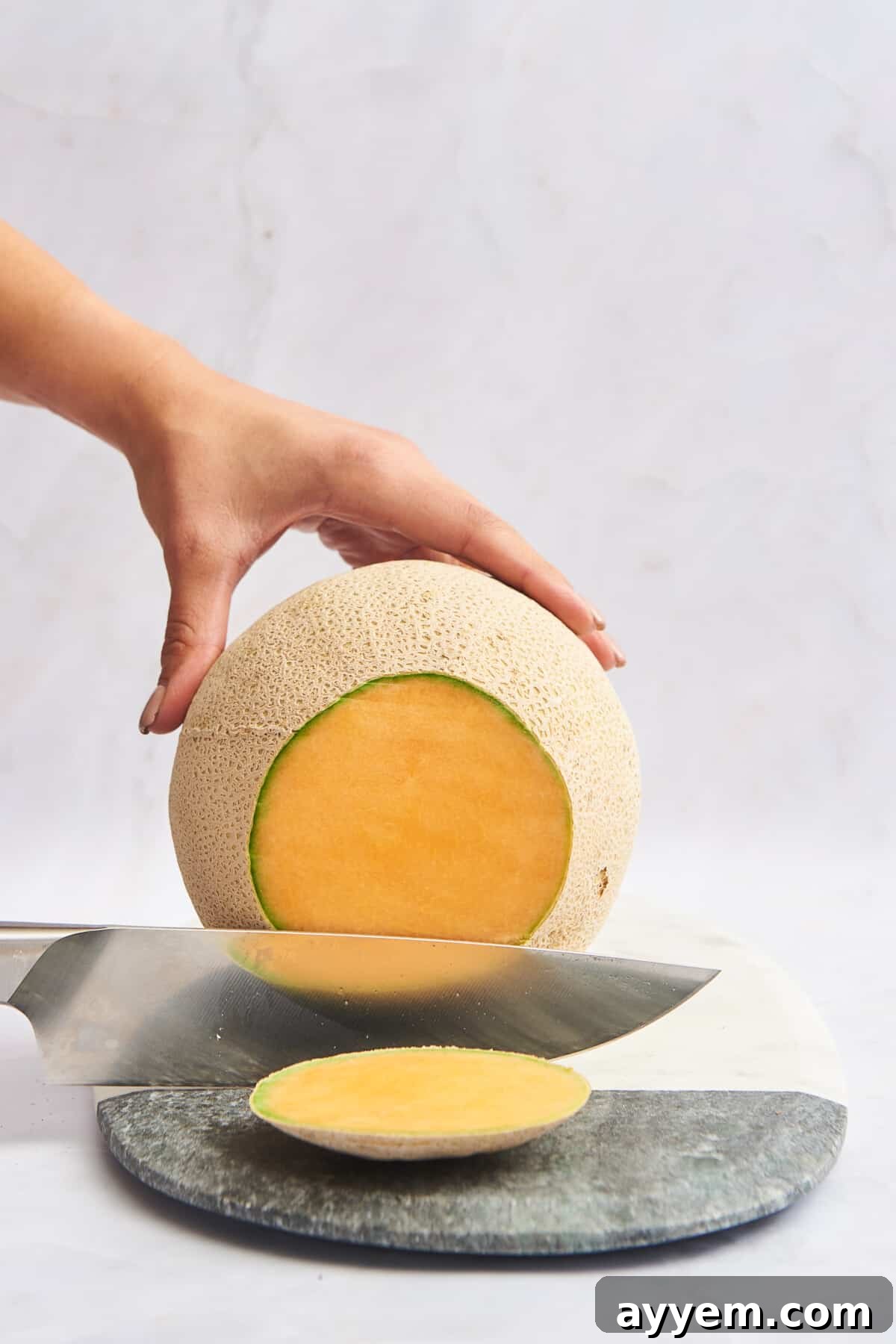
Selecting a ripe cantaloupe is the first and most crucial step to enjoying its full sweet flavor. A perfectly ripe cantaloupe offers a delightful sensory experience, distinguishable by its appearance, aroma, and feel. Here’s how to ensure you pick the best one every time:
Visual Cues for Ripeness
- Color: Look for a cantaloupe with a uniform, creamy beige or golden-yellow color under its netting. Avoid melons with any green hues, as this usually indicates it’s underripe and won’t be as sweet.
- Netting (Reticulation): The melon’s distinctive web-like pattern, or “netting,” should be pronounced, raised, and firm. A ripe cantaloupe will have a well-defined and coarse netting.
- Stem End: The stem end, where the melon was attached to the vine, should be smooth and slightly concave, indicating it separated naturally from the vine when fully ripe. If there’s still a piece of stem attached, it was likely picked too early.
- Blossom End: The opposite end (blossom end) should be slightly soft when gently pressed, but not mushy.
Aromatic and Tactile Indicators
- Sweet, Musky Aroma: A ripe cantaloupe will emit a distinctively sweet, slightly musky fragrance, especially at the blossom end. If there’s no scent, it’s likely not ripe enough. If the smell is overly strong or fermented, it might be overripe.
- Weight for its Size: Lift the cantaloupe. It should feel heavy for its size, which signifies a high water content and juicy flesh.
- Slight Give: Gently press the entire melon. A ripe cantaloupe will have a slight, uniform give when squeezed, rather than being rock-hard or overly soft in spots.
If your chosen cantaloupe still feels rock hard and lacks a sweet aroma, it’s likely underripe. Don’t worry! You can usually allow it to sit on your kitchen counter for a day or two at room temperature. Cantaloupes are climacteric fruits, meaning they continue to ripen after being picked, becoming sweeter and softer with time. Once it reaches the desired ripeness, it’s best to refrigerate it and consume it within a few days to enjoy its peak flavor and texture.
Essential Preparation Before Cutting Cantaloupe
Before you even think about slicing into your beautifully ripe cantaloupe, a quick but crucial step is to prepare it for cutting. Melons grow on the ground and can harbor bacteria on their rind. To prevent transferring any unwanted germs to the edible flesh, always wash your cantaloupe thoroughly, even if you plan to discard the skin.
- Washing: Rinse the entire melon under cool, running water.
- Scrubbing: Use a clean produce brush to gently scrub the rind, especially focusing on the netted surface where dirt and bacteria can hide.
- Drying: Pat the cantaloupe completely dry with a clean paper towel. A dry surface not only helps prevent bacteria transfer but also makes the melon easier and safer to handle, reducing the risk of your knife slipping.
How to Cut a Cantaloupe: The Foundational Steps (3 Ways)
Regardless of whether you envision delightful slices for breakfast, practical wedges for a snack, or perfectly uniform cubes for a fruit salad, the initial preparation and core cutting process remain the same. A sharp chef’s knife and a sturdy cutting board are your best friends here, ensuring safety and efficiency.
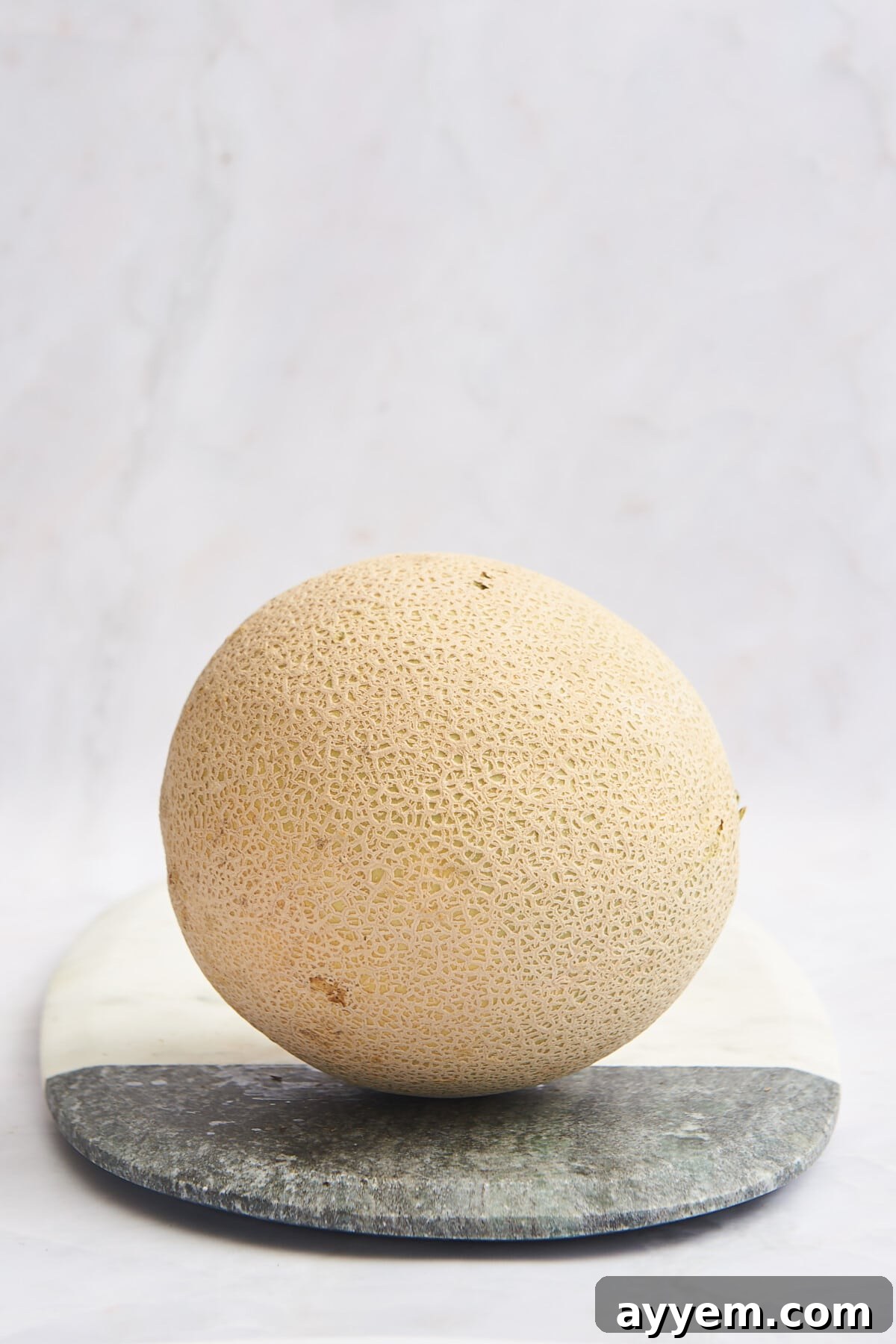
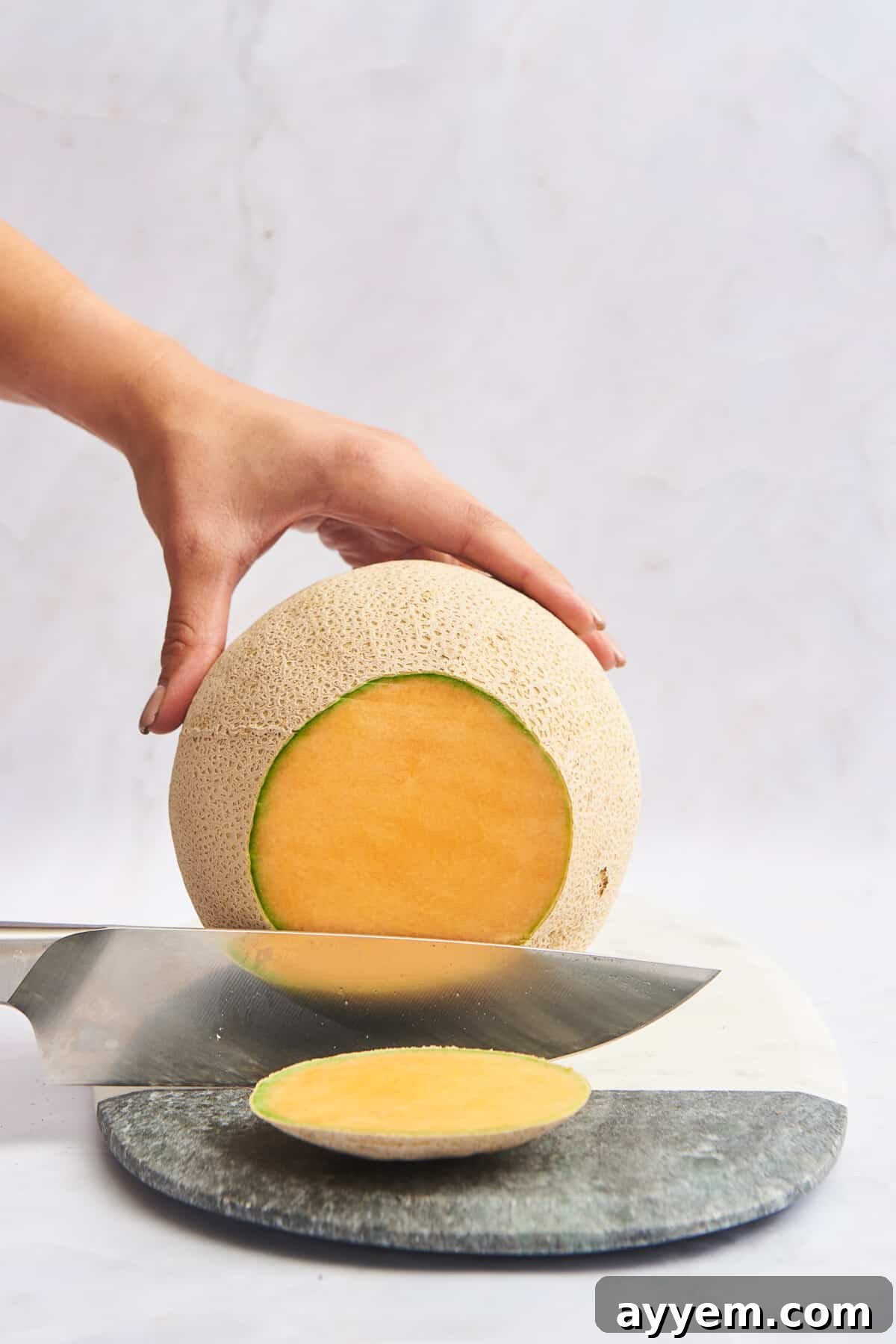
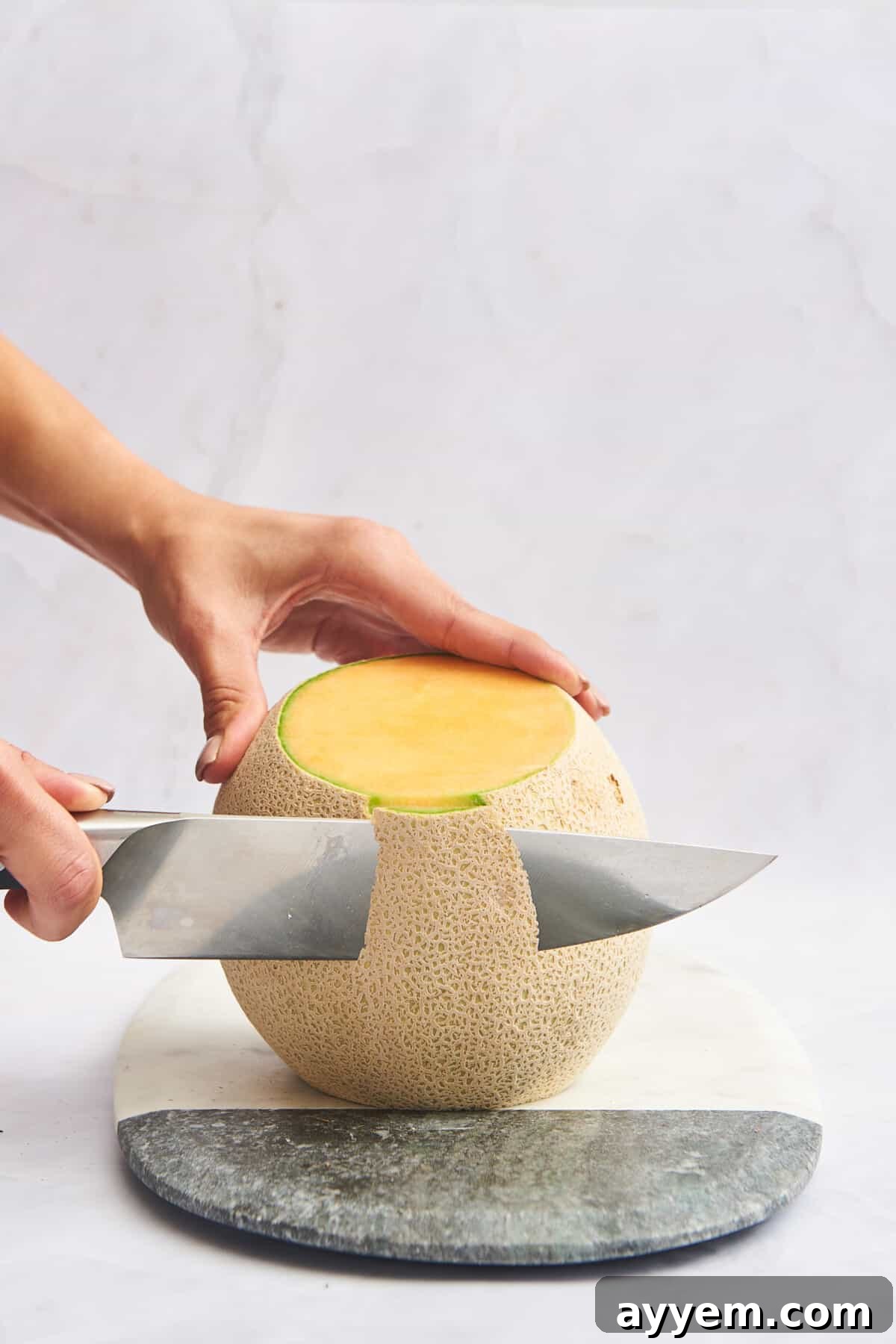
- Trim Both Ends: Carefully use a sharp, large chef’s knife to slice off both the stem end and the blossom end of the cantaloupe. Aim to remove about ¼ to ½ inch from each end, creating two flat surfaces. This step is crucial as it provides a stable base, preventing the melon from rolling during the peeling process and significantly enhancing safety.
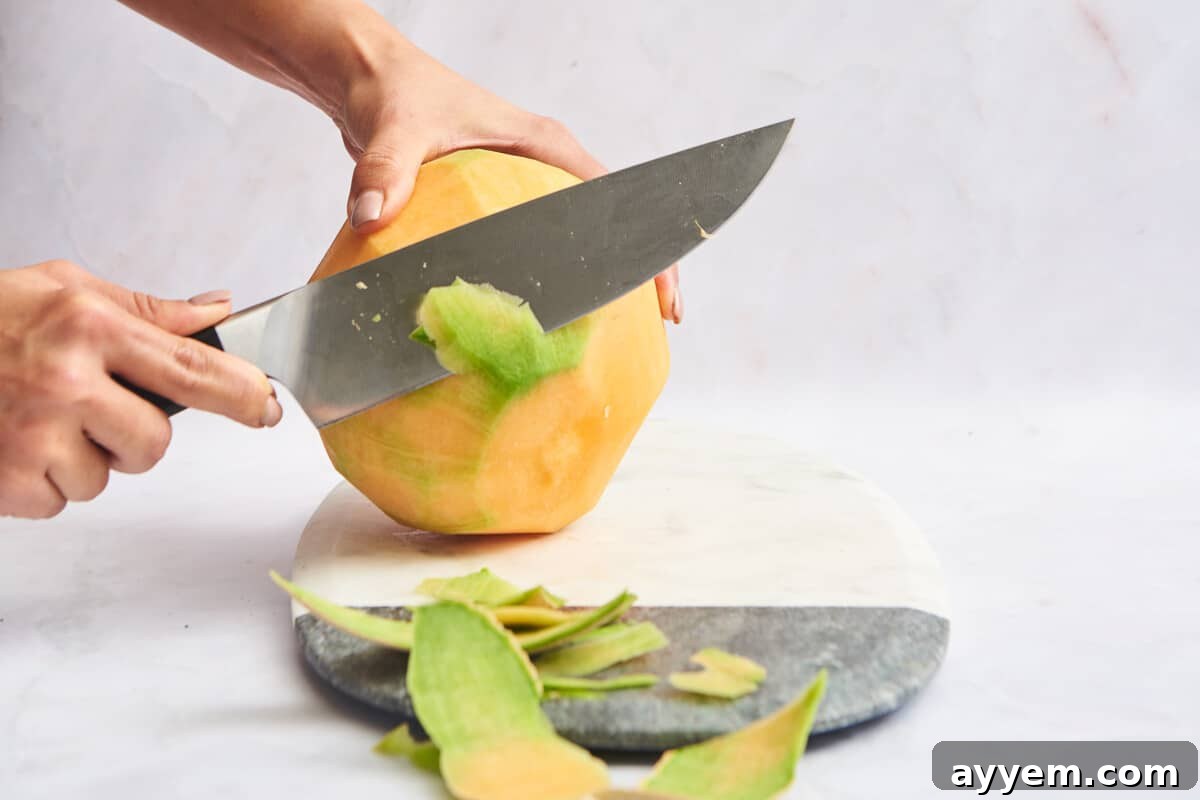
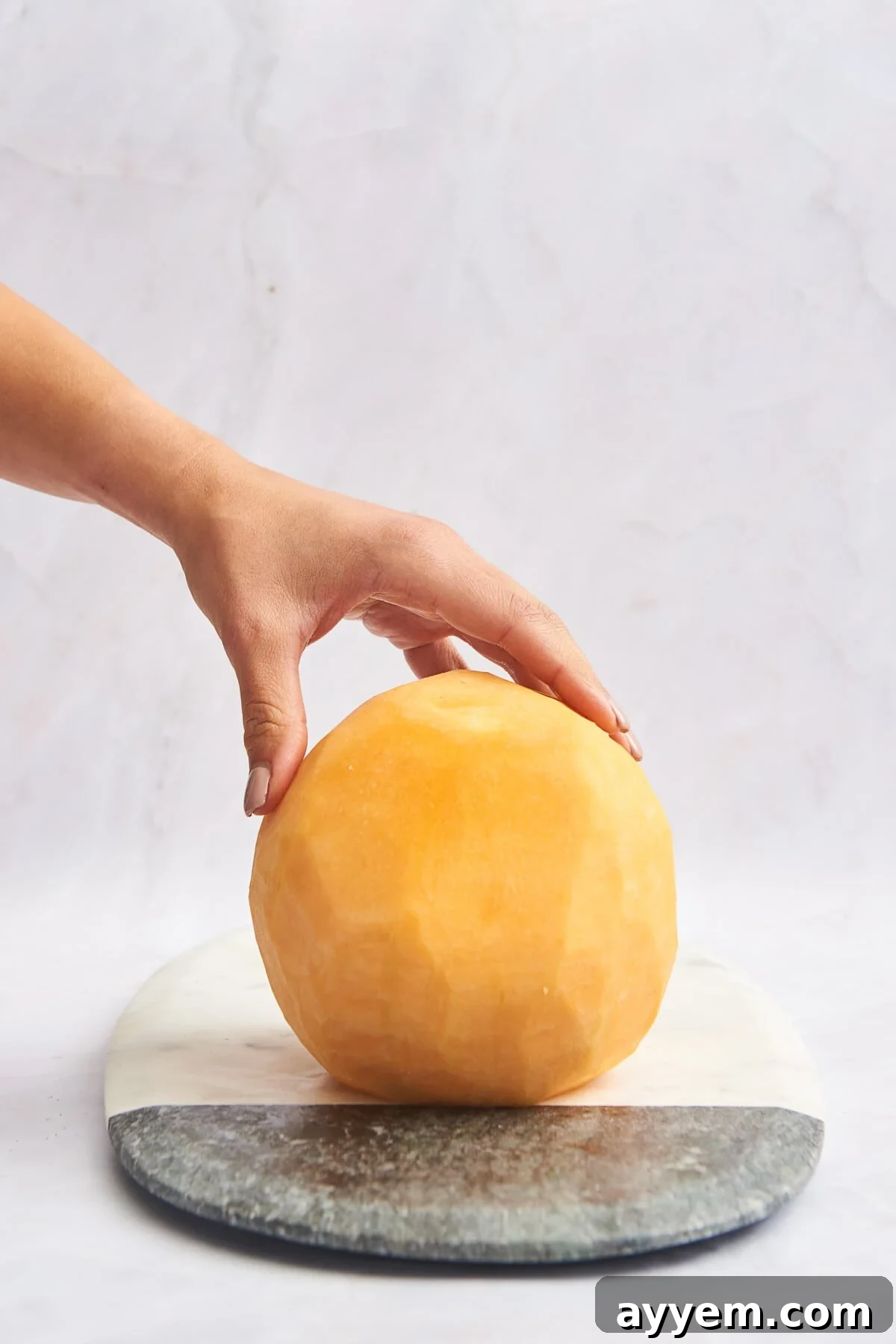
- Remove the Skin (Peel): Stand the fruit upright on one of its newly flattened ends. Position your knife near the top, just beneath the rind, and carefully run it downwards, following the natural curve of the melon. Work your way around the entire cantaloupe, removing the skin in strips. Be mindful not to cut away too much of the vibrant orange flesh, but ensure all the tough, green-white rind is removed. If you miss a spot, you can always go back and trim it off.
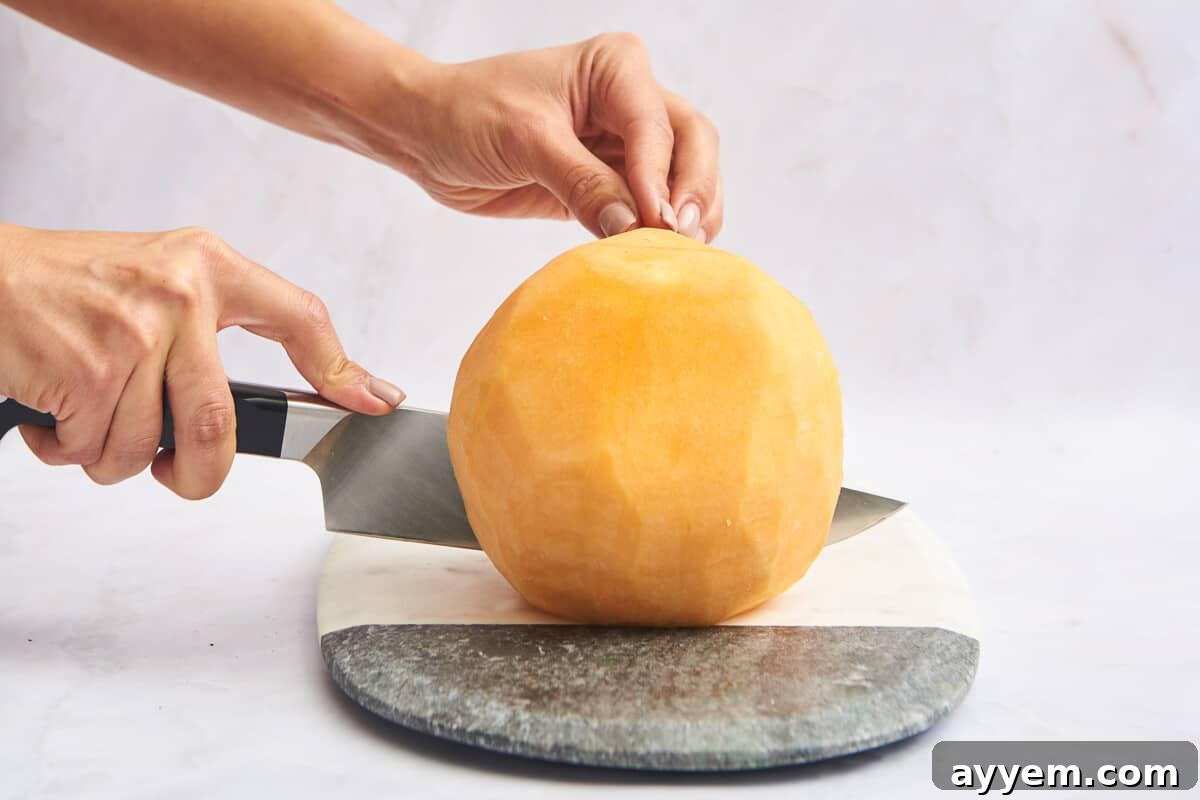
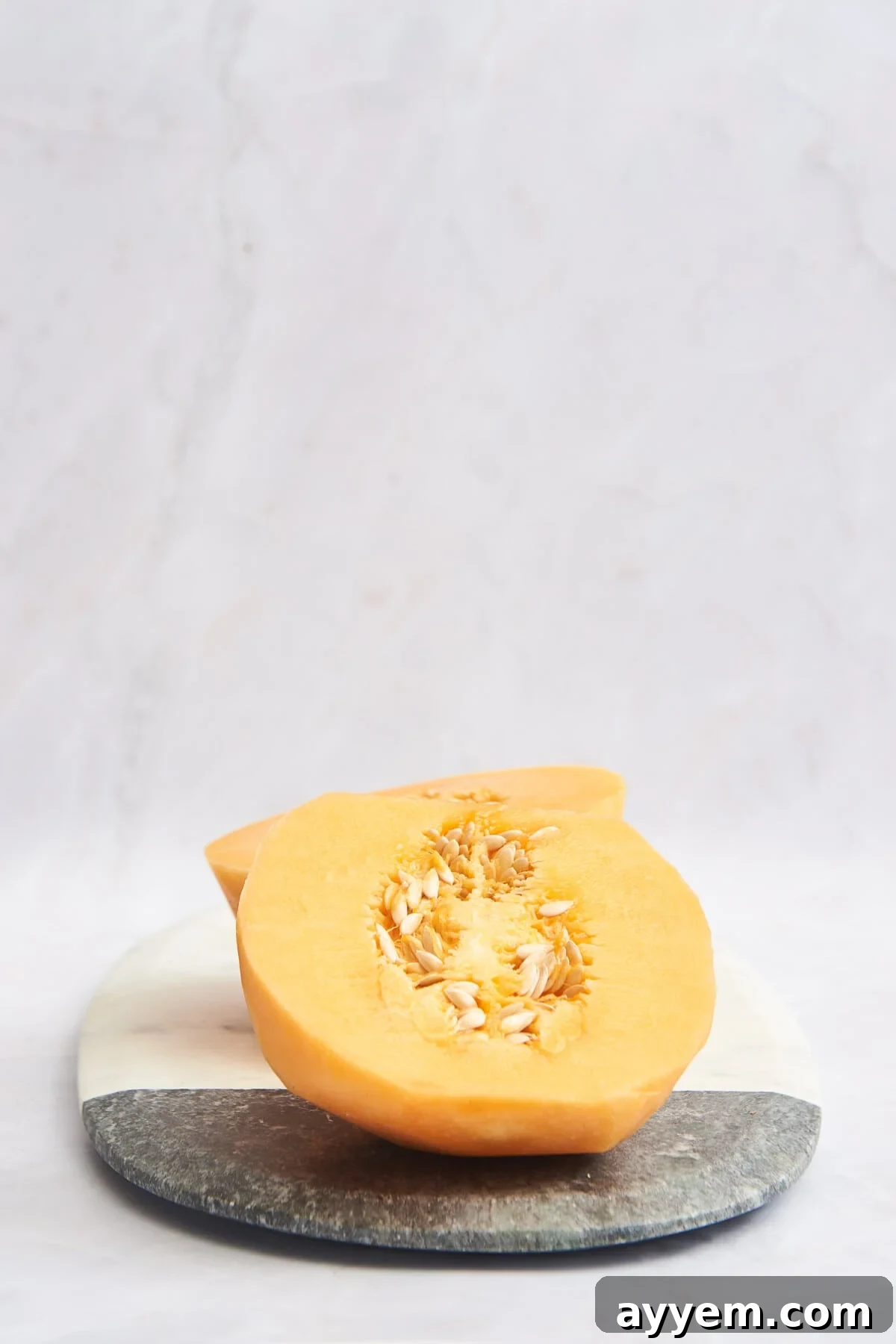
- Slice in Half Lengthwise: Once peeled, lay the cantaloupe on its side and slice it cleanly in half lengthwise. This will expose the central cavity filled with seeds and fibrous membrane.
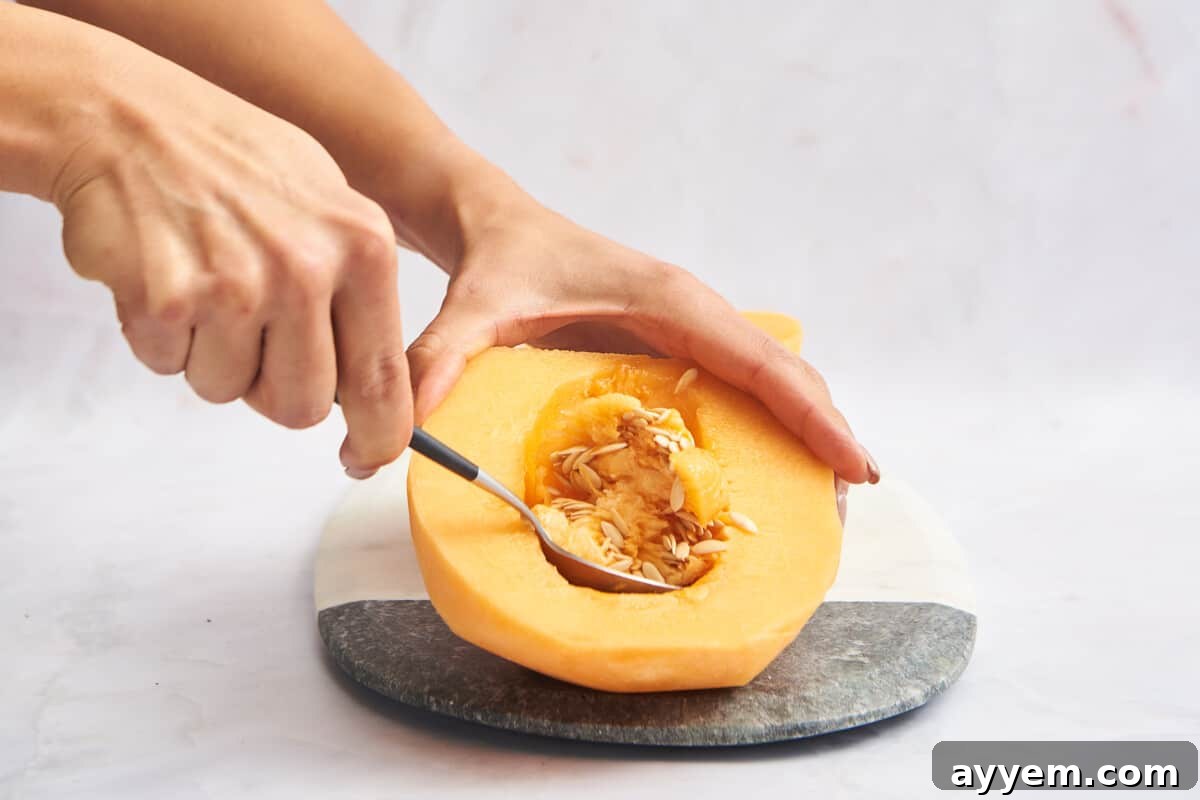
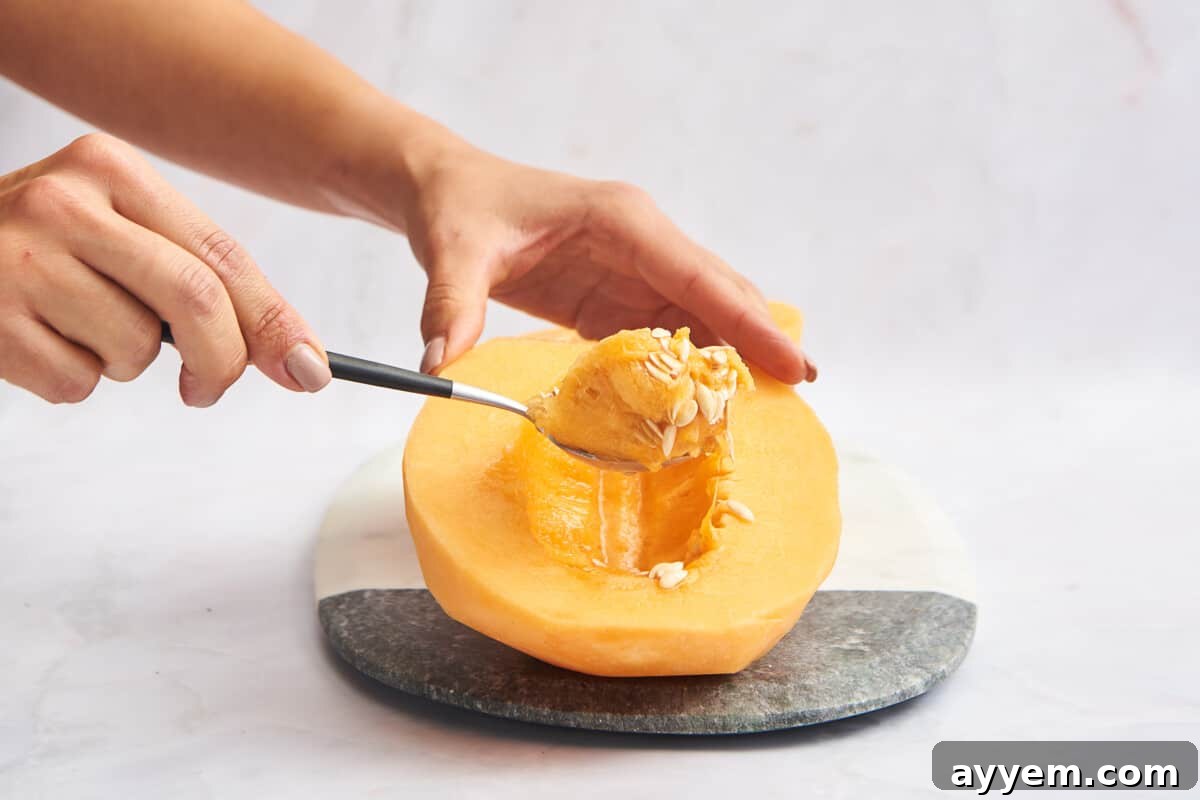
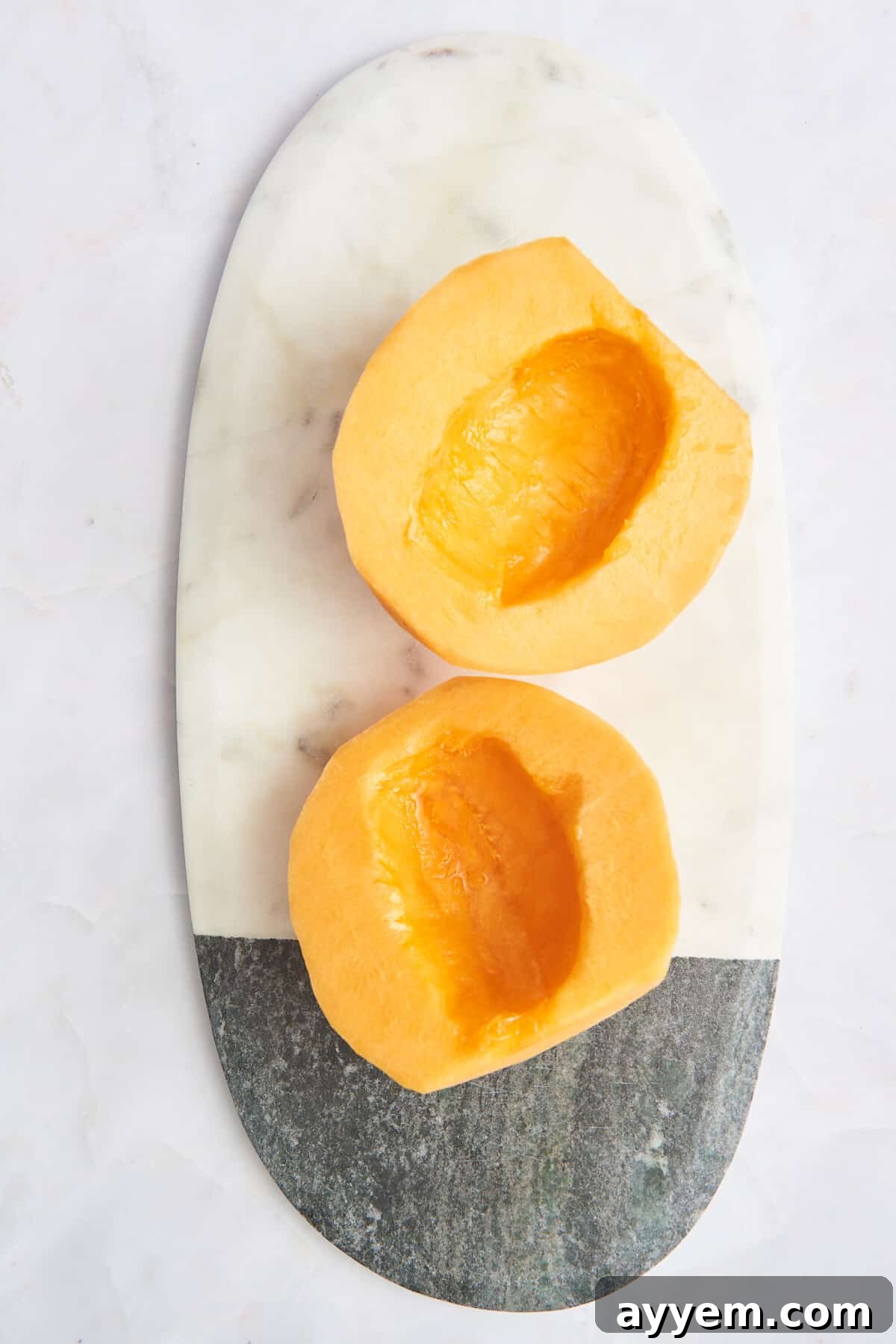
- Scoop Out Seeds and Membrane: Using a sturdy spoon, carefully scoop out the seeds and the stringy, whitish membrane from the center of each cantaloupe half. Discard these. Be gentle here, ensuring you only remove the seeds and membrane without digging into the delicious fruit flesh. A clean cavity will ensure a better eating experience.
Now that your cantaloupe is peeled and de-seeded, you’re ready to proceed with your preferred cutting shape!
Cutting Styles: Slices, Wedges, and Cubes
With your cantaloupe prepped, let’s explore the three most popular and practical ways to cut it, each suitable for different culinary applications.
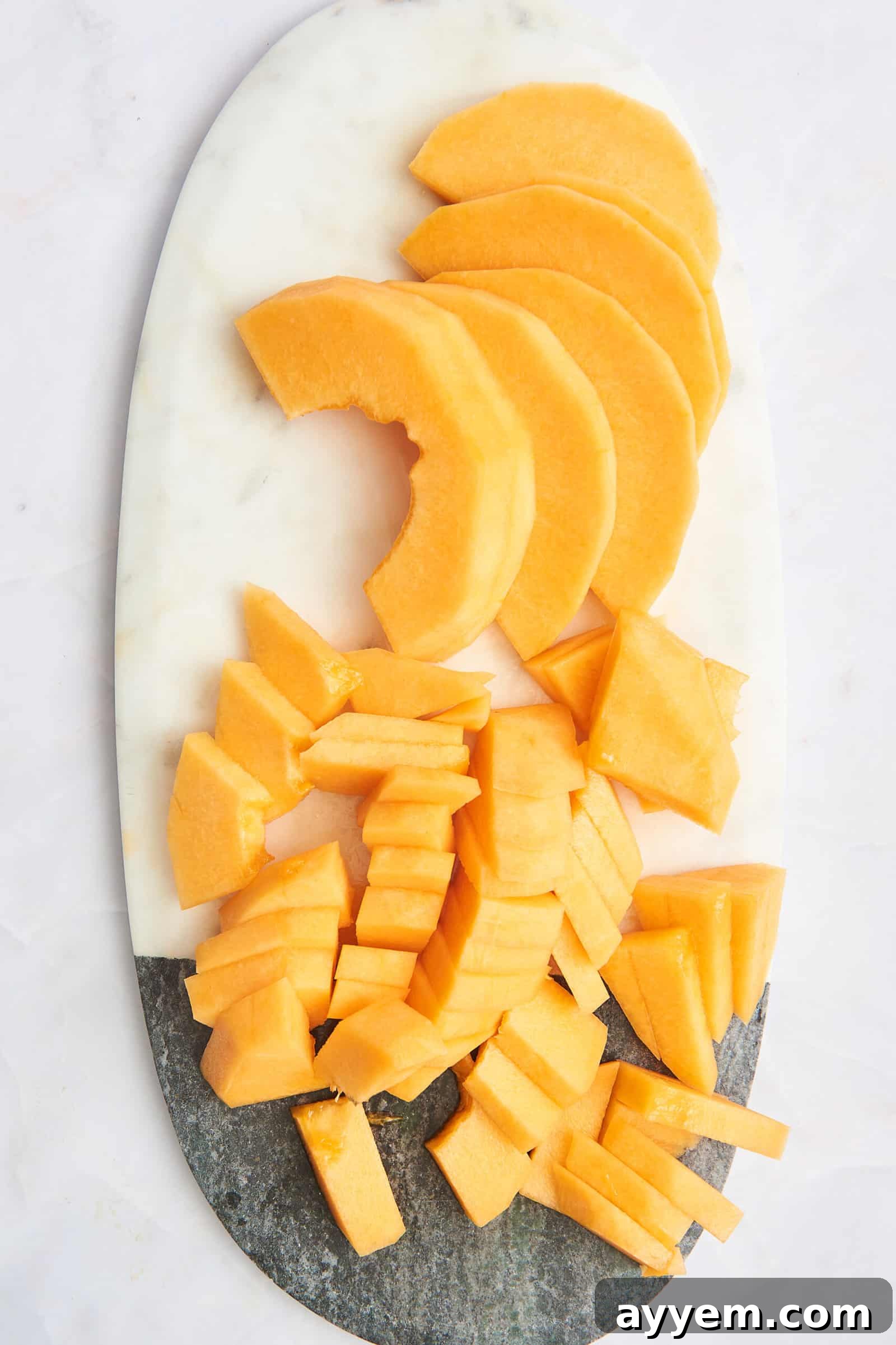
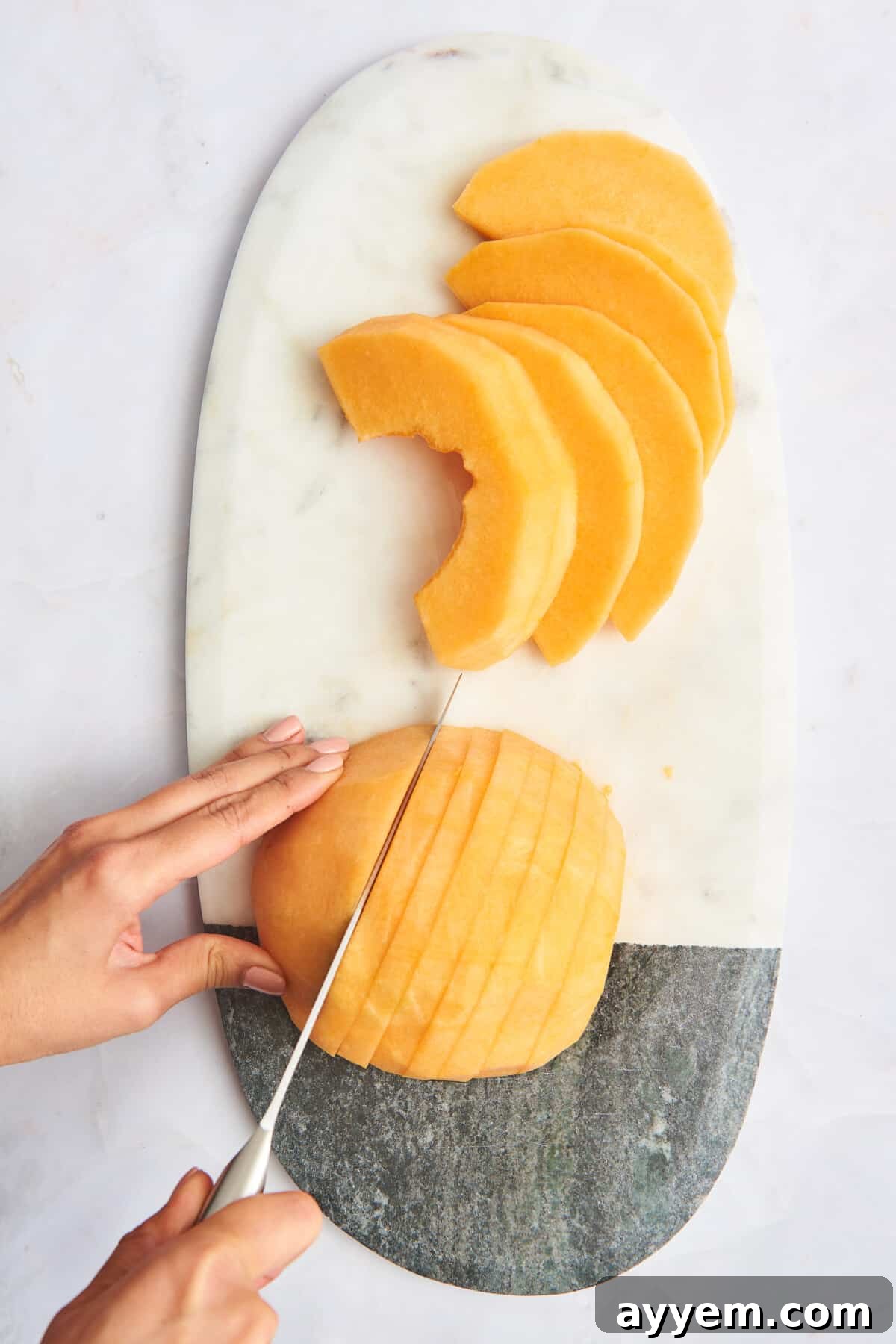
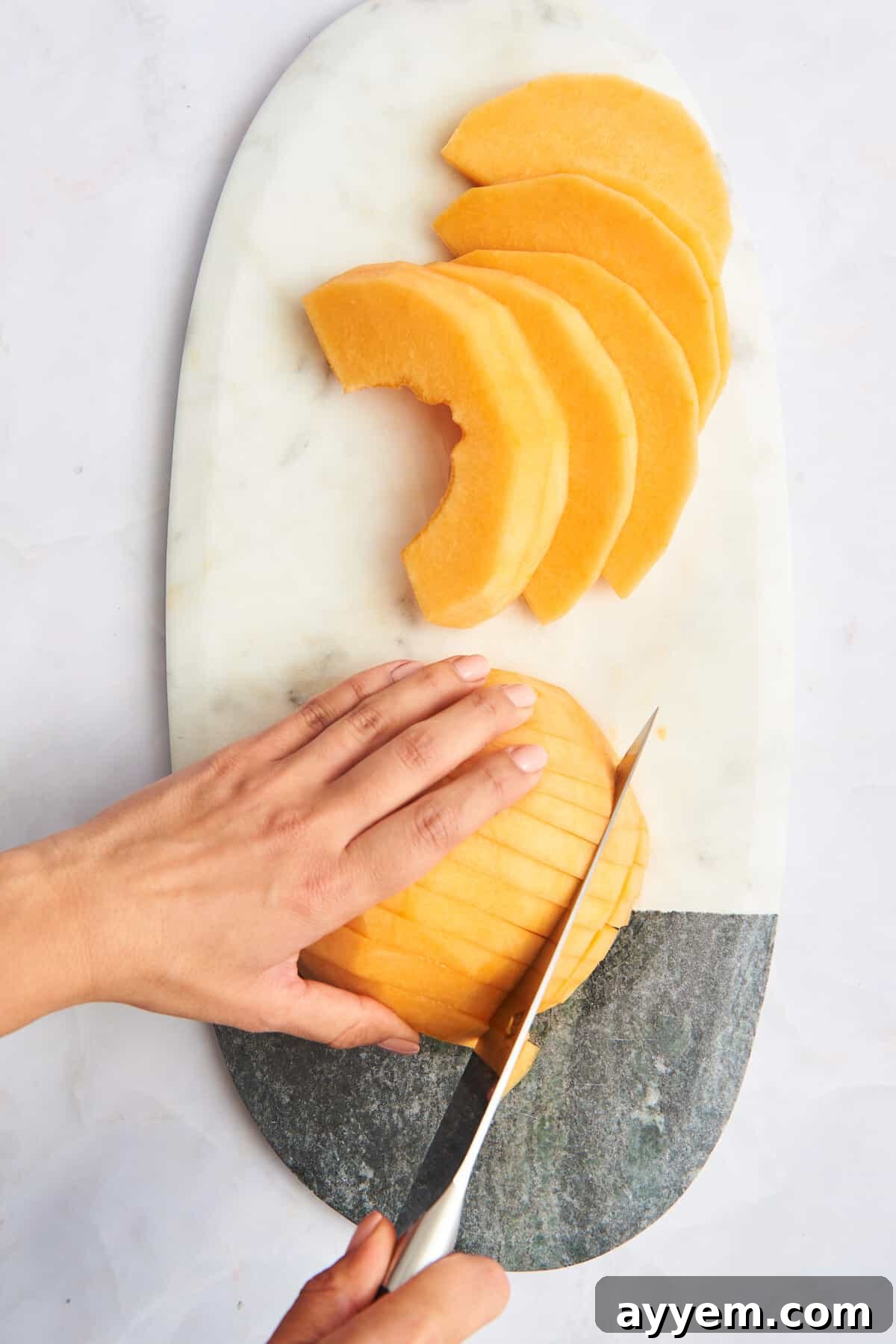
- Slices (Half Rings): To create elegant half-moon slices, place one cantaloupe half, hollow side down, on your cutting board. Slice widthwise across the melon at your desired thickness (typically ½ to 1 inch). These beautiful, arching slices are perfect for breakfast plates, garnishes, or simply enjoying on their own.
- Wedges: For easy-to-handle wedges, place a cantaloupe half, hollow side down, on the cutting board. First, slice this half in half again lengthwise, creating two quarter-melon pieces. Then, take one quarter, position your knife at approximately a 45-degree angle, and cut it into two smaller wedges. Repeat with the other quarter. Continue this process until you have a total of eight evenly sized wedges from the original half melon (16 from a whole cantaloupe). Wedges are ideal for snacking, fruit platters, or for smaller hands.
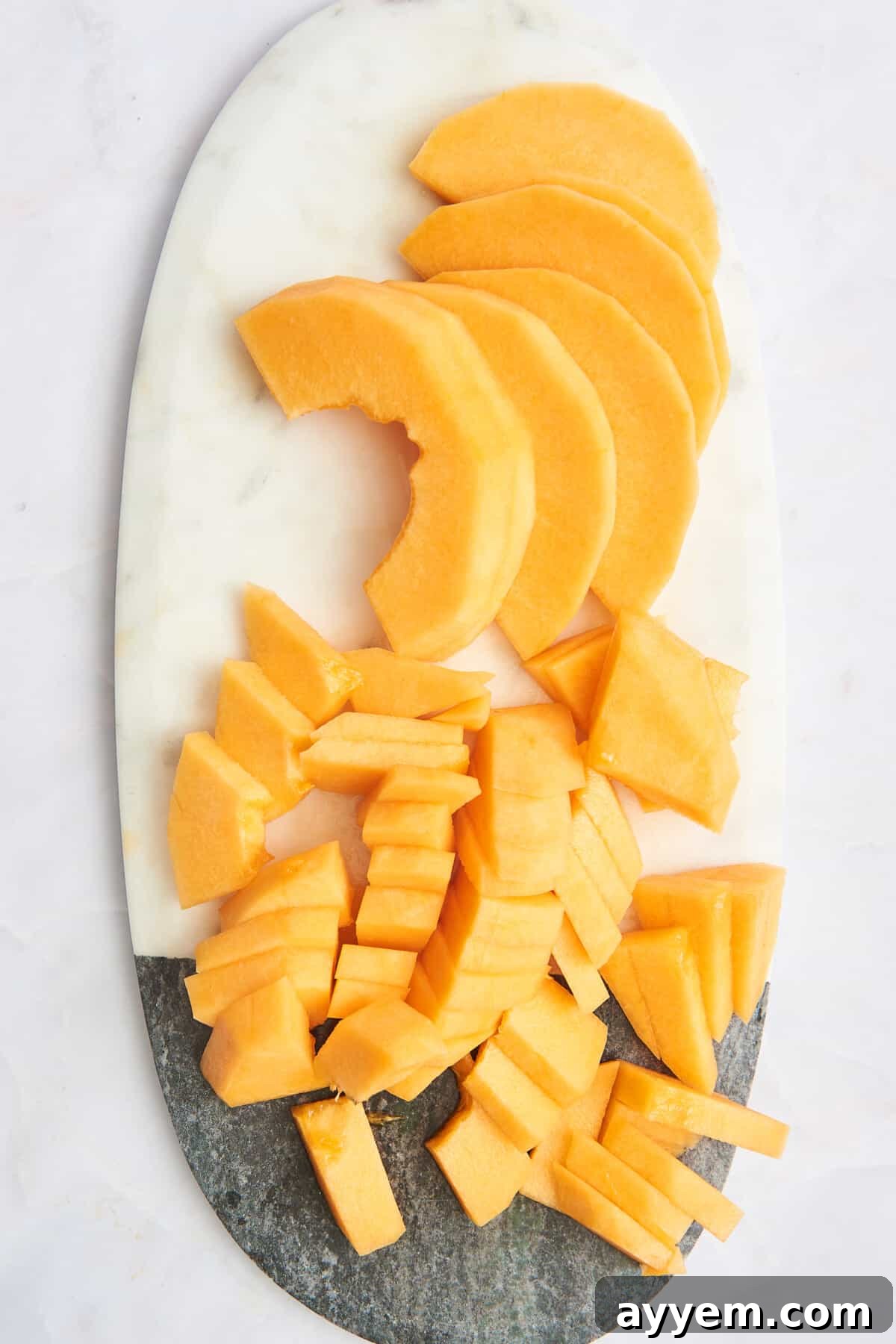
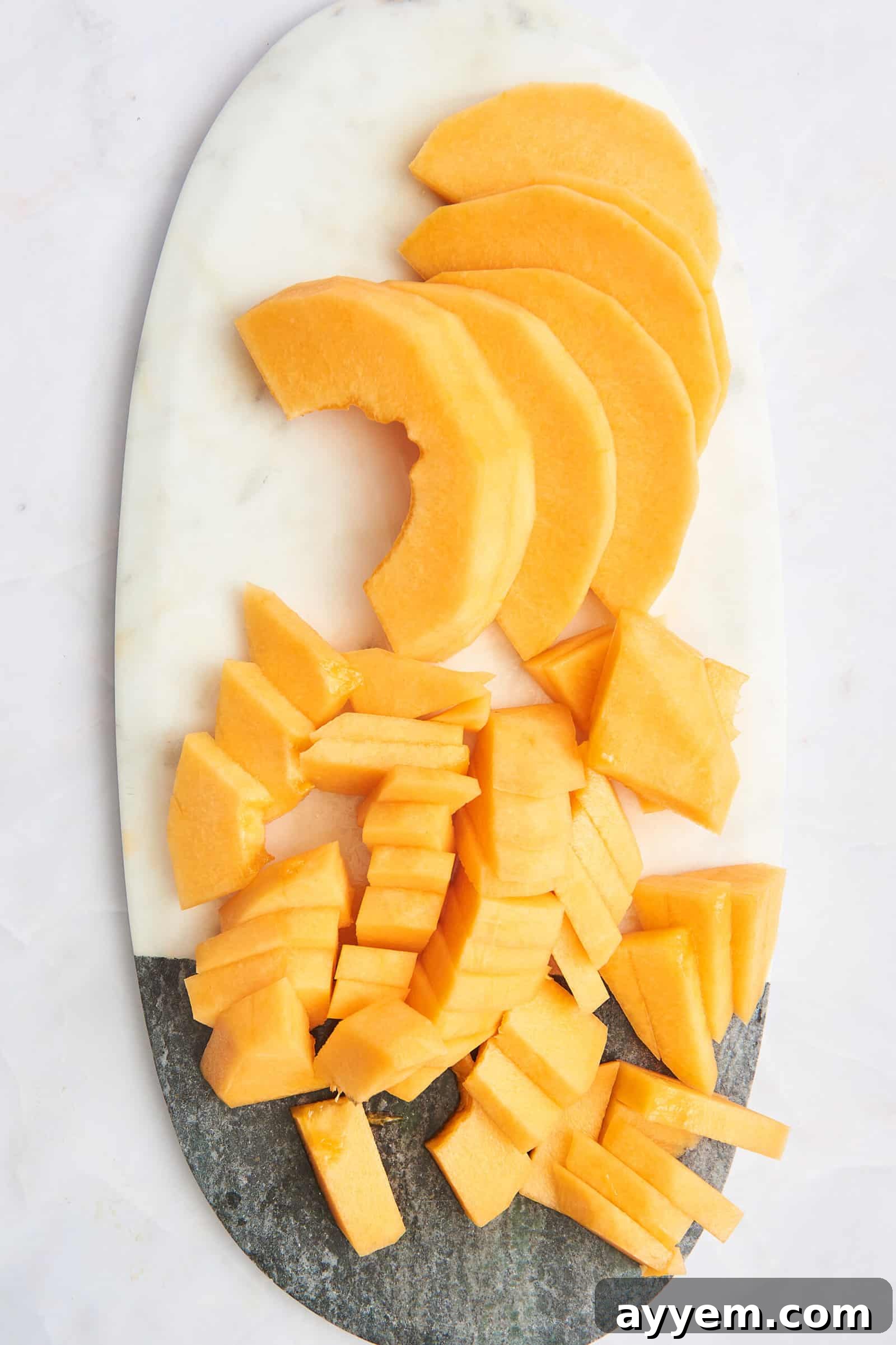
- Cubes (Bite-Sized Chunks): Cubes offer maximum versatility for salads, smoothies, or portion control. Place a cantaloupe half, hollow side down, on the cutting board. First, make several lengthwise cuts across the melon, creating long strips of your desired cube width (e.g., 1 inch). Then, rotate the fruit 90 degrees and slice across these strips widthwise, creating uniform, bite-sized chunks. Cantaloupe cubes are excellent for mixing into a vibrant fruit salad, adding to a savory green salad, or freezing for later use in smoothies.
- Bonus: Melon Balls: For a more decorative touch, particularly for fruit salads or cocktails, use a melon baller. Simply press the melon baller into the flesh and twist to create perfect spheres. This method does leave a bit of waste but results in a charming presentation.
Delicious Ways to Enjoy Your Freshly Cut Cantaloupe
Cantaloupe is not only a delightful treat on its own but also a wonderfully versatile ingredient that can elevate both sweet and savory dishes. Its sweet, juicy flesh and refreshing aroma make it a favorite for many. Here are numerous ways to savor your perfectly cut cantaloupe:
- Plain and Simple: The purest way to enjoy cantaloupe is straight from the fridge, chilled and on its own. A light sprinkle of sugar can enhance its sweetness, while a pinch of salt can surprisingly bring out its natural flavors and balance the sweetness.
- Classic Fruit Salads: Cantaloupe is a star in any fruit salad. Pair it with other seasonal fruits like berries, grapes, watermelon, honeydew, and pineapple for a colorful, refreshing medley. A squeeze of lime juice can brighten all the flavors.
- Savory Salads: Don’t limit cantaloupe to just sweet applications. Cubed or balled cantaloupe adds a sweet counterpoint to savory salads. Try it with arugula, crumbled feta cheese, red onion, a drizzle of balsamic glaze, and fresh mint for a surprisingly sophisticated dish.
- Smoothies and Juices: For a quick and nutritious boost, blend frozen or fresh cantaloupe chunks with yogurt, banana, spinach, or other fruits for a vibrant and hydrating smoothie. It also makes a fantastic base for fresh juices.
- Sweet and Savory Wraps: The classic pairing of cantaloupe and prosciutto is a timeless appetizer. The salty, savory cured ham beautifully complements the sweet, juicy melon.
- Fresh Salsas: Finely diced cantaloupe can be a refreshing addition to fruit salsas. Combine it with red onion, jalapeño, cilantro, and lime juice for a topping that pairs wonderfully with grilled chicken, fish, or pork.
- Grilled Cantaloupe: For a unique flavor, try grilling thick slices or wedges of cantaloupe. The heat caramelizes the sugars, intensifying its sweetness and adding a smoky depth. Serve it with a dollop of yogurt or ice cream.
- Desserts: Incorporate cantaloupe into light desserts like sorbets, granitas, or even a simple cantaloupe purée served with a sprinkle of ginger.
- Infused Water and Cocktails: Add chunks of cantaloupe to water with mint or basil for a naturally sweet and refreshing infused drink. It can also be muddled into cocktails for a summery twist.
- Breakfast Bowls: Layer cantaloupe cubes with granola, Greek yogurt, and a drizzle of honey for a wholesome and delicious breakfast.
Common Questions When Learning How to Cut and Store a Cantaloupe
Here are answers to some frequently asked questions about cantaloupe, covering everything from storage to ripening and more.
Once cut, cantaloupe should be stored in an airtight container in the refrigerator to maintain its freshness and prevent it from absorbing odors from other foods. Properly stored, cut cantaloupe will remain fresh and delicious for up to five days. It’s crucial to refrigerate it promptly after cutting to inhibit bacterial growth.
Yes, you can absolutely freeze cut cantaloupe! Freezing is an excellent way to preserve it for longer periods. Cantaloupe chunks work best for freezing. While the taste remains, the texture will become softer and slightly mushy after thawing, making frozen cantaloupe ideal for use in smoothies, purées, or soups rather than eating fresh. To freeze, spread chunks in a single layer on a baking sheet, freeze until solid, then transfer to a freezer-safe bag or container. It can be stored for up to one year.
Unripe whole cantaloupes should be stored at room temperature, ideally on your kitchen counter. This allows them to continue ripening and develop their full sweetness and aroma. Once a cantaloupe is ripe, you can transfer it to the refrigerator to slow down the ripening process and extend its shelf life. It’s best to consume it as soon as possible after it reaches peak ripeness, or at least within 3-5 days when stored in the fridge.
Yes, cantaloupes are climacteric fruits, meaning they do continue to ripen and become sweeter even after they’ve been picked from the vine. Storing an unripe cantaloupe at room temperature will help it further develop its sugars and soften its flesh. However, they won’t get any sweeter once they’ve been cut.
A ripe cantaloupe typically has a light tan or creamy beige color underneath its distinct netting. If the cantaloupe still has noticeable green patches, it generally indicates that it is underripe and needs more time to mature and sweeten.
If you find yourself with a cantaloupe that isn’t as sweet as you hoped, don’t despair! There are several ways to make good use of it. Many people enjoy using less-sweet cantaloupe in savory preparations, such as gazpacho or other cold soups, where its mild flavor can be a refreshing base. It’s also excellent for making jams, chutneys, or even a unique melon salsa where other strong flavors can balance it out. Adding it to smoothies with other sweet fruits or a touch of honey can also mask its lack of sweetness.
More Essential Kitchen Guides
Expand your culinary skills with these other helpful kitchen guides:
- How to Store Ginger
- How to Cut a Tomato (3 Ways)
- How to Store Garlic
- How to Make Taco Seasoning
How to Cut a Cantaloupe (3 Ways)
Rated 5 out of 5 stars by 1 user.
Food Dolls
4 servings
10 mins
10 mins
Print This Recipe
Email This Recipe
Learn how to cut a cantaloupe into slices, wedges, and cubes, how to store it, and the best ways to use it to get the most out of this sweet fruit!
Ingredients
- 1 cantaloupe
Instructions
-
Use a sharp knife to slice off both ends.
-
Stand the fruit up on one end, and carefully run the knife down the sides to remove the skin. Be careful not to cut away the flesh of the fruit!
-
Slice the cantaloupe in half lengthwise.
-
Use a spoon to scoop out the seeds and membrane. Again, be careful not to actually scoop out the flesh of the fruit!
-
Slices: Turn the melon cut side down, and cut widthwise to create half rings.
-
Wedges: Slice each melon half in half again, angling the knife at 45 degrees. Slice each piece in half again, keeping the knife angled. Repeat until there are 8 wedges.
-
Cubes: Place the melon hollow side down, and slice lengthwise. Then, rotate, and slice across again widthwise.
Equipment
Nutrition
Calories: 0.1kcal |
Carbohydrates: 0.02g |
Protein: 0.003g |
Sodium: 0.1mg |
Potassium: 0.4mg |
Fiber: 0.003g |
Sugar: 0.02g |
Vitamin A: 8IU |
Vitamin C: 0.03mg |
Calcium: 0.02mg
Nutrition information is automatically calculated, so should only be used as an approximation.