
Unlock the secret to flawlessly prepared tomatoes every time! No more dealing with messy, squishy tomatoes that drown your dishes. Mastering the art of how to cut a tomato is a fundamental kitchen skill that elevates your culinary creations, adding perfect texture, vibrant color, and fresh flavor to every bite. Whether you’re aiming for elegant slices for sandwiches, precise cubes for salsas, or rustic wedges for salads, this comprehensive guide will equip you with the techniques to achieve impeccable results effortlessly. Beyond their culinary versatility, tomatoes are also an incredibly nutritious and budget-friendly fruit, packed with health benefits. Let’s transform your tomato preparation and enhance all your favorite meals.
Selecting the Perfect Tomato
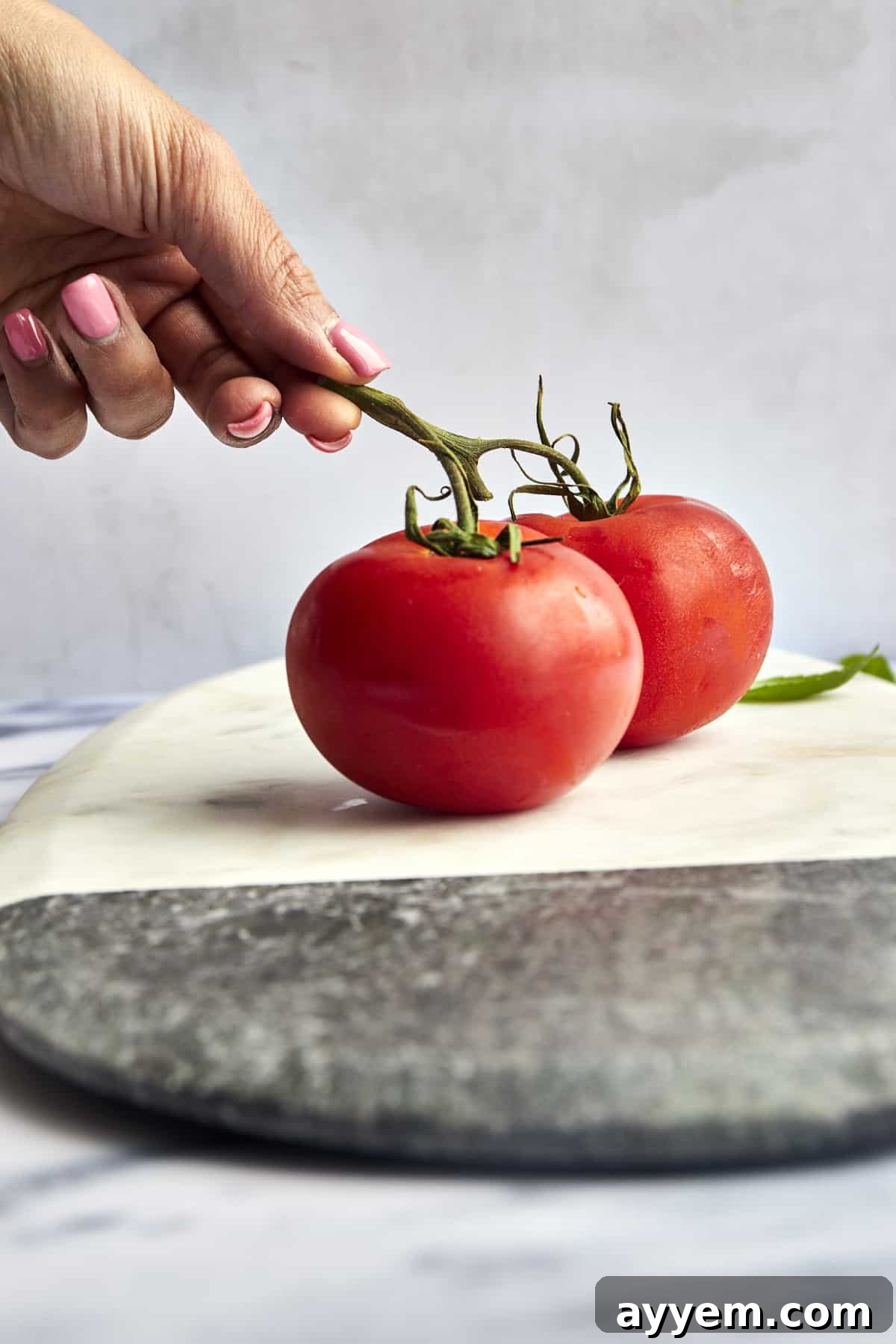
The journey to perfectly cut tomatoes begins long before you reach for your knife. Choosing ripe, high-quality tomatoes is crucial for both ease of cutting and superior flavor. A well-selected tomato will yield cleaner cuts and possess that irresistible juicy sweetness that makes all the difference in your dishes. Here’s how to pick the best tomatoes:
- Color: Look for tomatoes with a deep, uniform, and vibrant red hue. Avoid any with green patches (unless it’s a specific green variety), blemishes, bruises, or dark spots, which can indicate damage or an unripe state. The color should be consistent from top to bottom.
- Weight: Gently pick up a few tomatoes. A truly ripe tomato should feel surprisingly heavy for its size. This density indicates a high water content, translating to juiciness and robust flavor. Don’t shy away from handling them to gauge their weight and feel.
- Firmness: When lightly squeezed, a perfect tomato should be firm but yield slightly under gentle pressure. It shouldn’t be rock-hard (under-ripe) or mushy (over-ripe or bruised). An ideal tomato will have a slight springiness.
- Smell: Don’t underestimate the power of scent! Bring the tomato close to your nose, specifically near the stem end. A perfectly ripe tomato will emit a strong, sweet, and earthy aroma—the quintessential “tomato-y” smell. If it smells like nothing, it likely won’t taste like much either.
- Skin Condition: The skin should be smooth and taut, without any wrinkles, cracks, or soft spots. A healthy skin protects the delicate flesh inside.
Nutritional Powerhouse: Health Benefits of Tomatoes
Often treated as a vegetable in the kitchen, botanically, the tomato is a fruit. Regardless of classification, it’s an undeniable nutritional powerhouse. Incorporating tomatoes into your diet is a simple and delicious way to boost your intake of essential vitamins, minerals, and powerful antioxidants. Here’s a closer look at the remarkable health benefits tomatoes offer:
- Rich in Vitamins: Tomatoes are an excellent source of Vitamin C, vital for immune function, skin health, and collagen production. They also provide Vitamin K, crucial for blood clotting and bone health, and Folate (Vitamin B9), important for cell growth and function.
- Potassium Prowess: These juicy fruits are loaded with potassium, a mineral critical for maintaining healthy blood pressure, fluid balance, and proper nerve and muscle function.
- Antioxidant Abundance: Perhaps the most celebrated component of tomatoes is lycopene, a potent antioxidant responsible for their red color. Lycopene has been extensively studied for its ability to combat free radicals, which can damage cells and contribute to chronic diseases. Cooking tomatoes (especially with a little healthy fat) can significantly increase the bioavailability of lycopene, making it even more beneficial.
- Heart Health: The combination of potassium, Vitamin C, and lycopene in tomatoes supports cardiovascular health by helping to reduce bad cholesterol levels, improve blood vessel function, and lower blood pressure.
- Cancer Prevention: Research suggests that the high levels of lycopene and other antioxidants in tomatoes may play a role in reducing the risk of certain cancers, particularly prostate, lung, and stomach cancers.
- Blood Sugar Regulation: Studies indicate that tomatoes may help in managing blood sugar levels, potentially preventing Type 2 Diabetes by improving insulin sensitivity.
- Digestive Health: The fiber content in tomatoes aids in healthy digestion, promoting regularity and preventing constipation.
- Skin and Eye Health: Vitamin C and lycopene contribute to healthier skin by protecting against sun damage and promoting a youthful glow. Additionally, the Vitamin A (beta-carotene) in tomatoes is essential for good vision.
With such an impressive nutritional profile, making tomatoes a regular part of your diet is a smart choice for overall well-being. And knowing how to cut them properly ensures you enjoy every last nutritious drop!
Essential Tools and Preparation for Cutting Tomatoes
Before you begin slicing, dicing, or wedging, ensure you have the right tools and take a moment for proper preparation. A well-chosen knife and a stable surface are key to safety and efficiency when working with any produce, especially something as delicate as a tomato.
The Right Knife Makes All the Difference
For tomatoes, a sharp knife is non-negotiable. A dull knife will only crush the tomato, tearing its skin and squeezing out its precious juices. While a chef’s knife can work if exceptionally sharp, a serrated knife is often the best choice for tomatoes. The small teeth on a serrated blade effortlessly grip and slice through the tomato’s skin without squishing the tender flesh inside. A good 6-inch or 8-inch serrated utility knife or bread knife (if a utility knife isn’t available) is ideal.
Cutting Board
Always use a stable, non-slip cutting board. Place a damp paper towel or a non-slip mat underneath your cutting board to prevent it from sliding, ensuring your safety.
Washing Your Tomatoes
Before cutting, gently wash your tomatoes under cool running water. Even if you’re peeling them, washing removes any dirt, pesticides, or bacteria from the skin that could transfer to the flesh when cut.
Core Removal (Optional)
Some recipes may call for coring the tomato, which involves removing the tough, woody stem end. You can do this with a small paring knife by cutting a conical shape around the stem and popping it out. For most uses, especially slices or wedges, simply slicing off the top part where the stem attaches is sufficient.
How to Cut a Tomato – 3 Essential Ways
The method you choose for cutting a tomato largely depends on its intended use in your dish. Each cut offers a unique texture and presentation, making it suitable for various culinary applications. Here, we’ll guide you through the three most common and versatile ways to cut a tomato.
1. Perfect Slices
Tomato slices are incredibly versatile, perfect for layering in sandwiches, burgers, or elegant caprese salads. Achieving even, uniform slices ensures a beautiful presentation and balanced flavor in every bite.
- Positioning: Place the tomato on its side on a clean, stable cutting board. Position it so the stem end faces away from you.
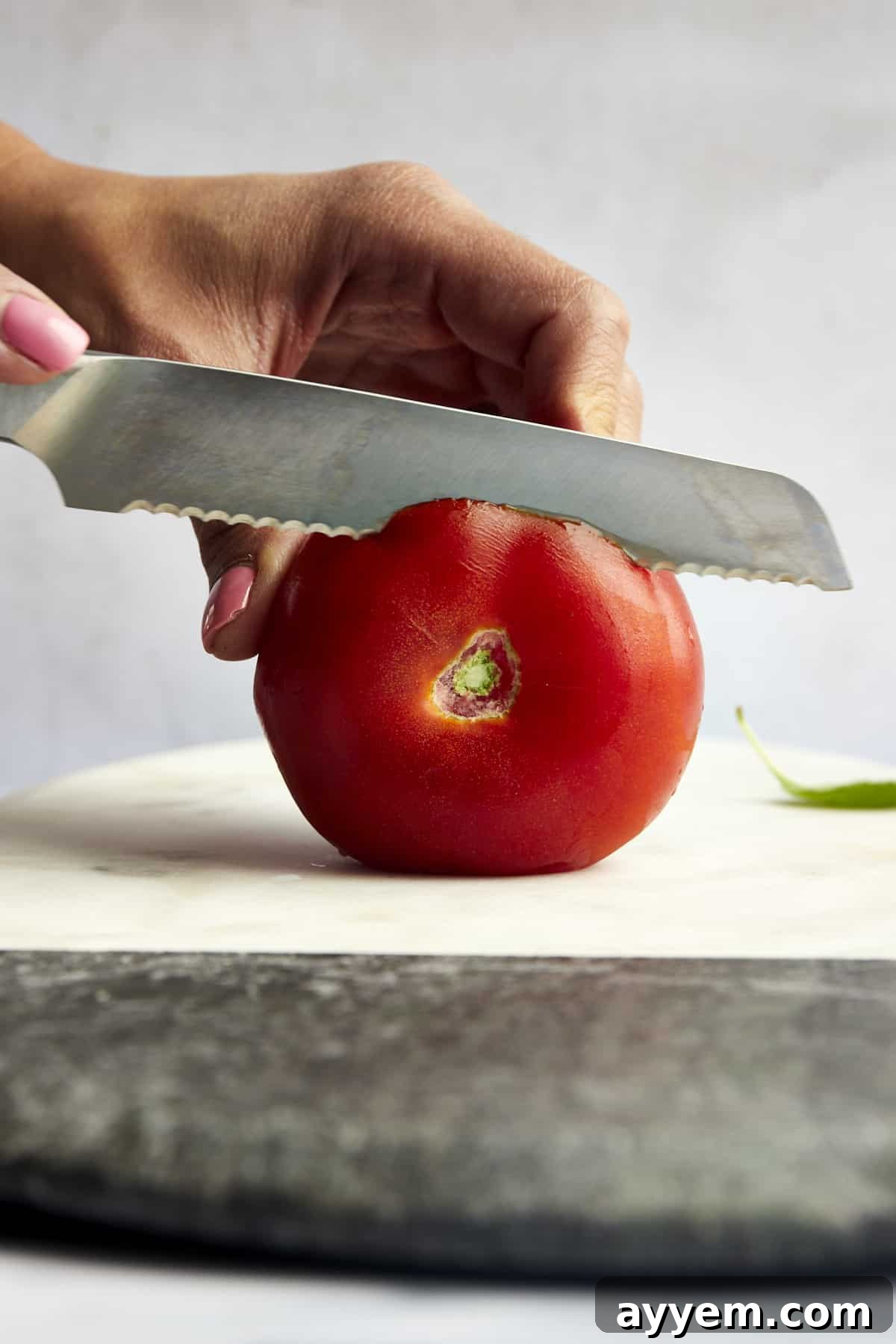
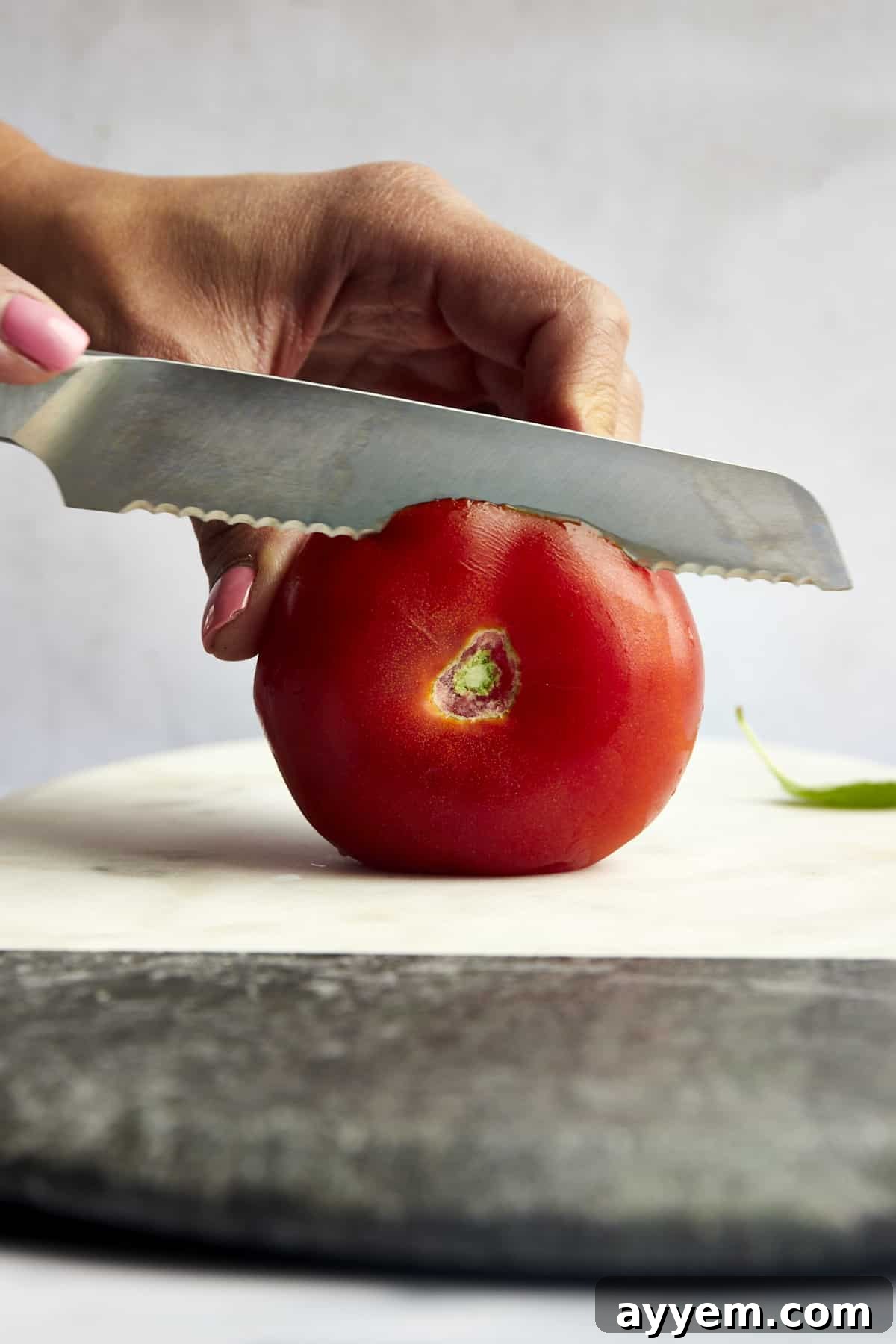
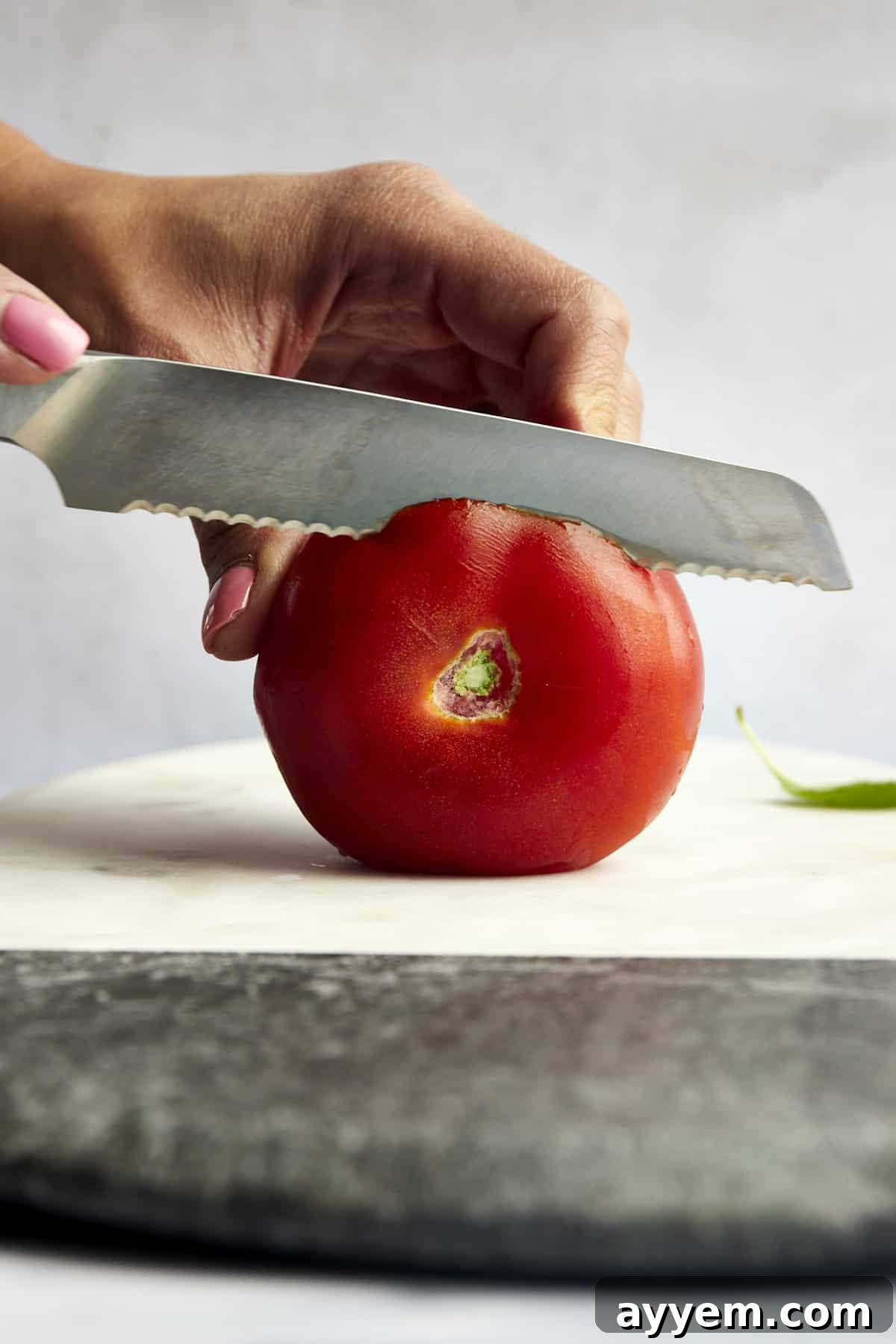
- Initial Cut: Using your sharp serrated knife, carefully slice off the very top of the tomato, removing the stem and a small, flat portion of the fruit. This creates a stable base for subsequent cuts and removes the woody core.
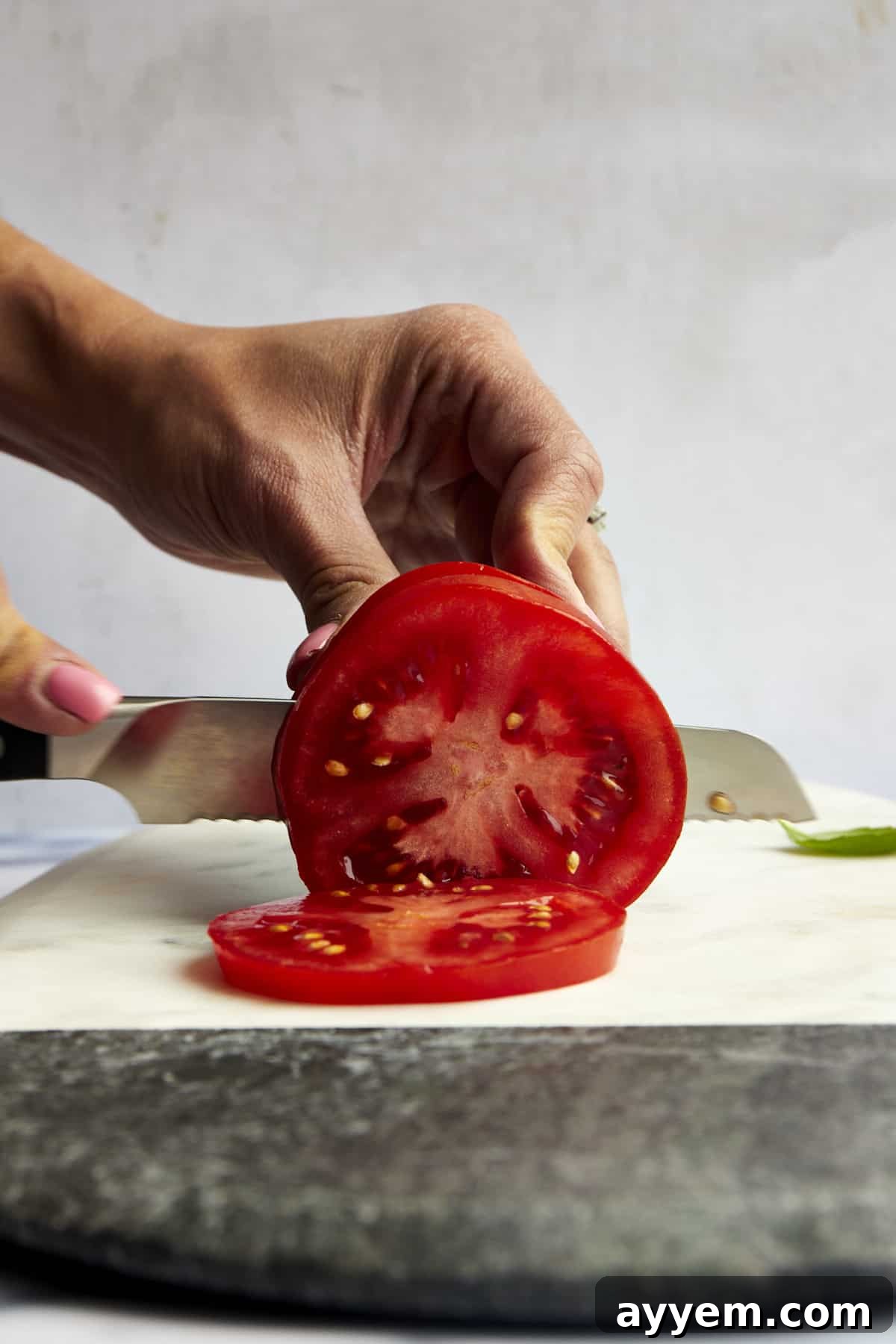
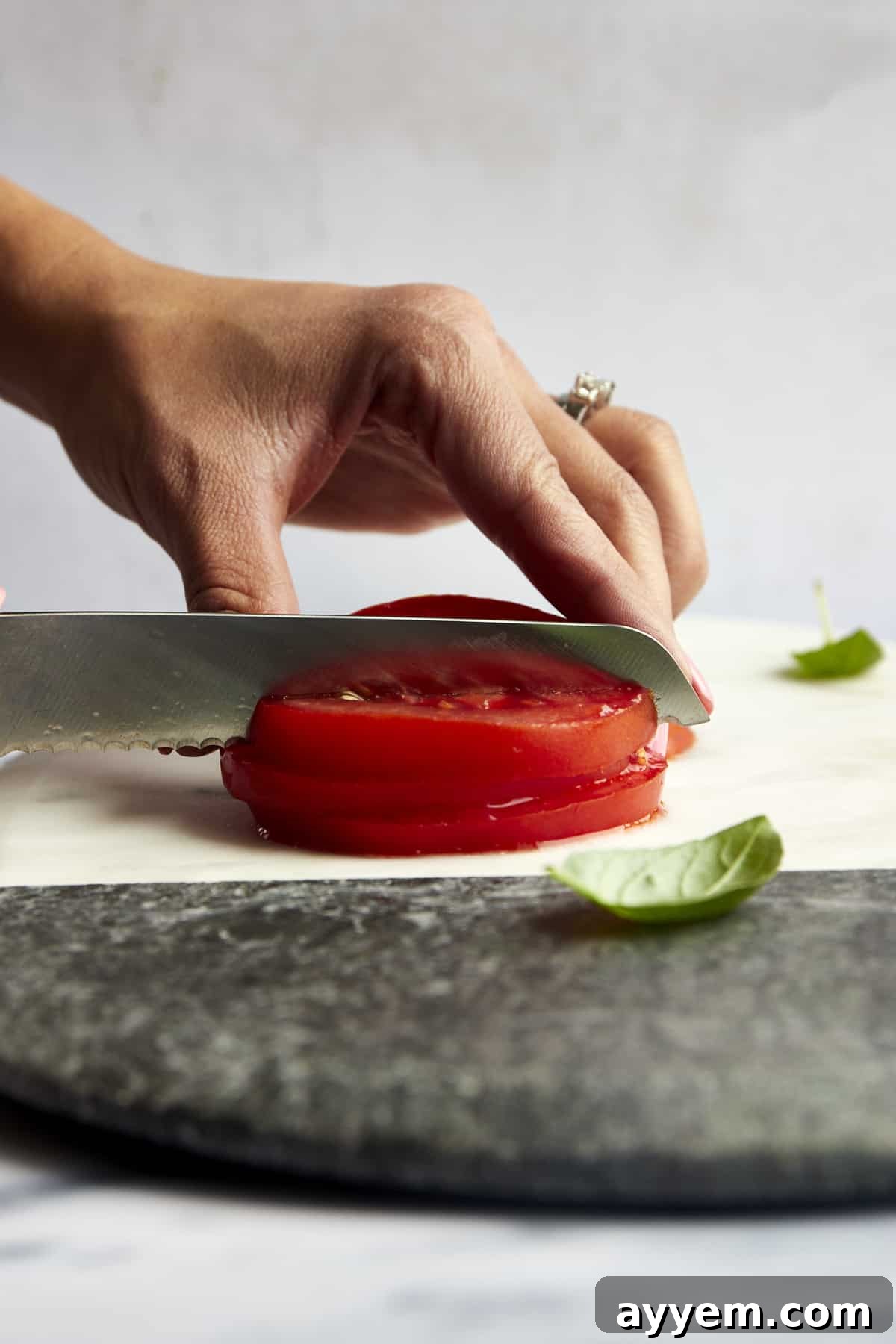
- Slicing: Starting from the freshly cut end, make thin, parallel slices across the entire tomato. Aim for a consistent thickness, typically between ¼ to ½ inch, depending on your preference and the recipe. For a cleaner cut, draw the knife through the tomato in a gentle sawing motion rather than pressing straight down.
- Uses: Ideal for sandwiches, burgers, tomato stacks, and garnishes. These slices offer a full burst of tomato flavor and a satisfying texture.
2. Uniform Cubes (Dicing)
Diced or cubed tomatoes are a staple for salsas, dips, omelets, stir-fries, casseroles, and chopped salads. Consistent cubing ensures even distribution in your dish and a pleasant texture.
- Start with Slices: Begin by slicing your tomato using the method described above. Aim for slices that are about ½ inch thick.
- Create Strips: Stack two or three tomato slices neatly on top of each other on your cutting board. Carefully cut them into thin, parallel strips, again aiming for about ½ inch width. Keep your fingers curled back to protect them.
- Cross-Cut for Cubes: Keeping the stack of strips together, rotate the cutting board 90 degrees. Now, cut across the strips in the opposite direction, creating uniform cubes. The size of your cubes will depend on the width of your initial slices and strips. For smaller dice, make thinner slices and strips.
- Uses: Perfect for salsas, bruschetta, pasta sauces, chili, or any dish where you want a consistent burst of tomato flavor and texture in every spoonful.
3. Rustic Wedges
Tomato wedges are fantastic for hearty salads, roasting, or as a vibrant addition to a crudités platter. They offer a substantial bite and a beautiful, natural shape.
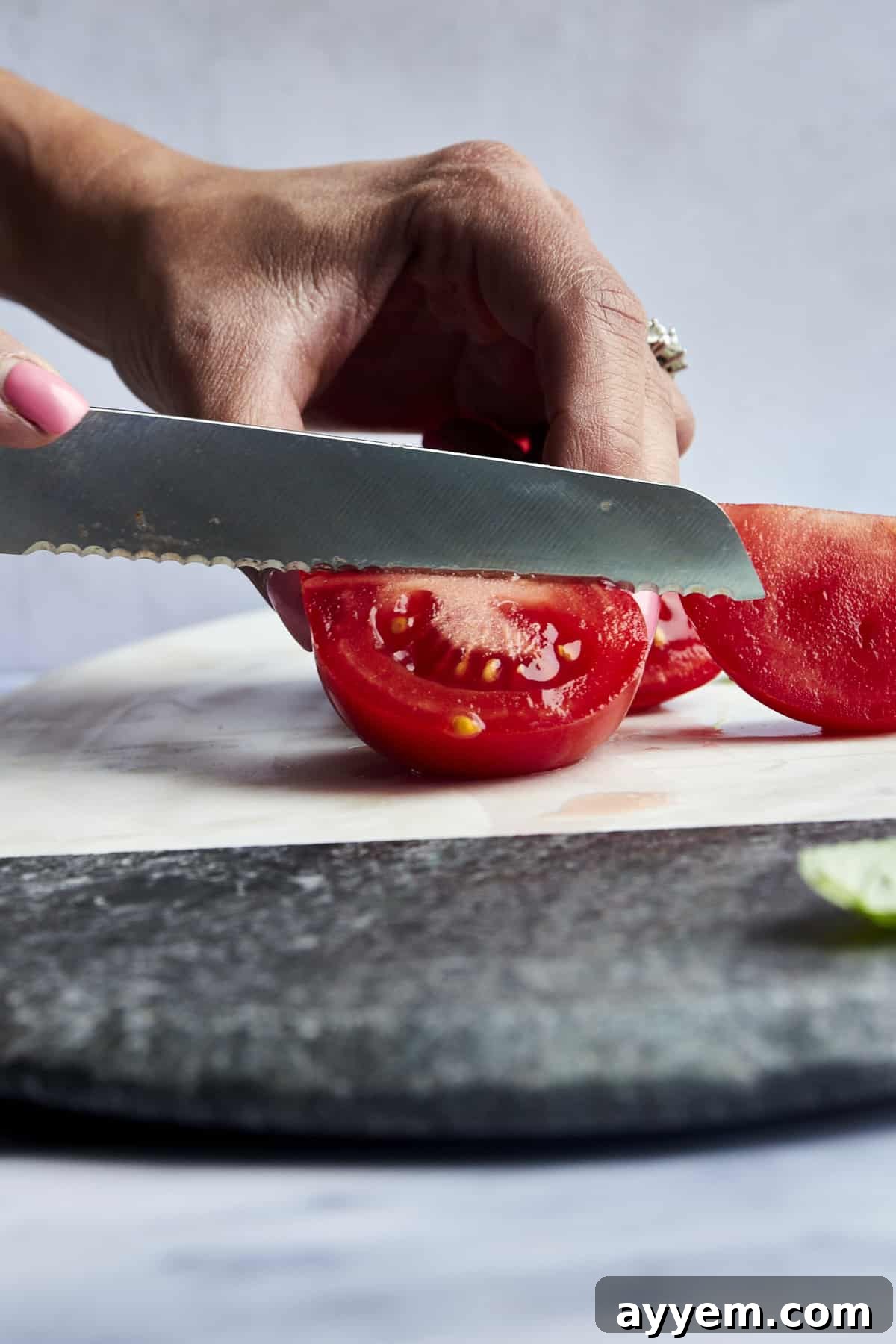
- Initial Halving: Remove the green stem from the tomato. Place the tomato upright on the cutting board, stem side up. Carefully slice the tomato in half from the stem end down through the bottom, dividing it into two equal halves.
- Quartering: Take one half of the tomato, lay it flat on its cut side, and cut it in half again, moving from the stem end to the bottom. Repeat this step with the second tomato half, resulting in four equal quarters.
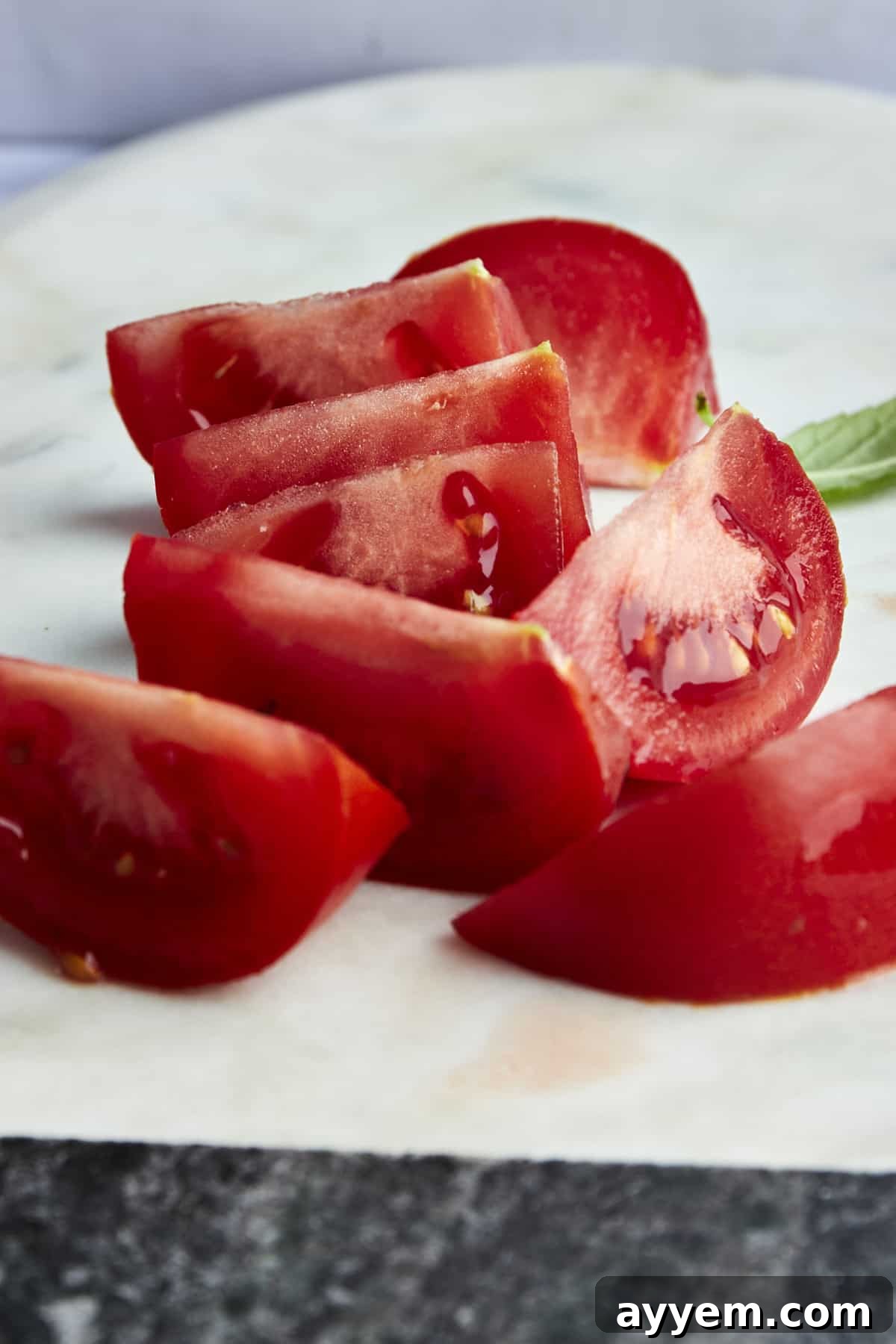
- Smaller Wedges (Optional): If you desire smaller wedges, take each quarter and slice it in half again lengthwise through the center, working from the top to the bottom. This will give you eight smaller, more delicate wedges.
- Uses: Perfect for wedge salads, grilling, roasting with herbs, or adding to stews and braises where you want larger, more robust pieces of tomato.
Common Questions When Learning How to Cut a Tomato
Uncut, whole tomatoes are best stored at room temperature, ideally on the counter in a cool, dry place away from direct sunlight. Refrigeration can diminish their flavor and alter their texture, making them mealy. However, once a tomato is cut, its delicate flesh is exposed to air and bacteria, accelerating spoilage. Therefore, cut tomatoes should always be transferred to an airtight container or a sealable bag and stored in the refrigerator. They are best used as soon as possible after cutting to enjoy their peak freshness.
When properly stored in an airtight container in the refrigerator, cut tomatoes will typically stay fresh for up to 2-3 days. To help absorb any excess moisture and potentially extend their shelf life slightly, you can place a folded paper towel at the bottom of the container before adding the tomatoes. Always check for any signs of spoilage, such as mold, off-smell, or excessive sliminess, before consuming.
Yes, tomatoes can be frozen, and it’s a great way to preserve a bountiful harvest. For the best results, we recommend freezing them in slices or even diced. To do this, arrange the cut tomato pieces in a single layer on a baking sheet lined with parchment paper. Transfer the baking sheet to the freezer until the tomatoes are solid (this prevents them from clumping together). Once frozen, transfer the solid pieces to a freezer-safe bag or container, removing as much air as possible to prevent freezer burn. Frozen tomatoes can be stored for up to 8 months. They are best used in cooked dishes like soups, sauces, or stews, as their texture will soften significantly upon thawing and may not be ideal for fresh salads or sandwiches.
This depends entirely on your recipe and personal preference! Tomato seeds and the jelly-like substance surrounding them contain a lot of flavor and moisture. For many dishes like salsas, stews, or salads, leaving the seeds in adds to the juiciness and flavor. However, for firmer preparations such as bruschetta, certain pasta sauces, or when you want a less watery consistency, removing the seeds can prevent sogginess. To remove them, simply slice the tomato in half and gently scoop out the seeds and pulp with a small spoon or your fingers. It’s a quick step that can significantly alter the final texture of your dish.
A sturdy, non-slip cutting board is best for cutting tomatoes. Wooden or plastic boards are both good options. Ensure the board is clean and stable on your counter. Placing a damp paper towel underneath can prevent it from shifting while you cut, enhancing safety and control.
To prevent slipping, always ensure your cutting board is stable (use a damp cloth underneath). For the tomato itself, make a small, flat cut on one side to create a stable base before proceeding with other cuts. This allows the tomato to sit flat and prevents it from rolling, giving you more control and a safer cutting experience.
Creative Ways to Use Your Perfectly Cut Tomatoes
Now that you’ve mastered the techniques for cutting tomatoes into beautiful slices, cubes, and wedges, it’s time to put those skills to delicious use! Freshly cut tomatoes instantly brighten any dish with their vibrant color and irresistible flavor. Here are some inspiring ideas and recipes to incorporate your perfectly prepped tomatoes:
- Whipped Feta with Tomato and Cucumber Salad: Cubed or wedged tomatoes are fantastic in this refreshing salad, adding juicy bursts of flavor against the creamy feta and crisp cucumber.
- Easy Focaccia with Tomatoes: Arrange thin slices or small wedges on top of homemade focaccia before baking for a savory, aromatic bread. The tomatoes will roast slightly, intensifying their sweetness.
- Turkey Caprese Sandwich: Layer thick, juicy tomato slices with fresh mozzarella, basil, and turkey for a gourmet sandwich experience. The clean cuts ensure a uniform bite.
- Caprese Avocado Toast: Diced tomatoes combined with avocado, mozzarella, and basil make for a colorful and flavorful topping on toasted bread.
- Homemade Salsas and Pico de Gallo: Finely diced tomatoes are the star ingredient, providing texture and freshness.
- Garden Fresh Salads: Add wedges or large cubes to your favorite green salads for a substantial and healthy boost.
- Bruschetta: Diced (and often deseeded) tomatoes, mixed with garlic and basil, are perfect piled high on toasted bread.
- Pasta Sauces: Use any cut—diced, crushed, or even whole peeled—for simmering down into rich, flavorful sauces.
- Roasted Tomatoes: Halved or wedged tomatoes roast beautifully with olive oil, garlic, and herbs, creating a sweet and savory side dish.
- Gazpacho or Chilled Soups: Blend roughly chopped tomatoes into a refreshing cold soup base.
With these methods and ideas, your kitchen adventures with tomatoes are bound to be more enjoyable and delicious than ever before!
Expand Your Kitchen Skills: More How-To Guides
Cooking is a journey of continuous learning, and mastering basic techniques can significantly enhance your culinary confidence and creativity. If you enjoyed learning how to perfect your tomato cuts, you’ll love exploring these other helpful kitchen tips and tricks. From efficient meal planning to smart ingredient storage, these guides are designed to make your time in the kitchen more productive and enjoyable.
- How to Meal Prep for the Week: Learn strategies for organizing your meals, saving time, and eating healthier throughout your busy week.
- How to Store Parsley: Keep your fresh herbs vibrant and flavorful for longer with these clever storage techniques.
- How to Make a Butter Board: Discover the viral trend and create an impressive, shareable appetizer perfect for entertaining.
- How to Make Taco Seasoning: Skip the store-bought packets and whip up your own customizable, fresh, and flavorful taco seasoning mix.
- How to Store Ginger: Maximize the life of your fresh ginger root with simple and effective storage methods.
- How to Freeze Tomato Paste: Never waste leftover tomato paste again with this smart freezing hack.
Equipping yourself with these foundational kitchen skills not only makes cooking easier but also opens up a world of new culinary possibilities. Happy cooking!
How to Cut a Tomato (3 Ways)
Print Recipe
Email Recipe
Ingredients
- 1 ripe tomato
Instructions
-
For Sliced Tomatoes: Place the tomato on its side on top of the cutting board so the stem is facing outward. Slice off the top of the tomato, removing the stem. Working from the sliced end, cut parallel strips down the tomato, creating slices.
-
For Cubed/Diced Tomatoes: Slice the tomato using the method above. Then, stack the tomato slices on the cutting board, and slice them into thin strips. Rotate the cutting board, and cut thin strips in the opposite direction.
-
For Wedge Tomatoes: Place the tomato on the cutting board with the stem facing up. Slice the tomato in half starting from the stem and moving toward the bottom. Flip one half of the tomato over, and cut it in half again moving from the stem to the bottom. Repeat with the second half. For smaller wedges, cut each piece in half another time.
-
Store cut tomatoes in an airtight container in the fridge for up to 3 days.
Equipment
Nutrition
Calories: 22kcal |
Carbohydrates: 5g |
Protein: 1g |
Fat: 0.3g |
Saturated Fat: 0.03g |
Polyunsaturated Fat: 0.1g |
Monounsaturated Fat: 0.04g |
Sodium: 6mg |
Potassium: 292mg |
Fiber: 1g |
Sugar: 3g |
Vitamin A: 1025IU |
Vitamin C: 17mg |
Calcium: 12mg |
Iron: 0.3mg
Nutrition information is automatically calculated, so should only be used as an approximation.