

Keep your kitchen sparkling and your dishes spotless by learning how to properly clean a dishwasher. Our comprehensive guide shares expert tips, essential tools, and step-by-step instructions to make this often-overlooked chore simple and effective. Discover everything you need to know to ensure your dishwasher runs efficiently and hygienically.

How to Clean a Dishwasher: The Ultimate Guide for a Spotless Kitchen
Many homeowners assume their dishwasher is a self-cleaning appliance. After all, it uses hot water and detergent to clean dishes, so surely it cleans itself in the process, right? Unfortunately, this common misconception can lead to a less efficient machine and dishes that aren’t as clean as they could be. Just like your washing machine or other household appliances, your dishwasher requires regular cleaning and maintenance to perform at its best.
Think about all the food particles, grease, and soap residue that get washed off your plates and cutlery during a cycle. These remnants don’t magically disappear. Over time, they accumulate in various parts of the dishwasher, including the filter, spray arms, drains, and even on the interior walls and door seals. This buildup can lead to a host of problems, from unpleasant odors and reduced water flow to unsightly film on your “clean” dishes and costly repairs down the line.
A neglected dishwasher can become a breeding ground for bacteria and mold, compromising the hygiene of your kitchen and your dinnerware. Regular deep cleaning ensures proper functioning, extends the lifespan of your appliance, and guarantees your dishes emerge sparkling clean after every wash. Moreover, a well-maintained dishwasher operates more efficiently, potentially saving you money on energy bills and preventing expensive service calls.
This comprehensive guide will walk you through everything you need to know about how to clean a dishwasher. We’ll cover the best products and tools, detailed step-by-step instructions, and essential maintenance tips to keep your machine in top condition. By the end of this guide, you’ll be equipped to tackle this chore with confidence, ensuring a cleaner, more hygienic, and more efficient dishwashing experience.

Why Your Dishwasher Needs Regular Cleaning
It might seem counterintuitive to clean an appliance designed to clean, but dishwashers are not immune to grime. Here’s why consistent cleaning is crucial:
- Food Particle Buildup: Despite pre-rinsing, tiny food scraps can get trapped in the filter, spray arms, and drain. These particles decompose, leading to foul odors and potential blockages.
- Grease and Soap Scum: Over time, grease from food and residue from dishwasher detergent can accumulate on interior surfaces, leaving a sticky film that inhibits proper cleaning and can redeposit on your dishes.
- Hard Water Deposits & Limescale: If you live in an area with hard water, mineral deposits (limescale) can build up on heating elements, spray arms, and the interior walls. This reduces the machine’s efficiency and can leave a cloudy film on your glassware.
- Mold and Mildew: The warm, damp environment inside a dishwasher is ideal for mold and mildew growth, especially in rubber seals and crevices. This not only causes bad smells but can also be unhealthy.
- Reduced Performance: Clogged spray arms lead to uneven water distribution, meaning some dishes won’t get properly cleaned. A dirty filter restricts drainage, leaving standing water or re-circulating dirty water.
- Extended Lifespan & Cost Savings: Regular maintenance prevents wear and tear on components, helping your dishwasher last longer and avoiding expensive repairs due to blockages or breakdowns.
How to Clean a Dishwasher: A Comprehensive Step-by-Step Guide
Ready to give your dishwasher the deep clean it deserves? Follow these detailed steps for a sparkling clean appliance and spotless dishes.
Step 1: Gather Your Cleaning Materials
Before you begin, make sure you have all the necessary supplies. You can choose between commercially available dishwasher cleaners or effective natural alternatives. Both methods are highly effective when applied correctly.
Premade Dishwasher Cleaning Solutions
Many reputable brands offer products specifically formulated for deep-cleaning dishwashers. These are convenient and designed to tackle tough grime, grease, and mineral deposits. Remember, you’ll only need one of these options for a single cleaning session.
- Dishwasher Cleaning Tablets: These specialized tablets are designed to be run in an empty dishwasher cycle. They contain powerful ingredients that target limescale, grease, and food residue. It’s crucial to distinguish these from regular dishwasher detergent tablets; cleaning tablets are much stronger and should not be used with dishes inside. Look for products like Affresh Dishwasher Cleaner Tablets.
- Liquid Dishwasher Cleaners: Often packaged in bottles that can be inverted and placed in the dishwasher, these liquid solutions work by dissolving stubborn grease and limescale, even in hard-to-reach areas like the piping. They are user-friendly; simply place the bottle and run a hot cycle. An example is Finish Dishwasher Cleaner.
- Dishwasher Cleaning Pods: Combining the convenience of tablets with the liquid power of detergents, pods offer a balance of ease and efficacy. They are single-use units that contain a concentrated cleaning liquid to tackle various forms of buildup. Cascade Platinum ActionPacs are a popular choice for daily use, but dedicated cleaning pods exist too.
Natural and Cost-Effective Alternatives
If you prefer to avoid harsh chemicals or are looking for a more economical and eco-friendly approach, natural products can be incredibly effective. While they might require a little more hands-on effort, they deliver excellent results and are safe for your family and the environment.
- Distilled White Vinegar: A powerful natural acid, white vinegar is superb at breaking down mineral deposits (limescale), soap scum, and grease. It also acts as a natural deodorizer and disinfectant. Apple cider vinegar can be used as a substitute if that’s what you have on hand.
- Baking Soda: This versatile household staple is a gentle abrasive, excellent for scrubbing away grime without scratching surfaces. It’s also a highly effective deodorizer, absorbing and neutralizing unpleasant smells.
- Lemon Juice: While not a primary cleaner for heavy duty tasks, a few drops of lemon juice can be added to the vinegar rinse for an extra burst of fresh scent and additional mild acidity to boost cleaning power.
The Best Tools for Cleaning a Dishwasher
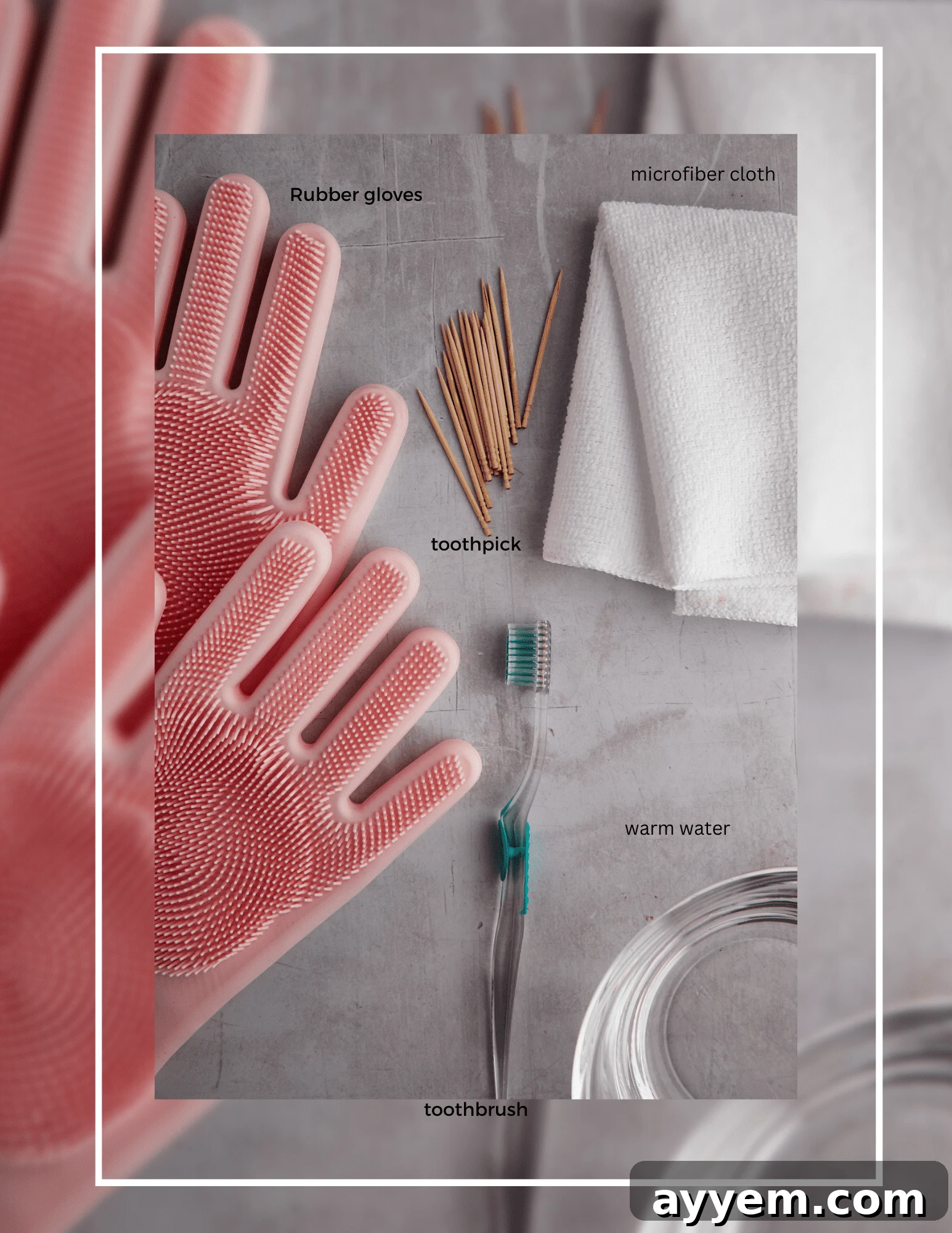
Beyond your chosen cleaning solution, a few simple tools will make the deep cleaning process much easier and more thorough.
- Warm Water: Essential for rinsing and creating cleaning solutions.
- Toothpick or Small Skewer: Perfect for clearing stubborn debris from small holes in spray arms and tight crevices.
- Old Toothbrush: Its small head and bristles are ideal for scrubbing tight spots, corners, and around seals where grime accumulates.
- Microfiber Cloths/Sponge: For wiping down surfaces, applying pastes, and polishing. Choose soft cloths to avoid scratching.
- Rubber Gloves: Protect your hands from cleaning solutions and grime.
- Small Bowl (Dishwasher-safe): For holding vinegar during a cleaning cycle.
Step 2: Prepare Your Dishwasher by Removing All Interior Items
To start the deep cleaning process, ensure your dishwasher is completely empty. Open the door and remove all removable components. This typically includes:
- Upper and lower dish racks
- Silverware baskets or cutlery trays
- Any other detachable inserts or accessories
Removing these parts allows you full access to the interior, making it easier to clean every nook and cranny. Set them aside for individual cleaning later.
Step 3: Spot-Clean and Clear Any Visible Debris
With the dishwasher empty, take a moment to manually remove any large, obvious food particles that might be sitting at the bottom or clinging to the interior walls. Use a paper towel or sponge for this. Then, meticulously inspect the entire interior for signs of stains, such as hard water spots, limescale buildup, or general grime along the sides, bottom, and around the door frame.
Pay close attention to crevices where the racks slot in and along the edges of the door. Use your toothpick or old toothbrush to dislodge any hidden bits of food or debris from these tight spaces. This manual removal prevents larger particles from recirculating during the cleaning cycles and potentially causing clogs.
How to Remove Interior Stains (Limescale & Hard Water)
If you spot stubborn hard water stains or limescale buildup, a simple baking soda and vinegar paste is incredibly effective:
- Mix equal parts baking soda and white vinegar in a small bowl to create a thick paste. For example, if you use half a cup of baking soda, use half a cup of vinegar.
- Wearing rubber gloves, apply this paste directly onto the stained areas. Use your fingers or a sponge to rub it in thoroughly.
- Allow the paste to sit and soak for at least 30 minutes to an hour. This gives the vinegar’s acidity time to break down the mineral deposits and the baking soda to gently abrade the grime.
- After soaking, use a damp cloth or sponge to wipe away the paste. For any remaining residue, reapply the mixture and gently scrub with an old toothbrush. There’s no need to rinse this solution completely, as it will be washed away in the subsequent cleaning cycles.
Step 4: Deep Clean the Dishwasher Filter
The filter is arguably the most crucial component to clean regularly, yet it’s often overlooked. It traps food particles, preventing them from recirculating and redepositing on your dishes. Many modern dishwashers have a removable filter assembly at the bottom of the tub.
- Locate and Remove the Filter: Consult your dishwasher’s manual if you’re unsure how to remove it. Most twist out or unclip easily. You might find a cylindrical filter with a flat filter underneath.
- Rinse Under Running Water: Take the filter components to your sink and rinse them thoroughly under hot running water. You’ll be surprised by the amount of gunk that comes out!
- Scrub Away Trapped Debris: Use your old toothbrush and a dab of dish soap to gently scrub the mesh and crevices of the filter. Pay attention to any trapped food particles or greasy residue.
- Rinse and Reinstall: Rinse the filter components completely until they are free of debris and soap. Ensure they are completely clean before carefully reinserting them back into the dishwasher, making sure they are securely locked in place. A clean filter is vital for preventing odors and ensuring optimal washing performance.
Step 5: Clean the Spray Arms
The spray arms (usually one at the bottom and one for the top rack) are responsible for spraying water onto your dishes. Their small holes can become clogged with food particles or mineral deposits, leading to uneven water distribution and poorly cleaned dishes.
- Remove Spray Arms (if possible): Many spray arms can be unclipped or unscrewed. If yours are removable, take them out for easier cleaning.
- Inspect and Clear Nozzles: Use a toothpick, thin wire, or small skewer to poke through each individual spray hole. This will dislodge any trapped food bits or hard water buildup. Ensure water can flow freely from every opening.
- Wash and Rinse: If removed, wash the spray arms under warm, soapy water. Use your old toothbrush to scrub away any surface grime. Rinse them thoroughly.
- Reinstall: Reattach the spray arms, ensuring they can spin freely and are securely in place.
Step 6: Perform a Vinegar Wash Cycle
Now it’s time for a deep cleaning wash cycle using white vinegar. This step is crucial for dissolving grease, soap scum, and limescale from the internal plumbing, heating element, and all interior surfaces.
- Place Vinegar: Pour one to two cups of distilled white vinegar into a dishwasher-safe bowl or mug. Place this on the top rack of your empty dishwasher. Do not add any dish soap or detergent.
- Run Hot Cycle: Close the dishwasher door and run a full cycle on the hottest water setting available (e.g., “Heavy Duty,” “Sanitize,” or “Intensive”). The hot water combined with the vinegar will work to break down and flush away accumulated grime, deodorize the machine, and disinfect surfaces.
- Allow to Air Dry (Optional): Once the cycle is complete, you can leave the dishwasher door ajar for a while to allow it to air dry, preventing new moisture from settling.
Step 7: Perform a Baking Soda Deodorizing Cycle
After the vinegar cycle, a baking soda cycle will further clean, brighten, and thoroughly deodorize your dishwasher, neutralizing any lingering odors (including the faint vinegar smell).
- Add Baking Soda: Sprinkle one cup of baking soda liberally across the bottom of the empty dishwasher tub.
- Run Short, Hot Cycle: Run a short, hot wash cycle (e.g., “Rinse” or “Light Wash”). The baking soda will act as a gentle abrasive to scrub away any remaining residue and absorb any lingering smells, leaving your dishwasher smelling fresh.
Step 8: Clean the Exterior of the Dishwasher
With the interior now pristine, don’t forget the exterior. A clean exterior completes the job and keeps your kitchen looking tidy.
- Wipe Down the Door and Control Panel: Mix a solution of equal parts white vinegar and warm water in a spray bottle. Spray this onto a microfiber cloth and wipe down the front of the dishwasher, the control panel, and the top edge of the door. For stainless steel finishes, wipe in the direction of the grain to prevent streaks. Alternatively, use your favorite multi-surface cleaner.
- Focus on High-Touch Areas: Pay special attention to the handle, buttons, and knobs, which are frequently touched and can harbor grime and fingerprints. Use a toothpick or old toothbrush to clean around buttons and in any small crevices.
- Clean the Door Gasket: The rubber gasket around the dishwasher door is a common spot for food particles, mold, and mildew. Use a cloth dampened with vinegar solution or a little dish soap to carefully wipe along and underneath the entire length of the gasket. This is crucial for preventing mold growth and ensuring a good seal.
- Ambition Bonus: Clean Around and Underneath: If you’re feeling ambitious and your dishwasher can be moved safely, take this opportunity to clean the floor underneath and the sides of the unit. Dust and grime can accumulate here, especially if you have pets.
How to Maintain Your Dishwasher for Long-Term Performance
Now that your dishwasher is sparkling clean, consistent maintenance is key to keeping it that way and ensuring its longevity. Incorporate these habits into your routine:
How Often Should You Clean Your Dishwasher?
For most households, the best practice is to deep clean your dishwasher once a month. However, this frequency can vary based on several factors:
- Usage Frequency: If you use your dishwasher daily, you might need to clean it every 3 weeks. Less frequent use (e.g., once or twice a week) might allow you to stretch it to every 6-8 weeks.
- Pre-Rinsing Habits: If you consistently scrape food off plates before loading, your filter and interior will accumulate less debris, potentially extending the time between deep cleans. If you load dishes with more food residue, monthly cleaning is essential.
- Hard Water: Homes with hard water will experience faster buildup of limescale. In such cases, more frequent cleaning (e.g., every 3-4 weeks) or the regular use of descaling agents is advisable.
- Odors: If you notice unpleasant smells, it’s a clear sign your dishwasher needs a cleaning, regardless of your schedule.
Daily and Weekly Maintenance Tips
- Scrape Plates, Don’t Pre-Rinse: Most modern dishwashers and detergents are designed to handle some food residue. Scrape off large food particles into the trash, but avoid excessive pre-rinsing, which can confuse your dishwasher’s soil sensors and waste water.
- Use Quality Detergent and Rinse Aid: Invest in a good quality detergent and use a rinse aid, especially if you have hard water. Rinse aid helps water sheet off dishes, preventing spots and promoting drying.
- Don’t Overload: Overcrowding the dishwasher restricts water circulation, leading to poorly cleaned dishes and potential strain on the machine.
- Run Hot Cycles Regularly: Using the hottest water settings helps to prevent grease and soap scum buildup.
- Clean the Door Gasket Frequently: A quick wipe down of the door seal with a damp cloth once a week can prevent mold and mildew from taking hold.
- Ensure Regular Use: Dishwashers are designed for regular use. Running it at least once or twice a week, even with smaller loads, helps keep the motor and seals lubricated and prevents issues like motor seizure or dried-out seals. People who live alone might think handwashing is more economical for small loads, but dishwashers are often more water-efficient.
Common Questions about Cleaning a Dishwasher
Yes, absolutely! While it cleans your dishes, grease, soap scum, food particles, and hard water minerals accumulate inside the appliance itself. Regular cleaning is essential to keep it smelling fresh, working efficiently, and ensuring truly clean dishes.
Yes, baking soda is an excellent natural cleaner for dishwashers! Sprinkle a cup in the bottom of an empty dishwasher and run a short, hot cycle. It helps neutralize odors, acts as a mild abrasive to scrub away grime, and can brighten the interior, leaving your dishwasher smelling super fresh.
Avoid harsh chemical cleaners like bleach if your dishwasher has stainless steel components, as bleach can cause discoloration or pitting. Also, steer clear of abrasive brushes or scouring pads that can scratch the interior surfaces. Gentle cleaners like vinegar and baking soda, along with soft cloths and old toothbrushes, are usually sufficient and safer.
Yes, dishwasher cleaning tablets are very effective! They offer a convenient and easy way to deep clean your machine – simply pop one in and run a hot cycle. They are specially formulated to break down limescale, grease, and food buildup. However, for a more budget-friendly and natural option, pantry staples like vinegar and baking soda work just as well.
If odors persist, double-check your filter and spray arms to ensure they are meticulously clean. Also, thoroughly inspect and clean the rubber door gasket, as this is a common spot for mold and mildew to hide. Running a hot cycle with a cup of white vinegar followed by a baking soda cycle often eliminates stubborn smells. Leaving the door ajar between cycles can also help prevent moisture buildup and subsequent odors.
The Bottom Line
Even the hardest-working appliances, like your dishwasher, require a bit of dedicated attention to maintain their peak performance. Learning how to clean a dishwasher effectively and integrating this task into your monthly routine will yield numerous benefits. Not only will your dishes consistently come out sparkling clean and hygienic, but your machine will also operate more efficiently, extending its lifespan and saving you from potential costly repairs in the future. A clean dishwasher is a cornerstone of a truly clean kitchen!
More Lifestyle Tips for a Well-Maintained Home
Looking for more easy ways to keep your home in tip-top shape and organized? Check out more of our practical tips and tricks below!
- How to Organize Spices
- Drawer Organizers
- The Best Food Storage Containers
- How to Make a Wood Accent Wall