
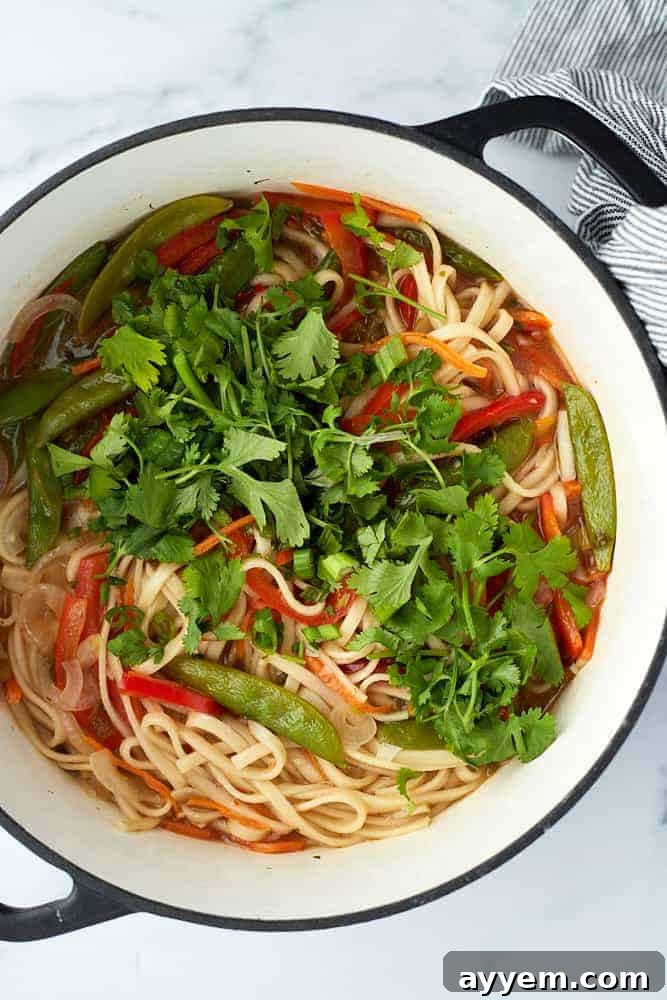
Savor the Flavor: Your Ultimate Guide to Easy One-Pot Vegetarian Ramen
Craving a bowl of warm, comforting ramen but short on time? Look no further! This simple One-Pot Vegetarian Ramen recipe is your ticket to a delightful culinary experience that’s both healthy and incredibly satisfying. Forget bland packaged noodles and embrace a vibrant, flavorful dish ready in under 30 minutes. It’s the perfect solution for busy weeknights, effortless entertaining, or simply treating yourself to a wholesome, homemade meal. Get ready to impress your taste buds and nourish your body without sacrificing your sanity!
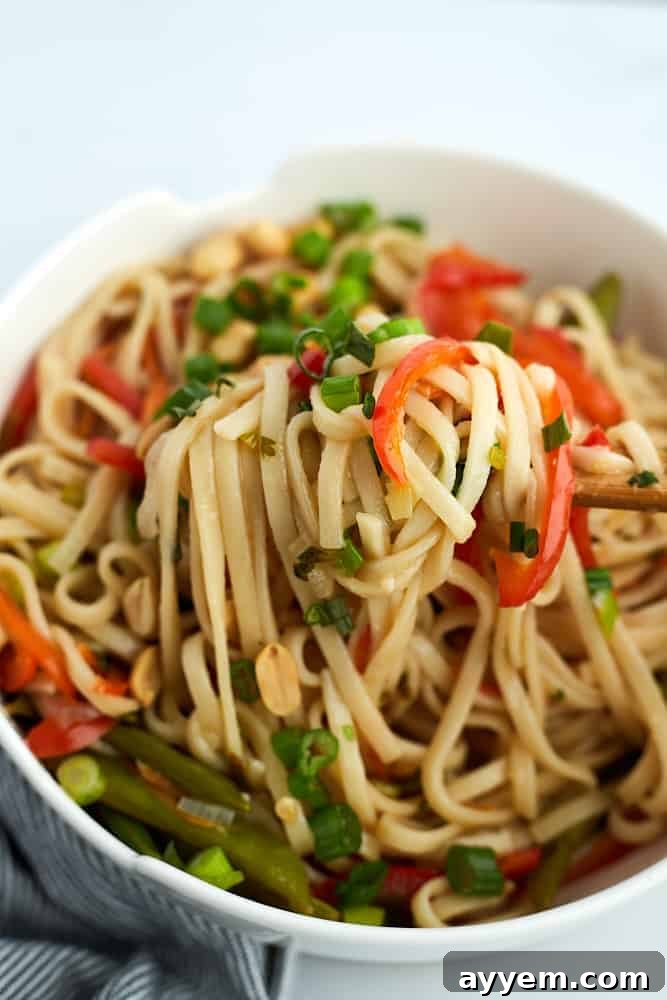
Unveiling Ramen: A Japanese Culinary Icon
While its popularity has soared in the United States in recent years, ramen has been a cherished staple of Japanese cuisine for centuries. At its heart, ramen is a Japanese noodle soup, but this simple description barely scratches the surface of its rich complexity. Thousands of regional variations exist, each a testament to Japan’s diverse culinary landscape.
Every bowl of ramen typically features three core components: a deeply flavored broth, perfectly cooked noodles, and an array of toppings. The broth, often simmered for hours, forms the soul of the dish, commonly seasoned with traditional Japanese staples like miso (fermented soybean paste) or soy sauce. The noodles, typically made from wheat flour, water, and kansui (an alkaline mineral water), provide a delightful chewiness. Toppings vary widely, ranging from thinly sliced meats like chashu (braised pork belly) to a medley of fresh vegetables and, frequently, a perfectly soft-boiled egg.
Ramen is so ingrained in Japanese culture that it’s often considered a form of fast food, readily available from countless small restaurants, bustling street vendors, and specialized ramen-ya across the country. Its regional variations are a culinary map of Japan itself, with each prefecture boasting unique ingredients and preparation methods that give their ramen a distinct character and taste.
Tracing Ramen’s Ancient Roots: From China to Global Phenomenon
Despite its undeniable Japanese identity today, the true origins of ramen can be traced back to 19th-century China. It is widely believed that Chinese immigrants introduced the noodle soup to Japan during the late 19th or early 20th century, where it gradually began to adapt and evolve into the beloved dish we know today. Early Japanese versions were often called “Shina Soba” (Chinese soba).
A pivotal moment in ramen history occurred in 1947 in Fukuoka, where a restaurant chef, by happy accident, over-boiled pork broth and discovered its unexpectedly delicious depth of flavor. This serendipitous creation quickly gained traction, leading to the rapid development of regional variations across Japan. From its humble beginnings as an immigrant dish, ramen has transformed into a global culinary sensation, cherished by food enthusiasts worldwide for its comforting warmth and complex flavors.
Navigating Vegetarian Ramen: What You Need to Know
Many assume that all ramen noodles are inherently vegan or vegetarian, but this isn’t always the case. While the noodles themselves are typically made from wheat flour, water, and sometimes oil, the accompanying seasoning packets, often found in instant ramen, frequently contain animal-derived ingredients. These can include meat extracts, seafood bases, or other non-vegetarian flavor enhancers, depending on your dietary definition.
To ensure your ramen is truly vegetarian, you have a few straightforward options. The simplest approach with instant ramen is to discard the seasoning packets entirely and create your own flavorful broth from scratch, as we do in this one-pot recipe. Alternatively, seek out brands specifically labeled as vegetarian or vegan ramen noodles. Popular choices that often offer vegetarian-friendly options include Top Ramen Soy Sauce Flavor, Top Ramen Chili Flavor, and Soken Brand Ramen. Always make it a habit to carefully read the ingredient list on any noodle product you choose to confirm it aligns with your dietary needs.
Why Homemade One-Pot Vegetarian Ramen Will Change Your Life
If your ramen experiences have been limited to microwave cups or flimsy packaged noodles, prepare for a culinary awakening! This one-pot vegetarian ramen isn’t just a meal; it’s a transformative dining experience that will redefine your expectations. One spoonful, and you’ll bid farewell to those store-bought versions and welcome a new standard of flavor, freshness, and convenience into your kitchen.
Here’s why this recipe will become your new go-to:
- Lightning Fast & Effortless: Designed for minimal prep and a quick cook time, this dish is ready from start to finish in less than 30 minutes. It’s the ultimate solution for busy weeknights when you need a wholesome meal without the fuss.
- Nutrient-Packed Goodness: Unlike many instant varieties, our recipe is brimming with a colorful assortment of fresh vegetables, ensuring you get a healthy dose of vitamins, minerals, and fiber to keep you feeling full and energized.
- Infinitely Customizable: This recipe provides a fantastic foundation, but the true joy lies in its flexibility. Easily adapt it to your preferences by swapping out vegetables, adjusting spice levels, or experimenting with different toppings. It’s a culinary canvas awaiting your personal touch.
- Perfect for Any Occasion: Whether you’re feeding a hungry crowd or prepping meals for the week, this ramen scales beautifully. Its one-pot nature makes cleanup a breeze, and it’s excellent for making ahead of time, ensuring deliciousness is always within reach.
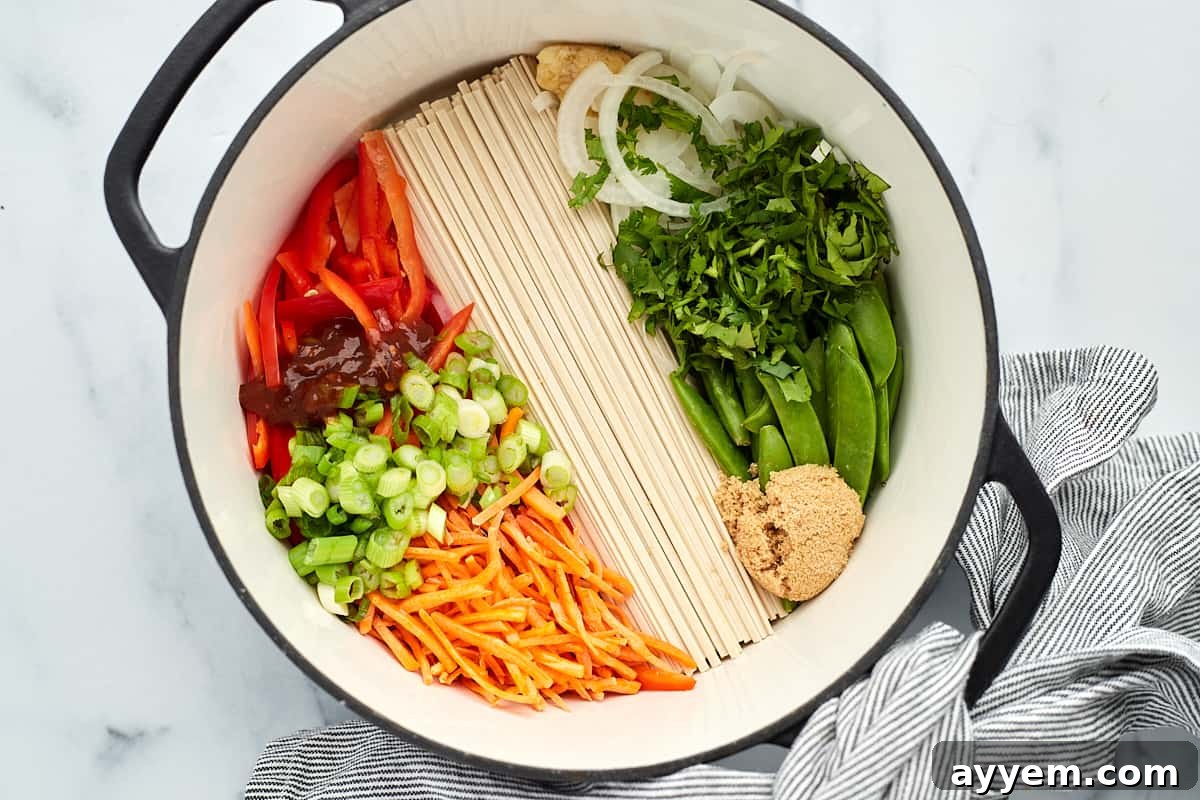
Essential Ingredients for a Stellar Vegetarian Ramen Bowl
The beauty of this ramen recipe lies in its inherent versatility. While the robust broth creates a magnificent flavor foundation, the real culinary adventure begins with the endless possibilities for ingredients and toppings. Consider your kitchen your personal ramen playground – feel free to mix, match, and customize to craft a bowl that perfectly caters to your unique cravings and dietary preferences. It’s an exciting flavor journey in every spoonful!
Here’s a detailed look at the core components we use:
- Organic Ramen Noodles: For an authentic texture and superior taste, we highly recommend the Hakubaku brand. However, don’t hesitate to use any good quality ramen noodles readily available in your local grocery store. Just ensure they are free of any non-vegetarian additives.
- Vibrant Vegetables: Our recipe incorporates a colorful blend of red peppers, carrots, snap peas, white onion, and bok choy. These not only provide a spectrum of essential vitamins and nutrients but also contribute diverse textures and flavors to the broth. This is also an excellent opportunity to utilize any leftover vegetables lingering in your fridge – think mushrooms, spinach, corn, or edamame!
- Aromatic Minced Garlic: Fresh, whole garlic cloves are paramount for the best flavor. Beyond its pungent, savory notes that infuse the broth with depth, garlic is celebrated for its potent anti-inflammatory properties and numerous health benefits.
- Toasted Sesame Oil: A little goes a long way with sesame oil! Its distinct nutty aroma and flavor are crucial for adding an authentic Asian essence to the broth. Furthermore, it contributes healthy fats, making your ramen bowl more satiating and satisfying.
- Zesty Grated Ginger: Fresh ginger not only boasts impressive health benefits but also introduces a delightful tang and a subtle, warming spice that elevates the entire dish. It’s the secret weapon for an irresistible flavor profile that will have you reaching for seconds.
- Balancing Light Brown Sugar: A touch of sweetness is essential to harmonize the savory, salty, and spicy notes in the broth. Light brown sugar helps to round out the flavors, preventing the heavier oils and spices from overwhelming the palate.
- Rich Soy Sauce: This staple is fundamental to forming the umami-rich base of your vegetarian ramen. It provides a crucial salty depth that enhances all the other ingredients. For an alternative with a slightly different flavor profile, miso paste can be used in place of or in addition to soy sauce.
- Fiery Chili Paste: For those who appreciate a kick, a dash of chili paste introduces a pleasant heat and peppery depth. You can typically find it in the Asian food aisle of most supermarkets. Adjust the amount to match your preferred spice level.
- Savory Fish Sauce (Optional for strict vegetarians): While this recipe is vegetarian, fish sauce is often used in traditional ramen for its sweet, salty, and profound umami qualities, which significantly deepen the broth’s flavor. If you are a strict vegetarian or vegan, you can omit this or use a vegan fish sauce alternative for similar depth.
- Sriracha for Custom Spice: This popular hot sauce allows you to easily customize the heat level of your ramen. Add more or less sriracha directly to your bowl to suit your individual spice tolerance.
- Flavorful Vegetable Broth: Crucially, to keep this dish vegetarian-friendly, we opt for vegetable broth instead of traditional meat-based broths. However, feel free to use your preferred broth if you’re not strictly vegetarian. High-quality vegetable broth forms the liquid foundation, tying all the flavors together.
Elevate Your Bowl: Creative Topping Ideas for Vegetarian Ramen
Let’s be honest: while the broth and noodles are the foundation, the toppings are often the true stars of any ramen bowl! We’re particularly fond of adding crushed peanuts for that irresistible textural crunch, but the beauty of ramen lies in its boundless topping possibilities. Your imagination is truly the only limit. Whether you prefer a fresh sprinkle of green onions, a vibrant swirl of Sriracha, or a luxurious poached egg gently bathing in the broth, there’s a topping combination for every palate. Dive into this topping adventure and personalize your ramen to make it uniquely yours!
Here are just a few ideas to get you started:
- Fresh Aromatics: Sliced green onions (scallions), fresh cilantro, or a squeeze of lime.
- Vegetable Boosts: Sweet corn kernels, crisp bean sprouts, sautéed shiitake or enoki mushrooms, baby bok choy, or bamboo shoots.
- Protein Power: Perfectly poached or soft-boiled eggs (if consuming eggs), pan-fried or silken tofu cubes, or seasoned tempeh.
- Crunch & Texture: Crushed peanuts, toasted sesame seeds, crispy fried onions, or shredded nori (seaweed sheets).
- Extra Flavor & Heat: A drizzle of chili oil, a dollop of garlic chili sauce, or a sprinkle of Togarashi (Japanese seven-spice blend).
Minimal Equipment, Maximum Flavor: What You Need
Absolutely not! That’s one of the fantastic advantages of our easy one-pot ramen recipe. You don’t need any specialized or fancy kitchen gadgets. As long as you possess a large Dutch oven or any heavy-bottomed pot with a snug-fitting lid, you’re perfectly equipped to create this comforting and delicious meal. Simplicity is key!
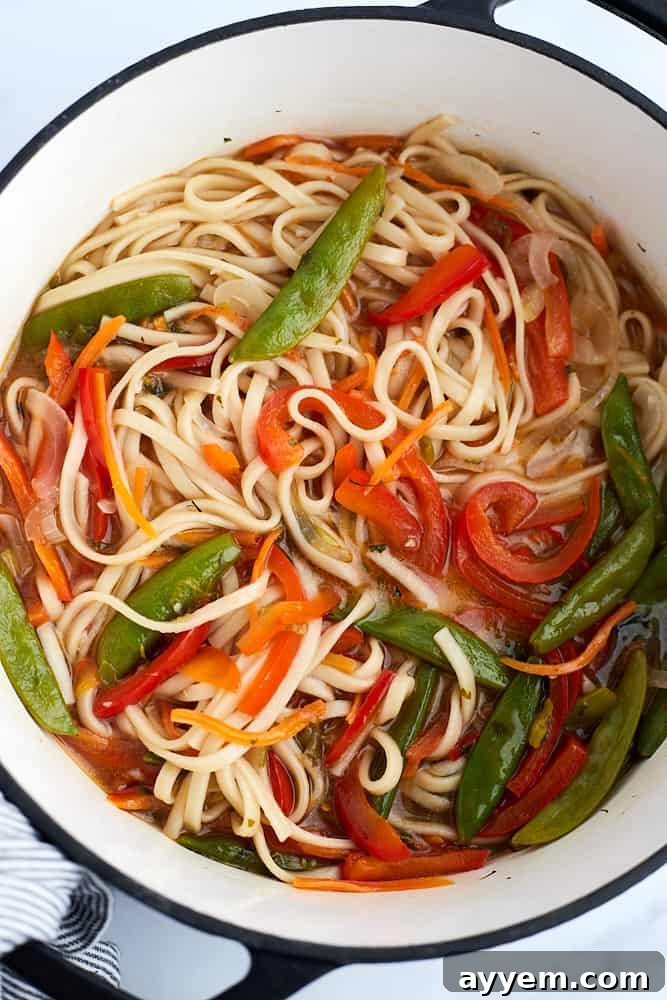
Effortless One-Pot Ramen: Three Simple Steps
You might have heard that crafting ramen from scratch can be a daunting and time-consuming task, and indeed, many traditional recipes require meticulous preparation. However, for our one-pot vegetarian version, we’ve streamlined the process to be as straightforward and approachable as possible, without compromising on flavor. Get ready to create a masterpiece with these three magic steps:
- Combine All Ingredients: In your chosen large Dutch oven or heavy pot, simply add all your prepped ingredients – noodles, vegetables, broth, and seasonings. Give everything a good stir to ensure it’s well combined and evenly distributed.
- Simmer to Perfection: Bring the liquid mixture to a rolling boil over high heat. Once boiling, reduce the heat to medium-low, cover the pot with its lid, and let it gently simmer. Continue cooking for approximately 12-14 minutes, or until your noodles are tender and the vegetables have softened to your liking. The flavors will meld beautifully during this simmering process.
- Serve and Savor: Once cooked, remove the lid, give the ramen a final stir, and taste for seasoning. Adjust any flavors as needed – perhaps a touch more soy sauce for umami, or a dash more sriracha for heat. Ladle generous portions into bowls and enjoy warm with all your favorite toppings!
Mastering the Art of Ramen Eggs (Ajitama)
While our core one-pot recipe doesn’t automatically include an egg, adding one is a fantastic way to enhance your ramen with creamy richness and extra protein. A perfectly cooked egg, often referred to as ‘ajitama’ in Japanese ramen shops, is a highly prized topping. The most popular choice for ramen is a soft-boiled egg with a jammy, runny yolk.
To achieve this, you’ll want to soft boil your egg in a separate pot. Carefully place the egg into gently boiling water and cook for precisely 6-7 minutes for that ideal jammy consistency. Immediately transfer it to an ice bath to stop the cooking process, then peel it gently under cold running water. For an even more authentic experience, you can marinate your soft-boiled eggs in a mixture of soy sauce, mirin, and sometimes sugar overnight in the refrigerator. This infuses them with a wonderful savory-sweet flavor. Just before serving, slice the egg in half and place it on top of your steaming bowl of ramen.
Smart Make-Ahead and Storage Solutions for Your Ramen
Ramen is undoubtedly at its best when enjoyed fresh and warm, right after it’s cooked, as the intensity of its flavors tends to diminish over time. However, with a few smart tips and tricks, you can certainly prepare components in advance or store leftovers effectively, ensuring you always have a delicious bowl within reach!
- For Optimal Storage: To best preserve the distinct flavors and textures, we highly recommend storing the various components of your ramen separately. Place the broth in one airtight container, the cooked noodles in another (perhaps with a splash of broth to prevent sticking), and the cooked vegetables in a third. This separation is key to preventing the noodles from becoming too soggy and the vegetables from over-softening. Stored this way, the ingredients will remain fresh in the refrigerator for up to two to three days.
- For Longer-Term Freezing: If you wish to extend the shelf life of your ramen, freezing is an excellent option. Again, separation is crucial. Pour the cooled broth into freezer-safe bags or containers, and store the blanched (but not fully cooked) vegetables in another. The noodles are best cooked fresh, but if you must freeze them, do so separately and expect a slight change in texture upon reheating. Frozen components can be kept for up to one month.
- Effortless Reheating: When hunger strikes and you’re ready to enjoy your stored ramen, transfer the frozen components to the refrigerator overnight to thaw. Reheat the broth gently in a pot over medium heat on the stovetop until it’s simmering, or warm it in the microwave. Once the broth is hot, add your prepped vegetables and fresh or reheated noodles, allowing them to warm through. Adjust seasonings to taste, add your favorite fresh toppings, and dig in!
Common Questions About This One-Pot Vegetarian Ramen Recipe
Absolutely, with a strategic approach! The broth component of your vegetarian ramen can be made several days in advance – in fact, its flavors often deepen and meld beautifully with a little time. However, for the best texture, the noodles should ideally be cooked just before serving. For efficient meal prep, prepare a generous batch of broth and all your desired toppings ahead of time. Then, when you’re ready to eat, simply reheat the broth and quickly cook fresh noodles directly in it for that perfect, comforting ramen experience.
Vegetarian ramen is a broad category encompassing any ramen dish prepared entirely without meat or fish products. This means the broth, noodles, and toppings are all plant-based. Miso ramen, on the other hand, specifically refers to a ramen where miso paste is used as the primary flavoring agent in the broth, giving it a distinctive savory, earthy, and umami-rich flavor profile, along with a slightly cloudy texture. Many miso ramen recipes can indeed be vegetarian if prepared with vegetable broth and plant-based toppings, but traditional miso ramen often includes pork or other animal-derived ingredients in its broth base.
Achieving a creamy texture in vegetarian ramen without dairy is surprisingly easy and adds wonderful richness. You can stir in a tablespoon of tahini (sesame paste) for a nutty creaminess, a dollop of full-fat coconut milk for a tropical hint, or a spoonful of blended silken tofu for a smooth, velvety consistency. Another excellent method is to whisk some white miso paste with a ladle of the hot broth until completely smooth, then stir it back into the pot. For a naturally thicker broth, you can mash some of the softer cooked vegetables directly into the soup or create a cornstarch slurry (cornstarch mixed with a small amount of cold water) and stir it in at the end to gently thicken the broth to your desired consistency.
The best vegetarian ramen toppings offer a delightful mix of flavors, textures, and nutrients. Excellent choices include thinly sliced shiitake or enoki mushrooms (sautéed or fresh), sweet corn kernels, vibrant baby bok choy, finely julienned carrots, crisp bean sprouts, and various forms of tofu – whether it’s cubed and pan-fried for a crispy exterior, or soft, silken tofu for a delicate addition. Freshly sliced green onions (scallions) are a classic aromatic garnish. For added crunch and depth, consider toasted sesame seeds, shredded nori (seaweed sheets), or crispy fried shallots. If you consume eggs, a perfectly soft-boiled, jammy egg adds a luxurious richness. Finally, a squeeze of fresh lime juice can brighten the entire bowl, bringing all the flavors into perfect harmony.
Discover More Effortless One-Pot Wonders
If the simplicity and deliciousness of this one-pot vegetarian ramen have won you over, you’ll love exploring more of our favorite one-pot recipes designed to make meal times a breeze. Simplify your cooking routine without sacrificing flavor!
- One Pot Hummus Pasta
- One-Pot Pasta with Zucchini
- One Pot Greek Spaghetti
- One Pot Mbakbaka (Spicy Libyan Pasta)
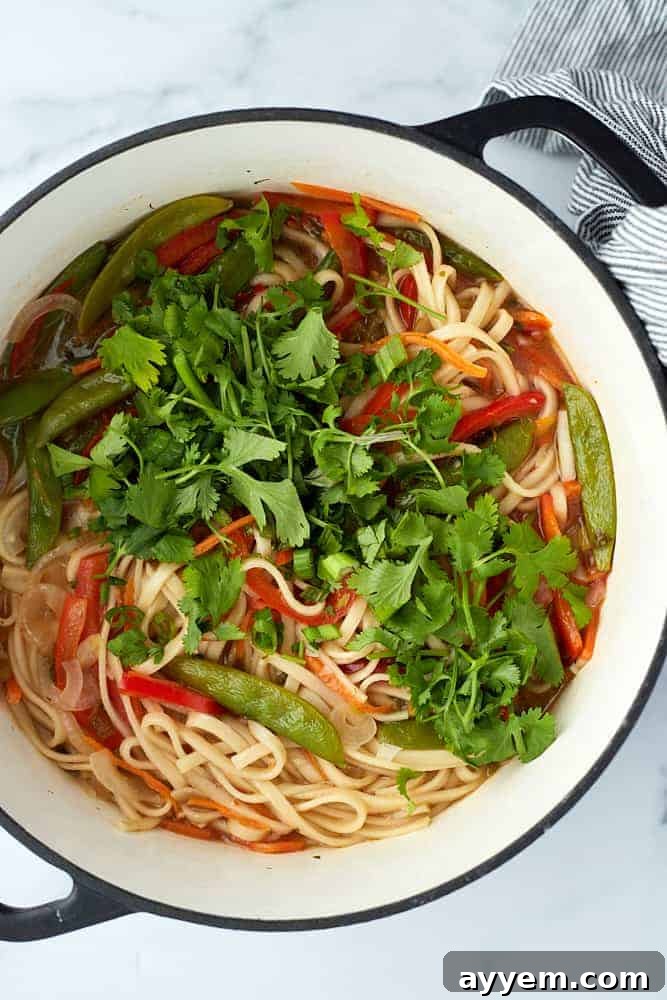
One Pot Vegetarian Ramen Recipe
Ingredients
- 10 ounces Organic Ramen Noodles
- 1 small red pepper, sliced
- 1/2 cup crinkle-cut carrots
- 1/2 cup snow peas
- 1/4 cup white onion, chopped
- 2 green onions, chopped
- 1 cup bok choy, chopped
- 3 cloves garlic, minced
- 1 teaspoon sesame oil
- 1 Tablespoon fresh ginger, grated
- 1 Tablespoon light brown sugar
- 1/4 cup soy sauce
- 2 Tablespoon chili paste
- 2 teaspoon fish sauce
- 2 Tablespoon sriracha more or less to taste
- 4 cups vegetable broth or choice of broth
- Optional: crushed peanuts and fresh cilantro for serving
Instructions
-
In a deep Dutch oven or a heavy-bottomed pot, add all the ingredients, stirring to combine.10 ounces Organic Ramen Noodles, 1 small red pepper, sliced, 1/2 cup crinkle-cut carrots, 1/2 cup snow peas, 1/4 cup white onion, chopped, 2 green onions, chopped, 1 cup bok choy, chopped, 3 cloves garlic, minced, 1 teaspoon sesame oil, 1 Tablespoon fresh ginger, grated, 1 Tablespoon light brown sugar, 1/4 cup soy sauce, 2 Tablespoon chili paste, 2 teaspoon fish sauce, 2 Tablespoon sriracha, 4 cups vegetable broth
-
Bring the liquid to a boil over high heat. Then, cover, and reduce the heat to medium-low. Cook for 12-14 minutes or until the noodles are tender.
-
Remove the lid, and stir.
-
Serve warm with crushed peanuts and cilantro, if desired.Optional: crushed peanuts and fresh cilantro for serving
Video
Equipment
Notes
- To Store: For the best results, we recommend separating all of the ingredients and storing them in individual containers. This helps preserve the flavor! Keep the ingredients in the fridge for two to three days.
- To Freeze: If you want to keep your ramen longer, we recommend storing it in the freezer. To do so, you’ll want to separate the broth, noodles, and veggies into separate sealable bags. Then, freeze them for up to one month.
- To Reheat: When you’re ready to eat, let your ingredients thaw in the fridge overnight. Then, warm them in a pot over medium heat on the stove or in the microwave until your desired temperature is reached.
Nutrition
Nutrition information is automatically calculated, so should only be used as an approximation.