
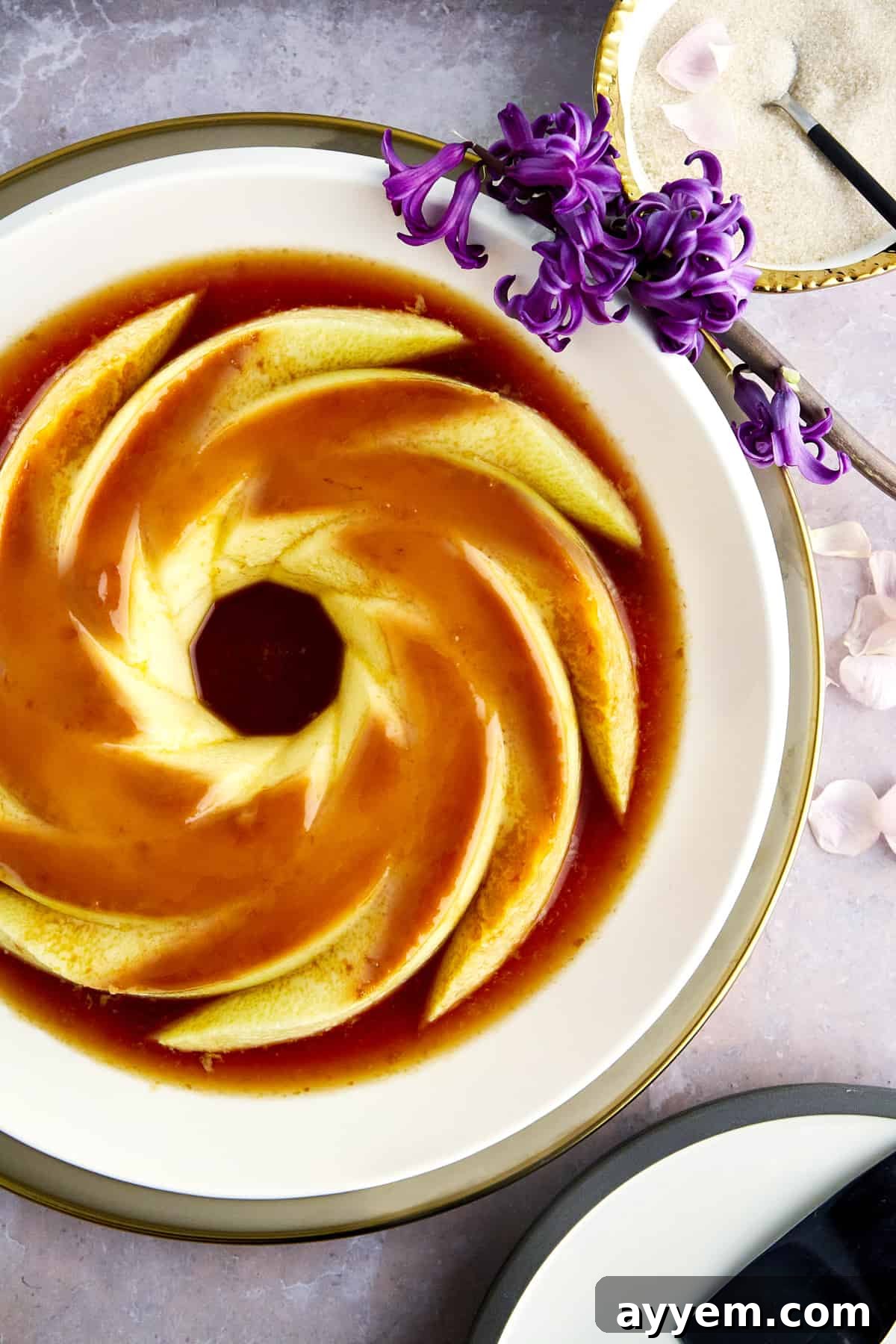
Get ready to transform your dessert repertoire with this incredible Easy Creme Caramel Recipe! Forget complicated techniques and endless ingredient lists – with just a few simple components and straightforward steps, you can craft a sophisticated, restaurant-quality dessert right in the comfort of your own home. This timeless classic boasts a luxuriously silky-smooth custard base crowned with a rich, glistening caramel sauce that’s guaranteed to captivate your guests and leave a lasting impression.
Whether you know it as flan, caramel custard, or by its elegant French name, this dessert is a universal favorite, cherished for its delicate texture and exquisite flavor. Preparing it yourself offers not only the satisfaction of creating something beautiful from scratch but also the opportunity to tailor it perfectly to your taste.
What Is Creme Caramel?
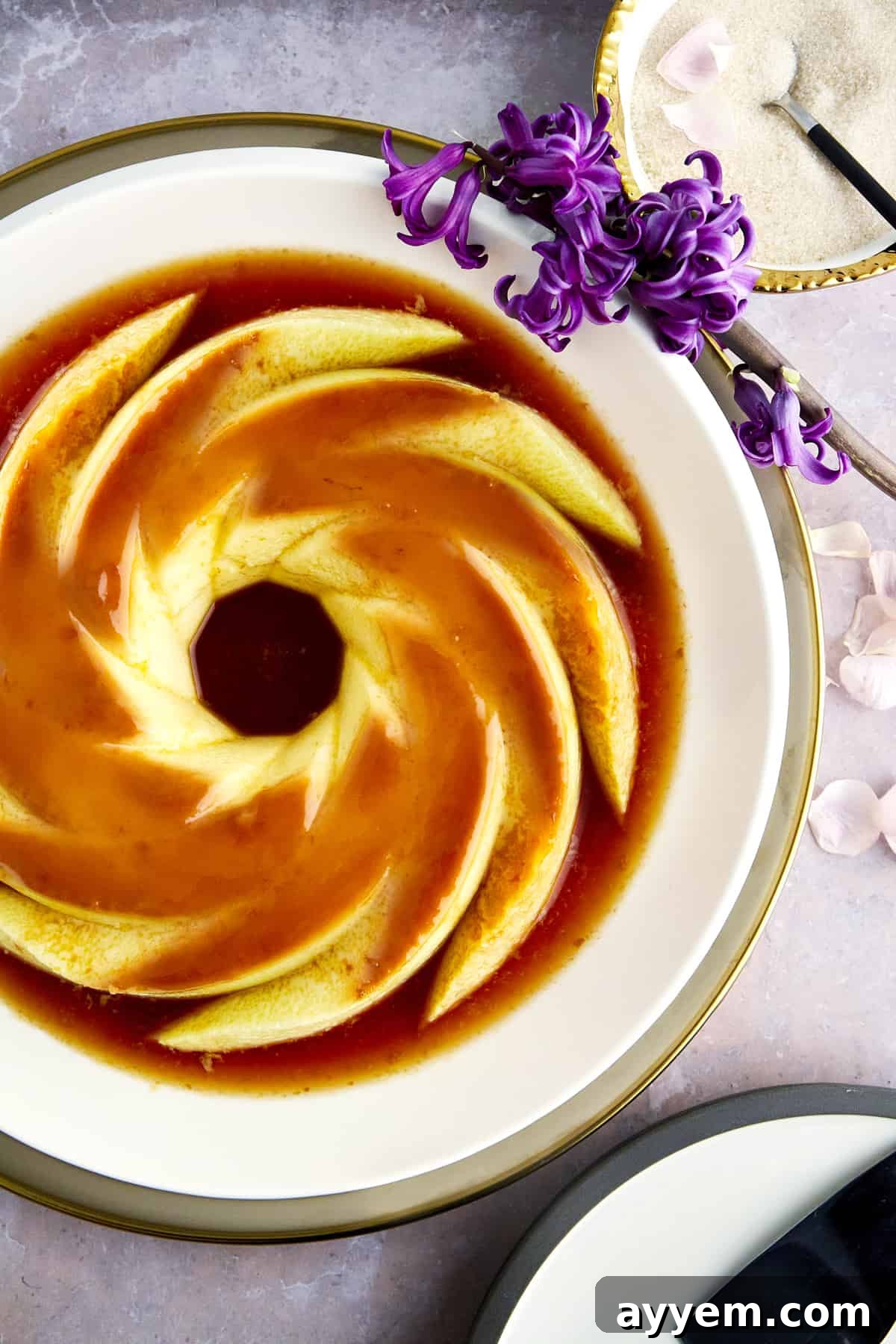
Creme Caramel, often affectionately known as flan, caramel custard, egg pudding, or in the Middle East as كريم كاراميل, stands as a beloved custard dessert cherished across diverse cultures worldwide. At its core, this delightful confection is comprised of a creamy custard base, meticulously crafted from a blend of eggs, sugar, and milk or cream. This mixture is then gently baked or steamed in a water bath until it achieves a perfect, self-sustaining set.
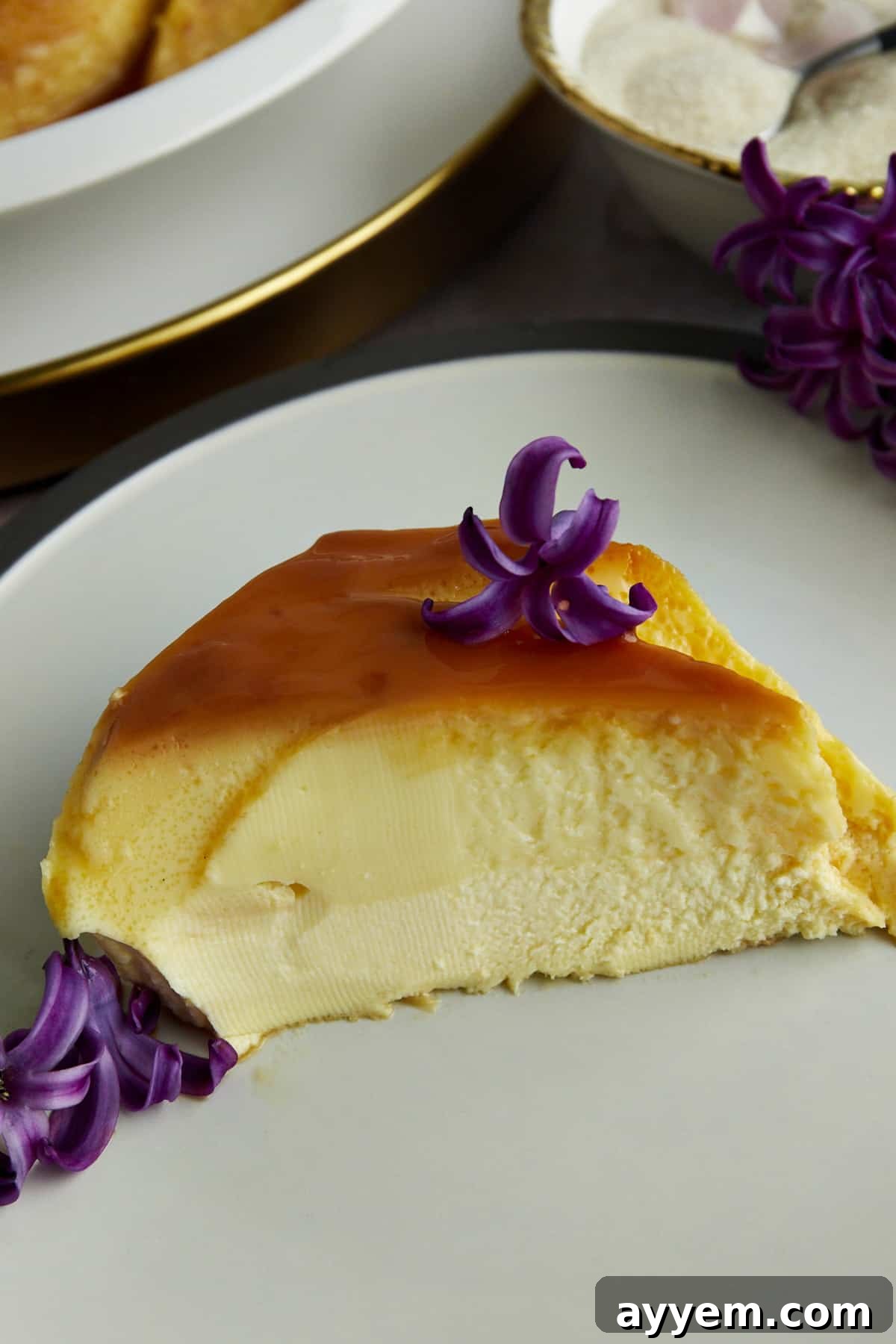
The signature element of a Creme Caramel is the glistening layer of rich caramel sauce that forms at the bottom of the mold before baking. Once chilled thoroughly, the dessert is inverted onto a plate, allowing this luxurious caramel to cascade over the velvety-smooth custard, creating an enticing glaze. The final result is a dessert of unparalleled elegance and simplicity: a soft, sweet, and jiggly custard that melts effortlessly in your mouth, leaving behind a subtle hint of rich caramelized sugar. Its smooth texture and balanced sweetness make it a comforting yet sophisticated treat for any occasion.
Origins of the Creme Caramel Recipe
The precise origins of Creme Caramel are shrouded in a delectable mystery, sparking friendly debates among culinary historians across Europe. While its French name strongly suggests a Gallic heritage, leading many to believe it’s a quintessential French recipe, both the English and Spanish cuisines lay claim to being the first inventors of this creamy delight. This culinary tug-of-war highlights the dessert’s widespread appeal and the different paths its evolution might have taken across various European traditions.
Regardless of which nation first perfected it, the concept of custards baked with a sweet, caramelized topping has deep historical roots, dating back centuries in many parts of the world. What remains undeniable is the dessert’s enduring scrumptiousness and its universal ability to bring joy to those who taste it. Its journey through history has cemented its status as a global dessert icon, appreciated from European bistros to Latin American households and beyond.
Is Creme Caramel the Same as Flan?
Often, the terms “Creme Caramel” and “flan” are used interchangeably, and for good reason: they refer to essentially the same exquisite dessert. While there are nuanced differences that often depend on regional traditions, the core components and preparation methods result in nearly identical tastes and textures.
The primary distinction often lies in geography. “Creme Caramel” is the term predominantly used in European countries, particularly France and the UK. Conversely, “flan,” sometimes specified as “Spanish flan,” is more common in Latin American and Spanish-speaking regions, reflecting its significant presence in Spanish culinary heritage.
From a technical standpoint, some traditional Creme Caramel recipes might call for a combination of both whole eggs and egg yolks, contributing to an even richer, silkier custard. Flan, on the other hand, frequently uses only whole eggs. Additionally, flan recipes in some regions may incorporate sweetened condensed milk or evaporated milk, leading to a denser, sweeter consistency, whereas classic Creme Caramel often relies solely on whole milk or cream. Despite these minor variations in ingredient ratios or specific milk types, the ultimate outcome is a strikingly similar dessert: a velvety-smooth, jiggly custard crowned with a luscious caramel sauce. This shared deliciousness is why the names continue to be used synonymously around the world.
What’s the Difference Between Crème Brûlée and Creme Caramel?
Though both desserts share a “creme” in their name and feature a rich custard base, Crème Brûlée and Creme Caramel are distinct culinary experiences. Understanding their differences enhances appreciation for each unique treat.
Creme Caramel, as we know, is served inverted onto a plate, showcasing its signature cascade of amber caramel sauce over a smooth, often jiggly, Jell-O-like custard. Its texture is soft, yielding, and uniform throughout. The caramel layer is integral to its presentation and flavor profile, forming a liquid pool around the custard.
Crème Brûlée, by contrast, is traditionally served directly in the ramekin it was baked in. Its hallmark is a crisp, glassy sugar shell, created by torching a layer of granulated sugar sprinkled over the chilled custard just before serving. This creates a delightful textural contrast with the creamy, slightly more liquid-like center of the custard. Unlike Creme Caramel, Crème Brûlée does not typically feature a pre-baked caramel layer at the bottom. It’s a dessert defined by its immediate crunchy topping and creamy interior, offering a different sensory delight.
What’s the Difference Between Mexican and Vietnamese Flan?
While both Mexican and Vietnamese flan recipes are members of the custardy dessert family, they boast unique characteristics in their flavor profiles, textures, and appearances, reflecting their distinct culinary traditions.
Mexican flan is renowned for its rich and indulgent character. It is typically prepared with a decadent combination of sweetened condensed milk, whole milk, and heavy cream, often infused with pure vanilla extract. This blend results in a notably creamier, richer flavor and a velvety-smooth, dense texture that is incredibly satisfying. The caramel sauce for Mexican flan is usually a deep, dark amber, providing a strong counterpoint to the sweet custard.
Vietnamese flan, known as Bánh Flan, offers a lighter, more aromatic experience. It frequently incorporates coconut milk, which imparts a subtle yet distinctive tropical flavor. Many Vietnamese flan recipes are also infused with pandan leaf extract, a popular Southeast Asian flavoring that gives the custard a delicate green hue and a fragrant, slightly grassy aroma. This results in a custard treat that is often less rich than its Mexican counterpart, with a brighter, more ethereal coconut taste. The caramel layer for Vietnamese flan might also be lighter in color and sweetness, complementing the nuanced flavors of the pandan and coconut. These regional variations truly showcase the versatility and global appeal of this humble yet exquisite dessert.
Essential Ingredients for this Easy Creme Caramel Recipe
Despite its sophisticated appearance and complex flavor profile, Creme Caramel is remarkably simple to prepare, requiring only a handful of readily available, basic ingredients. The key to its success lies in the quality of these components and the careful execution of each step. Here’s a closer look at what you’ll need to create this gourmet delight:
- Granulated Sugar: This fundamental ingredient serves a dual purpose. It’s used generously to create the foundational rich, amber caramel sauce that beautifully coats the custard, and a smaller portion sweetens the custard base itself, ensuring a perfectly balanced taste. For the caramel, pure granulated sugar is essential for achieving the right consistency and deep flavor without burning.
- Whole Milk and Heavy Cream: The combination of these two dairy powerhouses is crucial for achieving the signature creamy and luxurious texture of the custard. Whole milk provides the necessary liquid base and a subtle sweetness, while heavy cream elevates the richness, contributing to that desirable melt-in-your-mouth feel. Using both ensures a perfect balance of lightness and indulgence.
- Large Eggs: Eggs are the structural backbone of any custard. In this recipe, large eggs not only contribute significantly to the dessert’s richness and flavor but, more importantly, their protein content provides the essential structure that allows the custard to set into that smooth, almost gel-like, yet tender texture that defines a perfect Creme Caramel. They bind the ingredients together, preventing a watery or crumbly result.
- Vanilla Extract: A high-quality pure vanilla extract is indispensable. While it might seem like a small addition, vanilla plays a vital role in enhancing and complementing the flavors of the other ingredients, adding a layer of warmth and aromatic complexity. Avoid artificial vanilla if possible, as the difference in taste is truly noticeable and can elevate your dessert from good to truly gourmet.
Mastering this Homemade Creme Caramel: Easy Steps for Impressive Results
While Creme Caramel does require a bit of patience, primarily for the chilling process, the active preparation is surprisingly straightforward. As long as you allow ample time for the dessert to properly set, you’ll find this recipe to be an enjoyable and rewarding baking project. Follow these easy steps, and you’ll be on your way to impressing everyone with your culinary prowess!
- Prepare Your Baking Environment: Begin by preheating your oven to 375°F (190°C). Then, fill a saucepan with water and bring it to a gentle simmer over medium heat. This simmering water will be used for the water bath (bain-marie) in which your creme caramel will bake, ensuring an even, gentle cooking process and preventing the custard from curdling.
- Create the Caramel: In a separate small, heavy-bottomed saucepan, evenly spread 1 cup of granulated sugar. Cook this sugar over medium-high heat, watching it carefully. As it melts, swirl the pan gently every few minutes to ensure even caramelization. The sugar will transition from clear to amber, then to a rich, dark brown, typically within 6-8 minutes. The key is to achieve a deep golden-brown color without letting it burn, which can make it bitter. Immediately pour the hot caramel into your chosen bundt pan (or individual ramekins), tilting and swirling the pan to coat the bottom and slightly up the sides before the caramel sets. Work quickly but carefully as caramel is very hot.
- Warm the Dairy: In a clean pot over medium heat, combine the 3 cups of whole milk and 1 ¼ cups of heavy cream. Heat this mixture just until it is warm to the touch and small bubbles begin to form around the edges. It’s crucial not to let it boil, as this can affect the texture of the custard. Once warm, remove from heat.
- Prepare the Custard Base: In a large mixing bowl, gently beat the 9 large eggs with the remaining ½ cup + 2 tablespoons of granulated sugar until the mixture is smooth and well combined. Avoid over-whisking, as incorporating too much air can lead to bubbles in your finished custard. Slowly and gradually, while continuously whisking, pour the warm milk and cream mixture into the egg and sugar blend. This tempering process is essential to prevent the eggs from scrambling. Finally, gently mix in the 2 teaspoons of vanilla extract until just combined.
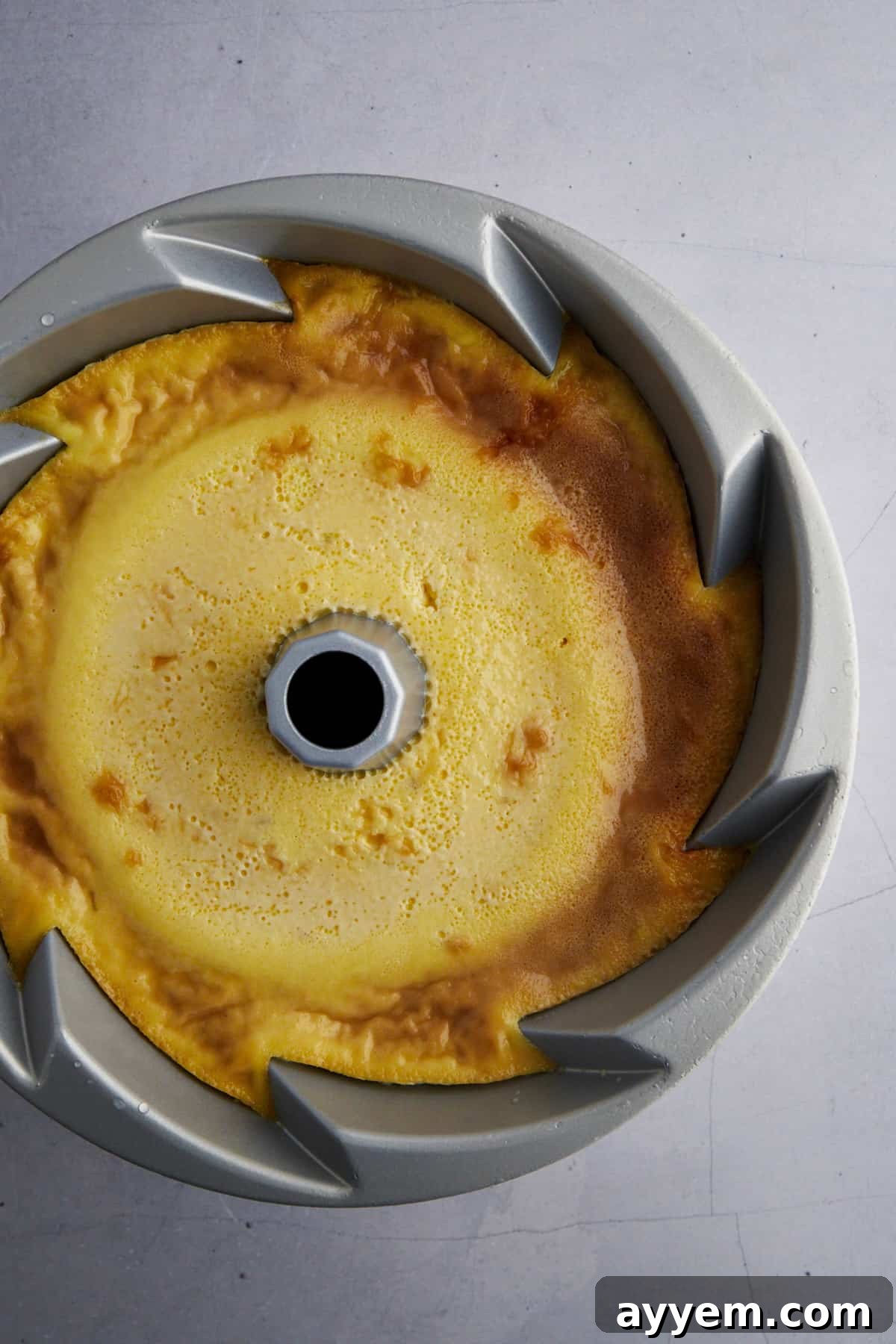
- Bake in a Water Bath: Carefully pour the prepared custard filling into the bundt pan, over the set caramel layer. Place the bundt pan into a larger baking dish. Now, pour 2-3 inches of the previously simmered warm water into the larger baking dish, surrounding the bundt pan. This water bath creates a moist, even heat environment, ensuring the custard bakes gently and smoothly. Carefully transfer the entire assembly to the preheated oven. Bake for 60-70 minutes, or until the creme caramel is firm enough to hold its shape but still exhibits a slight jiggly movement in the center when gently shaken. This “jiggle” indicates perfect doneness; it will firm up further as it cools.
- Cool and Chill: Once baked, carefully remove the baking dish from the oven and the bundt pan from the water bath. Allow the creme caramel to cool completely at room temperature for about 1 hour. After it has cooled, cover the pan tightly with plastic wrap and transfer it to the refrigerator. Chill for a minimum of 4 hours, but for the absolute best results and to allow the flavors to fully meld and the custard to set perfectly, chilling overnight is highly recommended.
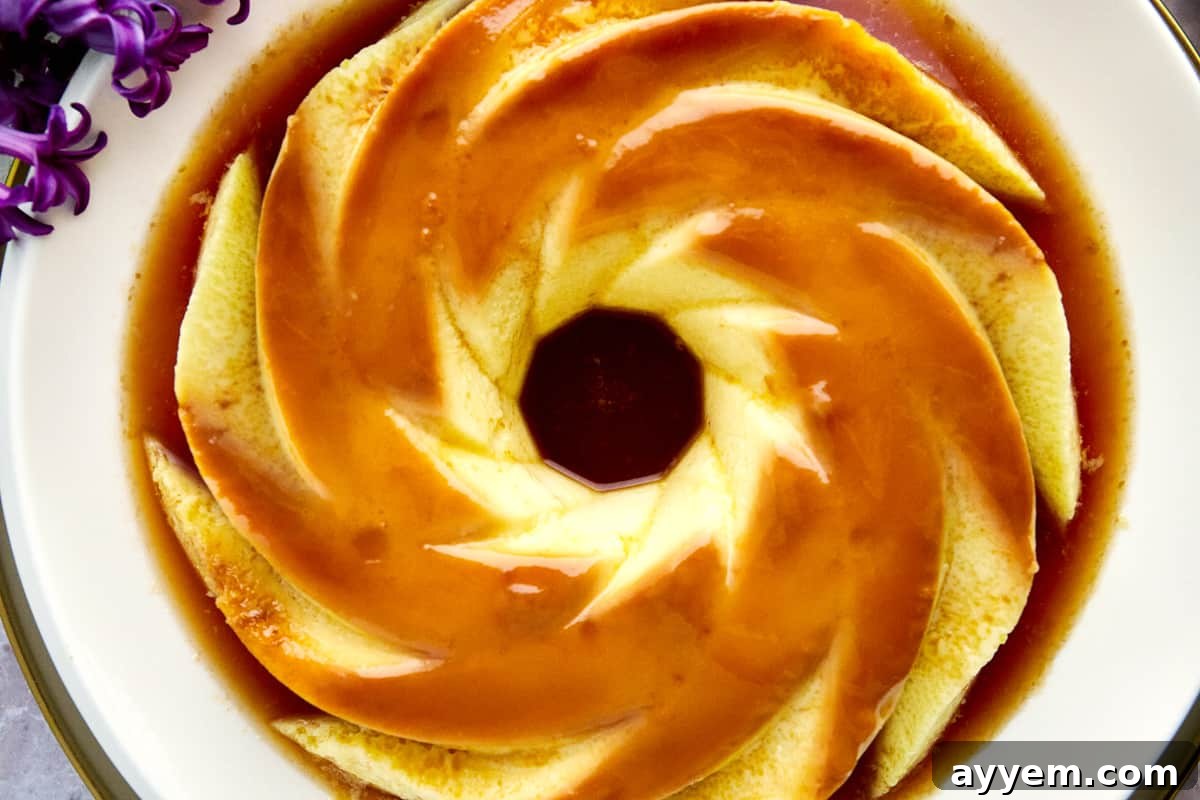
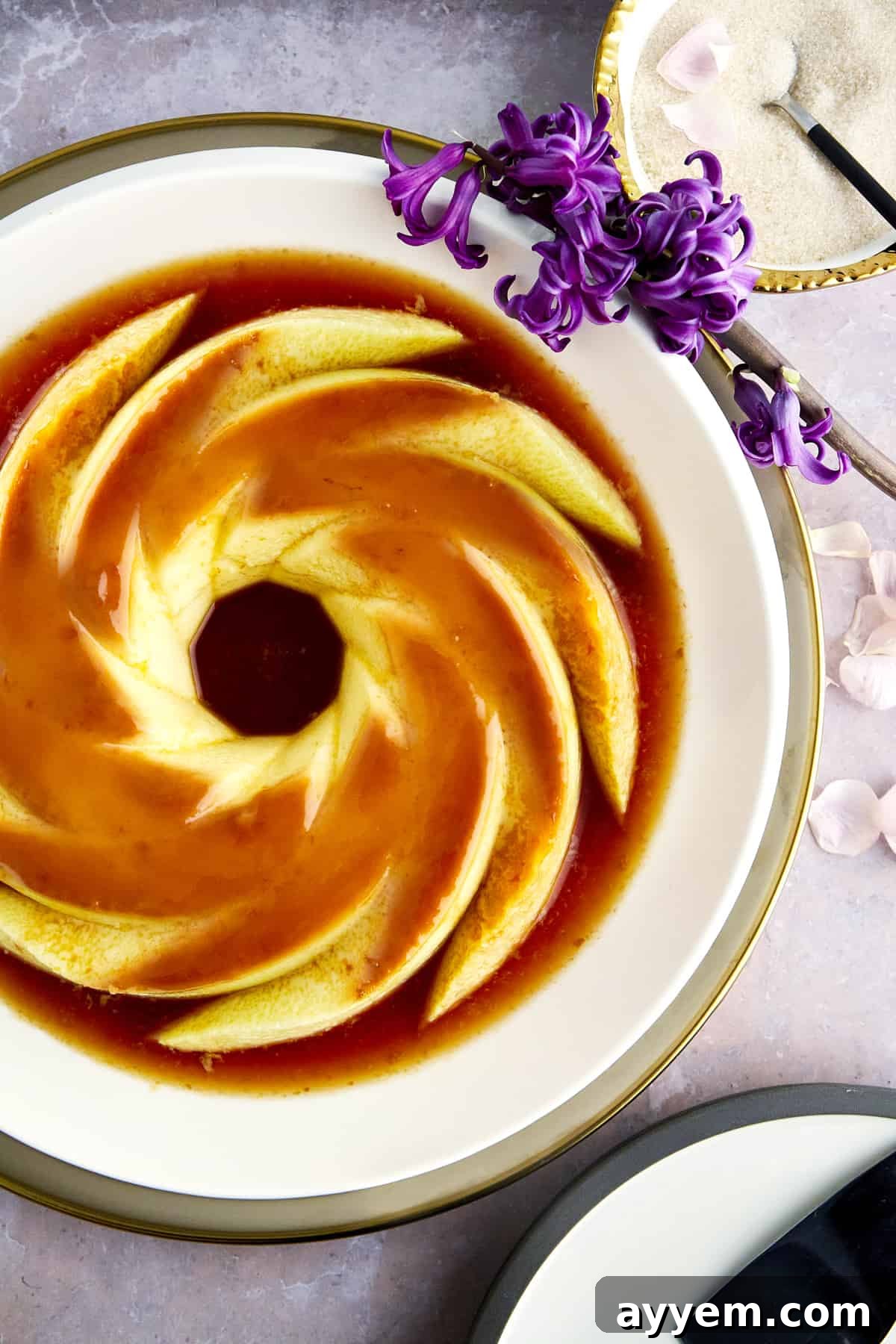
- Serve with Flair: When you’re ready to serve your masterpiece, run a thin, sharp knife carefully along the inner edges of the bundt pan and around the center cone. Place a large serving plate (preferably with a slight lip to catch the caramel sauce) over the pan. In one swift, confident motion, invert the dessert onto the plate. The caramel, now liquid again, will beautifully cascade over the custard. Serve cold and enjoy the rich, creamy goodness!
- Storage: Any leftover Creme Caramel can be stored, covered, in the refrigerator for up to 5 days. Its flavor and texture often improve slightly after a day or two!
Tips for a Flawless Creme Caramel
Achieving a perfect Creme Caramel every time is easier than you think, especially with these insider tips. Paying attention to these small details can make all the difference between a good dessert and an absolutely unforgettable one.
- Don’t Overmix the Custard: When combining your egg and sugar mixture with the warm dairy, mix just until the ingredients are smoothly incorporated. Over-whisking introduces too much air, which can lead to unsightly air bubbles in your finished custard or even a slightly rubbery texture. A gentle hand mixer or a whisk used slowly is sufficient.
- Avoid Overbaking: This is perhaps the most critical tip. Creme Caramel is delicate. Remove it from the oven as soon as the edges are set and the center is still slightly jiggly. The residual heat will continue to cook the custard as it cools, and it will firm up considerably in the refrigerator. Overbaking can result in a tough, porous, or curdled custard, losing its characteristic silky smoothness.
- Allow Plenty of Cooling Time: Patience is a virtue, especially with Creme Caramel. While a minimum of four hours in the fridge is necessary for it to set, chilling your dessert overnight is truly ideal. This extended cooling period not only ensures the custard is perfectly firm but also allows the flavors to deepen and meld beautifully, creating a more harmonious and delicious dessert.
- The Inversion Technique: When it’s time to unmold your Creme Caramel, a little finesse goes a long way. After running a thin knife along the edges and center of the pan (if using a bundt pan), place your serving plate firmly over the pan. Invert the dessert with a quick, confident flip. Sometimes, a gentle tap on the bottom of the pan or a slight wiggle can help release it. Don’t be afraid to let gravity do its work; the caramel will ensure it slides out beautifully, bathing the custard in its golden sauce.
Serving Suggestions for Creme Caramel
The inherent richness and exquisite flavor of this Creme Caramel recipe make it a perfectly satisfying dessert on its own. Its smooth custard and luscious caramel sauce are a complete sensory experience, requiring no elaborate accompaniments. Indeed, it’s quite rare to find this classic dessert served with significant additions or sides in traditional settings.
However, if you’re looking to add a touch of extra elegance, a pop of vibrant color, or a contrasting texture, there are a few simple garnishes that can elevate your presentation. Consider topping individual servings with a handful of fresh berries such as bright raspberries, juicy strawberries, or plump blueberries. Their slight tartness provides a wonderful counterpoint to the sweet custard and caramel. Alternatively, a delicate dollop of freshly whipped cream can add an extra layer of creaminess and visual appeal, making your homemade Creme Caramel even more irresistible. A sprinkle of toasted nuts like slivered almonds could also add a subtle crunch.
Common Questions About This Creme Caramel Recipe
Here are some frequently asked questions to help ensure your Creme Caramel is a resounding success:
Yes, you can, but keep in mind that whole milk is crucial for achieving the characteristic creamy and rich texture of Creme Caramel. Skim milk will result in a lighter custard, which might be appealing if you’re looking for a less indulgent version, but it will significantly alter the traditional mouthfeel.
The key to a smooth, bubble-free custard is gentle mixing. When combining your ingredients, whisk them slowly and avoid aggressive beating. Straining the custard mixture through a fine-mesh sieve before pouring it into the pan can also help remove any remaining air bubbles or small bits of scrambled egg, ensuring an incredibly silky final product.
Absolutely! Creme Caramel is an excellent make-ahead dessert. In fact, it actually benefits from chilling overnight. This extended refrigeration period allows the custard to fully set, the flavors to meld and deepen, and the caramel sauce to properly liquefy and become beautifully pourable upon inversion. It’s perfect for entertaining as it frees up time on the day of your event.
The custard is perfectly baked when the edges are set and firm, but the very center still has a slight, delicate jiggle when you gently shake the pan. It should not look watery. The residual heat will continue to cook it, and it will firm up considerably as it cools in the refrigerator. An inserted knife should come out mostly clean, though a little wetness is acceptable in the very center.
More Dessert Recipes You’ll Love
Are you searching for more homemade desserts that look incredibly gourmet but are surprisingly simple to make? These recipes are guaranteed to impress your family and friends and become new favorites in your baking rotation!
- Hazelnut Chocolate Tart with Candied Hazelnuts
- Chocolate Pots De Creme
- Easy Chocolate Tiramisu Recipe
- Tiramisú Bread Pudding
Creme Caramel Recipe
Author: Food Dolls |
Servings: 12 servings
Prep: 10 mins |
Cook: 1 hr |
Chill Time: 4 hrs (minimum, ideally overnight) |
Total Time: Approximately 5 hours 10 minutes (plus overnight chilling)
Print Recipe
Email Recipe
Creme Caramel, also known as Flan or its Middle Eastern name كريم كاراميل, is a sweet, creamy, custard-like dessert. A show-stopping recipe, it looks gourmet but is easy to make! This recipe will guide you through creating a perfect, silky-smooth dessert with a rich caramel topping that’s ideal for any special occasion or a delightful treat at home.
Ingredients
For the Caramel:
- 1 cup granulated sugar
For the Creme Caramel:
- 3 cups whole milk
- 1 ¼ cups heavy cream
- 9 large eggs
- ½ cup + 2 Tablespoons granulated sugar
- 2 teaspoons vanilla extract
Instructions
- Preheat the oven to 375° Fahrenheit (190°C).
- Fill a saucepan with water, and warm it over medium heat until it comes to a simmer. This will be for your water bath.
- In a separate small saucepan, cook 1 cup of granulated sugar over medium-high heat for 6-8 minutes, or until it caramelizes and turns a dark brown. Swirl the pan every few minutes to ensure even cooking. Be careful not to let it burn, as this will result in a bitter taste! Immediately pour the hot caramel into a bundt pan (or individual ramekins), swirling it around to coat the bottom and slightly up the edges of the pan.
- In a separate pot over medium heat, combine 3 cups of whole milk and 1 ¼ cups of heavy cream. Heat the mixture just until it is warm to the touch; do not bring it to a boil.
- In a large bowl, beat the 9 large eggs and ½ cup + 2 Tablespoons granulated sugar until smooth. Slowly, while gently whisking, pour the warm milk mixture into the egg mixture to temper the eggs. Stir in the 2 teaspoons of vanilla extract until just combined.
- Carefully pour the custard filling into the bundt pan, over the set caramel. Place the bundt pan in a larger baking dish. Pour 2-3 inches of the simmering water (from step 2) into the baking dish, surrounding the bundt pan.
- Bake for 60-70 minutes, or until the crème caramel is firm enough to hold its shape but still slightly jiggly in the center when gently shaken.
- Allow the crème caramel to cool at room temperature for 1 hour. Then, cover it with plastic wrap and store it in the fridge for at least 4 hours, or ideally overnight for the best results.
- To serve, run a thin knife carefully around the sides of the bundt pan and along the center. Place a large serving plate over the pan, and confidently invert the dessert onto the plate. The caramel sauce will flow beautifully over the custard.
- Serve cold and enjoy this magnificent dessert!
- Store any leftovers, covered, in the fridge for up to 5 days.
Equipment
- 2 Saucepans
- 1 Large Bowl
- 1 Bundt Pan (or individual ramekins)
- 1 Hand Mixer (or whisk)
- 1 Baking Dish (large enough for water bath)
Nutrition Information
Serving: 1 serving | Calories: 266 kcal | Carbohydrates: 29g | Protein: 7g | Fat: 14g | Saturated Fat: 8g | Polyunsaturated Fat: 1g | Monounsaturated Fat: 4g | Trans Fat: 0.01g | Cholesterol: 158mg | Sodium: 77mg | Potassium: 162mg | Sugar: 29g | Vitamin A: 641 IU | Vitamin C: 0.1mg | Calcium: 110mg | Iron: 1mg
Nutrition information is automatically calculated and should only be used as an approximation.
Like this recipe? We’d love to hear your thoughts! Please leave a comment below and share your experience.