
Embark on a culinary journey to Egypt with Koshari, a dish that effortlessly marries hearty ingredients with an explosion of flavors. Revered as the national dish and a ubiquitous street food, Koshari isn’t just a meal; it’s a cultural experience. Once you dive into its complex layers of taste and texture, you’ll instantly understand why it holds such a cherished place in Egyptian cuisine and hearts worldwide. It’s a truly satisfying, deeply nourishing, and completely plant-based masterpiece that promises to delight every palate.
For many of us, Koshari carries the warmth of childhood memories. Growing up, the aroma of Koshari simmering for hours filled our homes as Mom meticulously prepared this traditional dish. For a long time, the sheer effort involved made us hesitant to tackle it ourselves. It felt like a labor of love best left to seasoned hands, or perhaps, a well-guarded family secret.
However, the overwhelming demand from our community for an authentic yet simplified Koshari recipe ignited a new mission. We knew we had to demystify this beloved dish and make it accessible to everyone. Weeks of dedicated recipe testing followed, often with Mom’s invaluable guidance, and yes, many delicious (and some not-so-successful) attempts, which meant eating A LOT of Koshari! But through perseverance and passion, we finally perfected a recipe that captures the soul of traditional Koshari without requiring an entire day in the kitchen. Now, you too can bring the vibrant flavors of Egypt into your home with this streamlined Koshari recipe!
A Glimpse into Koshari’s Rich History and Essential FAQs
Koshari, often spelled Koshary or Kushari, is an Egyptian culinary icon with roots stretching back centuries. More than just a meal, it’s a cultural touchstone, officially recognized as the national dish of Egypt. Its presence is pervasive, from the bustling streets of Cairo and Alexandria to every major city, where vendors skillfully assemble plates for eager customers.
The precise origins of Koshari remain a subject of delightful debate, adding to its mystique. Some historians suggest that the dish was introduced to Egypt by the Ottomans during their reign in the late 1800s, possibly evolving from similar grain-based dishes found across the Indian subcontinent. Regardless of its exact lineage, Koshari quickly became interwoven into the fabric of Egyptian life. It holds particular popularity among students, who frequently gather around street food carts on college campuses, seeking a satisfying and affordable meal. Yet, its appeal transcends age and social strata, making it a universally cherished dish enjoyed by people from all walks of life.
Is Koshari an Expensive Dish? The Answer is a Resounding No!
One of Koshari’s most appealing attributes, especially for those seeking delicious yet economical meals, is its affordability. When considering the cost of Koshari in Egypt, prices will naturally fluctuate based on where you choose to dine – whether it’s a bustling street cart, a casual eatery, or a more upscale restaurant – and the specific ingredients used. However, Koshari remains incredibly budget-friendly, making it a staple for many families and individuals across the country.
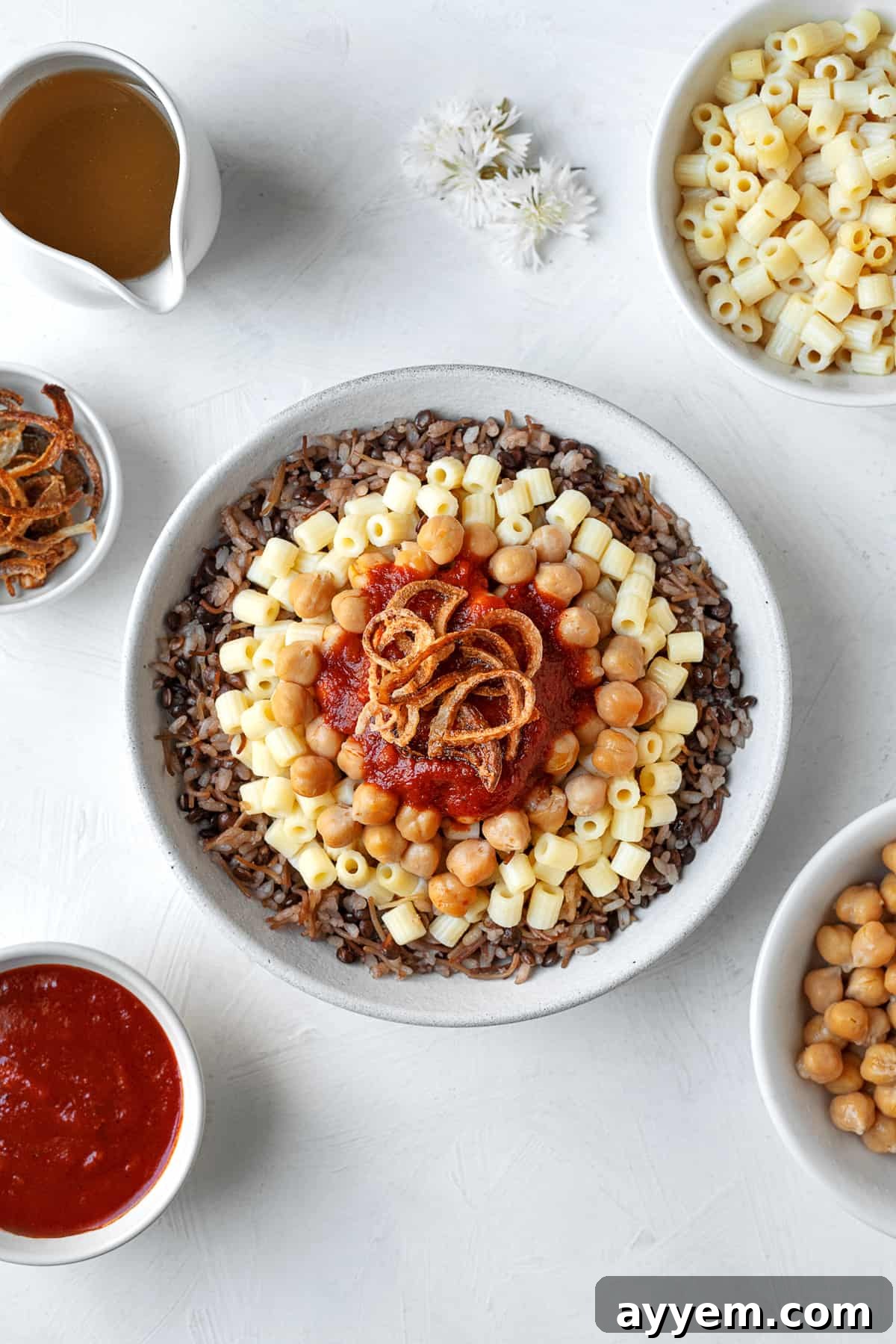
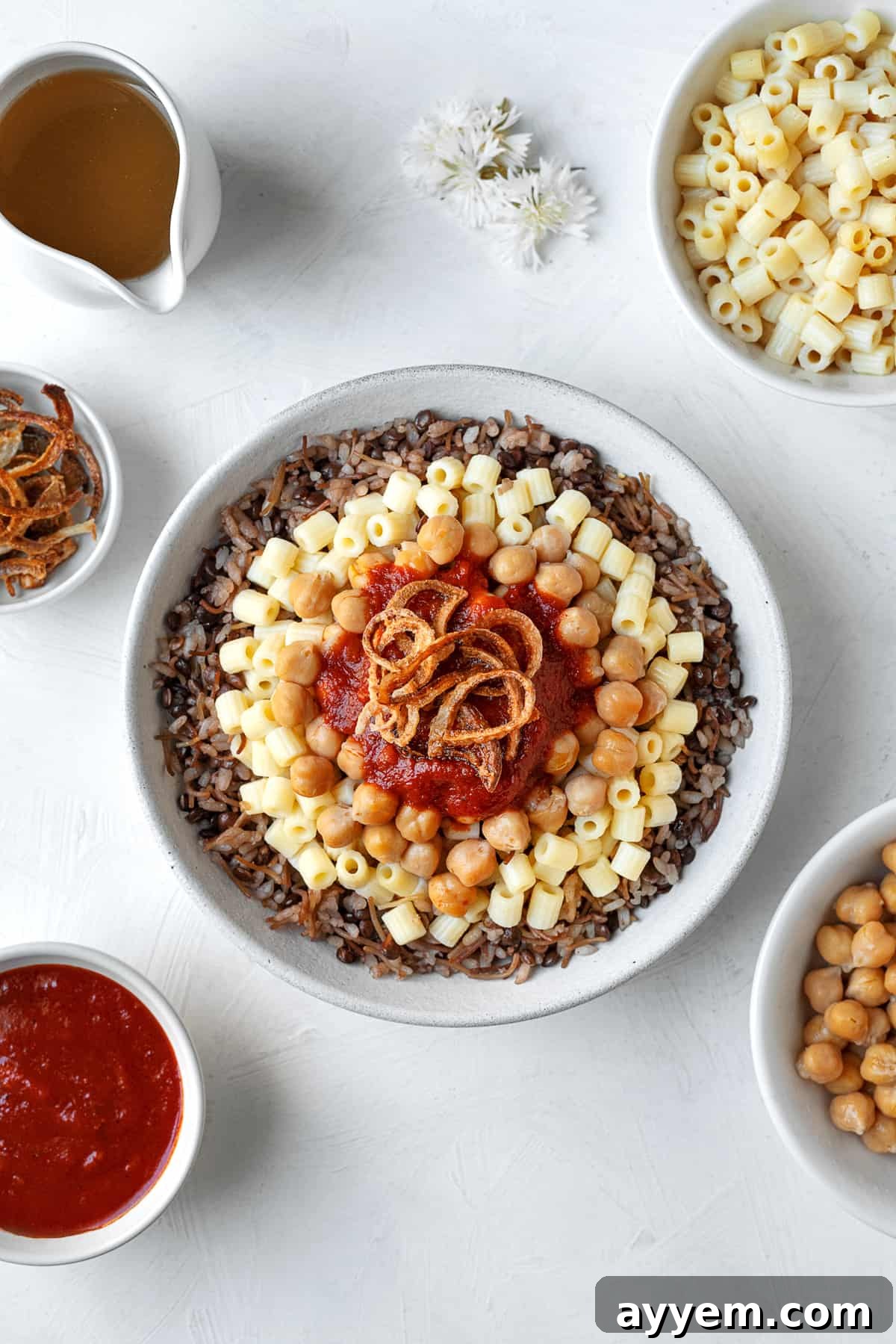
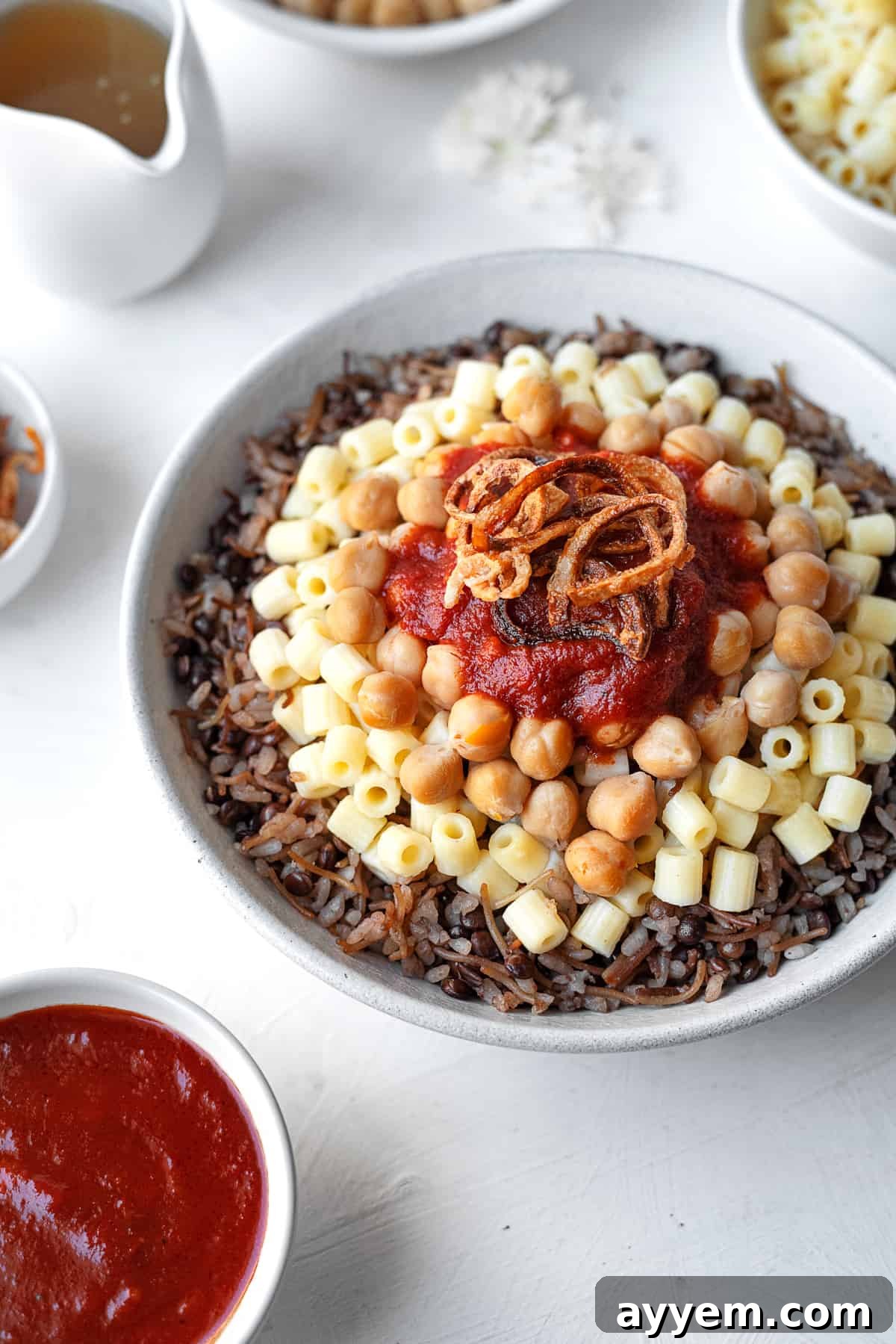
For first-timers, approaching Koshari with an open mind is key, as its versatility allows for numerous variations. A traditional Koshari served at a street cart typically features distinct layers: often three types of rice (a testament to its hearty nature), topped with tender lentils, wholesome chickpeas, and classic pasta noodles like macaroni. This foundation is then generously adorned with a vibrant red sauce, often infused with red pepper flakes and paprika powder (known as “shatta”), and sometimes additional garbanzo beans, creating a delightful medley of textures and tastes.
Should you ever find yourself at an Egyptian food vendor, you might be asked about your preference for “shatta” (with spicy red sauce) or “tammem” (without chili), indicating whether you prefer your Koshari served “wet” or “dry.” This choice allows for personal customization, ensuring each diner enjoys Koshari precisely to their liking. When enjoyed in the comfort of a friend’s home, homemade Koshari is typically served “with the works,” offering an array of accompaniments including the essential red tomato sauce, a tangy cumin sauce (daqaa), crispy fried onions, and crushed red peppers. This allows everyone at the table to craft their perfect bowl, adjusting the ratios of rice, lentils, pasta, and spice to their individual preference. Some prefer a generous helping of the rice and lentil base, others crave extra pasta, and many delight in a truly spicy kick!
What is the Flavor Profile of Koshari? A Taste of Heaven!
To describe Koshari’s taste is to evoke pure culinary delight. It’s an incredibly satisfying, savory, and often spicy dish that ingeniously brings together comforting lentils and fluffy rice with various pasta shapes. This combination creates a symphony of textures and flavors, making it truly the best of both worlds – a carb-lover’s dream infused with rich, aromatic spices.
Traditionally, Koshari is served piping hot, crowned with an abundance of crispy fried onions, a zesty vinegar-based cumin sauce (daqaa), and a robust, spicy tomato sauce (shatta). These essential toppings are what elevate Koshari from a simple mixture to an extraordinary meal. Some adventurous eaters might add a dash of ketchup for an extra tangy sweetness or a sprinkle of garlic powder for an intensified aroma. While such additions can be delightful for some, they can be quite a controversial topic among purists who believe the dish is already perfect in its traditional form!
While numerous Egyptian households proudly boast their unique Koshari recipes – and some spirited debates may arise about which version reigns supreme – the Koshari you’ll encounter at most street food vendors across Egypt will closely resemble the authentic recipe we’re sharing. So, rest assured, this recipe is as genuine as it gets. Imagine enjoying this hearty, flavorful dish, perhaps even battling the winter chill in the Northern US, where its warmth would be a welcome embrace, much like the desert heat that often accompanies its enjoyment in Egypt.
How Long Does Koshari Remain Fresh? Storage Tips.
One of the many benefits of Koshari is its excellent keeping qualities. When properly refrigerated in an airtight container, Koshari can maintain its deliciousness for up to three days, making it an ideal candidate for meal prepping or enjoying leftovers. However, for the best possible experience when reheating your homemade Koshari, we recommend using either a microwave or a stovetop. Reheating Koshari in the oven can unfortunately dry out the pasta and other components, compromising the wonderful texture that makes this dish so enjoyable. Nobody wants dry pasta, especially not in their Koshari!
Is Koshari a Healthy Meal Option?
Absolutely, Koshari can be a wonderfully healthy and nutritious meal! It is naturally high in complex carbohydrates, providing sustained energy, and an excellent source of plant-based protein, making it an ideal choice for athletes, active individuals, or anyone seeking a fulfilling meal. The inclusion of lentils significantly boosts its fiber content, which is crucial for digestive health and satiety. Furthermore, the vibrant tomato sauce contributes a good amount of Vitamin C, an essential antioxidant. With its blend of grains, legumes, and fresh tomato, Koshari offers a balanced profile of vital nutrients, making it a perfect meal for those on the go or as a satisfying post-workout replenishment.
What’s more, Koshari is incredibly adaptable to individual dietary preferences and health goals. If you’re looking to make your Koshari even healthier, consider reducing the amount of oil used for frying the onions or opting for air-fried onions. Another great tip is to prepare certain components, like the lentils or chickpeas, without frying them beforehand, thereby reducing overall fat content without sacrificing flavor. This flexibility ensures that Koshari can be enjoyed as a wholesome and delicious meal tailored to your needs.
Before I Cook It, Am I Saying It Right? How Do You Pronounce Koshari?
We completely understand the desire to pronounce foreign names correctly – it’s a sign of respect for the culture and cuisine! This delightful Egyptian dish is most commonly pronounced ‘ko-sha-ree’ (koh-shah-REE). You might also hear it referred to as Koshari, with a similar pronunciation, or Kushari. The slight variations in spelling and pronunciation often depend on regional dialects or transliterations from Arabic.
Just like many beloved dishes from diverse culinary traditions around the world, Koshari can have a few different names or spellings. Consider the example of
- Koshary/Kushari: This is the most widely recognized spelling and name, often believed to derive from an Arabic word meaning “mixed” or “blended,” perfectly describing the dish’s various components.
- Kishri: This term often specifically refers to the type of rice used in Koshari – typically a round-grained rice, sometimes similar to basmati, that forms the essential base of the dish.
- Kosheri: Some etymologists suggest a possible connection to the Greek word meaning “to mix things together,” which would certainly make sense given the dish’s layered nature. This linguistic link highlights the rich tapestry of influences that have shaped Egyptian cuisine over centuries.
Regardless of how you spell or pronounce it, the delicious experience of Koshari remains universal!
Delving into the Essential Components of Koshari
The magic of Koshari lies in the harmonious interplay of its distinct components, each prepared individually and then artfully layered to create a truly unforgettable experience. Understanding each element is key to appreciating this culinary masterpiece:
Crispy Fried Onions: An absolute non-negotiable! These golden-brown, caramelized onions are the backbone of Koshari, contributing not only a crucial textural contrast but also a profound depth of flavor. The oil used to fry the onions is typically reserved and then cleverly incorporated into other components like the rice and lentil mixture, and the tomato sauce. This infused oil imparts a rich, oniony essence, elevating the flavor profile of the entire dish.
Wholesome Chickpeas: These versatile legumes are a fantastic addition, providing a generous boost of fiber and plant-based protein. Their tender yet firm texture adds another delightful dimension to the multi-textured Koshari, offering a satisfying bite with every spoonful.
Hearty Rice and Lentils: These two ingredients are the very soul of Koshari. You simply cannot have this dish without them. The combination of fluffy short-grain rice and earthy brown lentils forms the comforting and robust foundation upon which all other flavors are built. They are often cooked together, absorbing the flavorful onion-infused oil, creating a rich and aromatic base.
Tangy Tomato Sauce (Dimaa): Also affectionately known as “Dimaa,” this vibrant tomato sauce is a primary flavor driver of Koshari. It’s a beautifully balanced concoction – tangy, savory, and utterly delicious. Its bright acidity cuts through the richness of the grains and legumes, adding a burst of freshness. We believe in loading on the tomato sauce for maximum impact! Chef’s Tip: For those who love an extra kick, divide your tomato sauce in half and stir a generous amount of cayenne pepper into one portion. This allows diners to choose their preferred level of spice, or even combine both for a nuanced heat.
Zesty Cumin Sauce (Daqaa): Often referred to as “Daqaa,” this garlicky, tangy, and deeply aromatic sauce is a non-negotiable condiment for Koshari. Its unique flavor, derived from a generous dose of ground cumin, adds a bright, pungent, and earthy note that perfectly complements the other components. It’s a refreshing contrast that truly wakes up the palate.
Koshari is an experience built on thoughtful layering! Begin by spreading the warm, aromatic rice and lentil mixture as the foundational base. Next, elegantly top it with the cooked pasta, followed by a scattering of tender chickpeas and a generous shower of those irresistible crispy fried onions. Finally, complete your masterpiece with a liberal drizzle of the tangy tomato sauce and the zesty cumin sauce. The interplay of these distinct layers creates a culinary tapestry of flavors and textures.
Frequently Asked Questions About Koshari
The spice level of Koshari is highly customizable. While some traditional versions can be quite fiery, others are milder. You can easily adjust the heat by adding more or less of the spicy “shatta” (red chili sauce) or cayenne pepper to your tomato sauce, ensuring it suits your personal preference.
For an authentic and satisfying Koshari experience, we highly recommend crispy fried onions and the tangy cumin sauce. These provide essential crunch and a flavor burst that perfectly complements the noodles, lentils, rice, and tomato sauce. Other popular toppings include a spicy chili sauce, a zesty garlic-vinegar sauce, and in some variations, even a hard-boiled egg for extra protein.
Absolutely! Koshari is renowned for being an incredibly hearty and satisfying meal. Packed with grains, legumes, and pasta, it’s designed to keep you feeling full and content for hours. It’s the ultimate comfort food that truly nourishes both body and soul.
Yes, Koshari is inherently a vegetarian dish, and often vegan, making it an excellent and flavorful choice for those following plant-based diets. Its richness comes entirely from its plant-based ingredients – lentils, rice, pasta, chickpeas, and a vibrant tomato sauce – proving that meat is not needed for a deeply satisfying meal.
Time to Savor Homemade Koshari! We’d Love to Hear Your Thoughts
Now that we’ve journeyed through the fascinating world of Koshari – exploring its rich history, understanding its pronunciation and varied spellings, and dissecting its delicious components – we hope your appetite has been thoroughly whetted! Our mouths are certainly watering just thinking about this incredible dish. We truly believe that our simplified yet authentic recipe will empower you to create a Koshari that tastes just like the cherished street food of Egypt. We invite you to try this recipe and experience the magic for yourself. Please share your cooking adventures and let us know what you think about this national treasure in the comments below!
Recipe for Koshary: an Egyptian National Dish
Rating: 4.60 from 10 votes
Author: Food Dolls
Servings: 8
Prep: 1 hr
Cook: 30 mins
One of the most popular street foods in Egypt, worth every step!
Ingredients
Fried Onions
- 3 large onions, sliced thin into rings
- 3 tsp kosher salt
- 1 1/2 tbsp cornstarch
- Vegetable oil for frying
Tomato Sauce
- 2 tbsp fried onions
- 1 tbsp reserved vegetable oil (from frying onions)
- 6 cloves crushed garlic
- 6 oz tomato paste
- 15 oz tomato sauce
- 3 cups water
- Salt and pepper to taste
- 3 tbsp white vinegar
- Cayenne pepper (optional)
Rice and Lentils
- 2 tbsp reserved oil (from frying onions)
- 1/3 cup fried onions
- 2 cups brown lentils, rinsed and drained
- 2 cups short grain rice, rinsed and drained
- 1 cup toasted vermicelli (see notes)
- 4 cups water
- 2 cups HOT water
- Ground cumin (optional)
Cumin Sauce
- 3 tbsp white vinegar
- 4 cloves crushed garlic
- 1/2 cup hot water
- 1 tsp ground cumin
- 1/2 tsp salt (more or less to taste)
- 1/2 tsp ground black pepper
- 1/4 tsp cayenne pepper (optional)
Instructions
Fried Onions
- Slice onions thin. Sprinkle with salt and cornstarch. Toss together until well coated.
- Add vegetable oil to a large deep pan, ensuring it covers the bottom by at least 1-inch. Heat oil to 350°F (175°C). Fry the seasoned onions, stirring occasionally, until they turn beautifully golden brown and crispy, approximately 10-12 minutes. Carefully reserve the onion-infused oil for later steps.
- Line a plate with a paper towel. Using a slotted spoon, transfer the fried onions onto the paper towel in a single layer to drain excess oil. Allow them to cool and harden, becoming wonderfully crisp. Set aside.
Tomato Sauce
- In a saucepan over medium heat, add 1 tablespoon of the reserved onion oil and the crushed garlic. Sauté gently until fragrant, about 1-2 minutes, being careful not to burn the garlic.
- Add 2 tablespoons of the fried onions, tomato paste, tomato sauce, white vinegar, 3 cups of water, salt, and pepper. Bring the mixture to a boil, then reduce the heat to medium-low, cover, and let it simmer for 15 minutes to allow the flavors to meld.
Rice and Lentils
- In an enameled Dutch oven or heavy pot over medium-high heat, add 2 tablespoons of the reserved onion oil and 1/3 cup of the fried onions. Stir for 1-2 minutes.
- Add the rinsed and drained brown lentils and 1 tablespoon of salt. Stir briefly. Add 4 cups of water and bring to a boil. Maintain a gentle boil for approximately 12-15 minutes, or until the lentils are al dente (slightly firm to the bite). *DO NOT DRAIN THE WATER.*
- Stir in the rinsed rice, toasted vermicelli, 2 cups of hot water, and an additional tablespoon of salt. (Optional: add a pinch of ground cumin for extra flavor.) Bring back to a boil, then cover the pot, reduce the heat to low, and let it cook for 12-15 minutes, or until the rice is tender and the water is absorbed. Fluff gently with a fork before serving.
Cumin Sauce
- Combine all the ingredients (white vinegar, crushed garlic, hot water, ground cumin, salt, ground black pepper, and optional cayenne pepper) in a measuring cup. Whisk thoroughly until well combined. Taste and adjust seasoning as needed.
Assembly
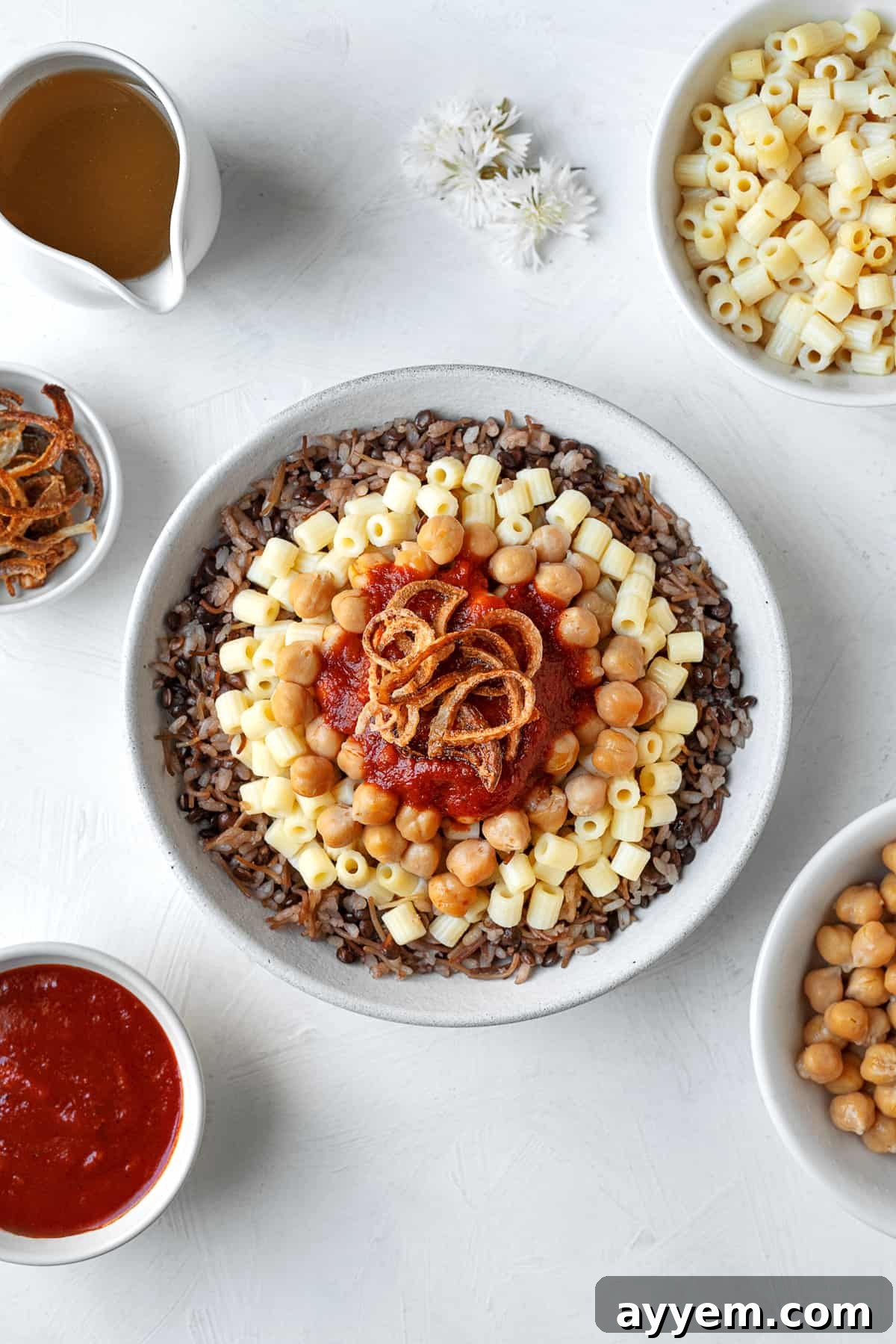
- Koshari is all about the art of layering! Begin by placing a generous amount of the warm rice and lentil mixture as the base in your serving bowl.
- Next, spoon a layer of cooked ditalini pasta on top of the rice and lentils.
- Scatter a portion of the tender chickpeas over the pasta.
- Generously top with the crispy fried onions.
- Finish by drizzling both the tangy tomato sauce (shatta) and the zesty cumin sauce (daqaa) over the entire dish, according to your preference.
- A great option for serving: Arrange all the prepared ingredients (rice and lentils, pasta, chickpeas, fried onions, tomato sauce, and cumin sauce) on the table in separate bowls, allowing everyone to customize their own Koshari masterpiece with their favorite toppings and desired spice level!
Notes
*How to toast vermicelli: In a medium non-stick pan, heat 1 tbsp olive oil or ghee over medium-high heat. Add the vermicelli and continuously stir to toast it evenly. It will quickly turn a beautiful golden brown, but be vigilant as it can burn easily! Remove from heat immediately once toasted.
Nutrition
Calories: 852kcal | Carbohydrates: 147g | Protein: 27g | Fat: 17g | Saturated Fat: 3g | Polyunsaturated Fat: 7g | Monounsaturated Fat: 5g | Trans Fat: 0.1g | Sodium: 1699mg | Potassium: 1138mg | Fiber: 23g | Sugar: 8g | Vitamin A: 613IU | Vitamin C: 15mg | Calcium: 107mg | Iron: 9mg
Nutrition information is automatically calculated, so should only be used as an approximation.
Like this recipe?
Please leave a comment!
If you’re eager to explore more delightful Egyptian recipes, be sure to try our delicious Egyptian Orzo Pasta – another family favorite!
Shopping for Your Kitchen:
For those who admire the beautiful bamboo wooden spoon featured in our photos, you can find it here.
The charming 4 qt. blue swirl enameled pot, perfect for cooking your Koshari, is available here.