
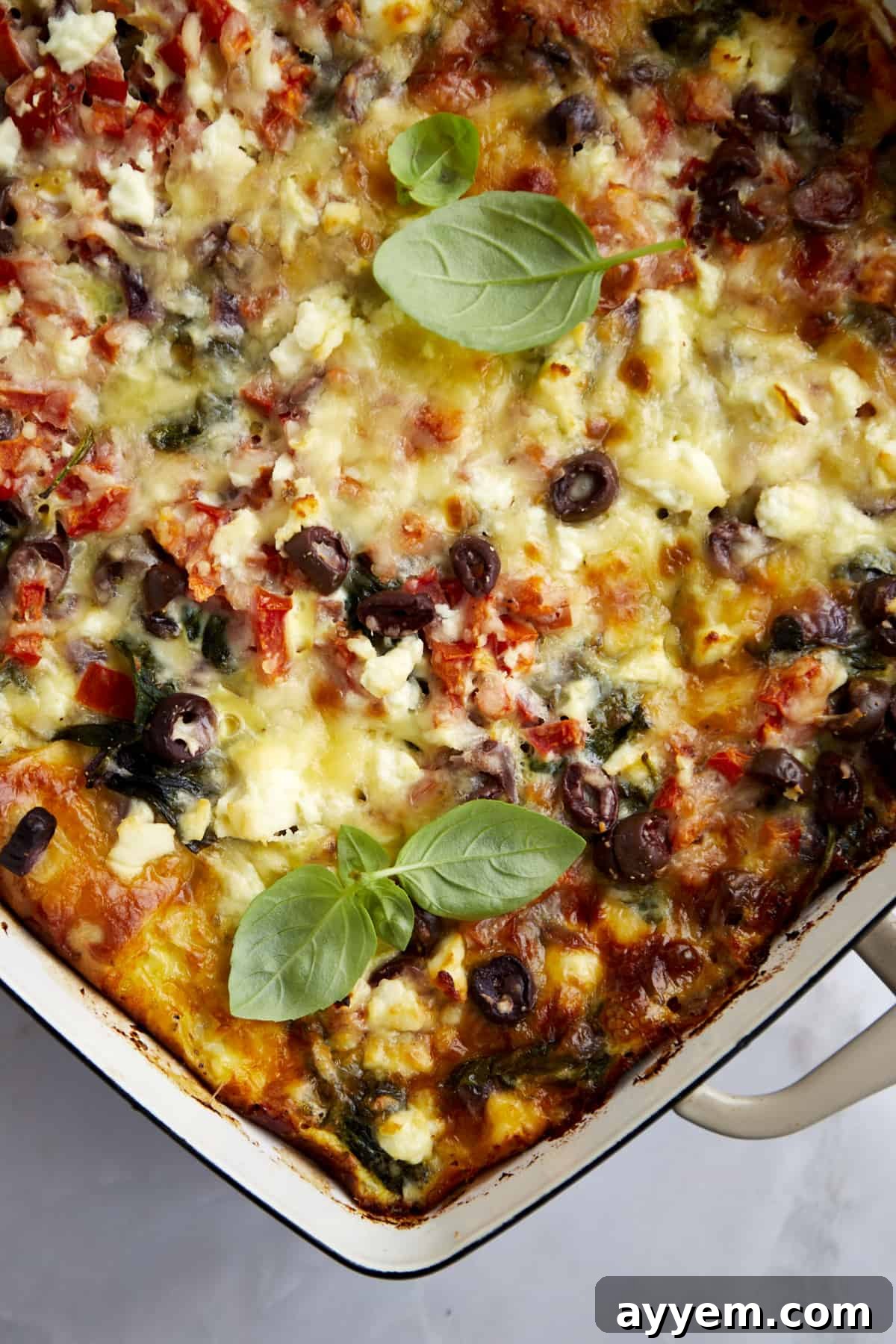
Welcome to a culinary journey that promises to transform your breakfast and brunch routines: the savory Greek Egg Bake Casserole. Imagine waking up to the irresistible aroma of warm, fluffy pita bread, perfectly sautéed vegetables, briny Kalamata olives, and a rich blend of gooey cheeses, all harmoniously baked with eggs to golden perfection. This delightful dish isn’t just incredibly delicious; it’s also wonderfully easy to prepare, making it a dream come true for busy mornings, leisurely weekend brunches, or even a comforting dinner. Say goodbye to bland breakfasts and embrace the vibrant flavors of the Mediterranean with this standout recipe that’s guaranteed to become a family favorite.
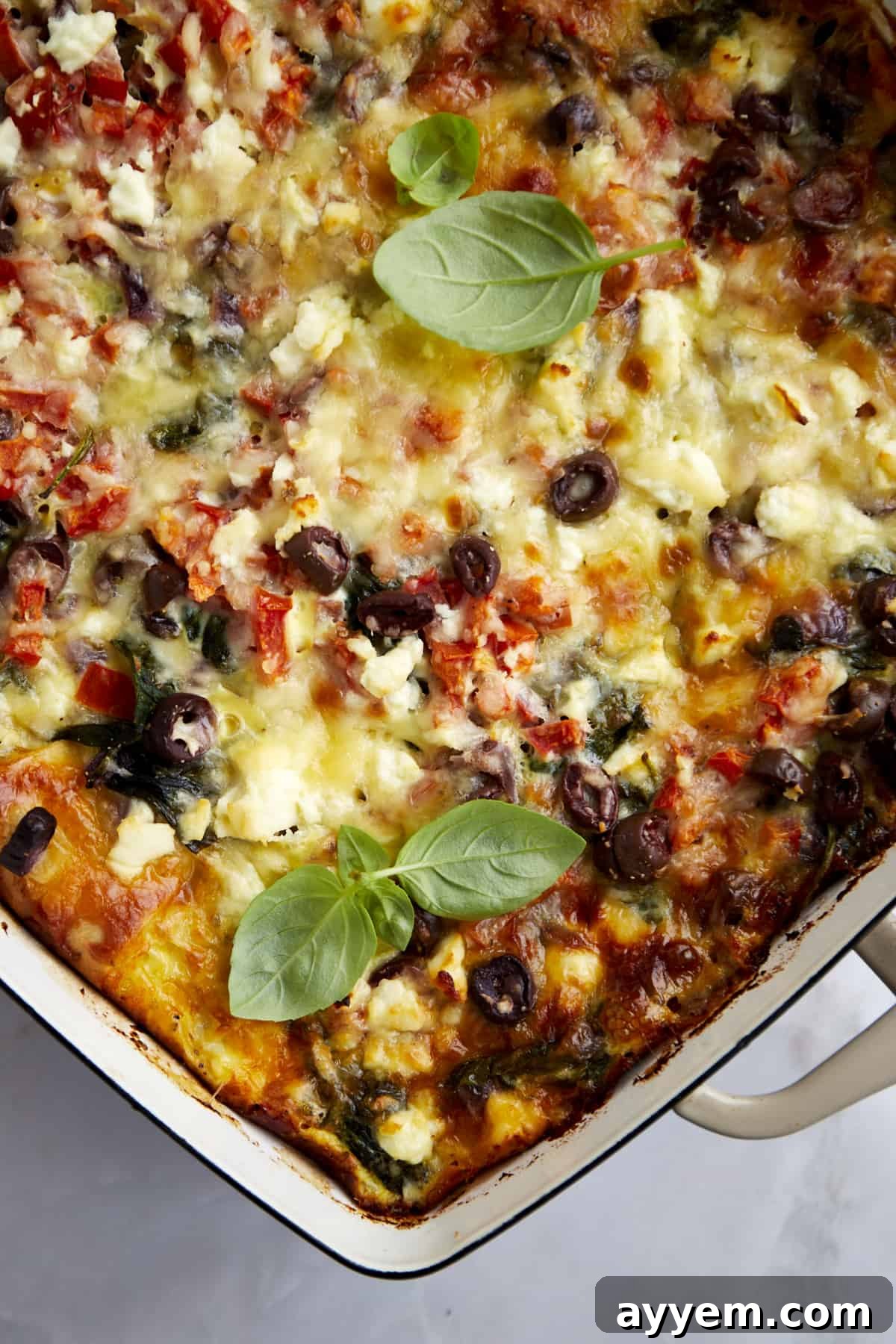
Embrace the Mediterranean: The Ultimate Greek Egg Bake Casserole
Whether you’re planning a special holiday brunch, prepping meals for a busy week, or simply craving a comforting and flavorful breakfast, this Greek egg bake casserole is your answer. It’s more than just an egg dish; it’s a hearty, wholesome meal packed with bold, savory flavors and an abundance of nutrients. The beauty of this recipe lies in its simplicity and versatility, allowing you to bring the authentic taste of Greek cuisine right to your kitchen table with minimal effort. It’s an easy way to elevate your mornings, transforming them from mundane to magnificent.
Crafted for convenience, this casserole layers fresh ingredients and bakes them all in a single dish, saving you time and cleanup. One of its most appealing features is its make-ahead potential. You can assemble the entire casserole the night before, store it in the refrigerator, and simply pop it in the oven the next morning. This means less stress and more enjoyment, giving you extra time to savor your coffee or spend with loved ones while a delicious, aromatic breakfast bakes itself to perfection.
Crafting the Perfect Greek Egg Bake Casserole: A Step-by-Step Guide
Creating this magnificent egg bake is simpler than you might think. With a thoughtful selection of fresh ingredients and a few easy steps, you’ll have a show-stopping dish that pleases every palate. This section provides an overview of the essential components and a clear guide to bringing them all together. For precise measurements and detailed nutritional information, please refer to the complete recipe card at the end of this article.
Key Ingredients for an Authentic Greek Flavor
- Pita Bread: This forms the foundational layer of our casserole, absorbing the rich egg mixture and transforming into a deliciously soft and savory base. You can use store-bought pita for convenience, or for an extra special touch, consider making your own fresh pita bread at home. The slight chewiness and earthy flavor of pita are crucial for this dish.
- Olive Oil: A cornerstone of Mediterranean cooking, high-quality olive oil is essential for sautéing our vegetables. It imparts a delicate, peppery flavor and helps to tenderize the onions and spinach, releasing their natural sweetness and aroma. Opt for extra virgin olive oil for the best results.
- Fresh Vegetables: We use a vibrant trio of red onion, tomatoes, and baby spinach. Diced red onion adds a subtle sharpness and sweetness when caramelized. Fresh tomatoes burst with juicy flavor and a touch of acidity, while baby spinach wilts down to provide a wealth of nutrients and a pleasing texture. These vegetables not only enhance the taste but also contribute essential vitamins, minerals, and fiber, making the casserole incredibly nutritious.
- Kalamata Olives: These dark, briny Greek olives are a signature flavor of the Mediterranean. Their distinct salty, fruity, and slightly smoky notes are indispensable for achieving an authentic Greek profile. Ensure they are pitted for ease of eating. If Kalamata olives are not available, any good quality black or green olive will work, or you can omit them if olives aren’t to your taste.
- Cheeses: A luxurious combination of crumbled feta cheese and shredded mozzarella cheese creates the perfect balance. Feta, with its tangy, salty, and crumbly texture, provides that unmistakable Greek zest. Mozzarella, on the other hand, melts beautifully, adding a creamy, stretchable, and mildly savory layer that binds all the ingredients together. This duo ensures a rich, satisfyingly cheesy experience in every bite.
- Large Eggs: The heart of any egg bake, eggs provide the creamy, protein-rich foundation for our casserole. They bind the ingredients together and puff up beautifully in the oven, creating a satisfyingly light yet hearty texture.
- Milk: Used to whisk with the eggs, milk adds richness and helps to create a softer, more custardy texture for the egg mixture. Full-fat milk will yield the creamiest results, but any milk you have on hand, including dairy-free alternatives, will work well.
- Seasonings: Dried oregano, salt, and black pepper are key to enhancing the overall savory profile of the dish. Oregano is a classic Greek herb that adds an aromatic, slightly earthy, and pungent flavor. Adjust salt and pepper to your preference, remembering that feta and Kalamata olives already contribute a significant amount of salt.
Simple Instructions for a Flawless Breakfast Casserole
- Prepare Your Baking Dish: Begin by preheating your oven to 350 degrees Fahrenheit (175 degrees Celsius). This ensures the oven is at the optimal temperature for even baking from the start. Lightly grease a 9 x 13-inch (23 x 33 cm) baking dish with cooking spray or a thin layer of olive oil. This step is crucial to prevent sticking and ensure easy serving.
- Sauté the Aromatics: In a large, sturdy skillet, heat one tablespoon of olive oil over medium-high heat. Add the diced red onion and sauté for approximately 5 minutes, stirring occasionally, until the onions soften and begin to turn a beautiful translucent golden color. This caramelization brings out their natural sweetness, adding depth to the casserole.
- Wilt the Spinach: Introduce the fresh baby spinach to the pan with the onions. Continue to sauté for an additional 2-3 minutes, stirring constantly, until the spinach completely wilts down. Spinach reduces significantly in volume when cooked, so it might seem like a lot at first. Ensure excess moisture is cooked off to prevent a watery casserole.
- Combine Remaining Vegetables: Remove the skillet from the heat and stir in the sliced Kalamata olives and chopped fresh tomatoes with the sautéed onion and spinach mixture. The residual heat will warm the olives and tomatoes without overcooking them, preserving their fresh texture and flavor.
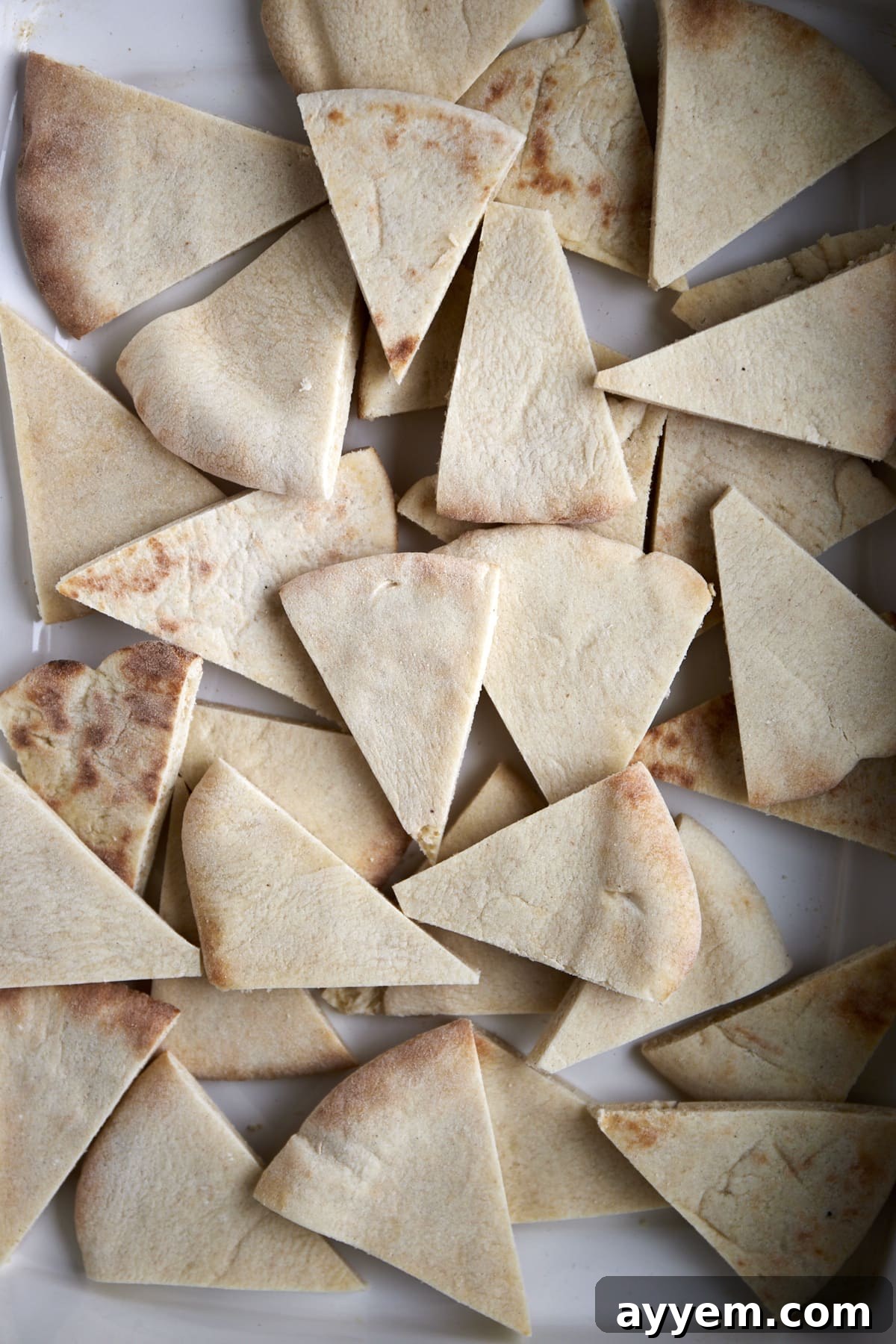
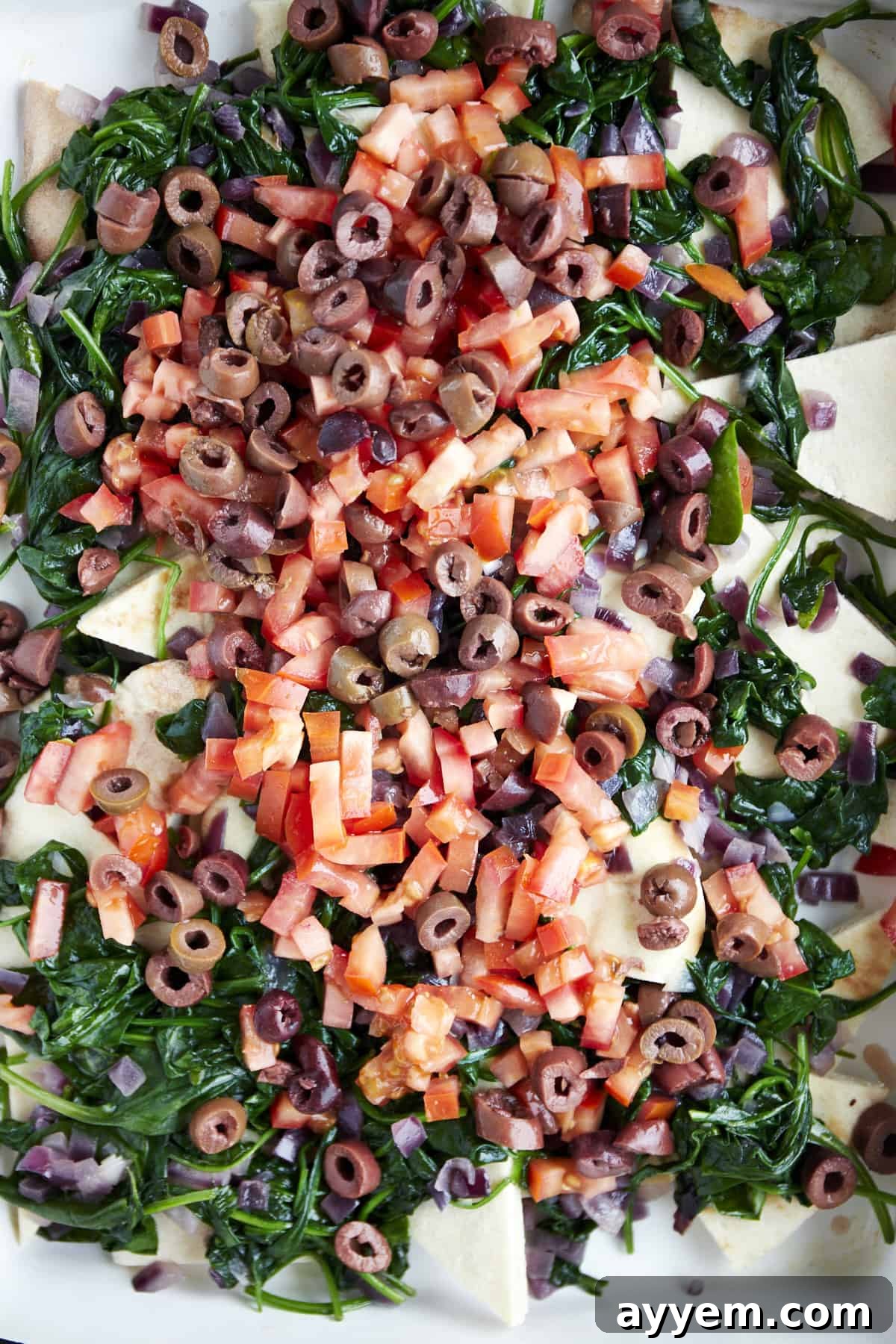
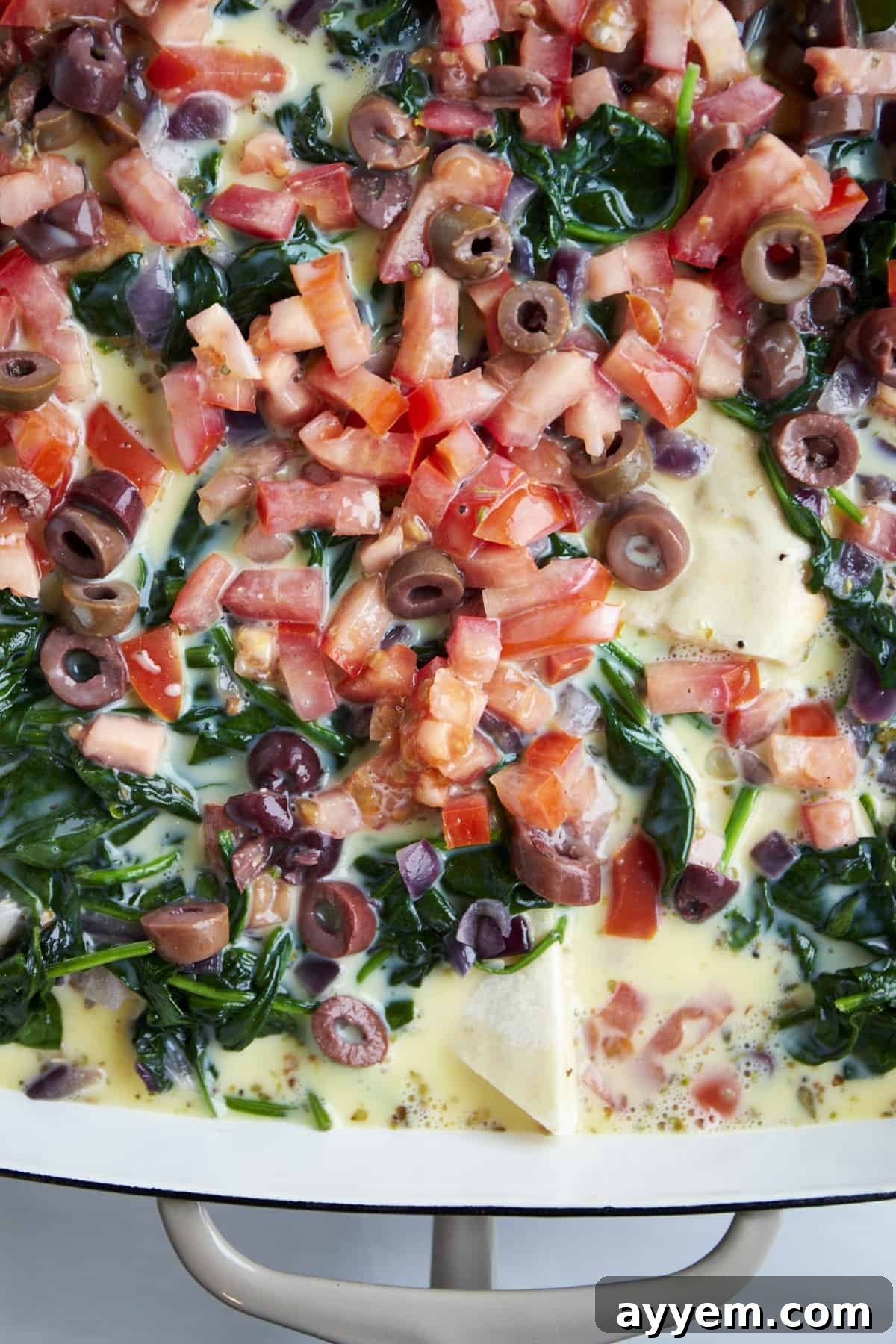
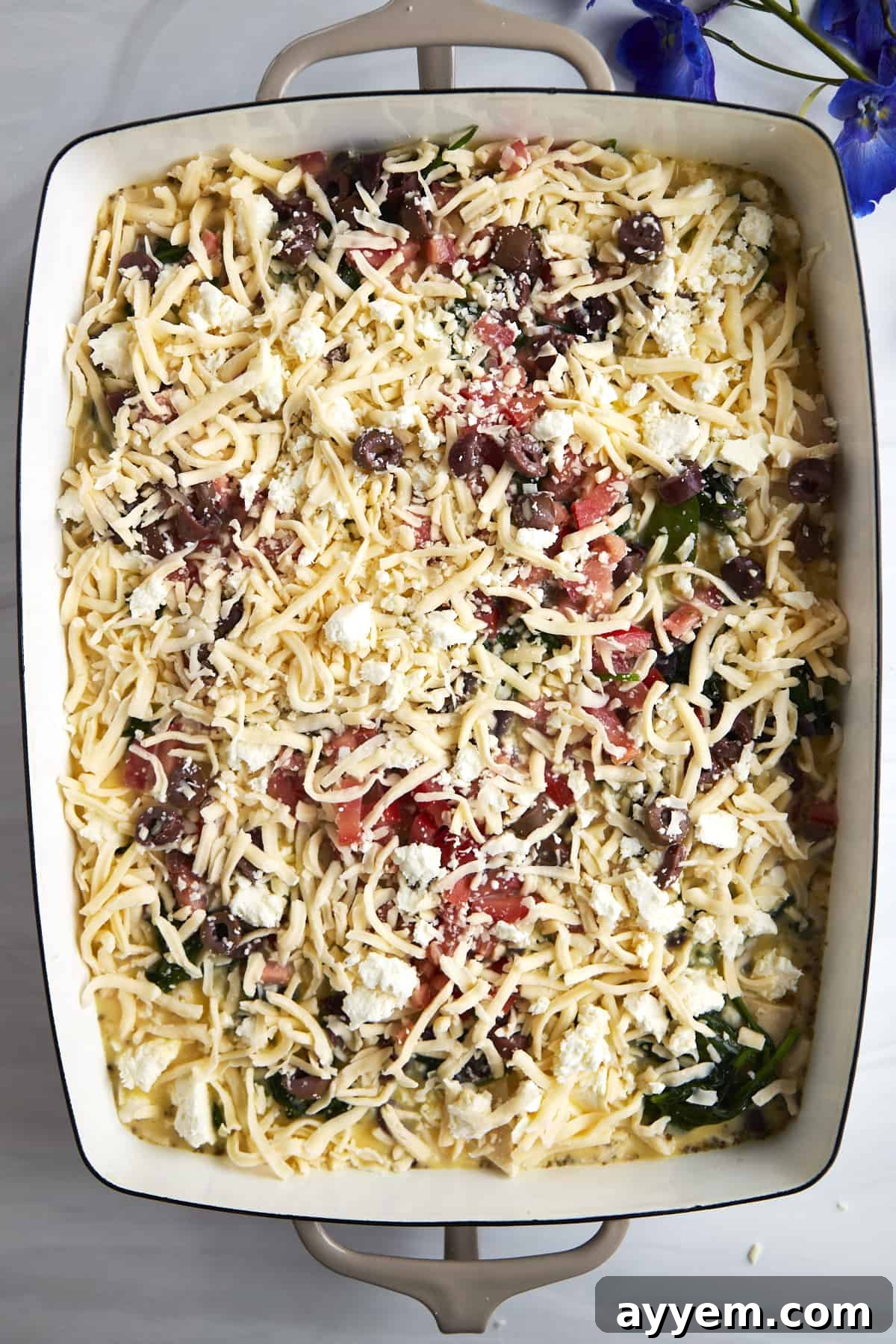
- Assemble the Layers: Arrange the sliced pita bread triangles in a single layer at the bottom of your prepared baking dish. The pita acts as a sponge, soaking up the egg mixture and preventing the casserole from becoming soggy. Evenly spoon the sautéed vegetable mixture over the pita bread. Finally, sprinkle the crumbled feta cheese and shredded mozzarella cheese generously over the vegetables.
- Whisk the Egg Mixture: In a separate medium-sized bowl, whisk together the large eggs, milk, dried oregano, salt, and black pepper until the mixture is completely smooth and well combined. Whisking ensures a uniform distribution of flavors and a consistent texture in the final bake.
- Pour and Rest: Carefully pour the whisked egg mixture evenly over all the ingredients in the baking dish. It’s important to let the casserole rest for at least 30 minutes at room temperature before baking. This resting period allows the pita bread to fully absorb the liquid, much like in a French toast casserole, which results in a tender, flavorful base rather than dry bread. If preparing ahead, cover and refrigerate overnight.
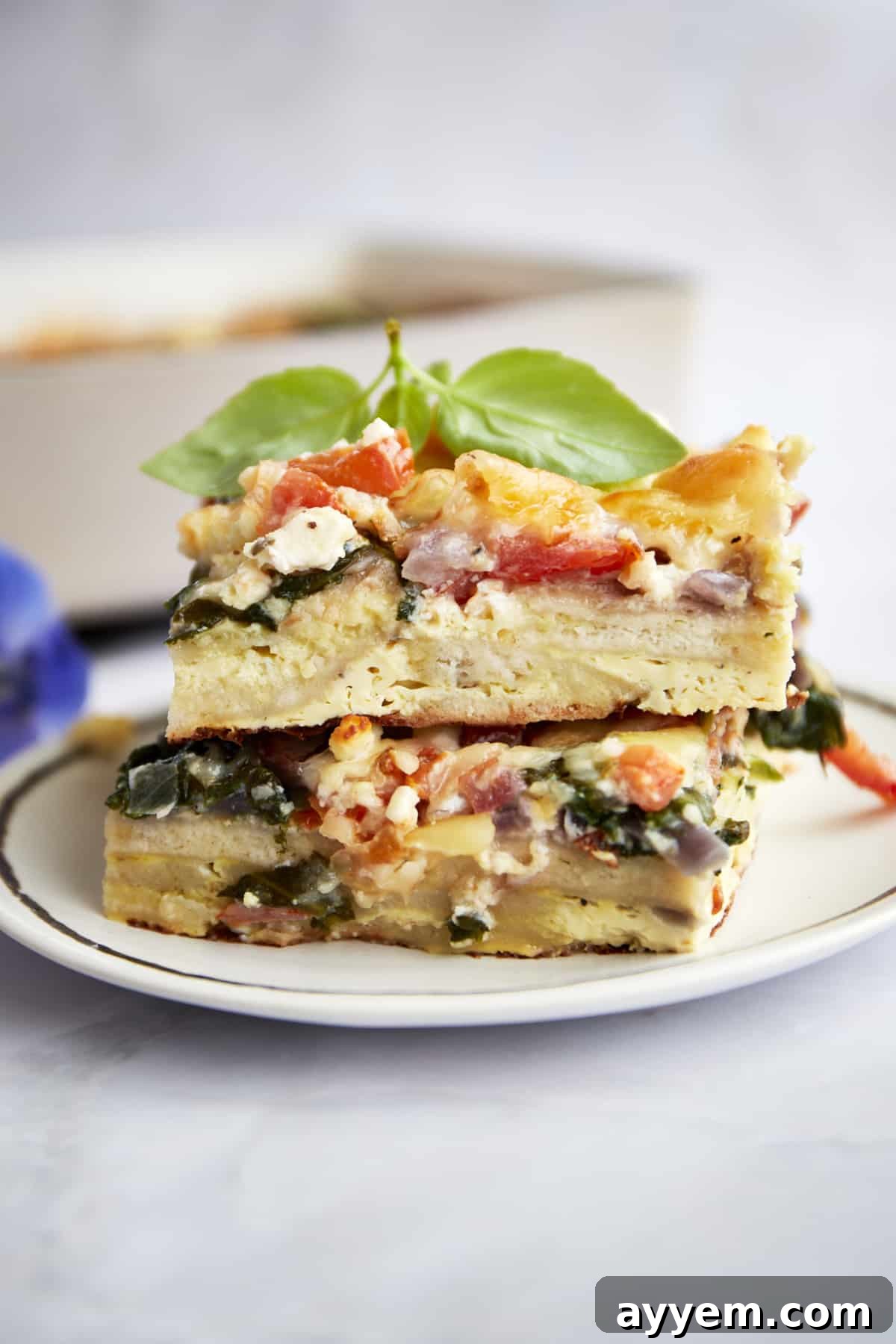
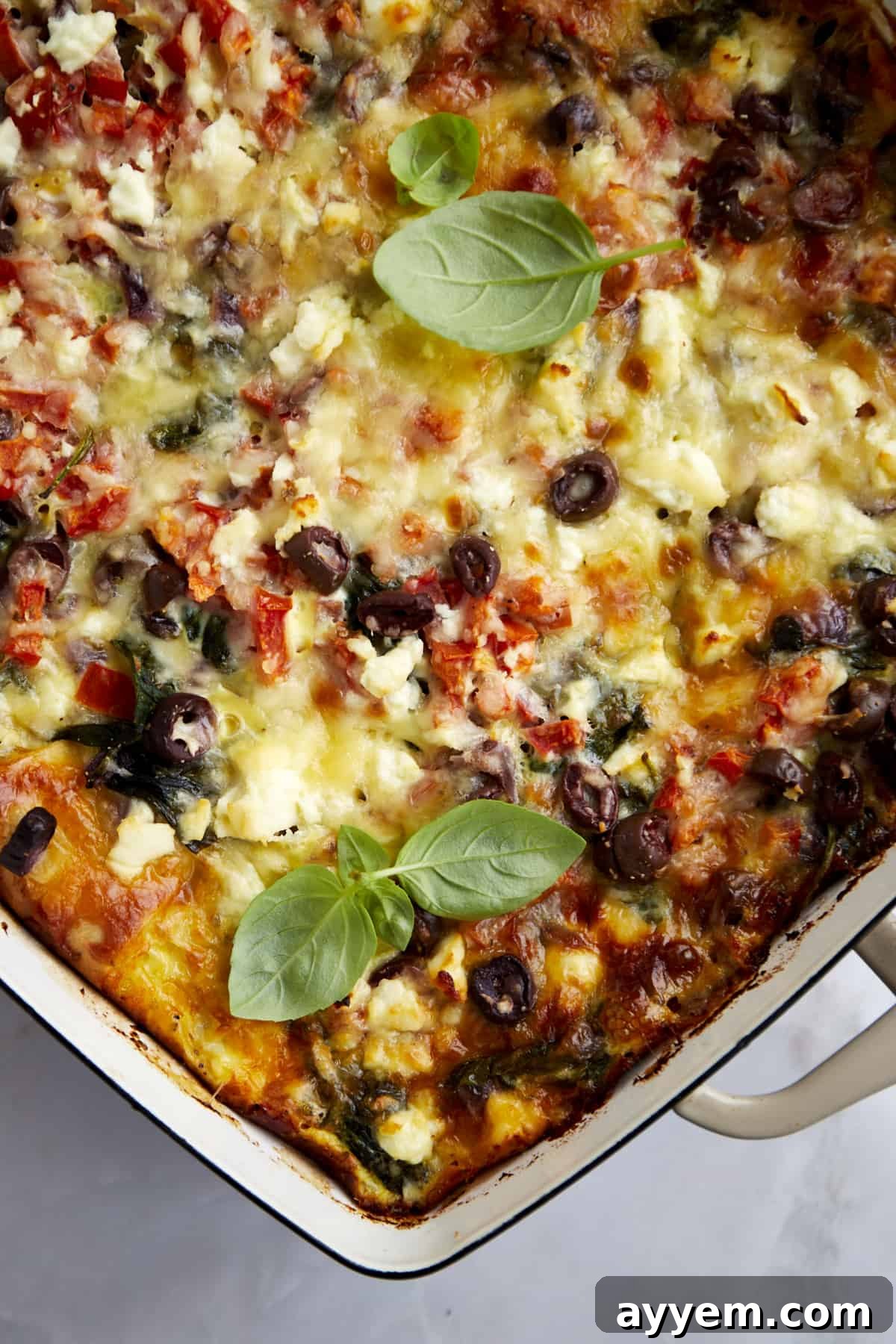
- Bake to Perfection: Transfer the baking dish to the preheated oven. Bake for approximately 40-50 minutes, or until the casserole is beautifully puffed up, golden brown on top, and the eggs are set in the center. A knife inserted into the center should come out clean.
- Cool and Serve: Once baked, remove the casserole from the oven and let it rest for about 10-15 minutes before slicing and serving. This crucial resting time allows the eggs to set further and the casserole to firm up, making it easier to cut into neat portions. Serve warm and enjoy!
Planning Ahead: Make-Ahead Tips for Your Egg Bake
One of the many benefits of this Greek egg bake casserole is its incredible suitability for meal prep. Whether you’re hosting a large brunch or simply want a quick and easy breakfast option during the week, preparing it in advance can be a game-changer. To make this delicious casserole ahead of time, simply follow all the assembly steps as outlined in the instructions.
After layering all the ingredients and pouring the egg mixture, instead of baking immediately, cover the baking dish tightly with aluminum foil. You can then store it in the refrigerator overnight, or for up to 24 hours. This extended resting time allows the pita bread to fully absorb the egg custard, resulting in an even more flavorful and moist casserole. When you’re ready to bake, simply remove it from the fridge and place it directly into your preheated oven. You might need to add an extra 5-10 minutes to the baking time to ensure it heats through completely and achieves that perfect golden brown crust.
Storage and Reheating Best Practices
Proper storage and reheating are key to enjoying your Greek Egg Bake Casserole at its best for days to come. This section provides tips to maintain its deliciousness.
- Storing Leftovers: Any leftover casserole should be covered tightly with aluminum foil or transferred to an airtight container. Store it in the refrigerator for up to four days. Ensure it cools completely before refrigerating to prevent condensation, which can lead to sogginess.
- Freezing Not Recommended: We generally do not recommend freezing this particular recipe. The combination of eggs, cheese, and pita bread tends to change texture significantly upon thawing and reheating, often resulting in a soggy or rubbery consistency. For optimal taste and texture, it’s best enjoyed fresh or within a few days of refrigeration.
- Reheating Instructions: To reheat larger portions, cover the casserole dish with foil to prevent drying out and warm it in a preheated oven at 300°F (150°C) until heated through, approximately 15-20 minutes. For individual servings, the microwave is a convenient option. Heat in 30-second intervals until warmed to your liking, being careful not to overheat, which can make the eggs rubbery.
Frequently Asked Questions About This Savory Egg Bake
Rubbery eggs are often a result of overcooking or too much moisture in the vegetables. To avoid this, first, ensure you sauté your vegetables (especially spinach) thoroughly to remove excess water. Second, avoid overbaking the casserole. Your egg bake is done when the eggs are just set and still slightly jiggly in the center. It will continue to cook and firm up as it rests outside the oven, yielding a wonderfully creamy texture.
Absolutely! To make this recipe gluten-free, you can either omit the pita bread entirely and create a crustless egg bake, or substitute it with a gluten-free pita bread alternative. Ensure all other ingredients, like cheeses and seasonings, are also certified gluten-free if cross-contamination is a concern.
The classic choice for authentic Greek flavor is undoubtedly feta cheese, which offers a delightful tanginess and crumbly texture. We love combining it with shredded mozzarella for its incredible melt and mild, milky taste. However, you can experiment with other Greek cheeses like Kasseri for a sharper bite or even a touch of grated Parmesan for an extra savory layer. For a milder flavor, a good quality mild cheddar or Monterey Jack could also work.
Certainly! Adding cooked meat can transform this into an even heartier meal. Crumbled and cooked breakfast sausage, diced ham, cooked ground lamb, or even sliced gyro meat would all be excellent additions. Just make sure any meat is fully cooked and drained of excess fat before adding it to the layers of your casserole.
This Greek Egg Bake Casserole is a complete meal on its own, but it pairs wonderfully with a side of fresh fruit salad for a touch of sweetness and freshness. A dollop of plain Greek yogurt or a drizzle of tzatziki sauce can add a cooling, tangy counterpoint. A simple green salad with a lemon-herb vinaigrette would also complement the rich flavors beautifully. Of course, a hot cup of coffee or tea is the perfect accompaniment for any breakfast or brunch.
Explore More Delicious Breakfast Egg Recipes
If you’re a fan of savory egg dishes and are looking for more ways to kickstart your day or impress your brunch guests, here are some other fantastic egg-centric recipes that you might enjoy:
- Egg Tortilla Bake (2 Ways): Versatile and flavorful, this recipe offers two distinct approaches to a tortilla-based egg bake, perfect for customizing.
- Easy Eggs in Purgatory (Italian Baked Eggs): A rustic Italian dish featuring eggs poached in a spicy tomato sauce, ideal for a comforting and vibrant meal.
- Oven Baked Shakshuka: A popular Middle Eastern and North African dish of eggs baked in a rich, spiced tomato and pepper sauce, perfect for sharing.
- Eggs and Dates (Egyptian Eggs with Agwa): A unique and unexpectedly delicious combination of savory eggs with sweet dates, offering a taste of Egyptian tradition.
Greek Egg Bake Casserole
Servings: 6 servings
Cook Time: 1 hr
Rest Time: 30 mins
Make this easy Greek egg bake casserole with sautéed veggies, fresh pita bread, eggs, and cheesy for a delicious savory breakfast option!
Ingredients
- 1 Tablespoon olive oil
- 1 red onion, diced
- 5 ounces fresh spinach
- 1/2 cup pitted Kalamata olives, sliced
- 3/4 cup chopped tomatoes
- 4 6-inch pita bread, sliced into triangles
- 1/2 cup crumbled feta cheese
- 3/4 cup shredded mozzarella cheese
- 8 large eggs
- 2 cups milk
- 1 teaspoon dried oregano
- 1/2 teaspoon salt
- 1/2 teaspoon pepper
Instructions
- Preheat the oven to 350 degrees Fahrenheit (175 degrees Celsius). Lightly grease a 9 x 13-inch (23 x 33 cm) baking dish.
- In a large frying pan, heat the olive oil over medium-high heat. Sauté the diced red onions for about 5 minutes, or until they become lightly golden.
- Add the fresh spinach to the pan and sauté for an additional 2-3 minutes until the spinach wilts.
- Stir in the sliced Kalamata olives and diced tomatoes into the vegetable mixture.
- Place the sliced pita bread into the prepared baking dish. Add the sautéed vegetable mixture over the pita bread, distributing it evenly. Top with crumbled feta cheese and shredded mozzarella cheese.
- In a separate bowl, whisk together the eggs, milk, dried oregano, salt, and pepper.
- Pour the egg mixture evenly over the ingredients in the baking pan.
- Allow the mixture to sit for 30 minutes, giving the liquid time to soak into the bread. Alternatively, you can cover and refrigerate it overnight for convenience.
- Bake the strata in the preheated oven for 40-50 minutes, or until it is puffed up and starting to brown on top.
- Let the strata sit for about 15 minutes before serving. This allows it to set and cool slightly.
Equipment
-

Large Skillet -
9×13 Baking Dish -
Mixing Bowl



Nutrition Information
Nutrition information is automatically calculated and should be used as an approximation.
- Serving: 1 serving
- Calories: 369 kcal
- Carbohydrates: 31 g
- Protein: 20 g
- Fat: 19 g
- Saturated Fat: 8 g
- Polyunsaturated Fat: 2 g
- Monounsaturated Fat: 7 g
- Trans Fat: 0.02 g
- Cholesterol: 250 mg
- Sodium: 948 mg
- Potassium: 439 mg
- Fiber: 2 g
- Sugar: 5 g
- Vitamin A: 2862 IU
- Vitamin C: 8 mg
- Calcium: 339 mg
- Iron: 3 mg
Like this recipe?
Please leave a comment and share your experience!