
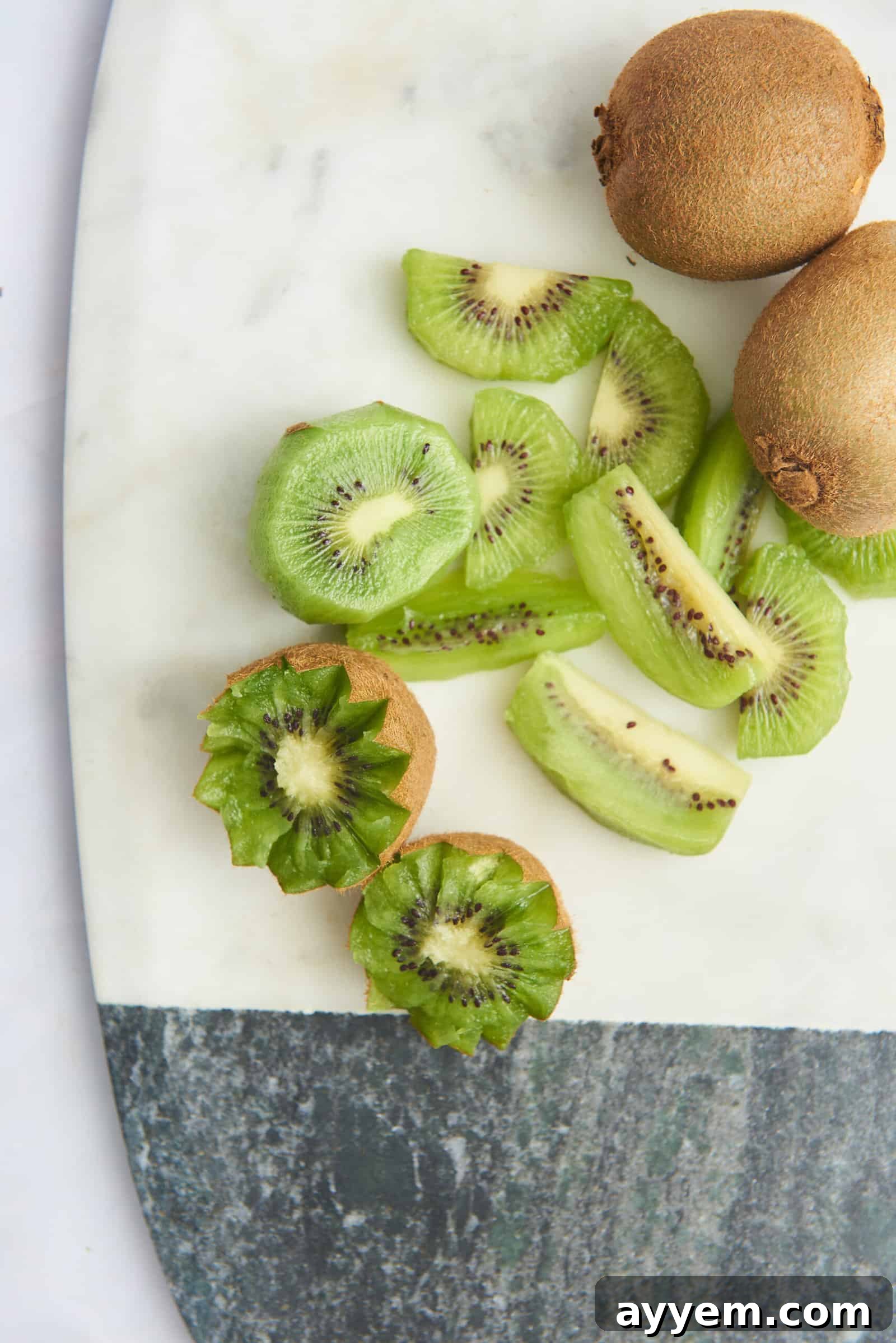
Discover the ultimate guide to mastering the art of cutting a kiwi with absolute ease! This comprehensive article will walk you through various techniques to transform this vibrant fruit into perfect rounds, practical quarters, versatile cubes, and even delightful star shapes for an extra touch of flair. We’ll also unveil a simple, mess-free spoon method that helps you effortlessly scoop out every last bit of this sweet, tangy, and incredibly nutritious berry. Get ready to elevate your fruit preparation skills and enjoy kiwi like never before!
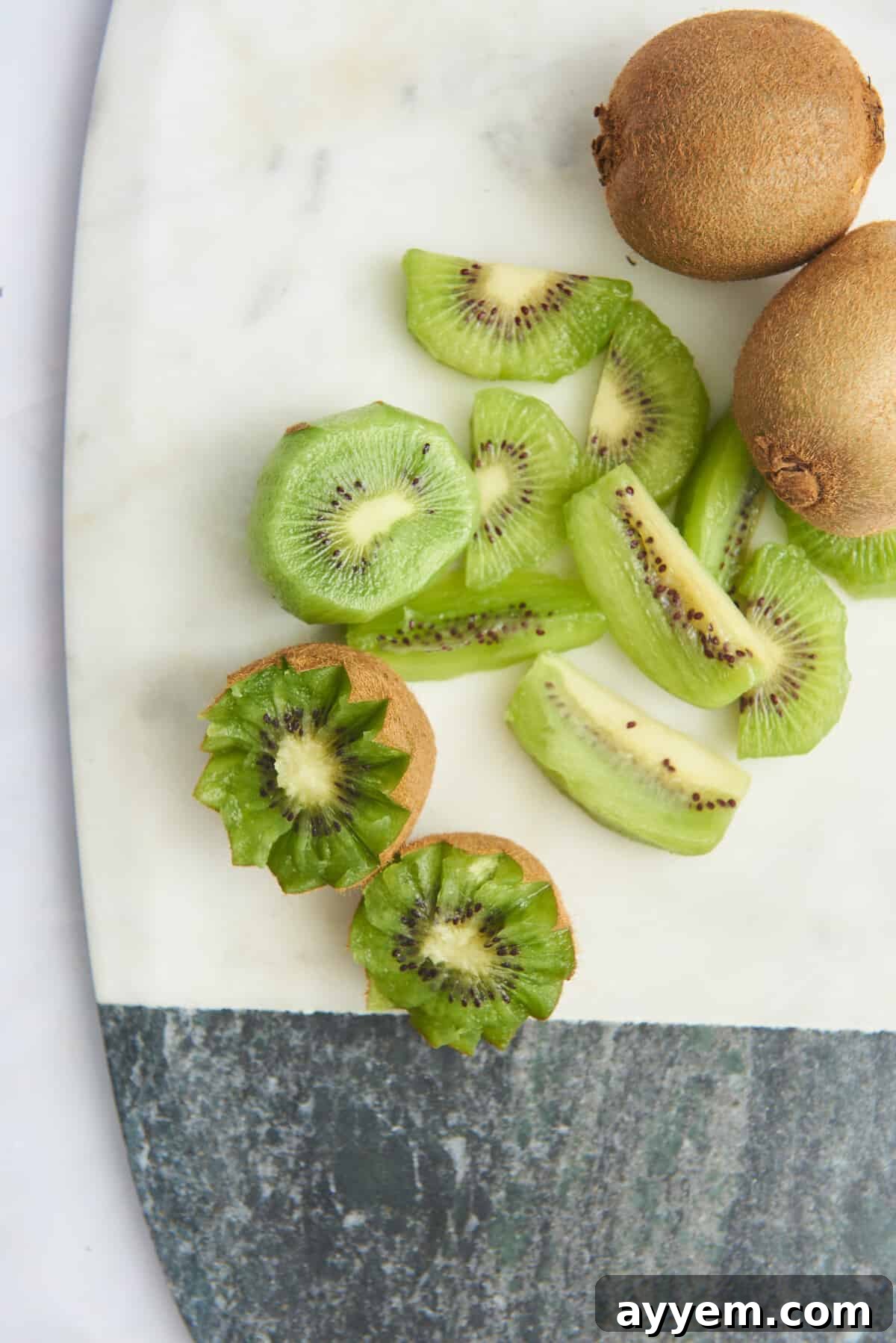
What Are Kiwis? Unveiling the Exotic Kiwifruit
Often simply called “kiwi,” this fascinating fruit is scientifically known as kiwifruit or, historically, Chinese gooseberry. Native to the lush regions of China and Taiwan, kiwifruit has gained global popularity, with major commercial cultivation also thriving in New Zealand and California. Despite its humble, fuzzy brown exterior, the kiwi is truly a remarkable fruit.
It may come as a delightful surprise to many, but kiwis are botanically classified as a type of berry! Characterized by their distinct oval or round shape, fuzzy brown skin, and brilliantly colored interior, kiwis typically feature a bright green or golden-yellow flesh dotted with tiny, edible black seeds arranged around a pale central core. The fruit is renowned for its succulent, juicy texture, an invigorating balance of sweetness and subtle tartness, and an impressive array of health benefits. Beyond simply eating it fresh, kiwi’s vibrant flavor and appealing texture make it a versatile ingredient, perfect for enhancing smoothies, enriching fruit salads, blending into juices, incorporating into baked goods, or simply savoring on its own as a healthy snack.
What Do Kiwis Taste Like? A Symphony of Sweet and Tangy Flavors
When perfectly ripe, kiwis offer a unique and complex flavor profile that tantalizes the taste buds. They are predominantly sweet, with a distinct underlying acidity and a refreshing tang. Many describe the flavor as a delightful fusion, often drawing comparisons to other beloved fruits such as juicy pineapple, sweet strawberries, and even the creamy notes of bananas. The tiny, crunchy black seeds add a delicate textural contrast, enhancing the overall eating experience. While green kiwis (like the popular Hayward variety) tend to be more tart, golden kiwis (like SunGold) are typically sweeter and less acidic, offering a milder, more tropical essence.
Are Kiwis Good for You? A Powerhouse of Nutrition
Absolutely! Don’t let their small size fool you; kiwis are tiny but mighty nutritional powerhouses, packed with an impressive array of vitamins, minerals, and antioxidants essential for optimal health. Integrating kiwifruit into your diet offers a multitude of benefits:
- Low in Calories: Kiwis are a light and healthy snack, offering significant nutrients without a high caloric load, making them excellent for weight management.
- Exceptional Source of Vitamin C: A single kiwi fruit contains more Vitamin C than an equivalent amount of orange, boosting your immune system, promoting collagen production for healthy skin, and acting as a powerful antioxidant.
- Rich in Vitamin K: Crucial for blood clotting and essential for strong bone health, Vitamin K is abundant in kiwifruit.
- Good Source of Vitamin E: This fat-soluble antioxidant helps protect cells from damage and supports skin health.
- Contains Vitamin A: Important for vision, immune function, and skin health.
- High in Dietary Fiber: Kiwis are an excellent source of fiber, which aids digestion, promotes gut health, helps regulate blood sugar levels, and contributes to a feeling of fullness.
- Abundant in Magnesium and Potassium: Potassium is vital for blood pressure regulation and maintaining fluid balance, while magnesium plays a key role in muscle and nerve function, blood glucose control, and bone development.
- Antioxidant Rich: Beyond vitamins, kiwis contain various phytonutrients and antioxidants that combat oxidative stress and inflammation throughout the body.
- Digestive Aid: Kiwifruit contains actinidin, a natural enzyme that helps break down proteins, often aiding digestion, especially after a meal.
With such a rich nutritional profile, kiwis are an undeniable asset to any balanced diet, supporting everything from immune defense to heart health and digestive well-being.
How to Tell When a Kiwi is Perfectly Ripe
Selecting a perfectly ripe kiwi is key to enjoying its optimal flavor and texture. You’ll know a kiwi is ready to eat when it yields slightly to gentle pressure, feeling soft but not mushy. It should give just a little when squeezed gently between your thumb and forefinger, similar to how you would test a ripe avocado or peach.
Avoid kiwis that are rock-hard, as they are under-ripe and will taste quite tart and firm. If you have an under-ripe kiwi, you can speed up its ripening process by placing it in a paper bag with an apple or banana, which naturally release ethylene gas—a ripening agent. Check daily until it reaches the desired softness. Conversely, steer clear of kiwis that feel overly soft, squishy, or show signs of bruising or mold, as these are likely over-ripe and past their prime.
A subtle sweet aroma at the stem end can also be an indicator of ripeness. Visually, the skin should be intact and free from blemishes, though slight variations in color or fuzziness are natural depending on the variety.
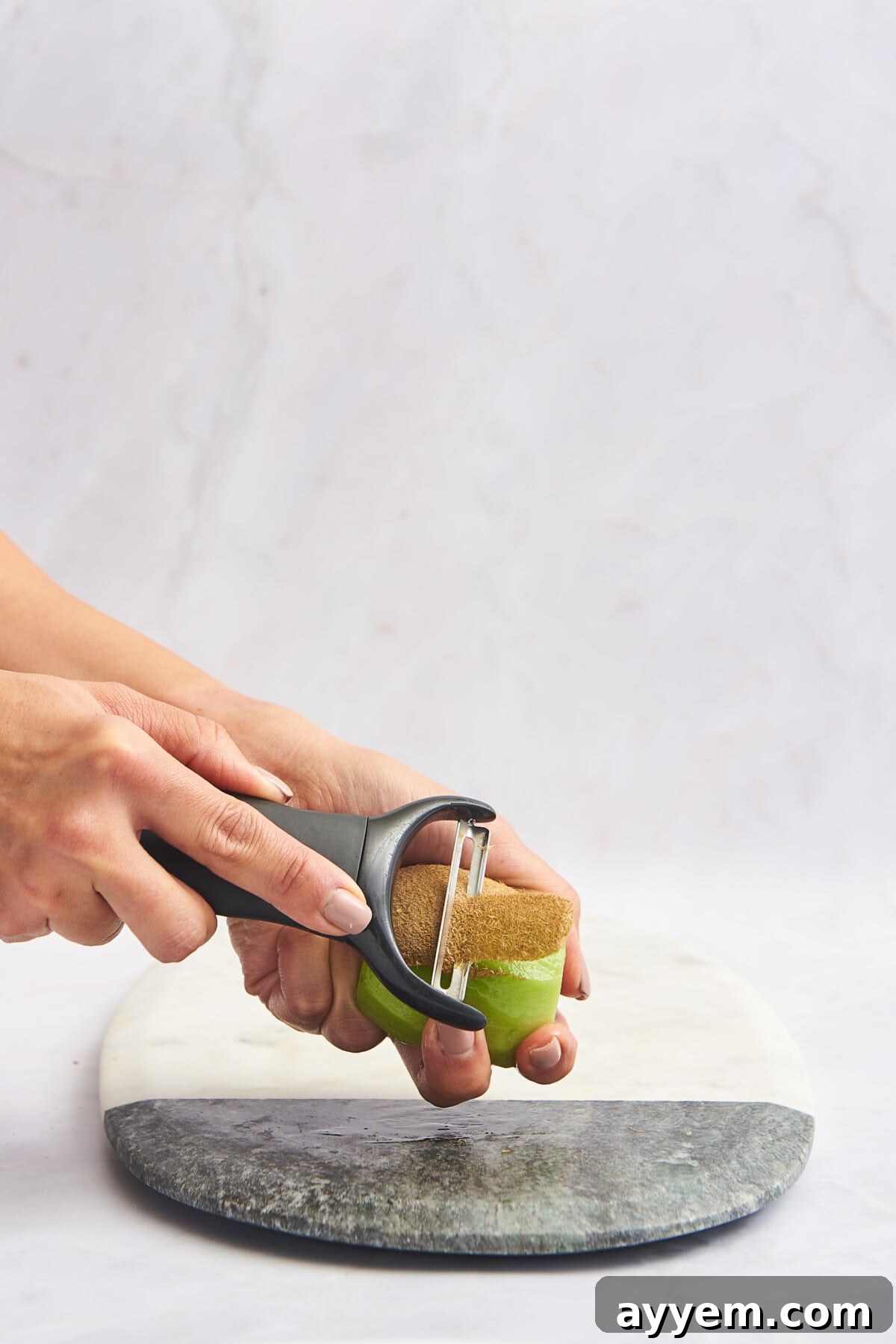
Do You Peel a Kiwi Before Cutting It? Exploring Your Options
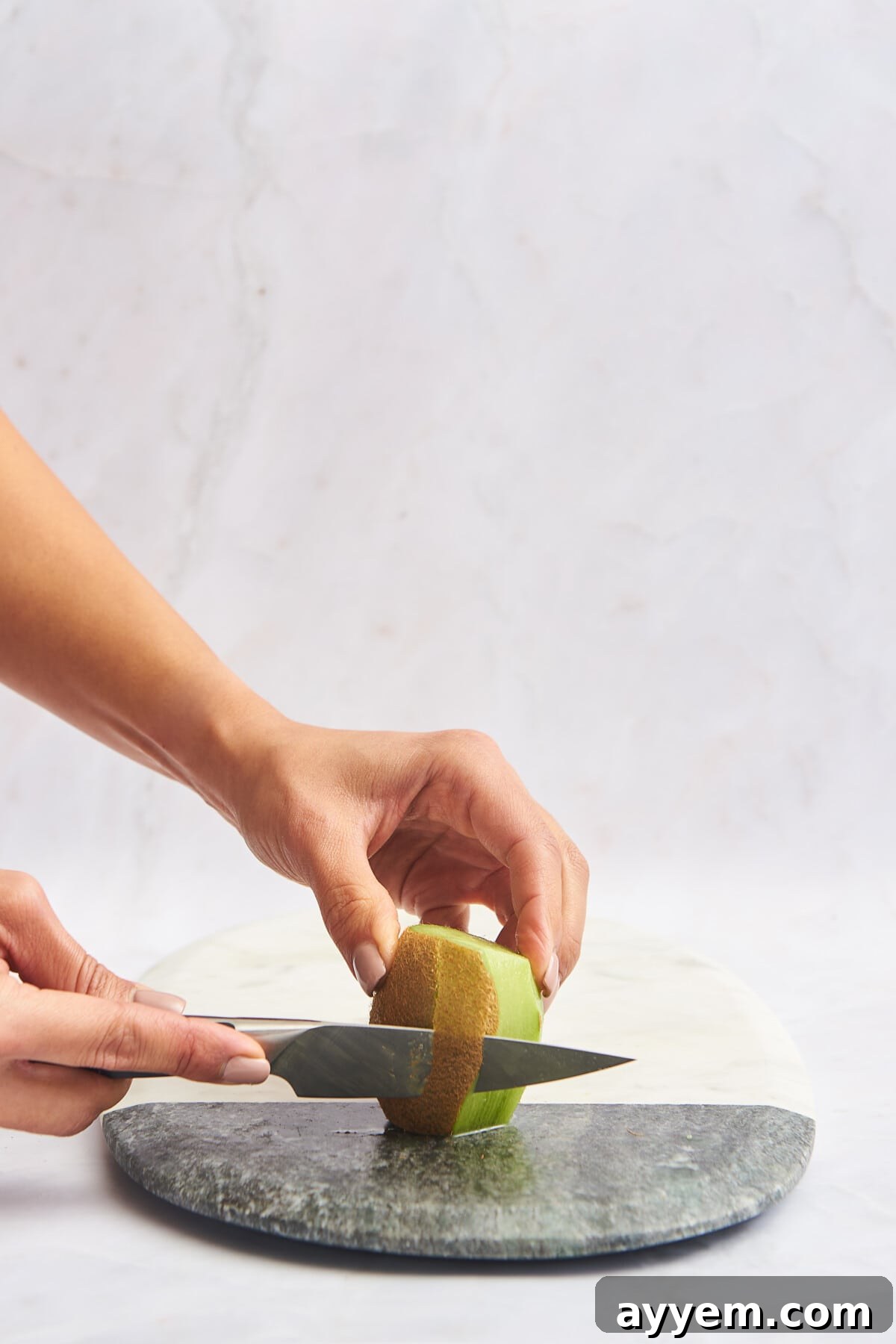
The question of whether to peel a kiwi before or after cutting, or even at all, is largely a matter of personal preference. While most people opt to remove the fuzzy brown skin for a smoother eating experience, or simply leave it uneaten, it’s important to know that kiwi skin is completely edible and safe to consume.
Eating the skin offers additional nutritional benefits, as it contains extra fiber, Vitamin C, and antioxidants. If you choose to eat the skin, make sure to wash the kiwi thoroughly to remove any dirt or potential pesticide residues (opting for organic kiwis can also be a good choice). However, the fuzzy texture can be off-putting for some, and it might not be ideal for certain culinary applications, such as delicate desserts or smoothies where a smooth consistency is desired. For these instances, peeling the kiwi beforehand is generally recommended for the best aesthetic and textural outcome. Ultimately, the choice is yours, based on your taste and how you plan to use the fruit.
How to Cut a Kiwi: Versatile Methods for Every Occasion
While you could technically enjoy a kiwi simply by biting into it like an apple (especially if you’re eating the skin), mastering a few simple cutting techniques will enhance your kiwi experience, making it more convenient, appealing, and versatile for various dishes. Below, we’ll cover popular methods using either a sharp knife or a simple spoon, catering to all needs and skill levels. Before you start, always ensure you have a clean, stable cutting surface and a sharp knife for safety and efficiency.
Knife Methods: Precision and Presentation
Using a sharp knife allows for precision and offers the most versatility in terms of cut shapes. Whether you need perfect rounds for a tart, quarters for a fruit platter, or small cubes for a salsa, a knife will be your best tool. Remember to always cut away from your body and keep your fingers tucked safely when slicing.
Cutting Kiwi into Rounds
Perfect for garnishes, fruit salads, or simply enjoying as a snack, kiwi rounds are a classic choice. Their vibrant green or golden color makes them visually appealing.
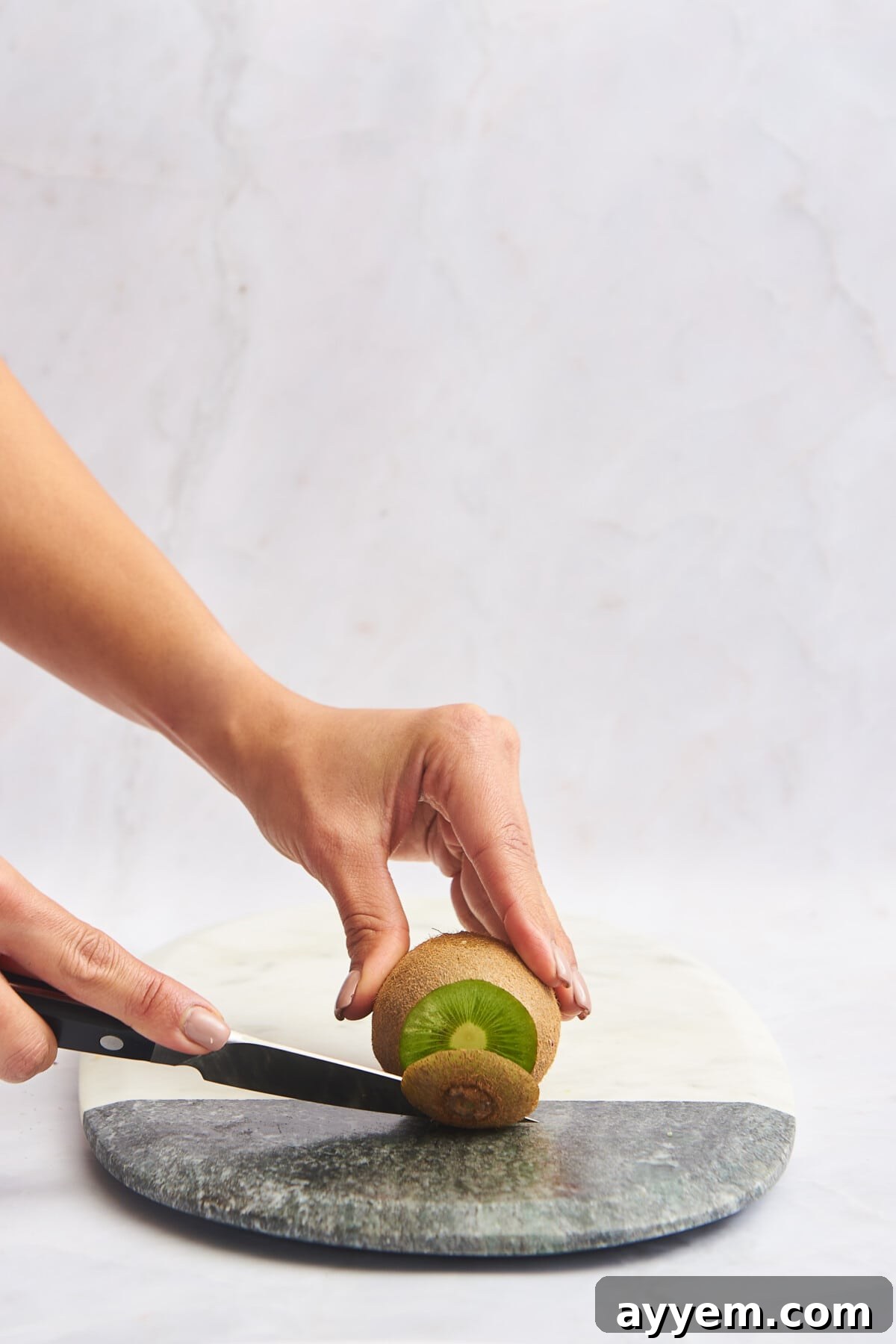
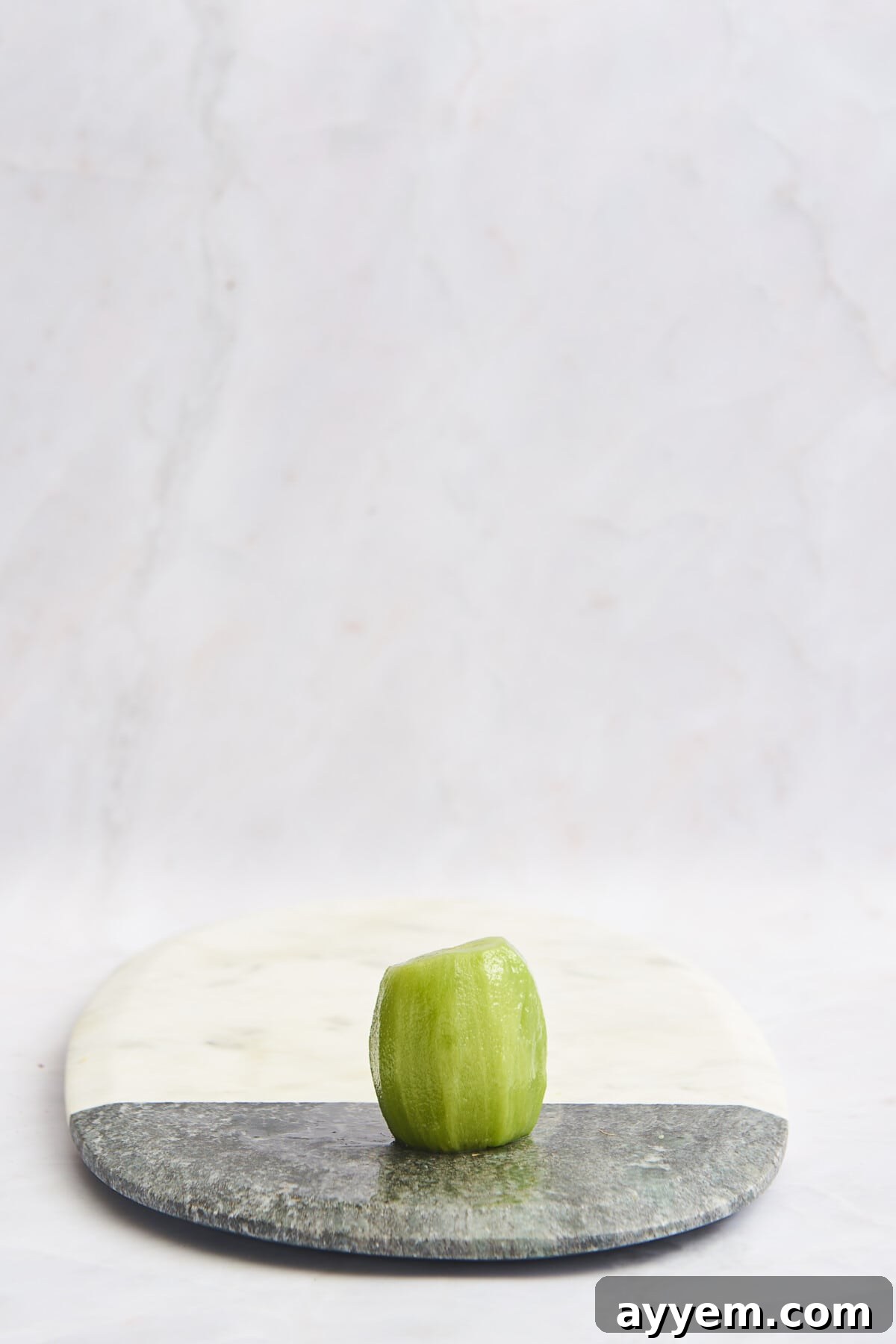
- Prepare the Kiwi: Place the kiwi on a cutting board. Using a sharp knife, carefully slice off both ends of the fruit, creating two flat surfaces. This helps stabilize the kiwi.
- Peel (Optional): If desired, peel the kiwi. You can do this by using a small, sharp knife to carefully slice away the skin in strips, working around the fruit. Alternatively, a vegetable peeler can make quick work of removing the skin, or even a spoon (as described in the spoon method below) can be used to scoop out the flesh from the ends.
- Slice into Rounds: With the kiwi now stable (and peeled, if preferred), stand it upright on one of the flat ends. Starting from one end, make crosswise cuts across the fruit, creating uniform circles. Adjust the thickness of your slices according to your preference – thicker for a hearty snack, thinner for delicate garnishes.
Cutting Kiwi into Quarters
Kiwi quarters are an excellent option for a grab-and-go snack, for children, or as larger chunks in a fruit salad where you want a more substantial bite.
- Prepare and Peel: Slice off both ends of the fruit as described above. Peel off the skin using your preferred method (knife, peeler, or spoon), if desired.
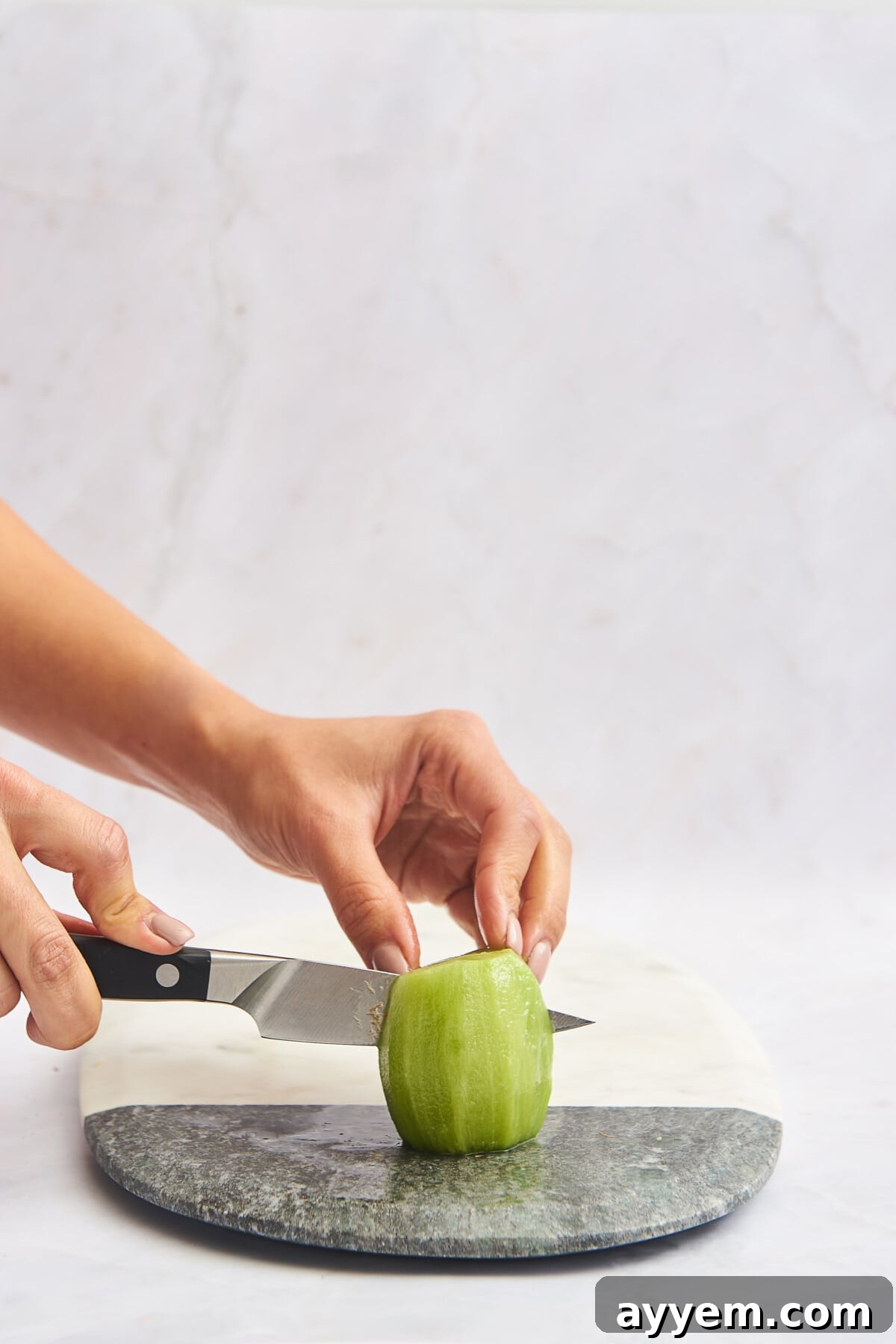
- Halve Lengthwise: Stand the peeled kiwi upright on your cutting board. Carefully slice it in half lengthwise, from one trimmed end to the other.
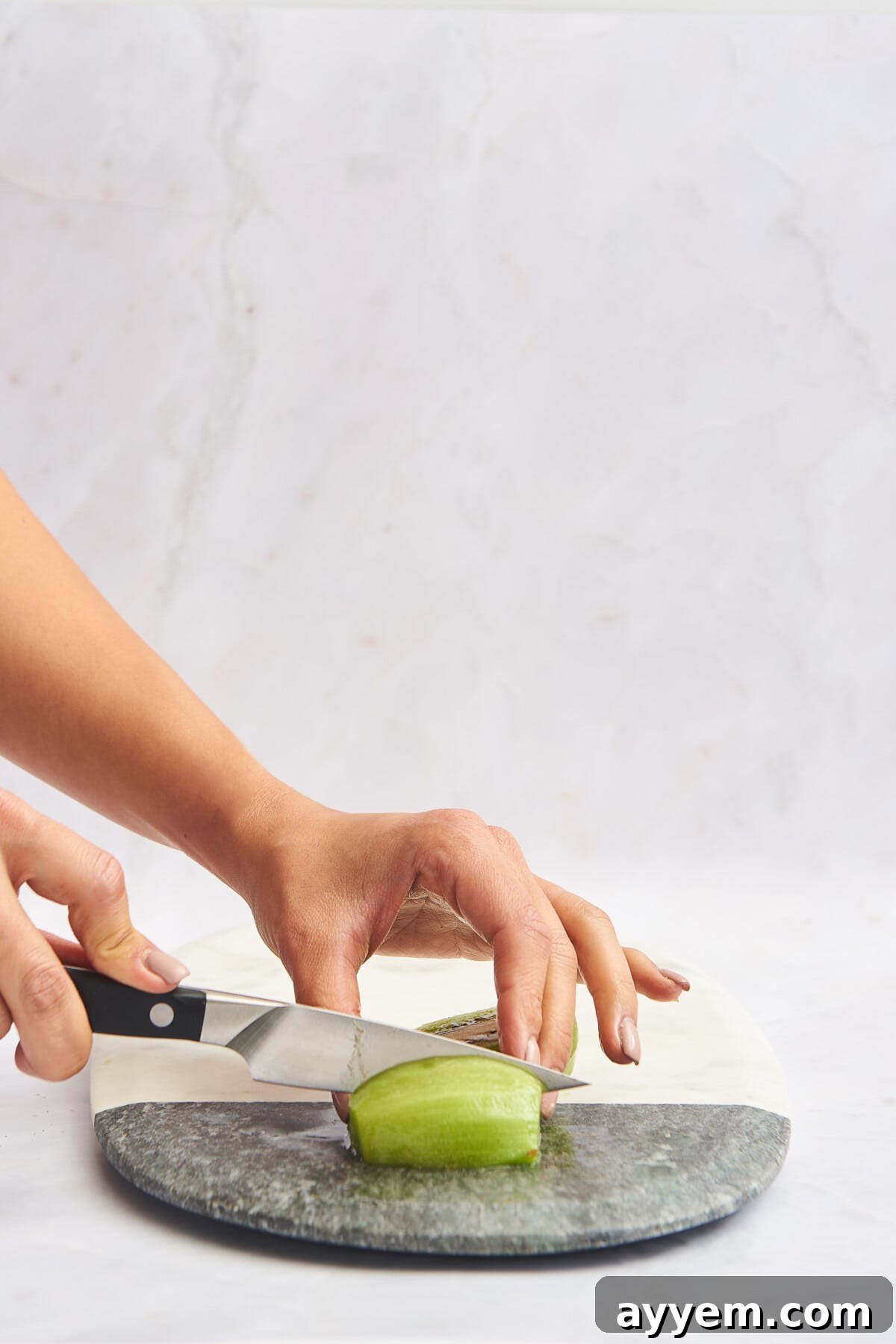
- Quarter Each Half: Lay each kiwi half flat on its cut side. Slice each half in half again lengthwise. You will now have four long, wedge-shaped pieces.
- Final Quarter Cuts (Optional): If you prefer smaller pieces, you can make crosswise cuts down each of these four pieces, creating smaller quarter-sized chunks.
Dicing Kiwi into Cubes
Diced kiwi is perfect for fruit salsas, adding to yogurt, oatmeal, baked goods, or blending into smoothies where smaller, consistent pieces are beneficial.
- Prepare and Peel: Begin by slicing off both ends of the kiwi and peeling the skin off completely, using a knife, peeler, or spoon.
- Make Vertical Slices: Stand the peeled kiwi upright on your cutting board. Make several vertical cuts down the length of the fruit, but do not cut all the way through if you want to keep the fruit together initially. Imagine you’re creating thin planks.
- Rotate and Slice: Rotate the kiwi 90 degrees and make cuts in the opposite direction, perpendicular to your first set of cuts. This will create columns or “sticks” of kiwi flesh. Again, hold the fruit together as you slice if possible.
- Crosswise Cuts for Cubes: Now, carefully lay the kiwi on its side (or keep it upright if you managed to hold the structure) and make crosswise cuts across the “planks” or “sticks.” This final step will yield perfectly sized kiwi cubes.
Creating Decorative Star-Shaped Kiwi
For a truly impressive presentation, especially for desserts, fruit platters, or to make fruit fun for kids, star-shaped kiwi slices are a fantastic choice. This method requires a bit more precision but yields stunning results. Alternatively, a small star-shaped cookie cutter can be used on rounds for a simpler approach.
- Prepare the Kiwi: Peel the kiwi first, as star shapes are best made from skinless fruit. Trim both ends to create flat surfaces.
- Initial Diagonal Cuts: Place the peeled kiwi on a cutting board. Using a small, sharp paring knife, make a diagonal cut about halfway through the fruit, starting from the center and angling outwards.
- Connecting Diagonal Cuts: Continue to make similar diagonal cuts all the way around the fruit, ensuring each new cut connects at the base with the previous cut. Aim for cuts that create distinct V-shapes or zig-zags along the circumference of the kiwi. You’ll essentially be outlining the points of a star.
- Pull Apart and Reveal: Once you’ve made connecting cuts all the way around, gently pull the two halves of the kiwi apart. You should be left with two beautiful, interlocking star-shaped halves. These can be served as is, or you can further slice them crosswise to create smaller star slices.
The Effortless Spoon Method: Quick and Clean
If you’re looking for the quickest, easiest, and often the least messy way to enjoy a kiwi, especially when eating on the go or serving it simply, the spoon method is your best friend. It’s also a great way to avoid the fuzziness of the skin without needing a peeler.
- Trim the Ends: Place the kiwi on a cutting board and slice off both ends of the fruit with a knife, creating flat, open surfaces.
- Halve the Fruit: Now, slice the kiwi in half crosswise, creating two equal portions.
- Insert the Spoon: Take a sturdy spoon (a grapefruit spoon works exceptionally well due to its serrated edge, but any regular spoon will do). Insert the spoon at the very edge of the kiwi flesh, just inside the skin, with the back of the spoon facing the skin.
- Scoop and Rotate: Carefully slide the spoon all the way around the green or golden flesh of the fruit, hugging the inside of the skin. Apply gentle pressure, rotating the kiwi as you go, until the flesh is completely separated from the skin.
- Enjoy or Further Process: Once separated, you can easily scoop out the entire kiwi half directly from its skin and enjoy it right away. Alternatively, if you wish to present it differently, you can now slice the scooped-out flesh into rounds, quarters, or cubes as desired.
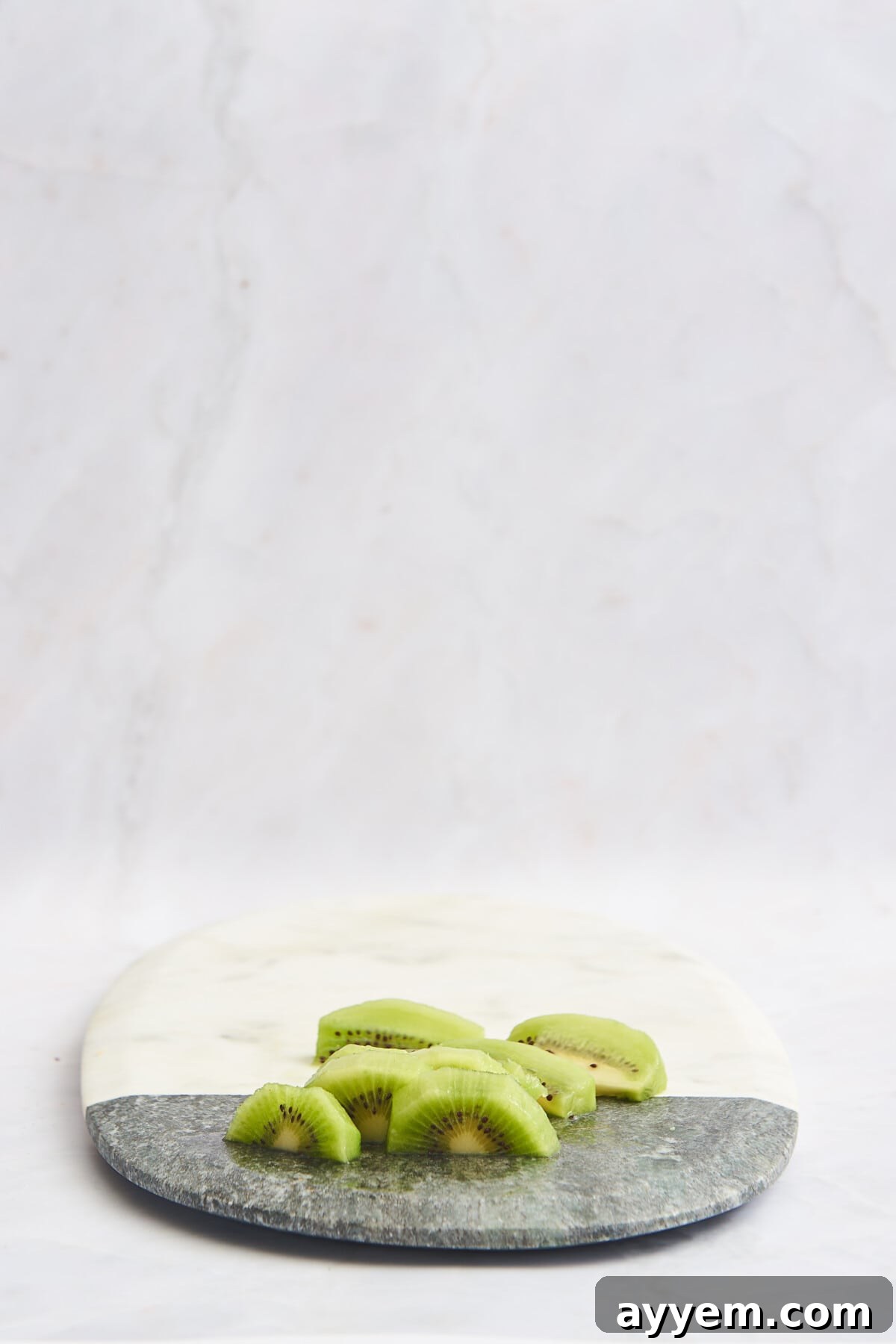
How Long Does a Cut Kiwi Last? Storage Tips
Proper storage is essential to maintain the freshness and flavor of your cut kiwi. Once a kiwi has been cut, its shelf life significantly shortens compared to a whole, unpeeled fruit due to exposure to air.
For best results, store cut kiwi pieces in an airtight container. This minimizes exposure to air, which can cause oxidation (browning) and flavor degradation. Kept in an airtight container, cut kiwi can last in the refrigerator for up to 3-4 days. For longer storage, you can freeze cut kiwi. Arrange the pieces in a single layer on a parchment-lined baking sheet and freeze until solid. Once frozen, transfer them to a freezer-safe bag or container, where they will remain fresh for up to six months. Frozen kiwi is perfect for smoothies, sorbets, or as a refreshing icy treat.
For whole kiwis: If unripe, store them at room temperature for a few days to soften. To extend the life of ripe, whole kiwis, store them in the crisper drawer of your refrigerator, where they can last for several weeks.
Delightful Ways to Use Kiwi Fruit in Your Kitchen
Kiwi, with its vibrant color and unique sweet-tart flavor, is incredibly versatile. While it’s absolutely delicious on its own, it also makes for a stunning and tasty addition to a wide variety of recipes. Here are just a few ideas to inspire your culinary creativity:
- Refreshing Fruit Salads: Incorporate diced or sliced kiwi into any fruit salad for a burst of color and tangy flavor. Try recipes like Fakhfakhina (Egyptian Fruit Salad) or a simple Easy Fruit Salad.
- Smoothies and Juices: Blend peeled kiwi into your favorite smoothies or fresh juices for a boost of Vitamin C and a tropical twist. It pairs wonderfully with spinach, banana, and pineapple.
- Yogurt Parfaits: Layer sliced or diced kiwi with yogurt, granola, and other fruits for a nutritious and visually appealing breakfast or snack.
- Fruit Pizza and Tarts: Arrange colorful kiwi slices on top of fruit pizzas, tarts, or cheesecakes for an elegant and fresh garnish.
- Breakfast Bowls: Add chopped kiwi to your oatmeal, porridge, or chia pudding bowls for added sweetness, fiber, and texture.
- Cream Cheese Dip: Mix finely diced kiwi into a sweetened cream cheese dip for a unique and flavorful spread, perfect with crackers or fruit.
- Salsas and Savory Dishes: The enzymes in kiwi can tenderize meat, making it a great addition to marinades. Its tangy flavor also works well in fresh fruit salsas served with grilled fish or chicken tacos.
- Desserts: From kiwi sorbet and popsicles to pavlova and fruit skewers, the kiwi’s vibrant appearance and taste make it a dessert superstar.
- Cocktails and Mocktails: Muddle fresh kiwi for vibrant cocktails or refreshing mocktails.
Common Questions About Cutting and Using Kiwi
It largely depends on your preference and the intended use. Peeling first can make slicing and dicing easier and provides a smoother texture for eating. However, you can also cut rounds or wedges with the skin on, especially if you plan to eat the skin for its added nutrients or appreciate the natural presentation. Just be sure to wash it well!
For elegant presentations, try cutting kiwi into thin wheels or half-moons. You can also use small cookie cutters to create fun shapes like stars (as detailed above) or flowers from thicker slices. Layering slices artfully on a fruit platter or using them as a colorful garnish for desserts instantly elevates their appearance.
Handle very ripe kiwis gently to prevent squishing. It’s often easiest to slice off both ends, then use the spoon method to scoop out the soft flesh cleanly. If you prefer slices, use a very sharp knife and a light touch. You can still make neat slices or wedges, but work quickly and carefully.
For smoothies, simply peel the kiwi and roughly chop it into chunks. There’s no need for fancy cuts, as the blender will do all the work. Smaller pieces will help ensure your smoothie is creamy and smooth.
Explore More Kitchen Guides and Tips
- How to Cut a Tomato (3 Ways)
- How to Store Uncooked Ground Beef
- How to Cook Quinoa (3 Ways)
- How to Store Parsley
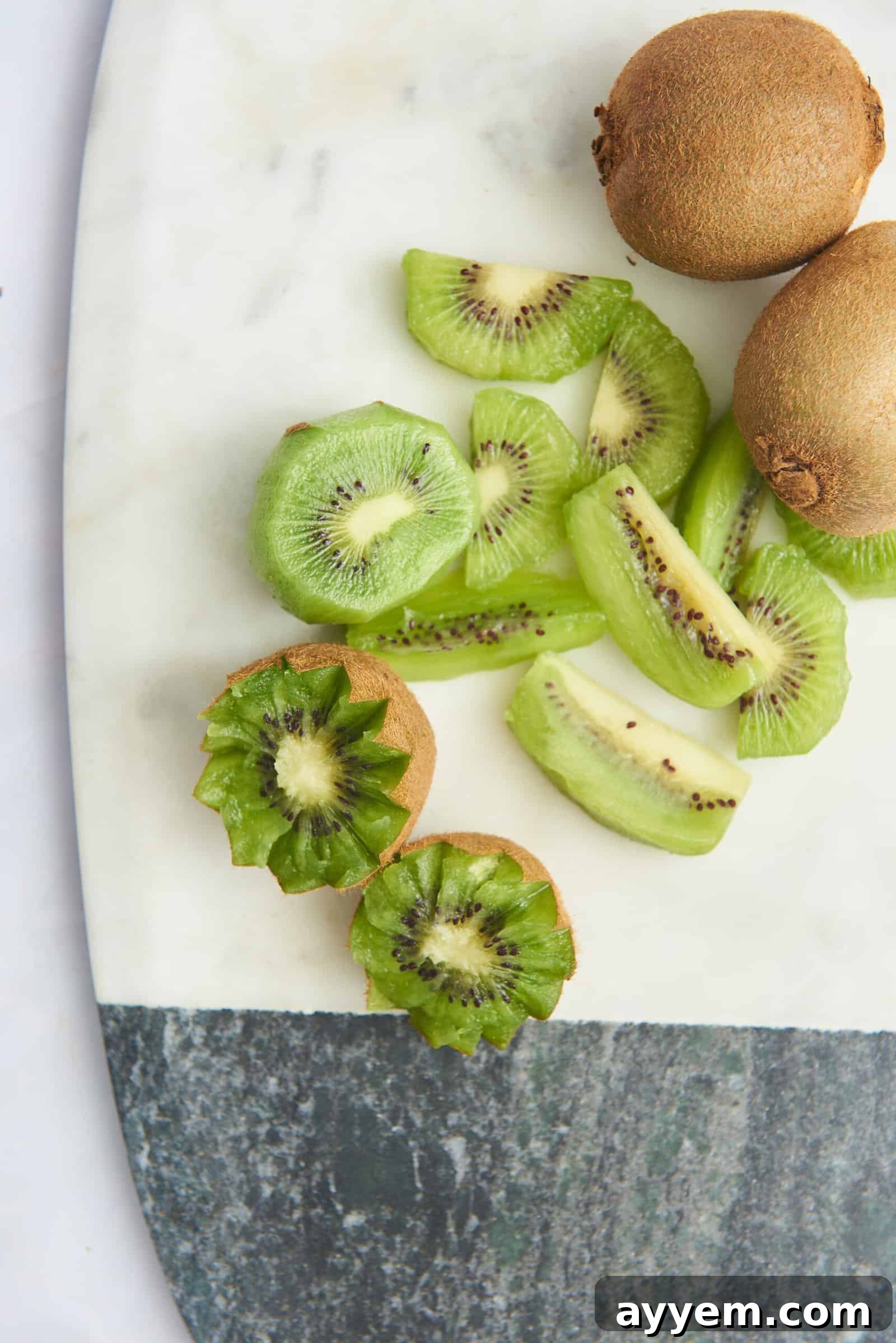
How to Cut a Kiwi
Food Dolls
1 serving
5 mins
5 mins
Pin
Learn how to cut a kiwi into rounds, quarters, cubes, and stars, how to store it, and how to use this sweet, tangy fruit!
Ingredients
- 1 Kiwi
Instructions
- Slice off both ends of the kiwi.
- Peel off the skin using a knife, vegetable peeler, or spoon, if desired.
Rounds
- Starting on one end, slice crosswise, creating circles as thick or thin as you prefer.
Quarters
- Stand the kiwi upright, and slice it in half lengthwise.
- Lay each half on its side, and slice them in half again lengthwise.
- Make crosswise cuts down each piece, creating quarters.
Cubes
- Standing the kiwi upright, make vertical cuts, holding the fruit together.
- Rotate the kiwi, and make cuts in the opposite direction, creating columns.
- Place the kiwi on its side, and slice crosswise cuts, creating cubes.
Star Shaped
- Place the kiwi on a cutting board, and use a knife to make diagonal cuts about halfway through the fruit.
- Continue to do this, making connecting diagonal cuts all the way around the fruit.
- Pull the halves apart, and enjoy.
Spoon
- Slice off both ends of the kiwi, and slice the fruit in half.
- Insert a spoon at the edge of the kiwi, with the backside facing the skin.
- Carefully, slide the spoon all the way around the fruit.
- Remove the pulp from the skin, and enjoy right away. Or, slice it into rounds, quarters, or cubes.
Equipment
Notes
Storage: Keep cut kiwi in an airtight container in the fridge for up to three to four days or in the freezer for up to six months.
Nutrition
Calories: 53kcal |
Carbohydrates: 13g |
Protein: 1g |
Fat: 0.4g |
Saturated Fat: 0.03g |
Polyunsaturated Fat: 0.3g |
Monounsaturated Fat: 0.04g |
Sodium: 5mg |
Potassium: 180mg |
Fiber: 3g |
Sugar: 8g |
Vitamin A: 79IU |
Vitamin C: 68mg |
Calcium: 32mg |
Iron: 0.2mg
Nutrition information is automatically calculated, so should only be used as an approximation.