
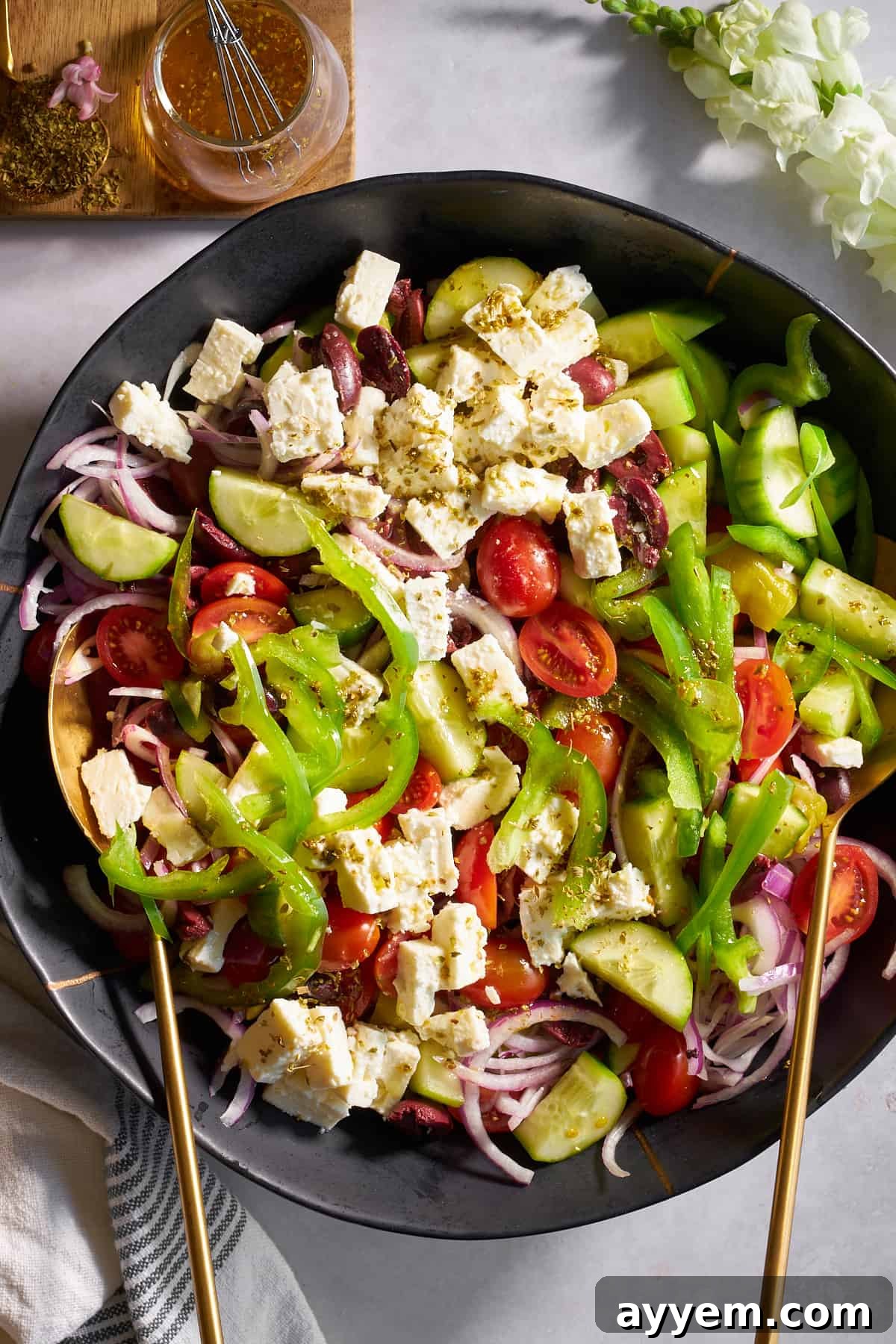
Nothing quite captures the essence of summer and the vibrancy of Mediterranean cuisine like a classic Greek Salad. Known in Greece as Horiatiki, this isn’t just a side dish; it’s a celebration of fresh, sun-ripened produce, rich olive oil, and creamy feta cheese. It’s a beautifully simple yet incredibly satisfying dish that truly tastes better with every forkful. Bursting with bright, tangy flavors and delightful crunchy textures, an authentic Greek salad offers a refreshing escape to the Aegean coast, no matter where you are.
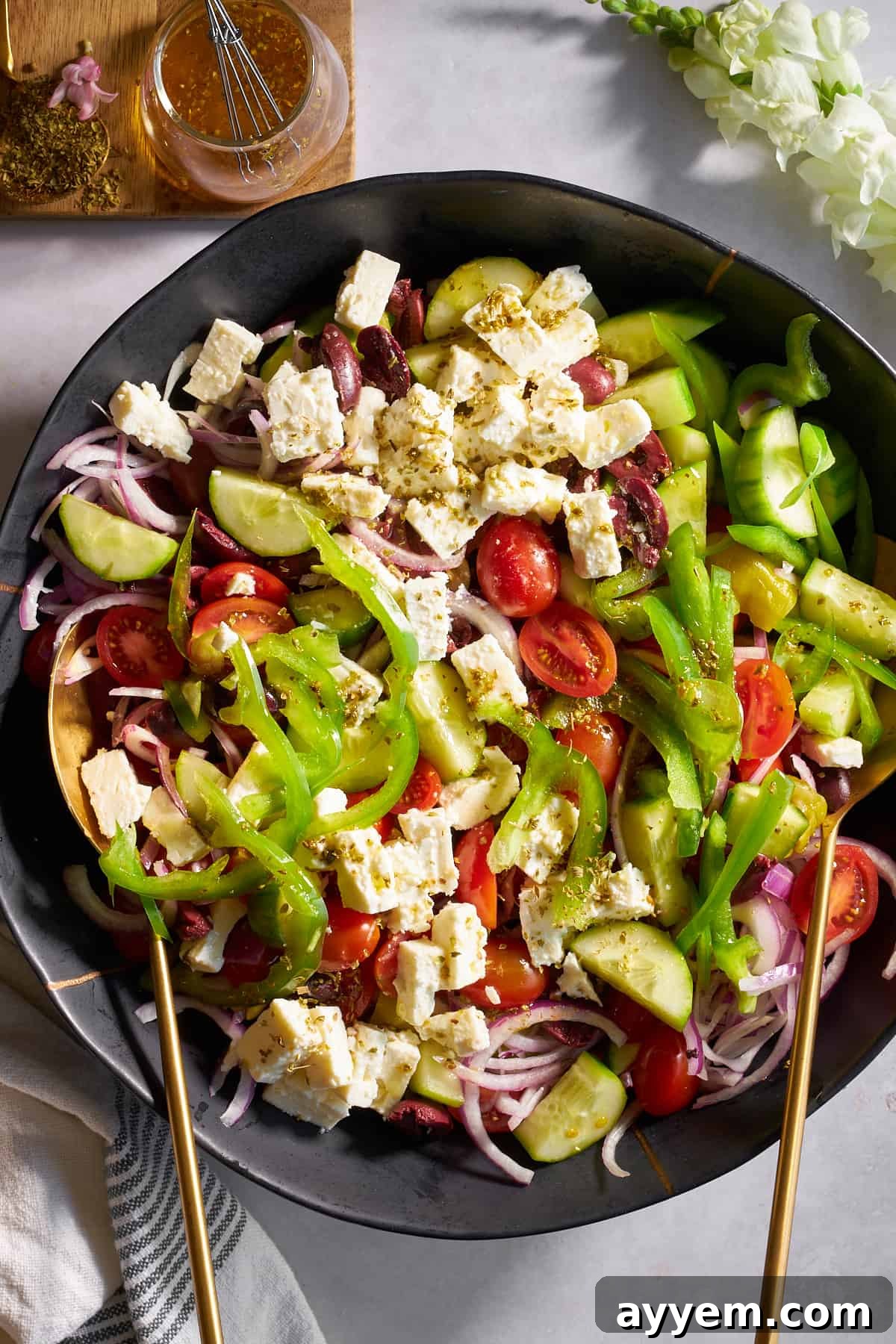
What is Authentic Greek Salad (Horiatiki)?
An authentic Greek Salad, or Horiatiki, translates to “village salad,” and this name perfectly encapsulates its rustic charm and traditional roots. Unlike many Western salads, the foundational element of a true Greek salad is not lettuce. Instead, it features a generous medley of hearty, seasonal vegetables, typically including ripe tomatoes, crisp cucumbers, pungent red onion, briny Kalamata olives, and a generous slab of creamy feta cheese, often served as a whole block on top. These fresh ingredients are simply dressed with high-quality extra virgin olive oil, a splash of red wine vinegar, and a generous sprinkle of dried oregano, along with a pinch of sea salt and black pepper.
The beauty of Horiatiki lies in its simplicity and the quality of its components. Each ingredient plays a crucial role, contributing to a harmonious blend of flavors and textures without overpowering the others. The combination of sweet, juicy tomatoes, cool, crunchy cucumbers, the sharp kick of onion, the salty depth of olives, and the rich, tangy creaminess of feta creates an unparalleled taste experience. It’s a remarkably balanced dish that is savory, tangy, and incredibly satisfying, making it a staple for hot summer days, backyard barbecues, and effortless healthy lunches across Greece and beyond. Its vibrant colors and robust flavors make it an instantly recognizable and beloved dish worldwide, embodying the fresh, wholesome spirit of Mediterranean cuisine.
The Essential Ingredients for a Perfect Greek Salad
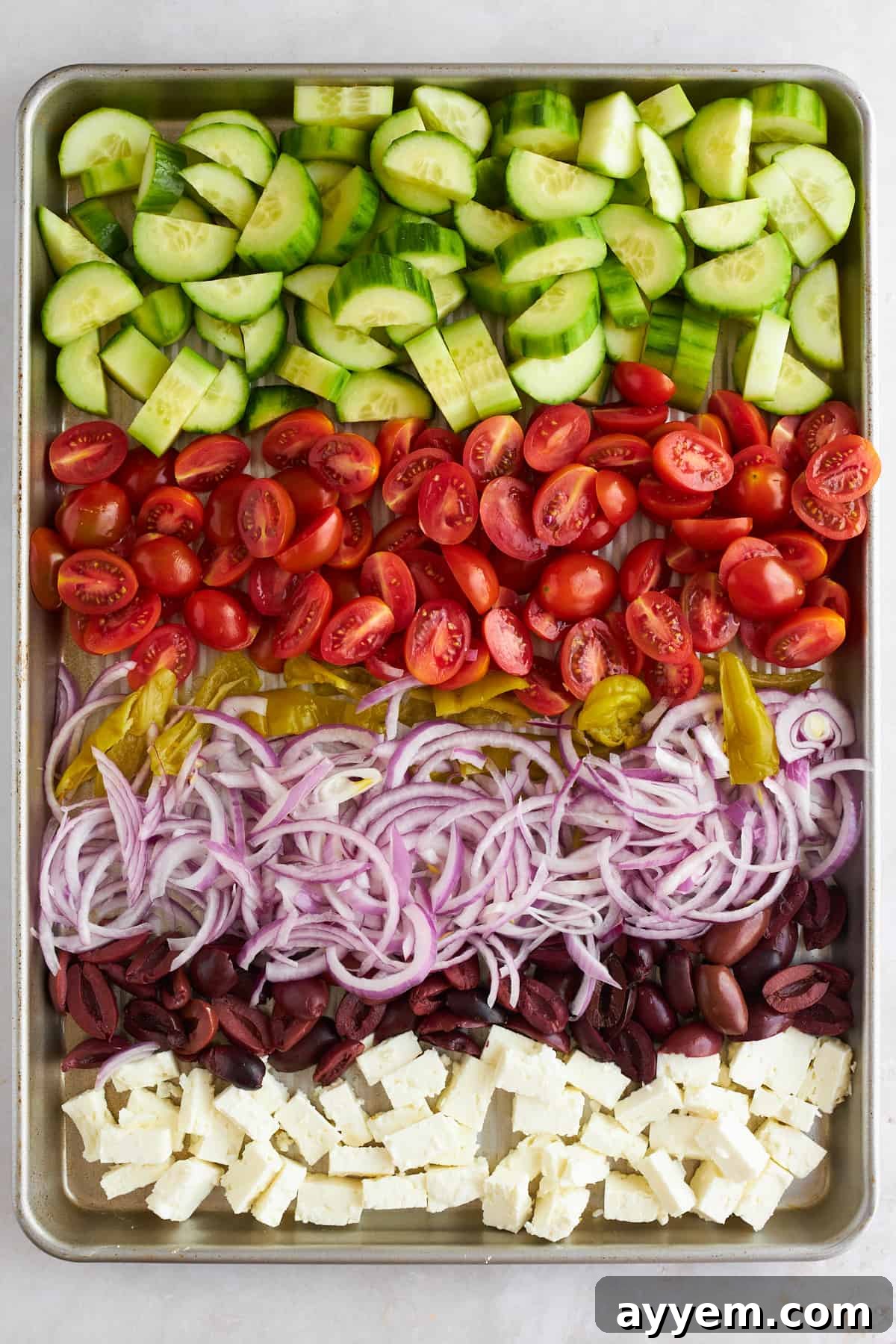
Creating a truly exceptional Greek salad hinges on using the freshest, highest-quality ingredients. Here’s a closer look at what you’ll need and why each element is crucial to achieving that authentic Mediterranean taste:
- Cherry Tomatoes: While traditional Horiatiki often uses larger, field-grown tomatoes, cherry tomatoes are a fantastic choice for their intense sweetness and juicy burst of flavor. Halving them releases their natural juices, which mingle beautifully with the dressing, adding a bright acidity that perfectly complements the salty and creamy components of the salad. For the best flavor, choose ripe, vibrant red tomatoes.
- Persian Cucumbers: These are preferred for their crisp texture, minimal seeds, and thin, tender skin, eliminating the need for peeling. Persian cucumbers offer a clean, refreshing bite that acts as a cooling counterpoint to the more robust flavors in the salad. Their subtle sweetness and crunch are indispensable.
- Green Bell Pepper: Sliced green bell pepper adds a wonderful crispness and a distinctive, slightly grassy sweetness to the salad. It contributes a lovely fresh aroma and a beautiful pop of green, enhancing the visual appeal as much as the flavor.
- Kalamata Olives: These deep purple, almond-shaped olives are a cornerstone of Greek cuisine. Known for their rich, fruity, and intensely briny flavor, Kalamata olives provide a savory punch that beautifully offsets the creamy feta and sweet vegetables. Ensure they are pitted for ease of eating.
- Red Onion: Thinly sliced red onion introduces a sharp, pungent flavor that is quintessential to Greek salad. To mellow its intensity without losing its characteristic bite, soaking the sliced onion in cold water for about 10 minutes prior to adding it to the salad is a traditional and highly recommended step. This technique removes some of the harshness, allowing the onion’s flavor to integrate more smoothly.
- Chopped Pepperoncini Peppers: These small, mild, and slightly sweet chili peppers, often pickled, are a fantastic addition for a tangy, subtly spicy kick. They bring an exciting zest that elevates the salad from a simple vegetable mix to a dynamic, crave-worthy dish, adding another layer of complexity to the flavor profile.
- Feta Cheese Cubes: The star of the show! For the most authentic experience, opt for a block of genuine Greek feta, preferably made from sheep’s milk or a blend of sheep and goat milk, stored in brine. This type of feta is significantly creamier, tangier, and more flavorful than pre-crumbled varieties. Cubing it allows you to enjoy substantial, satisfying bites of its salty, tangy, and rich goodness that ties all the other flavors together.
For the Simple Red Wine Vinaigrette:
- Extra Virgin Olive Oil: This is the soul of the dressing and, indeed, of Mediterranean cooking. Use a high-quality extra virgin olive oil for its rich, fruity notes and smooth, silky texture. It binds all the flavors together, providing a luxurious mouthfeel.
- Red Wine Vinegar: Providing the essential bright acidity, red wine vinegar cuts through the richness of the feta and olive oil, balancing the entire dish. Its robust flavor is perfect for this type of salad.
- Dried Oregano: The signature herb of Greek cuisine, dried oregano imparts an earthy, warm, and distinctly aromatic flavor that instantly transports you to the Mediterranean. Don’t skimp on this!
- Sea Salt: A good pinch of sea salt enhances the natural flavors of all the vegetables and balances the dressing. It’s crucial for making all the other ingredients pop.
- Black Pepper: Freshly ground black pepper adds a subtle, warm spice and a touch of zing, rounding out the flavors of the vinaigrette and the salad as a whole.
Crafting Your Classic Greek Salad: A Simple Guide
Making an authentic Greek salad is remarkably easy, focusing on fresh ingredients and minimal fuss. Here’s how to assemble this refreshing dish:
Preparation is Key
- Prepare the Vegetables: Begin by washing all your fresh produce thoroughly. Slice the cherry tomatoes in half. Dice or slice the Persian cucumbers into bite-sized pieces. Thinly slice the green bell pepper and the red onion. Remember to soak the sliced red onion in cold water for about 10 minutes to reduce its pungency, then drain it well before adding to the salad. Slice the Kalamata olives if they are not pre-sliced, and finely chop the pepperoncini peppers. Lastly, cube your block of feta cheese into generous pieces.
- Combine the Base: In a large mixing bowl, gently combine the halved cherry tomatoes, sliced cucumbers, green bell pepper, sliced Kalamata olives, drained red onion, chopped pepperoncini, and the feta cheese cubes.
Whisking the Perfect Greek Vinaigrette
- Assemble the Dressing: In a separate small bowl or a jar with a tight-fitting lid, combine the extra virgin olive oil, red wine vinegar, dried oregano, sea salt, and black pepper.
- Whisk Until Combined: Whisk vigorously until all the ingredients are fully blended and the dressing becomes fragrant. If using a jar, simply shake it well. The goal is a well-emulsified dressing that will coat every piece of the salad evenly.
Bringing It All Together
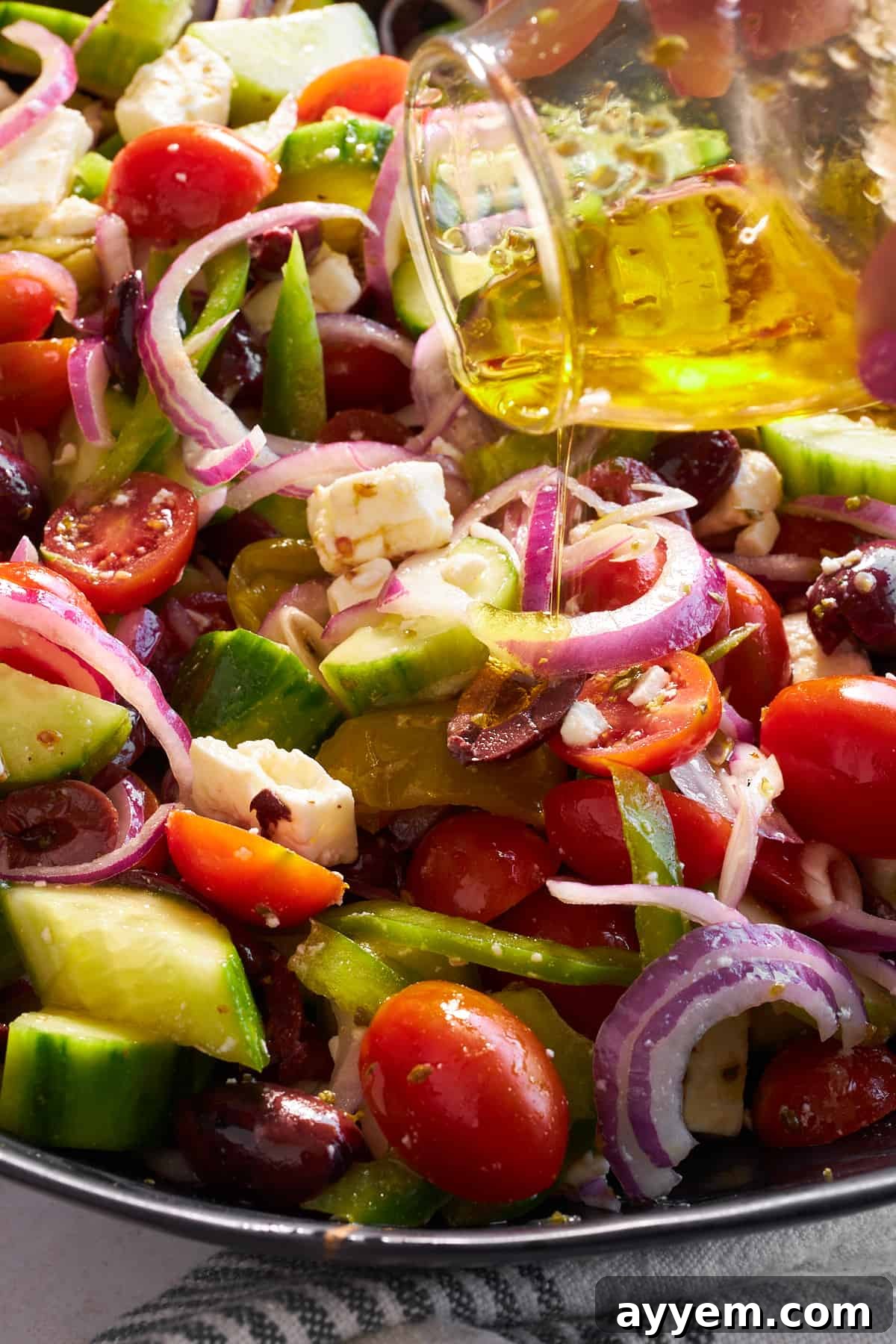
- Dress the Salad: Pour the freshly whisked dressing generously over the mixed vegetables and feta in the large bowl.
- Toss Gently: Using tongs or large salad servers, toss the salad gently. Ensure every piece of vegetable and feta is lightly coated with the dressing, allowing the flavors to meld beautifully. Be careful not to over-toss, as this can bruise the delicate ingredients.
- Serve Immediately: For the best texture and flavor, spoon the Greek salad onto individual plates or into bowls and serve it immediately while everything is still crisp and at its freshest. The vibrant colors and irresistible aroma are best enjoyed right away.
Beyond the Traditional: Creative Greek Salad Variations
While the classic Greek salad is perfect as is, it also serves as an excellent canvas for customization. Feel free to experiment with these variations to suit your taste or dietary needs:
- Add Protein: To transform your Greek salad into a more substantial meal, add grilled chicken breast, tender shrimp, flaky salmon, or marinated chickpeas for a vegetarian option. Grilled halloumi cheese also makes a delicious and authentic addition, offering a salty, chewy texture.
- Cheese Alternatives: If feta isn’t your preference, consider crumbled goat cheese for a milder, tangier profile, or a firm mozzarella for a creamier, less briny taste. For a dairy-free or vegan version, several high-quality vegan feta alternatives are now available that mimic the texture and flavor well.
- Different Olives: While Kalamata olives are traditional and highly recommended, you can certainly substitute them with other black olives (such as Niçoise) or various green olives if you prefer a different flavor. Just ensure they are pitted for convenience.
- Grain Boost: For a heartier, more filling salad, mix in cooked quinoa, couscous, or farro. These grains absorb the dressing beautifully and add a wonderful texture, transforming the salad into a complete grain bowl that remains incredibly fresh and satisfying.
- A Touch of Spice: If you enjoy a little heat, add a pinch of crushed red pepper flakes to the dressing. This provides a subtle warmth that can awaken the other flavors without overpowering them.
- Fresh Herbs: Beyond dried oregano, incorporating fresh herbs can add another layer of aromatic complexity. Fresh dill, mint, or parsley, finely chopped and mixed in just before serving, can provide a bright, herbaceous twist.
- Additional Vegetables: Feel free to include other fresh vegetables like thinly sliced radishes for an extra crunch and peppery note, or artichoke hearts for a tangy, earthy flavor.
Storage Tips: Enjoying Your Greek Salad to the Fullest
Greek salad is undeniably at its best when eaten fresh. The crispness of the cucumbers and bell peppers, and the juicy burst of the tomatoes, are most pronounced right after the dressing has been added. As the salad sits, especially after being dressed, the vegetables can begin to soften and become slightly watery.
If you do find yourself with leftovers, it’s best to store them in an airtight container in the refrigerator. Consume the salad within one to two days for the best possible flavor and texture. Beyond that, the vegetables will likely lose their desirable crunch and become somewhat soggy.
We strongly advise against freezing Greek salad. The high water content in the fresh vegetables means they will become mushy and unappetizing once thawed, completely losing their vibrant texture and flavor. If you anticipate having leftovers or want to prepare ahead, consider keeping the dressing separate from the chopped vegetables and feta. Dress only the portion you plan to eat immediately, and store the undressed components separately. This way, you can enjoy a fresh-tasting Greek salad for a few days without compromising on quality.
Common Questions about Greek Salad
Does traditional Greek salad contain lettuce?
No, in its traditional and authentic form, Greek salad (Horiatiki) does not include lettuce. The focus is on hearty, robust vegetables like tomatoes and cucumbers, not leafy greens.
What kind of feta cheese is best for Greek salad?
For the most authentic and delicious Greek salad, always opt for a block of genuine Greek feta cheese sold in brine. This type, typically made from sheep’s milk or a blend of sheep and goat milk, is creamier, richer, and more flavorful than pre-crumbled feta. Cut it into generous cubes for the best experience.
Are Kalamata olives a necessity?
Kalamata olives are highly traditional and contribute significantly to the unique flavor profile of a Greek salad with their distinct briny, fruity taste. However, if you don’t prefer them, you can substitute with other good quality black or green olives. Just ensure they are pitted.
Can I make this Greek salad recipe vegan?
Absolutely! To make this salad vegan, simply omit the feta cheese. Alternatively, you can use one of the many excellent vegan feta alternatives available on the market today to maintain that creamy, tangy element.
What should I serve with Greek salad?
Greek salad is incredibly versatile. It makes a fantastic light lunch on its own, a refreshing side dish for grilled meats or fish, or a perfect accompaniment to a Mediterranean mezze platter. Crusty bread is ideal for soaking up the delicious dressing at the bottom of the bowl.
More Mediterranean-Inspired & Veggie-Based Recipes
If you’re now inspired to whip up more seriously delicious and vibrant salads, we encourage you to explore other Mediterranean and veggie-focused recipes. These offer similar fresh flavors and wholesome ingredients that nourish and delight:
Mediterranean Cobb Salad
Shirazi Salad
Sweet Potato Salad with Chickpeas
Cucumber Tomato Tahini Salad
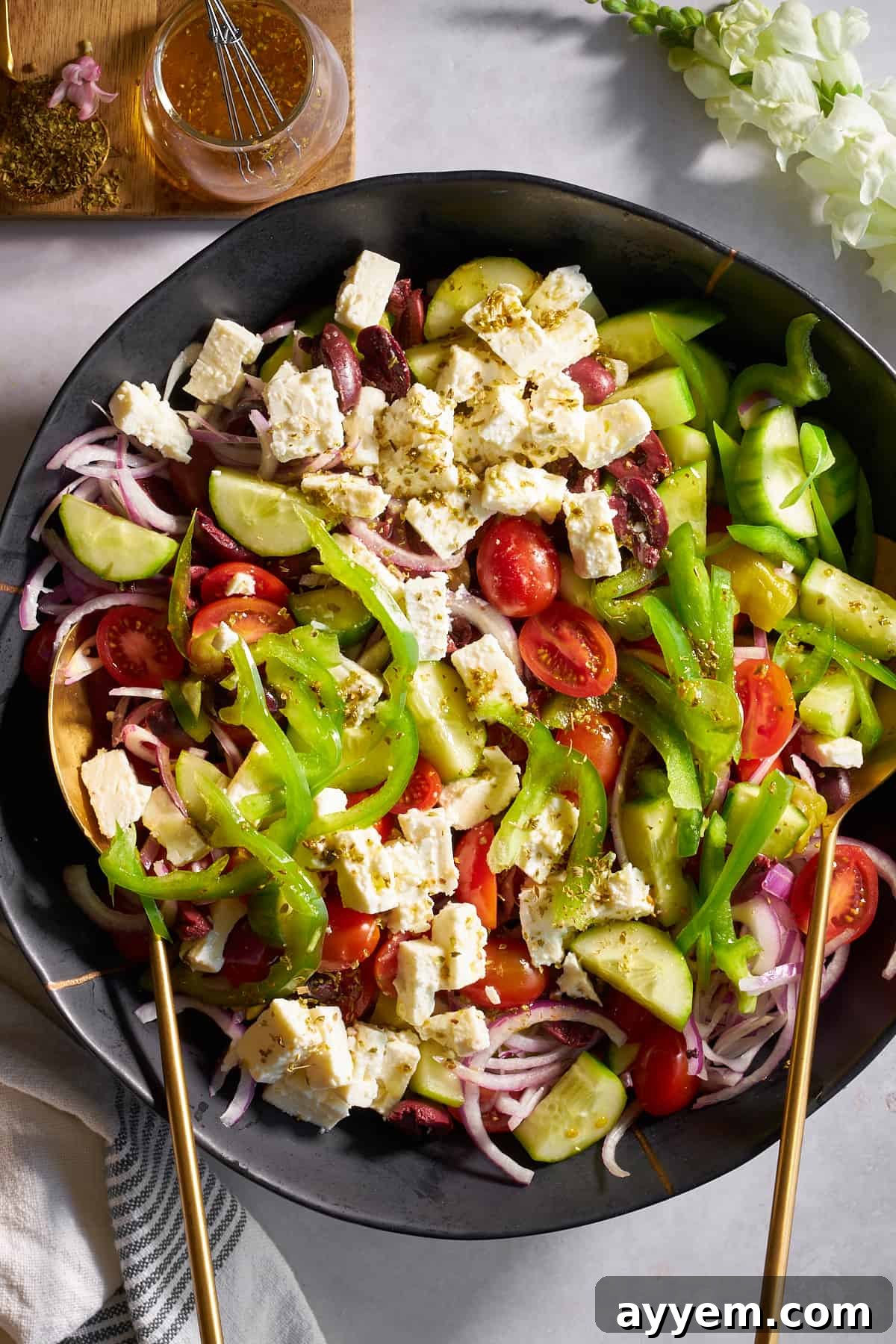
Classic Greek Salad (Horiatiki)
Print Recipe
Email Recipe
Ingredients
- 2 cups cherry tomatoes, halved
- 1 cup Persian cucumbers, sliced
- 1 green bell pepper, sliced
- 1/2 cup sliced Kalamata olives
- 1/2 red onion, thinly sliced and soaked in water for 10 minutes, then drained
- 1/3 cup pepperoncini peppers, chopped
- 1/2 cup feta cheese, cubed
- 2 Tablespoons extra virgin olive oil
- 1 Tablespoon red wine vinegar
- 1 teaspoon dried oregano
- 1/2 teaspoon sea salt
- 1/2 teaspoon black pepper
Instructions
- In a large bowl, combine the halved cherry tomatoes, sliced Persian cucumbers, sliced green bell pepper, sliced Kalamata olives, the drained thinly sliced red onion, chopped pepperoncini peppers, and cubed feta cheese.
- In a separate small bowl, whisk together the extra virgin olive oil, red wine vinegar, dried oregano, sea salt, and black pepper until all ingredients are well combined and the dressing is fragrant.
- Pour the prepared dressing over the salad ingredients in the large bowl.
- Toss gently using tongs or salad servers until all the vegetables and feta are evenly coated with the delicious vinaigrette.
- Serve immediately as a refreshing main course or a vibrant side dish, ensuring maximum freshness and crispness.
Equipment
 1 Large Mixing Bowl
 1 Small Mixing Bowl
Notes
Nutrition
Nutrition information is automatically calculated and should only be used as an approximation.
Embrace the Freshness: Your Greek Salad Awaits!
The Greek Salad, or Horiatiki, is more than just a dish; it’s a testament to the power of simple, fresh, and high-quality ingredients. Its vibrant colors, refreshing flavors, and satisfying textures make it a timeless classic that brings a taste of the Mediterranean to any table. Whether you’re looking for a light lunch, a healthy side, or a colorful addition to your next gathering, this authentic recipe promises a truly delicious experience.
We encourage you to try making this classic Greek salad at home and discover how effortlessly it can brighten your meal. Embrace the simplicity, savor the fresh flavors, and let this traditional Horiatiki transport your taste buds to the sun-drenched islands of Greece. Enjoy the crunch, the creaminess, and the unforgettable tang of this Mediterranean gem!