
Buying ground beef in bulk is a smart financial move that allows you to stock your freezer with versatile protein without overspending. But the biggest question that often arises is, “How long does uncooked ground beef last in the fridge?” Understanding proper storage techniques is crucial not only to extend its shelf life but also to ensure food safety and prevent waste. This comprehensive guide will equip you with everything you need to know about storing uncooked ground beef, from the best methods to adopt at home to clear indicators of spoilage, helping you maximize both your budget and your meal prep.
Why Store Uncooked Ground Beef? The Benefits of Bulk Buying and Proper Storage
Before diving into the “how-to,” let’s explore the compelling reasons behind storing ground beef in its uncooked state. While it’s tempting to cook a large batch all at once for quick meals, keeping it raw offers significant advantages that enhance convenience, flexibility, and cost-efficiency in your kitchen.
- Cost-Effective Purchasing: One of the primary benefits is the ability to purchase ground beef in larger quantities, which almost always comes with a lower per-pound price. This allows you to save money on a staple ingredient that you’ll likely use frequently.
- Maximized Versatility: Storing ground beef uncooked gives you unparalleled flexibility in meal planning. If you cook it all at once, you’re often committed to a single flavor profile or dish. Raw ground beef can be transformed into a vast array of recipes – from savory macarona bechamel and hearty million dollar spaghetti to simple ground beef bowls, tacos, burgers, meatballs, and more. This adaptability prevents meal fatigue and ensures your bulk purchase doesn’t lead to monotonous dinners.
- Ready for Quick Meals: Properly stored uncooked ground beef is a lifesaver for busy weeknights. Having pre-portioned beef ready to thaw means you can whip up a nutritious meal in a pinch, reducing reliance on takeout and processed foods. It’s perfect for those evenings when you’re short on time but still want to cook something wholesome.
- Reduced Waste: By storing beef correctly and extending its shelf life, you minimize the chances of spoilage, ultimately leading to less food waste and more value from your grocery budget.
- Convenience and Time-Saving: Let’s be honest, sometimes we’re too busy or simply too tired to cook a large amount of ground beef right after shopping. Proper uncooked storage allows you to handle it when you have the time and energy, without compromising quality or safety.
The Best Way to Store Uncooked Ground Beef: A Step-by-Step Guide
Storing uncooked ground beef effectively is paramount for food safety and maintaining its quality. While the process is straightforward, following each step meticulously is crucial to prevent contamination and ensure your beef remains fresh. Here’s a detailed guide on how to store uncooked ground beef, whether for short-term refrigeration or long-term freezing.
- Prepare Your Workspace and Hands: Before you even touch the beef, ensure your countertop, cutting boards, and any tools you’ll use are meticulously clean and sanitized. Wash your hands thoroughly with soap and warm water for at least 20 seconds. This is a critical first step to prevent cross-contamination.
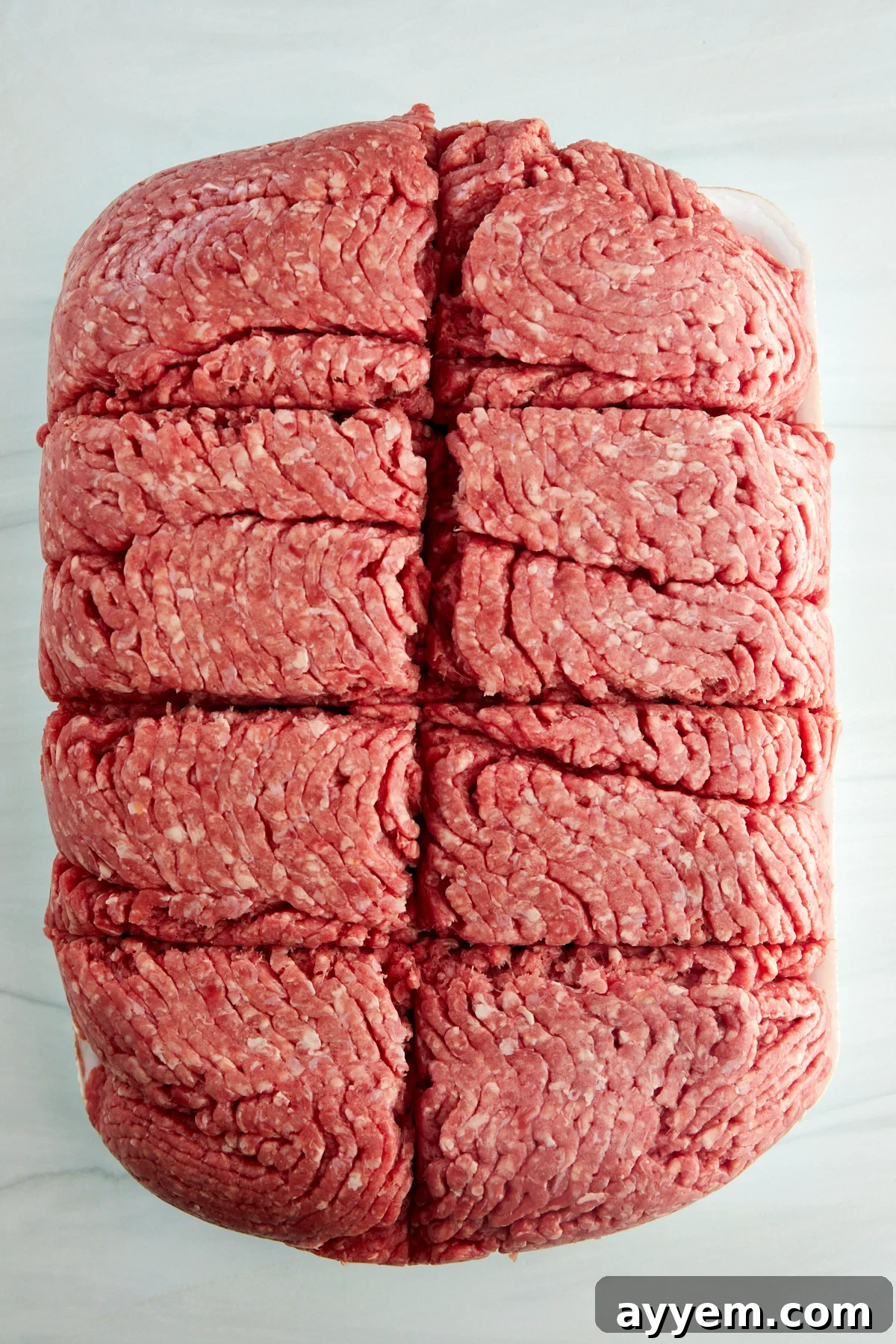
- Portion the Beef: Working quickly on your clean surface, divide the bulk ground beef into convenient, meal-sized portions. One-pound servings are typically ideal for most recipes, making meal planning and thawing much easier. Use a clean kitchen scale for accuracy if desired.
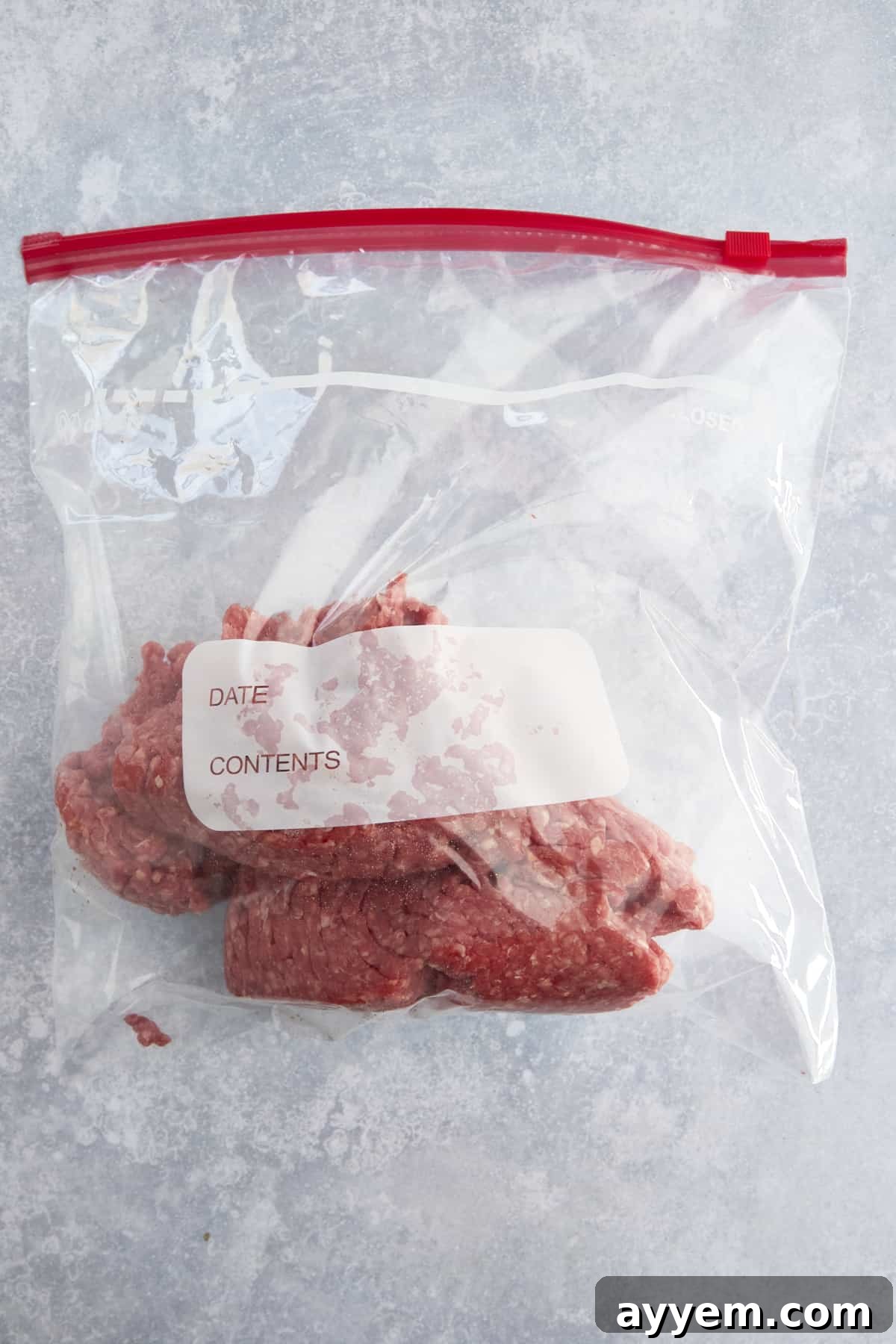
- Choose the Right Packaging: Transfer each portion into high-quality, sealable freezer bags. While plastic wrap or aluminum foil can be used for very short-term refrigeration (1-2 days), freezer bags are essential for longer storage in the freezer as they are thicker and more resistant to freezer burn. For the best results, consider investing in a vacuum sealer to remove nearly all air, significantly extending storage life.
- Remove Excess Air: This is arguably the most important step for preserving quality and preventing freezer burn. After placing the beef in the bag, press out as much air as possible before sealing. If you don’t have a vacuum sealer, you can use the water displacement method: slowly submerge the bag (with the seal almost closed) into a bowl of water, allowing the water pressure to push the air out, then seal completely before removing.
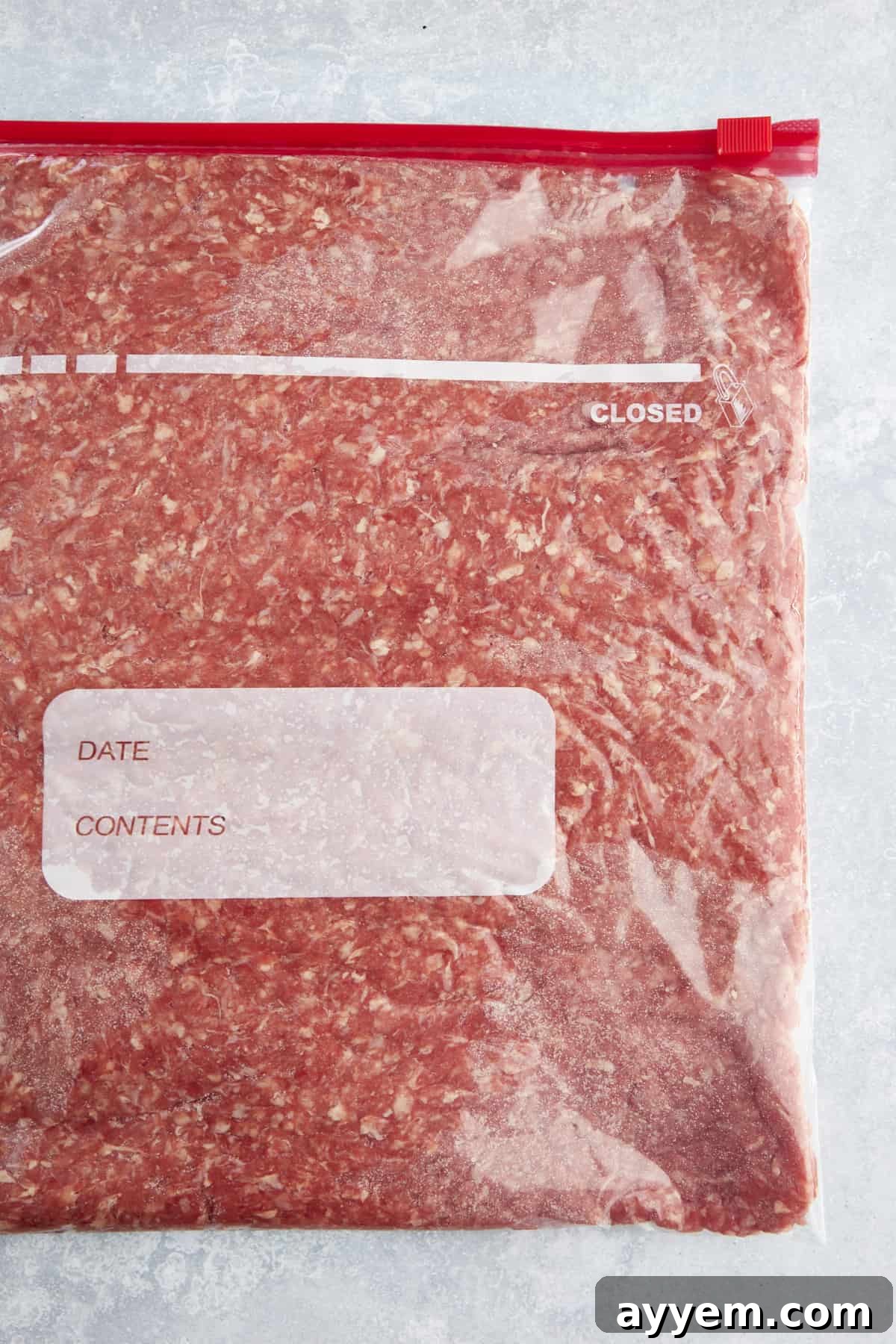
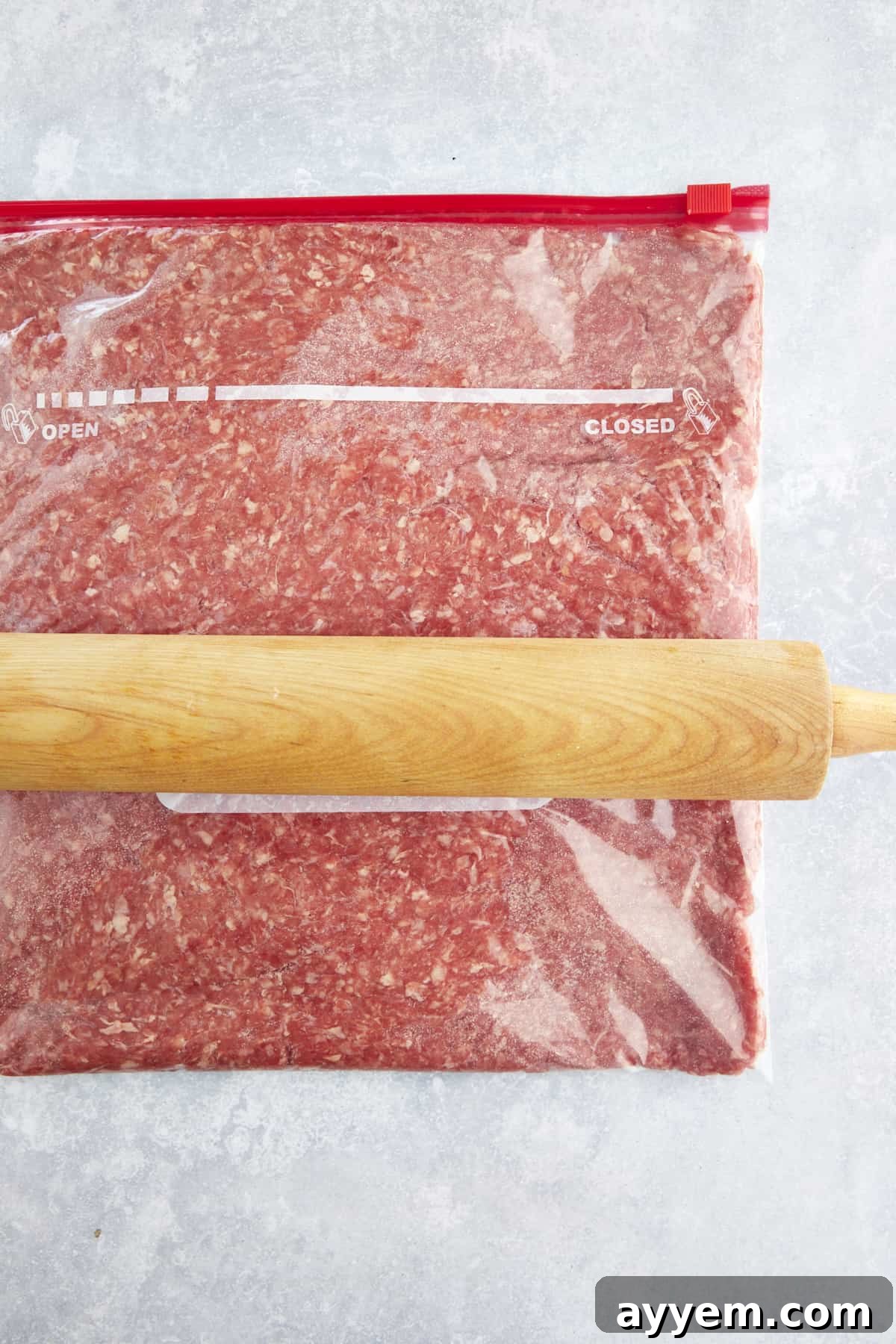
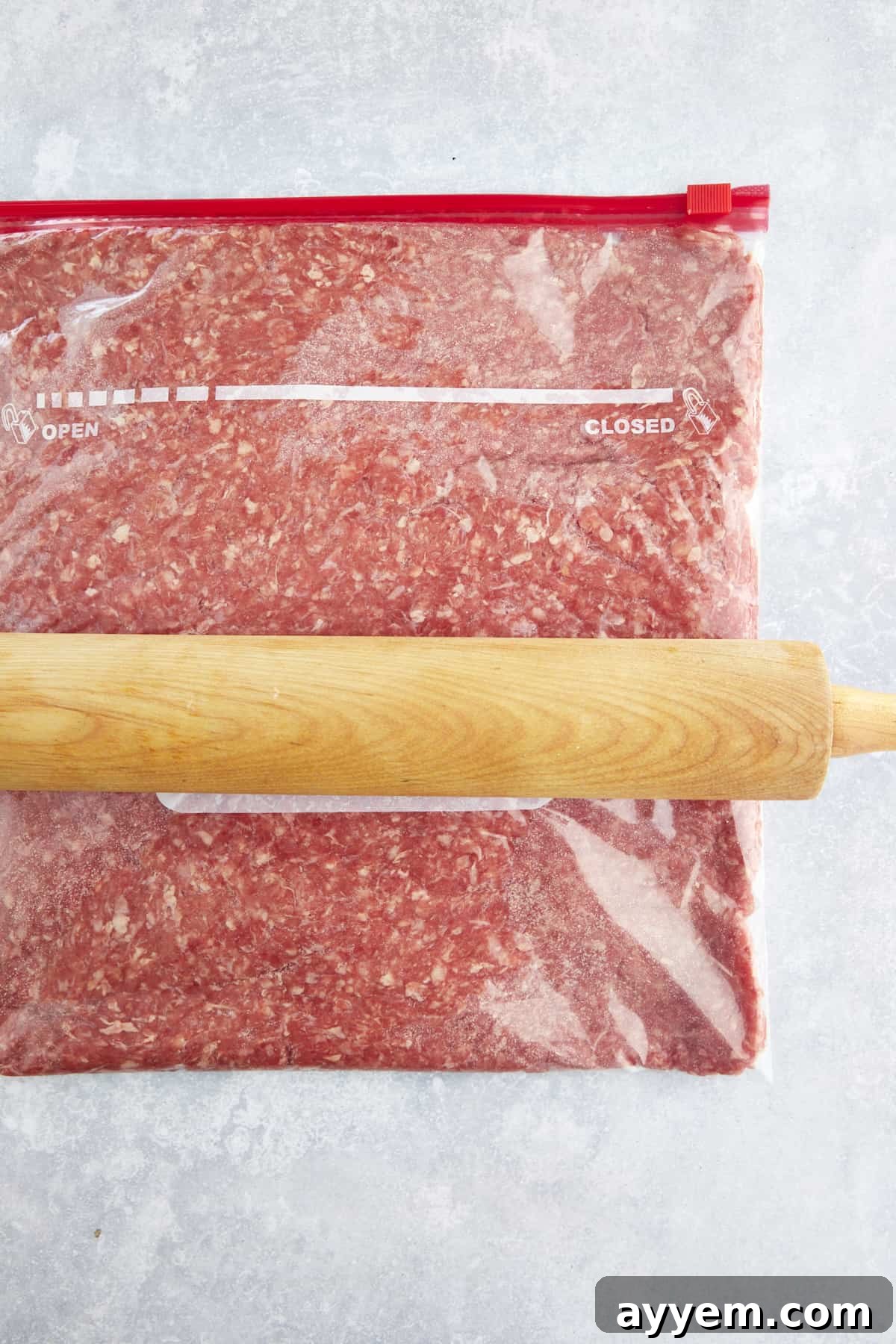
- Flatten for Efficiency: Once the air is removed and the bag is sealed, use a rolling pin or your hands to flatten the ground beef into a thin, even layer within the bag. This creates a flat “beef brick” that thaws much faster and takes up less space in your freezer, allowing for better organization.
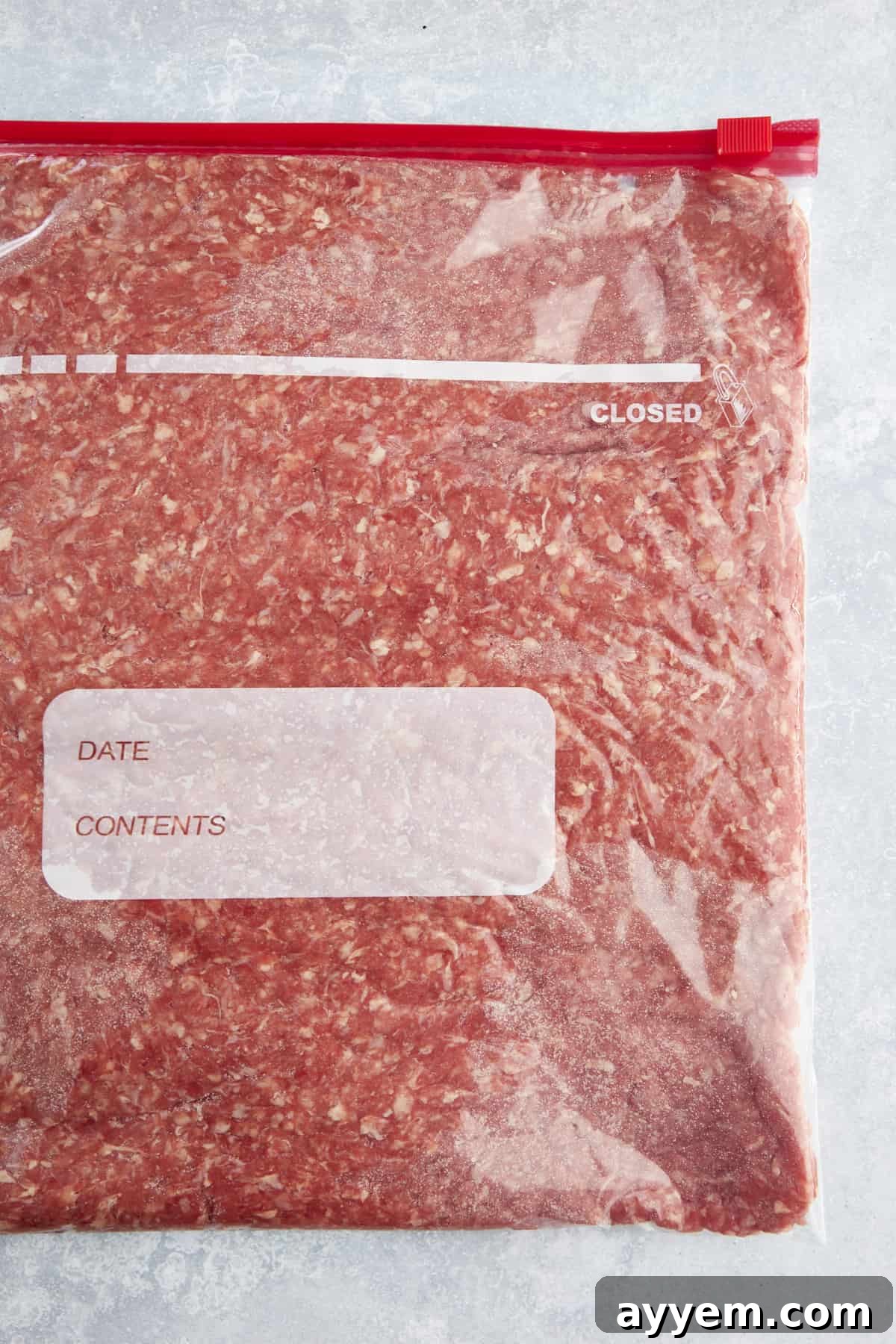
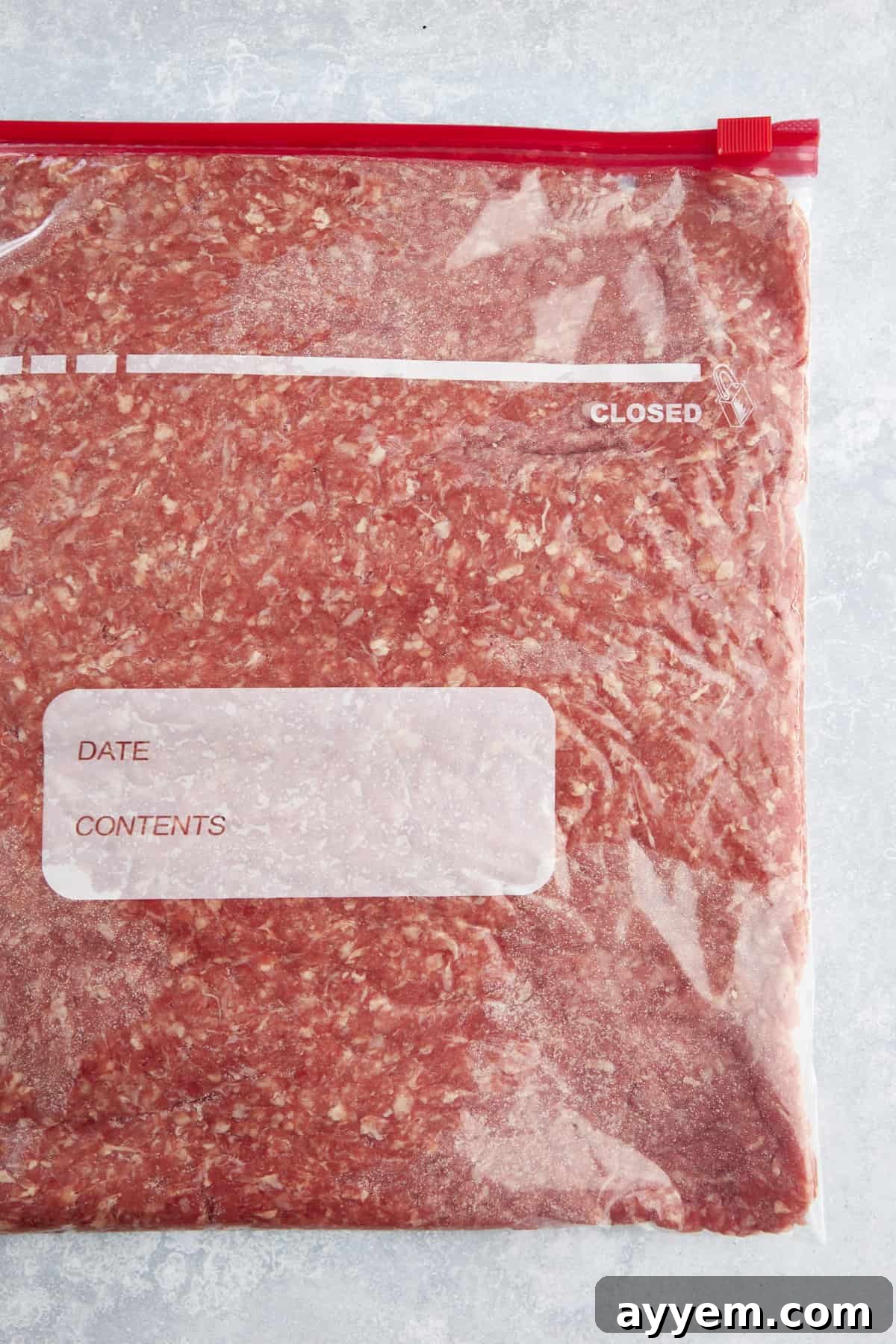
- Label Clearly: Using a permanent marker, write the current date, the type of meat (e.g., “Ground Beef 80/20”), and the weight (e.g., “1 lb”) on the outside of each bag. This crucial step helps you keep track of your inventory and adhere to proper storage timelines.
- Store Properly:
- For Refrigeration: Store the labeled bags of ground beef in the coldest part of your refrigerator (usually the bottom shelf, to prevent any potential drips from contaminating other foods) for up to 1 to 2 days from the purchase date.
- For Freezing: For longer storage, place the labeled, flattened bags in your freezer. Uncooked ground beef can safely be stored in the freezer for up to 4 months without significant loss of quality. Beyond this, it remains safe indefinitely, but its texture and flavor may start to degrade due to freezer burn.
- Sanitize Your Workspace: After all beef has been stored, immediately and thoroughly clean and disinfect all surfaces and tools that came into contact with the raw meat. Use hot, soapy water and a sanitizing solution to prevent the spread of bacteria. Always wash your hands again after this process.
By diligently following these steps, you can confidently store your uncooked ground beef, ensuring it remains safe, delicious, and ready for your next culinary adventure.
How Do You Know if Uncooked Ground Beef Is Bad? Clear Signs of Spoilage
While proper storage significantly extends the life of ground beef, it’s essential to recognize the signs of spoilage to ensure food safety. Even if frozen, there’s always a chance for quality degradation or improper handling before freezing. Trust your senses – sight, touch, and smell – to determine if ground beef is still safe to eat. When in doubt, it’s always best to discard it.
- Color Changes: Fresh uncooked ground beef typically has a bright red color on the surface due to oxygen exposure. The interior may appear a bit brownish or grayish because it hasn’t been exposed to oxygen. However, if the entire package of beef has turned a dull brown, gray, or even greenish tint, it’s a strong indicator of spoilage. This is often accompanied by other signs. Any presence of fuzzy mold, which can appear in various colors like green, white, or black, is an immediate red flag, meaning the beef must be discarded.
- Unpleasant Texture: The texture of fresh ground beef should be slightly moist and crumbly. If you notice that your ground beef has become sticky, slimy, or overly dry and hard, it’s likely spoiled. Sliminess is caused by bacterial growth and is a clear sign that the meat is no longer safe to consume. Avoid touching raw meat with bare hands; use a utensil or paper towel if you need to test the texture.
- Off-Putting Smell: This is often the most reliable indicator of spoilage. Fresh uncooked ground beef has a very mild, almost neutral scent. If the beef has gone bad, it will develop a distinctively strong, sour, tangy, or putrid odor. Some describe it as ammonia-like or reminiscent of rotten eggs. You won’t need to get very close to detect it – the smell will likely be noticeable as soon as you open the package. Trust your nose; if it smells “off” in any way, do not risk it.
- Expiration Date: Always check the “use-by” or “sell-by” date on the package. For ground beef stored in the refrigerator, it’s generally best to use it within 1-2 days of purchase. For frozen beef, while it’s safe indefinitely if properly stored, quality begins to decline after 4 months. If your refrigerated beef is past its date, or if your frozen beef has been in the freezer for an extended period and shows signs of freezer burn (dry, discolored spots), it’s often best to err on the side of caution and discard it.
Common Questions about Storing Uncooked Ground Beef
Uncooked ground beef can safely be stored in the refrigerator for 1 to 2 days after purchase. It’s crucial to keep it at or below 40°F (4°C) to inhibit bacterial growth. For longer storage, freezing is the best option.
To prevent freezer burn, which degrades quality, ensure your ground beef is stored in airtight packaging. Remove as much air as possible from freezer-safe bags before sealing, or use a vacuum sealer. Flattening the beef also helps minimize air pockets. Freezer burn doesn’t make food unsafe, but it can make it dry, tough, and less flavorful.
Absolutely! Dividing ground beef into meal-sized portions (e.g., 1-pound packs) before freezing is highly recommended. This makes thawing easier, reduces waste, and allows you to use only what you need without thawing the entire bulk package. Flattening each portion in a bag accelerates the thawing process.
For short-term refrigeration (1-2 days), the original store packaging is usually adequate. However, for longer refrigeration or freezing, it’s best to rewrap the beef. Original packaging often isn’t airtight enough for freezer storage and can lead to freezer burn. Transfer it to freezer-safe bags or vacuum-seal it for optimal preservation.
Yes, packaging significantly impacts freshness. Airtight packaging is key to preventing oxidation and bacterial growth. Vacuum-sealed packages offer the best protection and extend freshness considerably. Loosely wrapped meat exposes more surface area to air, accelerating spoilage and freezer burn.
The safest ways to thaw ground beef are in the refrigerator, in cold water, or in the microwave. Thawing in the refrigerator is preferred; it takes about 24 hours for a 1-pound package. For faster thawing, submerge sealed beef in cold water, changing the water every 30 minutes, or use the defrost setting on your microwave (cook immediately after microwaving).
You can refreeze thawed ground beef if it was thawed safely in the refrigerator and has not been cooked. However, refreezing may result in some loss of quality due to moisture loss. If thawed in cold water or the microwave, it should be cooked before refreezing.
Delicious Ways to Use Your Stored Ground Beef
Now that you’re a pro at storing ground beef, it’s time to put those perfectly preserved portions to good use! Ground beef is incredibly versatile, forming the base for countless comforting and creative meals. Here are some of our favorite beefy recipes to inspire your next cooking adventure:
- Ground Beef Philly Cheesesteak
- Beef Kofta Meatballs
- One Pot Spaghetti with Ground Beef
- Middle Eastern Beef Chili
How to Store Uncooked Ground Beef
Food Dolls
4 servings
5 minutes
5 minutes
Pin Recipe
Print Recipe
Email Recipe
Ingredients
- 1 pound ground beef, raw
Instructions
-
Place the beef in a sealable bag, squeezing out all excess air.
-
Using a rolling pin, flatten the beef into an even layer.
-
Using a permanent marker, write the date on the outside of the bag.
-
Store the beef in the fridge for up to 2 days or in the freezer for up to 4 months.
Equipment
Nutrition
Calories: 288kcal |
Protein: 19g |
Fat: 23g |
Saturated Fat: 9g |
Polyunsaturated Fat: 1g |
Monounsaturated Fat: 10g |
Trans Fat: 1g |
Cholesterol: 81mg |
Sodium: 76mg |
Potassium: 306mg |
Calcium: 20mg |
Iron: 2mg
Nutrition information is automatically calculated, so should only be used as an approximation.