
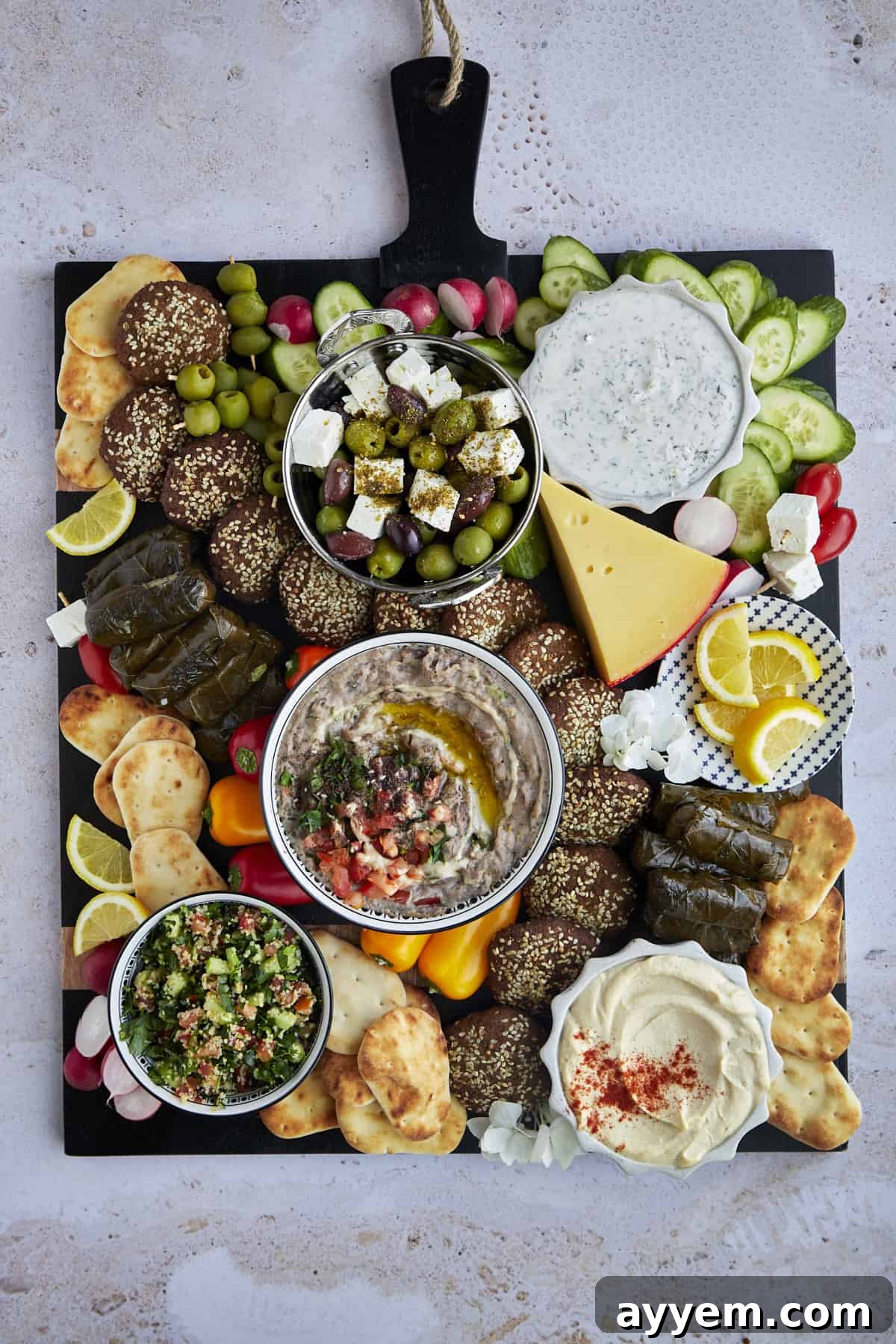
Welcome to the world of exquisite flavors and vibrant colors! Prepare to impress your guests and elevate your entertaining game with the ultimate Mediterranean Mezze Platter. This culinary masterpiece is far more than just a meal; it’s an experience, a journey through the rich and diverse tastes of the Mediterranean and Middle East. Packed with an array of fresh vegetables, creamy dips, savory cheeses, and more, it’s a feast that thoughtfully caters to everyone’s cravings and dietary preferences.
Whether you’re seeking a delightful appetizer to kick off a gathering, a wholesome and engaging main course for a family dinner, or simply a fun way to explore new flavors, a Mediterranean Mezze Platter is guaranteed to wow your taste buds and create lasting memories. It embodies the essence of communal dining, inviting everyone to gather, share, and savor each delicious bite.
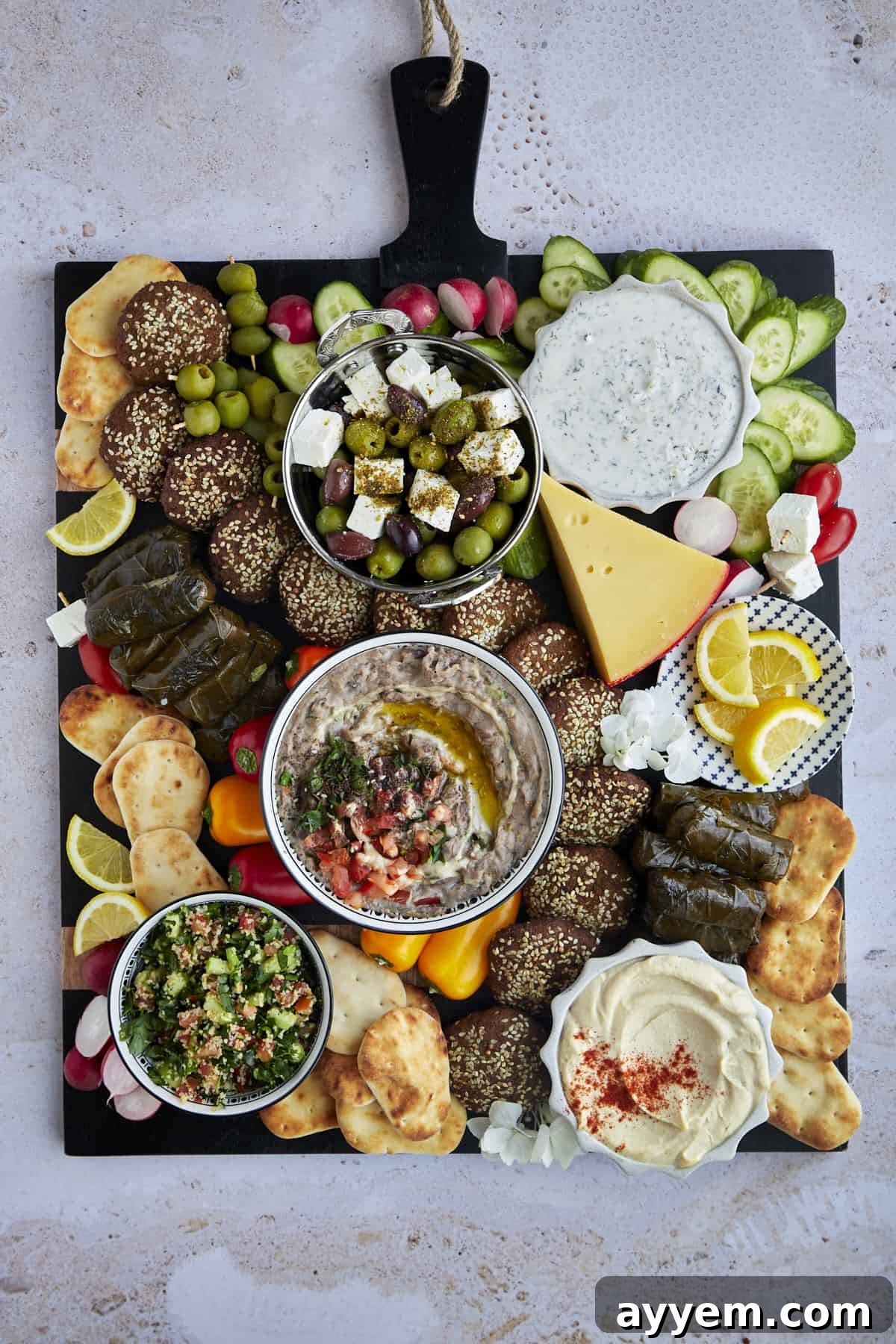
The Timeless Appeal of Mezze: A Cultural Cornerstone
While trendy charcuterie boards and snack platters have recently surged in popularity on social media, the concept of a lavish spread of small, shareable dishes has been a cherished staple in Middle Eastern and Mediterranean cultures for centuries. In these regions, no family gathering, celebration, or casual get-together is truly complete without an abundant array of dips, savory bites, cheeses, and fresh accompaniments. Preparing a mezze platter is, by far, one of the most beloved and effective ways to nourish and delight a crowd.
Beyond their undeniable visual appeal on any dining table, mezze platters are incredibly enjoyable to assemble. They offer unparalleled versatility, making it easy to accommodate a wide variety of tastes and dietary needs, from vegan to gluten-free, ensuring every guest finds something they adore. After all, variety truly is the spice of life! Why settle for a single main course when you can experience an exciting medley of appetizers, light main dishes, wholesome snacks, and even a hint of dessert components, all beautifully presented on one inviting board?
Moreover, mezze platters offer a fantastic advantage for busy hosts. Instead of spending endless hours cooking in the kitchen just before guests arrive, many components can be prepared well in advance. Dips can be made, vegetables can be chopped, and even some baked goods can be prepped a day or two ahead. This strategic preparation allows for quick and stress-free assembly when it’s time to serve. Your guests will love the freedom to sample a diverse selection of items at their leisure, and you’ll appreciate how effortlessly you can put it all together and enjoy the celebration. It’s truly a win-win for everyone!
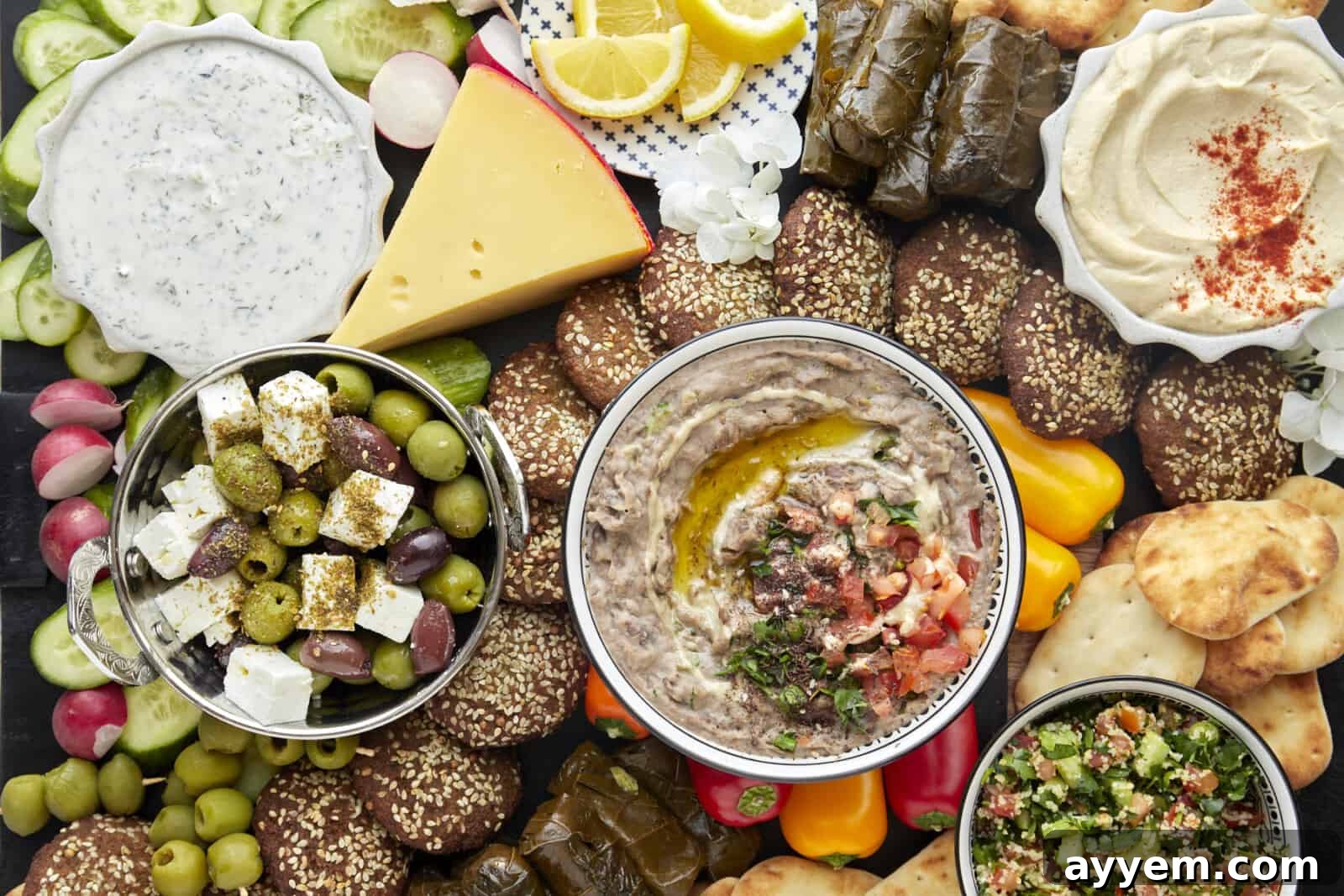
What Exactly Is a Mediterranean Mezze Platter?
A cornerstone of Middle Eastern and Mediterranean cuisine, mezze platters are an artful assortment of small dishes served together. They are designed to be enjoyed family-style, encouraging conversation and shared culinary delight. Mezze can function as a delightful collection of appetizers, setting the stage for a larger meal, or can be substantial enough to serve as a satisfying light meal in itself. The precise components of mezze platters can vary significantly from one region or household to another, but they consistently feature an abundance of colorful, fresh, and flavorful options.
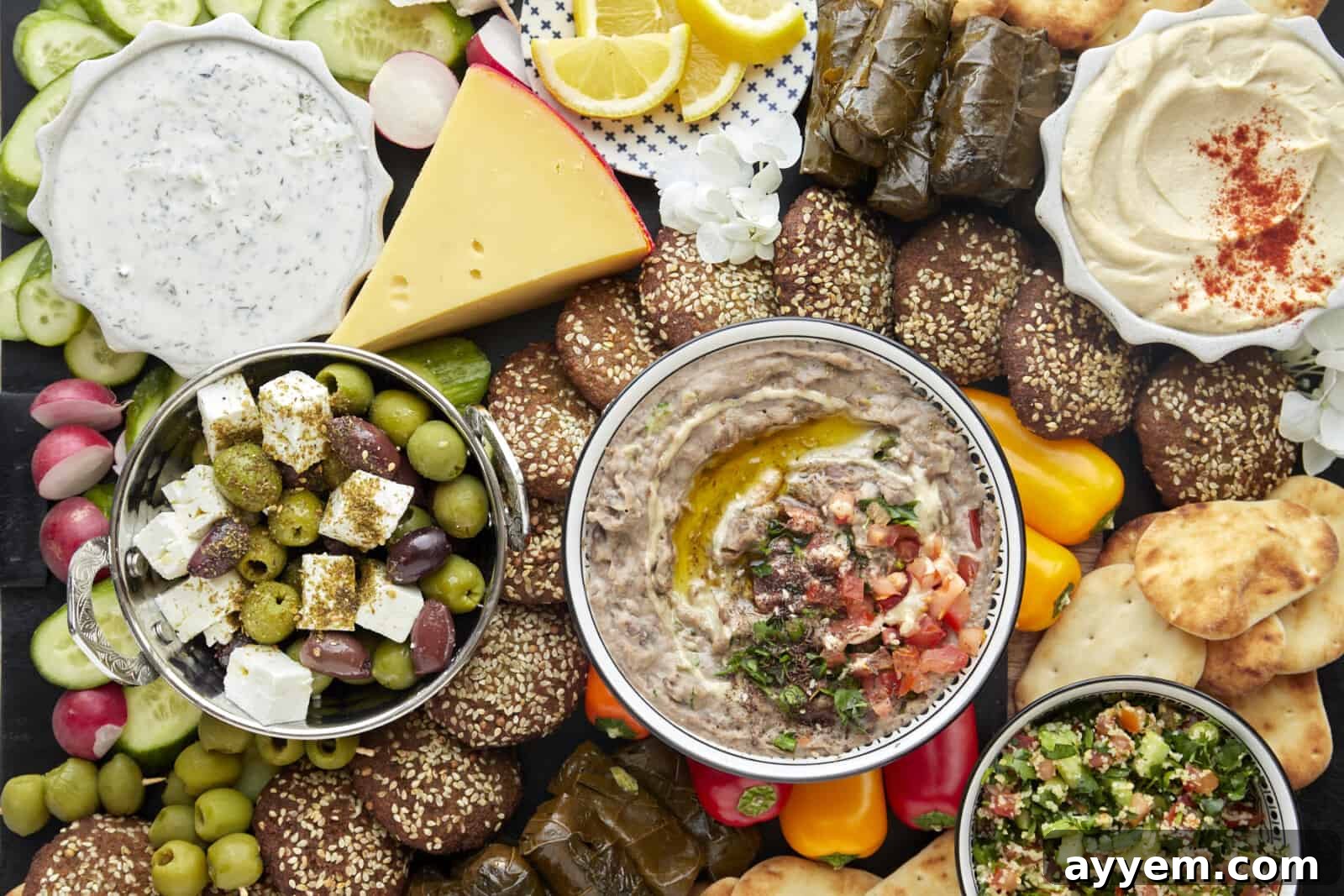
Common elements typically include beloved dips such as creamy hummus, smoky baba ganoush, refreshing tzatziki, and zesty tabbouleh. You’ll often find savory stuffed grape leaves (dolmades), a variety of local cheeses, an assortment of briny olives, and, of course, plenty of warm, soft pita bread or other flatbreads perfect for scooping up all the deliciousness. The beauty of mezze lies in its flexibility and the joy of creating a mosaic of tastes and textures.
How Do You Pronounce Mezze?
The word “mezze” originates from the Persian word “mazze,” which translates to “taste” or “snack.” When pronouncing mezze, you typically say “mez-ay” or “mez-eh,” with the emphasis placed on the first syllable. The “zz” in mezze is pronounced like a soft “z” sound, similar to the “s” in the English word “measure.” So, the correct and most common pronunciation is “MEZ-ay” or “MEZ-eh.”
What’s the Difference Between Tapas and a Mezze Platter?
While both tapas and mezze are cherished culinary traditions centered around small, shareable dishes, they possess distinct cultural origins, typical ingredients, and serving styles. Understanding these differences enriches appreciation for each unique offering.
Tapas, for instance, are deeply rooted in Spanish culture. Legend has it that tapas originated when bartenders in Andalusia would place small slices of bread or meat (the “tapa,” meaning “lid” or “cover”) over customers’ drinks to protect them from flies. Over time, these simple covers evolved into a diverse array of small savory dishes. Tapas platters are typically composed of classic Spanish fare such as crispy patatas bravas, creamy croquetas, the iconic tortilla española, and various cured meats like jamón. These dishes are often served individually on small plates or in bowls, allowing diners to order a selection and share as they please, often moving from one bar to another.
The Mezze Platter, on the other hand, hails from the vibrant culinary landscapes of the Middle East and Mediterranean regions, including countries like Lebanon, Greece, Turkey, and beyond. Mezze is characterized by a rich abundance of dips, flavorful spreads, fresh salads, and various toppings, almost always served with an assortment of breads for dipping and scooping. Unlike tapas, mezze components are traditionally arranged together on a single, large platter or a collection of smaller dishes that collectively form one grand presentation. The focus is on a harmonious spread of diverse elements meant to be enjoyed communally from a central arrangement.
To summarize, tapas platters are a Spanish tradition featuring individual small plates of Spanish dishes, while mezze platters present a unified spread of Middle Eastern and Mediterranean foods, emphasizing dips, spreads, and shared experience from a central board.
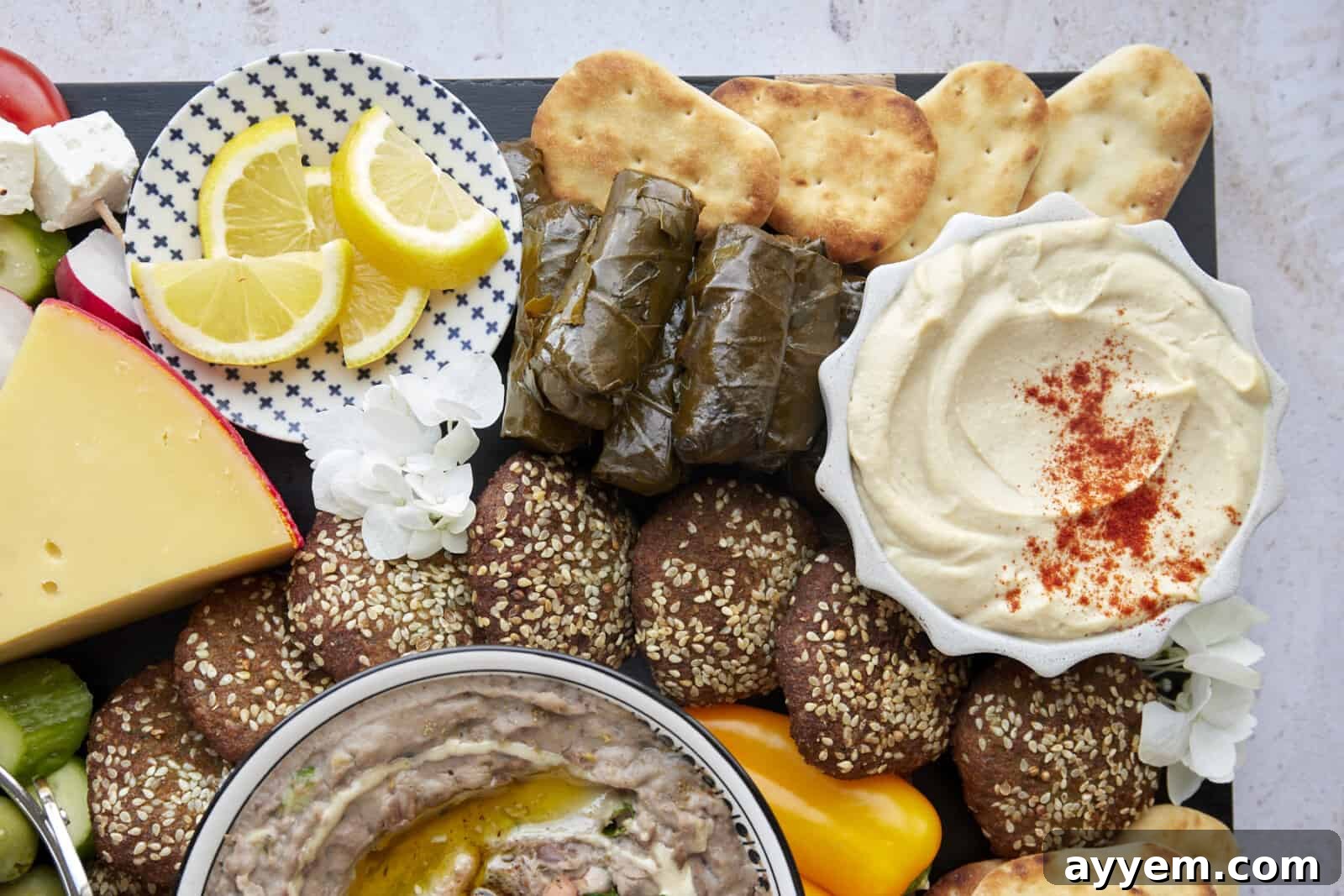
Crafting Your Ultimate Mediterranean Mezze Platter
If you’ve ever enjoyed creating a charcuterie board, you already possess the fundamental skills to assemble a stunning mezze platter! The process is surprisingly simple, focusing on variety, presentation, and bold flavors. Here’s your step-by-step guide to making the best mezze platter:
- Select a Generous Platter or Board: Mezze is inherently about sharing, so the larger your serving surface, the better! You’ll want a board or platter expansive enough to comfortably hold a wide variety of items, ensuring there’s plenty for everyone to enjoy. A substantial wooden board, a large ceramic platter, or even multiple smaller boards grouped together can work beautifully.
- Curate Your Dips and Spreads: These flavorful foundations are the heart of any mezze platter, contributing immense texture, color, and taste. Gather your favorite Mediterranean and Middle Eastern dips such as creamy hummus, smoky baba ganoush, refreshing tzatziki, pungent toum, and perhaps even a vibrant muhammara or creamy labneh. Portion them into small, attractive bowls and strategically arrange them across your board, creating focal points.
- Embrace a Bounty of Fresh Vegetables: Vegetables are absolutely crucial for creating a vibrant, balanced, and nutritious platter. No proper mezze board is complete without them. Choose a wide array of options to add a spectrum of colors and textures. Think crisp cucumber slices, juicy cherry tomatoes, colorful bell pepper strips, crunchy carrot sticks, crisp radish rounds, and tender blanched asparagus. Arrange them artfully around your dips.
- Incorporate Briny Delights: Olives and pickles are fantastic for filling in any gaps on your platter and providing a delightful contrast of salty, tangy, and savory flavors. Offer a medley of olives (Kalamata, Castelvetrano, green olives), and consider adding pickled turnips, cornichons, or marinated artichoke hearts for an extra burst of zest.
- Add Savory Extras & Protein Boosts: Elevate your platter with an assortment of Mediterranean cheeses like crumbled feta, salty halloumi (perhaps grilled), or cubes of mozzarella or gouda for milder notes. Cured meats such as thinly sliced salami or prosciutto can add another layer of savory goodness. Don’t forget plant-based proteins like crispy falafel or tender stuffed grape leaves. These items are perfect for adding substance and filling any sparse areas.
- Ensure Plenty of Dipping Essentials: Bread is non-negotiable for a mezze platter, serving as the perfect vehicle for scooping up all those delicious dips. Warm, fluffy pita bread, soft lavash, crusty crostini, or a selection of gourmet crackers work wonderfully. Cut pita into triangles for easy dipping and arrange them enticingly around the dips.
- Garnish and Finish with Flair: A sprinkle of fresh herbs (parsley, mint, dill), a drizzle of high-quality olive oil, a scattering of toasted nuts (pistachios, almonds), or a few lemon wedges can add a beautiful finishing touch and enhance the overall freshness and flavor profile.
Expert Tips for a Picture-Perfect Mezze Platter
Now that you understand the basic construction of a mezze platter, let’s dive into some expert tips and tricks we’ve gathered over the years. These insights will help ensure your platters are not only incredibly delicious but also visually stunning and truly memorable.
- Emphasize Variety in All Aspects: When curating your mezze platter, think beyond just different types of food. Aim for variety in size, shape, color, and texture. Combine smooth dips with crunchy vegetables, soft cheeses with firm olives, and light breads with heartier proteins. This thoughtful contrast makes each bite more interesting and the platter more engaging to the eye.
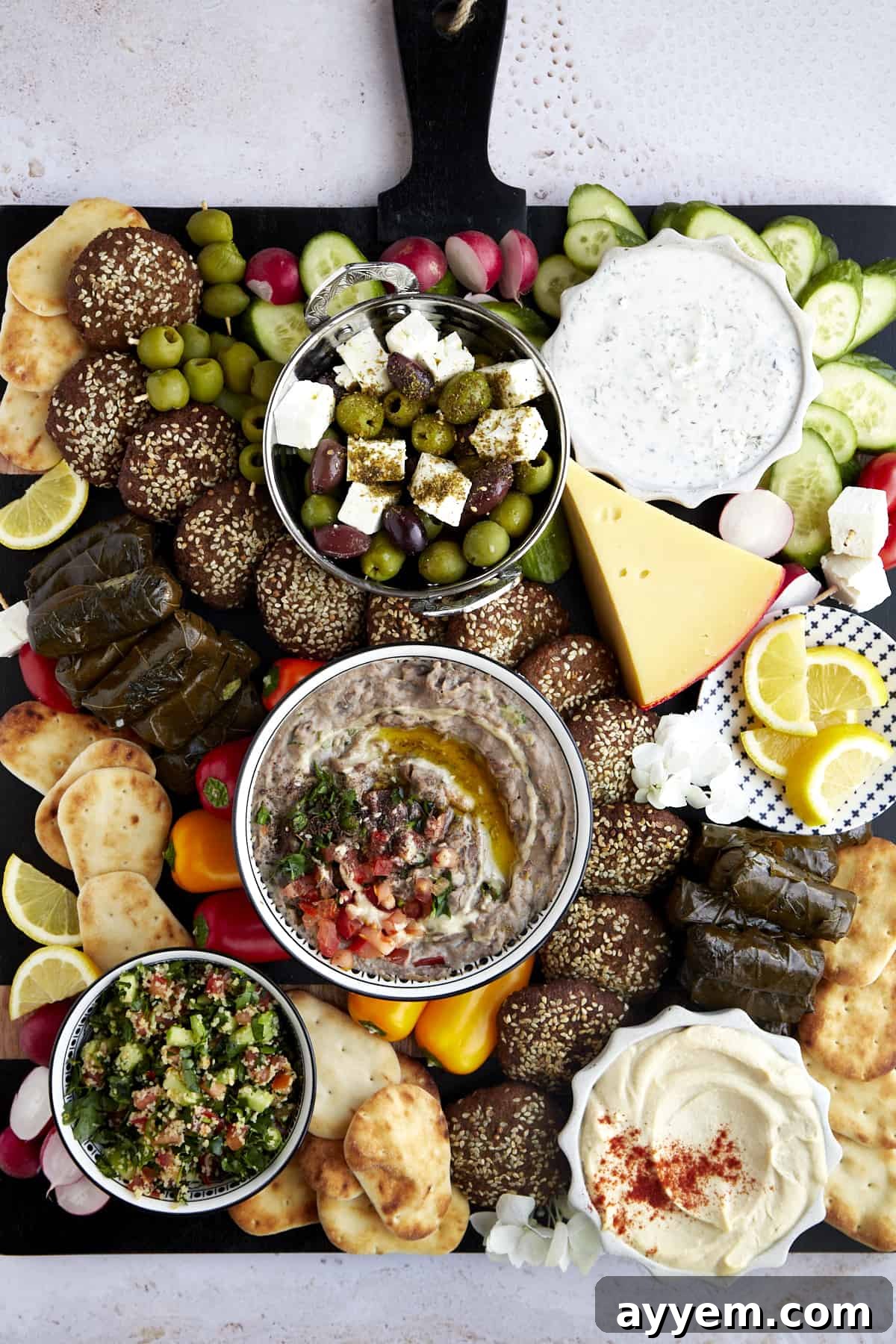
- Strategic Placement for Visual Appeal: Don’t just place items randomly. Start with your small bowls of dips and spreads, distributing them evenly across the board. Then, fan out your larger items like pita bread and sliced vegetables around these anchors. Use smaller items like olives, nuts, and cherry tomatoes to fill in any remaining gaps, creating a lush, abundant look. Alternate colors and textures as you place items to create visual interest and prevent monotony.
- Leverage the Power of Garnishes: Garnishes are not mere afterthoughts; they are essential for adding freshness, aroma, and a final touch of beauty. Fresh herbs like chopped parsley, mint leaves, or dill sprigs can brighten flavors and add vibrant green hues. Thin slices of lemon or orange, edible flowers, a light dusting of sumac or paprika, or a final drizzle of extra virgin olive oil can transform your platter from good to absolutely gorgeous. They also help to fill any small sparse spaces.
- Plan Ahead for Stress-Free Entertaining: To truly enjoy your hosting experience, prepare as much as you can a day or two in advance. Dips like hummus and baba ganoush often taste even better after a day in the fridge as the flavors meld. Slice most of your vegetables, toast nuts, and marinate olives beforehand. This strategy means that on the day of your event, all you need to do is arrange everything on your board, minimizing last-minute rush and maximizing your time with guests.
- Don’t Hesitate to Use Quality Store-Bought Options: There is absolutely no shame in taking a few shortcuts to save time and effort. Many grocery stores offer excellent quality pre-made items that are perfect for a mezze platter. Look for fresh pita bread, a variety of olives, pre-made hummus, baba ganoush, tzatziki, stuffed grape leaves, and even pre-sliced vegetables. Combining a few homemade elements with high-quality store-bought selections can significantly reduce your workload without compromising on flavor or presentation.
- Consider Dietary Restrictions: One of the beautiful aspects of a mezze platter is its inherent adaptability. It’s relatively easy to create a platter that caters to various dietary needs. Label items if necessary. Many mezze components are naturally vegetarian or vegan (hummus, baba ganoush, tabbouleh, vegetables). You can also easily offer gluten-free crackers alongside pita bread to accommodate those avoiding gluten.
What to Include on Your Mezze Platter: A World of Options
The beauty of a mezze platter lies in its infinite customizability. There’s no single “right” or “wrong” way to build one, allowing for endless creativity and personal preference. However, if you’re looking for inspiration to create a truly spectacular spread, here are some of our favorite and most popular items to consider:
- Essential Dips and Creamy Spreads:
- Creamy Hummus: The quintessential chickpea dip, often drizzled with olive oil and sprinkled with paprika.
- Smoky Baba Ganoush: A velvety eggplant dip with tahini and lemon.
- Refreshing Tzatziki: A cooling yogurt and cucumber dip, often with garlic and dill.
- Garlicky Toum: A potent and fluffy Lebanese garlic sauce.
- Rich Bread Dipping Oil: Infused olive oil with herbs and spices.
- Spicy Muhammara: A roasted red pepper and walnut dip.
- Creamy Labneh: A thick, strained yogurt cheese, often drizzled with olive oil.
- Fresh Sides and Vibrant Salads:
- Bright Tabbouleh: A refreshing parsley and bulgur salad with tomato and mint.
- Hearty Roasted Eggplant Salad: Tender roasted eggplant often mixed with bell peppers and herbs.
- Savory Stuffed Grape Leaves (Dolmades/Dolmas): Rice and herb-filled grape leaves, served cold.
- Marinated Artichoke Hearts: Tangy and tender, a great addition.
- Crisp Fattoush Salad: A colorful salad with toasted pita bread, sumac, and fresh vegetables.
- Savory Main Course Bites (Optional, for a heartier platter):
- Crispy Falafel: Deep-fried chickpea patties, a vegetarian staple.
- Flavorful Beef Kofta: Seasoned ground beef skewers or meatballs.
- Grilled Halloumi: Salty, squeaky cheese that’s delicious when grilled.
- Small grilled chicken skewers or shrimp.
- Essential Extras and Accents:
- Assorted Olives: A mix of green, black, and Kalamata olives.
- Varied Cheeses: Crumbled feta, cubes of halloumi, mozzarella, or gouda.
- Fresh Vegetables: Cucumber sticks, carrot sticks, bell pepper strips, cherry tomatoes, radishes.
- Dried Fruits: Figs, apricots, dates for a touch of sweetness.
- Nuts: Toasted almonds, pistachios, or walnuts for crunch.
- Pickled Items: Pickled turnips, cornichons, or other assorted pickles.
- Perfect Dipping Vessels:
- Warm Pita Bread: Soft and pliable, ideal for scooping.
- Thin Lavash: A soft, unleavened flatbread.
- Crusty Crostini: Toasted bread slices for a crunchier option.
- A selection of Crackers: For added variety and texture.
- Freshly baked rustic bread.
Common Questions about Mediterranean Mezze Platters
Absolutely, and it’s often considered the best kind of meal—one you get to savor and snack your way through! With a thoughtful combination of creamy dips, savory cheeses, crisp veggies, and protein-packed bites like falafel or grilled meats, a mezze platter is incredibly satisfying and totally dinner-worthy. It encourages a leisurely, communal dining experience.
A mezze platter truly embodies the spirit of Mediterranean cuisine by bringing together fresh, vibrant flavors and ingredients characteristic of countries like Greece, Lebanon, Turkey, and beyond. Think classic elements such as briny olives, creamy hummus, salty feta cheese, refreshing tabbouleh, and an abundance of roasted or fresh vegetables. Everything is typically fresh, colorful, wholesome, and perfectly suited for lingering over with friends and family.
Mezze platters are very often vegetarian, and can easily be made completely vegan! Many traditional components like hummus, baba ganoush, tabbouleh, dolmades (stuffed grape leaves), and various fresh salads are naturally meat-free. Even cheeses like halloumi or feta fit into a vegetarian diet. However, for those who enjoy meat, you can certainly add elements like grilled lamb kofta, chicken skewers, or shrimp to complement the vegetarian offerings.
While you don’t strictly have to, including bread is a highly recommended and traditional component of a mezze platter. Warm pita or soft flatbreads are absolutely perfect for scooping up all those creamy dips, crunchy salads, and tangy bites. They complete the experience, acting as a versatile utensil and a delicious addition to every mouthful.
More Boards, Platters, and Spreads to Inspire You
If this delightful Mediterranean Mezze Platter has sparked your creativity and left you craving more fantastic food displays, don’t miss out on our other favorite board and platter ideas. These creative spreads are perfect for elevating any occasion, from casual brunches to festive holiday gatherings!
- Valentine’s Charcuterie Board
- Indoor S’mores Board
- Breakfast Charcuterie Board
- How to Make a Butter Board
Mediterranean Mezze Platter Recipe
Food Dolls
6 servings
30 mins
30 mins
Ingredients
- Hummus
- Baba Ganoush
- Tzatziki
- Toum
- Bread Dipping Oil
- Tabbouleh
- Roasted Eggplant Salad
- Stuffed Grape Leaves
- Falafel
- Beef Kofta
- Fresh Vegetables
- Assorted Cheese
- Olives
- Pita Bread
- Lavash
- Crackers
Instructions
- Choose as many ingredients listed above as desired.
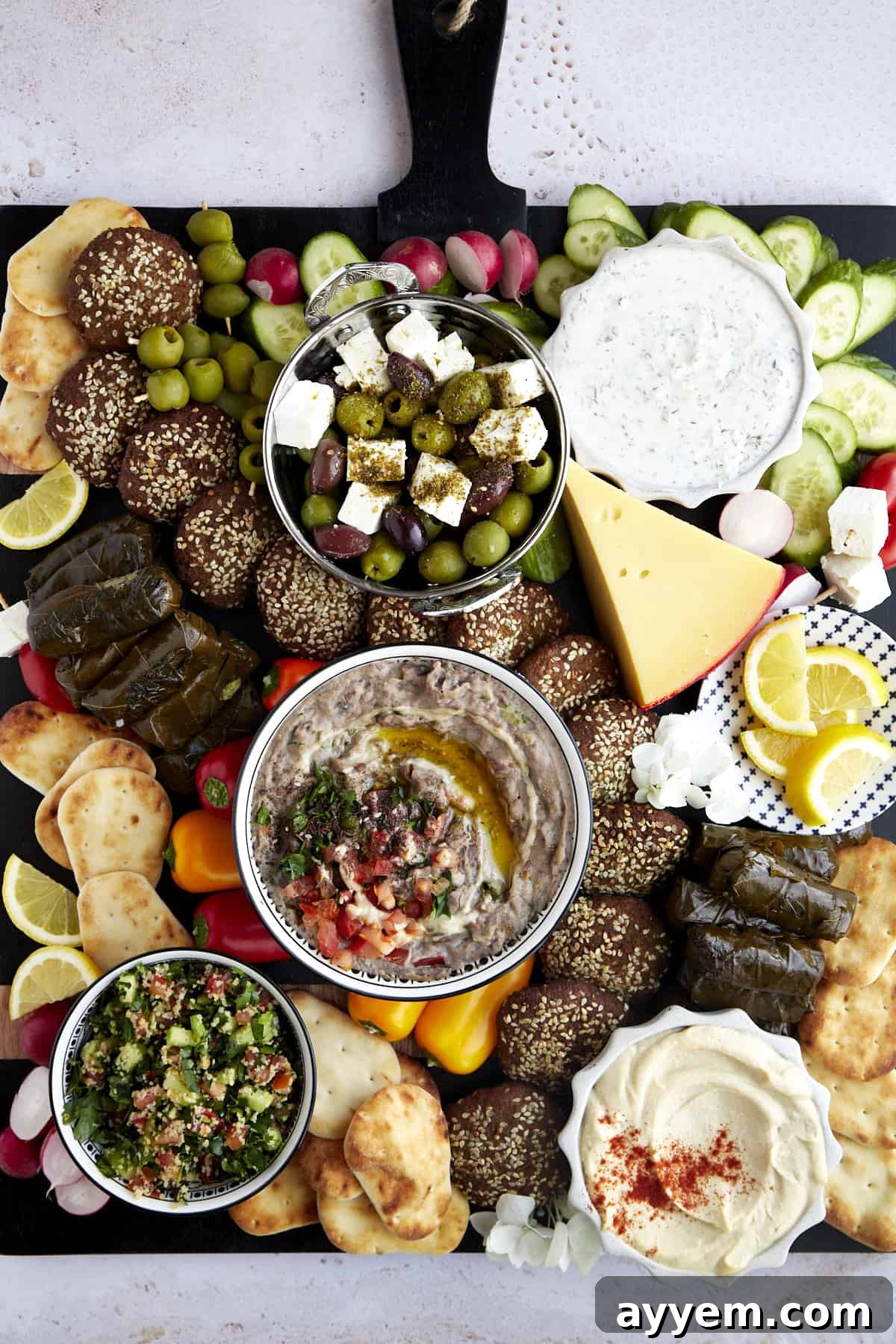
- Place the dips and spreads in small dishes.
- Arrange the items on a large serving board or platter.
- Garnish with fresh herbs, lemon slices, and edible flowers, as desired.
Equipment
Nutrition
Serving:
1
serving
Nutrition information is automatically calculated, so should only be used as an approximation.
Like this recipe?
Please leave a comment!