
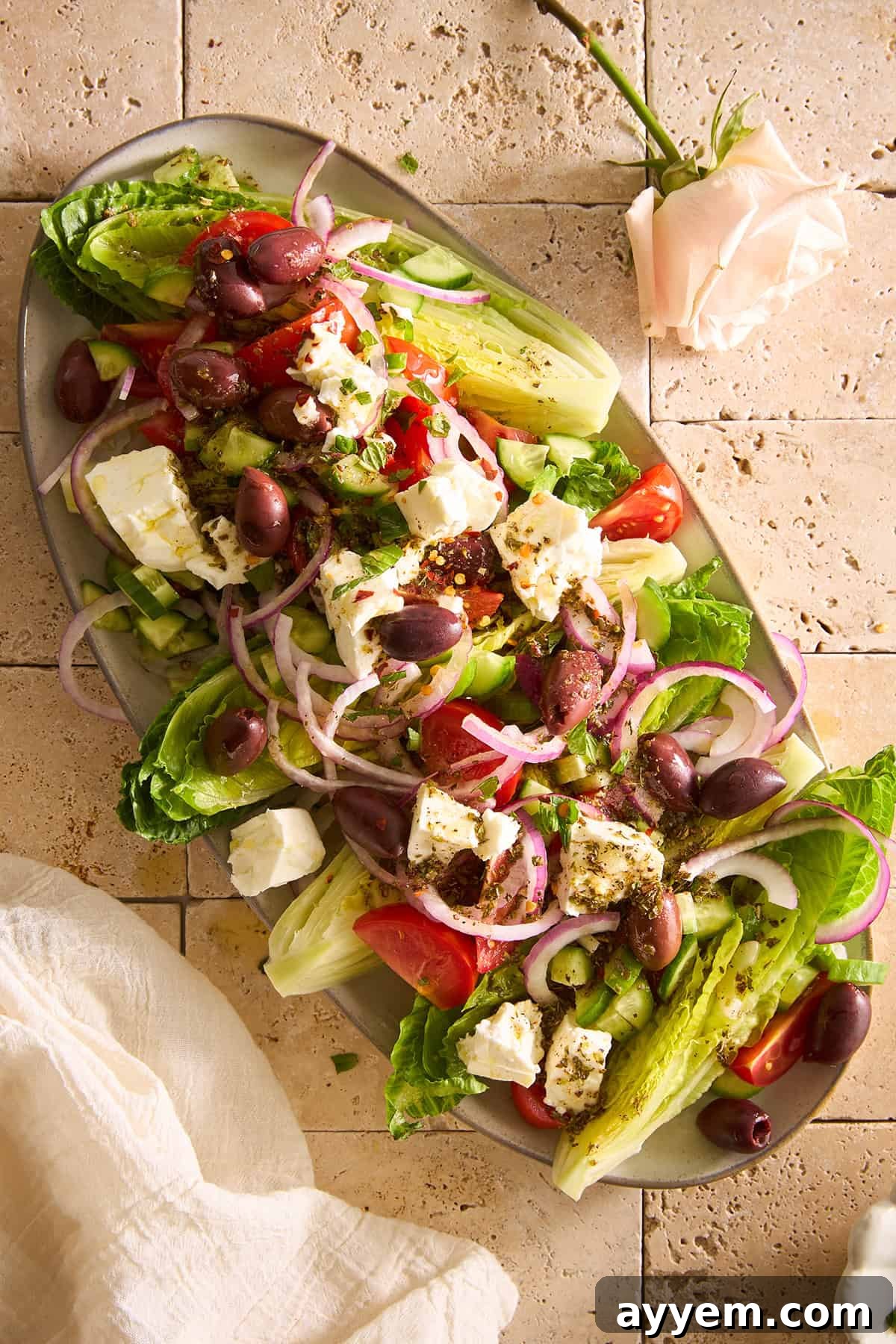
Get ready to embark on a culinary journey to the sun-drenched shores of Greece with this incredibly easy and utterly delicious Greek Salad Recipe! Crafted from simple, wholesome, and budget-friendly ingredients, this healthy meal is your passport to a flavor-packed feast that comes together in mere minutes. Whether you choose to serve it as a vibrant side dish, a refreshing appetizer, or let it shine solo as a satisfying and light main course, this recipe is guaranteed to be an absolute winner in any setting.
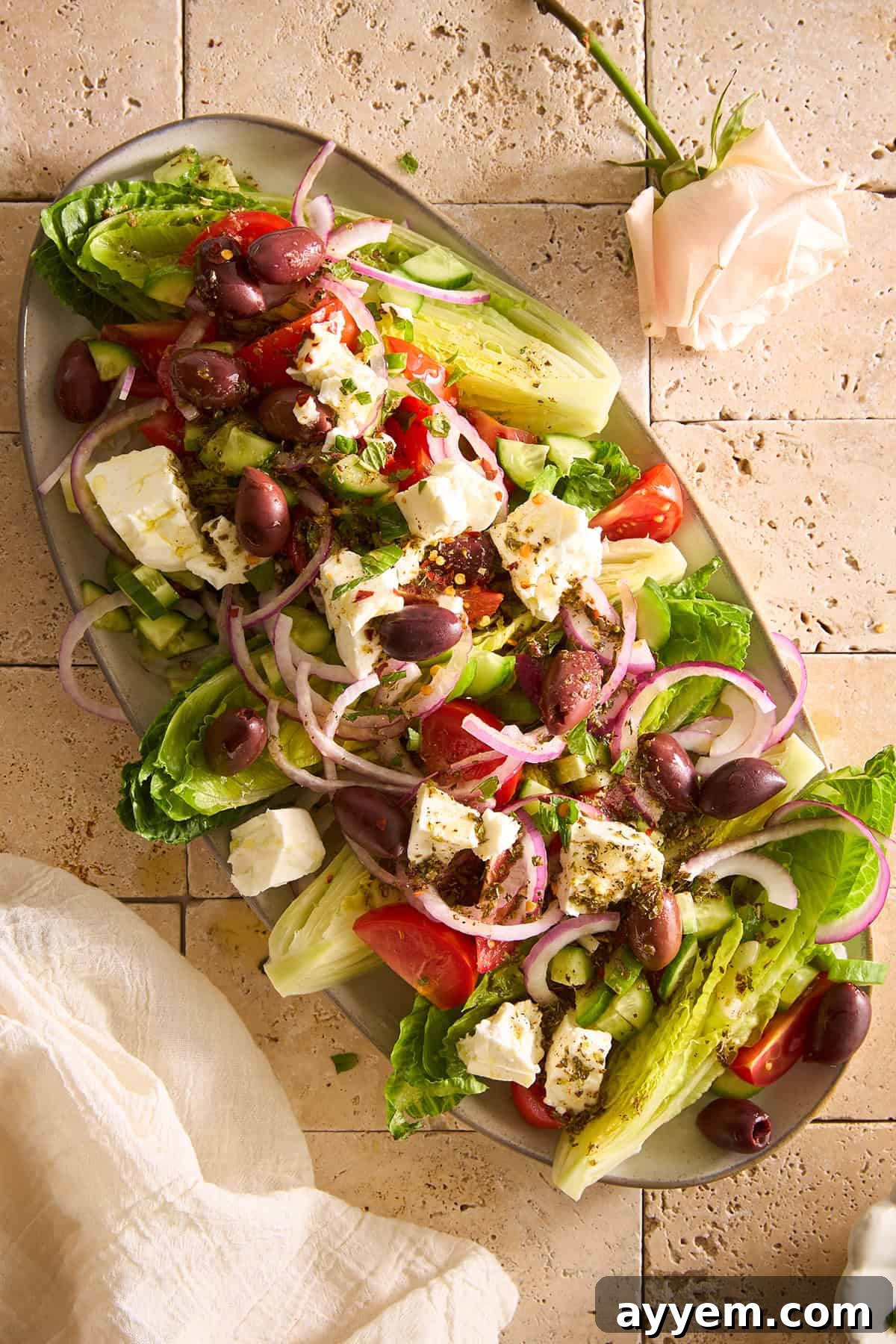
The Ultimate Easy Greek Salad Recipe: A Mediterranean Delight for Every Occasion
There’s something truly magical about a well-crafted salad – especially one that transports you to the idyllic landscapes of the Mediterranean with every bite. The Greek salad, known locally as Horiatiki, is a timeless classic that embodies freshness, simplicity, and robust flavor. Far from being just a side dish, it’s a celebration of ripe produce, tangy feta, and a rich olive oil dressing that harmonizes beautifully. This particular recipe takes that classic essence and makes it accessible for anyone, whether you’re a seasoned chef or a beginner in the kitchen. It’s perfect for a quick weeknight dinner, a light lunch, or even as an impressive dish for entertaining guests. Its versatility and undeniable appeal make it a staple in healthy eating and a beloved dish worldwide.
Why This Greek Salad Recipe Will Become Your Go-To
In a world full of complex culinary creations, sometimes the most satisfying dishes are those that embrace simplicity. This Greek salad recipe stands out for many reasons, quickly earning its spot as a household favorite. It’s more than just a salad; it’s an experience that nourishes your body and delights your taste buds without requiring hours of effort. Here’s why you’ll find yourself returning to this recipe again and again:
- Fresh, Wholesome Ingredients: The beauty of this salad lies in the quality of its components. We focus on using the freshest vegetables, vibrant herbs, and premium olive oil. Each ingredient contributes its unique flavor and texture, creating a symphony of tastes that is both healthy and incredibly satisfying. You’ll love knowing exactly what goes into your meal.
- Effortless Preparation in Minutes: Life is busy, and sometimes you need a delicious meal without a complicated process. This Greek salad recipe is designed for efficiency. With minimal chopping and a quick whisk for the dressing, you can have this nutritious meal on the table in under 20 minutes. It’s the perfect solution for those hectic days when you crave something homemade and healthy.
- Infinitely Customizable for Every Palate: One of the greatest strengths of this recipe is its adaptability. While we provide a fantastic base, the Greek salad welcomes your personal touch. Easily adjust ingredients to suit dietary preferences, seasonal availability, or simply what you have on hand. It’s a forgiving recipe that encourages culinary creativity, ensuring it’s great for every occasion and every eater.
- Bursting with Authentic Mediterranean Flavor: Prepare your taste buds for an explosion of traditional Mediterranean flavors. The combination of juicy tomatoes, crisp cucumbers, briny olives, sharp red onion, and creamy feta, all coated in a zesty, herb-infused dressing, delivers a flavor profile that is both refreshing and deeply satisfying. The added crunch from pita chips elevates the texture, making it an irresistible dish everyone is guaranteed to love.
Understanding the Heart of Traditional Greek Salad: Horiatiki
To truly appreciate the Greek salad, it’s essential to understand its origins and what constitutes the authentic version. In Greece, it’s known as “Horiatiki Salata” (Χωριάτικη Σαλάτα), which translates to “village salad” or “peasant salad.” This name perfectly encapsulates its rustic charm and its reliance on fresh, locally sourced produce. Traditional Horiatiki is not just a collection of ingredients; it’s a reflection of Greek culinary philosophy – simple, honest, and bursting with natural flavors.
The core components of an authentic Greek salad are quite specific and intentionally chosen to create a harmonious balance of taste and texture:
- Ripe Tomatoes: Often large, juicy, and sun-ripened, these form the flavorful base.
- Crisp Cucumbers: Typically English or Persian cucumbers, providing a refreshing crunch.
- Green Bell Peppers: Adds a slightly sweet and pungent note.
- Red Onion: Thinly sliced, offering a sharp, aromatic kick.
- Kalamata Olives: Briny, meaty, and indispensable for their distinctive flavor.
- Feta Cheese: A generous slab or thick slices of authentic Greek feta, typically from sheep or goat’s milk, offering a salty, tangy, and creamy counterpoint.
These ingredients are traditionally tossed with high-quality extra virgin olive oil, a sprinkle of dried oregano, and sometimes a splash of red wine vinegar. The beauty lies in the chunky cuts and the robust flavors of each component, allowing them to truly shine without being overshadowed by too many additions or a heavy dressing.
The Great Lettuce Debate in Greek Salad: Traditional vs. Modern Adaptations
One of the most common misconceptions about Greek salad, particularly outside of Greece, concerns the inclusion of lettuce. Surprisingly, traditional Greek salad recipes, the authentic Horiatiki, do not contain any lettuce or leafy greens at all. The vibrant vegetables like tomatoes, cucumbers, and peppers are meant to be the stars, providing all the texture and substance needed.
However, as the dish has gained immense popularity and spread globally, it has naturally been adapted and modified to suit local palates and preferences. The addition of lettuce or other greens is one such adaptation, turning it into a more conventional “salad” in the Western sense. For our Greek salad recipe, we typically use romaine lettuce. Its crisp texture and slightly bitter notes provide an excellent foundation that complements the other ingredients without overpowering them.
If you’re looking to achieve a similar taste or texture to romaine, shredded iceberg lettuce offers a wonderfully crisp and refreshing bite, while bibb lettuce provides a softer, buttery contrast. But don’t limit yourself! Feel free to shake things up with more flavorful leafy greens to add an extra layer of complexity and nutrition. Consider incorporating rainbow chard, Swiss chard, fresh spinach, or peppery arugula. Each of these greens brings its own unique character to the dish.
If you opt for heartier greens like kale, a quick tip for preparation is to massage the leaves with a little lemon juice or olive oil before combining them with the other ingredients. This simple step helps to break down the tough fibers and mellow out any bitterness, ensuring a tender and more palatable texture that integrates seamlessly into the salad. Experimenting with different greens can transform the salad, making it a new and exciting experience each time.
Essential Ingredients for the Best Greek Salad
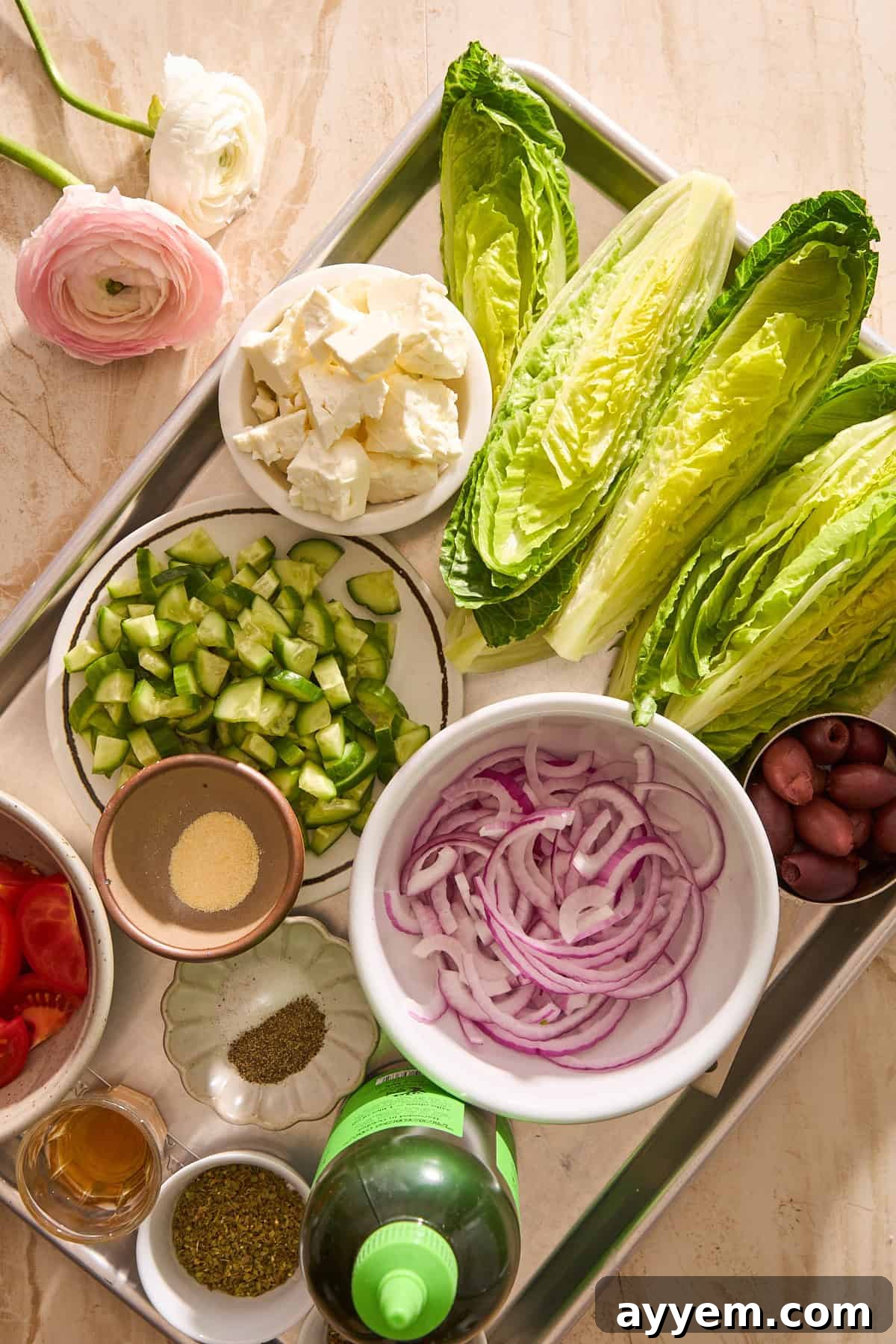
The secret to a truly outstanding Greek salad lies in the quality and freshness of its ingredients. While the essence of the salad is its simplicity, choosing ripe, vibrant produce and authentic components will elevate your dish from good to unforgettable. For this specific Greek salad recipe, we’ve taken the classic version and subtly enhanced it with a few extra ingredients to introduce even more depth of flavor and delightful texture. Here’s a detailed look at everything you’ll need to create this magnificent meal:
For the Perfect Greek Salad Bowl:
- Crisp Lettuce: As highlighted earlier, we often gravitate towards crisp romaine lettuce for its refreshing crunch and sturdy texture, which holds up well to the dressing. However, feel absolutely free to mix and match your favorite greens. Iceberg, butter lettuce, spinach, or even a spring mix can offer delightful variations in texture and taste, allowing you to customize the salad to your preference.
- Pungent Red Onion: Sliced ultra-thin, red onions are crucial for adding a sharp, piquant flavor and an invigorating crunch. Their vibrant color also adds to the salad’s visual appeal. If you find red onion too strong, you can soak the slices in cold water for 10-15 minutes before adding them; this mellows their intensity without losing their essential flavor.
- Briny Olives: Kalamata olives are our absolute favorite for Greek salad due to their distinctive briny, fruity, and slightly smoky flavor profile and meaty texture. They are a cornerstone of Greek cuisine. However, don’t hesitate to use any good quality pitted black olives you have on hand, such as Gaeta or even a good quality domestic black olive. Just ensure they are pitted for ease of eating.
- Juicy Tomatoes: We prefer on-the-vine tomatoes for their concentrated flavor and perfect ripeness, but any ripe, juicy tomatoes you enjoy will work beautifully. Cherry or grape tomatoes, halved, also make an excellent choice, adding bursts of sweetness. The key is ripeness, as it contributes significantly to the salad’s overall fresh taste.
- Cool Cucumbers: English cucumbers are ideal for their minimal seeds and thin skin, which means no peeling is necessary. They provide an essential refreshing crunch and a cool contrast to the other ingredients. Regular garden cucumbers work well too, but you might want to peel them and scoop out the seeds if they are too large or watery.
- Creamy Feta Cheese: This is arguably the most iconic ingredient in a Greek salad. Authentic Greek feta, traditionally made from sheep’s milk (or a mix with goat’s milk), offers a uniquely tangy, salty, and creamy texture that crumbles beautifully and melts in your mouth. Avoid pre-crumbled feta if possible, and opt for a block of feta in brine, which you can crumble yourself for superior flavor and texture.
- Crunchy Pita Chips: While not a part of classic Greek salad recipes, we’ve found that lightly crushed pita chips add an incredibly satisfying crunch and a delightful savory element that makes this Greek salad extra enjoyable and filling. They soak up a little dressing, offering a textural contrast that makes each bite more interesting. You can also toast some regular pita bread and break it into pieces for a similar effect.
Crafting the Irresistible Greek Salad Dressing:
A Greek salad is only as good as its dressing, and this homemade vinaigrette is simple, vibrant, and perfectly balanced. It enhances, rather than overwhelms, the fresh ingredients.
- Premium Extra Virgin Olive Oil: This forms the foundational base of the dressing and is a critical component of Mediterranean cuisine. Opt for a high-quality extra virgin olive oil for its robust, fruity flavor and abundant heart-healthy monounsaturated fats. It adds richness and a silky texture to the dressing.
- Aromatic Herbs and Spices: Dried oregano is non-negotiable for its quintessential Greek flavor, imparting earthy and slightly peppery notes. Dried basil adds a layer of sweet, aromatic complexity, while garlic powder provides a savory depth without the intensity of raw garlic. A pinch of salt and pepper ties all the flavors together, seasoning the dressing to perfection.
- Tangy White Wine Vinegar (or Red Wine): The acidity of white wine vinegar is vital here, cutting through the richness of the olive oil and brightening all the flavors in the salad. It adds a subtle tang and depth. If white wine vinegar isn’t available, red wine vinegar is an excellent substitute, offering a slightly more robust flavor profile that still works beautifully.
- Bright Lime Juice: Fresh lime juice introduces a fantastic citrusy brightness and a zesty zing that elevates the entire dressing. Its acidity further enhances the freshness of the vegetables. While lemon juice is more traditional in some dressings, lime offers a slightly different, equally refreshing note. Always use freshly squeezed for the best results.
Unleash Your Creativity: Flavor Variations and Additions
The beauty of a Greek salad lies not only in its classic form but also in its incredible adaptability. This recipe is a fantastic canvas for your culinary creativity, allowing you to mix and match your favorite ingredients to tailor it perfectly to your flavor preferences, dietary needs, or what you have available. Don’t be afraid to experiment and make it your own! Here are some top-notch variations to spark your inspiration and elevate your Greek salad experience:
- Hearty Carb Sources: To transform this salad into an even more substantial and filling meal, consider adding complex carbohydrates. Cooked quinoa, with its nutty flavor and fluffy texture, is an excellent choice for a gluten-free boost. Hearty lentils or black beans can also add a delightful earthiness and additional fiber. For a more traditional Mediterranean touch, torn pieces of crusty whole-wheat bread or baked pita bread (beyond the chips) can add a wonderful texture and make it reminiscent of a panzanella salad.
- Lean Protein Boosters: If you’re looking to make this Greek salad a complete main course, integrating a lean protein source is a superb idea. Grilled chicken breast, seasoned with lemon and oregano, is a classic pairing that complements the salad’s flavors beautifully. Sautéed shrimp or grilled steak slices can add a luxurious touch. For those following a vegetarian or vegan diet, pan-fried tempeh or roasted chickpeas can provide a satisfying protein punch, soaking up the dressing’s flavors wonderfully.
- Nutritious Healthy Fats: While the olive oil in the dressing provides healthy fats, you can further boost the nutritional value and creaminess of your salad. Sliced avocado adds a buttery texture and a wealth of monounsaturated fats. Halved hard-boiled eggs contribute protein and a rich creaminess. A sprinkle of toasted nuts like almonds or walnuts, or seeds such as sunflower or pumpkin seeds, can offer an extra layer of crunch and essential fatty acids. These additions not only enhance the flavor but also increase the satiety of the salad.
- Additional Vegetables and Herbs: Don’t hesitate to add other seasonal vegetables like thinly sliced radishes for a peppery bite, or artichoke hearts for a briny, tender addition. Fresh herbs like chopped parsley, dill, or mint can significantly brighten the flavor profile of the salad. A handful of fresh mint leaves adds an incredibly refreshing coolness, especially on a hot day.
- Spice it Up: For those who enjoy a little heat, a pinch of red pepper flakes in the dressing or a few finely diced jalapeños can add a lovely kick.
Step-by-Step Guide: How to Make Your Greek Salad
You’ll be amazed at how something so incredibly delicious can be so remarkably easy to make. This Greek salad comes together with minimal fuss, making it ideal for any day of the week. Just follow these simple steps to create your fresh and flavorful Mediterranean masterpiece:
- **Prepare Your Salad Ingredients:** Begin by washing and thoroughly preparing all of your fresh vegetables. Start with the lettuce: thinly slice the romaine or cut it into elegant bite-sized wedges, depending on your preference. Next, dice the ripe, juicy tomatoes and crisp English cucumbers into small, uniform cubes – consistency in cutting ensures a pleasant texture in every forkful. Halve the Kalamata olives to release their full briny flavor, and thinly slice the red onion. Arrange these vibrant ingredients separately for now.
- **Whip Up the Zesty Dressing:** In a clean mason jar with a tight-fitting lid, or a small bowl, combine all the ingredients for the dressing: the rich extra virgin olive oil, aromatic dried oregano, sweet dried basil, savory garlic powder, tangy white wine vinegar (or red wine vinegar), bright fresh lime juice, and a good pinch of salt and black pepper. Secure the lid tightly on the jar and shake vigorously for about 30 seconds until the ingredients are thoroughly combined and slightly emulsified. If using a bowl, whisk energetically until the dressing is smooth and well-blended.
- **Assemble the Salad Base:** Take a large, aesthetically pleasing mixing bowl that will accommodate all your ingredients with enough room for tossing. Gently place the prepared lettuce at the bottom of the bowl. This forms a crisp, fresh foundation for your Greek salad, ready to be layered with goodness.
- **Layer the Fresh Toppings:** Now, artfully arrange the chopped tomatoes, cucumbers, halved Kalamata olives, and thinly sliced red onion over the lettuce base. Evenly sprinkle the crumbled feta cheese across the top, ensuring that every bite will get a taste of its creamy tang. Finally, scatter the crushed pita chips (if using) over the feta for that irresistible added crunch.
- **Dress Generously (or to Taste):** Carefully drizzle your freshly prepared Greek salad dressing over the assembled salad ingredients. You have control over the amount; start with a conservative pour and add more as desired, depending on how much dressing you prefer. The goal is to coat everything evenly without making the salad soggy.
- **Toss for Perfection:** Using a pair of large salad spoons or tongs, gently but thoroughly toss all the ingredients in the bowl. Make sure the dressing coats every single piece of lettuce and vegetable, distributing the flavors evenly. Toss until everything is beautifully combined and glistening with the vibrant dressing.
- **Serve Immediately for Optimal Freshness:** For the very best texture and flavor, serve your delicious Greek salad immediately after tossing. The crispness of the vegetables and the refreshing zest of the dressing are at their peak when fresh. If you have time, chilling the assembled salad for a brief 10-15 minutes can further enhance its refreshing quality, especially on a warm day. Enjoy your homemade taste of Greece!
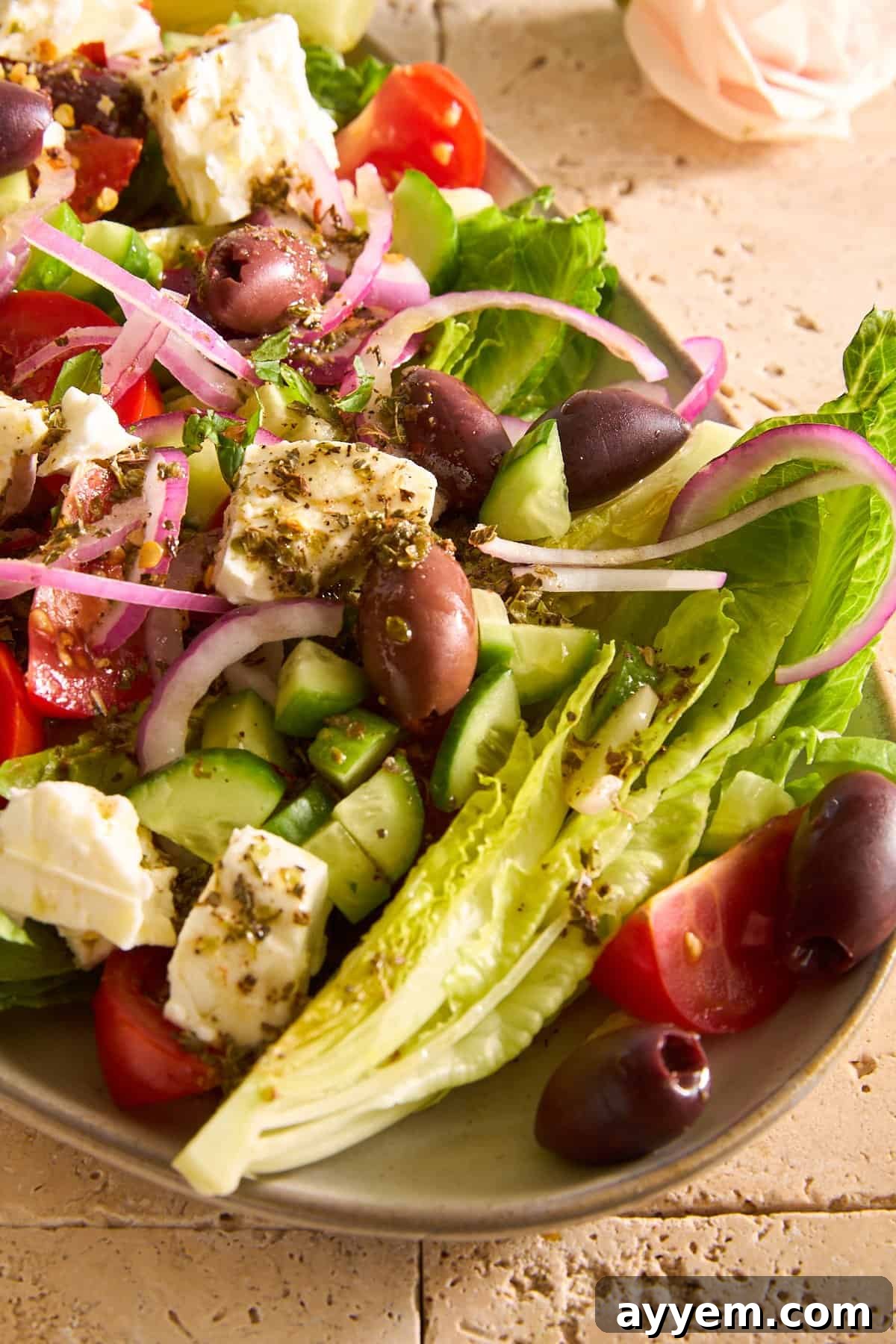
Delightful Serving Suggestions for Your Greek Salad
The beauty of this Greek salad lies in its incredible versatility. As mentioned, it can effortlessly take the spotlight as a light, satisfying, and wholesome meal all on its own, especially when you’ve bulked it up with some of the suggested protein or carb variations. However, its refreshing and vibrant flavors also make it an exceptional companion to a wide array of dishes, transforming any meal into a Mediterranean-inspired feast. Here are some of our favorite ways to serve this incredible salad:
As a Perfect Sidekick: This Greek salad is an ideal complement to rich, savory dishes, balancing them with its fresh acidity and crisp textures. We absolutely adore pairing it with our:
- Warm and Cheesy Olive Cheese Bread: The salty olives and gooey cheese of the bread find a perfect counterpoint in the fresh, tangy salad.
- Homemade Garlic Bread with Spinach and Artichokes: The garlic-infused bread, combined with the creamy spinach and artichoke, is beautifully cut by the zesty Greek salad.
Beyond these specific pairings, imagine serving it alongside a perfectly grilled chicken souvlaki or tender lamb chops. It’s also fantastic with any roasted meats, providing a refreshing contrast that lightens the entire meal. For a simple weeknight dinner, serve it with a crispy baked fish fillet or grilled halloumi cheese.
As a Dynamic Appetizer: Before a hearty meal, a small portion of this Greek salad can serve as a delightful and palate-awakening appetizer. Its fresh flavors stimulate the appetite without being too heavy. Consider pairing it with:
- Moroccan Spicy Tomato Soup: The warmth and spice of the soup are beautifully balanced by the cool, crisp salad.
- Crispy Falafel: The earthy, deep-fried chickpea patties are wonderfully complemented by the fresh, tangy notes of the salad.
- Air Fryer Honey Garlic Chicken Wings: The sweet and savory wings gain an extra dimension when served with the bright, herbaceous salad.
It’s also an excellent addition to a Mediterranean mezze platter, alongside hummus, tzatziki, olives, and warm pita bread. The options are truly endless!
As a Refreshing Main Course: When enhanced with a protein or grain, this Greek salad makes a fantastic and fulfilling main meal. It’s light yet satisfying, perfect for warmer weather or when you’re seeking a fresh, vegetable-forward option. Serve it with a crusty piece of whole-grain bread to sop up the delicious dressing, and you have a complete meal.
Experiment with these suggestions or create your own perfect pairings. This Greek salad is designed to complement and elevate any dining experience.
Make-Ahead Tips and Storage for Freshness
While this Greek salad recipe is undeniably best enjoyed immediately after it’s assembled and dressed, its components can be prepared in advance to save you time and ensure maximum freshness when you’re ready to eat. The key to preserving the vibrant texture and flavor of your salad is to keep the wet and dry ingredients separate until the last possible moment. This strategic approach prevents the lettuce from wilting, the vegetables from becoming soggy, and the pita chips from losing their crunch.
Here’s how you can expertly prepare and store your Greek salad components for optimal freshness:
For Make-Ahead Preparation (1-2 days in advance):
- Prepare Vegetables: Wash, chop, and slice all of your salad vegetables (lettuce, tomatoes, cucumbers, red onion, olives). Ensure they are thoroughly dry after washing to prevent excess moisture from compromising their crispness during storage.
- Store Vegetables Separately: Place the chopped lettuce in a large airtight container lined with a paper towel to absorb any residual moisture. Store the diced tomatoes, cucumbers, sliced red onion, and olives in separate airtight containers. The key is to keep them distinct to maintain their individual textures and prevent cross-contamination of moisture or strong flavors.
- Crumble Feta: If using a block of feta, crumble it and store it in its own small airtight container.
- Prepare Dressing: Whisk or shake all the dressing ingredients together as directed. Store the dressing in a separate airtight jar or container in the refrigerator. The flavors will actually meld and deepen beautifully as it sits.
- Pita Chips: Store pita chips in their original airtight bag or an airtight container at room temperature. They should not be stored with the other salad components, as moisture will quickly make them soggy.
When Ready to Serve:
When it’s time to enjoy your salad, simply combine all the prepared vegetables, crumbled feta, and pita chips in a large mixing bowl. Give the dressing a good shake or whisk again, then drizzle it over the salad and toss gently until everything is perfectly coated. Serve immediately to savor the crisp textures and fresh flavors.
Storage for Leftovers:
If you have leftover salad that has already been dressed, it’s best consumed within a few hours. The dressing will start to break down the vegetables, especially the lettuce, causing it to wilt. If you anticipate leftovers, it’s always better to dress individual portions rather than the entire bowl. If you do have dressed leftovers, store them in an airtight container in the refrigerator and try to eat them the same day. While they won’t be as crisp, the flavors will still be enjoyable.
Frequently Asked Questions About Greek Salad
- Can I prepare Greek salad in advance?
- While it’s always better when it’s fresh and vibrant, you can certainly prepare the chopped vegetables a few hours, or even a day, ahead of time. Store each component (tomatoes, cucumbers, onions, olives, and lettuce) in separate airtight containers in the refrigerator. Add the feta cheese, pita chips, and dressing just before you serve it for the best possible texture and flavor, preventing sogginess.
- What variations can I try with Greek salad?
- To mix things up and personalize your Greek salad, the possibilities are endless! Try adding ingredients like briny capers, a few anchovy fillets for a savory punch, or a generous sprinkle of fresh herbs such as parsley, dill, or mint for an aromatic lift. For a unique sweet and savory contrast, consider incorporating seasonal fruits like thinly sliced nectarines or peaches during summer. You can also boost its heartiness with grilled chicken, chickpeas, or quinoa.
- How should I serve Greek salad?
- Greek salad is incredibly versatile. It makes a fantastic and refreshing side dish alongside a variety of main courses, particularly grilled meats like lamb or chicken, or pan-seared seafood such as salmon or shrimp. It can also stand alone as a light and satisfying main course, especially when you pair it with perfectly crusty bread to soak up the flavorful dressing. For a mezze spread, serve it alongside hummus, tzatziki, and warm pita.
- Is Greek salad healthy?
- Absolutely! Packed with an abundance of fresh vegetables like tomatoes, cucumbers, and onions, heart-healthy extra virgin olive oil, and protein-rich feta cheese, Greek salad is a highly nutritious option. It’s rich in essential vitamins (like Vitamin C and A), minerals, fiber, and beneficial monounsaturated fats, making it a delicious cornerstone of the renowned Mediterranean diet known for its health benefits.
- What makes a Greek salad authentic?
- An authentic Greek salad, or Horiatiki, is characterized by its simplicity and the quality of its fresh, chunky-cut ingredients. Key elements include ripe tomatoes, cucumbers, green bell peppers, red onion, Kalamata olives, and a generous block of real Greek feta cheese. Crucially, traditional Horiatiki does NOT contain lettuce. It is dressed simply with high-quality extra virgin olive oil and a sprinkle of dried oregano.
- Can I make Greek salad vegan?
- Yes, it’s easy to adapt Greek salad to be vegan! Simply omit the feta cheese. To mimic the creamy, tangy element, you can use a plant-based feta alternative, or create a creamy dressing with blended silken tofu, nutritional yeast, and lemon juice. Adding chickpeas or white beans can also provide a protein boost and satisfying texture. Ensure your pita chips are also vegan (check ingredients).
More Mediterranean-Inspired Salad Recipes to Explore
If you’re absolutely vibing with the fresh, wholesome flavors of this Greek salad recipe, then get ready to dive into an even bigger treasure trove of our other favorite salad creations below! Each one offers a unique and delicious experience, perfect for expanding your culinary repertoire:
- Hearty Lentil Salad Recipe: A protein-packed and satisfying salad, perfect for a wholesome lunch or dinner.
- Vibrant Green Goddess Salad: Indulge in a creamy, herb-packed dressing that makes any green a culinary delight.
- Zesty Southwest Salad: Explore bold and zesty flavors with this vibrant and filling salad, bursting with Tex-Mex flair.
- Refreshing Cucumber Thai Salad Recipe: A light and crisp salad featuring the refreshing taste of cucumber with an exotic Thai twist.
The Best Greek Salad Recipe
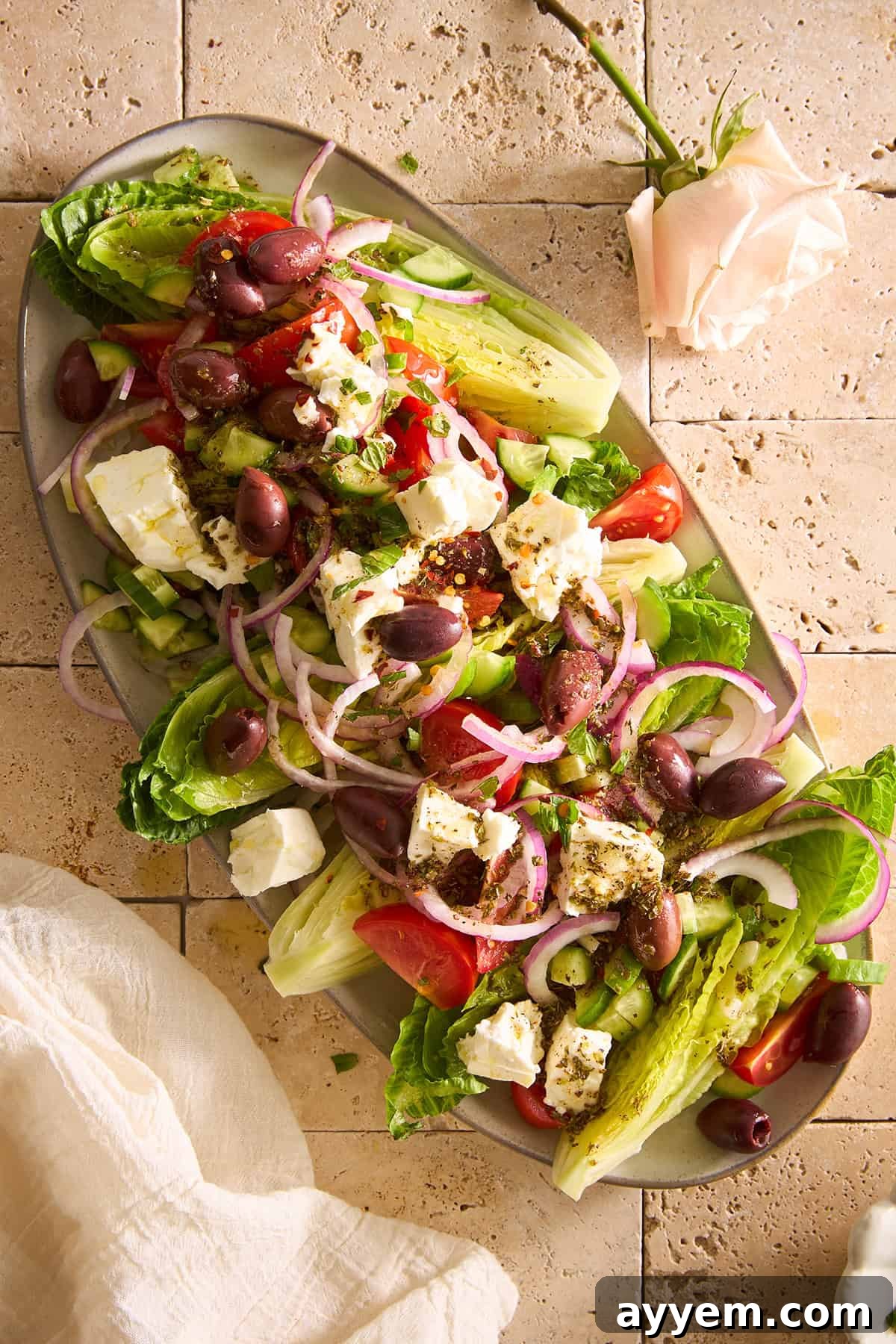
Wholesome and delicious, this easy Greek Salad Recipe is made with simple, budget-friendly ingredients for a healthy meal you can whip up in minutes. Serve it as a side or appetizer or on its own for a filling meal!
Author: Food Dolls
Servings: 4 servings
Prep Time: 20 minutes
Total Time: 20 minutes
Ingredients
For the Greek Salad:
- 3 cups shredded romaine lettuce or cut into wedges
- 2 large (approx 2 cups) on-the-vine tomatoes, chopped
- 1 large (approx 1 1/2 cups) English cucumber, chopped
- ½ cup Kalamata olives, pitted
- ½ medium red onion, thinly sliced
- 1/2 cup crumbled feta cheese
- 1 cup pita chips, lightly crushed (optional, for crunch)
For the Dressing:
- 1/4 cup extra virgin olive oil
- 1 teaspoon dried oregano
- 1 teaspoon dried basil
- 1/2 teaspoon garlic powder
- 1 Tablespoon white wine vinegar (or red wine vinegar)
- Juice of 1 medium lime (approx. 1-2 tablespoons)
- 1/2 teaspoon salt, or to taste
- 1/2 teaspoon black pepper, or to taste
Instructions
- **Prepare Salad Ingredients:** Begin by washing and preparing all your vegetables. Thinly slice the romaine lettuce, or cut it into bite-sized wedges. Dice the ripe tomatoes and crisp English cucumbers into small, uniform cubes. Halve the Kalamata olives and thinly slice the red onion. These precise cuts ensure a harmonious texture in every bite.
- **Craft the Zesty Dressing:** In a mason jar with a lid, or a small bowl, combine the extra virgin olive oil, dried oregano, dried basil, garlic powder, white wine vinegar (or red wine vinegar), fresh lime juice, salt, and black pepper. Secure the lid tightly and shake vigorously until the ingredients are well combined and slightly emulsified. Alternatively, whisk thoroughly in a bowl.
- **Assemble the Salad Base:** Take a large, appealing mixing bowl. Gently place the prepared romaine lettuce at the bottom, creating a fresh, vibrant base for your Greek salad.
- **Layer the Fresh Toppings:** Artfully arrange the chopped tomatoes, cucumbers, halved Kalamata olives, and thinly sliced red onion over the lettuce. Evenly sprinkle the crumbled feta cheese across the top, followed by the pita chips (if using) for that satisfying crunch.
- **Dress and Toss to Perfection:** Drizzle your freshly prepared Greek salad dressing over the assembled ingredients. You can start with a conservative amount and add more to your preference. Using large salad spoons or tongs, gently toss all the ingredients until every piece is beautifully coated with the flavorful dressing.
- **Serve and Enjoy:** For the best possible experience, serve your Greek salad immediately. The crispness of the vegetables and the vibrancy of the dressing are at their peak when fresh. If you prefer, you can chill it for a short while before serving to enhance the refreshing quality.
Nutrition Information
- Serving Size: 1 serving
- Calories: 282 kcal
- Carbohydrates: 18 g
- Protein: 6 g
- Fat: 22 g
- Saturated Fat: 5 g
- Polyunsaturated Fat: 2 g
- Monounsaturated Fat: 14 g
- Trans Fat: 0.003 g
- Cholesterol: 17 mg
- Sodium: 857 mg
- Potassium: 180 mg
- Fiber: 3 g
- Sugar: 3 g
- Vitamin A: 437 IU
- Vitamin C: 7 mg
- Calcium: 138 mg
- Iron: 2 mg
Nutrition information is automatically calculated and should be used as an approximation.