
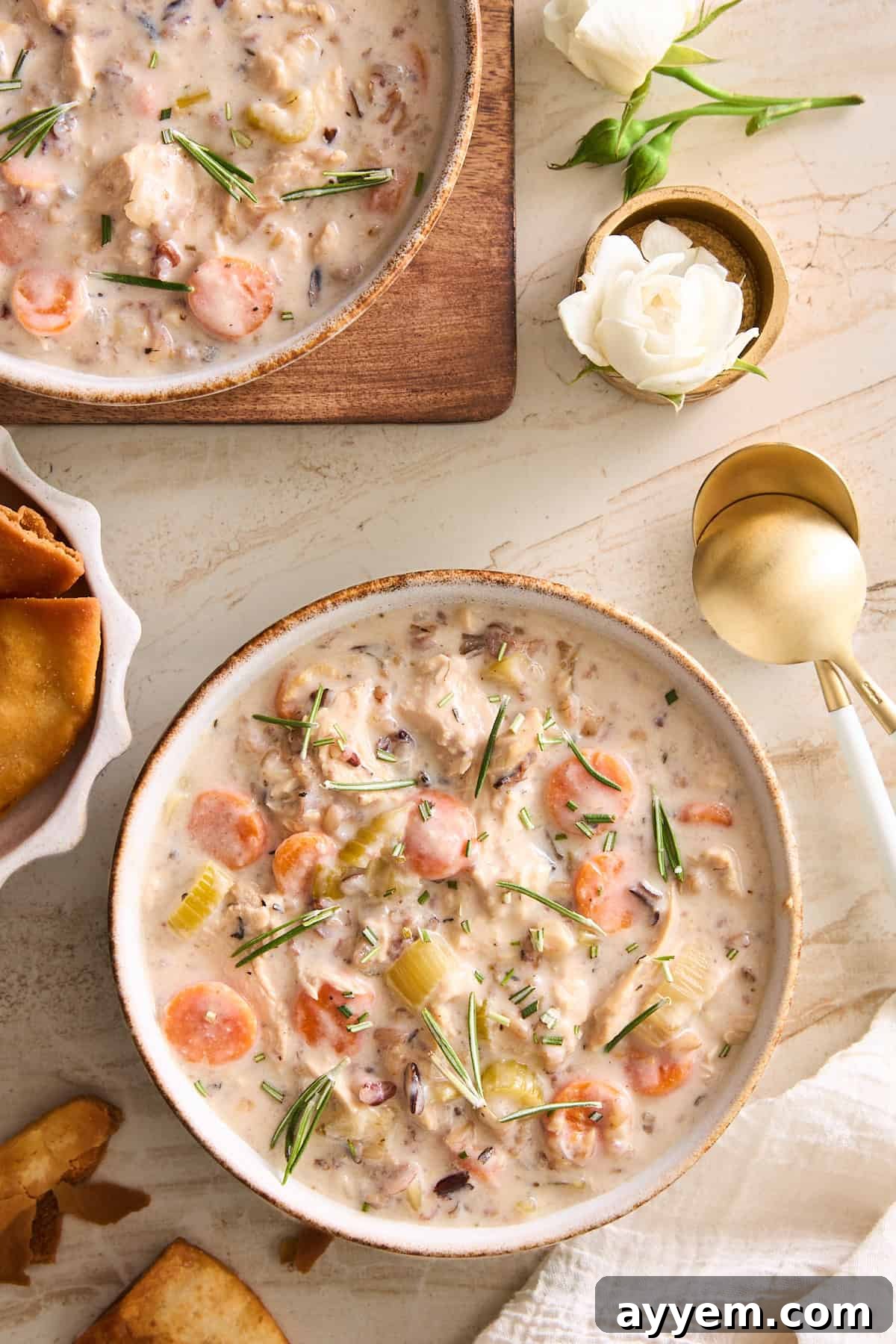
As the chill of winter sets in, there’s nothing quite like a steaming bowl of hearty soup to bring warmth and comfort. This Chicken Wild Rice Soup is more than just a meal; it’s a culinary embrace, designed to nourish your body and soul from the inside out. Imagine tender chicken, earthy wild rice, and a medley of wholesome vegetables, all swimming in a rich, creamy broth that’s bursting with flavor. Perfect for a cozy night in, a comforting family dinner, or a nourishing meal prep option for busy weeks, this recipe promises to become a beloved staple in your kitchen. We’ve crafted this recipe to be not only incredibly delicious but also adaptable, allowing for dairy-free alternatives and packed with nutritional benefits that make it a truly wholesome choice.
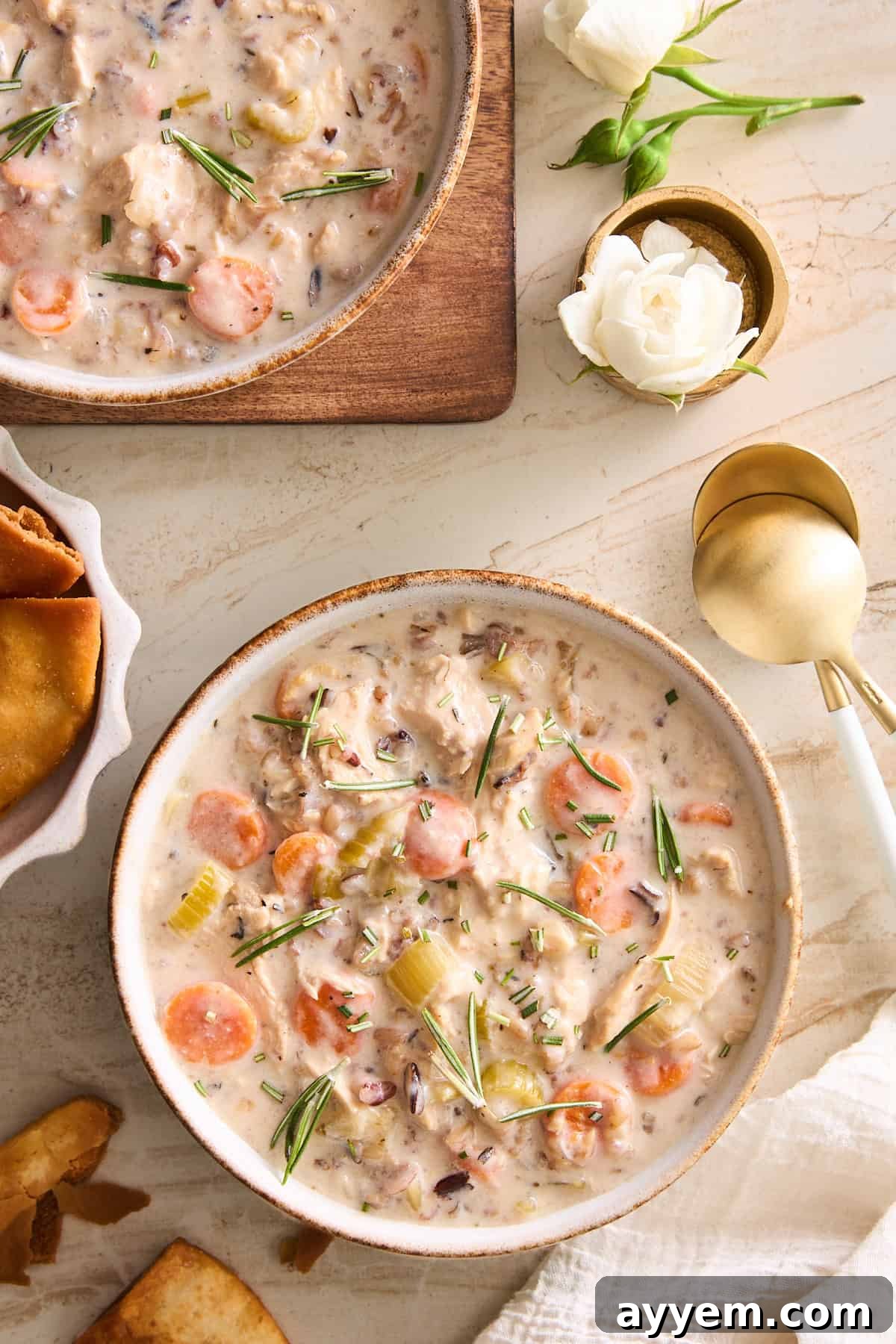
Unveiling the Comfort: Your Ultimate Chicken Wild Rice Soup Recipe
Our Chicken Wild Rice Soup offers a perfect harmony of textures and flavors. It’s a dish that evokes nostalgia, reminiscent of classic homemade meals, yet stands out with its robust profile and satisfying creaminess. Whether you’re battling the winter blues or simply craving something genuinely comforting, this soup delivers. Its balanced ingredients contribute to a meal that is both filling and light, making it suitable for a variety of occasions. Join us as we explore the fascinating components of this delightful soup, from the unique nature of wild rice to the aromatic secret of bay leaves, and discover how easily you can customize it to fit your dietary preferences.
What is Wild Rice? A Deep Dive into this Nutritious Grain Alternative
Despite its name, wild rice is not actually a grain in the botanical sense, a fact that often surprises many! Technically, it is the seed of an aquatic grass (genus Zizania) that grows in shallow lakes and slow-moving streams, primarily in North America. This unique origin sets it apart from traditional rice varieties like white or brown rice, which come from the Oryza sativa plant. Its elongated, dark kernels bear a striking resemblance to rice, and it cooks in a similar fashion, which is how it earned its common name. For those adhering to a grain-free diet or seeking healthier alternatives, wild rice presents an excellent and flavorful option.
Beyond its botanical classification, wild rice boasts an impressive nutritional profile, making it a superior choice compared to its white and even brown rice counterparts. It is an outstanding source of antioxidants, which help combat oxidative stress in the body and contribute to overall health. Furthermore, wild rice is rich in essential minerals, offering significantly more potassium and zinc than regular rice. These minerals are crucial for maintaining healthy blood pressure, immune function, and numerous other bodily processes. What truly makes wild rice a powerhouse, especially for those on plant-based diets, is its high protein content. It’s a complete protein, meaning it contains all nine essential amino acids, which is rare for a plant-based food. This makes it an invaluable addition for vegetarians and vegans looking to boost their protein intake.
When you encounter wild rice in the market, you might notice it comes in a variety of colors: white, brown, and the most common, black. These different hues often result from varying degrees of processing or different species of the aquatic grass. However, regardless of their color, they generally share a similar nutty, earthy flavor and firm texture once cooked. Most commonly, you’ll find wild rice sold as a blend of these colors or, more often, as exclusively black wild rice. The slightly chewy texture and distinct flavor of wild rice add a wonderful dimension to soups, salads, and side dishes, making it a versatile ingredient for any adventurous cook.
Unlocking Flavor: The Essential Role of Bay Leaves in Your Soup
Bay leaves are a secret weapon in many culinary traditions, revered for their ability to infuse dishes with a subtle yet complex flavor profile. This fragrant herb, derived from the bay laurel tree (Laurus nobilis), is native to the Mediterranean region, which explains its prevalence in Mediterranean, Middle Eastern, and Indian cuisines. Its distinctive earthy, slightly floral, and subtly minty notes contribute a depth of flavor that rounds out and enhances other ingredients without overpowering them. They are particularly effective in long-simmering dishes like soups, stews, and braises, where their aromatic compounds have ample time to gently permeate the liquid.
In most North American kitchens, bay leaves are typically found in their dried form, which offers a more mellow and nuanced flavor compared to fresh bay leaves. While specialty stores might occasionally stock fresh bay leaves, it’s generally advisable to use dried ones unless a recipe explicitly calls for fresh. Fresh bay leaves possess a significantly stronger, almost pungent minty flavor that can sometimes dominate a dish, altering its intended taste. Dried bay leaves, on the other hand, release their aromatics more gradually, creating a consistent and balanced flavor infusion.
Despite their wonderful aromatic contributions, dried bay leaves are not meant for consumption. They remain stiff and brittle even after prolonged cooking, and biting into one can be an unpleasant, intensely bitter experience. More importantly, while not poisonous, their sharp edges can pose a choking hazard or irritate the digestive tract. Therefore, it is crucial to remove all bay leaves from your soup or broth before serving. Think of them as flavor infusers that have completed their job once the cooking is done. A quick stir and a careful scan of the pot before ladling will ensure a smooth, enjoyable dining experience, allowing you to appreciate their aromatic magic without any unwelcome surprises.
Making It Your Own: Dairy-Free and Other Adaptations for This Versatile Soup
One of the fantastic aspects of this Chicken Wild Rice Soup recipe is its inherent flexibility, particularly when it comes to dietary adjustments. You can effortlessly adapt it to be completely dairy-free without compromising on its rich and creamy texture. There are numerous compelling reasons to explore a dairy-free lifestyle, whether you’re managing a dairy allergy or intolerance, aiming to reduce your environmental impact, or simply seeking healthier alternatives. The good news is, achieving that desired creaminess without traditional dairy products is easier than ever with the wide array of plant-based options available today.
To transform this into a delectable dairy-free recipe, the key is to swap out the whole milk and heavy cream for your preferred plant-based alternatives. Oat milk is an excellent choice due to its naturally mild flavor and relatively thick, creamy texture, which closely mimics the mouthfeel of dairy milk and cream. It blends seamlessly into the soup, contributing to its richness without introducing any strong, competing flavors. For an even more indulgent texture, you can opt for a combination of oat milk and a dairy-free cream alternative, such as full-fat oat cream or cashew cream.
Another popular option for achieving creaminess in dairy-free recipes is coconut milk and coconut cream. However, it’s important to note that using these will impart a distinct, subtle coconut flavor to the soup. While this can be a delicious twist and pairs surprisingly well with the savory elements, it will undoubtedly alter the overall taste profile of the dish. If you enjoy the tropical hint of coconut, this can be a wonderful variation, but if you’re aiming for a flavor closest to the original dairy version, oat or cashew-based alternatives are generally the best bet. Experimenting with different dairy-free products allows you to tailor the soup perfectly to your taste and dietary needs, ensuring everyone at your table can enjoy a comforting bowl.
Crafting the Perfect Bowl: Your Step-by-Step Guide to Chicken Wild Rice Soup
Creating this delicious Chicken Wild Rice Soup is a straightforward and rewarding process. Follow these detailed steps to achieve a perfectly balanced and incredibly satisfying meal that will impress everyone.
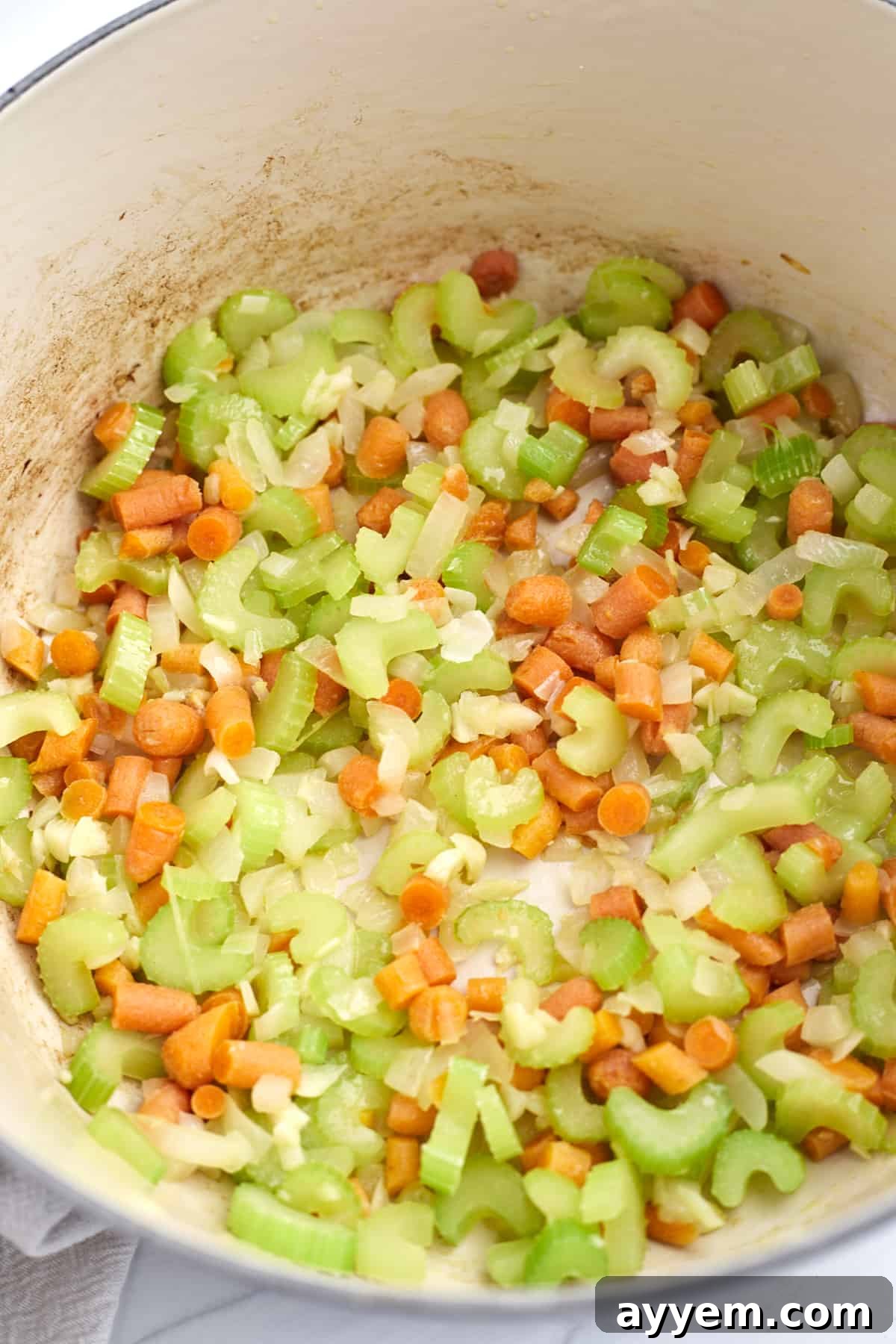
- **Prepare Your Base:** Begin by drizzling olive oil into a large, heavy-bottomed pot or Dutch oven. A pot with a snug-fitting lid is ideal for efficient cooking. Place the pot over medium-high heat. Once the oil shimmers, add the chopped celery, carrots, onions, and minced garlic. Sauté these aromatic vegetables, stirring occasionally, until they soften and begin to caramelize slightly, developing a rich depth of flavor. This step typically takes about 10 minutes and is crucial for building the soup’s foundational taste.
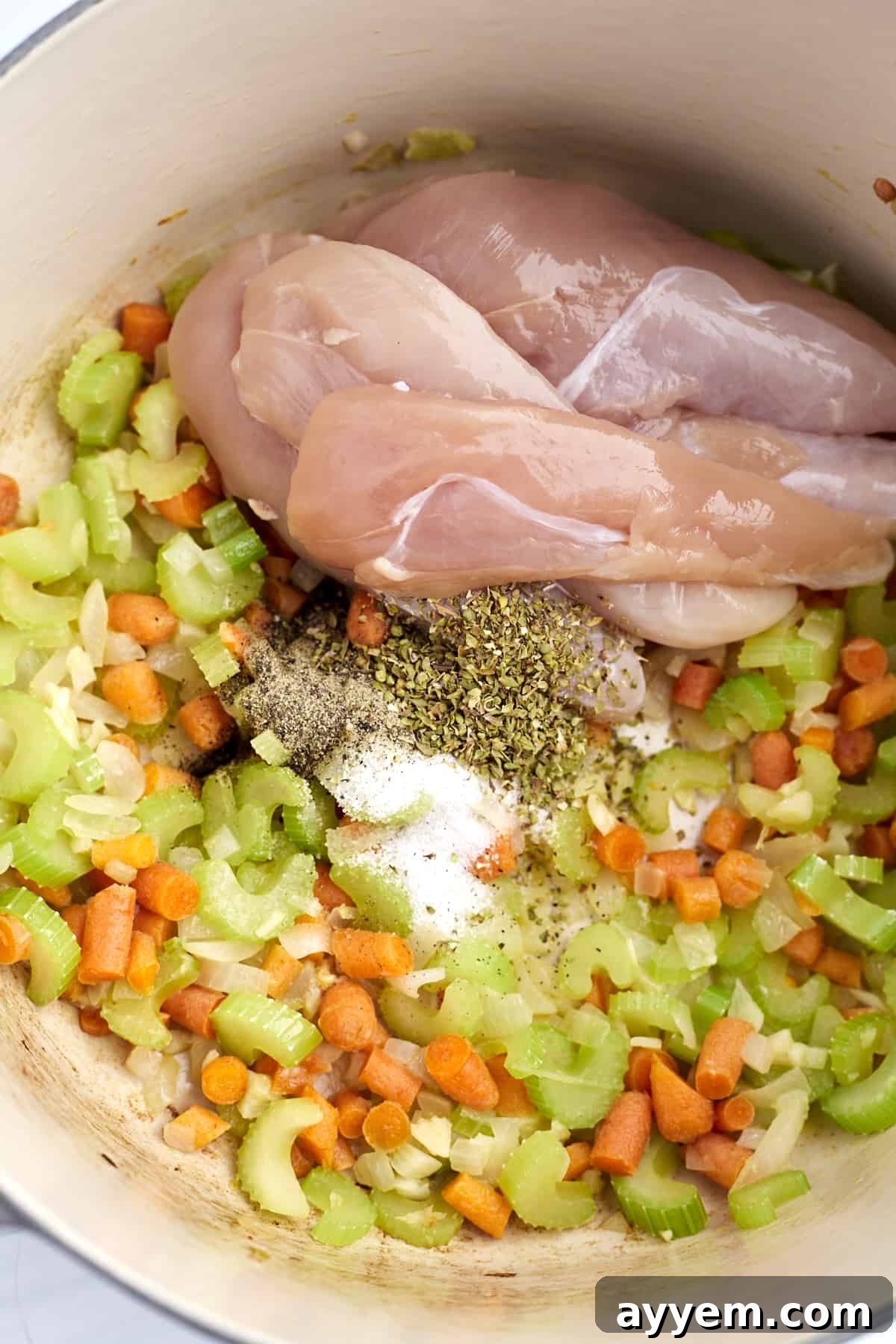
- **Introduce Chicken & Liquids:** Carefully place the chicken breast directly on top of the softened vegetables in the pan. Season the chicken generously with salt, freshly ground black pepper, and dried oregano, ensuring an even coating. Next, add the two bay leaves, tucking them into the vegetables. Pour in the chicken broth, followed by 1 cup of whole milk and 1/2 cup of heavy cream. Add the wild rice, ensuring it’s submerged in the liquid. Finally, open the seasoning packet that often accompanies long-grain and wild rice blends and sprinkle its contents into the pot.
- **Simmer to Perfection:** Give all the ingredients a thorough yet gentle mix to combine everything evenly. Increase the heat to bring the liquid to a rolling boil. Once boiling, reduce the heat to a low simmer, cover the pot tightly with its lid, and allow it to cook for approximately 20 minutes. During this time, the wild rice will begin to tenderize, and the chicken will cook through, absorbing all the wonderful flavors of the broth and seasonings.
- **Prepare the Thickening Mixture:** While the soup is simmering, take this opportunity to prepare your thickening agent. In a separate small bowl, combine the all-purpose flour with the remaining 1 cup of whole milk and 1/2 cup of heavy cream. Whisk vigorously until the mixture is smooth and lump-free. Set this aside; it will be added towards the end to give the soup its signature creamy consistency.
- **Finish & Serve:** Once the wild rice is tender and the chicken is cooked through (after the initial 20 minutes of simmering), carefully remove the bay leaves from the soup and discard them. Next, transfer the cooked chicken breast to a clean cutting board. Using two forks, shred the chicken into bite-sized pieces. Return the shredded chicken to the pot of soup. Pour in the prepared thickening mixture, stirring constantly to integrate it smoothly. Continue to simmer the soup for an additional 5 minutes, or until it reaches your desired creamy, thickened consistency. Mix everything together one last time to ensure all ingredients are well distributed. Serve your delicious Chicken Wild Rice Soup hot, perhaps with a sprinkle of fresh parsley or a side of crusty bread, and enjoy every comforting spoonful!
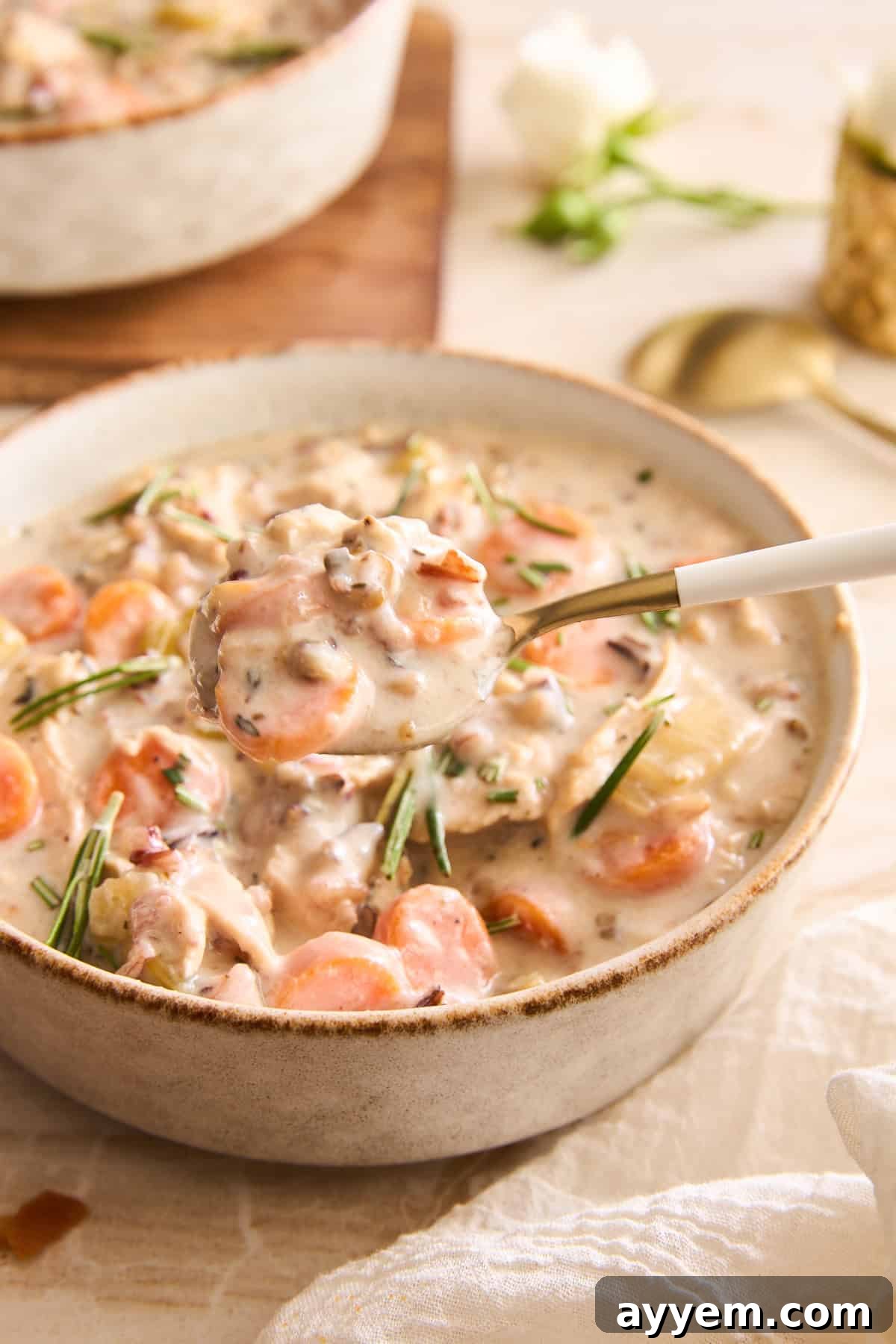
Smart Storage & Meal Prep: Enjoying Your Chicken Wild Rice Soup All Week Long
This Chicken Wild Rice Soup is not only quick and easy to prepare but also fantastic for meal prepping, ensuring you have a delicious and nourishing meal ready to go throughout the week. Proper storage is key to maintaining its freshness and flavor. You have the flexibility to store it in either the refrigerator or the freezer, depending on how long you wish to keep it.
For refrigeration, allow the soup to cool down sufficiently before transferring it. Ideally, you want the soup to be warm, not piping hot, when it goes into the fridge. Placing very hot food directly into the refrigerator can raise the internal temperature of your appliance, potentially compromising the safety of other foods stored within. Once cooled, ladle the soup into an airtight container. Stored this way, it will remain fresh and delicious for 3 to 5 days, making it perfect for your weekday lunches or quick dinners.
If you’re looking to extend its shelf life even further, this soup freezes beautifully. To make reheating from the freezer as convenient as possible, consider freezing it in individual portion sizes. You can use freezer-safe containers, heavy-duty freezer bags (laid flat for efficient storage), or even muffin tins (once frozen solid, pop them out and store the soup pucks in a freezer bag). When properly stored in an airtight container, the soup can last for up to 3 months in the freezer. To reheat, simply thaw overnight in the refrigerator or gently warm from frozen on the stovetop over low heat, adding a splash of broth or milk if it seems too thick, until heated through. Freezing in portions means you only defrost what you need, minimizing waste and maximizing convenience.
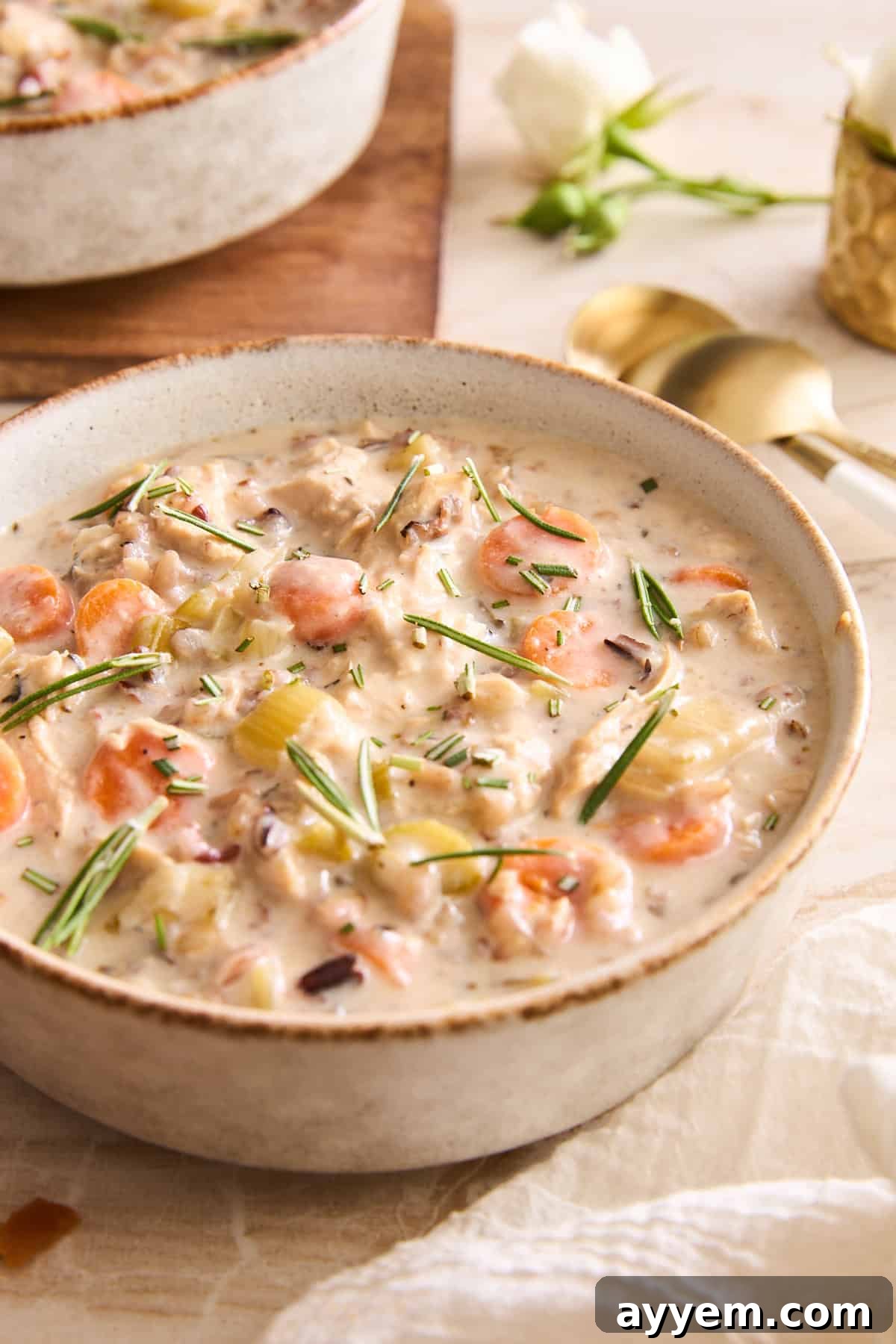
Frequently Asked Questions About Chicken Wild Rice Soup
Why is my wild rice still hard in soup?
Several factors can contribute to hard wild rice. High altitude cooking often requires longer cooking times or more liquid. Older wild rice, which may have dried out more over time, can also take longer to soften. Insufficient liquid in your pot is a common culprit, as wild rice needs ample moisture to absorb and expand. If your wild rice remains firm, simply continue simmering and add a bit more hot chicken broth or water, one-half cup at a time, until it reaches your desired tender yet slightly chewy consistency. Remember to taste-test periodically to avoid overcooking once it begins to soften.
How do you keep wild rice from getting mushy in soup?
The secret to perfectly cooked, non-mushy wild rice lies in avoiding overcooking. Wild rice should be tender with a pleasant, slight chew, not disintegrate. Monitor your soup closely during the final stages of cooking, testing the rice for doneness. Another excellent strategy, especially if you anticipate having leftovers, is to cook the wild rice separately. Prepare it according to package directions, then add it to individual bowls of soup just before serving. This prevents the rice from continuing to absorb liquid and becoming overly soft when stored with the soup.
What vegetables go well in chicken wild rice soup?
The classic trio of carrots, celery, and onions forms the perfect aromatic foundation for chicken wild rice soup, contributing essential flavor and texture. However, don’t hesitate to get creative with other vegetables! Sliced mushrooms add a wonderful earthy depth, while a handful of fresh spinach or kale stirred in during the last few minutes of cooking will boost both nutrition and color. Other great additions include diced bell peppers, parsnips for a subtle sweetness, or even corn kernels for a touch of sweetness and pop.
Can I use leftover rotisserie chicken in wild rice soup?
Absolutely! Using pre-cooked rotisserie chicken is a brilliant and convenient shortcut that not only saves time but also imparts a fantastic, rich flavor to your soup. When using rotisserie chicken, simply shred it and add it to the soup towards the end of the cooking process. Ensure your vegetables and wild rice have cooked thoroughly and are tender before incorporating the cooked chicken, as it only needs to be heated through. This ensures the chicken remains moist and doesn’t become tough from excessive cooking.
Explore More Comforting Soup Recipes
If you’ve enjoyed this delightful Chicken Wild Rice Soup, we invite you to explore more of our comforting and flavorful soup recipes. Each one is crafted to bring warmth and joy to your table.
Slow Cooker White Chicken Chili: A creamy, zesty chili that’s perfect for a fuss-free meal.
Roasted Tomato Soup with Parmesan Croutons: A vibrant and deeply flavored soup, elevated with cheesy croutons.
Egyptian Lentil Soup: A wholesome and aromatic vegetarian soup, packed with nutritious lentils and spices.
Easy Chicken Noodle Soup with Ditalini: The quintessential comfort food, simplified for a quick and satisfying meal.
Slow Cooker Creamy Chicken Wild Rice Soup: A convenient slow cooker version of this classic, perfect for busy days.
Creamy Chicken Wild Rice Soup
Author: Food Dolls
Servings: 8 servings
Prep Time: 20 mins
Cook Time: 30 mins
Total Time: 50 mins
Rating: 5 out of 5 stars (from 22 votes)
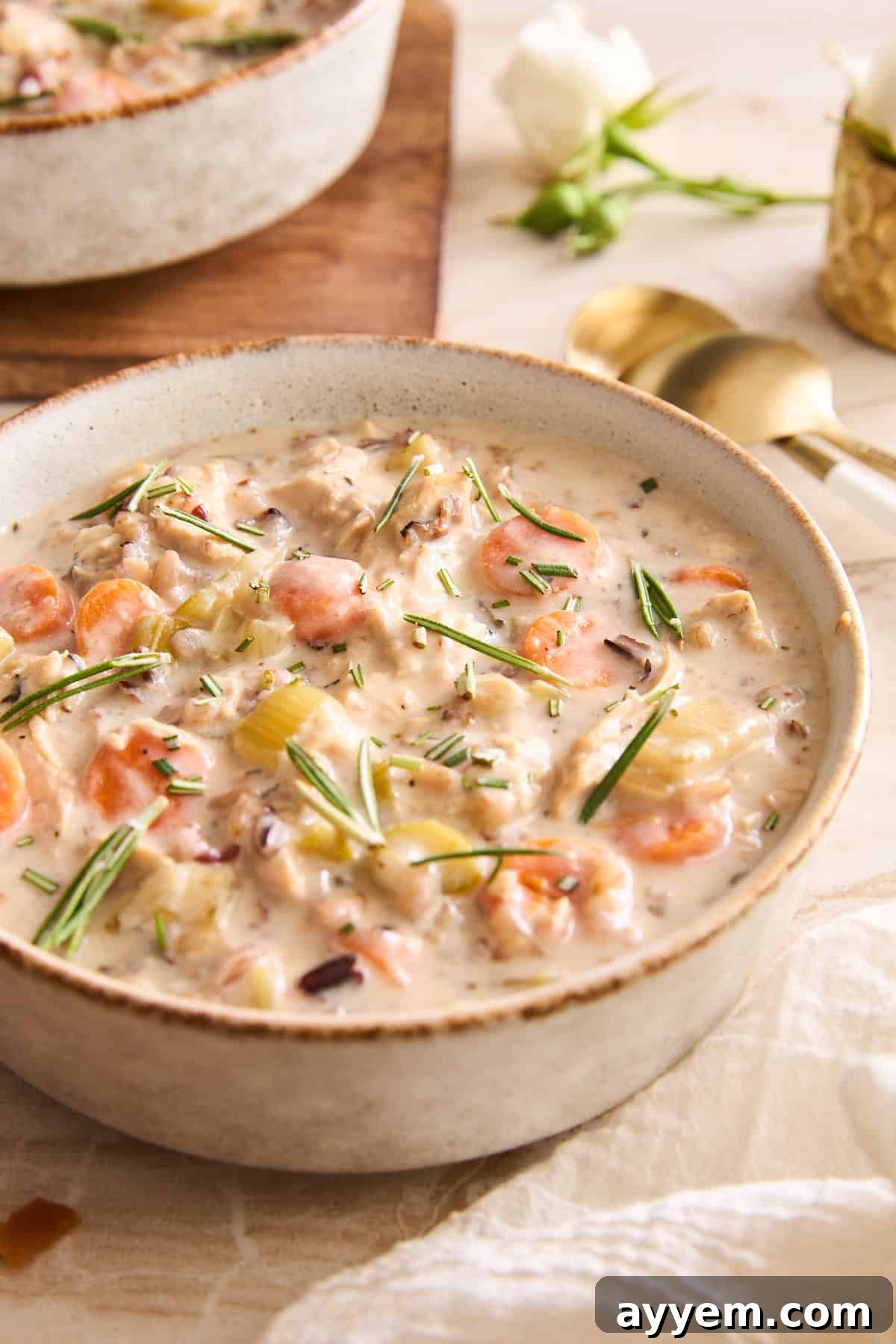
This ultra-comforting chicken wild rice soup is full of rich flavors and boasts a wonderfully creamy texture, making it perfect for any occasion!
Ingredients
- 1 Tablespoon olive oil
- 4 stalks chopped celery
- 1 cup chopped carrots
- 1 medium chopped yellow onion
- 4 cloves minced garlic
- 1 pound chicken breast (boneless, skinless)
- 1 teaspoon salt (or more, to taste)
- 3/4 teaspoon black pepper (or more, to taste)
- 2 teaspoons dried oregano
- 2 bay leaves
- 5 cups low sodium chicken broth
- 2 cups whole milk (divided)
- 1 cup heavy cream (divided)
- 6 ounces long grain & wild rice with seasoning packet (if included)
- 1/4 cup all-purpose flour
Instructions
- In a large Dutch oven or deep pot, heat the olive oil over medium-high heat. Add the chopped celery, carrots, onions, and minced garlic. Sauté for about 10 minutes, stirring occasionally, until the vegetables begin to soften and lightly brown.
- Place the raw chicken breast on top of the sautéed vegetables. Season the chicken and vegetables with salt, black pepper, and dried oregano. Add the bay leaves. Pour in the chicken broth, 1 cup of whole milk, and 1/2 cup of heavy cream. Stir in the wild rice and the contents of its seasoning packet (if applicable).
- Bring the soup to a boil over high heat, then reduce the heat to a simmer. Cover the pot and cook for approximately 20 minutes, or until the wild rice is tender and the chicken is cooked through.
- While the soup simmers, prepare the thickening mixture: In a small bowl, whisk together the 1/4 cup all-purpose flour with the remaining 1 cup whole milk and 1/2 cup heavy cream until smooth and no lumps remain. Set aside.
- Once the chicken is cooked, remove the bay leaves from the soup and discard them. Carefully remove the chicken breast from the pot and shred it using two forks. Return the shredded chicken to the soup.
- Stir in the prepared flour-and-cream thickening mixture. Continue to simmer for an additional 5 minutes, stirring occasionally, until the soup thickens to a creamy consistency. Mix everything together one final time.
- Serve hot and enjoy this comforting and hearty chicken wild rice soup!
Recipe Video
Equipment
-
1 Large Pot (e.g., Dutch Oven)
-
1 Mixing Bowl
- Whisk
Nutrition Information
Serving Size: 1 serving
Calories: 351 kcal
Carbohydrates: 29g
Protein: 22g
Fat: 17g
Saturated Fat: 9g
Polyunsaturated Fat: 1g
Monounsaturated Fat: 5g
Trans Fat: 0.01g
Cholesterol: 77mg
Sodium: 462mg
Potassium: 690mg
Fiber: 3g
Sugar: 6g
Vitamin A: 3331IU
Vitamin C: 4mg
Calcium: 137mg
Iron: 2mg
Nutrition information is automatically calculated and should only be used as an approximation. Individual results may vary based on exact ingredients and portion sizes.
Did you love this recipe?
We’d be thrilled if you left a comment and shared your thoughts! Your feedback helps us grow and inspires others to try this delicious soup.