
Tired of watching your beautiful bunches of fresh parsley wilt away, leaving you with nothing but disappointment and wasted money? We understand the frustration! Parsley is a staple in countless kitchens, adding vibrant flavor and a pop of green to dishes, but keeping it fresh can feel like an endless battle. This comprehensive guide will equip you with the best tips and tricks for how to store parsley, ensuring your herbs stay crisp, green, and full of flavor for weeks. Say goodbye to sad, soggy parsley and hello to a constant supply of this invaluable herb!
In our kitchen, fresh parsley is practically a daily essential. From elevating simple Parmesan Potatoes to brightening a refreshing Chickpea Cucumber Feta Salad, or enhancing the richness of Baked Feta Salmon, its versatility is unmatched. However, this love for parsley often led to a repetitive cycle: buying a bunch, using a portion, and then watching the rest succumb to wilting within days. This recurring issue prompted us to dive deep into research, discovering simple yet incredibly effective methods for storing fresh parsley to maintain its vibrancy and pungent flavor for much longer. It turns out, achieving long-lasting parsley is far from difficult. To help you minimize food waste, save money, and ensure all your culinary creations taste their absolute best, we’re excited to share our expert insights and proven techniques with you.
What Is Parsley? A Culinary Staple with Ancient Roots
Parsley, scientifically known as Petroselinum crispum, is a popular leafy herb belonging to the Apiaceae family, which also includes carrots, celery, and dill. Native to the Mediterranean region, its use dates back thousands of years. While its precise origins are a bit murky, historical records indicate it has been cultivated and cherished in countries like Greece, Italy, Spain, Portugal, Morocco, and Algeria for centuries. The name “parsley” itself is derived from the Latin word “petros” meaning “stone” and “selinum” meaning “celery,” a nod to its historical growth in the rocky hillsides of ancient Greece. Revered by the Greeks not just for culinary purposes but also for its medicinal properties and symbolic uses (often associated with victory and celebration), parsley quickly spread across Europe and eventually the world, becoming an indispensable ingredient in global cuisine.
Beyond Flavor: The Impressive Health Benefits of Parsley
Often perceived merely as a garnish, parsley is, in fact, a powerhouse of nutrition and widely recognized as a disease-fighting plant. Incorporating this vibrant herb into your diet can significantly contribute to overall well-being due to its rich profile of vitamins, minerals, and antioxidants. Parsley is an exceptional source of:
- Vitamin A: Crucial for maintaining healthy vision, immune function, and skin health. Parsley’s carotenoids, including beta-carotene, are converted into Vitamin A in the body.
- Vitamin C: A potent antioxidant that boosts the immune system, aids in collagen production for healthy skin, and helps protect cells from damage caused by free radicals.
- Vitamin K: Essential for blood clotting and plays a vital role in maintaining strong, healthy bones. Adequate Vitamin K intake is linked to improved bone density and reduced risk of fractures.
- Folate (Vitamin B9): Important for cell growth and function, particularly crucial during pregnancy for fetal development, and plays a role in heart health by helping to regulate homocysteine levels.
- Potassium: A key electrolyte that helps regulate fluid balance, nerve signals, and muscle contractions, playing a crucial role in maintaining healthy blood pressure.
Beyond these, parsley contains various flavonoids and volatile oil compounds that act as powerful antioxidants and anti-inflammatory agents. Regular consumption can support bone health, exhibit anti-cancer properties, protect your eye health, improve cardiovascular health, and significantly boost your overall immunity, making it a small but mighty addition to any meal.
What Does Parsley Taste Like? A Culinary Chameleon
Fresh parsley offers a unique flavor profile that brightens and balances a multitude of dishes. It has a distinctly bright, herbaceous, and clean taste, often with subtle peppery notes and earthy undertones. Depending on the variety, it can also have a slightly bitter edge, which adds complexity without overpowering other ingredients. Unlike its dried counterpart, which has a more muted and concentrated flavor, fresh parsley provides a burst of verdant freshness. Its vibrant green hue not only adds visual appeal as a garnish but its nuanced, veggie-like flavor harmonizes wonderfully with savory components, cutting through rich flavors and adding a refreshing finish. It’s truly a culinary chameleon, versatile enough to be the star of a fresh salad or a subtle background note in a hearty stew.
Exploring the Diverse Types of Parsley
While most grocery stores primarily stock two main varieties, flat-leaf and curly parsley, there are actually several types, each with its own characteristics and culinary applications:
- Flat-Leaf Parsley (Italian Parsley) – This is arguably the most popular and widely used variety, favored by chefs for its robust flavor. Flat-leaf parsley boasts broad, flat leaves and a deep green color. Its taste is more pronounced and slightly peppery compared to curly parsley, making it excellent for adding a fresh, herbaceous punch to cooked dishes, salads, sauces like chimichurri, and marinades. It holds up well to cooking and is less prone to wilting.
- Curly Parsley (French Parsley) – Instantly recognizable by its tightly ruffled, bright green leaves, curly parsley has a milder flavor than its flat-leaf cousin. While it can be used in cooking, its primary role is often as a decorative garnish, adding texture and visual appeal to plates. Its mildness also makes it a good choice for those who find flat-leaf too intense.
- Hamburg Parsley (Root Parsley) – Less common in North American grocery stores, Hamburg parsley is primarily grown for its thick, edible root, which resembles a parsnip. Native to Germany, both its leaves and its root are used in cooking. The leaves are larger and broader than other varieties and have a strong, celery-like flavor, often used in soups, stews, and stocks. The root, with its earthy, slightly sweet flavor, can be roasted, boiled, or used in broths, much like other root vegetables.
- Japanese Parsley (Mitsuba) – This distinct variety is native to Japan and China and stands out with its three-lobed leaves and extra-thick, hollow stems. Mitsuba has a more pronounced bitter and slightly peppery flavor, often described as a cross between parsley and celery, with hints of chervil. It is frequently used in traditional Japanese cuisine in soups, salads, and as a garnish for its refreshing aroma and crisp texture. The stems, unlike other varieties, are often eaten on their own or lightly cooked.
The Ultimate Guide: How to Store Fresh Parsley Like a Pro
Parsley is a delicate herb, and proper storage is key to extending its life. Think of it much like a bouquet of flowers – it needs water and protection to thrive. By following these steps, you can keep your parsley fresh and vibrant for 1-2 weeks, significantly longer than if left in its original packaging:
- Prepare the Bunch: Trim and Inspect. Carefully unwrap your bunch of parsley. Lay the stems on a clean cutting board and use a sharp knife or kitchen shears to trim about ½ to 1 inch off the very bottom of the stems. This fresh cut allows the parsley to absorb water more efficiently, much like freshly cut flowers. Simultaneously, take a moment to pluck off any yellowed, brown, or slimy leaves, as these can accelerate spoilage for the entire bunch.
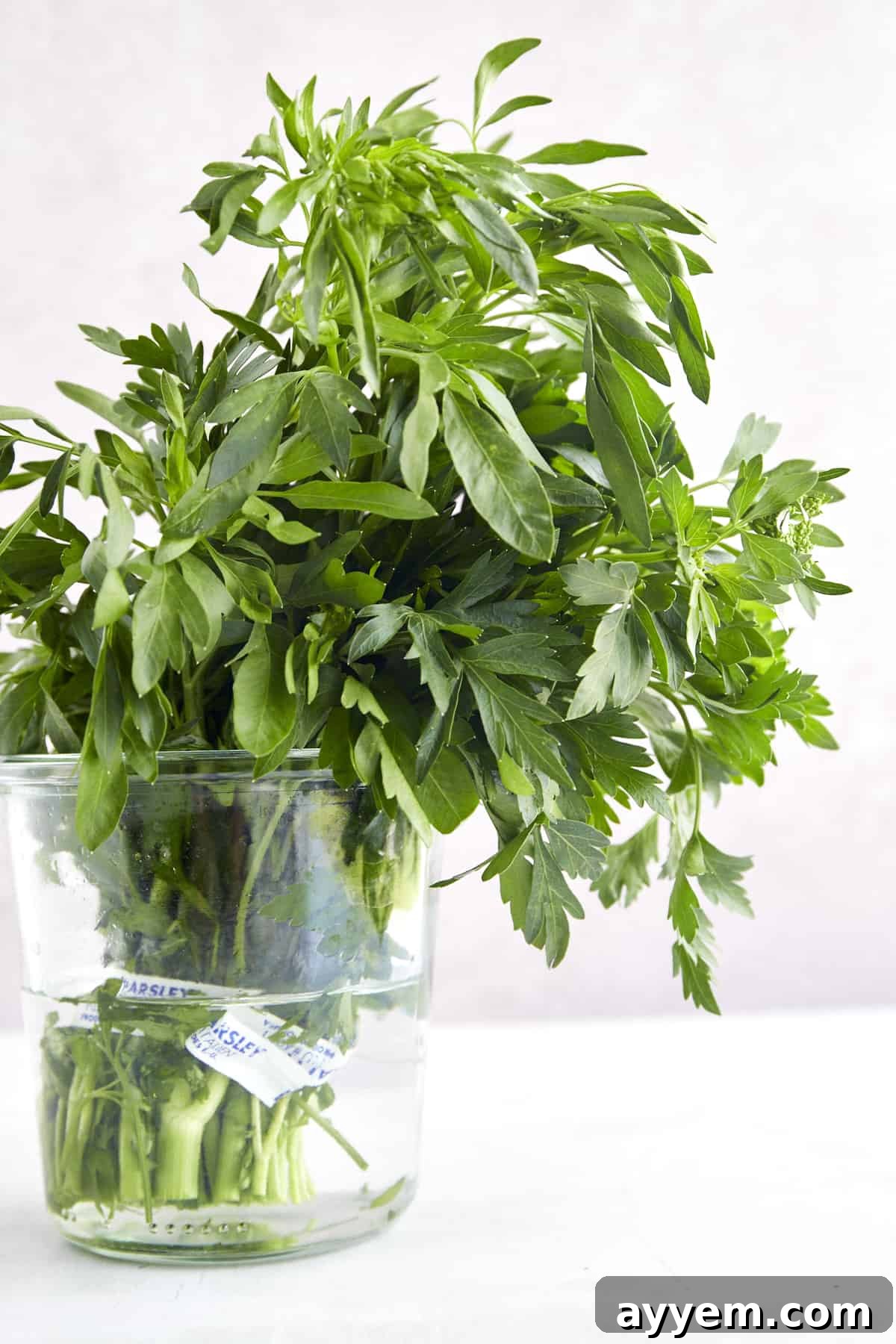
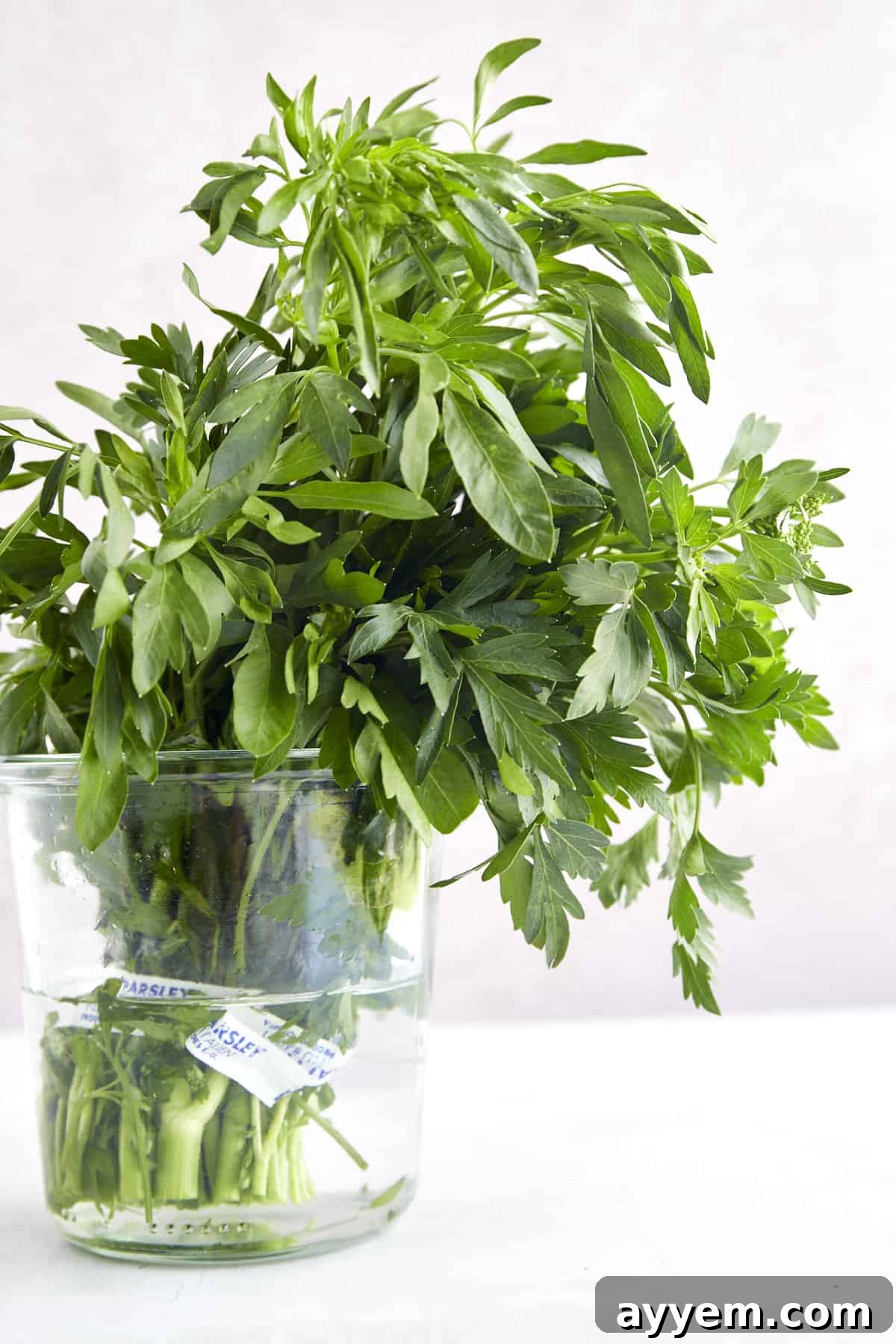
- Hydrate in a Glass Jar. Select a clean glass jar (a Mason jar or any tall drinking glass works perfectly). Fill the jar with about 1 inch of fresh, cold water. Gently place the trimmed parsley bunch into the jar, stems down, ensuring that the cut ends are submerged in the water. The water provides constant hydration, preventing the leaves from drying out and wilting.
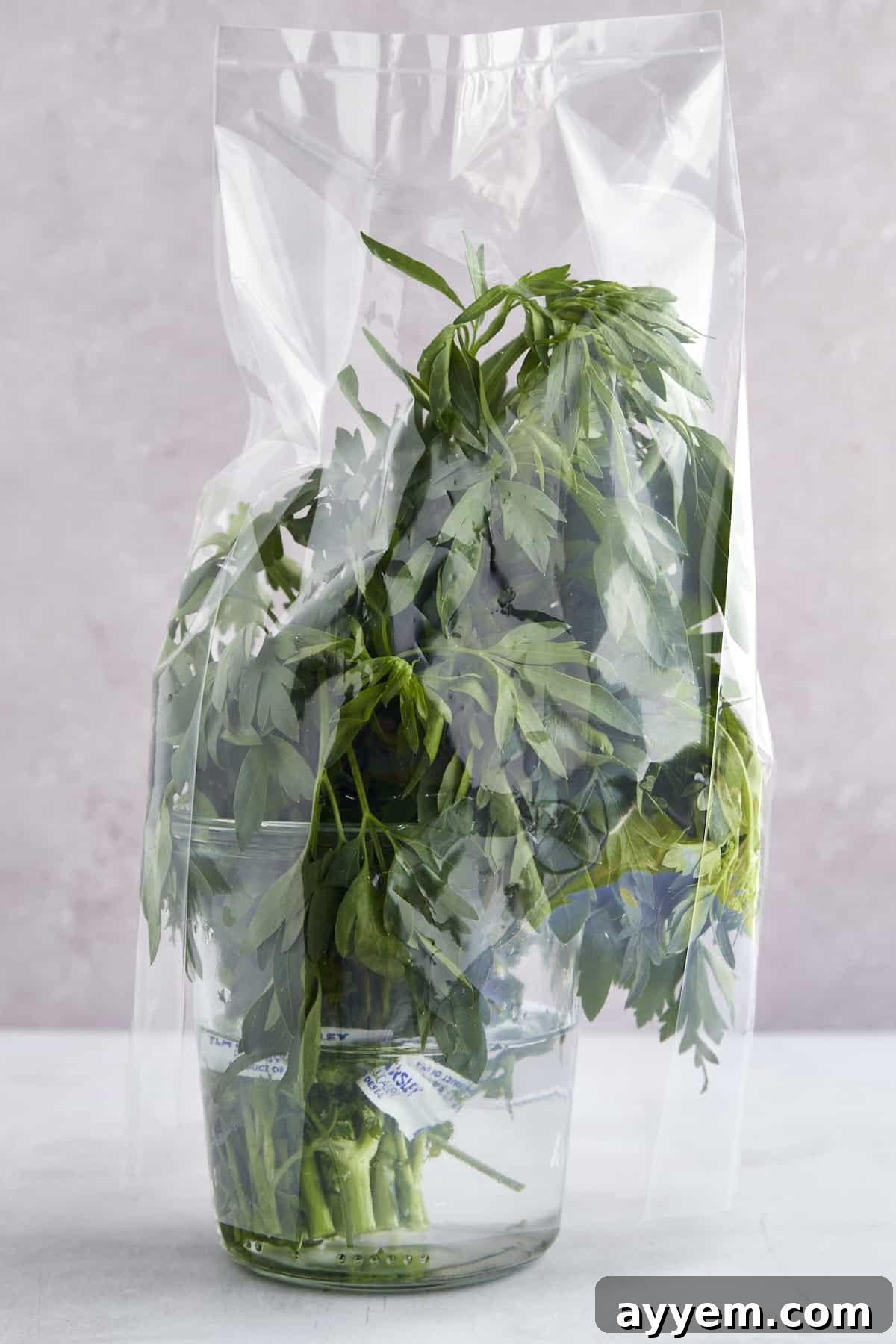
- Create a Protective Environment: Cover and Refrigerate. Loosely cover the entire jar of parsley with a plastic bag. A clean grocery bag or a large ziplock bag works well. You can secure the bag loosely around the jar’s rim with a rubber band, but ensure it’s not airtight – a little air circulation is beneficial. This plastic bag acts like a mini-greenhouse, trapping humidity around the leaves, which minimizes moisture loss. It also shields the parsley from absorbing strong odors from other foods in your refrigerator and protects it from the drying effects of refrigerator air.
- Maintain Fresh Water. Just like with cut flowers, the water in the jar needs to be kept clean and fresh. Every 1-2 days, check the water. If it looks cloudy, discolored, or if the level has dropped, replace it entirely with fresh, cold water. This prevents bacterial growth and ensures the parsley continues to receive optimal hydration.
- Ready for Use: Rinse, Dry, and Chop. When you’re ready to use your parsley, remove the desired amount from the jar. Rinse it thoroughly under cold running water to remove any dirt or debris. To ensure your parsley doesn’t make your dishes watery, it’s crucial to dry it completely. You can do this by placing it in a salad spinner for a quick spin, or by gently patting it dry between layers of paper towels. Once dry, you can mince, chop, or use the leaves whole in your favorite recipes.
How Long Does Stored Parsley Last? Maximizing Shelf Life
When you follow the proper storage method outlined above, your fresh parsley can astonishingly stay vibrant and flavorful in the refrigerator for a remarkable 1 to 2 weeks! This extended shelf life far surpasses the typical few days you might get from simply tossing a bunch into the crisper drawer. Several factors influence how long it lasts, including the initial freshness of the parsley when purchased, the temperature consistency of your refrigerator, and how diligently you replace the water. Signs that your parsley is past its prime include yellowing leaves, a slimy texture, a strong, unpleasant odor, or limp, non-crisp stems. By regularly checking and changing the water, you create an optimal environment that significantly delays spoilage, allowing you to enjoy fresh parsley whenever a recipe calls for it.
Beyond Fresh: Can I Freeze Parsley for Longer Storage?
Absolutely, freezing is an excellent way to preserve parsley for even longer periods, especially if you have an abundance or want to ensure you always have some on hand. Frozen parsley can maintain its quality for up to an entire year, making it a fantastic solution for meal prep and reducing food waste. There are two primary methods for freezing fresh parsley, each offering distinct advantages:
- Freezing Whole Parsley Leaves: This method is ideal for parsley you might use in larger quantities, or for dishes where the texture isn’t paramount.
- Start by thoroughly washing and drying the parsley, ensuring there’s no excess moisture, as this can lead to freezer burn.
- Carefully lay the whole, dry herbs in a single layer on a baking sheet.
- Flash freeze them for about 30 minutes to an hour until firm. This prevents them from clumping together.
- Once frozen, transfer the whole parsley leaves to a freezer-safe bag or an airtight container. Remove as much air as possible before sealing.
- Store the bag in a part of your freezer where the delicate leaves won’t get crushed or damaged.
Frozen whole parsley is perfect for adding directly to soups, stews, sauces, smoothies, or stocks. It may lose some of its crisp texture, but its flavor will remain intact.
- Freezing Chopped Parsley in Oil (Ice Cube Method): This convenient method creates ready-to-use portions of chopped parsley, infused with oil, perfect for cooking.
- Wash and thoroughly dry your parsley.
- Finely mince or chop the parsley leaves to your desired consistency.
- Place the chopped parsley into the compartments of an ice cube tray, filling each about two-thirds full.
- Pour a neutral-tasting oil over the chopped parsley until it’s completely covered. Good options include avocado oil, light olive oil, or even melted butter. The oil helps preserve the color and flavor of the parsley while preventing freezer burn.
- Freeze the tray until the cubes are solid.
- Once frozen, pop out the herb cubes and transfer them to a labeled freezer-safe bag or airtight container.
When a recipe calls for minced or chopped parsley in sauces, braises, or sautéed dishes, simply pop out an herb cube or two and add it directly to your pan. The oil will melt, and the parsley will infuse your dish with fresh flavor without any thawing needed beforehand.
Common Questions about Storing Parsley
While some people prefer to wash immediately, it’s generally best to give it a gentle rinse only right before you plan to use it. Washing it extensively before storage can introduce excess moisture, which is the enemy of fresh herbs, leading to faster wilting or sliminess. If you must wash it, ensure it’s meticulously dried with a paper towel or a salad spinner before storage. However, for maximum longevity, just a quick trim and into the water it goes, then wash right before cooking.
Parsley thrives when its stems are kept in water, similar to fresh-cut flowers. This “bouquet method” is often the most effective for parsley, cilantro, and similar leafy herbs. Other herbs, like basil, might prefer a different method (room temperature with stems in water, or wrapped in a damp paper towel in the fridge), but for parsley, the jar-in-water approach keeps it significantly fresher and crispier than simply laying it flat in a bag or container in the crisper drawer.
While you can chop parsley in advance, it’s generally recommended to store it whole. Whole stems tend to last longer because the leaves are less exposed to air and less prone to moisture loss or bacterial growth. If you do choose to chop it ahead of time for convenience, ensure it’s completely dry, then store it in an airtight container lined with a dry paper towel to absorb any residual moisture. Replace the paper towel every day or two. Be aware that chopped parsley will have a shorter shelf life than whole parsley, typically only lasting a few days.
Not at all! While there are specialized herb keepers on the market, a simple glass jar (like a Mason jar or even a drinking glass) with about an inch of water, loosely covered with a plastic bag, works perfectly. The key elements for success are consistent hydration (stems in water), cold temperature (refrigerator), and protection from drying air and strong odors (the plastic bag). You don’t need fancy gadgets to achieve excellent results.
If your parsley is looking a bit limp but not yet yellow or slimy, you can often revive it with an ice water bath. Trim the ends of the stems, then submerge the entire bunch (leaves and all) in a bowl of ice-cold water for 15-30 minutes. The cold water will rehydrate the leaves, bringing them back to a crisp, vibrant state. Dry thoroughly before use.
Recipes Using Parsley: Put Your Fresh Herbs to Good Use!
Now that you’re an expert in storing parsley and keeping it fresh for weeks, it’s time to unleash its flavor in your kitchen! Parsley is incredibly versatile and can enhance a wide range of dishes. Here are some of our favorite recipes that truly highlight this flavorful herb:
- Balela Salad: A vibrant Middle Eastern chickpea salad, generously studded with fresh parsley for a burst of freshness.
- Lentil Salad: Earthy lentils meet bright herbs in this hearty yet refreshing salad, where parsley adds a crucial counterpoint.
- Lemon Greek Potatoes: These tender, zesty potatoes are often finished with a sprinkle of fresh parsley, elevating their aroma and appearance.
- Zhoug Sauce: A spicy, herbaceous Middle Eastern hot sauce that relies heavily on a generous amount of fresh cilantro and parsley for its signature flavor.
How to Store Parsley
Food Dolls
1 bunch
3 mins
Ingredients
- 1 bunch fresh parsley
Instructions
-
Arrange the parsley on a cutting board, and use a sharp knife to cut off the bottom 1/2 inch of the stems.
-
Pluck off any brown or discolored leaves.
-
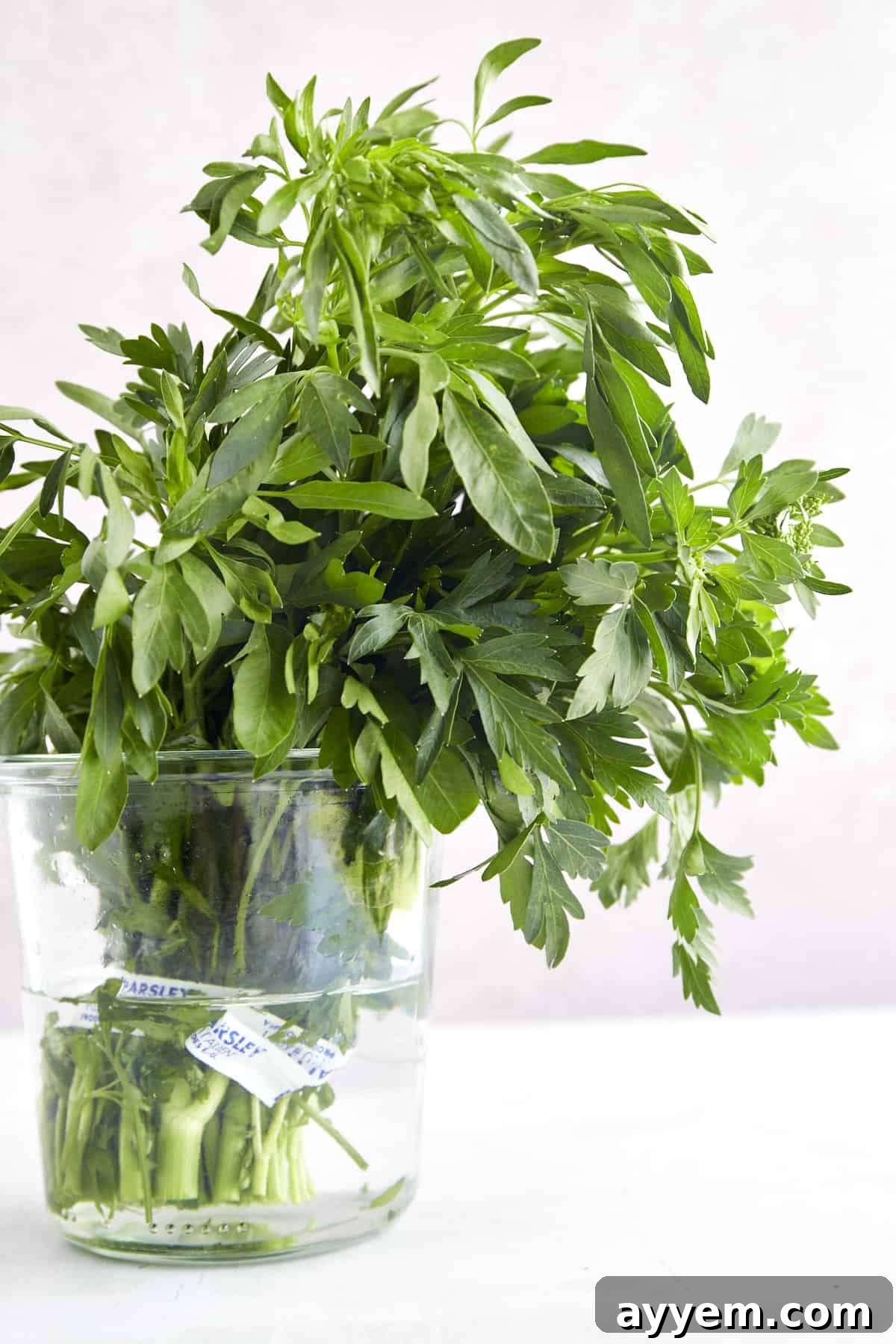
Fill a glass jar with 1 inch of cold water, and add the parsley.
-
Cover loosely with a plastic bag fitted with a rubber band.
-
Store in the fridge 1-2 weeks, replacing the water every 1-2 days.
Equipment
Nutrition
Carbohydrates: 4g |
Protein: 2g |
Fat: 0.5g |
Saturated Fat: 0.1g |
Polyunsaturated Fat: 0.1g |
Monounsaturated Fat: 0.2g |
Sodium: 32mg |
Potassium: 316mg |
Fiber: 2g |
Sugar: 0.5g |
Vitamin A: 4802IU |
Vitamin C: 76mg |
Calcium: 79mg |
Iron: 4mg
Nutrition information is automatically calculated, so should only be used as an approximation.