
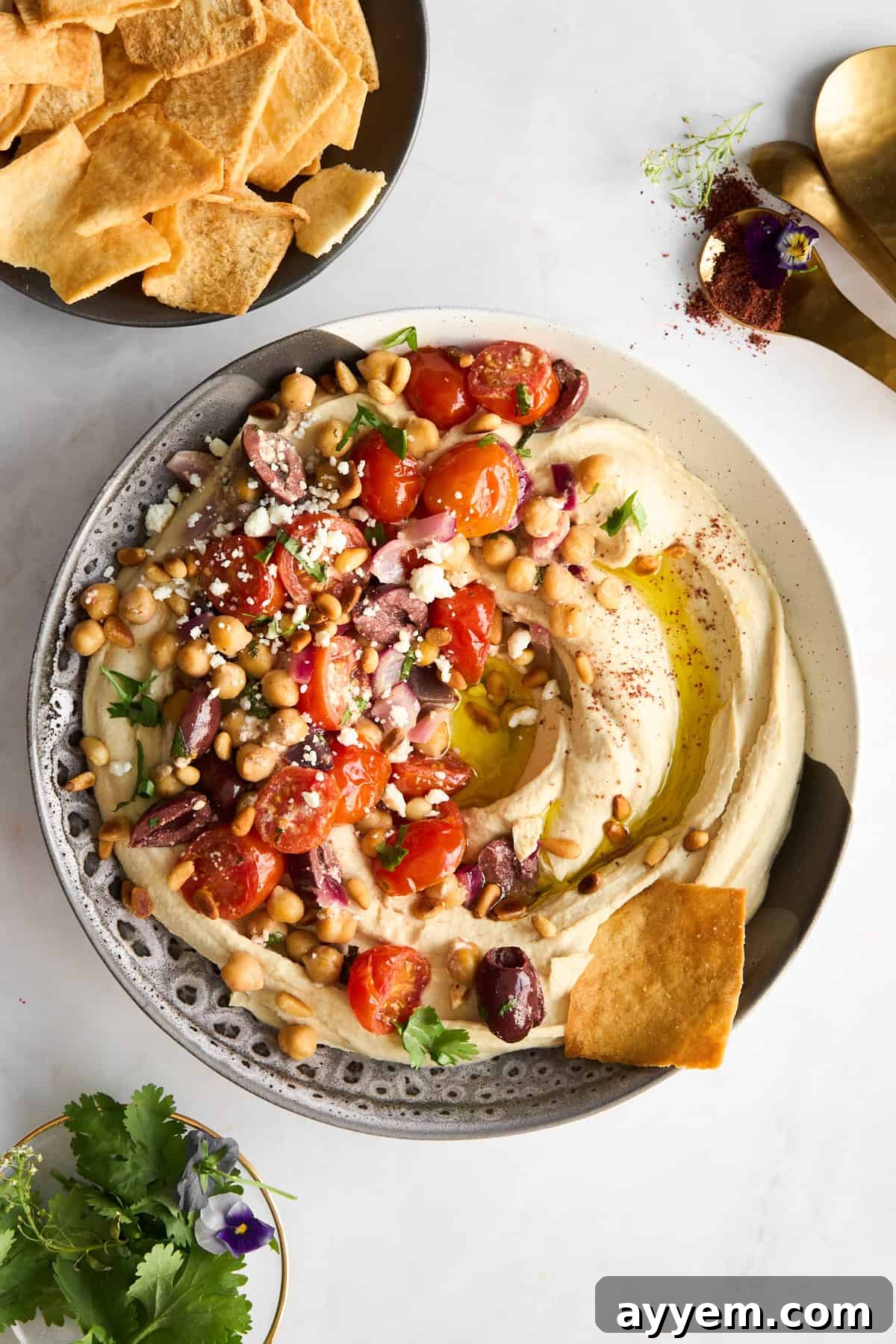
In our modern kitchens, where convenience often takes precedence, there’s a timeless delight that stands out for its simplicity, nutritional value, and unparalleled flavor: homemade hummus. Forget the bland, store-bought versions – once you experience the creamy texture and vibrant taste of hummus made from scratch, especially when elevated with the rich flavors of roasted tomatoes and briny Kalamata olives, you’ll wonder why you ever settled for anything less. This isn’t just a dip; it’s a culinary journey to the heart of the Mediterranean, a game-changer that promises to win over every palate in your household.
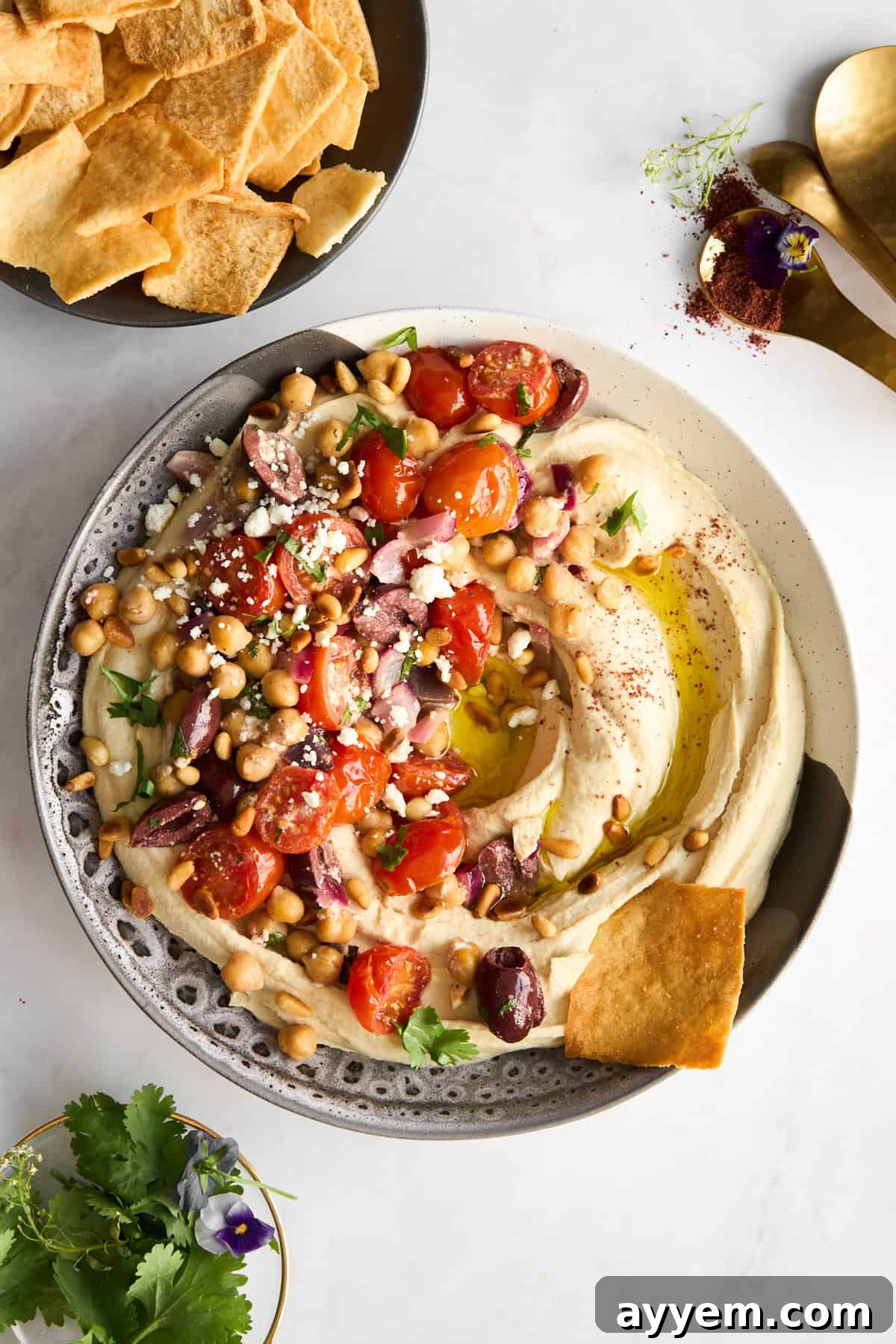
Creating this irresistible dip is not only incredibly rewarding but also surprisingly easy. With just a handful of wholesome ingredients and the magic of a food processor, you can transform basic chickpeas into a luxurious, dreamy spread that’s ready to tantalize your taste buds in mere minutes. The real beauty of homemade hummus lies in its versatility and adaptability. Once you master the fundamental recipe, you unlock a world of possibilities, allowing you to customize it with your favorite seasonings, spices, and toppings. Whether you crave a spicy kick, a garlicky punch, or a refreshing burst of fresh herbs, your homemade hummus can be tailored to perfectly match your unique preferences. This recipe takes that customization a step further, integrating the sweet and tangy notes of roasted tomatoes with the salty depth of Kalamata olives, creating a truly unforgettable flavor profile.
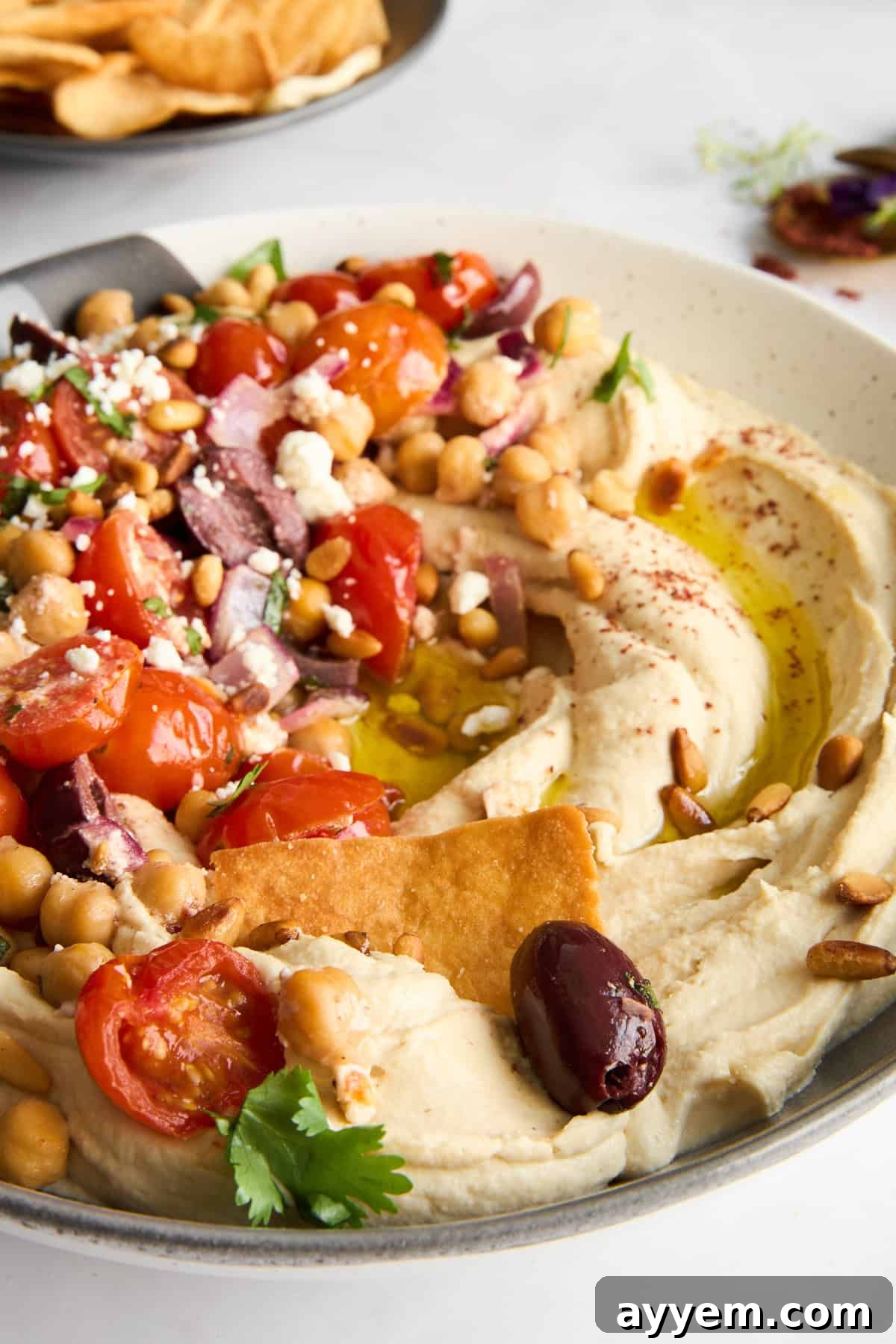
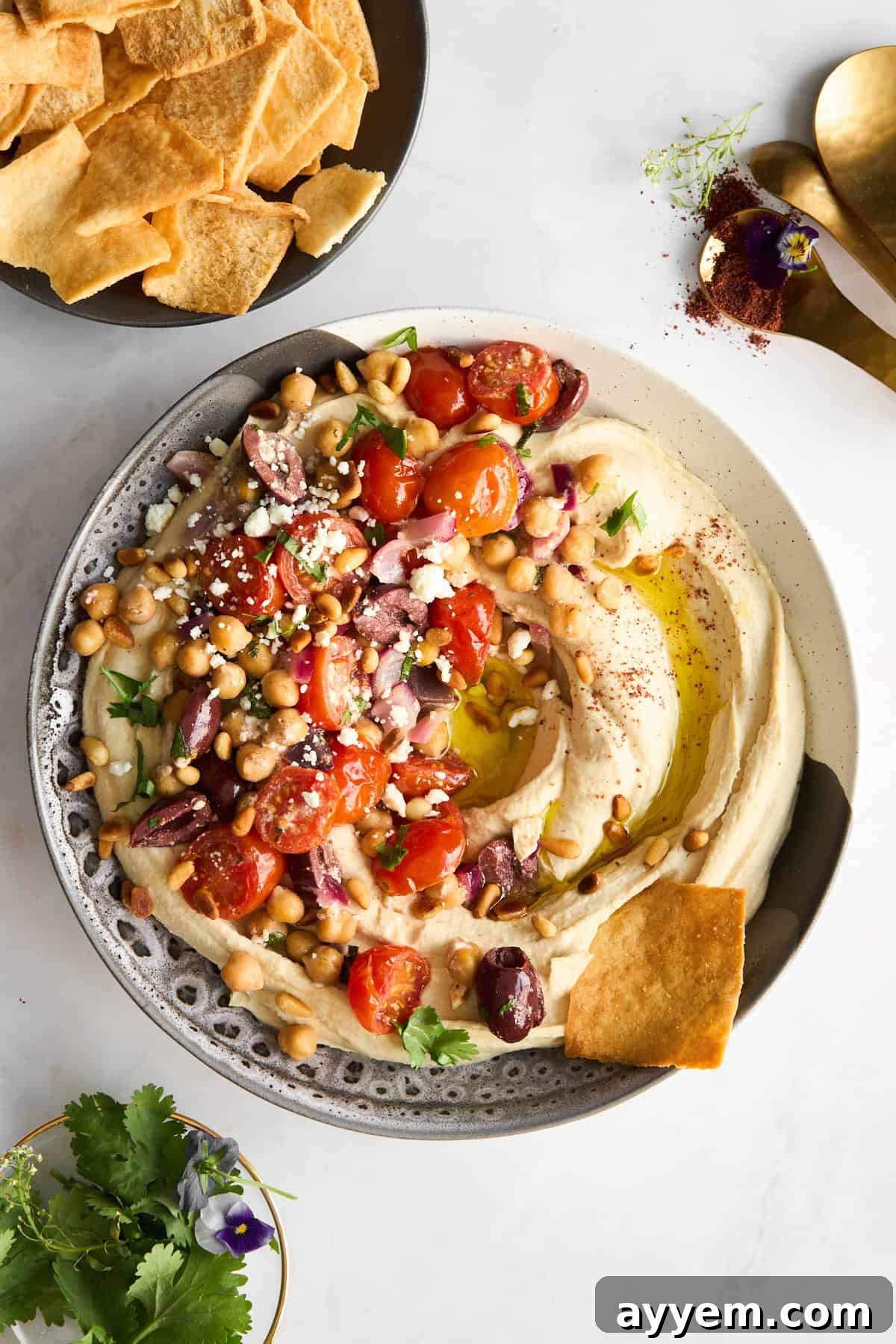
Our favorite way to enhance this Mediterranean classic is by pairing the creamy hummus with warm, savory roasted chickpeas, a vibrant, simple cucumber salad, and crunchy toasted pine nuts. The addition of succulent roasted Kalamata olives and perfectly charred tomatoes not only adds an incredible depth of flavor but also introduces a delightful textural contrast that elevates your hummus bowl from a simple snack to a sophisticated culinary experience. This harmonious blend of textures and tastes ensures every spoonful is an adventure, a perfect balance of creamy, crunchy, sweet, and savory elements. If you’ve enjoyed the exquisite flavors of Whipped Feta with Roasted Tomatoes and Chickpeas, then you absolutely must give this remarkable hummus recipe a try. It’s a celebration of fresh ingredients and vibrant Mediterranean flavors, designed to impress with minimal effort.
Why Homemade Hummus is a Culinary Game-Changer
In a world saturated with convenience foods, homemade hummus stands out as a beacon of freshness, flavor, and health. The distinction between a lovingly prepared batch of hummus and its mass-produced counterpart is profound. Store-bought hummus often contains preservatives, excessive sodium, and sometimes, oils of lesser quality, which can mute the natural brightness and complexity of the dip. When you make hummus at home, you have complete control over every ingredient, ensuring a pure, unadulterated taste that simply cannot be replicated by commercial brands.
Beyond its superior taste, homemade hummus offers significant health benefits. Chickpeas, the star ingredient, are a powerhouse of plant-based protein, dietary fiber, and essential minerals like iron, magnesium, and zinc. This makes hummus an excellent choice for a balanced diet, promoting satiety and aiding in digestion. Tahini, a sesame seed paste, contributes healthy fats, calcium, and antioxidants, while extra virgin olive oil provides heart-healthy monounsaturated fats. By opting for homemade, you avoid unnecessary additives and can adjust salt and fat content to suit your dietary needs, making it a truly wholesome and nourishing addition to your meals.
Moreover, the process of making hummus is incredibly cost-effective. Chickpeas, tahini, and olive oil are relatively inexpensive staples, especially when purchased in bulk. Whipping up a large batch at home will invariably save you money compared to regularly buying smaller containers from the supermarket. The ease of preparation, requiring only a food processor and a few simple steps, means that even on your busiest days, a fresh, flavorful, and healthy snack or appetizer is within reach. It’s a culinary ritual that transforms mundane ingredients into something extraordinary, offering not just a delicious dish but also a sense of accomplishment and satisfaction.
Elevate Your Hummus: The Magic of Roasted Tomatoes and Kalamata Olives
While classic hummus is delightful on its own, infusing it with additional components like roasted tomatoes and Kalamata olives elevates it to an entirely new level of gourmet sophistication. These ingredients are not merely garnishes; they are integral flavor enhancers that bring a dynamic dimension to the creamy base, creating a truly memorable culinary experience. The roasting process is key to unlocking their full potential, transforming their natural characteristics into something even more special.
When cherry tomatoes are roasted, their natural sugars caramelize, intensifying their sweetness and creating a depth of flavor that is both subtly smoky and wonderfully umami. The heat softens them, causing their juices to concentrate, resulting in tender, bursting gems that release a burst of sweet-tart goodness with every bite. This concentrated tomato essence provides a delightful counterpoint to the rich, earthy chickpeas and nutty tahini, adding a vibrant acidity and a touch of Mediterranean sunshine to the dip.
Kalamata olives, with their distinctively rich, fruity, and slightly tangy flavor, contribute a robust and briny complexity. Roasting them briefly alongside the tomatoes further enhances their inherent richness, creating a more mellow yet intensely savory profile. These deep purple olives, hailing from Greece, are a hallmark of Mediterranean cuisine, and their presence instantly transports your taste buds to sun-drenched coastal regions. Their firm texture offers a pleasant chewiness that contrasts beautifully with the smooth hummus, while their salty notes perfectly balance the sweetness of the roasted tomatoes.
Together, the roasted tomatoes and Kalamata olives create a symphony of flavors and textures. The creamy, cool hummus serves as the perfect canvas, allowing the warm, tender tomatoes and savory, briny olives to shine. This combination not only makes for an exquisite dip but also transforms hummus into a substantial and visually appealing centerpiece for any gathering. It’s a testament to how simple, quality ingredients, thoughtfully prepared, can turn an everyday dish into an extraordinary one.
Crafting Your Perfect Batch: A Step-by-Step Guide to Hummus with Roasted Tomatoes and Olives
We believe in creating recipes that are not only delicious but also straightforward, making home cooking an enjoyable and accessible experience. While this recipe isn’t a single-pot affair, it efficiently uses a couple of key tools to bring together a truly spectacular dish with minimal fuss and, most importantly, easy cleanup. The less time spent on dishes means more time enjoying your culinary creation!
- Prepare the Hummus Base: Begin by gathering all your hummus ingredients. In the bowl of your food processor, combine the tahini, extra virgin olive oil, Greek yogurt, thoroughly rinsed and drained canned chickpeas (or pre-soaked dried chickpeas, as per our notes below), cumin, sea salt, cayenne pepper (if using), ice cubes, and water. Ensure your chickpeas are well-drained to avoid an overly watery hummus.
- Achieve Silky Smoothness: Pulse all the hummus ingredients together until you achieve a wonderfully smooth and creamy texture. The key here is to pulse, not blend continuously, to prevent bitterness (more on this below). If you find your hummus is too thick or still a bit grainy, slowly add more water, one tablespoon at a time, continuing to pulse until you reach your desired consistency.
- Preheat Oven for Roasting: Next, preheat your oven to a robust 400 degrees Fahrenheit (200 degrees Celsius). This ensures the tomatoes and olives will roast beautifully, developing rich flavors and textures.
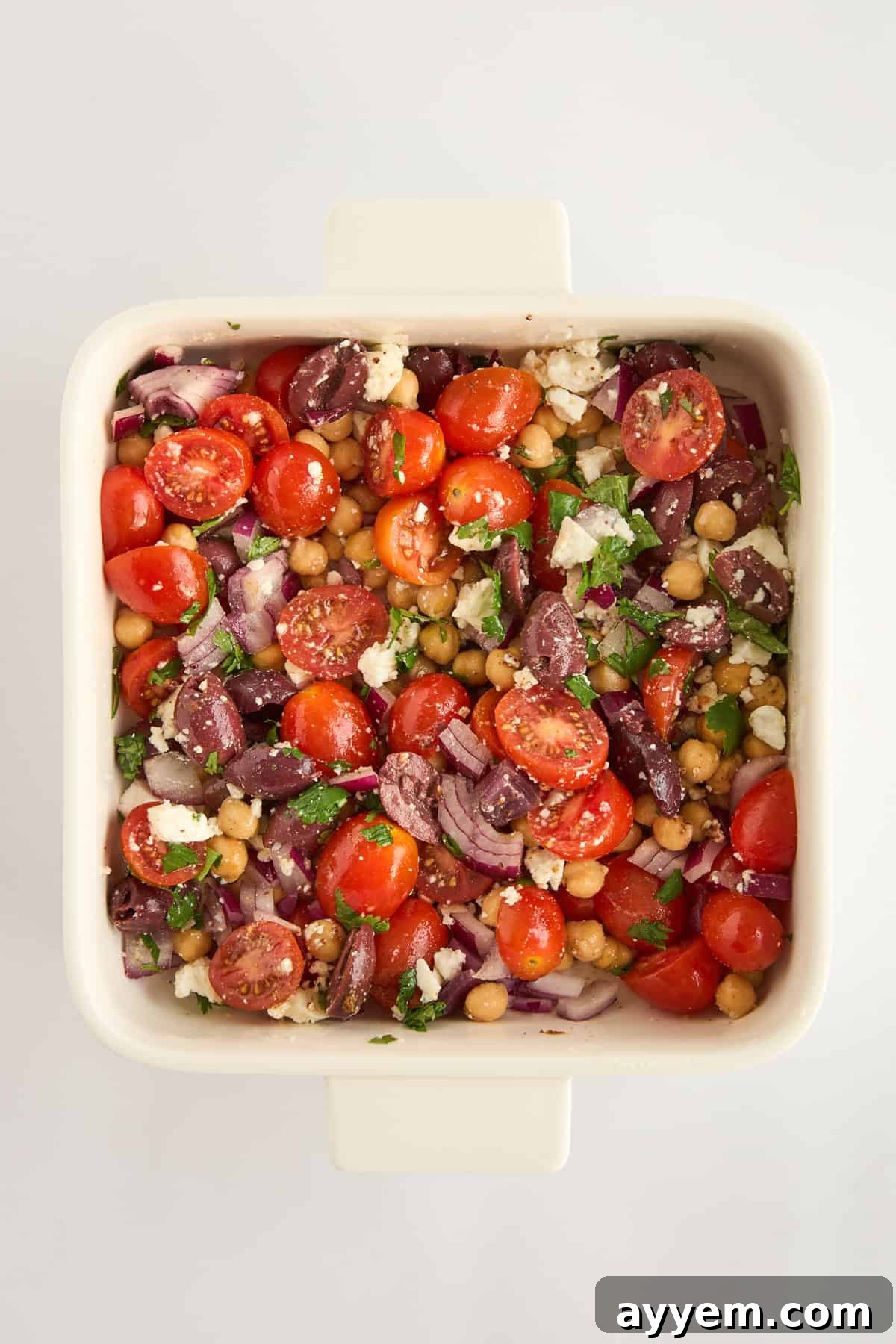
- Roast the Flavorful Topping: In a large baking dish or on a sheet pan, combine your cherry tomatoes, Kalamata olives, the additional washed and drained chickpeas, chopped red onion, fresh cilantro, crumbled feta, ground sumac, cumin, fresh squeezed lemon juice, extra virgin olive oil, salt, and freshly ground black pepper. Toss everything together gently until all the ingredients are well coated in the oil and seasonings. Spread them out into a single, even layer to guarantee they cook uniformly and caramelize nicely.
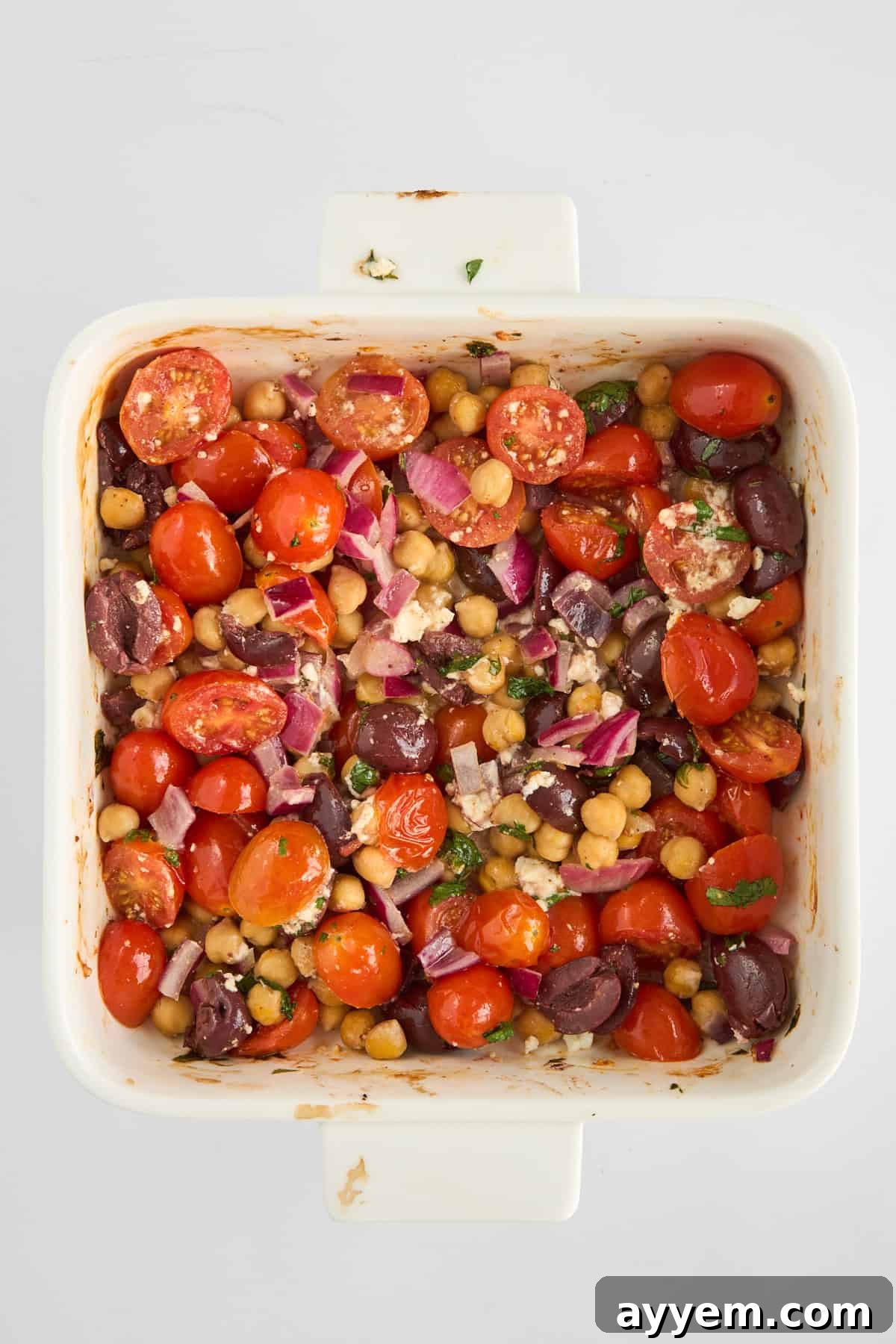
- Bake to Perfection: Place the baking dish in your preheated oven and bake for approximately 15-18 minutes. Keep an eye on them; the goal is for the cherry tomatoes to be slightly burst and tender, and the chickpeas to develop a subtle crispness. Once they reach your desired texture, remove them from the oven and set them aside to cool slightly.
- Final Assembly and Garnish: To assemble this magnificent dish, spread a generous layer of your freshly made hummus onto a serving plate or shallow bowl. Spoon the warm, roasted tomato and olive mixture over the hummus. Finish by sprinkling diced cucumbers, toasted pine nuts, and extra feta crumbles on top. For an extra touch of richness and visual appeal, drizzle with a bit more extra virgin olive oil and a final sprinkle of vibrant sumac.
- Serve and Savor: With all components ready and artfully arranged, your gourmet hummus is now prepared to be served and savored. Enjoy immediately with your favorite accompaniments!
The Secret to Silky Smooth Hummus: Mastering the Food Processor Pulse
Have you ever made homemade hummus, only to find it had an unexpected bitter aftertaste? If so, you’re certainly not alone, and we’re here to demystify this common issue. The culprit behind bitter hummus often isn’t your ingredient balance, but rather the technique used to combine them, specifically how your food processor is operated.
The key to preventing bitterness and achieving that coveted silky-smooth consistency lies in the “pulse” function of your food processor. Instead of letting the machine run continuously, you should pulse the ingredients in short bursts. This method is crucial because it limits the amount of heat transferred from the motor and blades to your ingredients. While your food processor blades won’t get hot enough to cause burns, even a slight increase in temperature can negatively impact delicate ingredients like extra virgin olive oil and tahini. These components are rich in complex flavor compounds and healthy fats that are susceptible to heat degradation. When overheated, extra virgin olive oil can develop a harsh, peppery, or even metallic taste, while tahini can become more bitter and less nutty. This effect is often referred to as “cooking” the oils, altering their chemical structure and, consequently, their flavor profile.
By using the pulse feature, you introduce air into the mixture in a controlled manner, promoting emulsification without generating excessive heat. This not only protects the integrity of the olive oil and tahini but also helps create a lighter, fluffier, and truly creamy hummus that tastes fresh and vibrant. So, remember: for perfect, non-bitter hummus, a gentle touch with the pulse button is your best friend. This simple technique ensures your hummus is saved from bitterness, allowing its natural, delicious flavors to shine through beautifully.
Chickpea Choices: Canned vs. Dried for the Best Hummus
For those who love to keep a well-stocked pantry, the question of using dried chickpeas versus canned ones for hummus often arises. We’re delighted to confirm that you can absolutely make exceptionally delicious homemade hummus using dried chickpeas! While it requires a bit more foresight and preparation, the results can be incredibly rewarding, offering a slight edge in flavor and texture for some enthusiasts.
The fundamental difference between dried and canned chickpeas lies in their hydration and readiness for use. Canned chickpeas are pre-cooked and fully hydrated, making them a marvel of convenience. Simply rinse, drain, and they’re ready for your food processor. This speed makes them ideal for spontaneous cravings or busy weeknights. However, dried chickpeas come with their own set of advantages. They are often more economical, especially when purchased in bulk, and typically involve less packaging, aligning with eco-friendly cooking practices. Many home cooks also argue that dried chickpeas, when properly prepared, yield a hummus with a fresher, earthier flavor and a creamier, less grainy texture, as you have control over the cooking process from start to finish.
If you choose to embark on the dried chickpea journey for this recipe, you’ll need to plan ahead. The day before you intend to make your hummus, measure out one cup of dried chickpeas. Place them in a large bowl and cover them generously with liquid. For an added layer of flavor that beautifully complements the hummus, consider soaking them in chicken or vegetable broth instead of just water. Ensure the chickpeas are submerged, as they will double (or even triple) in size as they rehydrate. Leave them to soak in the refrigerator for a full 12 hours, or overnight. This crucial step softens the chickpeas, preparing them for cooking.
After soaking, drain the chickpeas and then cook them until tender. This usually involves simmering them in fresh water or broth for about 1 to 1.5 hours, or until they are soft enough to mash easily between your fingers. One cup of dried chickpeas, once rehydrated and cooked, will yield approximately the same amount as a standard 16-ounce can of chickpeas. Once cooked and cooled, your rehydrated chickpeas are ready to be used in this recipe just as you would their canned counterparts, seamlessly integrating into your delicious homemade hummus. This method, while requiring extra time, offers a subtle but noticeable improvement in the final product’s depth of flavor and overall luxuriousness.
Customization & Creative Variations for Your Hummus Bowl
The beauty of homemade hummus lies in its infinite possibilities for customization. Beyond the exquisite roasted tomatoes and Kalamata olives, you can truly make this dish your own with various toppings and flavor infusions. Consider adding a pinch of smoked paprika to the hummus for a warm, earthy undertone, or a dash of chili flakes if you prefer a spicier kick. Fresh herbs like finely chopped parsley, mint, or even dill can bring a burst of freshness and vibrant color. For an extra layer of texture and protein, you can roast additional chickpeas with different spices like za’atar or coriander until they’re crispy.
Beyond the recipe, think about what else would complement the rich Mediterranean profile. A sprinkle of toasted sesame seeds, pickled red onions for a sharp tang, or even a drizzle of a spicy olive oil can transform the experience. To turn this dip into a more substantial meal, consider serving it as a base in a power bowl topped with grilled halloumi cheese, falafel, or thinly sliced roasted chicken or lamb. You could also swirl in a spoonful of harissa for a North African twist, or blend in some roasted bell peppers for a sweeter, smokier flavor. The only limit is your imagination!
Perfect Pairings: What to Serve with Your Gourmet Hummus
This delectable hummus with roasted tomatoes and olives is incredibly versatile, making it the perfect centerpiece or accompaniment for a variety of meals and occasions. Its rich, creamy texture and vibrant flavors pair wonderfully with a multitude of dippers and dishes.
Traditionally, warm pita bread or crunchy pita chips are the go-to choices, offering a comforting and satisfying experience. However, don’t limit yourself! Thick slices of crusty artisan bread, such as a rustic sourdough or a freshly baked baguette, are also fantastic for scooping up every last bit of this flavorful dip. For a healthier alternative, an array of fresh, crisp vegetables like cucumber slices, carrot sticks, bell pepper strips (red, yellow, or orange), celery stalks, or even blanched broccoli florets provide a refreshing contrast and satisfying crunch. Think beyond dipping too; this hummus makes an incredible spread for sandwiches, wraps, or even as a creamy base for toast. You can also dollop it onto grilled meats or fish for an instant flavor boost, or incorporate it into a vibrant grain bowl for a complete and wholesome meal. Its robust flavor profile also makes it an excellent addition to a Mediterranean mezze platter alongside other dips, cheeses, and cured items.
Ingredient Spotlight: What is Sumac (Soo-Mak)?
Sumac, pronounced “soo-mak,” is a fascinating and essential spice in Middle Eastern cuisine, often distinguished by its beautiful deep red hue and delightful lemony, tangy flavor profile. It is derived from the dried and ground berries of the wild sumac flower, a plant belonging to the Rhus genus.
Unlike lemon juice, which provides a sharp, wet acidity, sumac offers a dry, vibrant tartness that is less overpowering and imparts a subtle, complex fruitiness. This unique flavor makes it incredibly versatile, acting as a natural brightener for a wide array of dishes. It’s commonly used as a finishing spice, sprinkled over salads, roasted vegetables, and dips like hummus to add a pop of color and a zesty finish. In traditional Middle Eastern cooking, sumac is frequently used in rubs for grilled meats, such as chicken, lamb, and beef, where its acidity helps to tenderize and enhance the savory notes. It’s also a key ingredient in za’atar, a popular Middle Eastern spice blend.
Beyond its culinary applications, sumac is also appreciated for its potential health benefits, being rich in antioxidants. You can typically find sumac in specialty grocery stores, ethnic markets, or easily purchase it online here. Incorporating sumac into your cooking is an effortless way to add an authentic touch and a burst of bright, tangy flavor to your dishes.
Frequently Asked Questions (FAQs) about Roasted Hummus
While Kalamata olives are our top recommendation for their robust, fruity flavor and firm texture, feel free to experiment with your favorite variety! Green olives, like Castelvetrano, could offer a milder, buttery note, or you could try a mix of different types for a more complex profile.
The possibilities are endless! For a spicier kick, add a pinch of red pepper flakes or a dash of harissa paste. To enhance the smoky notes, stir in a teaspoon of smoked paprika. Fresh herbs like chopped parsley, cilantro, or mint can add a refreshing aroma. You could also experiment with different roasted vegetables, such as bell peppers or zucchini, for alternative flavor profiles.
Absolutely! As long as all your ingredients are plant-based, this delicious dip is 100% vegan-friendly. The base hummus is naturally vegan (chickpeas, tahini, olive oil, lemon), and the roasted tomatoes and olives are also plant-derived. If you include feta cheese as a topping, it would no longer be vegan, but it can easily be omitted for a fully plant-based dish.
Yes, definitely! Sun-dried tomatoes bring a concentrated, intense burst of sweet-tart flavor that pairs wonderfully with the olives and hummus. If using oil-packed sun-dried tomatoes, be sure to drain them well before incorporating them, and you might want to reduce the amount of olive oil added to the roasting mixture slightly.
Store any leftover hummus in an airtight container in the refrigerator for up to 3-5 days. For best results, you can smooth the top of the hummus and drizzle a thin layer of olive oil over it before sealing. This helps prevent it from drying out and maintains its fresh flavor. The roasted tomato and olive mixture can be stored separately and added just before serving, or stored together with the hummus.
Absolutely! Hummus is an excellent make-ahead dish. You can prepare the hummus base up to 2-3 days in advance and store it in the refrigerator. The roasted tomato and olive topping can also be made a day in advance and stored separately. Assemble the dish just before serving to ensure the best presentation and texture of the toppings.
Hummus with Roasted Tomatoes and Olives
Food Dolls
6 servings
15 minutes
25 minutes
40 minutes
Print Recipe
Email Recipe
Ingredients
Hummus
- 1/3 cup tahini stirred
- 1/4 cup extra virgin olive oil
- 1/4 cup Greek yogurt
- 1 (16 ounce) canned Chickpeas rinsed and drained
- 1/2 teaspoon cumin
- 1/2 teaspoon sea salt more or less to taste
- 1/8 teaspoon cayenne pepper optional
- 3 ice cubes
- 1/4 cup water
Roasted Tomatoes and Olives
- 8 ounces cherry tomatoes
- 1/2 cup Kalamata olives
- 1/2 cup washed and drained chickpeas
- 1/2 small chopped red onion
- 2 Tablespoons chopped cilantro
- 1/4 cup crumbled feta
- 1/2 teaspoon ground sumac
- 1/2 teaspoon cumin
- 1 Tablespoon fresh squeezed lemon juice
- 2 Tablespoons extra virgin olive oil
- 1/2 teaspoon salt more or less to taste
- 1/2 teaspoon freshly ground black pepper more or less to taste
Topping/Garnish
- 2 Tablespoons toasted pine nuts
- 1/4 cup diced cucumber
- 1 Tablespoon feta crumbles
- a drizzle of extra virgin olive oil optional
- sprinkle of sumac optional
Instructions
Hummus
-
In a food processor, add all the ingredients for the hummus: tahini, extra virgin olive oil, Greek yogurt, rinsed and drained canned chickpeas, cumin, sea salt, optional cayenne pepper, ice cubes, and water. Pulse until the mixture is completely smooth and creamy. If the hummus appears too thick or coarse, add an extra splash of water, one tablespoon at a time, until the desired consistency is achieved.1/3 cup tahini, 1/4 cup extra virgin olive oil, 1/4 cup greek yogurt, 1 (16 ounce) canned Chickpeas, 1/2 teaspoon cumin, 1/2 teaspoon sea salt, 1/8 teaspoon cayenne pepper, 3 ice cubes, 1/4 cup water
-
Preheat your oven to 400 degrees Fahrenheit (200 degrees Celsius).
-
In a large baking dish or on a sheet pan, combine the cherry tomatoes, Kalamata olives, additional washed and drained chickpeas, chopped red onion, cilantro, crumbled feta, ground sumac, cumin, fresh squeezed lemon juice, extra virgin olive oil, salt, and black pepper. Toss all ingredients together until evenly coated. Spread them out into a single layer to ensure even cooking. Bake for 15-18 minutes, or until the tomatoes are tender and slightly burst. Set aside to cool slightly before assembling.8 ounces cherry tomatoes, 1/2 cup kalamata olives, 1/2 cup washed and drained chickpeas, 1/2 small chopped red onion, 2 Tablespoons chopped cilantro, 1/4 cup crumbled feta, 1/2 teaspoon ground sumac, 1/2 teaspoon cumin, 1 Tablespoon fresh squeezed lemon juice, 2 Tablespoons extra virgin olive oil, 1/2 teaspoon salt, 1/2 teaspoon freshly ground black pepper
-
To assemble, spread the creamy hummus generously on a serving platter or shallow bowl. Spoon the warm roasted tomato and olive mixture over the hummus. Finish by sprinkling the diced cucumbers, toasted pine nuts, and extra feta cheese crumbles on top. For a final flourish, drizzle with a touch more extra virgin olive oil and a decorative sprinkle of sumac. Serve immediately and enjoy!2 Tablespoons toasted pine nuts, 1/4 cup diced cucumber, 1 Tablespoon feta crumbles, a drizzle of extra virgin olive oil, sprinkle of sumac
Equipment
Nutrition
Nutrition information is automatically calculated, so should only be used as an approximation.