
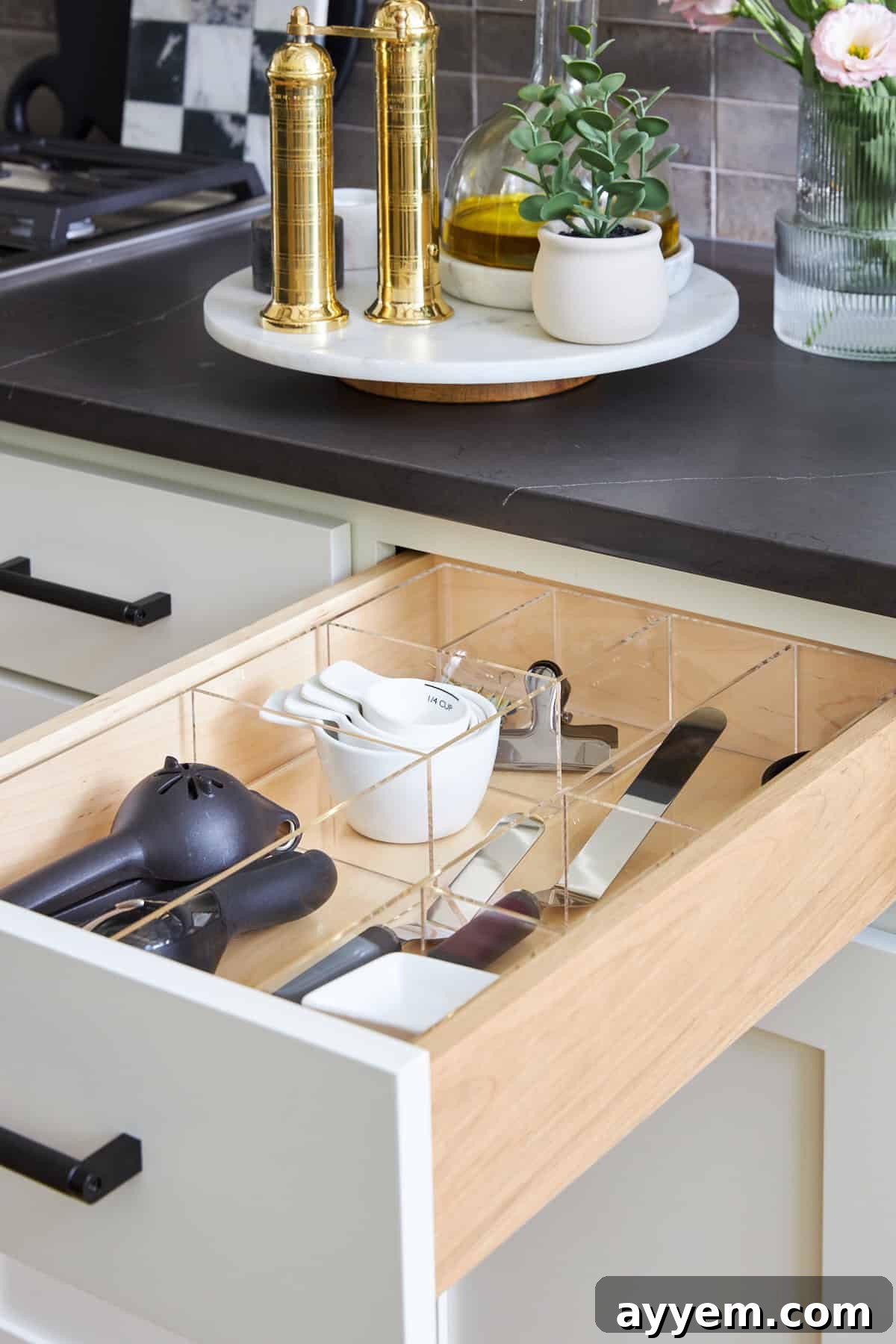
We’re always refining our kitchen counter organization because when you cook frequently, a lot of items deserve to be within arm’s reach. Appliances, utensils, cutting boards, and everyday tools can quickly crowd your workspace if you don’t make deliberate choices about what stays out.
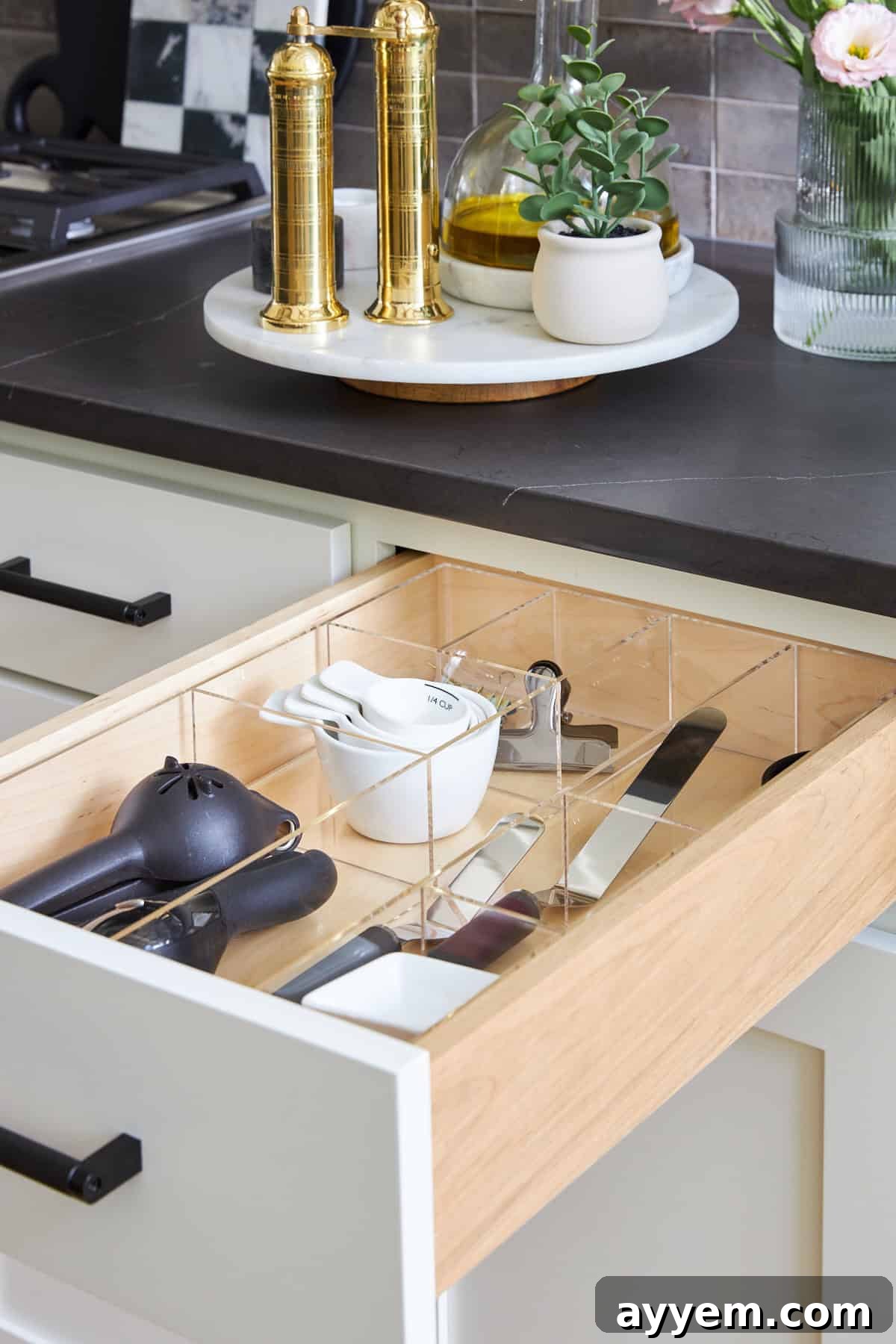
Organizing counters is really about deciding what you use often enough to justify permanent placement and what can be stored elsewhere. You don’t need to hide everything, but you also don’t want so much out that your prep area becomes unusable. The good news: counter organization doesn’t have to be expensive or time-consuming. A focused 15–30 minute session to sort, clear, and relocate items usually makes a big difference. Often a quick reshuffle of cabinets or drawers is all that’s necessary.
Does It Earn Its Spot?
A practical rule of thumb is frequency of use. If you use an item daily or almost daily, it likely earns a counter spot. If it’s used infrequently, consider storing it. This will naturally vary by household: a family that makes toast every morning will want the toaster on the counter, while a seldom-used appliance can be stored to free up workspace.
Also consider convenience. A large cutting board or mixing bowl that you use constantly may take up more space but still be worth keeping on the counter. If pulling an item out of storage interrupts your workflow every time, it’s better kept within reach.
What Usually Deserves Counter Space
There are no absolute rules, but certain items commonly merit staying out because they support daily routines:
Coffee and Tea Supplies – If coffee or tea is part of your morning ritual, keep the coffee maker or kettle accessible. Lids, pods, spoons, and other small items can be organized nearby in a drawer or container so the surface stays tidy.
Everyday Appliances – Appliances you genuinely use every day—like a toaster, blender, or air fryer—can remain on the counter. Practical usage matters more than aesthetic trends that show appliances tucked away.
Knives – A knife block or magnetic strip is a safe, convenient option for knives you reach for often. Avoid tossing sharp knives into drawers where they can dull or become hazardous.
Utensils – A utensil crock near the stove for wooden spoons, spatulas, and tools you grab on the fly keeps prep efficient and frees drawer space.
Oil and Salt – Frequently used seasonings and oils deserve a place on the counter. If you reach for them every time you cook, putting them away only creates extra work.
Bottom line: keep what makes cooking easier and remove what gets in the way. Counter organization should streamline meal prep, not add extra steps.
What Can Probably Go Somewhere Else
Items you rarely use are the simplest candidates to move. Clearing these can create surprisingly large stretches of usable space.
Occasional Appliances – Stand mixers, waffle makers, slow cookers, and similar appliances take up space. Store ones you use seasonally or monthly rather than leaving them on the counter.
Decorations – Decorative pieces are lovely, but too many on prep surfaces get in the way. Limit decor on counters and favor wall decor or functional, attractive tools that add character without reducing workspace.
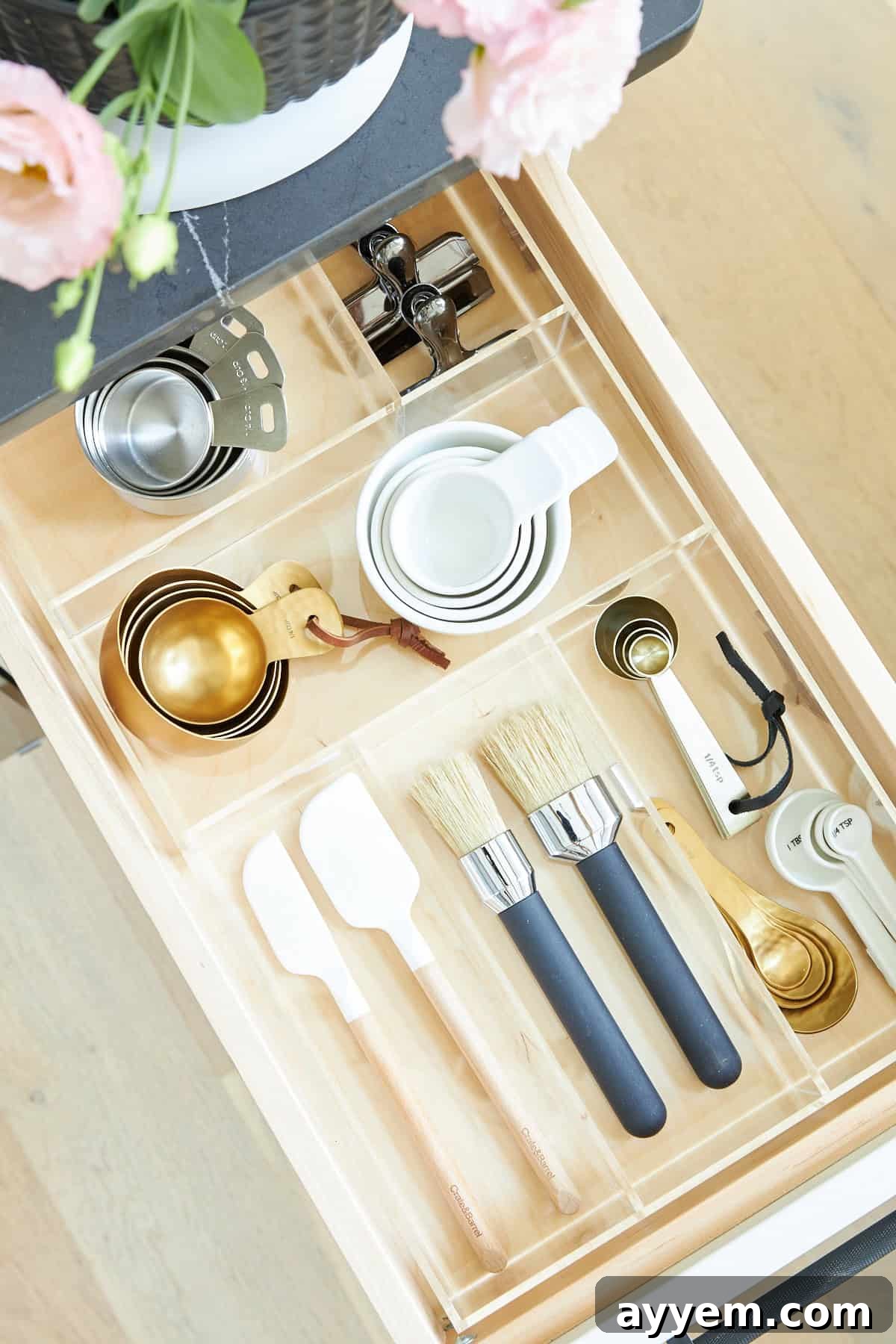
Extra Tools – If you have multiples of the same gadget, keep the versions you actually use and store or donate extras. Use drawer organizers to keep small tools accessible without cluttering counters.
Kitchen Counter Organization Ideas for Everything That Stays
Once you decide what remains, arrange those items based on where you use them. Grouping like items makes the space more efficient and visually calmer.
Keep coffee supplies by the coffee maker and utensils near the stove. Small systems and proximity are more useful than aesthetic symmetry when it comes to functionality.
Use Trays – Place oils, salt, pepper, and other frequently used small items on a tray. Trays corral items, look intentional, and make cleaning or clearing the area simple.
Try a Caddy or Container – Designated containers keep utensils and gadgets orderly. A small caddy or utensil holder prevents items from scattering across the counter.
Keep Things Where You Use Them – Store tools where you actually use them. If a certain spice or cutting board is used near the stove or prep zone, keep it there for convenience rather than moving it to a distant cabinet.
Give Mail and Keys Their Own Spot – If the kitchen becomes the household drop zone, assign a specific area for mail, keys, and everyday items, positioned away from food prep surfaces to maintain hygiene and reduce clutter.
Rotate What You Keep Out
Rotate counter items seasonally or by current needs. Heavy appliances you use intensively for a season, like a stand mixer during holiday baking, can remain on the counter temporarily and be stored when not required.
Similarly, summer coffee or beverage setups can be more prominent during warm months and simplified when seasons change. When storing items, keep them in locations that still make sense for how you use the kitchen to maintain efficiency.
Common Mistakes
If counters still feel crowded, check for these common missteps:
Keeping Everything Out – Just because several appliances get occasional use doesn’t mean they all need concurrent counter space. Prioritize by daily use and by the practicality of leaving heavy items accessible.
Letting Mail and Papers Pile Up – Mail tends to multiply. Deal with it regularly or designate a small bin or clipboard to prevent piles from overtaking the prep area.
Putting Too Much Away – Counter minimalism can be attractive, but don’t sacrifice practicality. If an appliance or tool supports your daily routine, keep it accessible even if it alters the look of your counters.
Using Prep Space for Excessive Decor – Maintain the items you love but preserve functional prep areas so you don’t need to clear space every time you cook.
FAQs About Kitchen Counter Organization
Keep items you use every day or almost every day within easy reach: coffee makers, toasters, knife blocks, a utensil crock, a commonly used cutting board, and frequently used seasonings. Decide based on your personal cooking habits.
Avoid leaving rarely used appliances, piles of mail or paperwork, and tools that constantly get in your way. Also, any perishable food that requires refrigeration should be stored properly.
Evaluate frequency of use and convenience. Daily-use items can stay; weekly or occasional items can be stored and pulled out when needed. Smart cabinet or drawer placement helps keep stored items accessible.
Keep the machine, mugs, and daily supplies together. Use a tray for smaller items and a nearby drawer or container for extra pods, filters, or tea bags.
They can if you have room and it makes your routine easier. Otherwise store them and bring them out during the weeks or seasons you use them more frequently.
Reassess every few months or whenever counters start to feel crowded. Seasonal habits and changing needs are good prompts to rearrange and optimize your setup.