
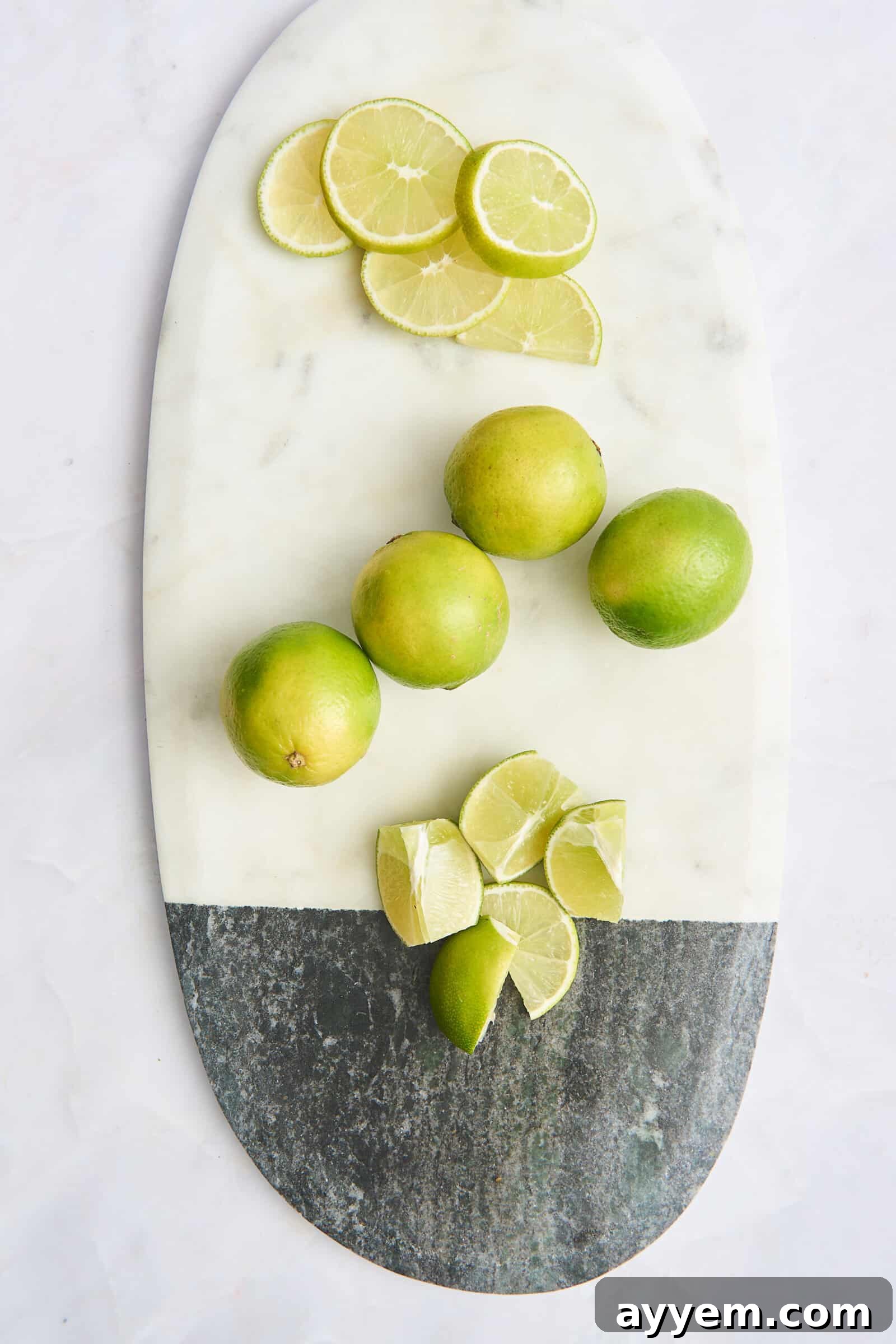
Dive into the refreshing world of limes! This comprehensive guide will transform you into a lime-cutting expert, from selecting the finest fruits to mastering various slicing techniques. You’ll learn essential tips for storing limes to maintain their peak freshness and discover a multitude of fantastic ways to infuse your culinary creations with their signature sweet, tart, and zesty flavor.
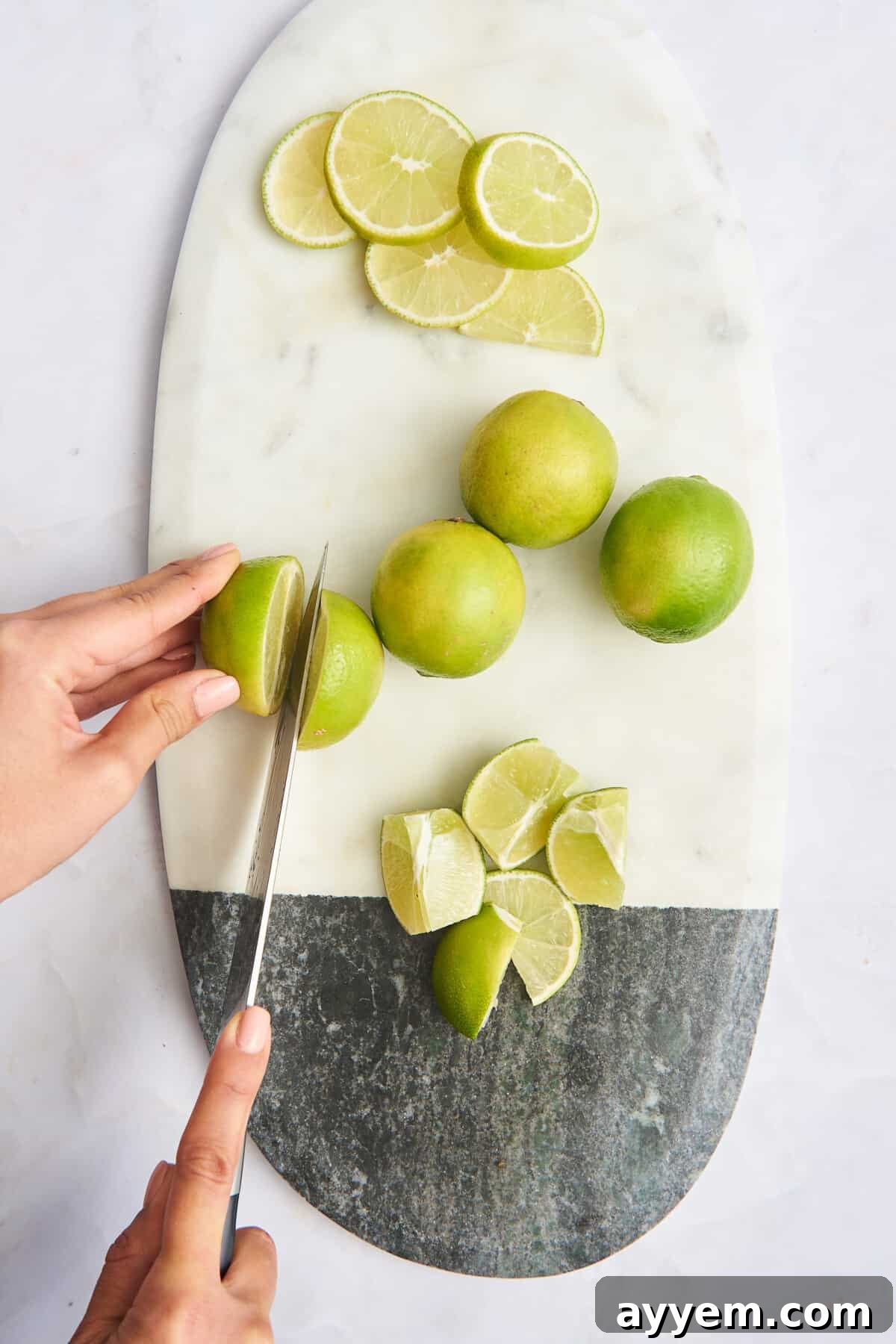
How to Pick the Perfect Lime
Choosing the right lime is the first step to maximizing its flavor and juiciness. While many assume the greenest limes are best, the ideal choice often depends on your desired taste profile and how you plan to use it. Understanding the nuances of lime selection will ensure you always pick a winner from the produce aisle.
Color Considerations: Beyond Just Green
Contrary to popular belief, the “best” lime isn’t always intensely green. Limes actually ripen from green to yellow. A lime that has started to turn slightly yellow often indicates a sweeter, juicier fruit with a less acidic bite. These are perfect for cocktails, desserts, or dishes where a mellower citrus note is desired.
- Bright Green Limes: These are typically harvested younger and will offer a more intensely sour and zesty flavor. They are excellent for savory dishes, marinades, or anything that benefits from a strong citrus kick.
- Yellow-Green to Pale Yellow Limes: As limes mature, their color shifts. These limes tend to be juicier and have a slightly sweeter, less acidic taste. They are often preferred for juicing, or for a subtler lime flavor in recipes.
Sensory Cues for Quality Limes
Beyond color, your senses are your best tools for selecting high-quality limes:
- Weight: Pick up a few limes. The heaviest ones for their size usually contain the most juice. A heavy lime indicates it’s plump and full of the refreshing liquid you’re looking for.
- Firmness: Gently squeeze the lime. It should feel firm but have a slight give. Avoid limes that are rock-hard (they might be dry inside) or those that are too soft or squishy (a sign of overripeness or spoilage).
- Skin Texture: Look for limes with smooth, taut skin. While some minor blemishes are natural, avoid any with soft spots, mold, or wrinkly skin, which can indicate dehydration or age. A dull skin can also mean it’s older.
- Aroma: Give the lime a gentle scratch with your fingernail and smell it. A fresh, vibrant lime will release a strong, aromatic citrus scent. If there’s little to no scent, it might not be as flavorful.
By following these simple tips, you’ll consistently choose limes that are bursting with flavor and juice, ready to elevate any dish or drink.
How to Cut a Lime
Mastering various lime cutting techniques is crucial for efficient cooking, elegant garnishing, and maximizing juice extraction. Whether you need decorative rounds for cocktails, sturdy wedges for squeezing, or small pieces for specific recipes, knowing the proper method will make all the difference. We’ll guide you through the most common cuts, ensuring you get the most out of every lime.
Essential Preparation Steps for Cutting Limes
Before you begin any cutting method, a little preparation goes a long way:
- Wash Your Limes Thoroughly: Even if you don’t plan to use the peel, it’s essential to wash limes under cool running water. This removes any dirt, pesticides, or wax from the surface, especially important if you intend to zest the lime or if the peel might come into contact with your food or drink.
- Dry the Limes: Use a clean kitchen towel to thoroughly dry the limes. A dry surface helps prevent slipping while cutting, ensuring safety and precision.
- Remove Stickers: Always check for and remove any stickers on the fruit. These are not edible and can interfere with cutting or zesting.
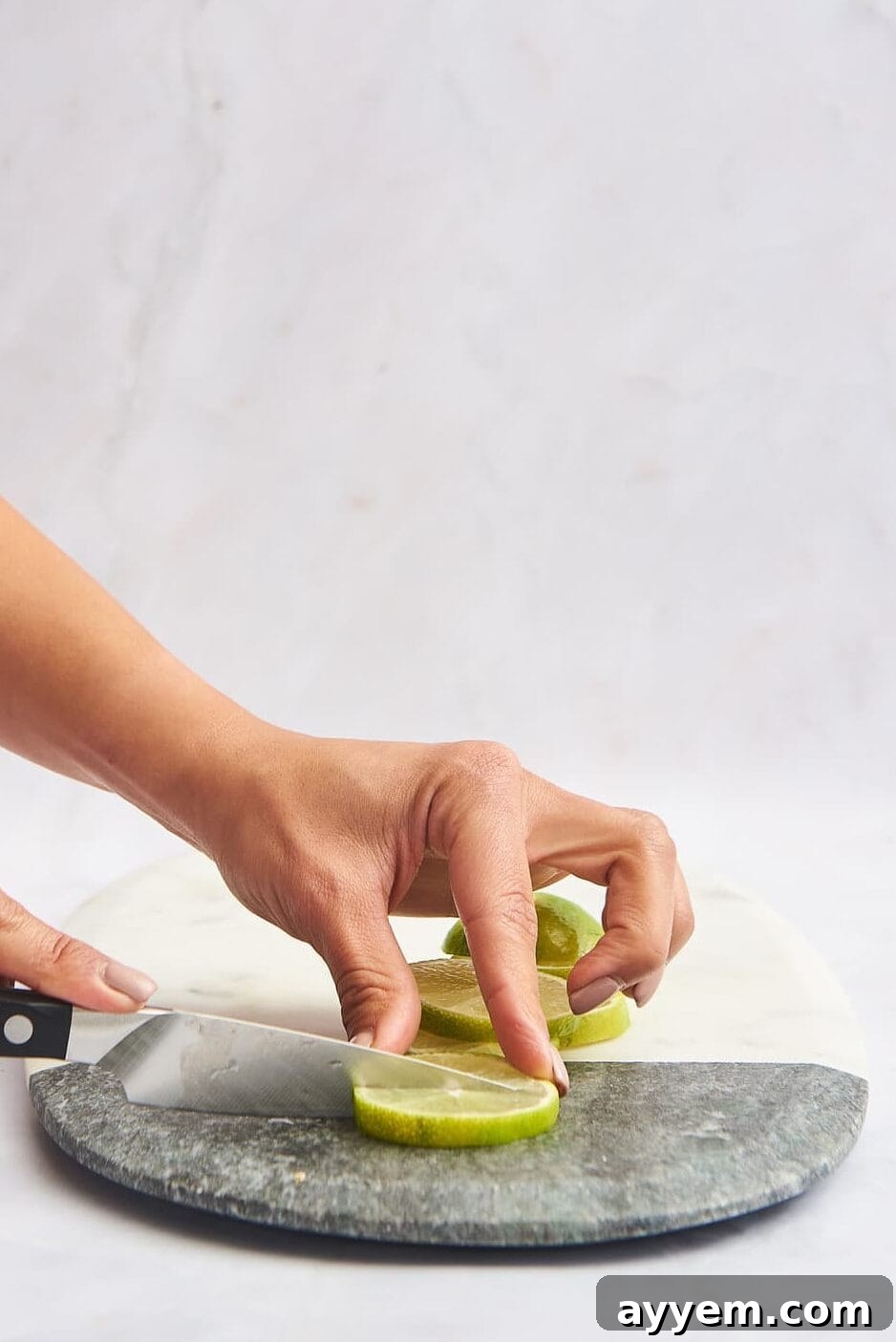
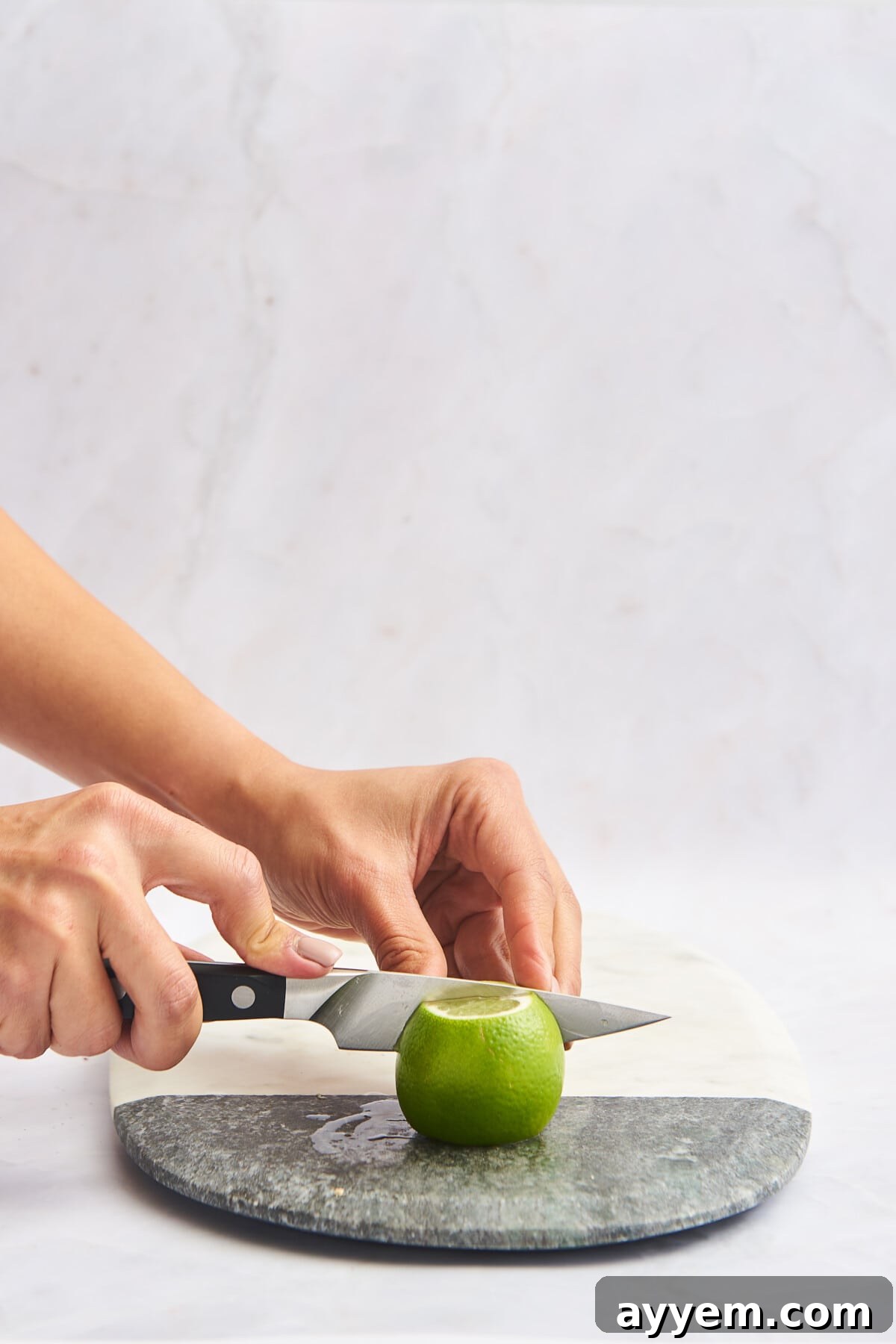
- “Top and Tail” the Lime: Using a sharp chef’s knife or paring knife, carefully slice off both ends of the lime (the stem and blossom ends). This creates a flat, stable surface on both sides, making the lime much safer and easier to handle on your cutting board. It also helps to expose the juicy flesh, making subsequent cuts more efficient.
Cutting Limes into Wedges/Slices
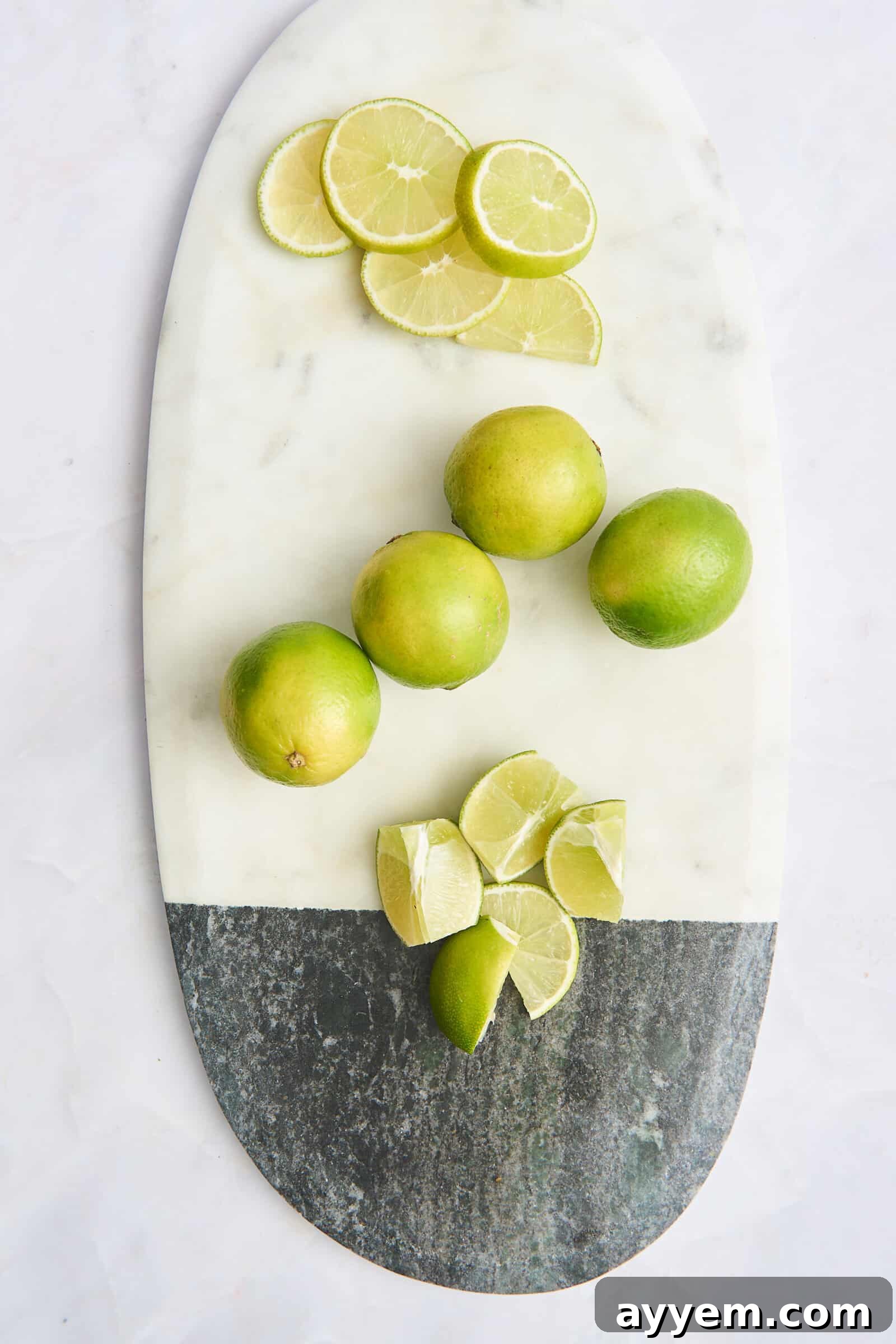
Lime wedges are ideal for squeezing over food, adding to beverages, or as a simple garnish. Slices offer a slightly thinner profile, perfect for adding directly into drinks or dishes.
- Halve the Lime Lengthwise: Stand the “topped and tailed” lime upright on your cutting board. Carefully slice it in half lengthwise, from one flat end to the other.
- Create Quarters: Place each half flat-side down. Cut each half in half again lengthwise. This will give you four long, crescent-shaped quarters.
- Slice into Wedges: Take each quarter and slice it crosswise into two or three pieces, depending on your desired thickness and size. For standard wedges suitable for cocktails or squeezing, aim for pieces about 1/2 to 3/4 inch thick at their widest point.
- Adjusting Wedge Size: If you need smaller wedges (e.g., for certain garnishes or specific dishes), you can continue to cut the larger wedges down into halves, fourths, or even eighths.
PRO TIP for Juicy Wedges: For maximum juice, slightly angle your knife (about forty-five degrees) when making the final cuts for wedges. This exposes more of the juicy interior when squeezed.
Cutting Limes into Rounds (Wheels)
Lime rounds or wheels are aesthetically pleasing, making them perfect for garnishing cocktails, glasses of water, or plating desserts.
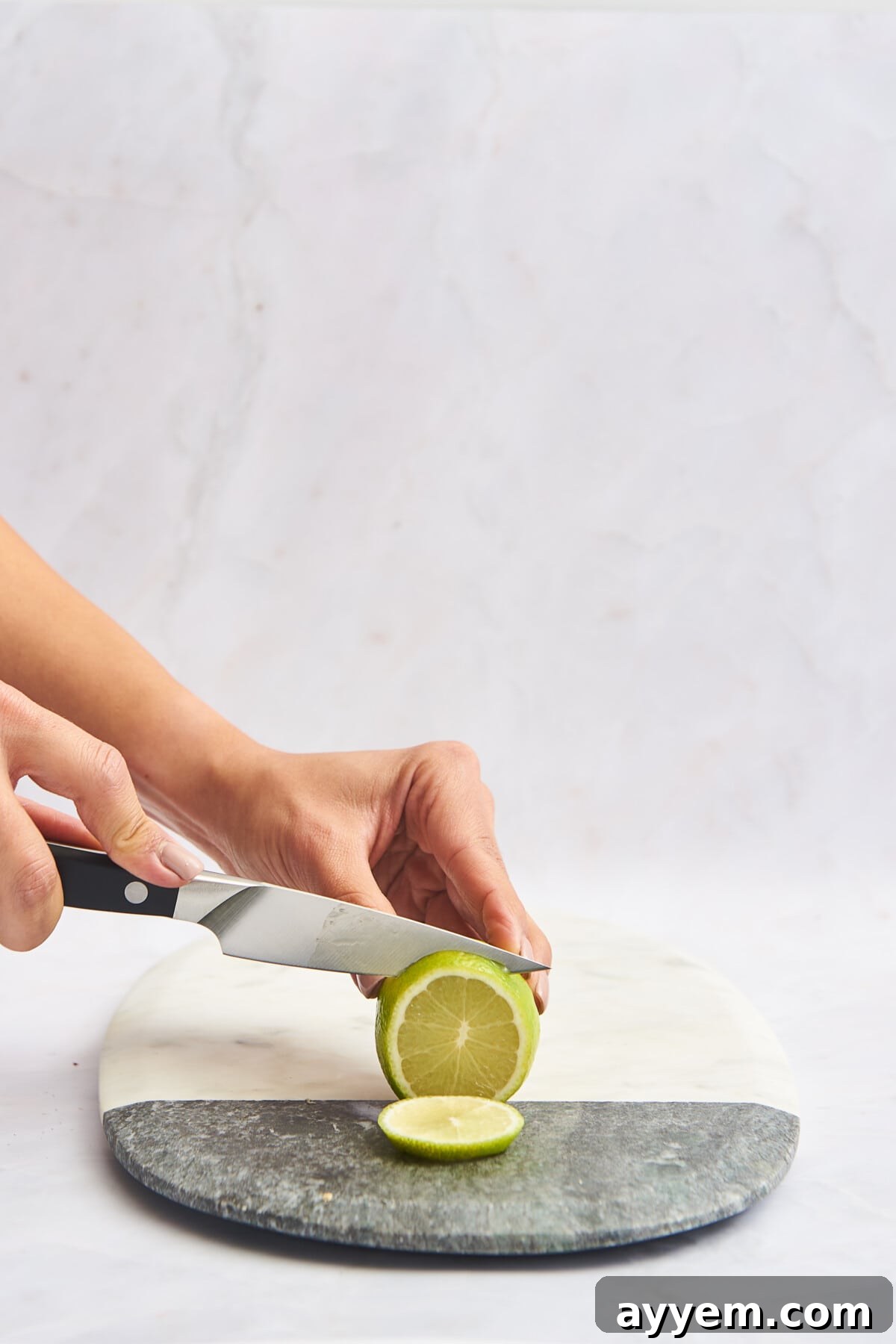
- Place Lime Flat: After “topping and tailing” your lime, place it on its side on the cutting board.
- Slice Widthwise: Using your sharp knife, begin slicing widthwise across the lime to create circular rounds. Adjust the thickness based on your preference; thinner slices are generally more elegant for garnishes, while slightly thicker ones hold up better in drinks.
Creating Half-Moons or Segments
Half-moons are simply rounds cut in half, offering a slightly different visual appeal, while segments are peeled, membrane-free pieces of lime flesh, often used in salads or delicate dishes.
- For Half-Moons: Simply take your prepared lime rounds and slice each one in half.
- For Segments (Supremes): This method is a bit more advanced.
- Start with a “topped and tailed” lime. Using a sharp paring knife, carefully slice away the peel, including the white pith, following the natural curve of the lime. Try to remove as little of the flesh as possible.
- Once peeled, hold the lime over a bowl. Carefully cut between the membranes of each segment, releasing the juicy flesh. Discard the membranes.
Zesting a Lime: Harvesting Aromatic Oils
While not strictly “cutting,” zesting is a fundamental way to utilize the lime’s flavorful outer peel, or zest, which is rich in aromatic oils. A microplane grater is the best tool for this.
- Wash and Dry: Ensure your lime is thoroughly washed and dried.
- Grate Carefully: Hold the microplane over a bowl or cutting board. Gently rub the lime against the grater, rotating it as you go. Only remove the bright green part of the peel, avoiding the bitter white pith underneath.
- Uses: Lime zest adds intense flavor and aroma to baking, marinades, dressings, and cocktails without adding extra liquid or tartness.
Common Questions About Limes
Here are answers to some frequently asked questions about cutting, storing, and using limes.
Can you eat a lime peel?
Yes, lime peels are edible and highly aromatic! The zest, which is the outermost green layer of the peel, is widely used in cooking and baking to add concentrated lime flavor and a vibrant pop of color. It’s fantastic in marinades, dressings, desserts, and even savory dishes. The entire peel, while edible, tends to be quite bitter due to the white pith underneath. Some people boil lime peels to make a tea or infuse liquids, often sweetening them or combining them with other ingredients to balance the bitterness. Always wash your limes thoroughly before consuming any part of the peel.
How long do cut limes last?
Once limes are cut, their exposed flesh begins to dry out and lose flavor more quickly. To maximize their freshness, transfer sliced or cut limes to an airtight container or a resealable plastic bag. Store them in the refrigerator, and they will typically stay fresh for about five to seven days. For best flavor and juiciness, it’s always recommended to use them sooner rather than later.
Can you freeze limes once they’re cut?
Absolutely! Freezing is an excellent way to preserve cut limes for longer periods. Limes, whether whole, sliced, or as juice, can be frozen for four to six months. For cut pieces, we recommend flash-freezing them first to prevent them from sticking together. To do this, arrange the lime pieces (wedges, rounds, or halves) in a single layer on a baking sheet lined with parchment paper. Place the baking sheet in the freezer for a couple of hours or until the pieces are solid. Once frozen solid, transfer them to a freezer-safe airtight container or heavy-duty freezer bag. This method allows you to grab just a few pieces as needed without thawing the entire batch.
How do I cut a lime to make it look fancy?
For an elevated presentation, consider these fancy cuts:
- Thin Wheels: Ultra-thin slices arranged artfully can look very elegant. Use a very sharp knife for best results.
- Half-Moons: Simply cut your thin wheels in half. These look great rimming a glass or layered on a plate.
- Decorative Twists: Make a small slit from the center of a lime wheel to the edge. You can then twist the ends in opposite directions to create a spiral.
- Curled Zest Ribbons: Use a vegetable peeler or a channel knife to create long, thin strips of zest. Curl them tightly around a chopstick or your finger, then release for a beautiful garnish.
- Notched Wedges: Before cutting a lime into wedges, make small V-shaped notches along the length of the fruit. When sliced, each wedge will have a decorative edge.
A small, sharp paring knife is your best friend for intricate cuts and elegant garnishes. Precision is key for a polished presentation!

The Wonderful Health Benefits of Limes
Beyond their delightful flavor, limes are packed with nutritional goodness, offering several health benefits that make them a valuable addition to your diet. They are low in calories and sugar but high in beneficial compounds.
- Rich in Vitamin C: Limes are an excellent source of Vitamin C, a powerful antioxidant that supports the immune system, promotes collagen production for healthy skin, and helps protect cells from damage caused by free radicals.
- Boosts Immunity: The high Vitamin C content helps stimulate the production of white blood cells, which are crucial for fighting off infections and illnesses.
- Aids Digestion: The acidity of limes can help break down food, aiding in digestion. Some traditional medicines even use lime for digestive issues.
- Promotes Skin Health: Vitamin C and other antioxidants in limes contribute to healthy, youthful skin by reducing oxidative stress and supporting collagen synthesis, which keeps skin firm and elastic.
- May Help Lower Blood Sugar: Some studies suggest that the soluble fiber in limes can help moderate blood sugar absorption, potentially reducing the risk of type 2 diabetes.
- Hydration: Adding lime juice to water is a refreshing way to encourage hydration, especially if you find plain water unappealing.
- Anti-inflammatory Properties: Limes contain compounds called flavonoids that have anti-inflammatory effects, which can be beneficial for reducing inflammation in the body.
Incorporating limes into your daily routine, whether through cooking, beverages, or even simple lime water, is a delicious way to enjoy these health-boosting properties.
Fantastic Ways to Use Limes
The versatility of limes knows almost no bounds! From culinary applications to refreshing drinks and even household uses, this vibrant citrus fruit can add a unique zing. Here are countless ways to incorporate limes into your life:
In the Kitchen: Savory Dishes
- Marinades: Lime juice is a fantastic tenderizer and flavor enhancer for chicken, fish, shrimp, and beef. Its acidity breaks down proteins and infuses a bright flavor.
- Dressings & Sauces: Whisk lime juice into vinaigrettes, or create creamy sauces for tacos, salads, or grilled proteins.
- Mexican & Thai Cuisine: An essential ingredient in guacamole, salsas, ceviche, curries, and noodle dishes like Pad Thai.
- Roast Vegetables: Squeeze lime juice over roasted broccoli, asparagus, or sweet potatoes for a refreshing finish.
- Soups & Stews: A squeeze of fresh lime juice at the end can brighten up heavy soups or stews, especially lentil or bean-based dishes.
- Fish & Seafood: Classic pairing! Lime enhances the delicate flavors of fish and seafood and helps to “cook” ceviche.
- Rice Dishes: Add zest and juice to rice for a flavorful side, such as cilantro-lime rice.
Refreshing Drinks & Cocktails
- Classic Cocktails: Indispensable for margaritas, mojitos, daiquiris, and gin and tonics.
- Mocktails & Lemonades: Create delicious virgin mojitos, limeades, or Egyptian Mint Lemonade (Limonana).
- Infused Water: Add slices or wedges to your water bottle for a subtle, refreshing flavor boost.
- Smoothies: A touch of lime juice can cut through sweetness and add brightness to fruit smoothies.
Baking & Desserts
- Pies & Tarts: Key lime pie is just the beginning! Use lime juice and zest in cheesecakes, custards, and fruit tarts.
- Cakes & Cookies: Add zest to cake batters or glazes for a citrusy twist.
- Sorbets & Ice Creams: The tartness of lime makes for incredibly refreshing frozen desserts.
- Fruit Salads: Squeeze a little lime juice over fresh fruit to prevent browning and enhance natural sweetness.
Other Creative Uses
- Aromatic Cleaner: Combine lime juice with baking soda for a natural and fresh-smelling cleaning scrub.
- Odor Neutralizer: Place cut limes in your refrigerator or garbage disposal to combat unpleasant smells.
Here are some specific recipe inspirations that highlight the vibrant flavor of lime:
- Blackened Shrimp with Cilantro Lime Dressing
- Spicy Cilantro Lime Chicken
- Air Fryer Lime Chicken
- Viral Green Goddess Salad
- Egyptian Mint Lemonade (Limonana)
More Essential Kitchen Guides
Expand your culinary skills with these helpful kitchen tutorials:
- How to Cut a Tomato (3 Ways)
- How to Store Ginger
- How to Make a Butter Board
- How to Store Garlic
- How to Cut a Kiwi
How to Cut a Lime
Author: Food Dolls
Servings: 1 serving (adjustable)
Prep Time: 5 mins
Total Time: 5 mins
Learn how to cut a lime into versatile wedges or elegant rounds, discover optimal storage methods, and get expert tips to make the most of this vibrant citrus fruit in your cooking and drinks!
Ingredients
- 1 Lime
Instructions
General Preparation
- Remove any stickers from the lime.
- Using a sharp knife, slice off both ends of the lime to create flat, stable surfaces.
For Wedges/Slices
- Stand the prepared lime up on a cutting board and slice it in half lengthwise.
- Flip each half over so the cut side is down, and slice them again two or three times from end to end, depending on your desired thickness for wedges. If smaller pieces are needed, you can further cut the wedges down into halves, fourths, or even eighths.
For Rounds
- Place the prepared lime on its side on a cutting board. Use a sharp knife to slice widthwise, creating circular rounds as thin or as thick as preferred for garnishes or drinks.
Equipment

1 Sharp Knife

1 Cutting Board
Notes
Storage: Store cut limes in an airtight container in the fridge for up to five to seven days. For longer preservation, keep them frozen for up to six months. For the best results when freezing, flash-freeze the individual lime pieces on a baking sheet before transferring them to a freezer-safe container to prevent sticking.
Nutrition
Serving: 1 serving | Calories: 20kcal | Carbohydrates: 7g | Protein: 0.5g | Fat: 0.1g | Saturated Fat: 0.01g | Polyunsaturated Fat: 0.04g | Monounsaturated Fat: 0.01g | Sodium: 1mg | Potassium: 68mg | Fiber: 2g | Sugar: 1g | Vitamin A: 34IU | Vitamin C: 20mg | Calcium: 22mg | Iron: 0.4mg
Nutrition information is automatically calculated and should only be used as an approximation. Actual values may vary based on specific product brands and preparation methods.
We hope this guide empowers you to confidently pick, cut, and enjoy limes in all their zesty glory! Experiment with different cuts and discover new ways to bring a burst of fresh citrus flavor to your culinary adventures. Happy cooking!