
Hibiscus Tea (Karkarde): Your Ultimate Guide to a Refreshing Egyptian Elixir
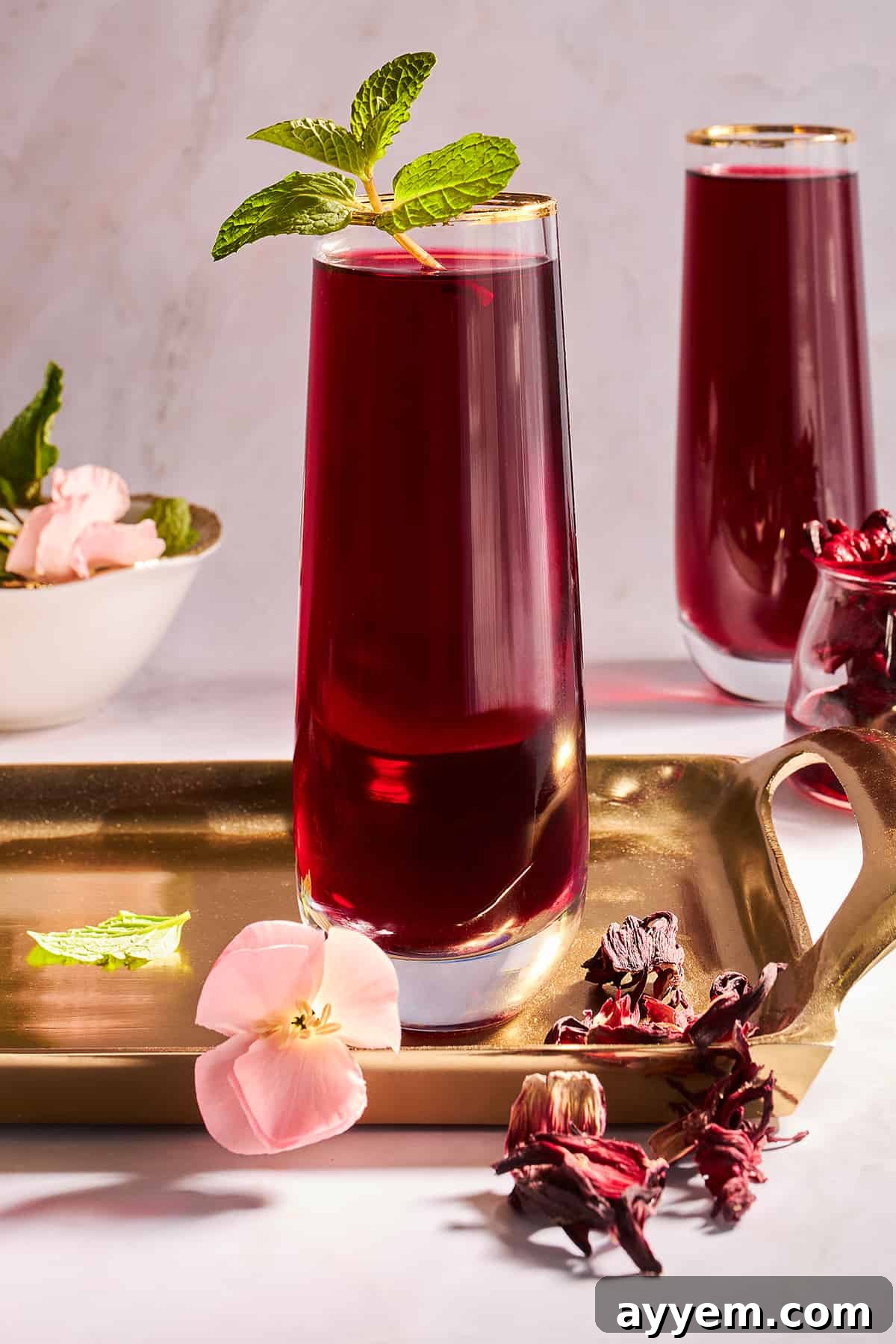
Embark on a delightful culinary journey to Egypt with this authentic hibiscus tea recipe, affectionately known as Karkarde. This vibrant herbal tea, a staple in Egyptian culture, promises a captivating blend of sweet and tart flavors. Our recipe begins by steeping premium dried hibiscus flowers, carefully balanced with just the right amount of sugar to create a harmonious taste. Once steeped to perfection, it’s strained and traditionally garnished with fresh mint sprigs, transforming it into a visually stunning and incredibly delicious beverage.
Served chilled, Karkarde is more than just a drink; it’s a refreshing escape, a thirst-quenching elixir that invigorates your senses and cools you down, especially on warm days. Its deep red hue and complex flavor profile make it a memorable drink for any occasion, from casual family gatherings to festive celebrations.
What Is Karkarde? A Deep Dive into Egypt’s Beloved Hibiscus Tea
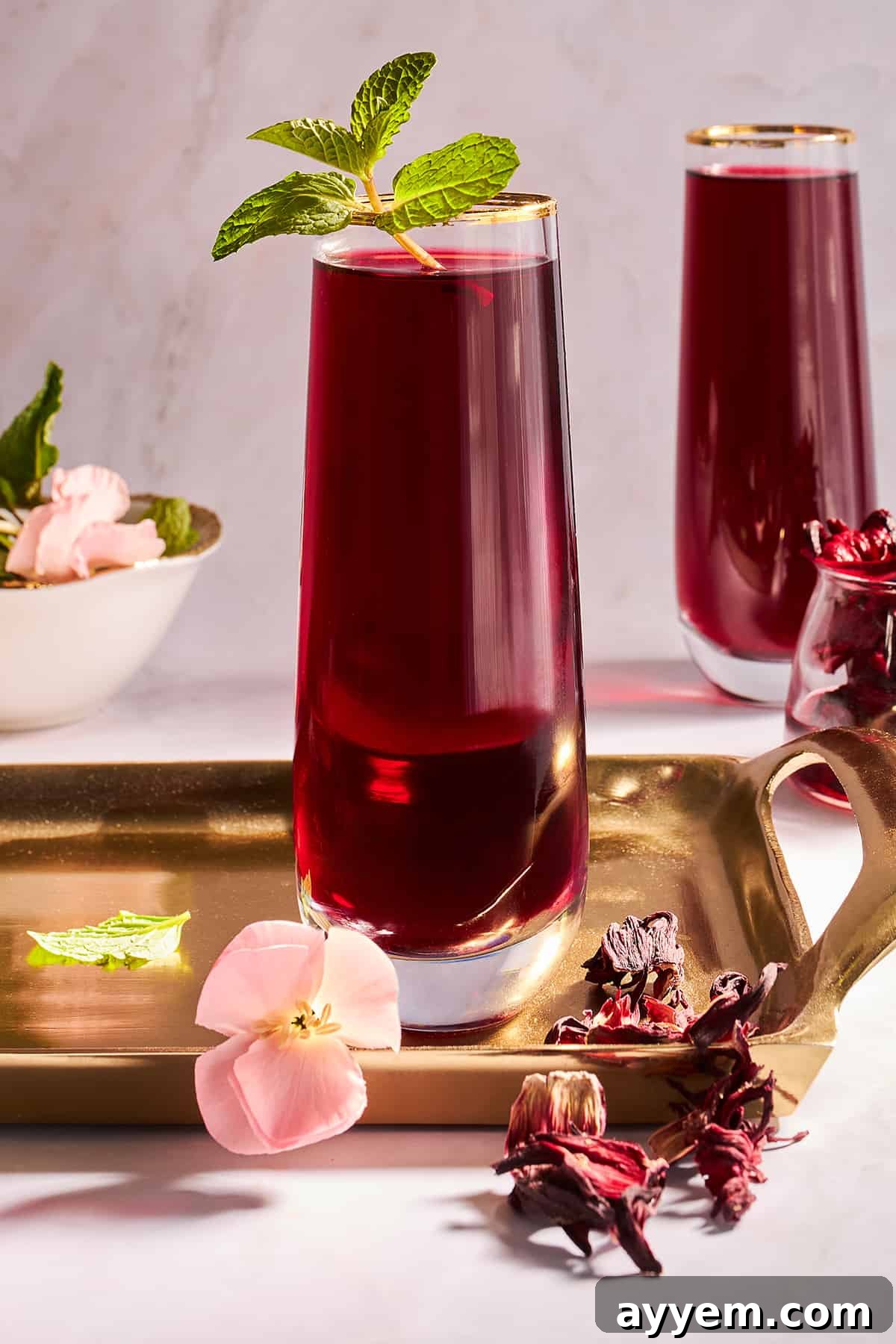
Karkarde, pronounced “kar-kar-day,” is the Egyptian name for hibiscus tea, a beloved beverage deeply rooted in the country’s history and traditions. It is an herbal infusion made from the dried calyces of the Hibiscus sabdariffa plant, also known as roselle. While hibiscus tea is enjoyed worldwide, the Egyptian Karkarde boasts a unique cultural significance and preparation method passed down through generations.
The history of hibiscus in Egypt dates back to ancient times. The plant, native to Africa, was highly valued by the ancient Egyptians not only for its striking beauty but also for its perceived medicinal properties. It was believed to have a cooling effect and was often consumed to alleviate thirst and heat. Over centuries, Karkarde evolved into a fundamental part of Egyptian hospitality, offered to guests as a sign of welcome and refreshment.
It’s particularly popular during Ramadan, where it serves as a revitalizing drink after a day of fasting, and is frequently served at weddings, celebrations, and family meals. Our family’s Karkarde recipe, lovingly shared by our mom, carries this rich heritage. We cherish memories of sipping it during hot Egyptian summers as children, and now our own kids delight in its sweet-tart goodness just as much.
Understanding Hibiscus: The Vibrant Flower Behind the Brew
Hibiscus refers to a genus of flowering plants found predominantly in warm, tropical, and subtropical regions around the globe, including Egypt. There are hundreds of species within the Hibiscus genus, showcasing a stunning array of colors like white, yellow, pink, orange, and the deep red variety most commonly used for tea.
For culinary purposes, particularly in beverages like Karkarde, we primarily use the fleshy, cup-shaped sepals known as calyces, which enclose the flower’s petals and ovary. These calyces are harvested after the flower blooms and wilts, then dried. It is these dried calyces, rather than the delicate petals themselves, that impart the characteristic tart flavor and rich ruby-red color to the tea. This specific variety is *Hibiscus sabdariffa*, often called Roselle, and it is distinct from the ornamental hibiscus varieties commonly grown in gardens.
Beyond Beauty: Unveiling the Impressive Health Benefits of Hibiscus Tea
Beyond its striking appearance and delightful taste, hibiscus tea is celebrated for a remarkable array of health benefits that make it a truly nourishing beverage. Rich in antioxidants and other beneficial compounds, incorporating hibiscus into your diet, especially through a delicious Karkarde, can offer several advantages:
- Immune System Boost: Hibiscus is packed with antioxidants, most notably vitamin C, which plays a crucial role in strengthening the immune system and helping your body fight off infections. These antioxidants combat free radicals, protecting your cells from damage.
- Anti-Inflammatory Properties: The natural compounds in hibiscus have been shown to possess anti-inflammatory effects, which can help reduce inflammation throughout the body and potentially alleviate symptoms associated with inflammatory conditions.
- Blood Pressure Regulation: Numerous studies suggest that regular consumption of hibiscus tea can significantly contribute to lowering both systolic and diastolic blood pressure, making it a valuable natural remedy for individuals managing hypertension.
- Cholesterol Management: Research indicates that hibiscus tea may help lower levels of “bad” LDL cholesterol and triglycerides, while potentially increasing “good” HDL cholesterol, thus supporting cardiovascular health.
- Antimicrobial Action: Hibiscus extract has demonstrated antibacterial properties, helping to inhibit the growth of certain types of bacteria, which could contribute to overall bodily health.
- Liver Health Support: Some studies suggest that the antioxidants in hibiscus can help protect the liver from damage and improve its function, aiding in detoxification processes.
- Hydration and Weight Management: As a delicious, low-calorie, and caffeine-free beverage, Karkarde is an excellent alternative to sugary sodas and juices, helping you stay hydrated while supporting weight management goals.
Crafting the Perfect Karkarde: Ingredients and Their Role
Below is an overview of the essential ingredients and simple instructions to create this delightful Egyptian Karkarde. For a complete, detailed guide and nutritional information, please refer to the recipe card below.
Essential Ingredients
- Filtered Water: The foundation of any great tea! Using filtered water is crucial as it ensures a clean, pure taste, free from chlorine or other impurities that can alter the delicate flavors of the hibiscus.
- Dried Hibiscus Flowers (Roselle): Sometimes labeled as “Flor de Jamaica,” these are the star of our Karkarde. Look for vibrant, dark red, whole dried calyces rather than powdered forms for the best flavor and color. They are readily available online, in ethnic grocery stores (especially Middle Eastern or Latin American), or in the tea section of larger supermarkets. The quality of your hibiscus significantly impacts the final taste.
- Granulated Sugar: This is added to balance the inherent tartness of the hibiscus, creating a well-rounded and smooth profile. The amount can be adjusted to your personal preference, from mildly sweet to more pronounced. Feel free to substitute with other sweeteners such as honey (for a more floral note), agave nectar, maple syrup, or sugar alternatives like stevia or monk fruit, adjusting quantities as per their sweetness intensity.
- Vanilla Extract: A secret ingredient for many Karkarde recipes! A touch of pure vanilla extract adds an incredible depth of flavor and a subtle, comforting sweetness that beautifully complements the tart hibiscus, elevating the tea beyond a simple infusion.
- Fresh Mint Sprigs: Primarily used as a garnish, fresh mint not only enhances the visual appeal of the tea but also imparts a bright, cooling aroma and a refreshing herbaceous note that perfectly complements the hibiscus.
Step-by-Step Guide: How to Make Authentic Egyptian Hibiscus Tea
- Boil the Water: Begin by adding 10 cups of filtered water to a clean teapot or a medium-sized saucepan. Bring the water to a rolling boil over high heat on your stove. Ensure the water is fully boiling to extract the maximum flavor and color from the hibiscus.
- Prepare the Hibiscus Mixture: While the water is heating, measure out 1 cup of dried hibiscus flowers and 3/4 cup of granulated sugar into a large, heat-safe bowl or pitcher. Mixing the sugar with the dried flowers beforehand helps the sugar dissolve more easily once the boiling water is added.
- Combine and Steep: Once the water has reached a vigorous boil, carefully pour the hot water directly over the dried hibiscus flowers and sugar in the heat-safe bowl. Stir gently to ensure the sugar begins to dissolve.
- Allow to Steep: Let the mixture steep undisturbed for at least 15-20 minutes. During this time, you will witness the magical transformation as the water gradually absorbs the vibrant red pigments and distinctive flavors from the hibiscus, turning into a deep pink, crimson, or even purple hue. For a stronger flavor, you can steep for up to 30 minutes, but avoid over-steeping as it can sometimes lead to a slightly bitter taste.
- Strain the Tea: After the steeping period, use a fine mesh strainer to separate the liquid from the spent hibiscus flowers. Place the strainer over another heat-safe pitcher or large bowl and slowly pour the tea through it. Gently press down on the flowers in the strainer to extract any remaining liquid, then discard the used flowers.
- Flavor and Adjust Sweetness: Stir in 2 teaspoons of vanilla extract into the strained hibiscus tea. This adds a wonderful aromatic dimension. Now is the time to taste the tea and adjust the sweetness to your liking. If you prefer it sweeter, add more granulated sugar, stirring continuously until it completely dissolves. Remember, it will taste slightly different once chilled, so aim for a balance you enjoy now.
- Cool Completely: Allow the tea to cool down to room temperature naturally. This is important before refrigeration to prevent rapid temperature changes that can affect flavor.
- Chill Thoroughly: Once cooled, transfer the pitcher of hibiscus tea to the refrigerator. Chill it for a minimum of 2-3 hours, or ideally, overnight. Serving Karkarde ice-cold is traditional and enhances its refreshing qualities.
- Serve and Enjoy: When ready to serve, fill glasses with ice cubes. Pour the perfectly chilled hibiscus tea over the ice. Garnish each glass generously with fresh mint sprigs for an added touch of freshness and visual appeal. Sip and savor this invigorating Egyptian delight!
Tips for Success: Mastering Your Hibiscus Tea
- Quality Matters: Always opt for high-quality, whole dried hibiscus calyces. Avoid broken pieces or overly dark, dull flowers, which might indicate older stock or poor processing.
- Don’t Over-steep: While steeping longer might seem to yield a stronger tea, going beyond 20-30 minutes can sometimes introduce a more bitter, less pleasant undertone. Find your sweet spot through experimentation.
- Adjust Sweetness While Warm: Sugar dissolves much better in warm liquid. Make your final sweetness adjustments before the tea cools down completely.
- Chill Factor: Karkarde is almost always served very cold. Don’t skip the chilling step, as it significantly impacts the taste experience. You can also prepare it a day in advance for maximum chill.
- Batch Size: This recipe makes a good pitcher for multiple servings. If you’re hosting, consider doubling the recipe.
Storage and Longevity
Once prepared and chilled, Karkarde can be stored in the refrigerator for up to 5-7 days in an airtight container or pitcher. While it remains safe to drink beyond this, its vibrant flavor and color are best enjoyed within the first week. We do not recommend freezing prepared Karkarde, as it can affect the texture and vibrancy of the tea once thawed.
Creative Twists: Exciting Flavor Variations for Your Karkarde
While the traditional Karkarde recipe is perfect as is, feel free to get creative and experiment with different ingredient ratios and mix-ins to make this hibiscus tea truly your own. Some fun ways to switch it up and explore new dimensions of flavor include:
- Sparkling Hibiscus Refresher: For a bubbly twist, dilute your chilled Karkarde with sparkling water or club soda just before serving. A squeeze of fresh lime juice will add an extra zesty kick, making it an excellent mocktail or light mixer.
- Warm Spiced Hibiscus: If you’re craving a comforting beverage, skip the chilling step and serve the Karkarde warm. Enhance its warmth by steeping a cinnamon stick or two, a few whole cloves, or a slice of fresh ginger along with the hibiscus flowers. These spices infuse a beautiful aroma and a subtle depth that’s perfect for cooler evenings.
- Citrus Burst: Add thin slices of orange, lemon, or lime to the steeping mixture or as a garnish. The citrus notes beautifully complement the tartness of the hibiscus. A splash of fresh citrus juice (orange, lemon, or grapefruit) stirred in before serving can also brighten the flavor profile.
- Berry Infusion: For a fruiter Karkarde, add a handful of fresh or frozen mixed berries (like raspberries or blueberries) to the hibiscus and sugar mixture before pouring in the boiling water. The berries will slightly sweeten and add another layer of fruity complexity.
- Herbal Harmony: Beyond mint, consider experimenting with other fresh herbs for garnishing or steeping. A sprig of fresh basil, a few cardamom pods, or a hint of star anise can introduce intriguing aromatic notes.
- Adult Version: Karkarde makes an excellent base for cocktails. Mix it with your favorite white rum, vodka, or gin for a uniquely Egyptian-inspired alcoholic beverage.
Pairing Perfection: Serving Suggestions for Every Occasion
Hibiscus tea (Karkarde) is incredibly versatile and makes for a delightful addition to almost any meal or moment. It’s a fantastic afternoon pick-me-up and a natural choice to curb those soda cravings. Prepare a large pitcher to effortlessly serve at your next brunch, lunch, or as a vibrant accompaniment to snacks and desserts!
It pairs fabulously with a range of dishes, especially those with Middle Eastern or Mediterranean flavors:
- Ful Medames Beans: The earthy richness of Egyptian ful medames finds a refreshing contrast in the tartness of Karkarde.
- Blender Banana Bread: The sweet, comforting notes of banana bread are beautifully balanced by the bright, fruity tea.
- Mezze Platter: A colorful mezze platter featuring hummus, olives, and fresh vegetables is perfectly complemented by this refreshing drink.
- Phyllo Rolls with Ground Beef: The rich, savory flavors of phyllo rolls are lightened and balanced by the tart hibiscus tea.
- Pita Chips and Hummus: A classic snack duo that becomes even more enjoyable with a glass of Karkarde.
Your Karkarde Questions Answered: FAQs
Hibiscus tea has a distinctive flavor profile that is both tangy and slightly fruity, often compared to cranberries or pomegranates. It also carries subtle floral notes, making it unique among herbal teas. You can customize its taste by adding more or less sweetener, creating a spectrum from boldly tart to pleasantly sweet. Either way, its flavor is bright, refreshing, and incredibly invigorating.
Dried hibiscus calyces (often referred to as petals or flowers) are widely available. You can typically find them at Middle Eastern, Latin American, or Asian grocery stores, specialty tea shops, or health food stores. They are also easily purchased online through various retailers. Look for packages labeled “dried hibiscus flowers,” “flor de jamaica,” or “roselle.”
Yes, hibiscus tea is naturally caffeine-free! This makes it an excellent beverage choice for any time of day, whether you’re looking for a morning pick-me-up without the jitters, a refreshing afternoon drink, or a soothing evening sip that won’t interfere with your sleep. It’s a fantastic alternative for those avoiding caffeine.
Absolutely! Karkarde is wonderfully adaptable. We love enhancing it with a cinnamon stick, a few whole cloves, or a few slices of fresh ginger steeped alongside the hibiscus for a warm, spicy undertone. For a citrusy burst, add orange or lemon peel while it steeps, or stir in a splash of fresh orange, lemon, or lime juice before serving. You can also experiment with other fruits like berries for a deeper fruity note.
Traditionally, Karkarde is most commonly served well-chilled, especially in Egypt where it’s valued for its cooling properties in a hot climate. However, it can also be enjoyed warm, particularly as a comforting spiced beverage during cooler weather. The choice depends on your preference and the occasion!
Explore More Egyptian & Middle Eastern Culinary Delights
If you’re looking for more authentic recipes to transport your taste buds to Egypt and the wider Middle East, we’ve got you covered! Discover these delicious offerings:
- Egyptian Mint Lemonade (Limonana)
- Fakhfakhina (Egyptian Fruit Salad)
- Kahk Cookies (Egyptian Eid Cookies)
- Egyptian Bread Pudding (Om Ali)
- Dried Fruit Compote Drink (Khoshaf)
Hibiscus Tea Recipe (Karkarde)
Food Dolls
6
servings
5
mins
20
mins
25
mins
Print Recipe
Email Recipe
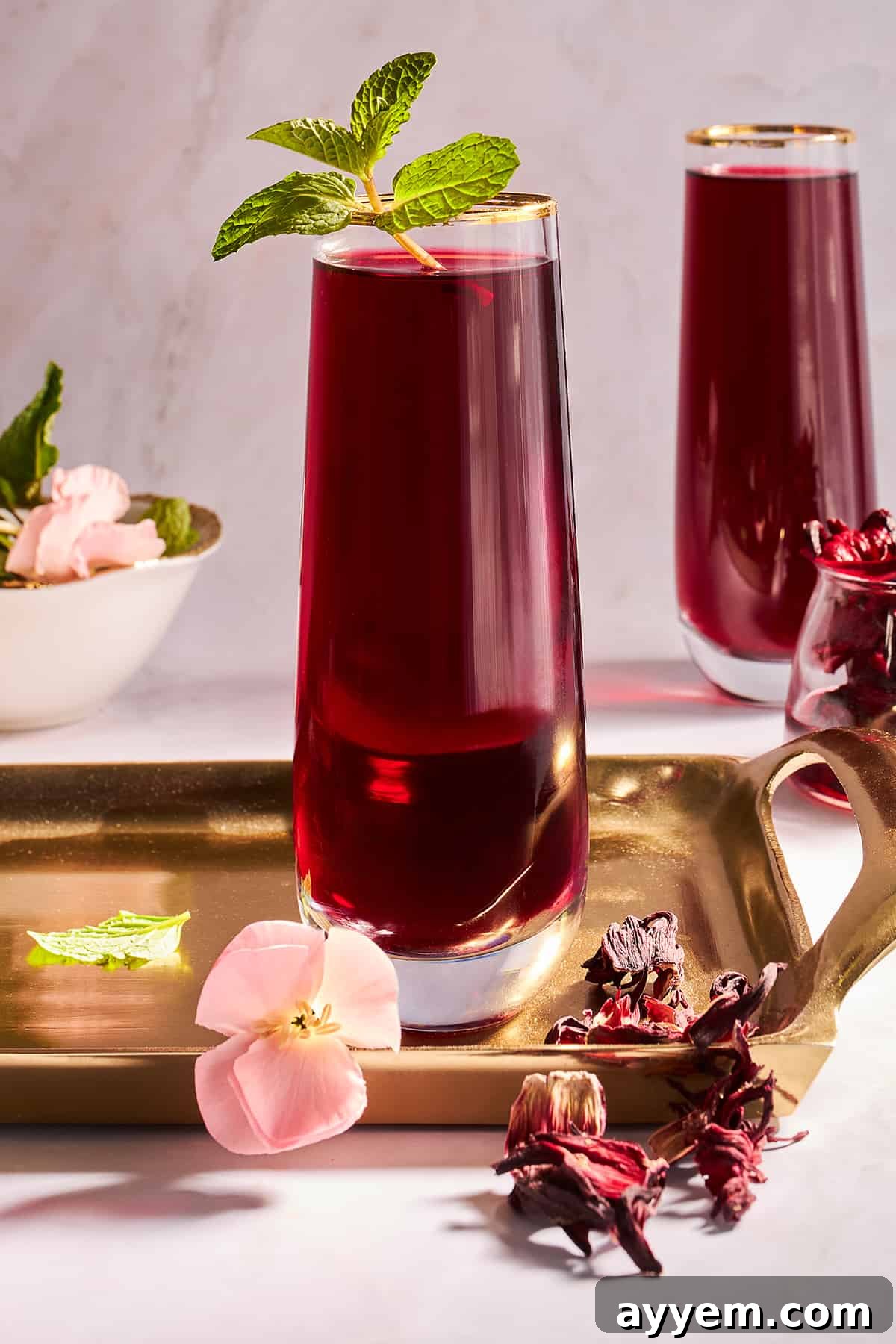
Make this easy hibiscus tea recipe (Karkarde) with just five ingredients for a sweet, tart, refreshing drink full of health benefits!
Ingredients
-
10
cups
filtered water -
1
cup
dried hibiscus flowers -
3/4
cup
granulated sugar
adjust to taste -
2
teaspoons
vanilla extract
-
Fresh mint sprigs
for serving
Instructions
-
In a teapot or saucepan, bring the filtered water to a boil.10 cups filtered water
-
In a large, heat-safe bowl, combine the dried hibiscus flowers and granulated sugar.1 cup dried hibiscus flowers,
3/4 cup granulated sugar -
Once the water is boiling, carefully pour it over the hibiscus flowers and sugar in the heat-safe bowl.
-
Let the mixture steep for 15-20 minutes until it reaches a deep pink or purple color.
-
After steeping, strain the mixture using a fine-mesh strainer over a heat-safe glass pitcher or bowl. Discard the hibiscus flowers.
-
Stir in the vanilla extract.2 teaspoons vanilla extract
-
Taste the tea and adjust sweetness if necessary by adding more sugar, stirring until dissolved.
-
Allow the tea to cool completely to room temperature.
-
Once cooled, transfer the pitcher or bowl to the refrigerator and chill for a few hours until very cold.
-
Serve the chilled hibiscus tea over ice, garnished with fresh mint sprigs.Fresh mint sprigs
Equipment
Nutrition
Serving:
1
serving
|
Calories:
100
kcal
|
Carbohydrates:
25
g
|
Fat:
0.1
g
|
Sodium:
22
mg
|
Potassium:
10
mg
|
Sugar:
25
g
|
Vitamin A:
117
IU
|
Calcium:
15
mg
|
Iron:
0.05
mg
Nutrition information is automatically calculated, so should only be used as an approximation.
Like this recipe?
Please leave a comment!