
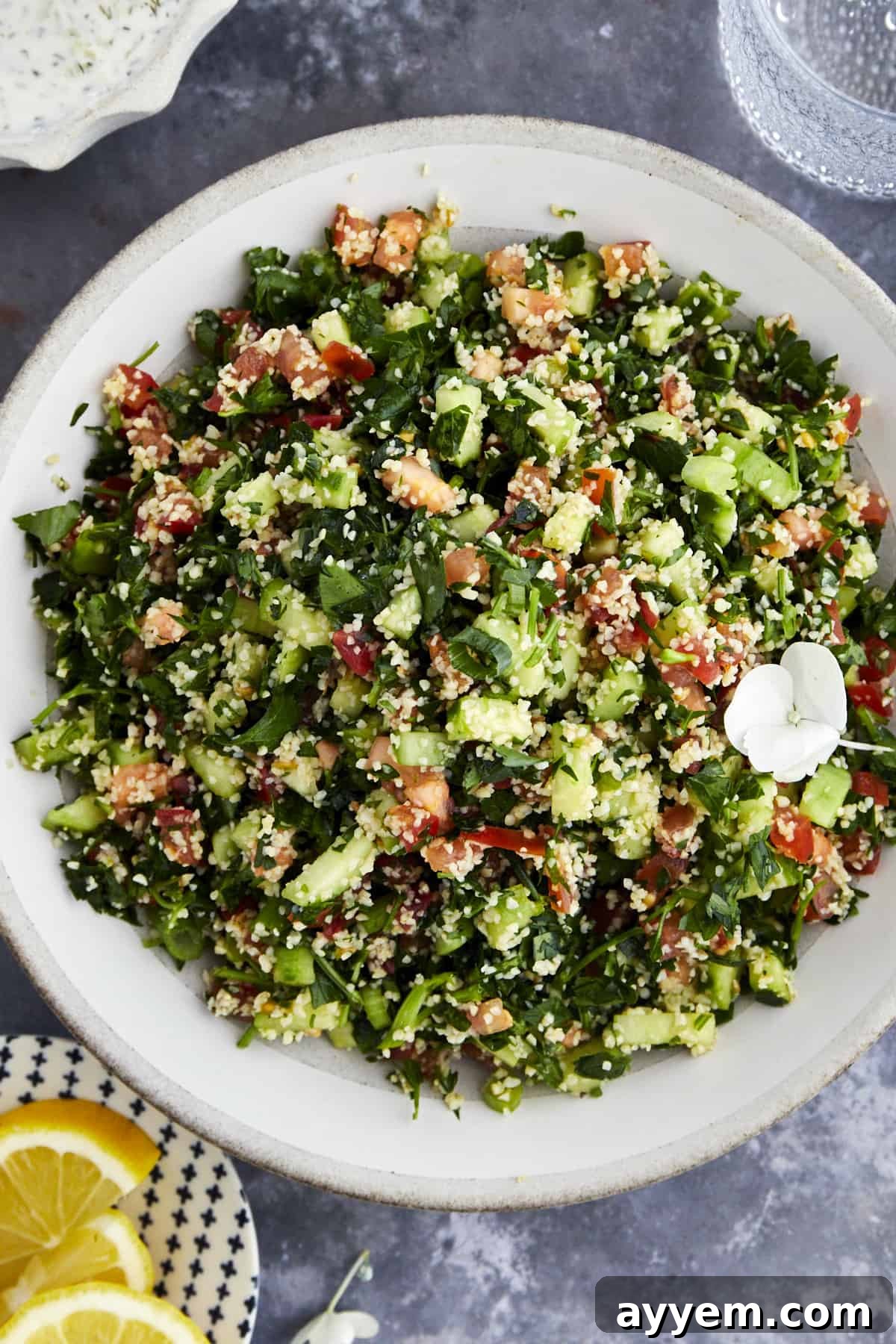
This Easy Tabbouleh Salad recipe, often known as tabouli, is a vibrant celebration of fresh flavors. It masterfully combines crisp, invigorating vegetables, wholesome bulgur wheat, and a bright lime-infused olive oil dressing. This healthy delight makes for a perfect appetizer or a refreshing side dish. Exceptionally quick and simple to prepare, this salad is the quintessential companion for all your favorite meals, guaranteed to invigorate your palate with every bite.
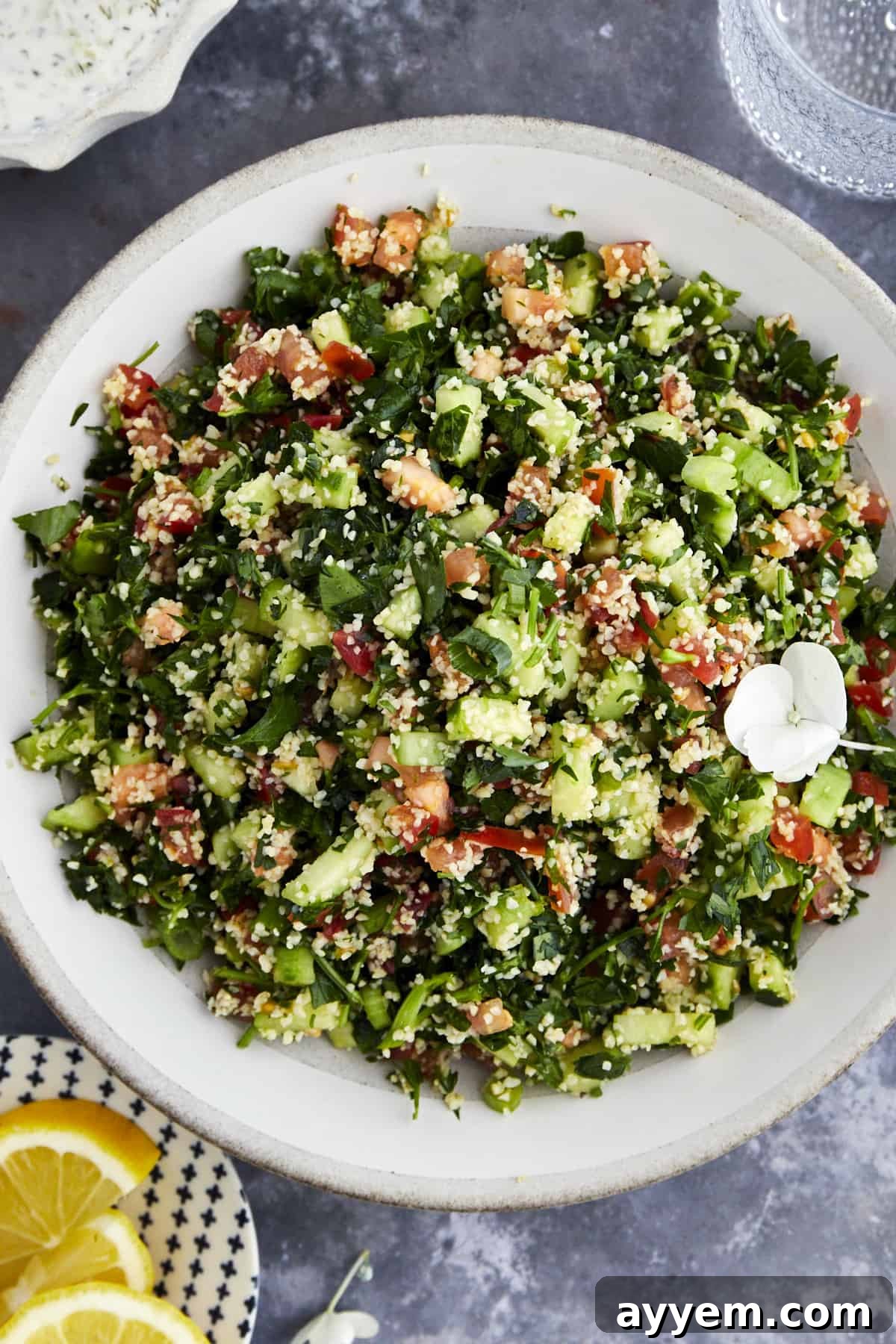
Easy Tabbouleh Salad: A Vibrant, Fresh, and Healthy Middle Eastern Delight
Tabbouleh, known by various spellings like tabbouli or tabouli, transcends the definition of a mere salad; it’s a cornerstone of Middle Eastern cuisine, particularly from Lebanon. This iconic dish is a testament to fresh, simple ingredients coming together to create an explosion of taste and texture. It’s brimming with finely chopped fresh vegetables, an abundance of aromatic herbs, and a light touch of wholesome grains like bulgur wheat, all brought to life with a zesty olive oil dressing.
Its refreshing quality and vibrant appearance have propelled tabbouleh to global popularity, making it a beloved choice in kitchens and restaurants far beyond its origins. Whether you’re looking for a light lunch, a healthy side, or an impressive addition to a mezze platter, this easy tabbouleh salad recipe promises an authentic and satisfying culinary experience.
What Exactly is Tabbouleh? Unpacking a Middle Eastern Staple
At its heart, tabbouleh is a refreshingly simple yet incredibly flavorful salad that originated in the mountainous regions of Lebanon and Syria. Traditionally, it celebrates the freshest parsley and mint, complemented by ripe tomatoes, crisp cucumbers, and finely diced green onions. The “grain” component, typically fine bulgur wheat, is used sparingly, acting more as a binder and texture enhancer rather than the main bulk of the salad. This emphasis on fresh herbs and vegetables gives traditional tabbouleh its signature bright green hue and unbelievably fresh taste.
This ancient dish has been enjoyed for centuries, often served as part of a larger meal, known as a mezze, alongside other delightful dips and small plates. Tabbouleh is not just food; it’s a cultural icon, symbolizing freshness and the bounty of the earth. Its widespread appeal today means you can find variations in almost any grocery store or international deli, but nothing quite compares to the vibrant flavors and superior texture of a homemade batch.
One notable difference between traditional Lebanese tabbouleh and many Western interpretations lies in the proportion of ingredients. Authentic recipes prioritize the herbs and vegetables, allowing their bright flavors to shine, with bulgur wheat playing a supporting role. Americanized versions, on the other hand, sometimes feature a higher ratio of bulgur or even other grains like quinoa, making them heartier but often losing the delicate balance of the original. Our recipe stays true to the Lebanese spirit, ensuring the fresh produce remains the star of your dish.
The Unmatched Freshness and Benefits of Homemade Tabbouleh
While store-bought tabbouleh offers convenience, preparing this salad at home unlocks an unparalleled level of freshness and flavor. You have complete control over the quality and ripeness of your ingredients, ensuring your herbs are at their peak and your vegetables are crisp. Homemade tabbouleh allows you to customize seasonings to your preference, creating a dish that perfectly suits your taste buds. Moreover, making tabbouleh from scratch is surprisingly affordable and simple, especially once you get the hang of the chopping, which is arguably the most time-consuming part.
Beyond its incredible taste, tabbouleh is a powerhouse of nutrition. It is naturally vegetarian and vegan, making it suitable for a wide array of dietary needs. For those avoiding gluten, fine bulgur can easily be substituted with quinoa to create a gluten-free version without compromising flavor or texture. Packed with vitamins, minerals, and dietary fiber from the abundance of fresh herbs and vegetables, tabbouleh is not just delicious but also incredibly healthy, contributing to digestive health and overall well-being. The healthy fats from extra virgin olive oil add another layer of nutritional benefit, making this salad a truly wholesome choice for any meal.
Essential Ingredients for an Authentic Tabbouleh Salad
To achieve that truly authentic Lebanese flavor, this recipe emphasizes fresh produce and precise ingredient selection. Here’s a detailed look at what you’ll need and why each component is crucial:
- Fine Bulgur Wheat: The key to traditional tabbouleh. Bulgur is a parboiled, cracked wheat product available in different grinds. For this recipe, you absolutely need *fine* bulgur, which resembles couscous. Its delicate texture means it doesn’t require boiling; it simply softens by soaking, making preparation incredibly easy and ensuring the bulgur doesn’t overwhelm the fresh herbs.
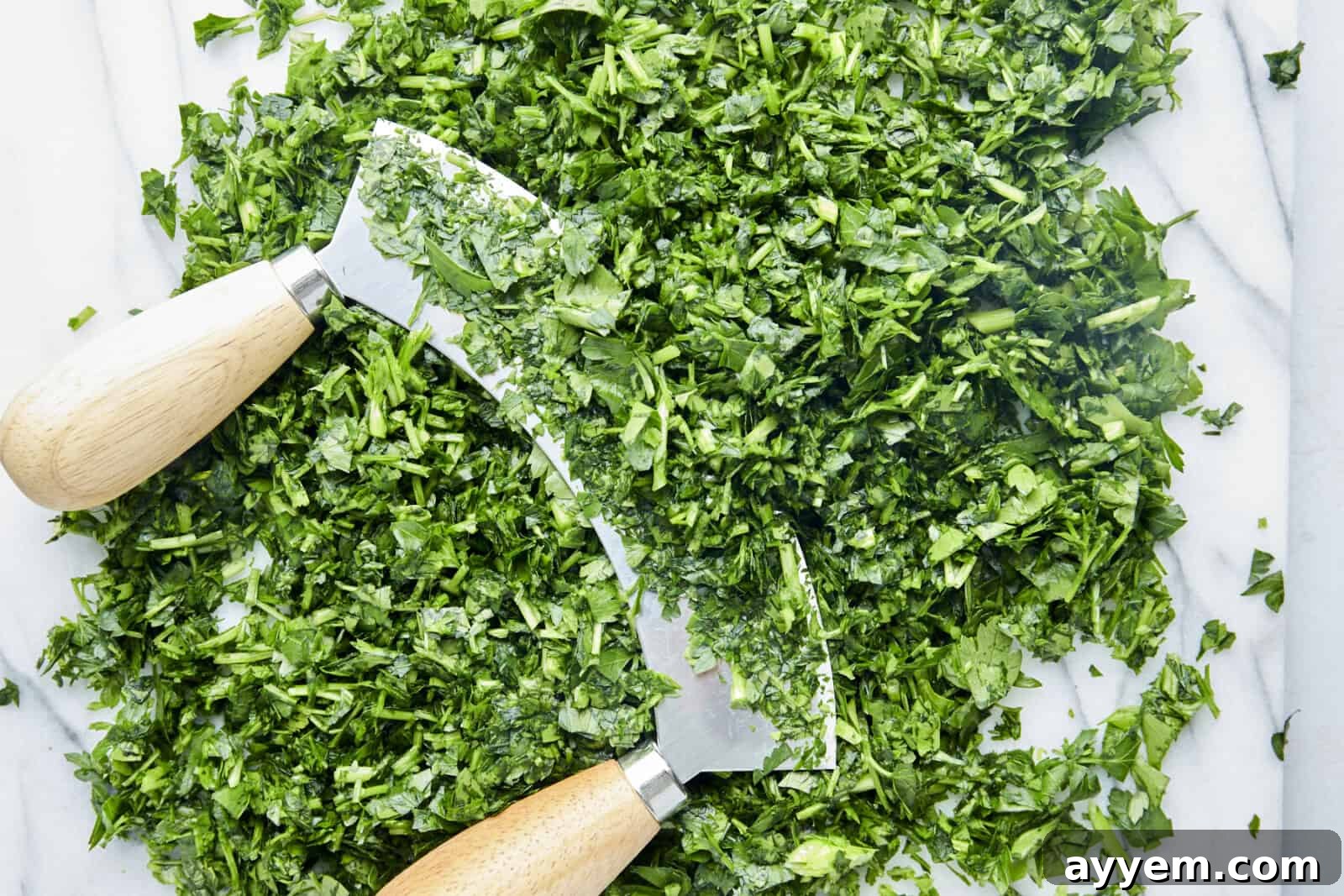
- Fresh Parsley: This is the undisputed star of tabbouleh. Opt for flat-leaf (Italian) parsley for its stronger, more robust flavor profile compared to curly parsley. Whichever you choose, ensure it’s thoroughly rinsed under cold water and completely dried before chopping. Excess moisture can cause the parsley to wilt and dilute the salad’s vibrant taste.
- Crisp Vegetables: These provide essential crunch, color, and a wealth of nutrients.
- Firm Roma Tomatoes: Known for their low seed content and firm flesh, Roma tomatoes are ideal. When chopped, they release just enough natural juice to help soften the bulgur, infusing it with their sweet and tangy essence.
- Persian Cucumbers: These small, thin-skinned cucumbers are less watery and have fewer seeds than larger varieties, offering a perfect, satisfying crunch without making the salad soggy.
- Green Onions: Use both the white and green parts for a mild, subtle onion flavor that enhances the freshness without being overpowering. They add a gentle bite and another layer of color.
- Fresh Mint Leaves: While some recipes list mint as optional, we consider it absolutely essential for an authentic and truly refreshing tabbouleh. Mint provides a unique subtle sweetness and a distinct cooling sensation that elevates the entire dish, creating that classic bright, invigorating flavor profile. Make sure to use fresh mint, as dried mint will not yield the same vibrant results.
- Zesty Dressing: The dressing brings all the fresh components together.
- Freshly Squeezed Lime Juice: Fresh is non-negotiable here. Bottled juice simply won’t deliver the same bright, tangy, and invigorating flavor. Lime juice cuts through the richness of the olive oil and adds a crucial acidic lift to the salad. While lemon is traditionally used, lime offers a slightly different, equally delightful tang.
- High-Quality Extra Virgin Olive Oil: Invest in a good quality extra virgin olive oil. Its robust, slightly peppery flavor will make a noticeable difference in the final taste of your tabbouleh, providing healthy fats and a smooth mouthfeel.
- Salt and Pepper: Simple seasonings are all that’s needed to enhance the natural flavors of the fresh ingredients. Adjust to your personal taste.
Crafting Your Easy Tabbouleh Salad: A Step-by-Step Guide
While tabbouleh might seem intimidating due to the chopping, it’s actually incredibly straightforward. With a sharp knife or a handy vegetable chopper, you’ll have this vibrant salad ready in no time. Here’s how to bring this Middle Eastern masterpiece to life:
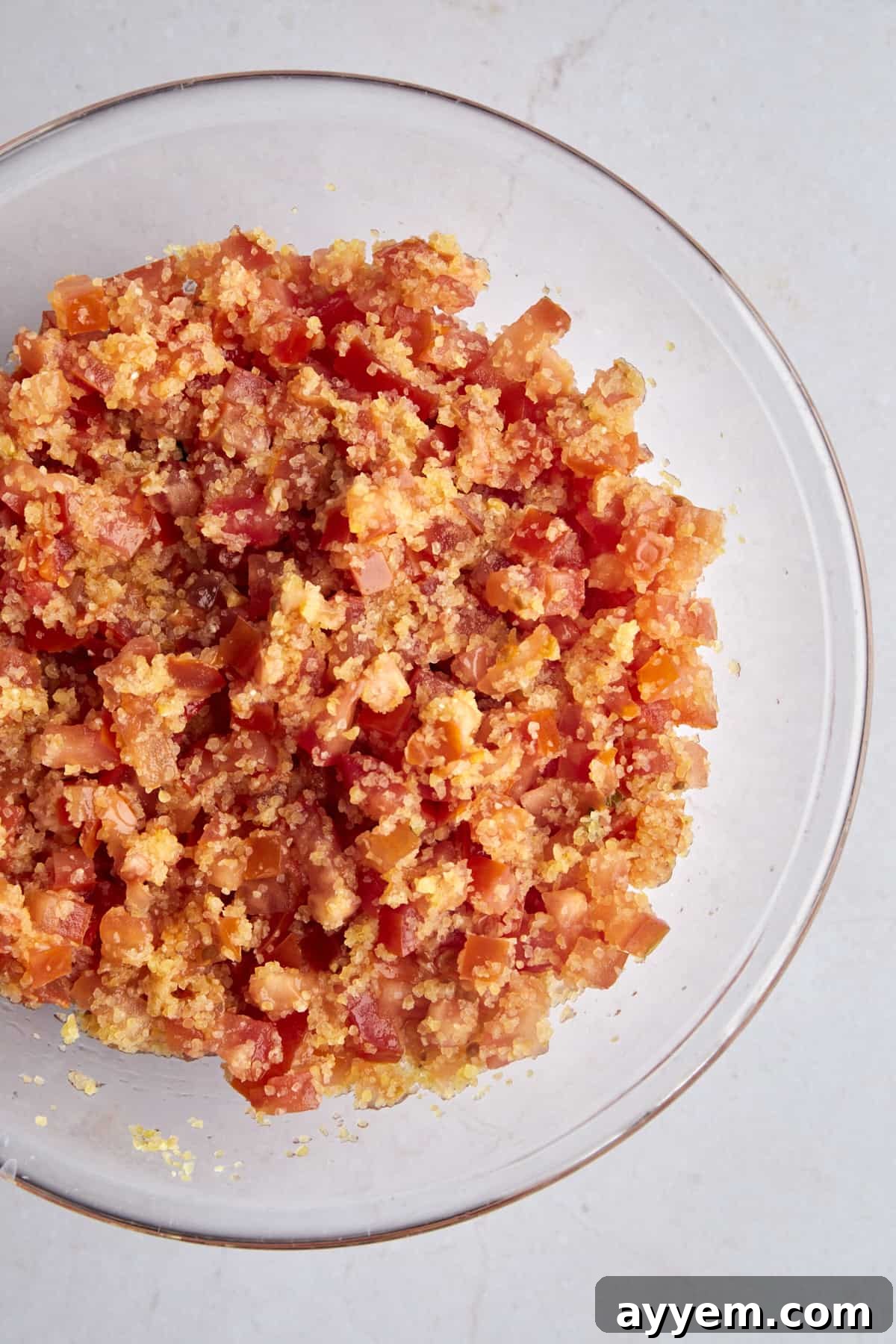
- Prepare the Bulgur Foundation: Begin by rinsing the fine bulgur wheat under cold running water in a mesh colander until the water runs clear. This step cleans the bulgur and helps prepare it for soaking. In a large mixing bowl, combine your finely chopped Roma tomatoes with a generous dash of salt and pepper. Add the rinsed bulgur to the bowl. Stir everything together gently to ensure the bulgur is well coated by the tomato juices. Set this mixture aside for at least 15 minutes. This crucial soaking period allows the tomatoes to release their natural liquids, which are absorbed by the bulgur, softening it beautifully and infusing it with rich tomato flavor. This method prevents the bulgur from becoming watery or bland.
- The Art of Fine Chopping: Precision is key for the best tabbouleh texture and flavor distribution. Using a very sharp knife (or a food processor if you’re careful not to over-process), finely chop the Persian cucumbers, green onions (both white and green parts), fresh parsley, and mint leaves. The finer the chop, the more cohesive and integrated the flavors will be, allowing each component to shine without any single ingredient dominating. This also creates a pleasant, uniform texture that defines authentic tabbouleh.
- Whisking the Zesty Dressing: In a small measuring cup or a separate bowl, whisk together the high-quality extra virgin olive oil, freshly squeezed lime juice, and additional salt and pepper to taste. Whisk until the ingredients are well combined and slightly emulsified. This simple yet potent dressing is what brightens and unifies the entire salad.
- Gently Combine the Ingredients: Once the bulgur has sufficiently softened and absorbed the tomato juices, add all your finely chopped cucumbers, green onions, parsley, and mint to the large mixing bowl with the bulgur and tomato mixture. Pour the freshly whisked dressing evenly over the ingredients.
- Toss and Chill: With clean hands or a large spoon, gently toss all the ingredients together. Be careful not to mash the delicate herbs. Ensure everything is well combined and evenly coated with the dressing. For the best flavor development and refreshing experience, place your tabbouleh salad in the fridge to chill for at least 30 minutes, or ideally, a few hours, before serving. This allows the flavors to meld beautifully.
Pro Tip: The more finely you chop your ingredients, the more cohesive and flavorful your tabbouleh salad will be! Take your time with this step; it truly makes all the difference.
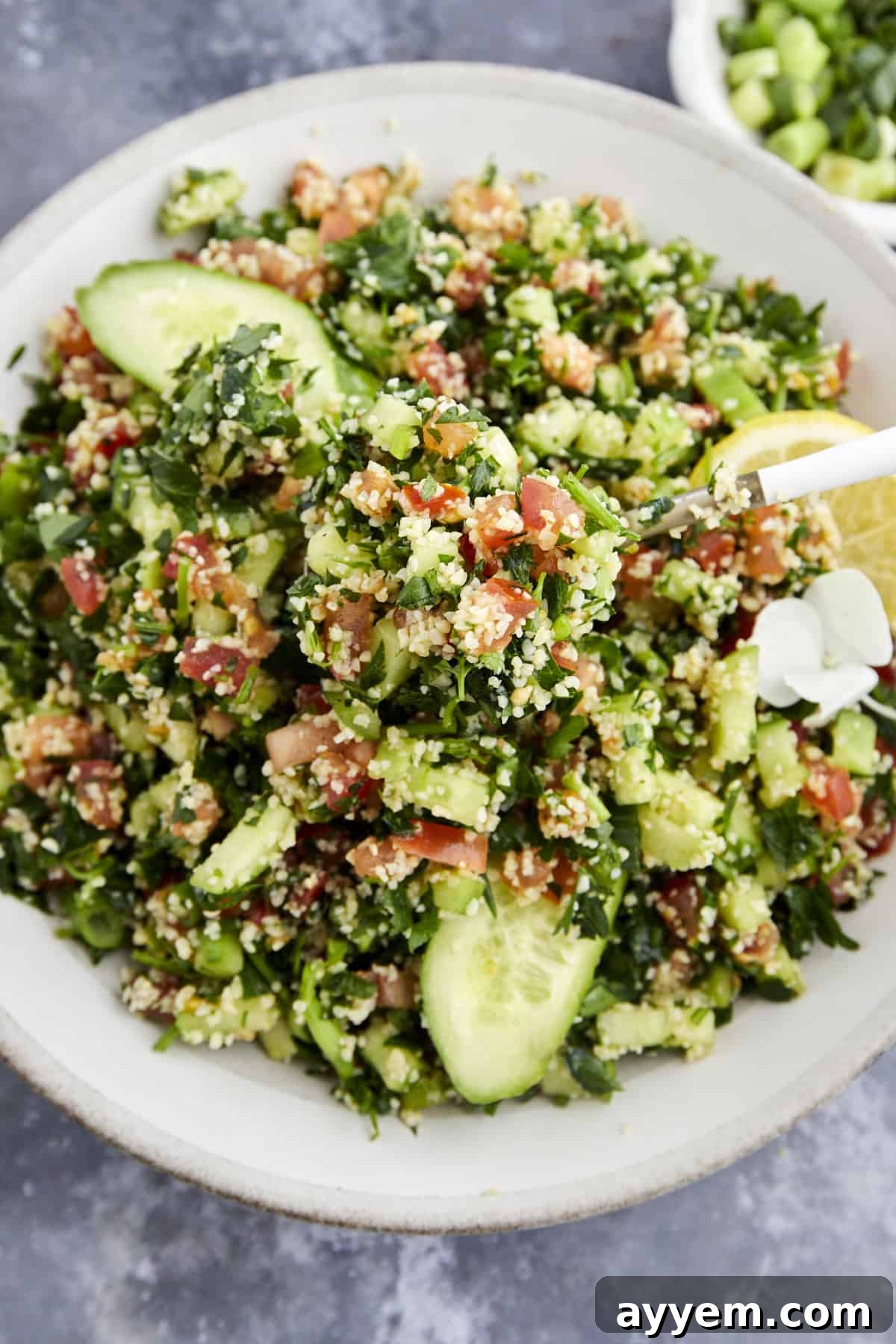
Serving Suggestions: The Versatility of Tabbouleh
Tabbouleh’s fresh and tangy profile makes it an incredibly versatile dish, perfect for a multitude of occasions and pairings. Its refreshing nature complements rich and savory main courses beautifully, cutting through heavier flavors with its bright acidity.
As a light yet satisfying side dish, tabbouleh shines alongside grilled meats such as succulent chicken kofta, savory beef kofta, or thinly sliced shawarma. It also pairs wonderfully with roasted lamb or chicken, offering a fresh counterpoint to the richness. For a vegetarian meal, serve it alongside grilled halloumi or falafel.
Tabbouleh truly excels as a staple on a traditional Middle Eastern mezze platter or appetizer spread. Arrange it next to creamy hummus, smoky baba ganoush, spicy muhammara, warm pita bread, and fluffy whipped feta or labneh. The medley of flavors and textures creates an inviting and festive spread perfect for sharing.
For a wholesome and light main course, especially popular in Lebanon, serve tabbouleh nestled inside crisp lettuce leaves (such as romaine or butter lettuce). This allows you to scoop the salad directly into the leaves, creating a handheld, refreshing wrap that’s both delicious and fun to eat. It’s also an excellent option for picnics, potlucks, and outdoor gatherings, as it travels well and holds its freshness beautifully.
Tabbouleh Storage and Make-Ahead Tips
Tabbouleh is one of those dishes that often tastes even better the next day, as the flavors have more time to meld and deepen. You can easily make this salad a few hours or even a day in advance. Store your tabbouleh in an airtight container in the refrigerator for up to 2-3 days. While it generally holds up well, you might notice some excess liquid accumulating at the bottom of the bowl over time. This is normal and can simply be drained off before serving to maintain the salad’s ideal texture. Give it a gentle stir before serving to redistribute the dressing and fluff up the ingredients, ensuring every bite is as fresh and flavorful as possible.
Frequently Asked Questions About Tabbouleh Salad
Tabbouleh is best served cold or at room temperature. Chilling the salad is crucial as it allows all the vibrant flavors of the herbs, vegetables, and dressing to properly meld together, enhancing its refreshing qualities. Serving it cold makes it especially invigorating on a warm day.
The primary distinction of tabbouleh is its herb-forward nature. Unlike many grain salads where the grain is the dominant ingredient, tabbouleh features a very high proportion of finely chopped fresh parsley and mint. The bulgur wheat plays a much smaller, supporting role, contributing texture rather than bulk. This emphasis on fresh herbs and bright, zesty dressing gives tabbouleh its incredibly fresh, light, and vibrant character.
Absolutely! In fact, making tabbouleh a few hours or even a day in advance often enhances its flavor. The chilling time allows the ingredients to marinate in the dressing, deepening and unifying the taste. Just be sure to store it in an airtight container in the refrigerator. If any excess liquid accumulates, simply drain it before tossing and serving.
Traditionally, tabbouleh is made with fine bulgur wheat. This type of bulgur is very finely ground and parboiled, meaning it softens quickly by just soaking in liquid (like the juices from the tomatoes and the dressing) rather than requiring cooking. Its light, fluffy texture is essential for the salad’s overall appeal, ensuring it doesn’t feel heavy.
Yes, you can! To make tabbouleh gluten-free, simply substitute the fine bulgur wheat with an equal amount of cooked and cooled quinoa. Quinoa offers a similar texture and absorbs flavors beautifully, making it an excellent gluten-free alternative that maintains the spirit of the original salad.
For the most authentic and appealing tabbouleh, the ingredients, especially the parsley, mint, and vegetables, should be very finely chopped. A sharp chef’s knife and good technique are ideal for achieving a uniform, fine dice. While a food processor can be used, be careful not to over-process, as it can turn the herbs into a paste rather than finely chopped pieces. Pulse in short bursts if using a machine.
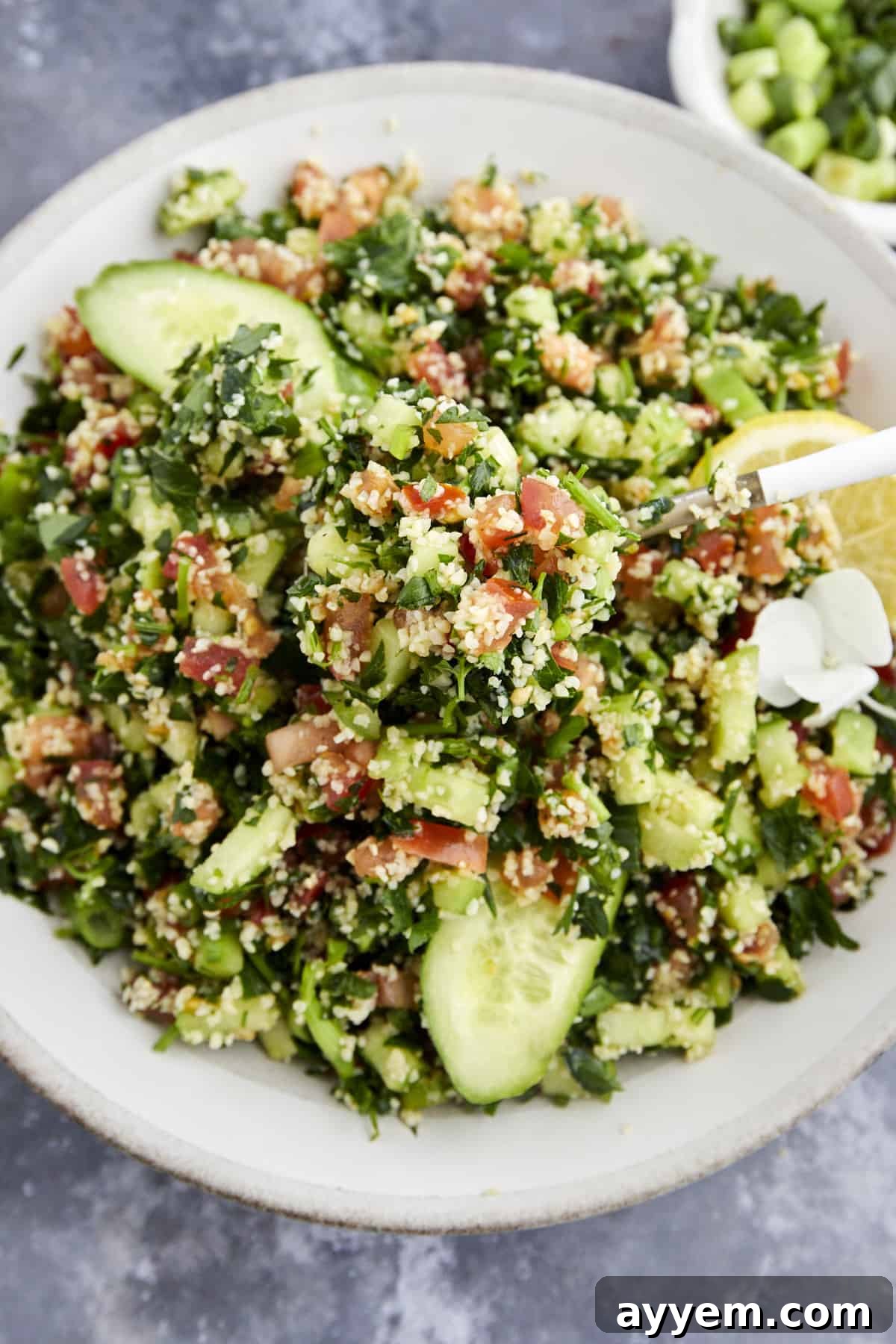
More Flavorful Salad Recipes
Ready to enhance your nutrient intake with more delicious and easy-to-make salads? Explore these other fresh and flavorful recipes:
- Chickpea and Cucumber Tahini Salad
- Quick Couscous Salad with Chicken
- Lentil Salad Recipe
- Mediterranean Quinoa Salad
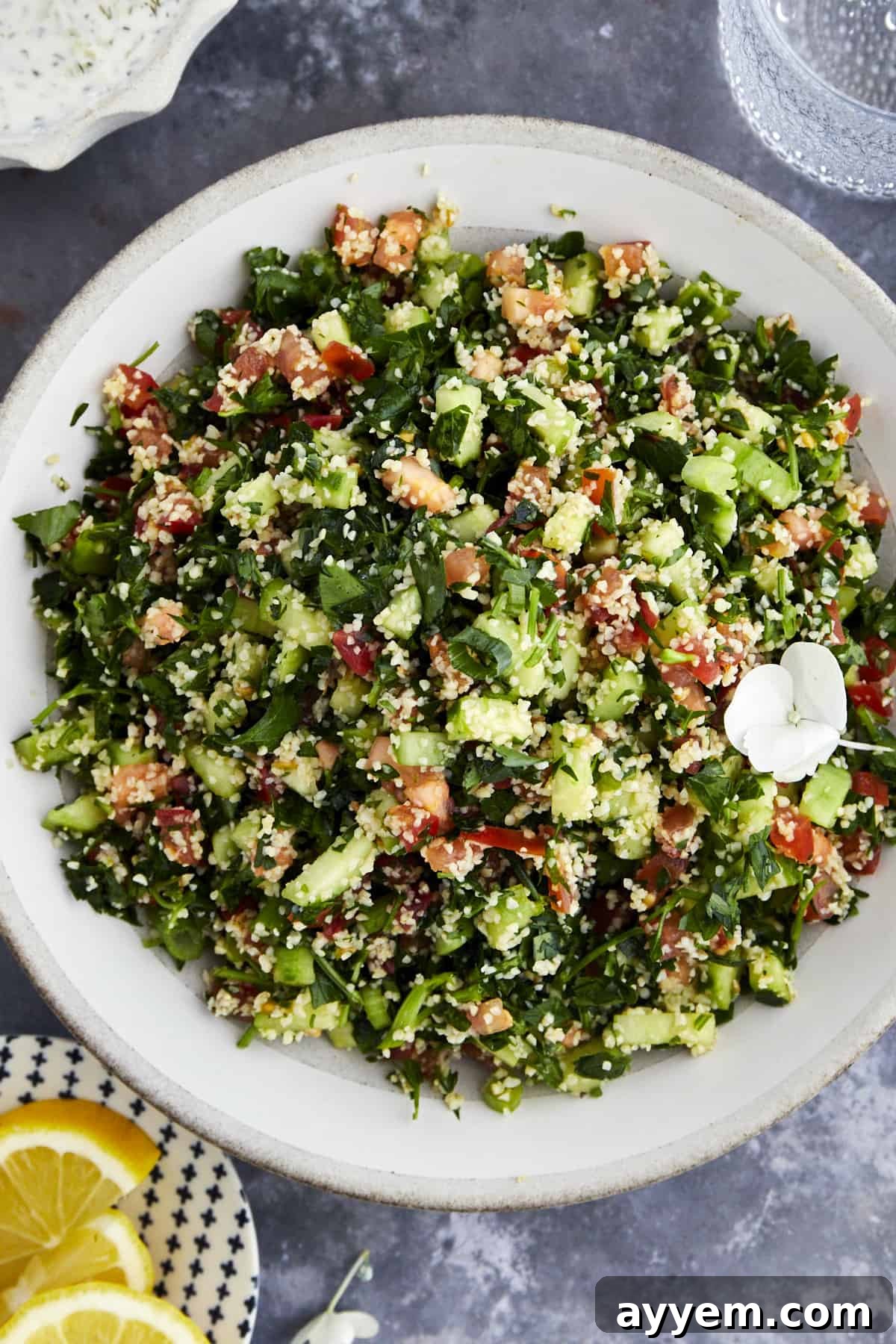
Easy Tabbouleh Salad Recipe
Food Dolls
4
servings
30 minutes
30 minutes
Ingredients
- 1/2 cup fine bulgur wheat
- 2 cups firm Roma tomatoes finely chopped
- Salt to taste
- Black pepper to taste
- 4 Persian cucumbers peeled and finely chopped
- 3 green onions white and green parts, finely chopped
- 1/4 cup extra virgin olive oil
- 1/4 cup lime juice freshly squeezed
- 3 bunches parsley with stems removed, washed and dried, very finely chopped
- 1 small bunch about 10-12 leaves fresh mint leaves , with stems removed, washed and dried, finely chopped
Instructions
-
Wash the bulgur wheat with cold water, and drain it in a mesh colander. Set aside.1/2 cup fine bulgur wheat
-
Chop the tomatoes finely, and place them in a bowl. Add a sprinkle of salt and pepper along with the drained bulgur. Mix well, and set aside for 15 minutes.2 cups firm Roma tomatoes, Salt to taste, Black pepper to taste
-
Using a sharp knife, finely chop the cucumbers, green onions, parsley, and mint. Set aside.4 Persian cucumbers, 3 green onions
-
In a small measuring cup, whisk the olive oil, lime juice, salt, and pepper.1/4 cup extra virgin olive oil, 1/4 cup lime juice
-
Add the cucumbers, green onions, herbs, and tomato and bulgur mixture to a large mixing bowl. Pour the dressing on top, and gently toss to combine.3 bunches parsley, 1 small bunch
-
Chill in the fridge until ready to serve.
-
Store in an airtight container for up to 2-3 days.
Equipment
Nutrition
Calories: 232kcal |
Carbohydrates: 25g |
Protein: 5g |
Fat: 14g |
Saturated Fat: 2g |
Polyunsaturated Fat: 2g |
Monounsaturated Fat: 10g |
Sodium: 36mg |
Potassium: 720mg |
Fiber: 7g |
Sugar: 5g |
Vitamin A: 4787IU |
Vitamin C: 81mg |
Calcium: 97mg |
Iron: 4mg
Nutrition information is automatically calculated, so should only be used as an approximation.