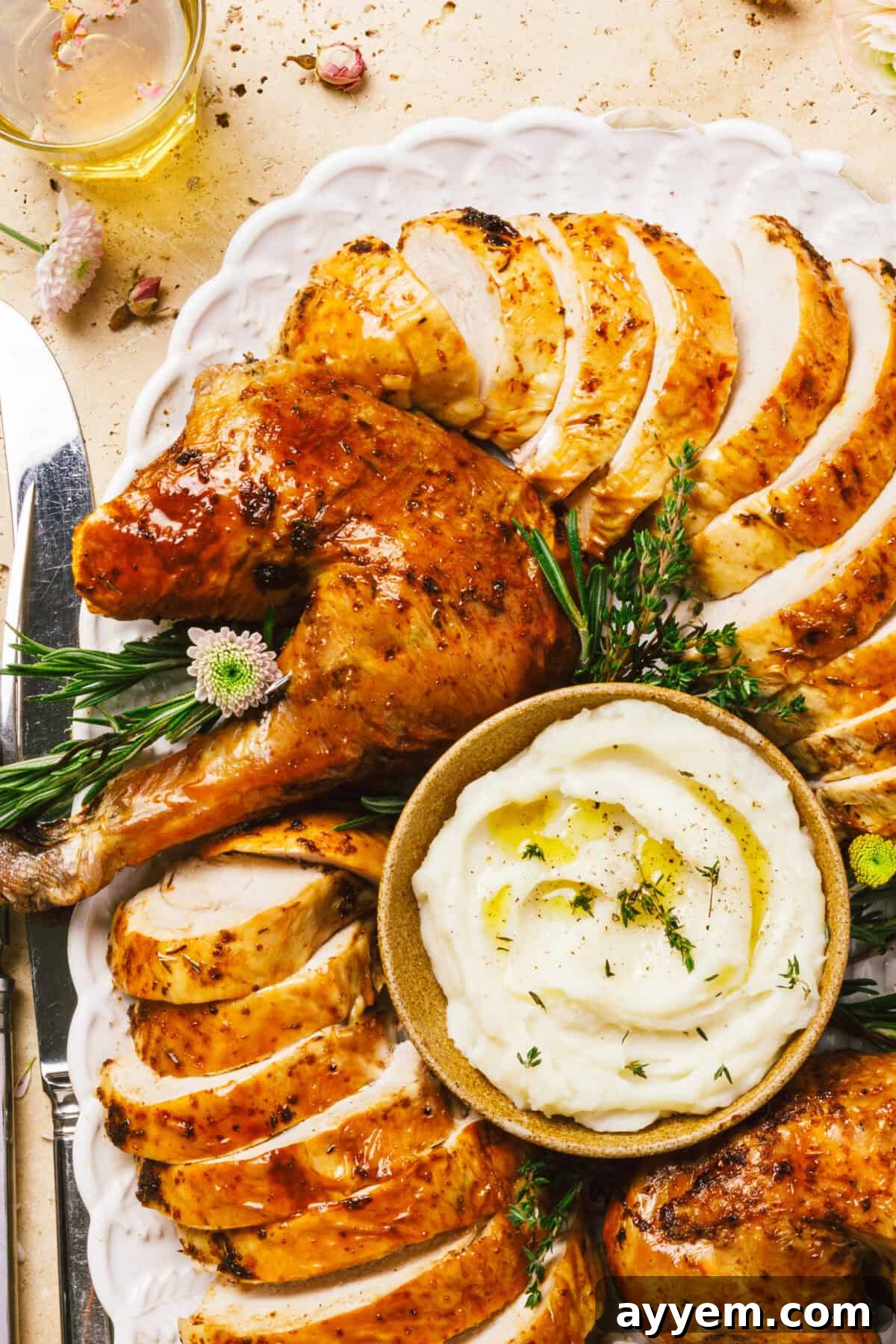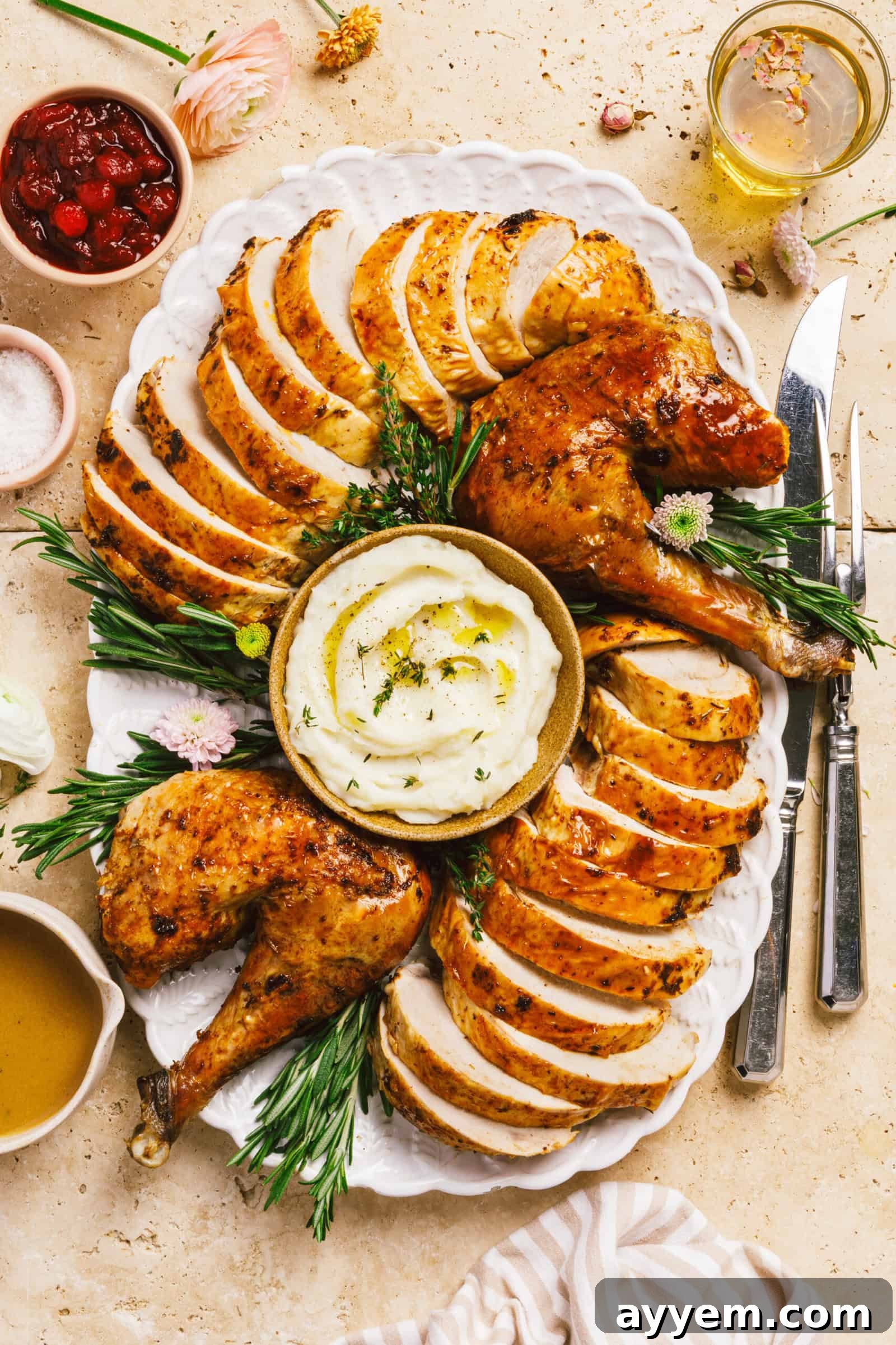
Prepare for an extraordinary culinary experience with a show-stopping centerpiece that bursts with incredible flavor and an intoxicating aroma! This **Herb-Roasted Whole Turkey** recipe masterfully blends fresh herbs, aromatic spices, and rich butter to create a beautifully seasoned bird. The result is a stunning golden-brown skin, incredibly juicy meat, and a taste that your guests will talk about long after the meal is over, making it truly unforgettable.
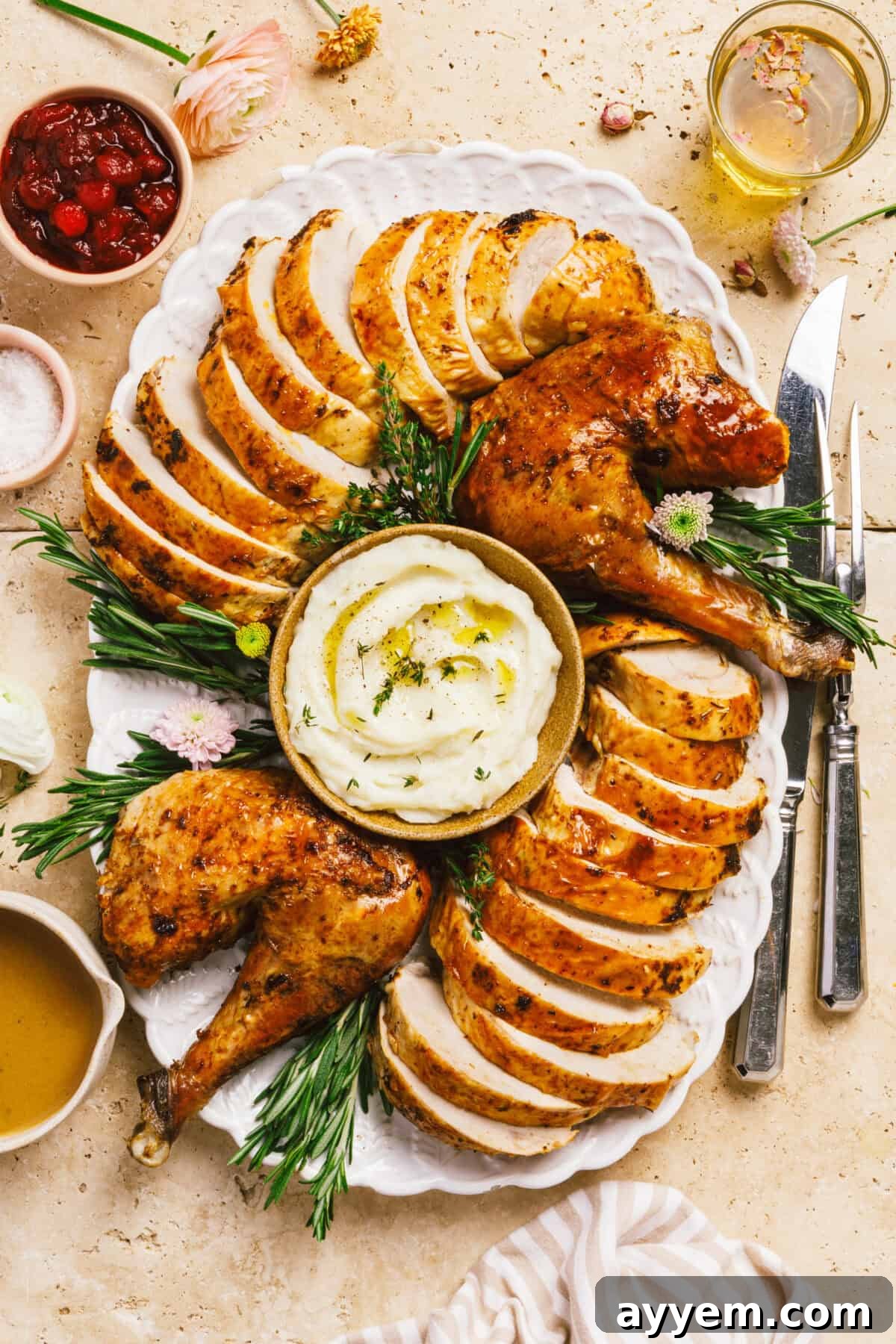
Discover the Delight of Herb-Roasted Whole Turkey
Herb-roasted whole turkey is a timeless, straightforward method to prepare your holiday bird, whether it’s for Thanksgiving, Christmas, or any special gathering throughout the year. What sets this approach apart is its elegance in simplicity. Unlike recipes that demand intricate marinades or lengthy brining processes, this method allows fresh, high-quality ingredients to shine naturally. By using a base of fresh herbs, garlic, and onions both inside and outside the turkey, it enhances the bird’s inherent flavors and fills your home with an irresistible, comforting aroma as it slowly roasts to perfection.
The magic of this recipe lies in its carefully curated seasoning blend. Rather than overpowering the turkey, the spices are chosen to complement and deepen its natural taste. A thoughtful combination of sea salt, black pepper, dried thyme, oregano, smoked paprika, garlic powder, and onion powder creates layers of warmth and savory notes. These seasonings, along with the fresh herbs, work in harmony to transform a simple turkey into a culinary masterpiece. The final product boasts an irresistibly golden-brown and crispy skin, while the meat beneath remains incredibly tender and moist. This effortless yet impressive dish is truly ideal for any family gathering or festive feast, promising a delightful experience for everyone at the table.
Essential Ingredients for Your Perfect Herb-Roasted Turkey
Crafting the perfect herb-roasted turkey begins with selecting the right ingredients. Each component plays a vital role in achieving that rich flavor and succulent texture you crave:
- Fresh Turkey: The foundation of our dish! Opt for a fresh, unprocessed turkey. A fresh bird will absorb the flavors more effectively and retain moisture better than a frozen one, leading to superior taste and juiciness. A 12-pound turkey is a great size for most gatherings, serving about 8-12 people generously.
- Italian Parsley: This vibrant herb adds a burst of fresh, clean flavor with a subtle peppery note. It’s not just for garnish; when tucked into the cavity, it infuses the meat with its distinct aromatic qualities.
- Fresh Thyme: A quintessential herb for poultry, fresh thyme contributes a warm, earthy, and slightly minty depth that beautifully complements the savory notes of the turkey. Its delicate leaves release their aroma wonderfully during roasting.
- Dried Bay Leaves: These traditional aromatics provide a subtle, almost floral bitterness that helps to balance the overall flavors, preventing the dish from becoming overly rich. They are a secret weapon for adding complexity.
- Yellow Onion: Quartering a yellow onion and placing it inside the turkey cavity adds a gentle, caramelized sweetness as it roasts. This sweetness permeates the turkey, enhancing its natural savory profile and contributing to a rich aroma.
- Garlic: Halved crosswise, a whole head of garlic placed in the cavity will slowly roast, releasing its pungent, savory aroma and infusing the turkey with a mellow, sweet garlic flavor that is simply irresistible.
- Unsalted Butter: The secret to that enviable golden, crispy skin! Melting unsalted butter allows you to generously brush it over the entire surface of the turkey. The fat conducts heat beautifully, ensuring even browning and a supremely flavorful crust. Unsalted butter gives you control over the overall saltiness of the dish.
Crafting the Perfect Seasoning Blend for a Flavorful Crust
The exterior seasoning is where the magic happens, forming a delicious crust that seals in moisture and elevates the entire dish. Here’s what you’ll need for this aromatic rub:
- Sea Salt: Essential for seasoning the entire bird, sea salt not only enhances flavor but also helps to draw moisture from the skin, leading to a crispier texture.
- Black Pepper: Freshly ground black pepper adds a mild, pungent heat that perfectly balances the rich and savory notes of the herbs and other spices.
- Dried Thyme: While fresh thyme is used in the cavity, dried thyme provides a more concentrated, earthy herb flavor that permeates the turkey’s skin and outer layers, ensuring every bite is seasoned.
- Dried Oregano: This robust herb brings a slightly minty, peppery, and earthy taste that rounds out the seasoning blend, adding a classic Mediterranean touch to the turkey.
- Smoked Paprika: For a delightful hint of smoky sweetness and a beautiful reddish hue, smoked paprika is a fantastic choice. If you prefer a milder flavor, regular sweet paprika works equally well.
- Garlic Powder: An easy way to infuse a deep, savory garlic flavor uniformly across the turkey’s surface without the risk of fresh garlic burning. It creates an extra layer of aromatic goodness.
- Onion Powder: Similar to garlic powder, onion powder adds a subtle hint of sweetness and warmth, contributing to a more complex and balanced savory profile for the turkey’s exterior.
Mastering the Art of Herb-Roasted Whole Turkey: A Step-by-Step Guide
Achieving a perfectly cooked, succulent herb-roasted turkey is simpler than you might imagine. Follow these steps for a stress-free and delicious result that will impress everyone at your table.
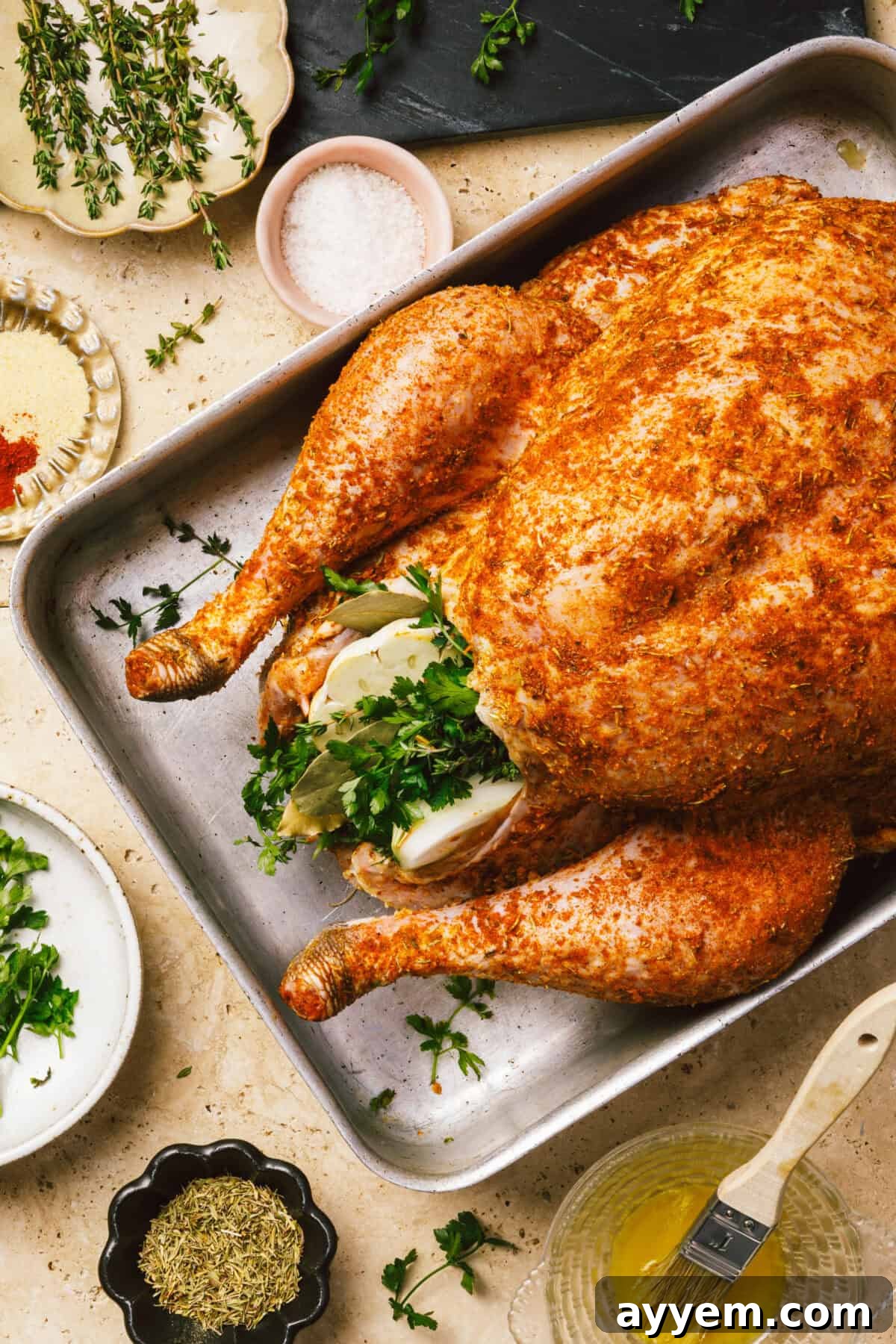
- Preheat Oven and Prep the Turkey: Begin by preheating your oven to 350°F (175°C). While the oven heats, carefully remove the giblets and neck from the turkey’s cavity. Rinse the turkey thoroughly inside and out with cold water, then use paper towels to pat it completely dry. This crucial step helps ensure crispy skin. Using kitchen shears or a sharp knife, trim any excess fat or leftover pinfeathers. Place the prepared turkey in a sturdy roasting pan, ideally one with a rack to allow for even airflow. For best results, allow the turkey to sit at room temperature for about 30-60 minutes before roasting, which promotes more even cooking.
- Create the Aromatic Seasoning Blend: In a small bowl, combine all the dry seasoning ingredients: sea salt, black pepper, dried thyme, dried oregano, smoked paprika, garlic powder, and onion powder. Whisk them together thoroughly until uniformly mixed. This ensures an even distribution of flavor when applied to the turkey.
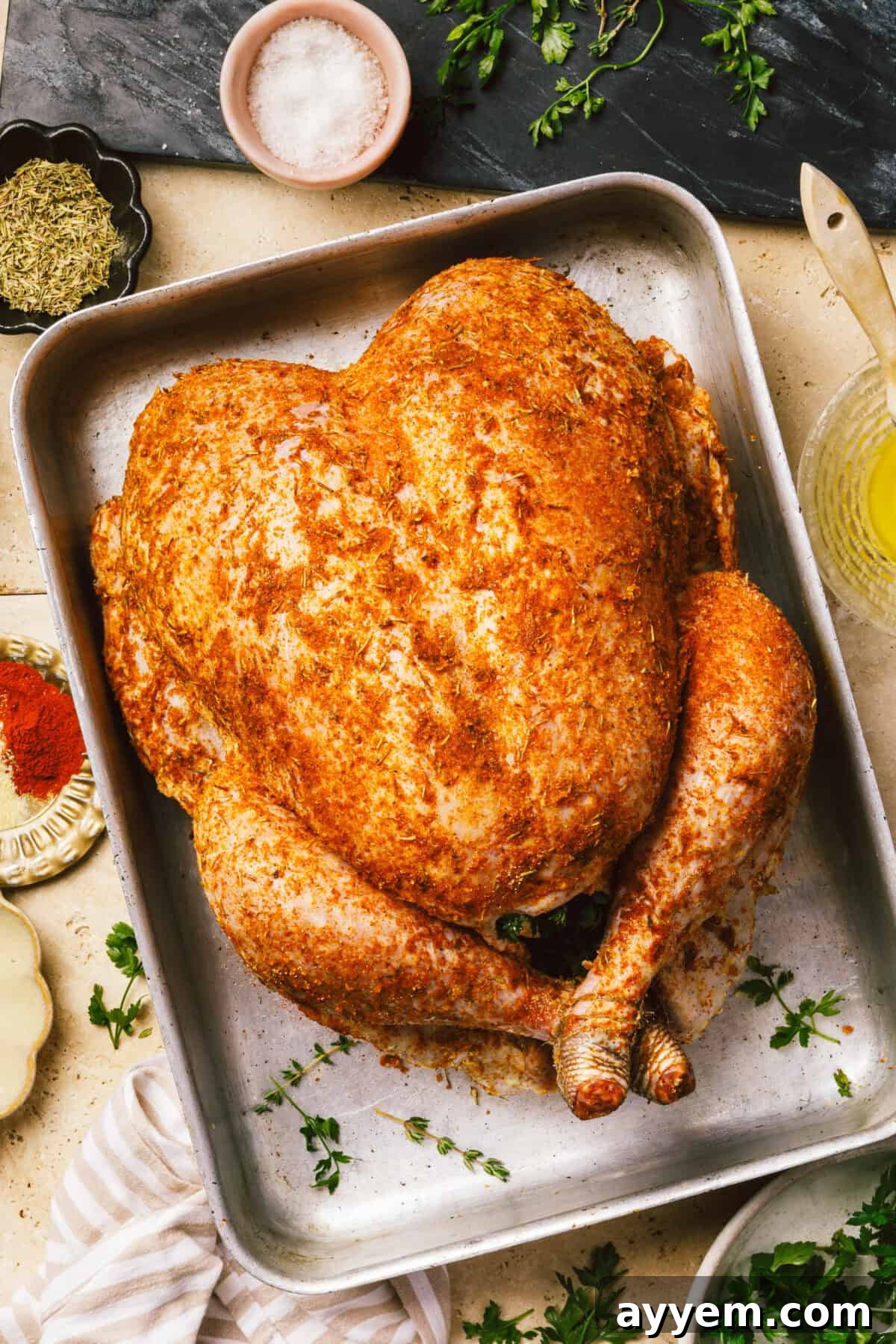
- Season and Stuff the Turkey: First, melt the unsalted butter. Using a pastry brush, generously apply the melted butter over the entire surface of the turkey, ensuring every crevice is covered. This butter layer helps the seasonings adhere and contributes significantly to the golden, crispy skin. Next, take your mixed dry seasoning blend and rub it generously over the buttered skin, making sure to coat the breast, legs, wings, and back. For an even deeper flavor, gently lift the skin over the breast and rub some seasoning directly onto the meat. Then, fill the turkey cavity with the fresh Italian parsley, fresh thyme, quartered yellow onion, halved garlic head, and dried bay leaves. These aromatics will infuse the turkey from the inside out. Finally, tie the turkey legs together with kitchen twine to help the turkey cook more evenly and maintain a neat shape. Tuck the wing tips underneath the turkey’s body to prevent them from burning during roasting.
- Roast to Perfection: Carefully place the seasoned and stuffed turkey into the preheated oven. The general rule for roasting turkey is about 13-15 minutes per pound for an unstuffed bird, but this can vary. For a 12-pound turkey, expect to roast for approximately 2 to 2.5 hours. To ensure the turkey remains incredibly juicy and develops that coveted crispy skin, baste it periodically (every 30-45 minutes) with the pan juices. Begin checking the internal temperature using an instant-read meat thermometer inserted into the thickest part of the thigh, without touching the bone. The turkey is fully cooked when it reaches an internal temperature of 165°F (74°C). If the skin starts to brown too quickly, you can loosely tent the turkey with aluminum foil.
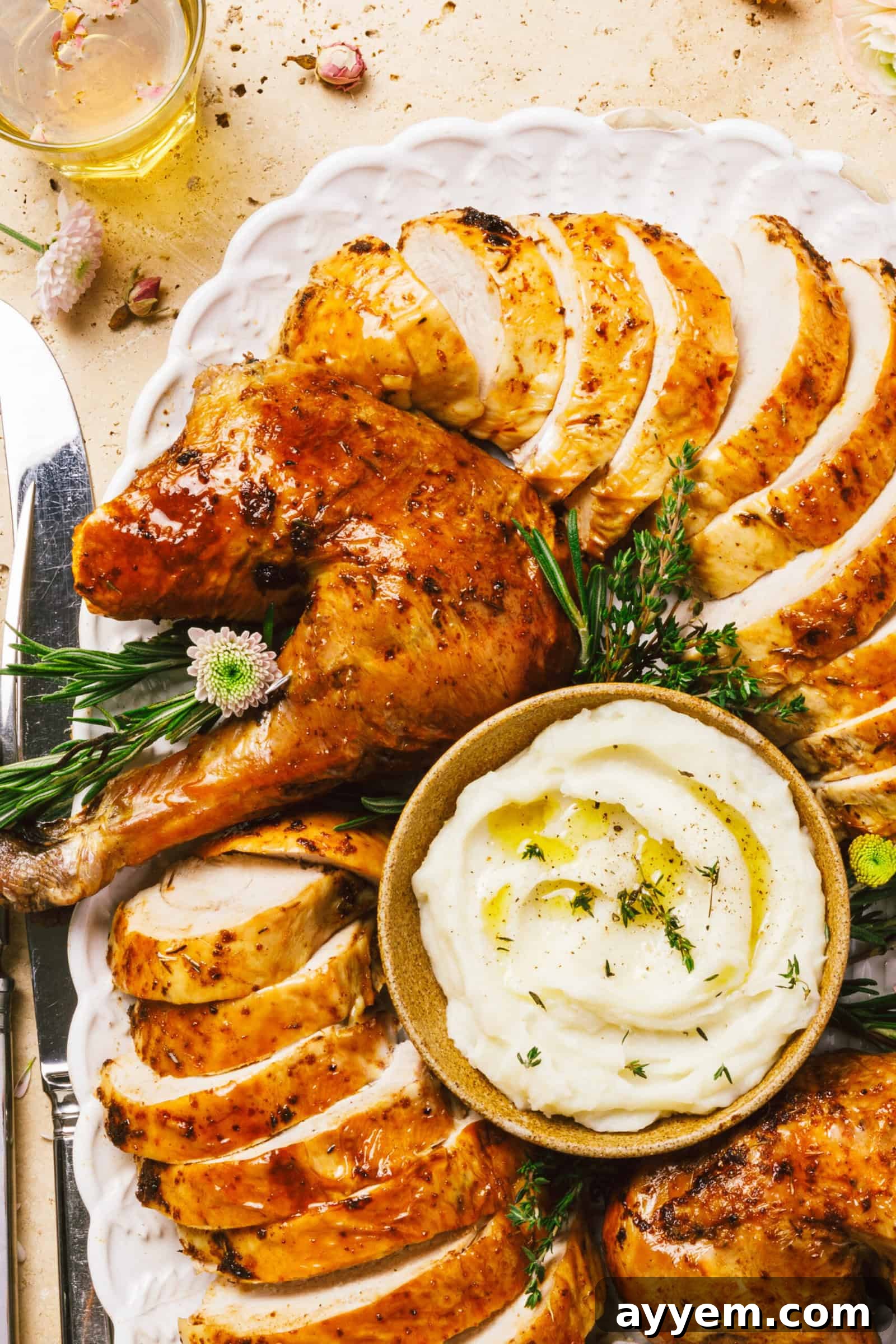
- Allow to Rest and Serve: Once the turkey reaches the target internal temperature, remove it from the oven and transfer it carefully to a large cutting board. Do not carve it immediately! Create an aluminum foil tent over the turkey to keep it warm. Allow the turkey to rest for at least 20 to 30 minutes (for larger birds, even longer). This resting period is crucial as it allows the juices to redistribute throughout the meat, ensuring a tender and incredibly juicy carved turkey. Skipping this step will result in dry meat. After resting, slice the turkey and serve it hot with your favorite side dishes.
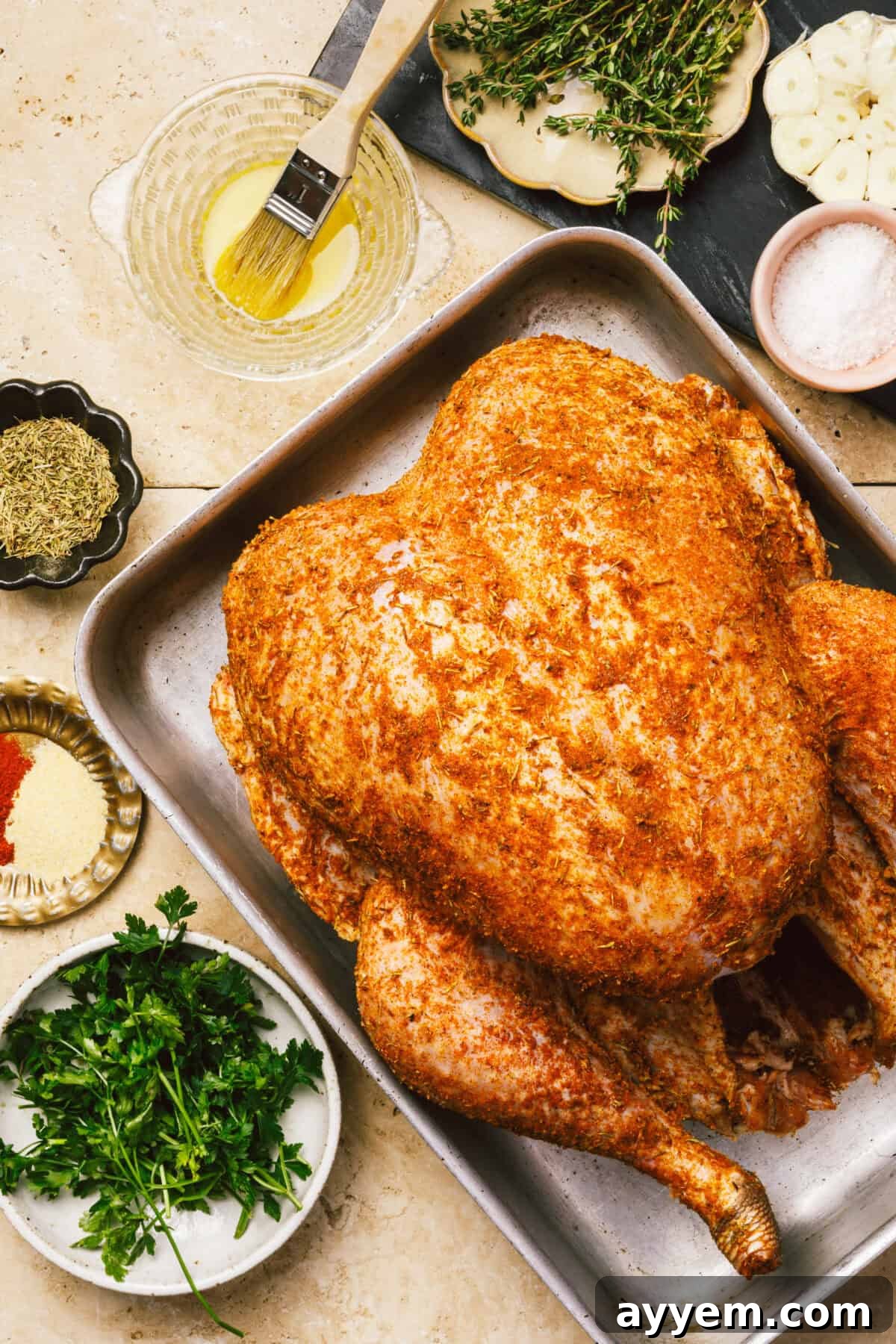
Exciting Variations to Customize Your Roasted Turkey
While this herb-roasted turkey recipe is fantastic on its own, there are many ways to customize it to your personal taste or adapt it for different occasions. Get creative and try these delightful variations:
- Zesty Lemon: For a bright, citrusy note, place lemon halves or wedges inside the turkey cavity along with the other aromatics. The lemon will add a subtle tang and help tenderize the meat.
- Earthy Rosemary: Add several sprigs of fresh rosemary to the cavity and even tuck some under the skin for an extra earthy, piney flavor that pairs wonderfully with poultry.
- Rich Olive Oil: Instead of butter, or in combination with it, brush the turkey with good quality extra virgin olive oil. Olive oil provides a slightly different, fruity flavor profile and contributes to a beautifully moist and crisp skin.
- Fragrant Sage: Incorporate fresh sage leaves into your cavity stuffing or chop them finely to add to the dry seasoning mix. Sage offers a soft, peppery warmth that is especially perfect for autumn and holiday meals.
- Sweet Roasted Carrots: For added sweetness, moisture, and a colorful presentation, place whole carrots, celery stalks, and quartered potatoes around the turkey in the roasting pan. They will cook in the savory pan drippings, becoming wonderfully tender and flavorful.
- Spicy Kick: If you enjoy a bit of heat, consider adding a pinch of cayenne pepper or a touch of red pepper flakes to your dry seasoning mix.
- Apple and Herb Infusion: Stuff the cavity with apple wedges, along with your herbs and onions, for a hint of autumnal sweetness and moisture.
Storing and Enjoying Leftover Herb-Roasted Turkey
One of the best parts of roasting a whole turkey is the delicious leftovers! Cooked turkey is incredibly versatile and stores well, making it perfect for meal prepping throughout the week. You can easily transform it into a variety of new dishes.
To ensure your leftovers stay fresh and safe to eat, store them properly. Once the turkey has cooled completely, remove the meat from the bones and slice or shred it. Place the turkey meat in an airtight container and refrigerate it promptly. It will remain fresh and delicious for up to three days. For longer storage, cooked turkey freezes exceptionally well. Simply transfer the cooled meat into freezer-safe bags or containers, removing as much air as possible to prevent freezer burn. Frozen turkey can be stored for up to two months, ready to be thawed and enjoyed in countless creative ways.
Consider using your leftover turkey for hearty sandwiches, savory soups or stews, flavorful salads, or even comforting casseroles. The possibilities are endless, ensuring no delicious morsel goes to waste.
Common Questions About Herb-Roasted Whole Turkey
Fresh herbs like thyme, parsley, and rosemary are always excellent choices for roasting turkey due to their robust and complementary flavors. Sage also adds a wonderful, traditional aroma, especially popular for holiday cooking. You can use a single herb or a combination to create a unique flavor profile.
Both butter and oil will help the turkey skin crisp up beautifully and achieve a golden-brown color. However, using unsalted butter tends to yield a richer, more flavorful sauce if you plan to use the pan drippings for gravy. Butter also imparts a delicious, creamy undertone to the skin. If you prefer a dairy-free option or a slightly lighter flavor, olive oil is a great alternative.
For the crispiest, most golden-brown skin, we generally recommend roasting the turkey uncovered. If you find the skin is browning too quickly, you can loosely tent it with aluminum foil for part of the cooking time. If you initially choose to cover it to keep moisture in, be sure to remove the foil about 30-45 minutes before the turkey is expected to finish roasting. This allows the skin ample time to crisp up and develop its appealing color.
Absolutely! When prepared correctly, an herb-roasted turkey is incredibly juicy. The combination of rubbing butter or oil over the turkey, stuffing it with aromatics, and basting it during roasting helps to lock in moisture. The herbs themselves don’t just sit on top; they infuse the meat with flavor and contribute to a tender, succulent result beneath a perfectly crispy, golden skin. A meat thermometer is your best friend to ensure it’s cooked just right without drying out.
The roasting time for a whole turkey depends heavily on its weight and whether it’s stuffed or unstuffed. A general guideline is about 13-15 minutes per pound for an unstuffed turkey and 15-20 minutes per pound for a stuffed turkey, when cooked at 325-350°F (160-175°C). Always use a meat thermometer to confirm doneness; the thickest part of the thigh should reach 165°F (74°C).
Several factors contribute to crispy turkey skin. First, ensure the turkey is thoroughly patted dry inside and out before seasoning. Second, rub butter or oil generously over the skin. Third, roast the turkey uncovered for most of the cooking time. Fourth, a higher initial temperature for the first 30 minutes can help, then reduce to a lower temperature for the remainder. Lastly, avoiding constant opening of the oven door helps maintain consistent heat, crucial for crisping.
More Delicious Turkey Recipes to Explore
Turkey isn’t just for the holidays; it’s a versatile protein that can be enjoyed all year long! If you love turkey and are looking for more ways to incorporate it into your meals, explore these fantastic recipes that put this lean protein front and center on your dinner table:
Turkey Pinwheels
Low-Carb Turkey Bell Pepper Sandwich
White Turkey Chili
Cheesy Breakfast Brioche Sliders
Roasted Herb Butter Turkey
Ingredients
- 1 12-pound fresh turkey
- 1 small bunch fresh Italian parsley
- 1 small bunch fresh thyme
- 3 dried bay leaves
- 1 yellow onion quartered
- 1 head garlic halved crosswise
- 4 tablespoons unsalted butter melted
Seasoning for the Outside of the Turkey
- 2 Tablespoons sea salt
- 1 teaspoon black pepper
- 2 teaspoons dried thyme
- 1 Tablespoon dried oregano
- 1 teaspoon smoked paprika (sweet paprika works too)
- 1 teaspoon garlic powder
- 1 teaspoon onion powder
Instructions
- Preheat the oven to 350°F (175°C).
- Remove the giblets from the turkey and rinse the turkey inside and out. Trim any excess fat and leftover pinfeathers, then pat the outside dry with paper towels. Place the turkey in a large roasting pan.
- Combine all the dry seasonings (sea salt, black pepper, dried thyme, dried oregano, smoked paprika, garlic powder, onion powder, and dried bay leaves) in a small bowl.
- Brush the outside of the turkey with the melted butter, then sprinkle and rub the seasoning mix evenly over the entire turkey and in the cavity. Stuff the cavity with the fresh Italian parsley, fresh thyme, quartered yellow onion, and halved garlic head. Tie the legs together with kitchen string and tuck the wing tips under the turkey to prevent burning.
- Roast the turkey for about 2 1/2 hours, basting occasionally with pan juices. The turkey is done when the juices run clear when you cut between the leg and thigh, and an instant-read thermometer reads 165°F (74°C) in the thickest part of the thigh.
- Transfer the turkey to a cutting board, cover with foil, and let it rest for 20 minutes before carving. Slice and serve hot.
Equipment
Nutrition
Nutrition information is automatically calculated, so should only be used as an approximation.