
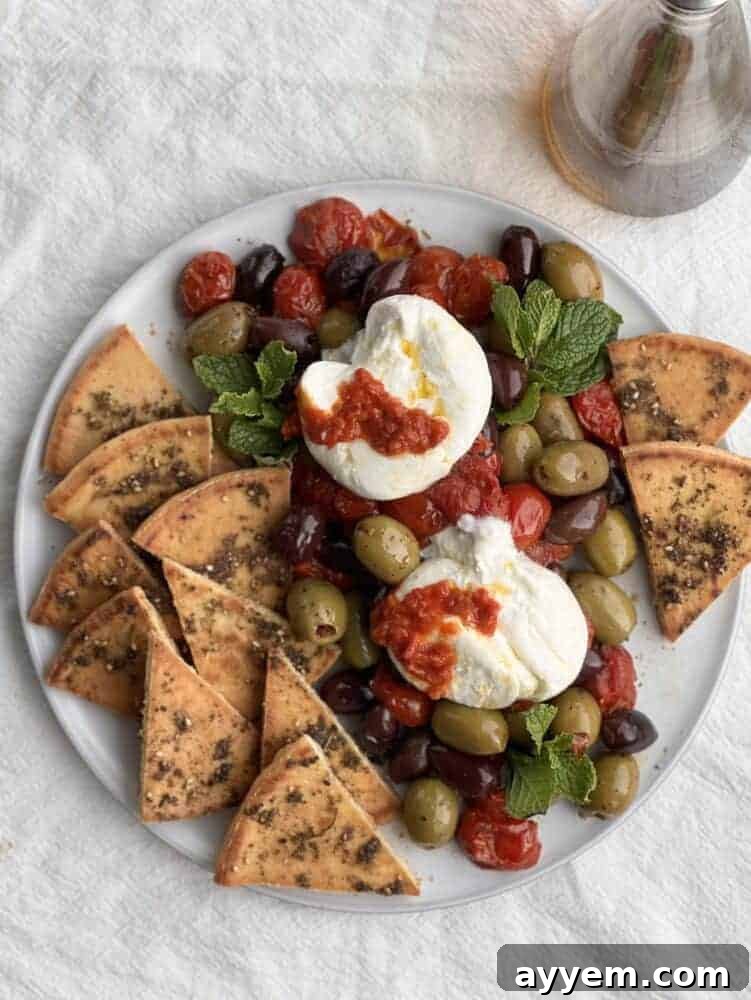
Welcome to a culinary journey that promises sophistication with surprising ease: our exquisite Burrata with Roasted Tomatoes and Za’atar Pita. This dish isn’t just a recipe; it’s an invitation to elevate your everyday meals and impress guests at your most memorable gatherings. Whether you’re seeking an indulgent treat for a quiet evening at home or a show-stopping appetizer for a vibrant weekend soirée, this harmonious blend of creamy, tangy, and aromatic flavors consistently delivers an unforgettable experience.
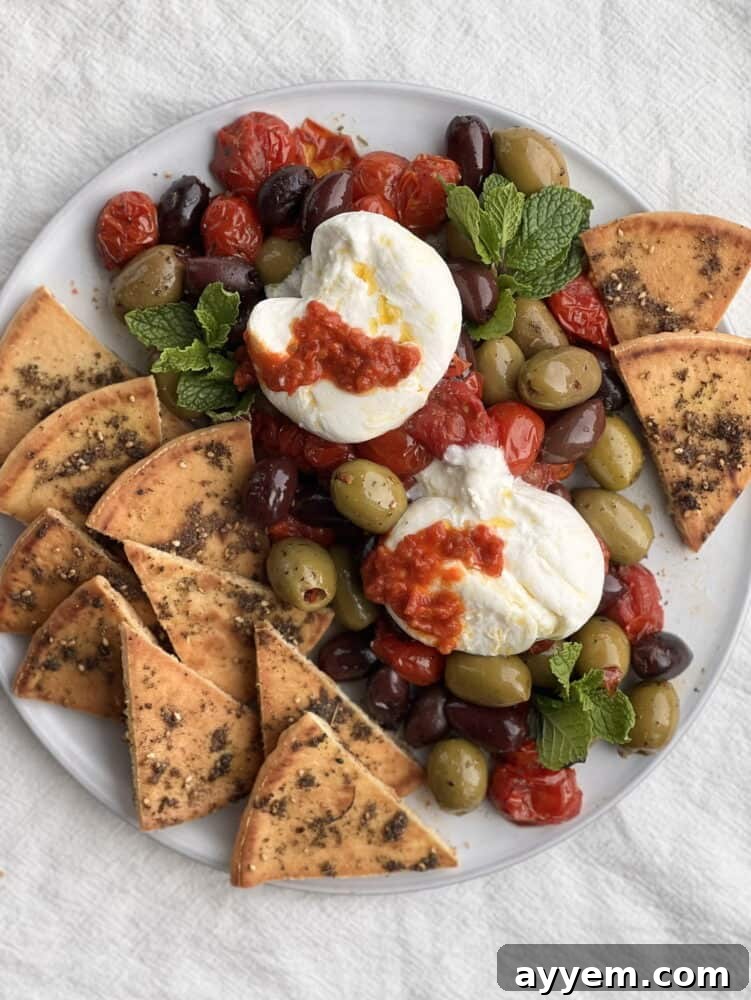
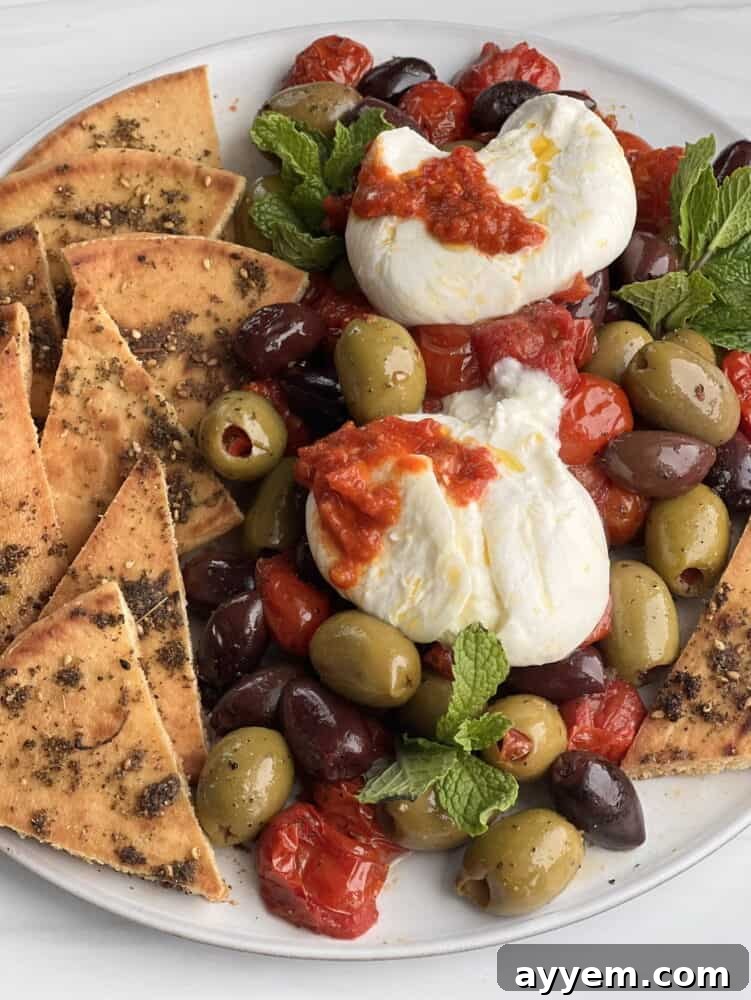
Imagine a vibrant platter that bursts with color and tantalizes the senses. The deep crimson of slow-roasted tomatoes, the rich green and purple hues of briny olives, all mingling around a pristine, luscious ball of burrata, complemented by the golden crunch of Za’atar-spiced pita. This isn’t just food; it’s a feast for the eyes and the palate, designed to look like a gourmet masterpiece while requiring minimal effort in the kitchen. If you’ve been captivated by the rich flavors of our Whipped Feta with Roasted Tomatoes and Chickpeas or the delightful simplicity of Whipped Feta with Roasted Olives, then prepare to fall even deeper in love with this recipe.
Is This Recipe as Easy as It Looks?
Absolutely! Do not be deceived by the perceived complexity or the seemingly long list of steps. While it might appear to be an elaborate undertaking, this dish is, in fact, a testament to culinary simplicity. It’s the kind of recipe that allows you to achieve stunning results without spending hours chained to the stove. Consider it more of a quick dash to deliciousness than a marathon cooking session.
This recipe is particularly ideal for those who love to multitask. While your medley of vibrant vegetables slowly roasts to perfection in the oven, you can effortlessly slice and toast your pita bread, infusing it with aromatic Za’atar. This efficient approach means that by the time your tomatoes and olives are tender and flavorful, your pita is crisp and ready, and assembling the final platter becomes a swift and satisfying process. The delicate textures and earthy flavors of this dish are guaranteed to become a beloved staple in your repertoire, perfect for effortlessly impressing friends and family on any occasion.
Burrata vs. Mozzarella: Understanding the Creamy Distinction
At first glance, burrata and mozzarella might seem like two peas in a pod, both pristine white, smooth, and alluringly round. However, the true magic of burrata reveals itself the moment you gently slice into its delicate exterior. While fresh mozzarella boasts a firm yet moist texture, holding its shape beautifully when sliced or shredded, burrata offers a captivating contrast that sets it apart.
Mozzarella, the more common of the two, is crafted through a process known as pasta filata, or “spun paste.” This involves heating cheese curds and stretching them until they become pliable and smooth, then shaping them into various forms. The result is a delightful, slightly chewy cheese that melts wonderfully and holds its integrity.
Burrata, on the other hand, elevates this traditional cheesemaking process to a new level of indulgence. It begins with a similar mozzarella shell, but this shell is then carefully filled with a rich, creamy mixture known as stracciatella. Stracciatella is a luxurious blend of soft, frayed pieces of mozzarella and fresh cream, creating an intensely rich and decadent interior. Legend has it that burrata was invented by accident in the early 20th century, when a resourceful cheesemaker in Puglia, Italy, found himself short on containers to store stracciatella. His ingenious solution was to encase the creamy mixture within a mozzarella pouch, and thus, burrata was born, a happy accident that gifted the world a truly exquisite cheese.
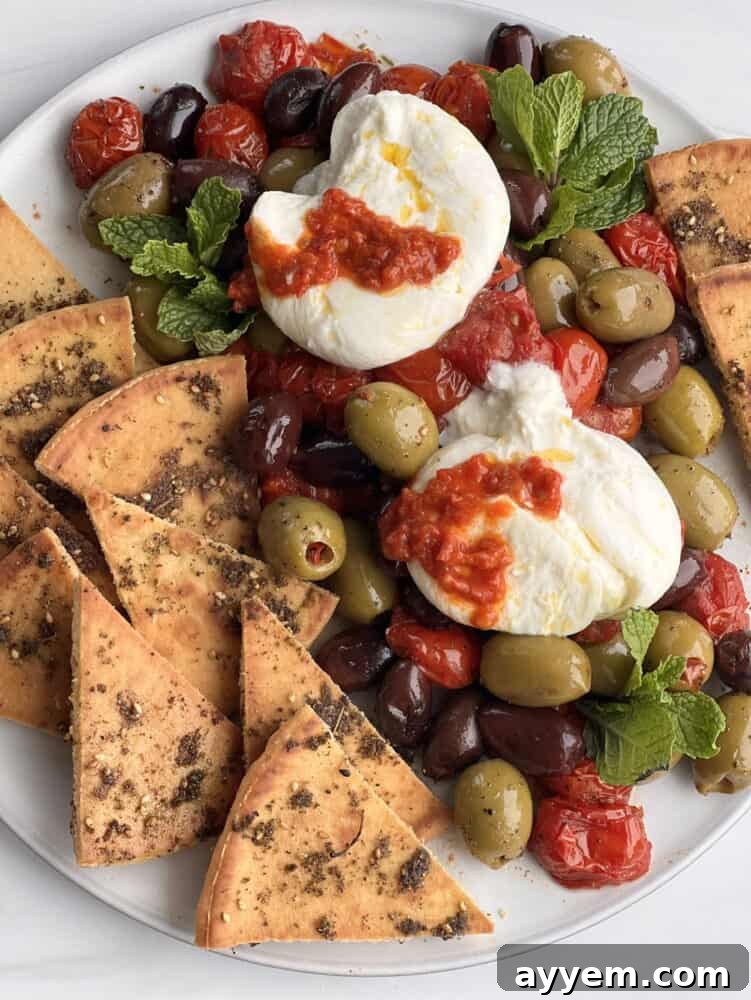
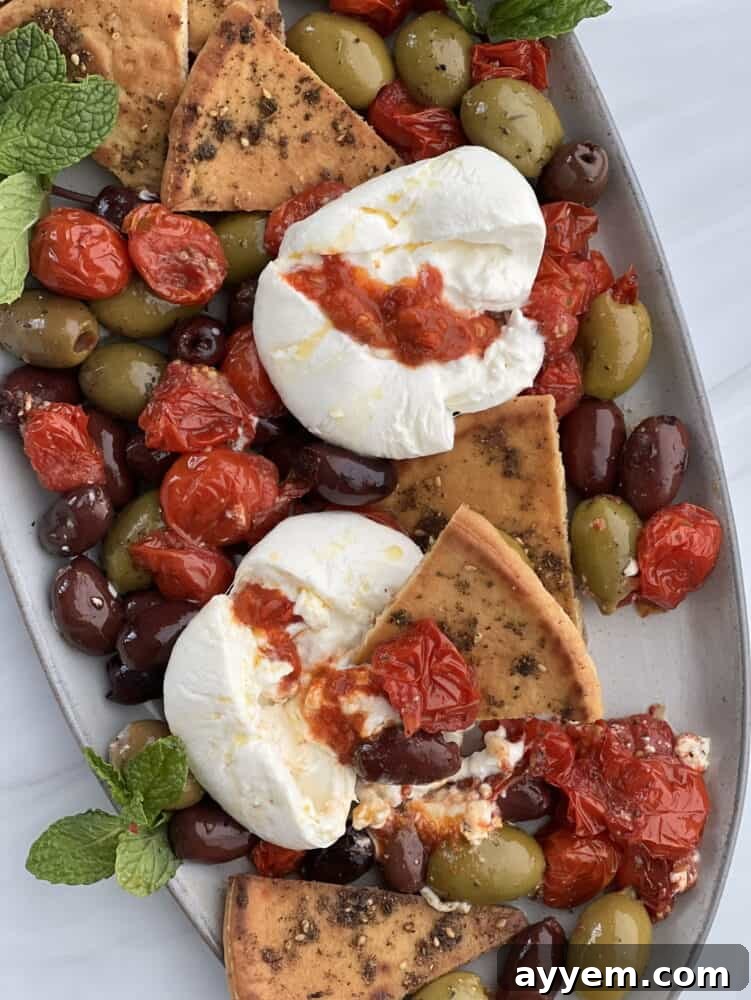
When you cut into a ball of burrata, the creamy stracciatella spills out, creating a luscious pool that mingles beautifully with the other ingredients on your plate. This unparalleled creaminess is precisely why burrata is the star of this recipe. Its smooth, buttery texture provides a perfect counterpoint to the vibrant spices of Za’atar, the bright acidity of the roasted tomatoes, and the delightful brininess of the olives. This interplay of textures and flavors makes every bite a luxurious experience.
What is Za’atar: A Middle Eastern Culinary Treasure
Za’atar is far more than just a spice blend; it is a fragrant cornerstone of Middle Eastern cuisine, steeped in history and beloved for its distinctive, earthy, and tangy flavor profile. While the precise composition of Za’atar can vary from region to region, and even from family to family, it typically features a harmonious blend of dried herbs like oregano, thyme, and marjoram, which contribute a profound earthiness.
Often, these herbs are combined with nutty sesame seeds, offering a delightful crunch and depth, and a touch of salt to enhance the overall flavor. Some variations might also include coriander or cumin for added warmth and complexity. However, one ingredient remains consistently present and defines the unique character of almost all Za’atar blends: sumac.
Sumac is a vibrant, reddish-purple spice derived from the berries of the sumac plant, which thrives in subtropical climates across East Asia, Africa, and the southern parts of North America. Botanically related to the cashew plant, sumac is prized for its distinctively lemony, tangy, and slightly fruity flavor. It imparts a bright, acidic note that is crucial to Za’atar’s refreshing zest.
The magic of Za’atar lies in this intricate balance: the robust, aromatic herbs grounded by the nutty sesame, all uplifted and brightened by the piquant sumac. This rich tapestry of flavors makes Za’atar incredibly versatile, commonly sprinkled over hummus, labneh, or salads, mixed with olive oil for dipping bread, or used as a rub for meats. In this recipe, it transforms simple pita bread into an aromatic, crispy vessel perfect for scooping up the creamy burrata and savory roasted vegetables.
How to Make Burrata with Roasted Tomatoes and Za’atar Pita
Creating this delightful dish is a straightforward process, broken down into three simple stages. The key to success lies in mindful preparation and combining components that are fresh and perfectly cooked.
-
Roasted Tomatoes and Olives
- Begin by preheating your oven to a robust 400°F (200°C). This ensures your vegetables will roast beautifully, caramelizing their natural sugars and intensifying their flavors.
- In a spacious baking dish, combine your vibrant cherry tomatoes, pitted kalamata olives, and pitted manzanilla green olives. Drizzle generously with high-quality extra virgin olive oil. Season with a good pinch of salt and freshly ground black pepper, then sprinkle with Trader Joe’s Green Goddess seasoning. Toss everything together gently, ensuring all the ingredients are evenly coated.
- Transfer the baking dish to the preheated oven and roast for approximately 20 minutes, or until the tomatoes have softened, slightly burst, and the olives are fragrant and warm.
-
Za’atar Pita
- While your vegetables are roasting, prepare your pita bread. Using a pizza cutter or a sharp knife, slice the flatbread pita into wedges or desired shapes. Arrange these pieces in a single layer on a separate baking sheet.
- Lightly drizzle the pita wedges with extra virgin olive oil, ensuring a light coating, then generously sprinkle them with Za’atar seasoning.
- Place the pita in the oven alongside the roasting tomatoes and olives during the last 4-5 minutes of their cooking time. Bake until the pita is golden brown, delightfully crispy, and wonderfully aromatic. Keep a close eye on them to prevent burning.
-
Assemble Your Platter
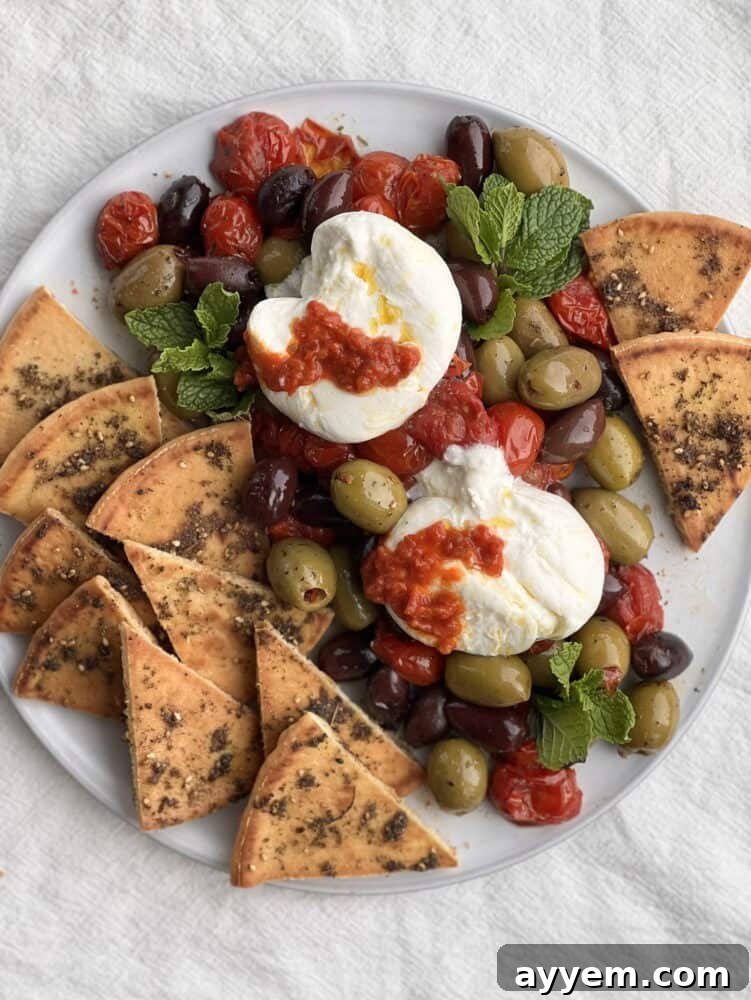
- Once all components are ready, it’s time for the grand assembly. Arrange the crispy Za’atar pita wedges elegantly around the rim of your serving plate, creating a welcoming border.
- Carefully scoop the warm, roasted tomato and olive mixture into the center of the plate, forming a flavorful bed.
- Gently place two fresh balls of burrata directly onto the roasted vegetable mixture. For an optional touch of heat and a beautiful color contrast, add a small dollop of harissa paste. Garnish with a few fresh mint leaves for a refreshing aroma and visual appeal.
- Finally, invite your guests to break open the burrata themselves, allowing the creamy interior to spill out and meld with the warm vegetables and spices. Dive in with your Za’atar pita and savor every incredible bite!
Green Goddess Seasoning: A Flavorful Shortcut
Trader Joe’s Green Goddess seasoning is a popular choice for adding a burst of fresh, savory, and herbaceous flavor to dishes like this. Its ingredient list typically includes: Dried Minced Onion, Salt, Granulated Garlic, Ground Black Pepper, Dried Chives, Dried Green Onion, Spinach Powder, Lemon Powder (comprising Citric Acid, Lemon Oil, and Lemon Juice), Dried Parsley, and a touch of Safflower Oil.
This blend offers a convenient way to infuse your roasted vegetables with a complex flavor profile. However, if this specific seasoning is unavailable, don’t fret! You can easily create a similar flavor profile using common pantry staples. A good substitute would be any all-purpose seasoning that contains key elements like onion powder, garlic powder, and lemon pepper seasoning. For an even fresher take, consider adding a mix of dried or fresh chopped chives, parsley, and a squeeze of fresh lemon juice to your basic salt, pepper, garlic, and onion blend. The goal is to capture that bright, herby, and slightly zesty essence.
Expert Tips for the Perfect Burrata Platter
- Quality Ingredients are Key: Since this dish features relatively few ingredients, the quality of each component truly shines through. Opt for the freshest burrata you can find, ripe cherry or grape tomatoes, and high-quality extra virgin olive oil.
- Temperature Matters: Serve the burrata at room temperature for the best creamy texture. Remove it from the fridge about 30 minutes before assembling the platter. The roasted vegetables should be warm, creating a delightful contrast with the cool burrata.
- Don’t Overcrowd the Pan: When roasting the tomatoes and olives, ensure they are in a single layer on the baking dish. Overcrowding can lead to steaming rather than roasting, preventing them from caramelizing properly and becoming juicy.
- Customize Your Olives: While Kalamata and Manzanilla olives offer a classic Mediterranean flavor, feel free to experiment with other varieties like Castelvetrano or Picholine for different nuanced briny notes.
- Garnish for Impact: Beyond mint, consider a sprinkle of red pepper flakes for an extra kick, a drizzle of balsamic glaze for sweetness, or a scattering of toasted pine nuts for added crunch and richness.
Variations to Explore
This Burrata with Roasted Tomatoes and Za’atar Pita is incredibly versatile, inviting you to experiment with various additions and substitutions to suit your taste or what you have on hand.
- Add More Veggies: Enhance the roasted medley with thinly sliced red onion, bell peppers, zucchini, or even small florets of broccoli or cauliflower. Roasting them alongside the tomatoes and olives will create an even richer, more complex flavor.
- Different Cheeses: While burrata is a star, fresh mozzarella pearls can be a good substitute if burrata is unavailable, though you’ll miss the creamy interior. For a sharper contrast, consider adding crumbled feta cheese.
- Herb Power: Introduce other fresh herbs like basil, oregano, or dill to the roasted vegetables or as a final garnish. The brightness of fresh herbs can beautifully complement the rich flavors.
- Nutty Crunch: A sprinkle of toasted slivered almonds, pine nuts, or chopped pistachios can add an unexpected and delightful textural element.
- Spicy Kick: If you enjoy heat, a pinch of chili flakes roasted with the vegetables or a drizzle of chili oil over the finished dish can add a pleasant warmth.
- Lemon Zest: A final grating of fresh lemon zest over the assembled dish can brighten all the flavors and add an extra layer of aromatic freshness.
Common Questions about Roasted Tomatoes and Burrata
Can you make roasted tomatoes and burrata ahead of time?
For the best results, it’s recommended to roast the tomatoes up to 2 days ahead of time and store them in an airtight container in the refrigerator. This makes for quick assembly when you’re ready to serve. However, burrata should always be served fresh and at room temperature. The magical combination of textures and flavors truly comes alive when you bring the warm, roasted ingredients together with the fresh, luscious burrata just before serving. Allowing the burrata to sit at room temperature for about 30 minutes before serving ensures its creamy interior is perfectly soft and ready to ooze.
What type of tomatoes work best for roasting?
Cherry or grape tomatoes are absolutely perfect for roasting. Their small size means they roast quickly and evenly, becoming beautifully sweet and slightly caramelized. They also maintain their shape wonderfully, making for an attractive presentation when scattered around the burrata. If you can find different colored varieties, such as yellow or orange cherry tomatoes, they will add an extra pop of visual appeal to your platter, making it even more inviting.
How do you stop roasted tomatoes from being watery?
To ensure your roasted tomatoes are concentrated with flavor and not watery, there are a few key tricks. First, always arrange your tomatoes in a single layer on the baking sheet. Avoid overcrowding the pan, as this can trap steam and prevent moisture from evaporating, leading to soggy tomatoes. Second, adding a pinch of salt to the tomatoes before roasting helps to draw out excess moisture. This process allows the tomatoes to achieve that perfectly intense, sweet, and slightly jammy flavor that makes them so delicious.
Can you freeze roasted tomatoes?
Yes, roasted tomatoes freeze exceptionally well and can be stored in an airtight container for up to 3 months. They are a fantastic ingredient to have on hand for enriching pasta sauces, soups, stews, or even as a topping for bruschetta. While they might release a bit more liquid upon thawing, making them slightly too watery for serving directly with fresh burrata, their concentrated flavor remains intact. Simply thaw them in the refrigerator overnight or gently reheat them on the stovetop when you’re ready to use them in your next culinary creation.
Burrata with Roasted Tomatoes and Za’atar Pita
Print Recipe
Email Recipe
Ingredients
- 1 cup cherry tomatoes
- 1 cup pitted kalamata olives
- 1 cup pitted manzanilla green olives
- salt and pepper to taste
- 1 tsp Trader Joe’s Green Goddess seasoning (or substitute)
- 2-3 whole flat bread pita
- 1/4 cup extra virgin olive oil
- 1 Tablespoon Za’atar seasoning
- 2 Burrata balls
- harissa for garnish (optional)
- Fresh mint for garnish (optional)
Instructions
Roasted Tomatoes and Olives
- Preheat oven to 400 degrees F (200°C).
- Pour the cherry tomatoes, kalamata olives, and green olives into a baking dish. Drizzle generously with olive oil. Sprinkle with salt, pepper, and Green Goddess seasoning. Mix everything together until well coated.
- Bake for 20 minutes, or until tomatoes are soft and slightly burst.
Za’atar Pita
- Slice the flatbread pita into wedges using a pizza cutter. Arrange them in a single layer on a separate baking sheet. Drizzle with olive oil and generously sprinkle with Za’atar seasoning.
- Toast in the oven for 4-5 minutes, or until crispy and golden brown, alongside the roasted tomato mixture. Watch carefully to prevent burning.
Assemble
- Arrange the crispy Za’atar pita wedges around the rim of your serving plate. Scoop the warm roasted tomato and olive mixture into the center of the plate.
- Place the two burrata balls on top of the roasted vegetables. Optionally, add a dollop of harissa for a touch of spice and garnish with fresh mint leaves. Break open the burrata and enjoy immediately!
Video
A video demonstration for this recipe can be found on the original recipe page.
Nutrition
Serving: 1 serving | Calories: 240kcal | Carbohydrates: 22g | Protein: 4g | Fat: 16g | Saturated Fat: 2g | Polyunsaturated Fat: 2g | Monounsaturated Fat: 12g | Sodium: 867mg | Potassium: 151mg | Fiber: 4g | Sugar: 1g | Vitamin A: 354IU | Vitamin C: 6mg | Calcium: 104mg | Iron: 2mg
Nutrition information is automatically calculated and should only be used as an approximation.
We’d Love to Hear From You!
We hope you thoroughly enjoy creating and indulging in this delightful Burrata with Roasted Tomatoes and Za’atar Pita. It’s a dish that proves elegance and flavor don’t have to come with a hefty time commitment. The combination of creamy burrata, sweet roasted tomatoes, briny olives, and aromatic Za’atar pita creates a truly memorable culinary experience that is perfect for any occasion.
We believe food brings people together, and your feedback helps our community grow. Please take a moment to leave a comment below and let us know what you think of this recipe. Did you try any variations? What did your friends and family say? Your insights and suggestions are invaluable and always welcome!