
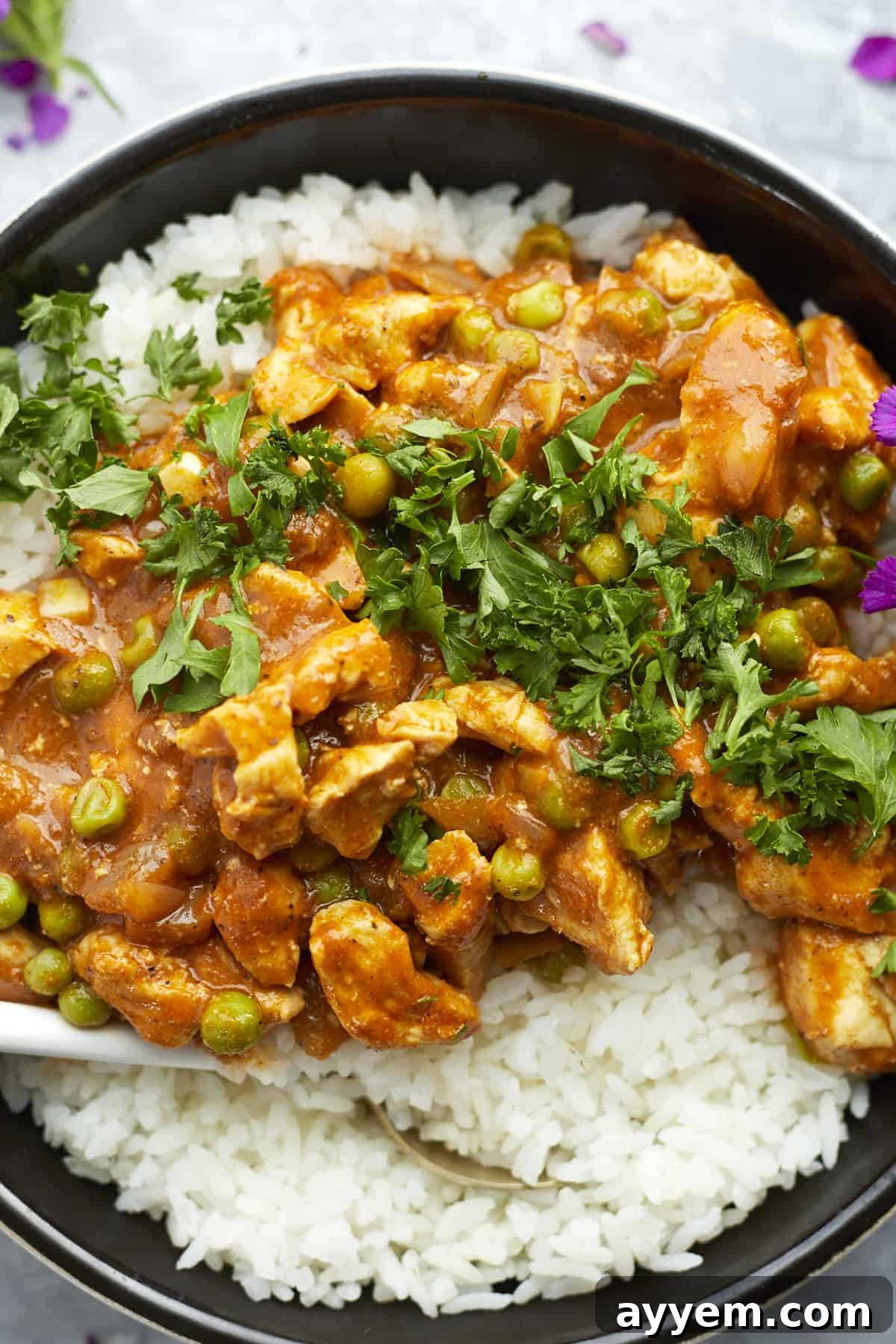
Welcome to a culinary journey where vibrant spices meet creamy textures, creating a dish that is both comforting and exhilarating. If you adore deeply flavored, mildly spicy yet incredibly rich Indian cuisine, then you are in the perfect place. Our Madras Chicken Curry recipe stands out as an effortlessly delicious meal, guaranteed to become a cherished staple in your kitchen.
What makes this recipe truly exceptional is its remarkable versatility. With just one simple modification, it transforms beautifully into a hearty and flavorful vegan option. This makes it an invaluable addition to your recipe repertoire, ensuring you can cater to diverse dietary preferences, whether for plant-based friends, family, or your own healthy lifestyle choices. Continue reading to discover our detailed suggestions on how to effortlessly veganize this Madras curry, making it accessible and enjoyable for everyone!
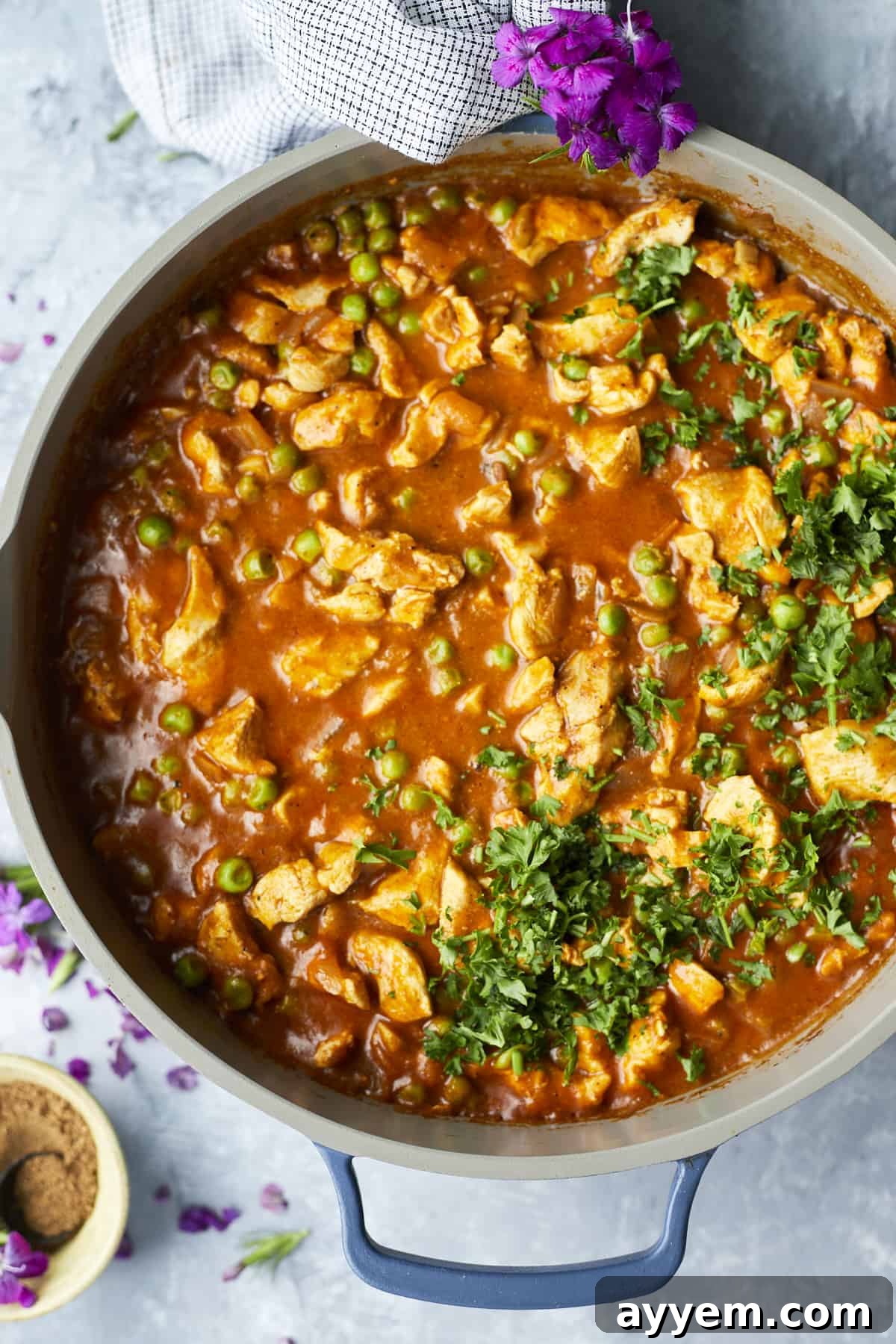
What Exactly is Madras Curry? Unpacking Its Rich Heritage and Flavor Profile
In the culinary landscape of India, the term “curry” encompasses a vast and diverse array of dishes, each characterized by unique spice blends, regional ingredients, and cooking techniques. Unlike the generalized notion of “curry powder” often found in Western supermarkets, Indian curries are a tapestry of distinct flavors. Madras curry, named after the historic city of Madras (now Chennai) in Southern India, is a beloved and iconic example of this rich diversity. It represents a particular style of curry that is celebrated for its distinctive balance of heat, sweetness, and aromatic depth.
The defining characteristics of Madras curry lie in its signature spice combination. While many Indian curries feature a complex blend of spices, Madras curry typically highlights the sweet and fragrant notes of ground cumin, coriander, and cardamom. These core spices are meticulously combined to create a warm, earthy base that is both comforting and inviting. What truly sets Madras curry apart from its counterparts is its characteristic spiciness, often achieved through the inclusion of dried Kashmiri chilies. These chilies provide a vibrant red hue and a pleasant, noticeable heat without being overwhelmingly fiery, making it a favorite for those who appreciate a kick in their meal.
Traditionally, preparing an authentic Madras curry involves toasting and grinding whole spices, then meticulously building the sauce from scratch. While this method yields unparalleled depth of flavor, it can be time-consuming for busy home cooks. This is precisely why we are enthusiastic advocates for using a high-quality curry starter sauce, such as Maya Kaimal’s Madras Curry Indian Simmer Sauce. This product is a game-changer, delivering authentic, complex flavors in a fraction of the time. It eliminates the need for stocking numerous individual spices and mastering intricate blending techniques, making this gourmet-tasting dish accessible even on weeknights. What’s more, despite its luxuriously creamy texture, this particular simmer sauce is naturally dairy-free, catering to those with dietary restrictions without compromising on richness or flavor. Its robust profile and ease of use make it the secret ingredient to a truly spectacular and quick Madras Chicken Curry.
Perfect Pairings: How to Serve Madras Chicken Curry for an Unforgettable Meal
The art of serving Madras Chicken Curry lies in complementing its bold and spicy flavors with balancing elements and delightful textures. While the curry itself is a star, its accompaniments elevate the dining experience to a truly authentic and satisfying level. Here are some of our favorite ways to serve this incredible dish:
- Cooling Raita: Traditionally, Madras curry is often served with raita, a refreshing Indian yogurt condiment. The creamy, cool notes of a simple yogurt dip are an absolute necessity, acting as the perfect counterpoint to the curry’s pleasant heat. Our roasted eggplant and tomato with yogurt dip offers a fantastic inspiration. You can simply prepare the creamy yogurt dip on its own, perhaps with a sprinkle of cumin and a hint of mint, or serve the entire roasted eggplant and tomato dish alongside for an added vegetable component.
- Fluffy Rice for Soaking Up Sauce: Rice is an indispensable companion to any curry, and Madras is no exception. It provides a neutral base that soaks up every drop of the rich, aromatic sauce. Our Egyptian baked rice (aka roz maamar) is a superb pairing, offering a comforting and slightly nutty flavor. Alternatively, classic basmati rice or fragrant jasmine rice would also be excellent choices, ensuring you savor every flavorful spoonful. For a lighter, lower-carb option, consider serving with fluffy cauliflower rice.
- Bright Tahini Dressing: For an unexpected yet delightful twist, a drizzle of tahini dressing can add a refreshing, nutty creaminess that beautifully complements the curry’s robust profile. Similar to raita, it helps to balance the spice. You can whip up the tahini dressing from our oven-roasted whole carrots with tahini dressing recipe, or even serve the entire roasted carrot dish as a vibrant and healthy side. The earthy sweetness of the carrots alongside the tahini is a wonderful textural and flavor contrast.
- Fresh Bread for Scooping: No Indian meal is complete without warm bread for scooping up every last bit of delicious curry. Pillowy naan bread, flaky paratha, or even simple homemade chapatis would be excellent choices. Their soft texture and mild flavor make them perfect for savoring the rich sauce.
- Simple Green Salad: A crisp, refreshing green salad with a light vinaigrette can provide a welcome textural contrast and a fresh element to cut through the richness of the curry. It’s a great way to add more greens to your meal.
- Roasted or Steamed Vegetables: Enhance the nutritional value and texture of your meal by adding a side of simply roasted or steamed vegetables like green beans, broccoli florets, or asparagus. These can be lightly seasoned to keep the focus on the curry.
Whichever accompaniments you choose, serving Madras Chicken Curry is an opportunity to create a balanced and flavorful feast that delights all the senses. Don’t forget a sprinkle of fresh cilantro for a final burst of color and aroma!
Effortless Elegance: Your Step-by-Step Guide to Making Madras Chicken Curry
Preparing this incredibly flavorful Madras Chicken Curry is surprisingly simple, thanks to the convenience of a high-quality simmer sauce. Follow these straightforward steps to create a hearty and aromatic dish in less than 30 minutes:
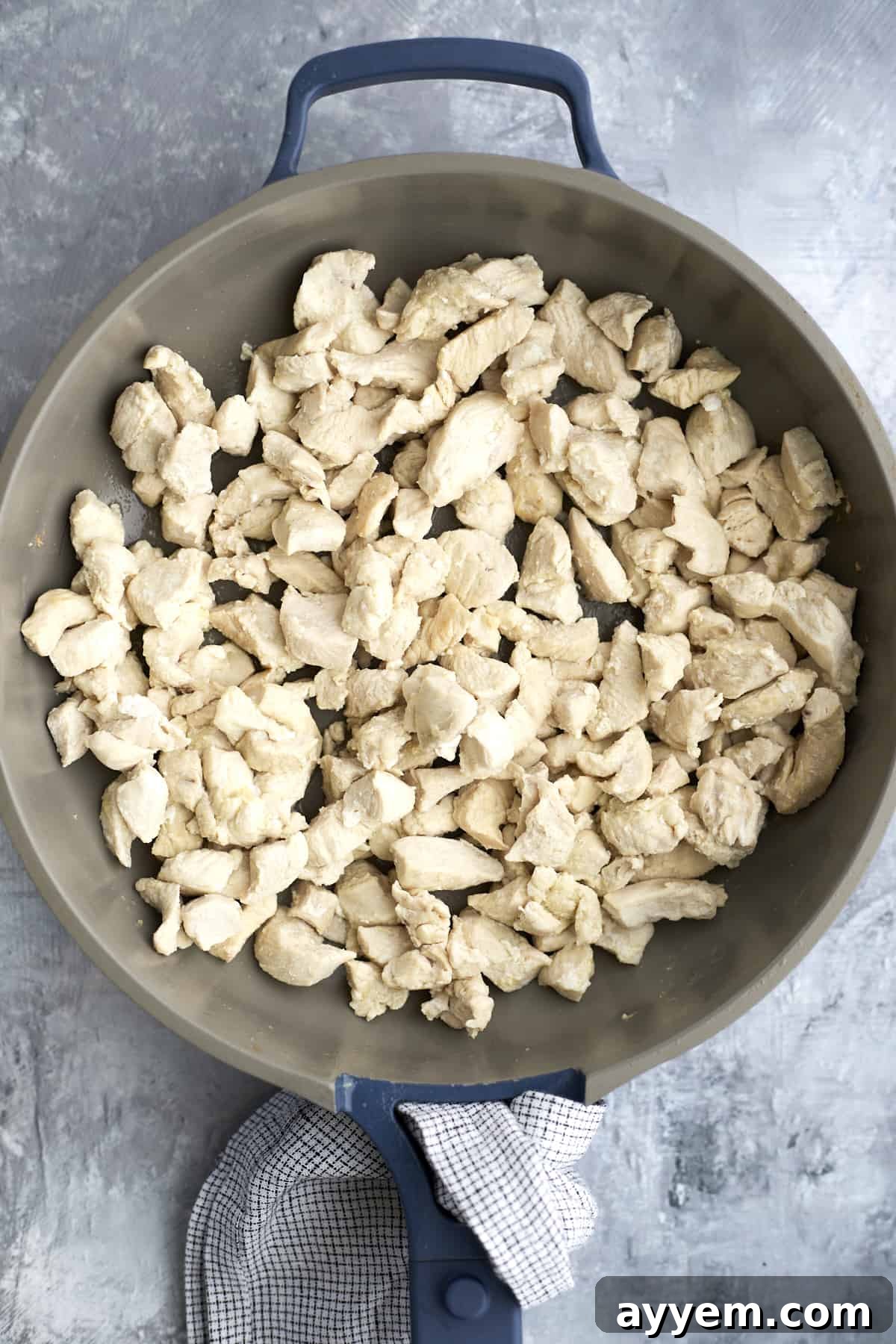
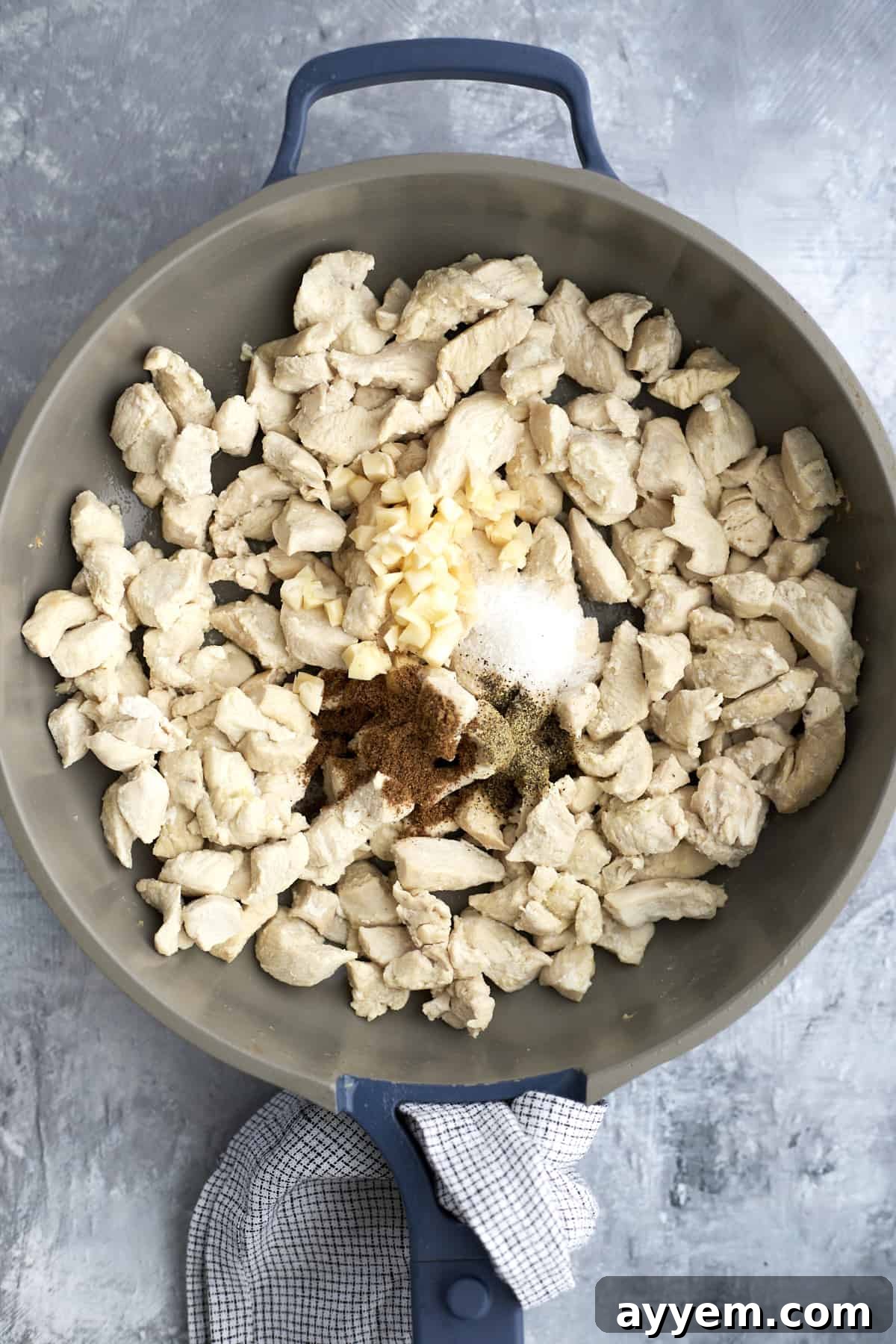
- Sear the Chicken: Begin by drizzling 2 tablespoons of olive oil into a deep, heavy-bottomed pan or Dutch oven. Heat the pan over medium-high heat until the oil shimmers. Carefully add the cubed boneless, skinless chicken breast in a single layer. To ensure even browning and a delicious crust, you may need to cook the chicken in two batches if your pan isn’t large enough to accommodate it all without overcrowding. Overcrowding will steam the chicken instead of searing it. As the chicken cooks, sprinkle it generously with 1 teaspoon of kosher salt, 1/2 teaspoon of fresh ground black pepper, and 1 teaspoon of garam masala spice mix. Allow the chicken to sear for 5-7 minutes, turning occasionally, until it’s beautifully browned on all sides and mostly cooked through. This searing step is crucial for developing deep flavor.
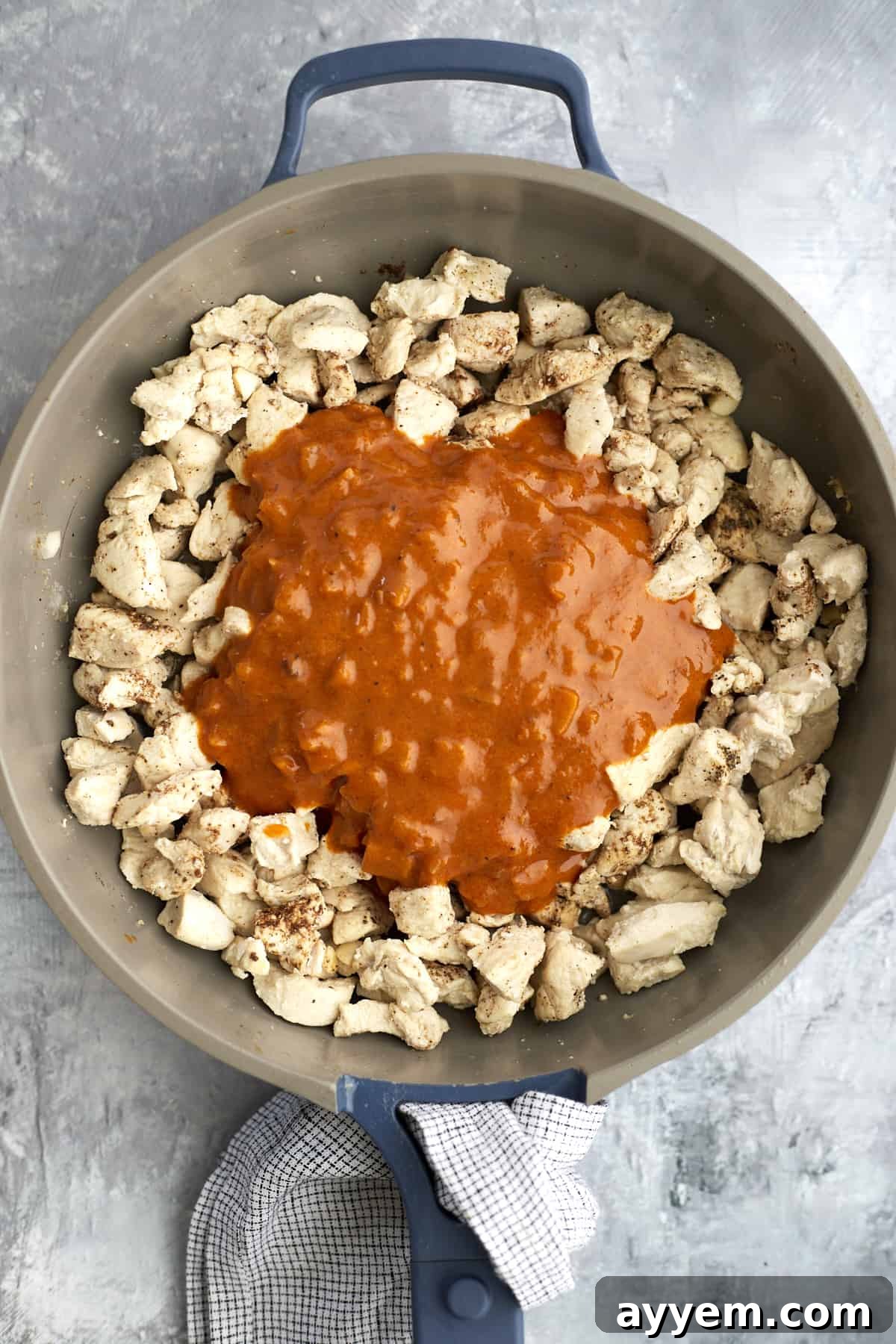
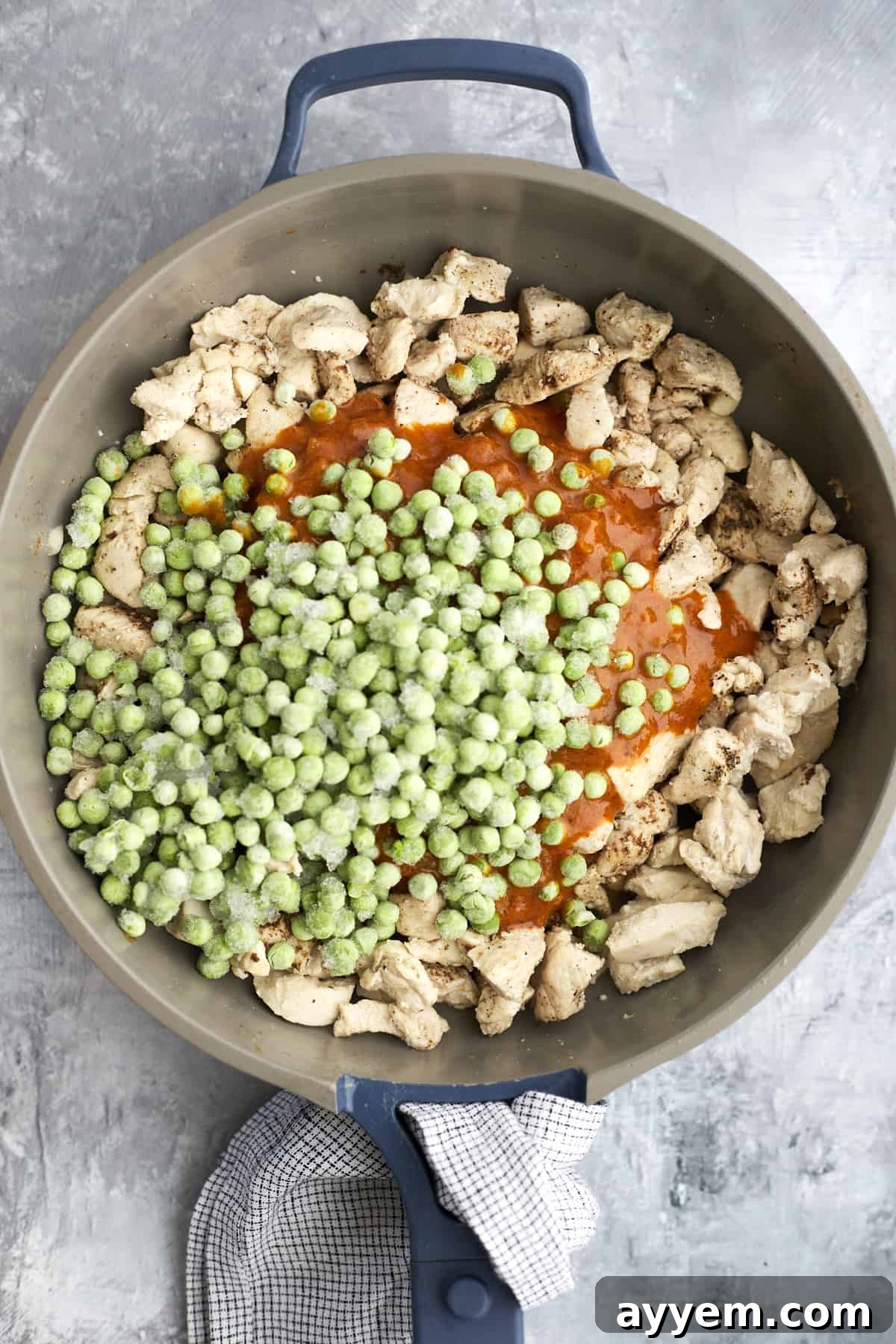
- Introduce the Curry Sauce and Peas: Once the chicken is seared, reduce the heat to medium. Pour in the 12.5 ounces of Madras Curry Simmer Sauce. The rich aromas will immediately begin to fill your kitchen! Next, add 12 ounces of frozen green peas directly to the pan. Gently stir all the ingredients together, ensuring the chicken and peas are thoroughly coated in the fragrant curry sauce.
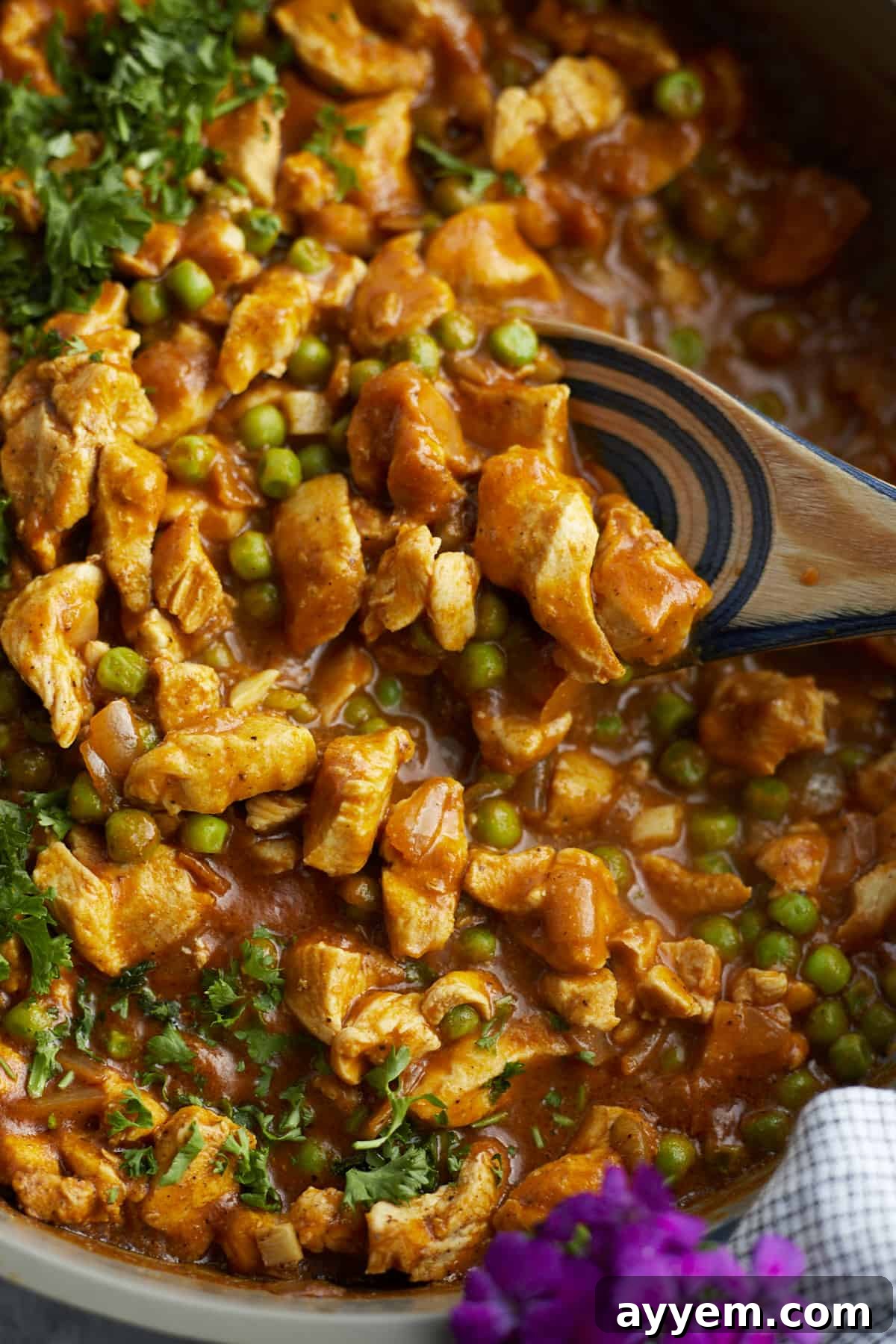
- Simmer to Perfection: Bring the contents of the pan to a gentle simmer. Once simmering, reduce the heat to low, cover the pan, and allow everything to cook together for another 8-10 minutes. This simmering time allows the flavors to meld beautifully, the chicken to finish cooking through, and the peas to become tender and infused with the curry’s essence. Stir occasionally to prevent sticking.
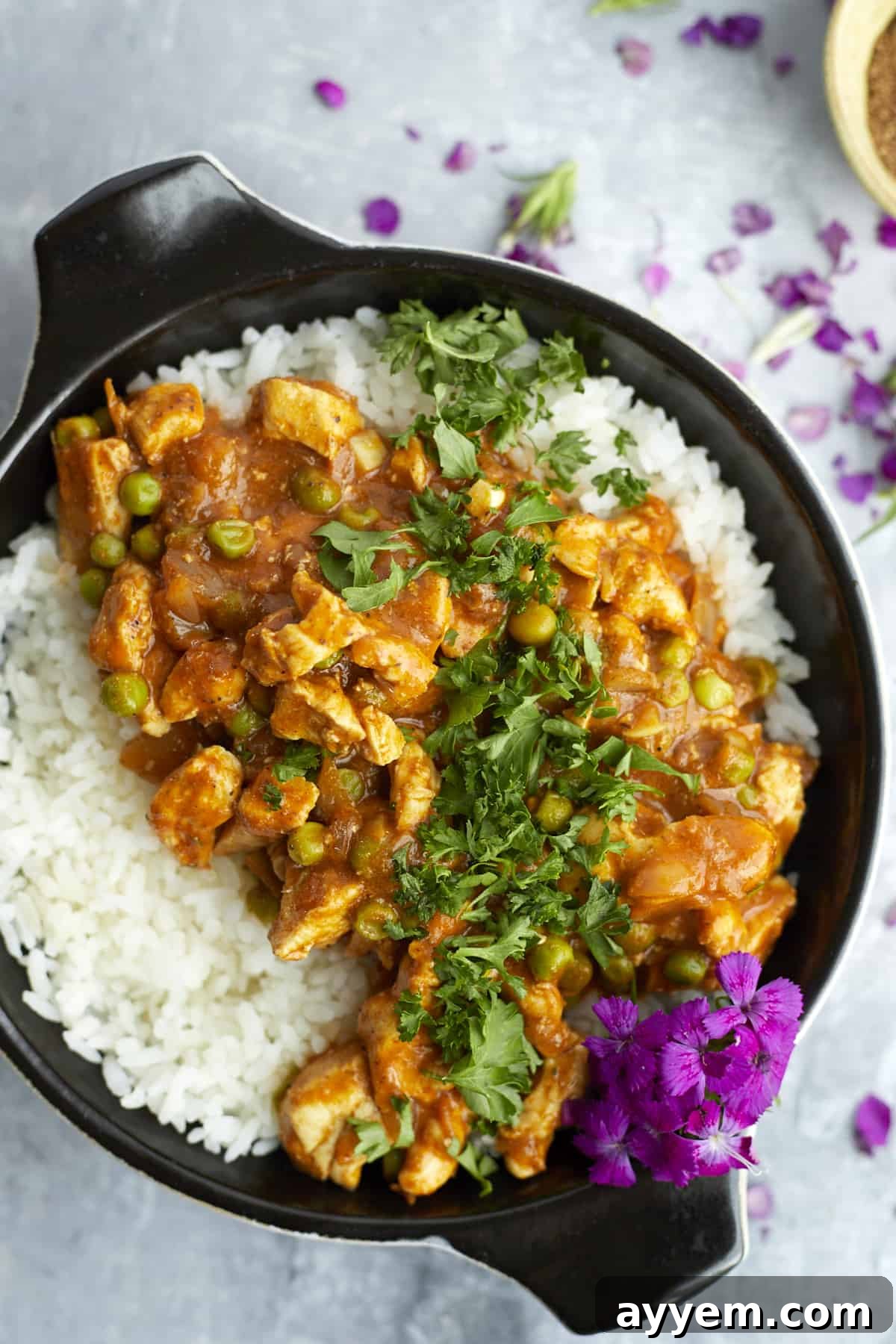
- Serve and Garnish: Your Madras Chicken Curry is now ready! Serve it hot, piled high over fluffy basmati rice, our recommended Egyptian baked rice, or any of your favorite grains. For a vibrant finish and an added layer of fresh flavor, generously garnish with freshly chopped cilantro. Enjoy this quick, easy, and profoundly satisfying meal!
Plant-Powered Perfection: Crafting a Delicious Vegan Madras Curry
One of the most exciting aspects of this Madras Curry recipe is how incredibly simple it is to adapt for a plant-based diet, without sacrificing any of its rich flavor or creamy texture. You’ll be delighted to know that the Madras curry sauce we recommend and use is inherently vegan-friendly, being naturally dairy-free. This means the heavy lifting of finding a creamy, flavorful vegan base is already done for you!
To transform this into a sensational vegan Madras curry, all you need to do is substitute the chicken with your favorite plant-based protein or a medley of vegetables. Here are some fantastic options to consider:
- Hearty Beans: Beans are an excellent and easy substitute, providing a substantial source of protein and fiber. While almost any type of bean would work well, we highly recommend trying red kidney beans. Their firm texture and robust outer layer hold up beautifully during simmering, mimicking the heartiness of chicken. Simply rinse and drain a can of kidney beans and add them to the curry in step 2, simmering for slightly less time (5-7 minutes) as they are already cooked.
- Nutrient-Rich Lentils: Lentils offer another wonderful, protein-packed alternative. They bring an earthy flavor and a pleasing texture to the curry. While canned beans are quicker, cooking lentils from scratch (brown or green lentils work best) will provide an even richer depth. Remember to cook the lentils separately according to package instructions before adding them to the curry in step 2. Simmer for 5-7 minutes to allow them to absorb the curry flavors.
- Versatile Jackfruit: For a truly unique and meat-like texture, consider young green jackfruit. This large tropical fruit, though spiky on the outside, has a remarkably mild flavor when young, making it a fantastic canvas for absorbing the vibrant spices of the Madras curry. When cooked, its fibrous texture often resembles pulled pork. Look for canned young jackfruit (often packed in brine or water), drain it, rinse thoroughly, and shred it gently with your hands or two forks. Add it directly to the pan with the curry sauce in step 2 and simmer until tender and thoroughly infused.
- Abundant Vegetables: Embrace the goodness of a vegetable-forward curry! The possibilities are endless. Whether you have leftover roasted broccoli, a bag of mixed frozen vegetables, or a fresh combination of potatoes, cauliflower, bell peppers, carrots, or spinach, almost any vegetable will shine in this curry. Cut harder vegetables like potatoes or carrots into smaller pieces to ensure they cook through. Add them in step 2 and simmer until tender-crisp.
- Classic Chickpeas: Chickpeas (garbanzo beans) are a beloved staple in Indian cuisine and pair exquisitely with the flavors of Madras curry. They offer a delightful bite, a good source of plant-based protein, and a healthy, nourishing addition to the dish. Simply rinse and drain a can of chickpeas and add them to the curry in step 2, simmering for 5-7 minutes to warm through and soak up the sauce.
No matter which vegan alternative you choose, you’ll be treated to a delicious, creamy, and satisfying Madras curry that is bursting with authentic Indian flavors, all while being completely plant-based.
Common Questions About Madras Curry Chicken
Absolutely! Madras curry is one of those dishes that often improves with time. After a day or two in the refrigerator, the spices have more opportunity to meld and deepen, resulting in an even more complex and satisfying flavor profile. To reheat, simply warm it gently on the stovetop over low to medium heat, stirring occasionally. If the sauce has thickened too much during storage, add a splash of water, vegetable broth, or coconut milk to achieve your desired consistency. This makes it a perfect meal prep option for busy weeks!
Basmati rice is the classic and arguably best choice for serving with Madras curry chicken. Its long, slender grains cook up light and fluffy, remaining separate rather than clumping together, which makes it ideal for soaking up all that rich, spicy, and aromatic sauce. Furthermore, Basmati rice has a delicate, subtle floral aroma that beautifully complements the bold flavors of the curry without overpowering them. Another fantastic option is Jeera rice (cumin rice), which adds an extra layer of savory spice to your meal, enhancing the overall Indian experience.
Many vegetables can be wonderful additions to Madras curry chicken, enhancing its nutritional value and textural variety. Classic choices include hearty root vegetables like potatoes and carrots, which become wonderfully tender and absorb the curry flavors beautifully. Green peas, as used in this recipe, add a pop of sweetness and color. For more texture and substance, consider adding bell peppers (any color), cauliflower florets, or even chopped spinach or kale towards the end of the cooking process. Feel free to experiment with your favorites!
The Madras curry simmer sauce we use is designed to have a perfect creamy consistency. However, if you find your curry is thinner than desired, there are a few simple ways to thicken it. The easiest method is to simply let the curry simmer uncovered for a few extra minutes over medium-low heat; this allows some of the liquid to evaporate, naturally reducing and thickening the sauce. For added richness and a more substantial thickness, you can also stir in a tablespoon or two of finely ground cashews or almonds (or cashew/almond butter) during the last few minutes of simmering. This not only thickens the sauce but also adds a lovely nutty flavor.
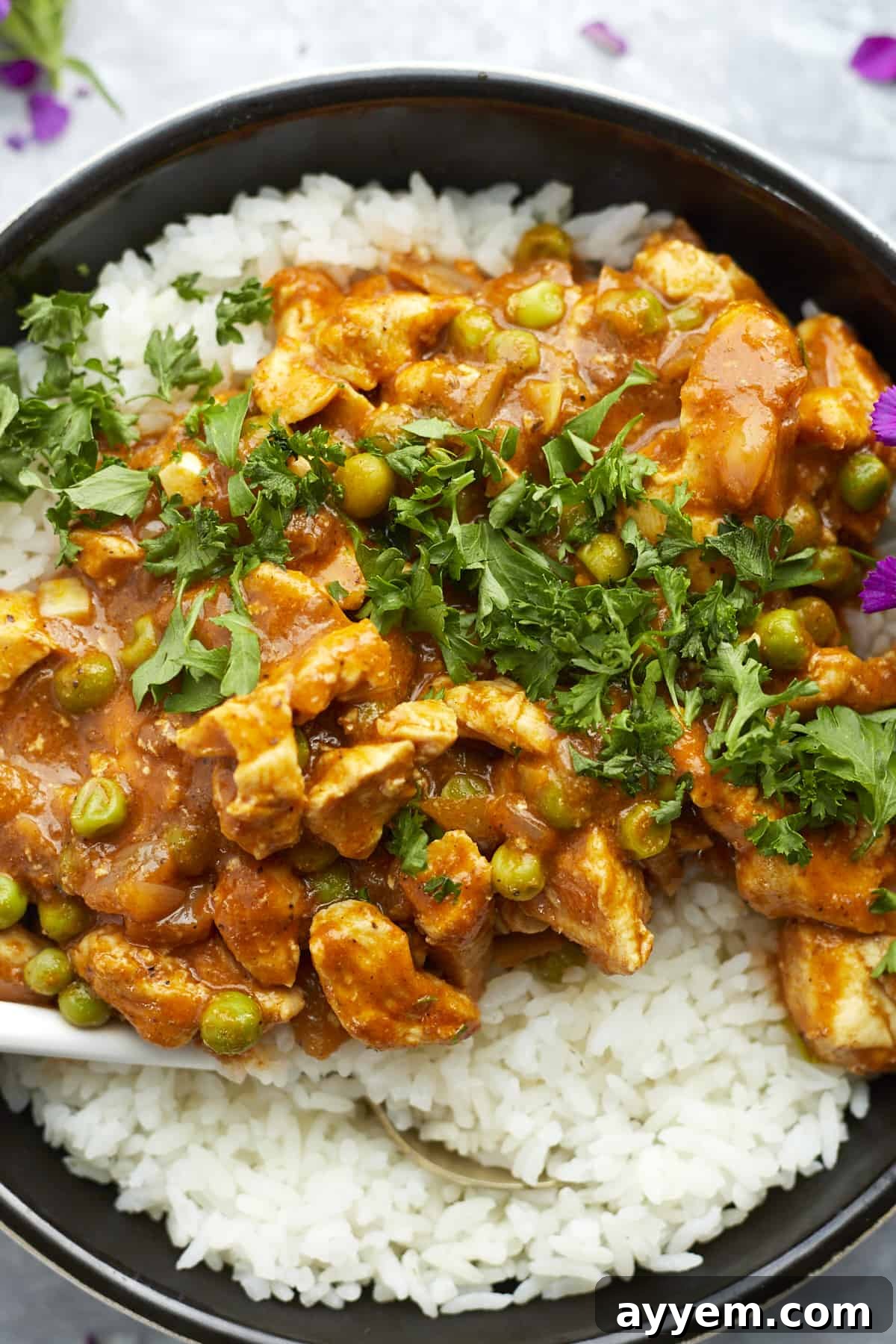
Madras Chicken Curry
Pin
Ingredients
- 2 Tablespoons olive oil
- 1 1/2 pounds boneless and skinless chicken breast cubed
- 1 teaspoon kosher salt
- 1/2 teaspoon fresh ground black pepper
- 1 teaspoon garam masala spice mix
- 12.5 ounces Madras Curry Simmer Sauce such as Maya Kaimal
- 12 ounces frozen green peas
- Cilantro for garnish
Instructions
-
Drizzle olive oil into a deep pan. Heat the pan over medium-high heat, then add the cubed chicken in a single layer (you may have to make this in batches if the pan isn’t big enough). Sprinkle on salt, pepper, and garam masala and allow the chicken to cook, browning on all sides, for about 5-7 minutes.2 Tablespoons olive oil, 1 1/2 pounds boneless and skinless chicken breast, 1 teaspoon kosher salt, 1/2 teaspoon fresh ground black pepper, 1 teaspoon garam masala spice mix
-
Reduce heat to medium. Add the Madras curry sauce and frozen peas to the pan. Mix everything together, ensuring all ingredients are well coated in the sauce. Bring the contents to a gentle simmer.12.5 ounces Madras Curry Simmer Sauce, 12 ounces frozen green peas
-
Once simmering, reduce the heat to low, cover the pan, and allow the curry to cook for another 8-10 minutes, allowing the flavors to meld and the chicken to finish cooking through. Stir occasionally. Serve hot with your choice of rice, and a garnish of fresh cilantro.Cilantro for garnish
Equipment
Nutrition
Nutrition information is automatically calculated, so should only be used as an approximation.