
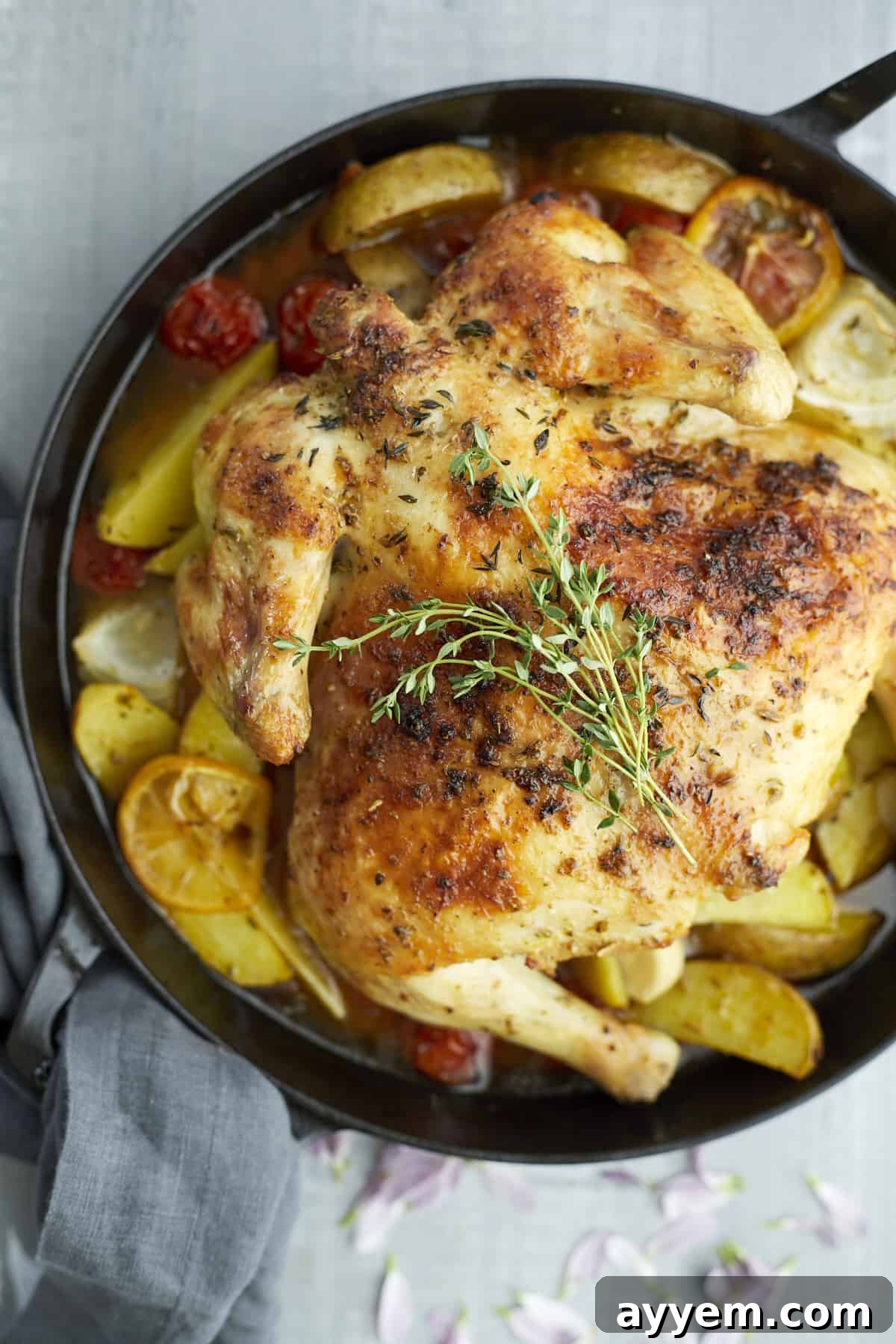
The Ultimate Guide to Whole Roasted Chicken with Vegetables: Crispy Skin, Juicy Meat, and a Flavorful One-Pan Meal
Transform your kitchen into a haven of savory aromas with this incredibly easy and utterly satisfying whole roasted chicken recipe. Paired with a vibrant medley of roasted vegetables, this dish offers the perfect balance of comfort, flavor, and convenience, all cooked in a single pan. Whether you’re planning a cozy family dinner, a small holiday gathering, or simply craving a hearty and wholesome meal, this recipe delivers crispy skin, irresistibly juicy meat, and tender, caramelized vegetables with minimal effort.
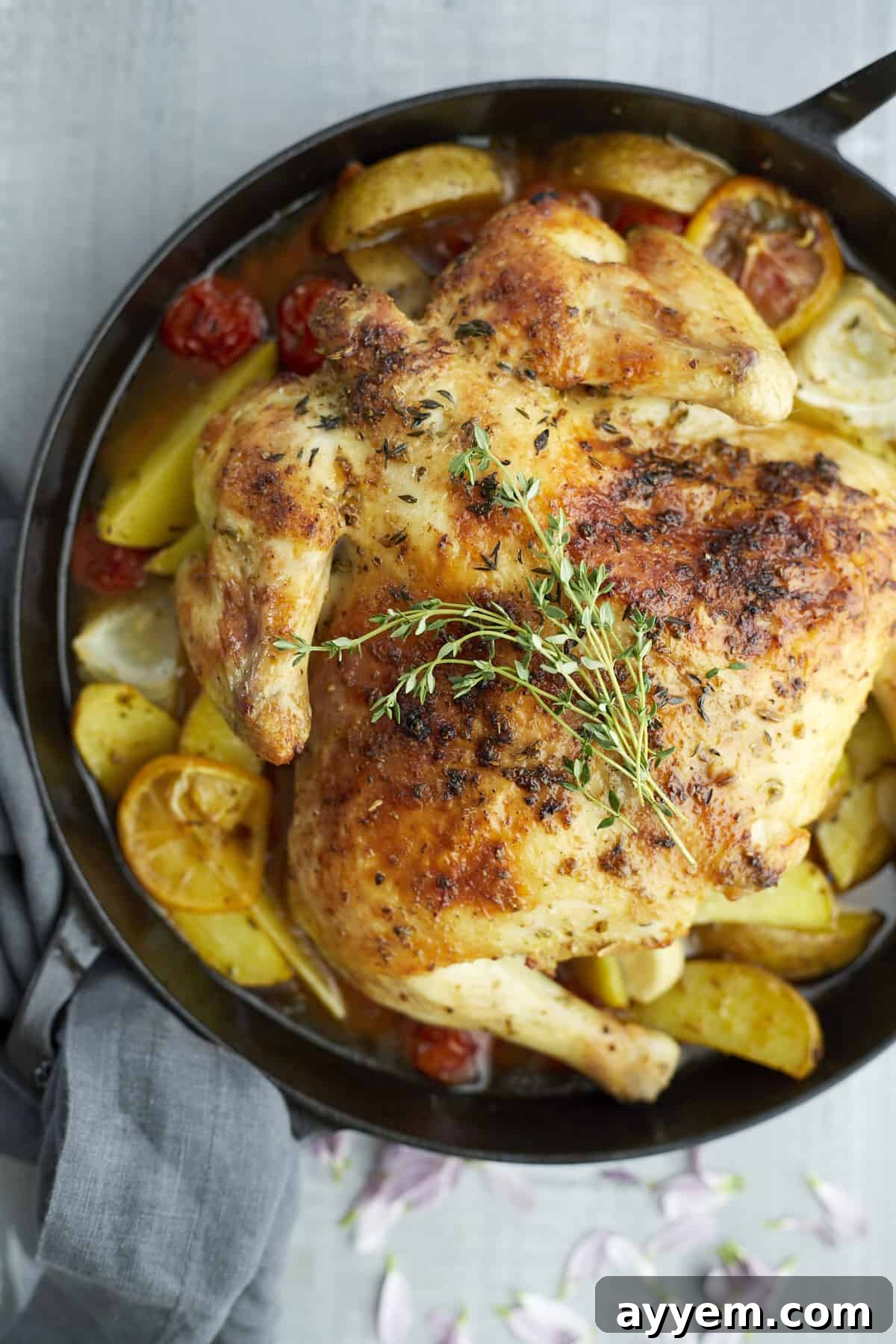
Why Spatchcocking a Chicken is a Game-Changer for Roasting
For generations, traditional whole chicken roasting often involved a technique called trussing, where the bird’s legs and wings were tied tightly to its body. While aiming for even cooking, this method was not only time-consuming during prep but also significantly extended the overall cooking duration. Furthermore, trussing often led to unevenly cooked chicken, where the delicate breast meat would dry out long before the thighs and legs were fully cooked.
Enter the art of spatchcocking, also known as butterflying. This simple yet revolutionary technique involves removing the chicken’s backbone and flattening the bird, allowing it to lie completely flat in the roasting pan. The benefits of spatchcocking are undeniable, making it the preferred method for home cooks and professional chefs alike:
- Guaranteed Even Cooking: When a whole chicken is roasted in its traditional form, the breast, being leaner, tends to cook faster than the denser leg and thigh meat. By butterflying the chicken, all parts of the bird are exposed to the oven’s heat more uniformly. This means the breasts and thighs cook at a more similar rate, preventing the breast from drying out while ensuring the dark meat is perfectly tender and cooked through.
- Significantly Faster Cooking Time: Laying the chicken flat dramatically increases the surface area exposed to heat. This allows for more efficient heat penetration, leading to a much shorter cooking time compared to a trussed bird. You’ll shave off a considerable amount of time, making this a fantastic option for weeknight dinners when time is of the essence.
- Achieve Unbeatable Crispy Skin: One of the most coveted aspects of roasted chicken is that golden, crackling crispy skin. Spatchcocking ensures that nearly all of the chicken’s skin faces upward, directly exposed to the dry heat of the oven. This promotes maximum browning and crisping, delivering perfect bites every time without any soggy or undercooked spots on the underside.
- Enhanced Flavor Absorption: With the chicken flattened, it’s easier to generously season both the top and underside of the bird. This allows the marinade and spices to penetrate more deeply into the meat, resulting in a more flavorful chicken overall.
Mastering the Art of Butterflying a Whole Chicken
Butterflying a chicken might sound intimidating, but it’s a straightforward process that requires just a few simple tools and a little confidence. Once you’ve done it a couple of times, it will become second nature, forever changing your approach to roasting poultry.
- Prepare Your Workspace: Begin by placing your whole chicken breast-side down on a sturdy cutting board. Ensure your board is stable to prevent slipping. It’s also a good idea to have some paper towels handy for a firmer grip and for patting the chicken dry later.
- Locate and Remove the Backbone: Identify the backbone, which runs down the center of the chicken’s back. You’ll notice the ribs connecting to it on either side. Using a good pair of sharp kitchen shears (this is key – they make the job incredibly easy!) or a very sharp chef’s knife, carefully cut along one side of the backbone, from the tail end up to the neck. Repeat this process on the other side of the backbone to completely remove it. You can save the backbone for making flavorful chicken stock later.
- Flatten the Bird: Once the backbone is removed, flip the chicken over so it is breast-side up. Place the palm of your hand firmly on the center of the breastbone. Press down with considerable force until you hear a distinct “snap.” This action breaks the breastbone, allowing the chicken to lie completely flat and ensuring it maintains this flattened shape throughout the cooking process without contracting.
- Pat Dry for Crispy Skin: Before seasoning, use paper towels to thoroughly pat the chicken dry, both on the skin side and underneath. This step is crucial for achieving that coveted crispy skin. Moisture on the surface will steam the skin instead of allowing it to crisp.
That’s it! Your chicken is now perfectly butterflied and ready for seasoning and roasting.
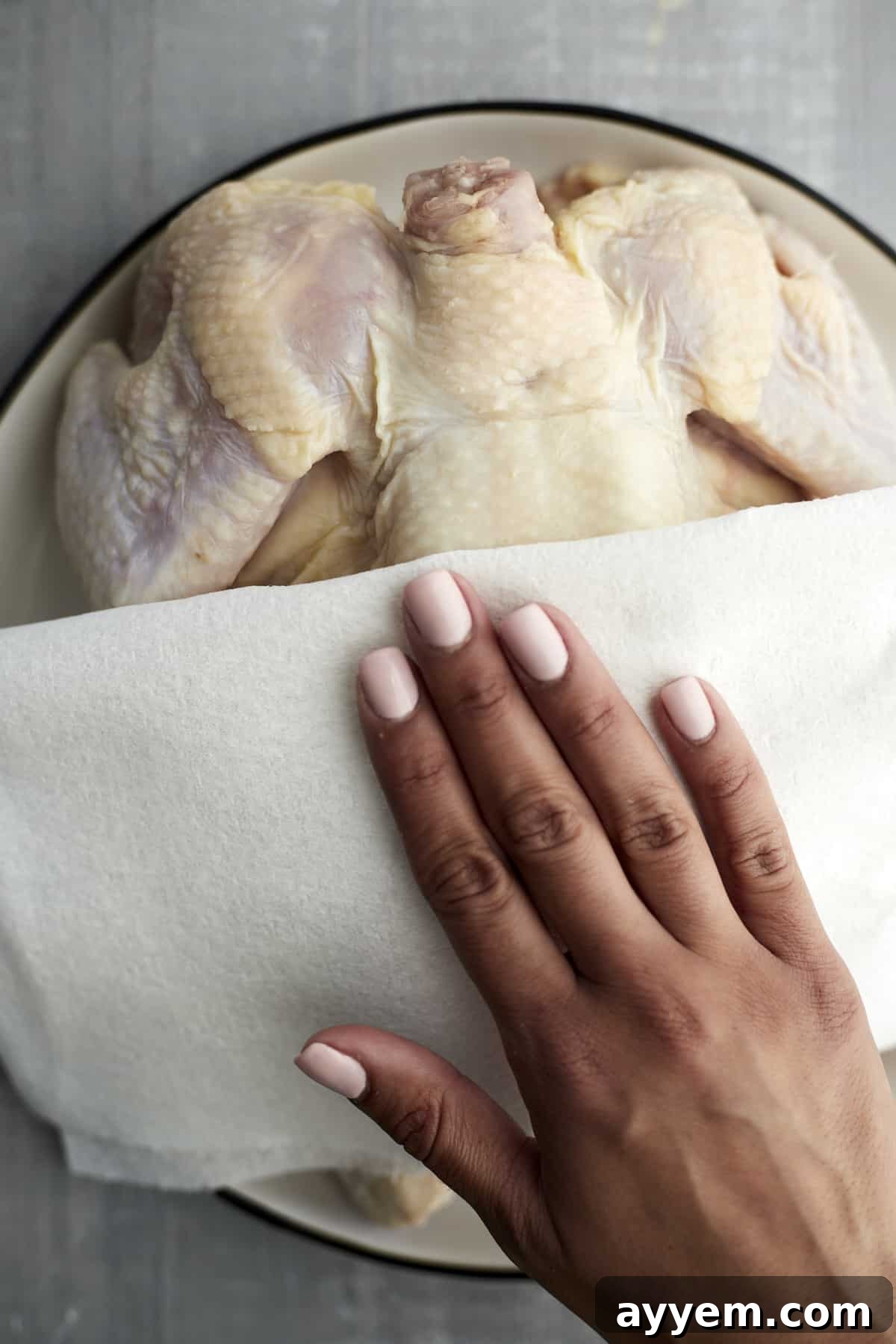
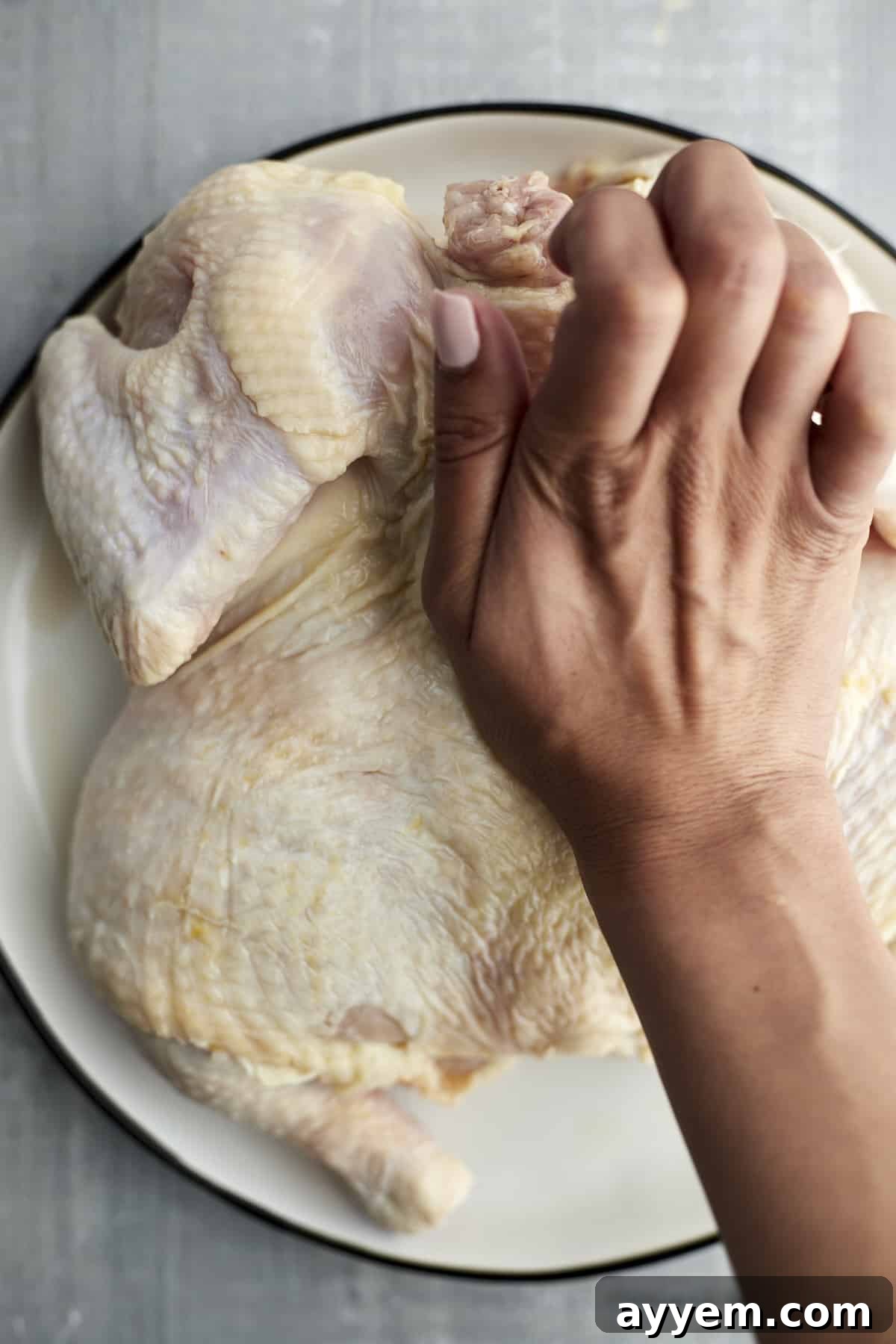
Crafting Your Perfect Roasted Chicken and Vegetable Meal
With your chicken prepped, the next steps are all about building layers of flavor. This recipe is designed to be a true one-pan wonder, with the vegetables roasting underneath the chicken, absorbing all the delicious drippings and becoming incredibly tender and flavorful.
- Butterfly Your Chicken: Follow the detailed instructions above to spatchcock your whole chicken. Ensure it’s patted thoroughly dry before proceeding.
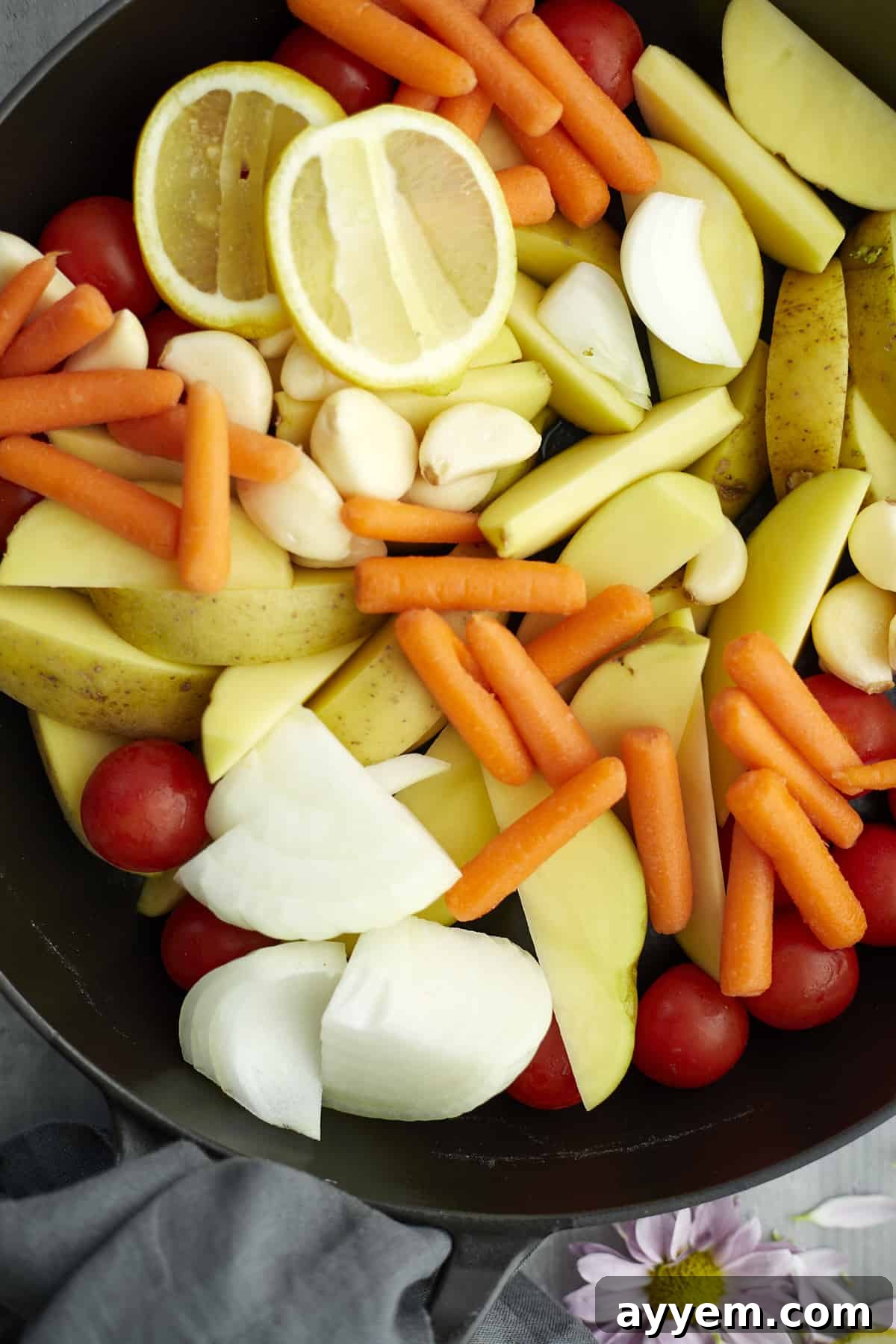
- Prepare Your Vegetables: Wash and chop all your chosen vegetables. For potatoes, carrots, and onions, aim for pieces of roughly the same size (about 1.5 to 2 inches). This uniformity is essential for even cooking. Slice lemons lengthwise into thick rounds and prepare your head of garlic by simply cutting off the top ¼ inch to expose the cloves, leaving the skin on.
- Assemble the Vegetable Bed: Spread the chopped vegetables, whole garlic head, and lemon slices evenly into a large roasting pan or oven-safe dish. A cast iron pan also works wonderfully for this.
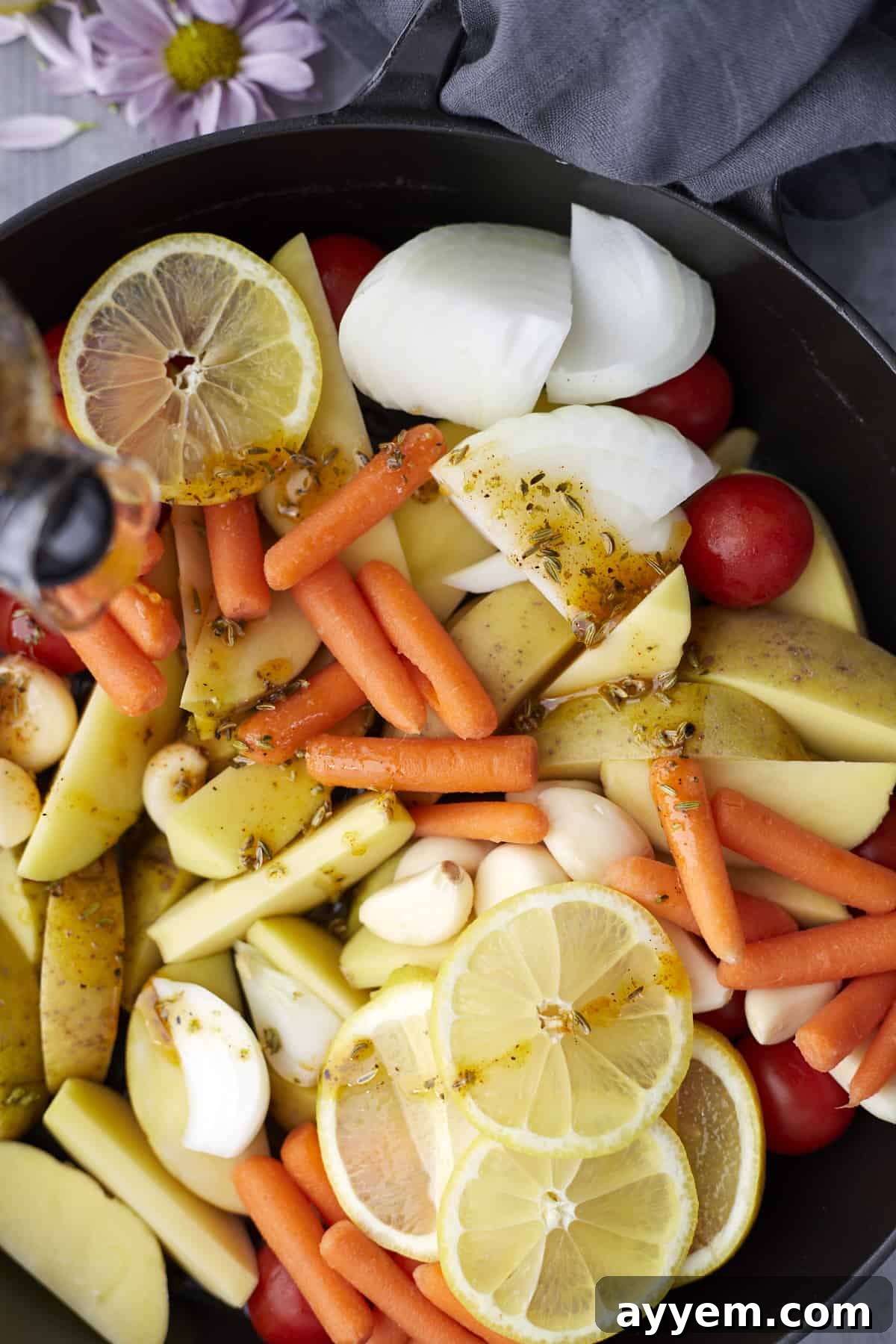
- Whisk the Flavorful Marinade: In a medium measuring cup or bowl, combine the extra virgin olive oil, freshly squeezed juice from one lemon, smoked paprika, dried oregano, fresh thyme sprig, sea salt, fresh ground black pepper, fennel seeds, lemon pepper, and garlic powder. Whisk vigorously until all the herbs and spices are thoroughly incorporated into the oil and lemon juice, creating a fragrant, vibrant marinade.
- Seasoning is Key: Pour about one-third of your prepared marinade over the vegetables in the roasting pan. Toss them gently to ensure they are evenly coated. Now, take the remaining marinade and generously rub it all over your butterflied chicken. Don’t be shy – get under the skin, especially over the breast meat, and ensure the entire surface is coated. The oil and spices will create an incredible crust and infuse the meat with flavor. Lay the butterflied chicken, skin-side up, directly over the bed of marinated vegetables in the pan.
- Roast to Perfection: Preheat your oven to 375 degrees Fahrenheit (190 degrees Celsius). Once hot, carefully place your roasting pan in the oven. Roast for 60-75 minutes, or until the chicken’s internal temperature reaches 165 degrees Fahrenheit (74 degrees Celsius) in the thickest part of the thigh (without touching the bone) and the juices run clear when pierced. The skin should be deeply golden brown and wonderfully crispy.
- Rest and Serve: Once cooked, carefully remove the pan from the oven. Transfer the whole chicken and roasted vegetables to a large platter. Tent them loosely with aluminum foil and allow them to rest for at least 15-20 minutes. This resting period is critical; it allows the juices in the chicken to redistribute throughout the meat, ensuring every bite is moist and tender. After resting, carve or pull apart the chicken, serve it alongside the caramelized vegetables, and enjoy!
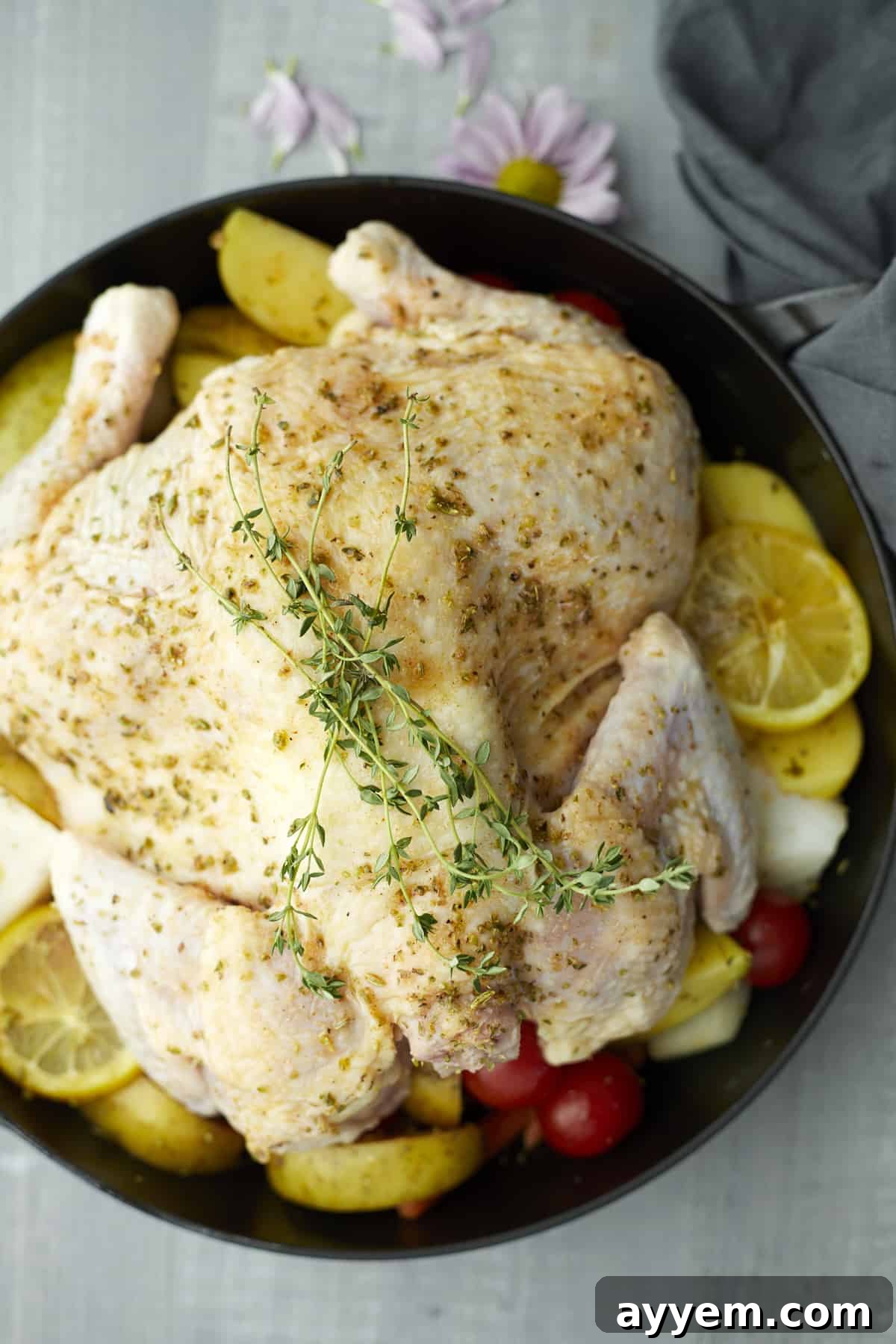
Elevate Your Roast: Creative Vegetable Combinations
While potatoes, carrots, onions, and tomatoes make a classic and delicious pairing, the beauty of this roasted chicken recipe lies in its versatility. You can easily customize the vegetable medley to suit your preferences or what’s in season. Many vegetables are robust enough to stand up to the high heat of roasting and beautifully absorb the chicken’s flavorful drippings. Here are some fantastic alternatives and additions:
- Brussels Sprouts: These cruciferous gems are perfect for roasting. For best results, blanch them briefly in boiling water for 2-3 minutes before adding them to the roasting pan. This pre-cooking step softens their tough texture slightly, ensuring they roast to a tender, caramelized perfection without drying out. Halve or quarter larger sprouts.
- Broccoli or Cauliflower: Both broccoli florets and cauliflower florets are nutrient-dense and develop a wonderful nutty flavor and tender-crisp texture when roasted. Toss them generously with a little olive oil and seasoning before adding to the pan.
- Parsnips: Similar to carrots, parsnips are a root vegetable with a naturally sweet, slightly earthy flavor. Their decent sugar content makes them ideal for roasting, as they caramelize beautifully, adding a depth of sweetness and an irresistible aroma to your dish. Peel and chop them into uniform chunks.
- Squash (Butternut, Acorn, Delicata): Any variety of winter squash makes a delightful addition, especially fitting for autumn or holiday roasts. Butternut and acorn squash should be peeled, deseeded, and cubed into 1-inch pieces. Delicata squash can often be roasted with its skin on for added ease and texture. Their inherent sweetness complements the savory chicken wonderfully.
- Mushrooms (Button, Cremini, Portobello): Mushrooms add an umami-rich depth to any roast. Button or cremini mushrooms work exceptionally well. For best results, leave them whole or halve larger ones, as they tend to shrink considerably during cooking. They will soak up the chicken drippings, becoming incredibly flavorful and tender.
- Bell Peppers: Red, yellow, or orange bell peppers, cut into large strips or chunks, add a vibrant color and sweet flavor.
- Asparagus or Green Beans: These delicate vegetables can be added during the last 20-30 minutes of roasting to prevent them from overcooking and becoming mushy.
Common Questions About Whole Roasted Chicken with Vegetables
For the crispiest skin, it’s best to keep your spatchcocked chicken uncovered throughout the roasting process. The direct heat allows the skin to brown and crisp beautifully. The vegetables underneath will benefit from the chicken drippings and steam, cooking perfectly without needing to be covered.
Not for this specific recipe! Since the vegetables are arranged in a single layer beneath the butterflied chicken, they get cooked evenly by the circulating heat and are constantly basted by the flavorful juices dripping from the chicken above. This creates a wonderful blend of flavors and ensures they cook without needing to be disturbed.
Several factors contribute to a juicy roasted chicken:
- Start at Room Temperature: Allow the chicken to sit out for 30-60 minutes before roasting. A room-temperature bird cooks more evenly.
- Spatchcocking: This technique, as discussed, promotes even cooking, preventing the breast from drying out.
- Generous Fat Rub: Rubbing olive oil or butter under and over the skin creates a protective layer and helps render the fat, contributing to moisture and crispiness.
- Don’t Overcook: Use a meat thermometer to ensure the chicken reaches 165°F (74°C) in the thickest part of the thigh. Remove it promptly once this temperature is reached.
- Resting Period: Always rest the chicken for 15-20 minutes after roasting. This allows the juices to redistribute, keeping the meat moist.
Absolutely! This is a fantastic time-saving strategy. You can butterfly and season the chicken, chop all your vegetables, and store them separately in airtight containers in the refrigerator overnight. The next day, simply assemble everything in the roasting pan and pop it in the oven for a super quick and easy dinner.
The USDA recommends cooking whole chicken to an internal temperature of 165°F (74°C). Insert an instant-read thermometer into the thickest part of the thigh, avoiding the bone, to get an accurate reading. The juices should also run clear.
Yes, absolutely! Dried herbs are a great substitute for fresh. As a general rule, use about one-third of the amount of dried herbs as you would fresh, as their flavor is more concentrated. For example, if a recipe calls for 1 tablespoon of fresh thyme, use 1 teaspoon of dried thyme.
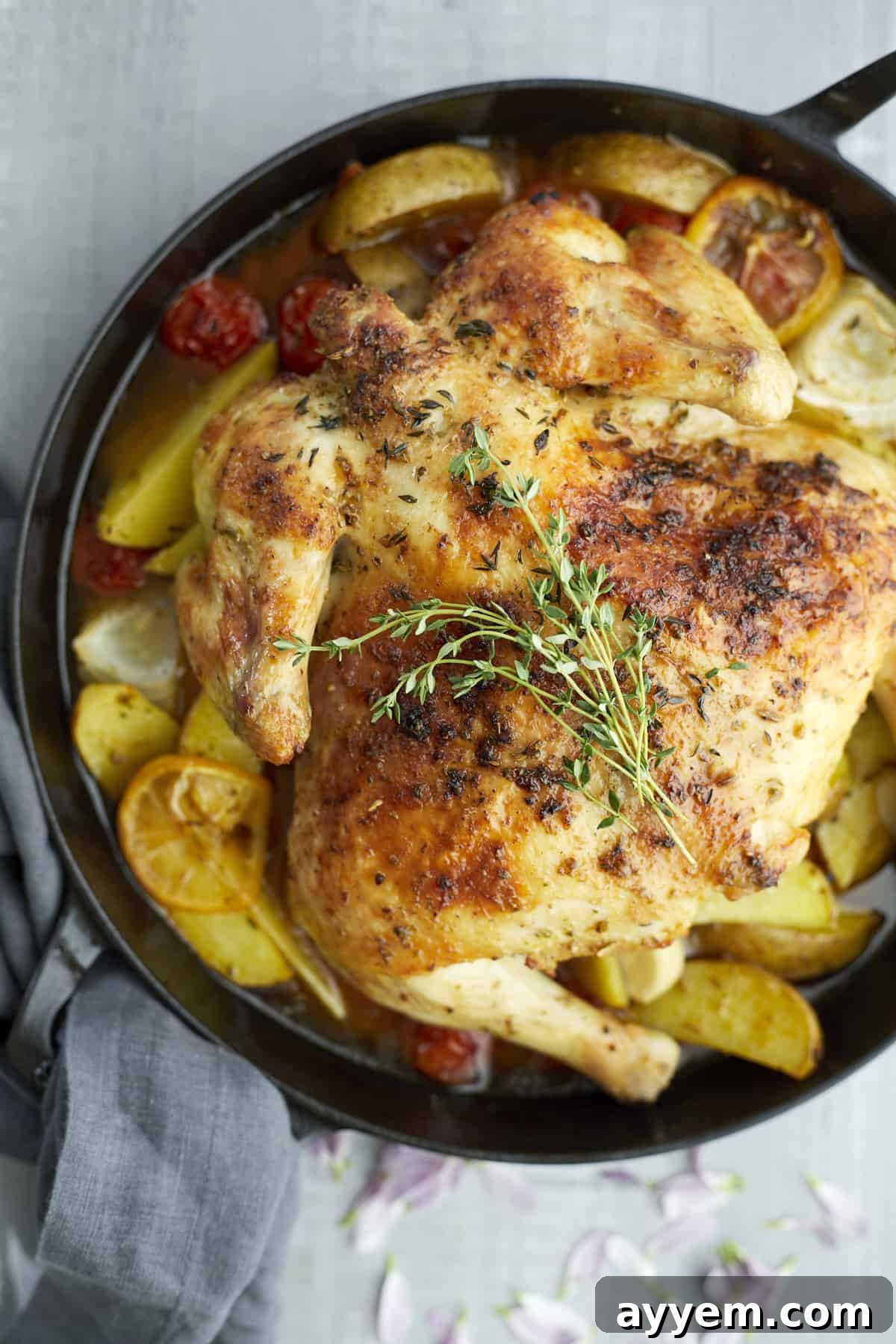
Whole Roasted Chicken with Vegetables
Food Dolls
6
servings
15
1
1
15
Ingredients
- 1/2 cup extra virgin olive oil
- 1 whole lemon, juiced
- 3 teaspoons smoked paprika
- 3 teaspoons dried oregano
- 1 sprig fresh thyme
- 3 teaspoons sea salt
- 1 teaspoon fresh ground black pepper
- 1 teaspoon fennel seeds
- 2 teaspoons lemon pepper
- 2 teaspoons garlic powder
- 1/2 pound quartered red potatoes
- 1/2 pound quartered Yukon gold potatoes
- 1 cup cherry tomatoes
- 2 carrots, roughly chopped
- 1 large quartered onion
- 1 head garlic, top sliced off
- 1 whole 5-6 lb chicken
Instructions
-
Preheat oven to 375 degrees Fahrenheit (190°C).
-
In a measuring cup or small bowl, combine the olive oil, juice of 1 lemon, and all the spices and seasonings (smoked paprika, dried oregano, fresh thyme, sea salt, black pepper, fennel seeds, lemon pepper, garlic powder). Whisk well to combine.
-
In a large baking dish or cast iron pan, arrange all the chopped vegetables, the whole head of garlic (with the top sliced off to expose cloves), and the lemon slices.
-
Pour about 1/3 of the prepared marinade over the vegetables and toss them to ensure an even coating.
-
To butterfly the chicken, place it breast-side down on a cutting board. Using kitchen shears or a sharp knife, cut along both sides of the backbone to remove it. Flip the chicken over, breast-side up, and press down firmly on the breastbone until you hear it snap, flattening the chicken. Pat the chicken thoroughly dry with paper towels.
-
Rub the remaining marinade all over the butterflied chicken, making sure to get some under the skin, especially on the breast. Lay the chicken, skin-side up, directly over the seasoned vegetables in the baking dish.
-
Bake for 60-75 minutes, or until the internal temperature of the thickest part of the thigh (avoiding the bone) reaches 165 degrees Fahrenheit (74°C) and the juices run clear. The skin should be golden brown and crispy.
-
Remove the chicken and vegetables from the oven and transfer to a serving platter. Cover loosely with aluminum foil and let rest for 15-20 minutes before carving or serving. This resting period helps redistribute the juices, ensuring a tender and moist chicken.
Video
Equipment
Nutrition
Serving: 1serving
|
Calories: 529kcal
|
Carbohydrates: 24g
|
Protein: 27g
|
Fat: 38g
|
Saturated Fat: 8g
|
Polyunsaturated Fat: 6g
|
Monounsaturated Fat: 21g
|
Trans Fat: 0.1g
|
Cholesterol: 95mg
|
Sodium: 1281mg
|
Potassium: 835mg
|
Fiber: 5g
|
Sugar: 4g
|
Vitamin A: 4235IU
|
Vitamin C: 49mg
|
Calcium: 76mg
|
Iron: 3mg
Nutrition information is automatically calculated, so should only be used as an approximation.
What to Serve with Your Roasted Chicken Feast
This whole roasted chicken with vegetables is a complete meal in itself, but a few complementary side dishes can elevate your dining experience even further. Consider pairing it with these delicious options to round out your meal:
- Crusty Bread: A good loaf of crusty bread, such as No-Knead Focaccia Bread or a classic baguette, is perfect for soaking up the flavorful pan juices left behind by the chicken and vegetables.
- Creamy Macaroni and Cheese: For ultimate comfort, a rich and creamy side like One-Pot Mac and Cheese provides a wonderful contrast in texture and flavor to the savory roast.
- Fresh Green Salad: A simple green salad with a light vinaigrette can add a refreshing, bright counterpoint to the richness of the roasted chicken and root vegetables.
- Rice Pilaf or Quinoa: A fluffy rice pilaf or a wholesome quinoa salad can be an excellent way to extend the meal and offer an alternative carbohydrate to potatoes.
- Gravy: While the pan juices are flavorful on their own, you can easily turn them into a delicious gravy for an extra touch of indulgence.
No matter what you choose to serve alongside it, this Whole Roasted Chicken with Vegetables promises to be a memorable and mouth-watering centerpiece for your table. Enjoy the process of creating this fantastic meal and savor every juicy, crispy, and flavorful bite!