
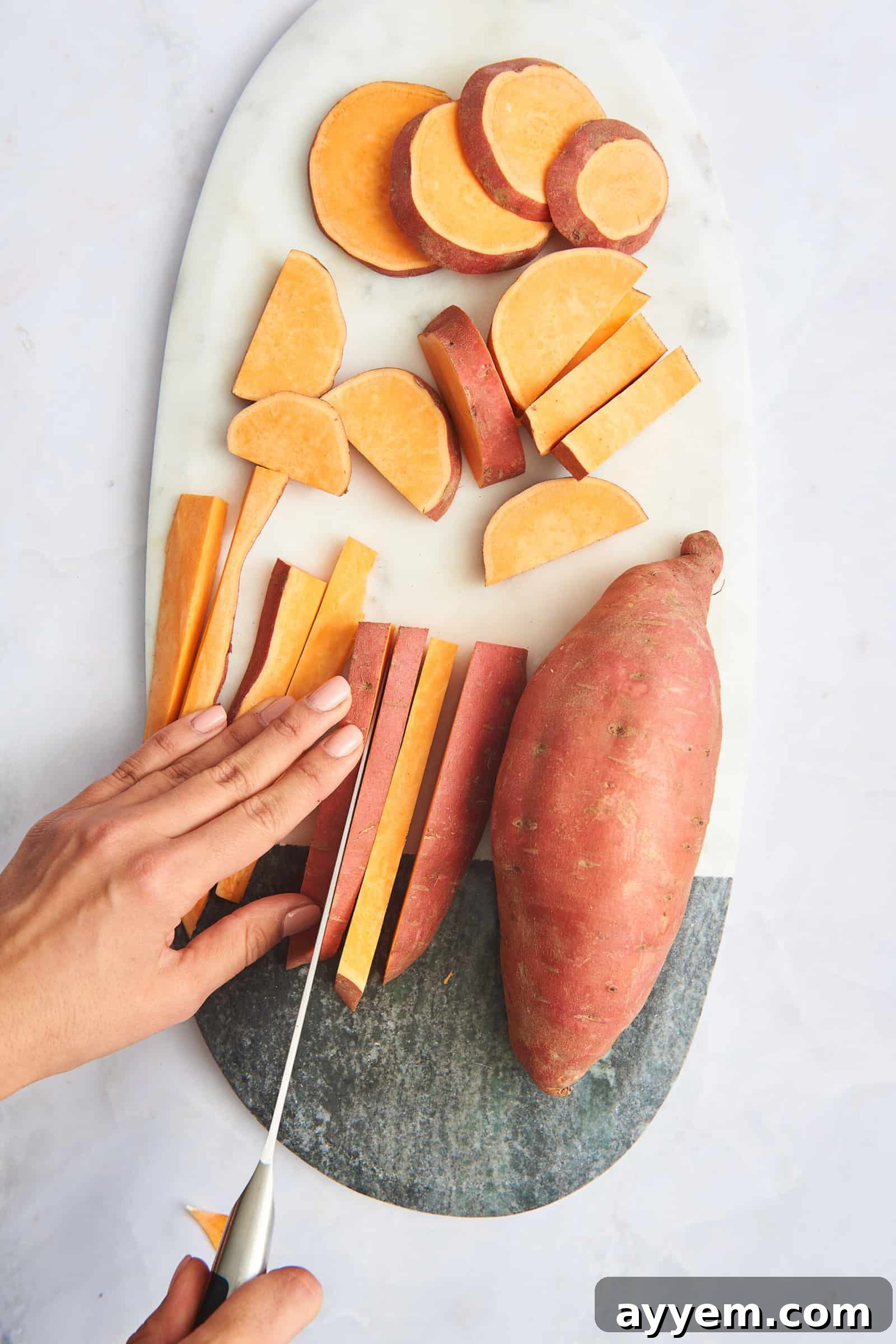
Unlock the full potential of your kitchen and elevate your culinary skills with our comprehensive guide to slicing sweet potatoes! This ultimate resource will empower you to master the art of cutting sweet potatoes into perfect wedges, slices, sticks, and cubes with remarkable ease. Say goodbye to struggling with tough vegetables and confidently conquer your cooking and meal prepping like a seasoned pro.
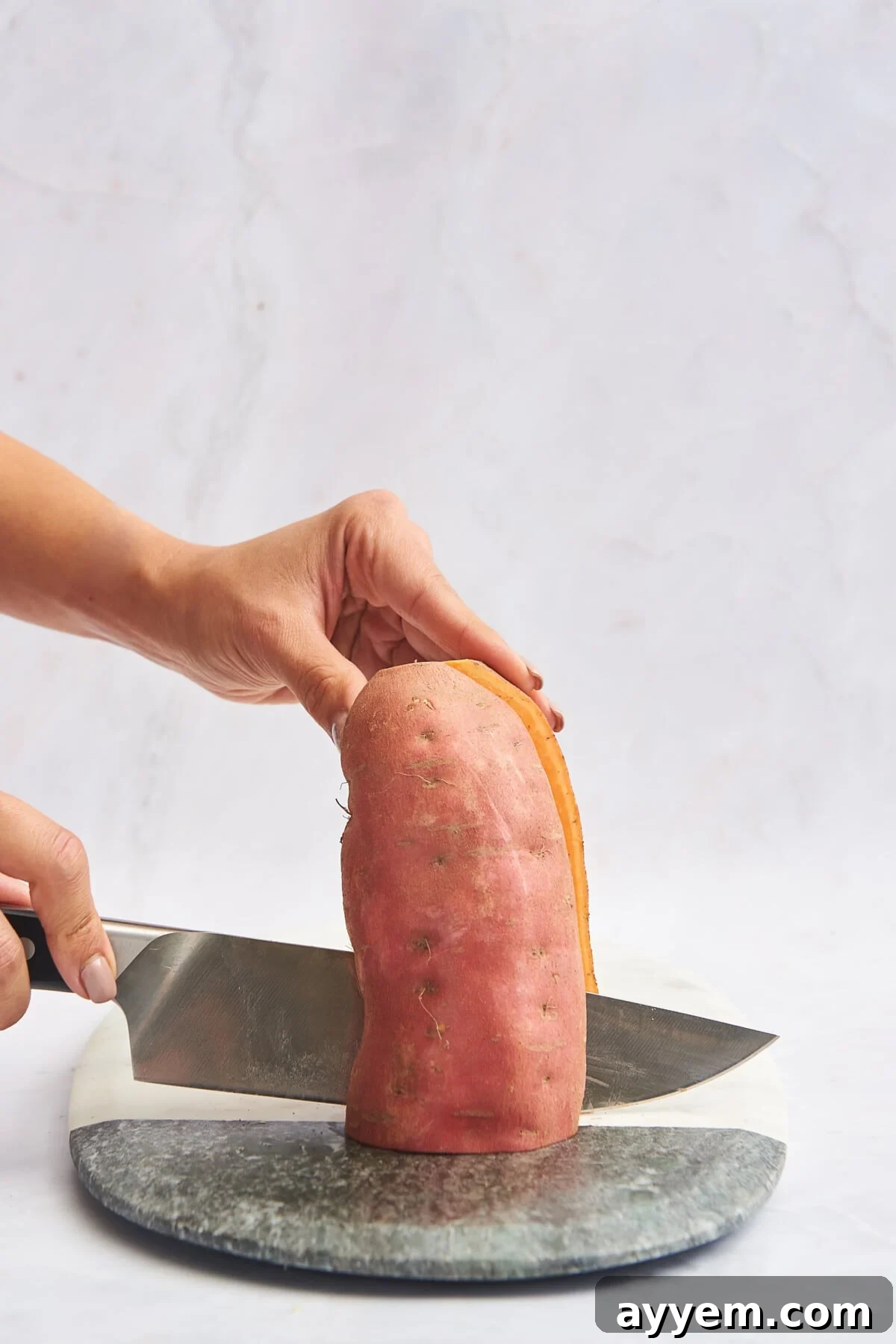
Many home cooks often shy away from sweet potatoes due to their notoriously dense texture, making them seem challenging to cut. However, this guide will demystify the entire process, demonstrating that with the right techniques for washing, softening, and cutting, preparing sweet potatoes can be surprisingly simple and enjoyable.
By learning these essential kitchen skills, you’ll be able to effortlessly incorporate more of these vibrant, nutritious root vegetables into your daily meals. Sweet potatoes are not just delicious; they are a nutritional powerhouse, celebrated as excellent sources of essential nutrients such as vitamin A, vitamin C, and dietary fiber. Furthermore, their versatility in various forms and preparations offers a fantastic way to add exciting variety to your diet, ensuring your meals are never boring.
Why Sweet Potatoes Are a Nutritional Powerhouse
Beyond their delightful flavor and vibrant color, sweet potatoes are nutritional superstars that deserve a regular spot on your plate. They are packed with beta-carotene, which the body converts into Vitamin A, crucial for healthy vision, immune function, and skin health. A single sweet potato can provide well over 100% of your daily Vitamin A needs. They also offer a significant dose of Vitamin C, a powerful antioxidant that supports the immune system and promotes collagen production for healthy skin.
Dietary fiber, another abundant nutrient in sweet potatoes, plays a vital role in digestive health, helping to regulate blood sugar levels and promoting a feeling of fullness. Additionally, sweet potatoes contain important minerals like potassium, which is essential for blood pressure regulation, and manganese, involved in bone development and metabolism. Incorporating sweet potatoes into your diet is a delicious and easy way to boost your nutrient intake and support overall well-being.
Softening Sweet Potatoes for Effortless Cutting
The primary reason sweet potatoes can be challenging to cut is their inherent density. Unlike white potatoes, sweet potatoes contain significantly less water, making their flesh firm and resistant to slicing. To make the cutting process smoother, safer, and more efficient, it’s highly recommended to soften them slightly before you begin. This preparatory step significantly reduces the effort required and minimizes the risk of accidents.
Here are a few effective methods to pre-soften your sweet potatoes:
- Parboiling: This method involves partially boiling the sweet potato to soften it without fully cooking it. Begin by trimming both ends of the sweet potato. Place the entire sweet potato in a large pot and cover it with cold water. Bring the water to a rolling boil, then reduce the heat to a gentle simmer. Allow the potato to simmer for approximately eight to ten minutes. The exact time may vary based on the potato’s size; a fork should be able to pierce the skin but the inside should still feel firm. Drain the water and let the potato cool completely. Once cooled, it will be noticeably softer and much easier to cut, with the added benefit of a reduced final cooking time.
- Microwaving: For a quick and convenient softening method, the microwave is your best friend. Use a fork or a sharp knife to poke several holes all around the sweet potato. These holes allow steam to escape, preventing the potato from bursting. Place the poked sweet potato in the microwave and heat it for two to three minutes on high power. Larger potatoes might require an additional minute or two. The goal is for the potato to feel slightly yielding when squeezed, not fully cooked. This method is excellent for individual sweet potatoes.
- Steaming: Steaming is another gentle way to soften sweet potatoes while preserving many of their nutrients. You can use a double boiler or a steamer basket placed over a pot of boiling water. Similar to the microwaving method, poke a few holes around the sweet potato to allow for even steaming. Steam the potato over vigorously boiling water for ten to fifteen minutes, or until it feels tender but still firm to the touch. Once softened, remove it from the steamer and let it cool before cutting.
- Quick Oven Roast: If you’re already preheating your oven for another dish, you can quickly soften a sweet potato. Pierce it multiple times with a fork and roast it at 375°F (190°C) for about 15-20 minutes, or until slightly tender. This method also imparts a subtle roasted flavor.


How to Wash and Clean Sweet Potatoes Before Cutting
Before you even think about softening or slicing, a crucial first step for preparing the most delicious and hygienic sweet potatoes is to thoroughly clean them. Sweet potatoes grow in the soil, and they often come with dirt, debris, and sometimes even residual pesticides on their skins. Proper cleaning ensures you’re not transferring any unwanted elements into your dish, especially if you plan to keep the skin on.
Start by rinsing the sweet potatoes under cool, running water. As the water flows, use your hands or, ideally, a stiff-bristled vegetable scrubbing brush to gently but firmly scrub the entire surface of each potato. Pay close attention to any crevices or ‘eyes’ where dirt might accumulate. Continue scrubbing until all visible dirt and debris are removed. Once clean, use a clean paper towel or a dedicated kitchen towel to thoroughly dry each sweet potato. A dry surface not only makes them easier and safer to handle during cutting but also helps prevent them from slipping on your cutting board.
Remember, even if you plan to peel the sweet potato, washing it first is still important to prevent transferring dirt from the skin to the flesh as you peel.
Essential Tools for Sweet Potato Preparation
Having the right tools can make all the difference in preparing sweet potatoes safely and efficiently. Investing in a few quality items will not only simplify the task but also enhance your overall kitchen experience.
- Sharp Chef’s Knife: This is arguably the most critical tool. A sharp knife is safer than a dull one because it requires less force to cut, reducing the chance of slippage. A chef’s knife, with its broad blade and versatile design, is perfect for handling the dense texture of sweet potatoes. Ensure it’s sharpened regularly.
- Sturdy Cutting Board: A large, stable cutting board provides ample space to work and helps prevent the potato from moving. Wooden or thick plastic boards are excellent choices. To enhance stability, place a damp paper towel or a non-slip mat underneath the board to keep it firmly in place on your countertop.
- Vegetable Peeler (Optional): If you prefer your sweet potatoes without skin, a good quality swivel peeler or Y-peeler will make quick work of removing the skin. While sweet potato skin is edible and nutritious, some recipes or personal preferences call for its removal.
- Bowl of Water: Handy for storing cut sweet potatoes to prevent browning if you’re not cooking them immediately.
- Oven Mitts/Tongs: Useful when handling parboiled or steamed sweet potatoes that are still warm.
How to Cut Sweet Potatoes: Four Versatile Ways
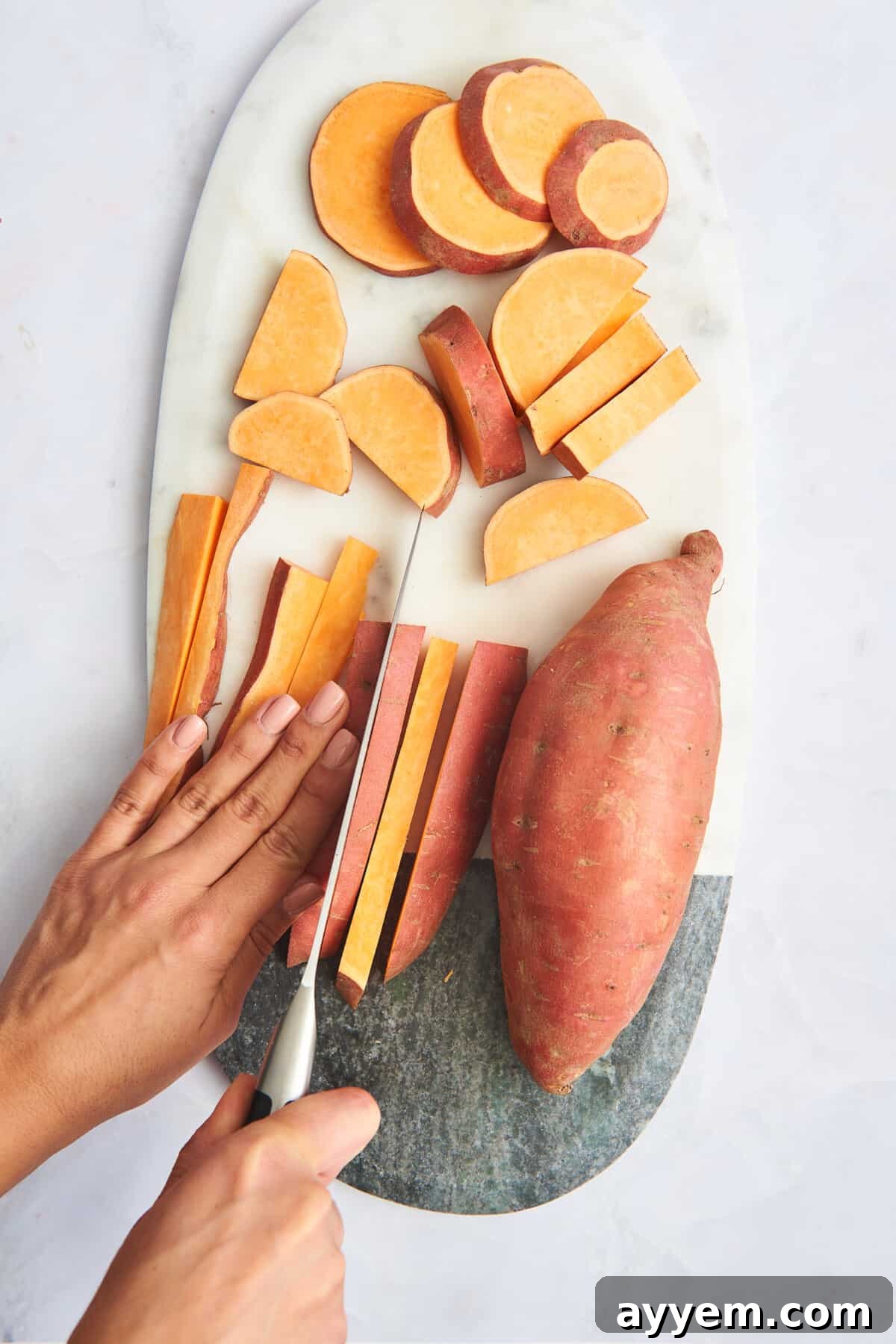
The way you cut your sweet potatoes can significantly impact their cooking time, texture, and suitability for various dishes. Whether you’re aiming for crispy fries, tender roasted wedges, or uniform cubes for a stew, understanding these four fundamental cuts will empower your culinary creations. Let’s break down each method to ensure your success, no matter what you’re making!
1. Wedges (Perfect for Roasting or Baking)
Sweet potato wedges are fantastic for roasting, baking, or air frying, offering a satisfying bite and a beautiful presentation. They crisp up nicely on the outside while remaining tender and fluffy on the inside.
- First, ensure your sweet potato is washed, dried, and ideally softened slightly. Place the potato firmly on a sturdy cutting board.
- Carefully slice the sweet potato in half lengthwise. This cut is often referred to as “hotdog style.”
- Take each half and place it cut-side down on the board for stability. Slice each half in half again lengthwise, down the center, creating four long quarters.
- For the final cut, angle your knife slightly and slice each of these four pieces in half lengthwise one last time. This will yield eight uniform wedges from a single sweet potato. Aim for consistency in size to ensure even cooking.
2. Slices (Ideal for Chips, Gratins, or Sweet Potato Toasts)
Sweet potato slices, or rounds, are incredibly versatile. Thin slices are perfect for homemade chips or gratins, while thicker slices make excellent sweet potato toasts or burger buns.
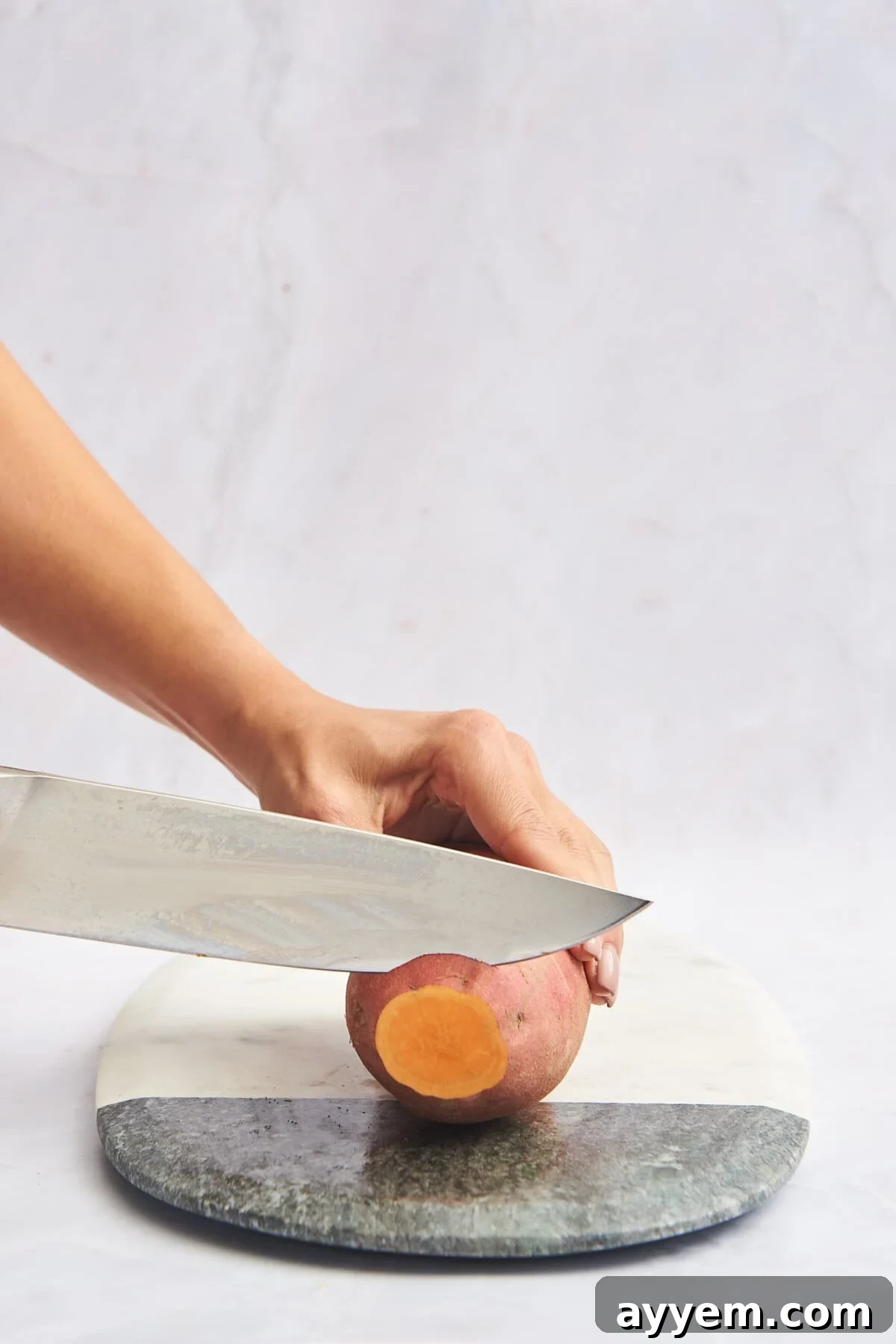
- Begin by trimming both ends off the sweet potato to create flat, stable surfaces.
- Place the sweet potato on one of its flat ends. With a sharp knife, slice all the way down the potato. You can choose to slice horizontally (if the potato is lying down) or vertically (if standing on an end), creating uniform slices of your desired thickness.
- For chips, aim for very thin, almost translucent slices (a mandoline can be very helpful here, but use with extreme caution and a guard). For gratins or toasts, slices of about ¼ to ½ inch thickness work well. Maintain even thickness across all slices for consistent cooking.
3. Sticks (Your Go-To for Sweet Potato Fries or Stir-Fries)
Sweet potato sticks are a popular choice for homemade fries, whether baked, fried, or air-fried, and also work wonderfully in stir-fries or as snackable crudités.
- Start by trimming both ends of the sweet potato.
- To create a stable base, carefully slice a small, thin piece off one side of the potato, creating a flat surface.
- Turn the potato over so the newly cut flat side is down on the cutting board. This prevents the potato from rolling.
- Now, cut the potato into even, lengthwise slices, aiming for a thickness of about ¼ to ½ inch. These will be your “planks.”
- Stack two or three of these planks on top of each other (depending on their width) and carefully slice them vertically all the way across, creating uniform sticks. For extra-long or thick sticks, you might not need to stack.
- For smaller, thinner sticks (like shoestring fries), you can slice these sticks in half lengthwise one final time.
4. Cubes (Excellent for Soups, Stews, Roasts, and Meal Prep)
Sweet potato cubes are incredibly versatile for adding to soups, stews, curries, hashes, or for general roasting and meal prepping. Their uniform size ensures even cooking and easy incorporation into various dishes.
- The most efficient way to create cubes is to first slice your sweet potato into sticks using the method described above. Aim for sticks that are roughly the desired width of your cubes.
- Once you have a pile of uniform sticks, stack two or three of them on top of each other.
- Carefully cut across the stacked sticks at even intervals, transforming them into perfectly sized cubes. For example, if you made ½-inch thick sticks, cut them into ½-inch lengths to create ½-inch cubes.
- Ensure all cubes are roughly the same size to promote even cooking throughout your dish.

Pro Tips for Sweet Potato Cutting Success
Achieving perfectly cut sweet potatoes is a skill that improves with practice, but these professional tips will help you get excellent results every time, ensuring both safety and efficiency in your kitchen:
- Gather the Proper Utensils: Before you even touch a sweet potato, ensure your workstation is ready. A super sharp knife is non-negotiable for cutting through dense vegetables like sweet potatoes. A large, sturdy cutting board will provide ample space and stability.
NOTE: To prevent your cutting board from sliding around, place a damp paper towel, a wet kitchen towel, or a non-slip mat underneath it. This simple trick dramatically increases safety.
- Use Room Temperature Potatoes: The storage temperature of sweet potatoes can affect their texture. It’s best to store your sweet potatoes in a cool, dry area at room temperature, away from direct sunlight, rather than in your fridge. Cold temperatures cause the starches in sweet potatoes to convert to sugars, which can make them harder and more fibrous, thus more difficult to cut. Allow refrigerated sweet potatoes to come to room temperature for a few hours before cutting.
- Slice Evenly for Consistent Cooking: This tip is paramount for any dish where sweet potato pieces need to cook uniformly. Whether you’re making wedges, slices, sticks, or cubes, strive for equal-sized pieces. Uneven cuts will result in some pieces being undercooked and hard, while others are overcooked and mushy. Consistency ensures every bite has the perfect texture and flavor.
- Maintain a Stable Grip: Sweet potatoes can be oddly shaped and slippery. When making your initial cuts, ensure you have a firm, flat surface to work with. If the potato is round, make a small flat cut on one side first, then place that flat side down on the board to stabilize it before proceeding with other cuts.
- Protect Your Fingers: Always practice proper knife safety. Keep your fingertips tucked under, using your knuckles as a guide for the knife blade. Cut slowly and deliberately, especially when dealing with the initial firmness of the potato.
- Consider Peeling (or Not!): While the skin is edible and nutritious, some prefer to peel sweet potatoes. Use a good vegetable peeler for efficiency. If the potato is tough to peel, a brief parboil or microwave session can soften the skin just enough to make peeling easier.
Common Questions When Learning How to Cut Sweet Potatoes
Cut sweet potatoes are best used immediately to prevent oxidation and maintain their fresh texture. However, if you need to prepare them in advance, the best method is to submerge the sliced pieces in cold water immediately after cutting. The water acts as a barrier, preventing oxygen from reaching the potato’s surface and causing browning. Before storing, ensure they are completely submerged. Then, transfer the water-filled bowl or container to an airtight container or a sealable bag and refrigerate.
When properly stored submerged in cold water in an airtight container, cut sweet potatoes can last in the fridge for up to two to four days. Change the water daily for optimal freshness. If they start to turn grayish or develop an off smell, it’s best to discard them.
We generally do not recommend freezing raw sweet potatoes directly. Freezing uncooked potatoes will significantly alter their taste and texture, often causing them to become mealy, soft, and unappetizingly watery upon thawing. To freeze sweet potatoes successfully, it’s best to cook them first (e.g., blanch, roast, or steam) until tender-crisp. Once cooked and cooled, you can freeze them in an airtight container or freezer bag for several months.
The browning of cut sweet potatoes is a natural enzymatic reaction (oxidation) that occurs when their flesh is exposed to air. The most effective way to prevent this if you don’t plan on cooking them right away is to submerge them in cold water immediately after cutting. Ensure all surfaces are covered. You can also add a squeeze of lemon juice or a teaspoon of vinegar to the water for extra protection, as the acidity helps inhibit the browning enzymes.
This is entirely up to your personal preference and the recipe you’re preparing! Sweet potato skin is completely edible and highly nutritious, containing a good amount of fiber and antioxidants. Many people enjoy the rustic texture and added nutrients the skin provides, especially when roasting or baking. However, if you prefer a smoother texture or if a particular recipe (like a soufflé or very smooth puree) calls for it, the skin can easily be removed with a vegetable peeler. Just make sure to wash them thoroughly regardless of whether you peel them or not.
When selecting sweet potatoes, look for firm, unblemished potatoes with smooth, uniform skin. Avoid any that have soft spots, sprouts, or cracks, as these are signs of spoilage or dehydration. Size doesn’t always matter, but medium-sized potatoes tend to be easier to handle and cook more evenly.
Due to their density, sweet potatoes can be challenging to cut, increasing the risk of knife slips. Always use a very sharp knife and a stable cutting board (with a damp towel underneath). Keep your fingers tucked back, using your knuckles as a guide. If a sweet potato is particularly large or hard, consider cutting it in half or thirds first to create smaller, more manageable sections before attempting intricate cuts. Softening the potato beforehand also significantly enhances safety.
More Kitchen Guides to Enhance Your Skills
- How to Cut a Tomato (3 Ways)
- How to Cook Quinoa (3 Ways)
- How to Store Garlic
- How to Store Parsley
- How to Store Ginger
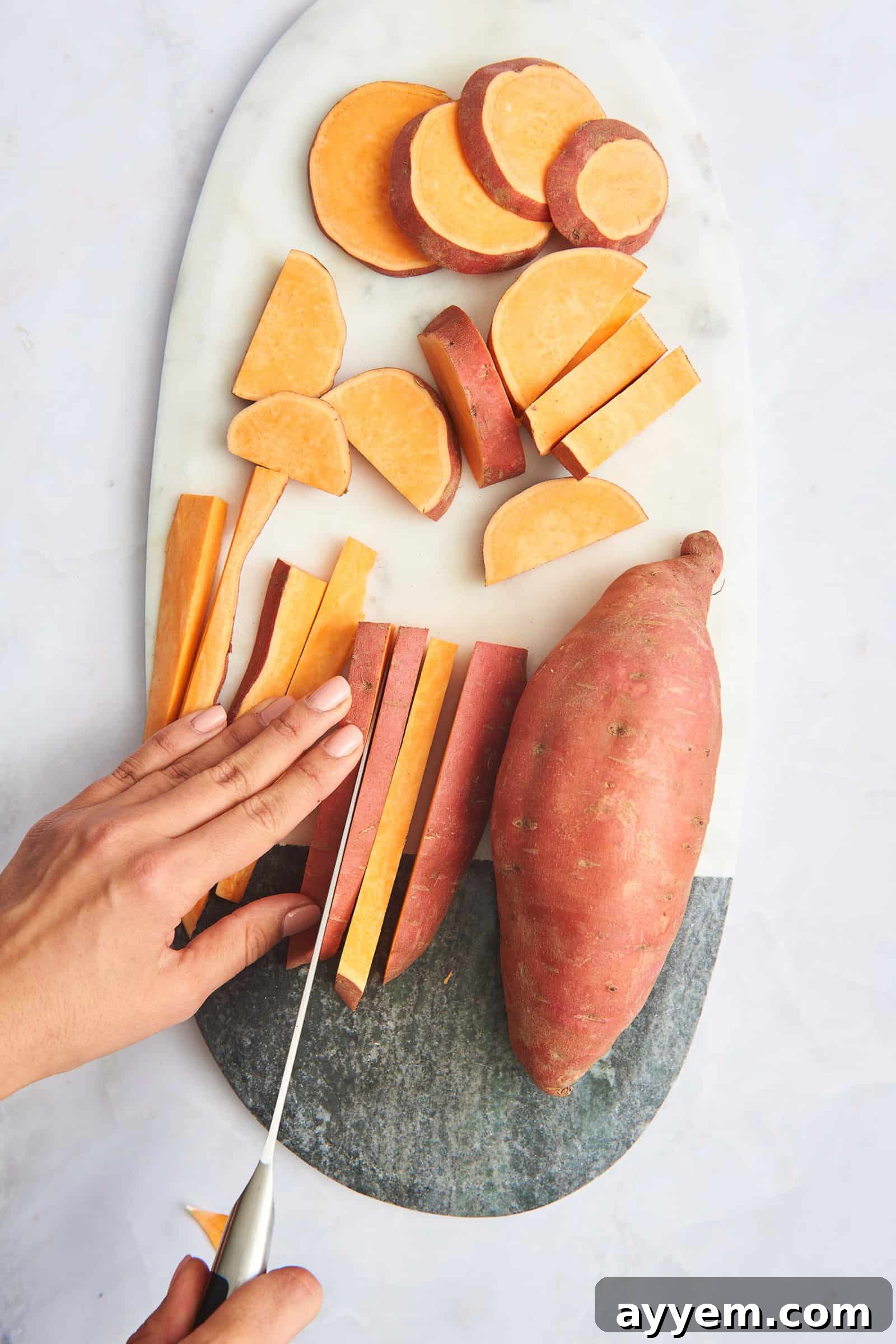
How to Cut Sweet Potatoes (4 Ways)
Food Dolls
1 serving
10 mins
10 mins
Ingredients
- 1 large sweet potato
Instructions
- Wash the potato under water, and dry it off.
- Remove the skin, if desired.
- Slice the potato into the desired shapes, referring to the detailed methods below.
Wedges
- Place the potato on a cutting board, and slice it in half lengthwise (hotdog style).
- Slice each half in half again lengthwise down the center.
- Angle the knife slightly, and slice each piece in half a final time.
Slices
- Slice both ends off the potato.
- Slice all the way down the potato either horizontally or vertically, creating slices of desired thickness.
Sticks
- Slice the ends off the potato.
- Slice a small piece off one side to create a steady base.
- Turn the potato over, cut side down, and cut in even intervals all the way down to create flat pieces.
- Stack those pieces on top of each other, and slice vertically all the way across.
- For smaller sticks, slice them in half a final time.
Cubes
- Slice the potato into sticks using the method above.
- Stack the sticks on top of each other, and carefully cut across to create cubes.
Equipment
Nutrition
Serving:
1serving
|
Calories:
194kcal
|
Carbohydrates:
45g
|
Protein:
4g
|
Fat:
0.1g
|
Saturated Fat:
0.04g
|
Polyunsaturated Fat:
0.03g
|
Sodium:
124mg
|
Potassium:
762mg
|
Fiber:
7g
|
Sugar:
9g
|
Vitamin A:
32063IU
|
Vitamin C:
5mg
|
Calcium:
68mg
|
Iron:
1mg
Nutrition information is automatically calculated, so should only be used as an approximation.
Enjoyed this guide and recipe?
Please leave a comment below and share your sweet potato cutting journey!