
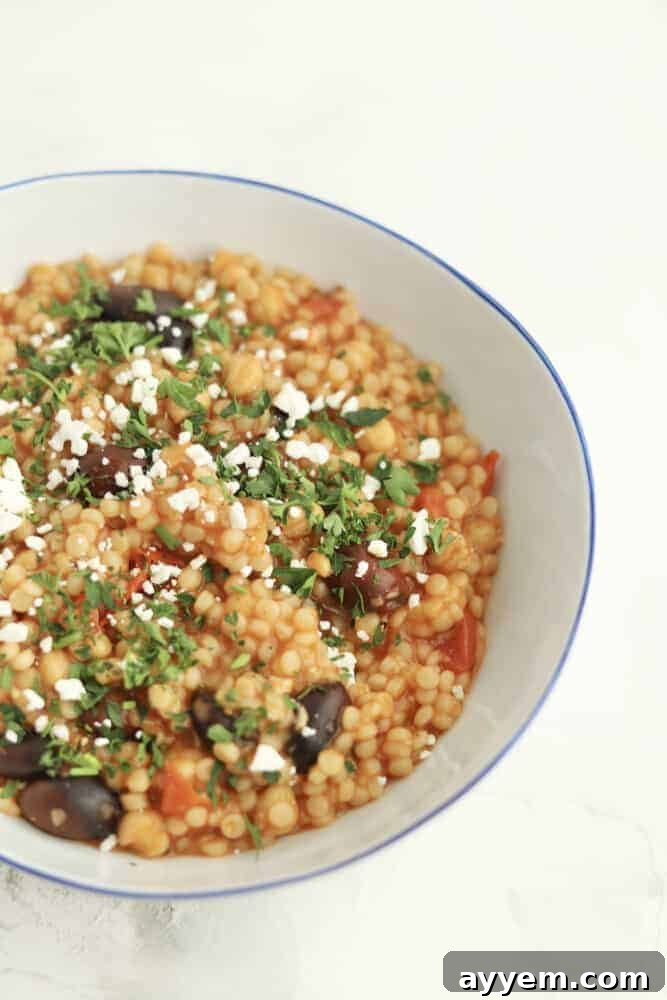
Embark on a culinary journey to the Mediterranean with our vibrant One-Pot Greek Couscous! This delightful dish isn’t just a feast for the eyes; it’s a nourishing, flavorful, and incredibly refreshing addition to any dinner table. Imagine a symphony of bright tomatoes, earthy chickpeas, briny olives, and fluffy couscous, all coming together in a harmonious blend of classic Greek flavors. The best part? This recipe champions simplicity, requiring minimal prep and making cleanup an absolute breeze. It’s a testament to the fact that healthy, delicious meals don’t need to be complicated, and we’re confident that this easy one-pot wonder will quickly become a cherished favorite in your kitchen.
Unveiling Couscous: A Culinary Chameleon
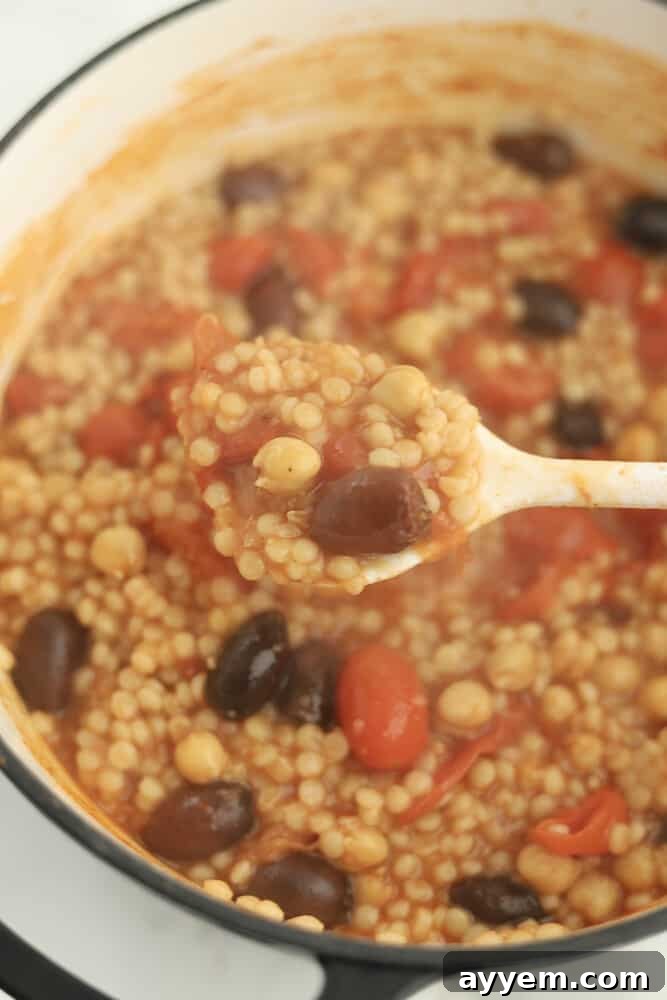
When you first encounter couscous, its tiny, granular appearance might lead you to believe it’s a grain, perhaps like quinoa or rice. However, prepare for a delightful surprise! Couscous is, in fact, a type of pasta. Often referred to as “pastina” in Italian, meaning “small pasta,” it’s traditionally crafted from durum wheat semolina flour. This flour is gently rolled with water into tiny, spherical pellets, which are then steamed. While durum wheat semolina is the most common base, some variations of couscous are also made from other nutritious grains like sorghum, millet, or bulgur.
Couscous truly shines as the chameleon of the culinary world. Much like its larger pasta cousins, it possesses a wonderfully mild flavor profile, making it an ideal canvas for a vast array of saucy masterpieces. But here’s where the magic truly unfolds: couscous isn’t just a passive component on your plate; it’s an active flavor sponge. Its unique texture and composition allow it to readily absorb and harmonize with the robust flavors of any dish it graces. This remarkable characteristic is precisely why one-pot meals featuring couscous are so incredibly successful and satisfying. Every bead of couscous becomes infused with the essence of your sauce and ingredients, creating a deeply flavorful experience with every bite.
There are generally three main types of couscous you’ll encounter:
- Moroccan Couscous: This is the smallest and most common type, resembling fine grains. It cooks very quickly.
- Israeli Couscous (Pearl Couscous): This is larger, pea-sized, and has a chewier texture, making it excellent for absorbing sauces, which is why we’ve chosen it for our Greek Couscous recipe.
- Lebanese Couscous: This is the largest variety, similar in size to small pasta shapes, and requires a longer cooking time.
For our One-Pot Greek Couscous, we specifically recommend pearl couscous, as its robust texture stands up beautifully to the other ingredients and readily soaks up the rich tomato and broth mixture, delivering that authentic, melt-in-your-mouth flavor.
The Unbeatable Charm of One-Pot Meals
Here at Food Dolls, we are unashamedly fervent fans of our one-pot wonders. Why the unwavering devotion? Well, beyond being consistently delicious, these culinary creations are undisputed champions of time-saving and efficiency. In today’s fast-paced world, who genuinely enjoys the daunting task of juggling multiple pots and pans, only to face an overwhelming cleanup afterward? With one-pot meals, you can conjure up a gourmet-level masterpiece with minimal effort, leaving you more time to savor your meal and enjoy life.
Beyond the obvious benefits of saving precious time and reducing kitchen mess, one-pot pasta and couscous recipes offer an incredible advantage in flavor development. The secret lies in how all the ingredients cook together, allowing their flavors to meld and deepen into a cohesive, rich profile that is hard to achieve with separate cooking methods. We’ve mastered the art of elevating this flavor in our one-pot pasta recipes by swapping out plain water for flavorful broth. In this particular Greek Couscous recipe, the couscous isn’t just boiled; it simmers directly in a vibrant tomato sauce alongside aromatic seasonings and fresh ingredients. The result? A pasta dish with an extraordinary depth of flavor that truly deserves a standing ovation.
Once you experience the sheer convenience and incredible taste of one-pot pasta dishes like our One-Pot Hummus Pasta, the creamy indulgence of One-Pot Creamy Pesto Pasta, and, of course, this sensational One-Pot Greek Couscous, we promise you’ll find it hard to go back to traditional multi-pot cooking. For those eager to explore more culinary shortcuts without compromising on taste, be sure to check out our curated list of favorite one-pot pasta recipes here!
Olives: A Matter of Preference – Substitutions and Options
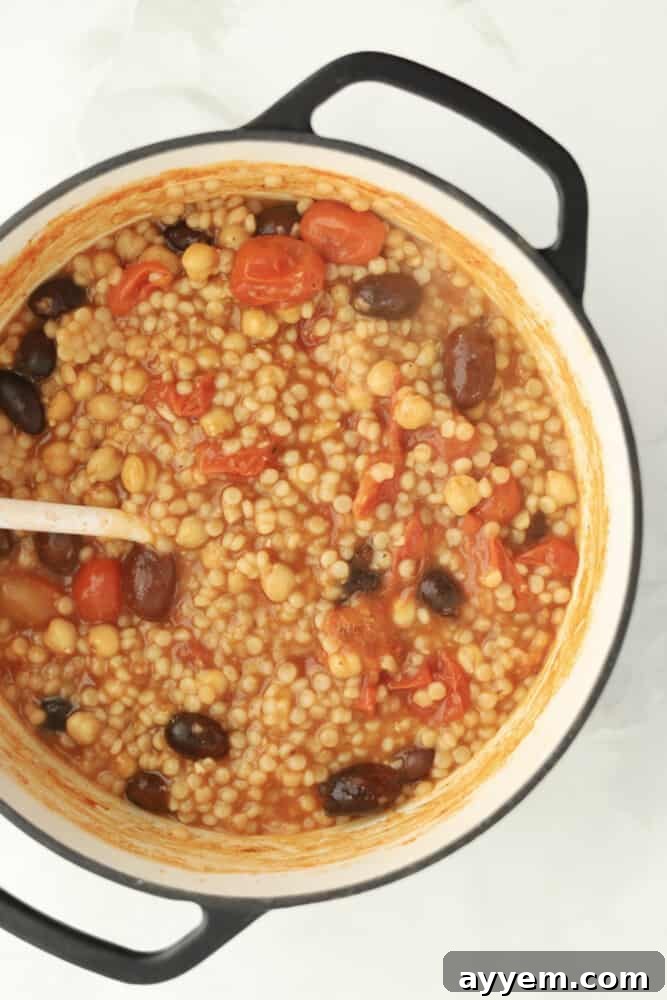
Olives are undeniably one of the most polarizing ingredients in the culinary world. It seems there’s no middle ground – you either adore their distinctive briny, sometimes fruity, sometimes pungent flavor, or you simply can’t stand them. And we absolutely understand! Everyone’s palate is unique, and enjoying your meal is paramount.
If you find yourself in the camp that isn’t a fan of the bold, briny, and occasionally assertive punch of olive flavor, please feel completely free to omit them from this recipe. Rest assured, your One-Pot Greek Couscous will still be an absolutely delicious and satisfying meal, bursting with other Mediterranean notes.
On the other hand, if you appreciate the unique taste of olives but perhaps don’t have the specific Kalamata black olives on hand, we have some fantastic and easy swaps for you. You can confidently use any other variety of olives in their place – green olives, Castelvetrano, or even a mix can add a wonderful dimension. For those seeking a similar flavor profile with a different twist, consider adding capers for their salty, tangy burst, or a small amount of anchovies (finely minced) for a deeper, umami-rich brininess that complements the Greek theme beautifully. Don’t be afraid to experiment and tailor this dish to your personal taste preferences!
Chickpeas: Dried vs. Canned – A Convenient Choice
When it comes to chickpeas, also known as garbanzo beans, a common question arises: should you opt for dried or canned? The short answer is wonderfully simple: you can use either! Both storage methods offer chickpeas an impressively long shelf life, making them excellent pantry staples. Ultimately, whether you choose dried or canned, they will contribute the same delicious, earthy flavor and satisfying texture to this One-Pot Greek Couscous recipe.
The primary advantage of using canned chickpeas lies in their unparalleled convenience. There’s virtually no prep time required, which is a huge bonus on busy weeknights. All you need to do is open the can, drain the liquid (which is known as aquafaba and can be saved for other culinary uses!), and give the chickpeas a quick rinse under cold water. This simple step helps remove excess sodium and any canning liquid residue. The only real drawback to canned chickpeas is their tendency to have a higher sodium content due to the preservation methods used during canning. If you’re mindful of sodium intake, look for “low sodium” or “no salt added” varieties.
Conversely, dried chickpeas require a bit more foresight and preparation time. They are rock-hard in their uncooked state and absolutely require rehydration before consumption – attempting to eat them raw could indeed crack a tooth! However, dried chickpeas often offer a slightly firmer texture and allow you to control the seasoning and tenderness from scratch. To rehydrate dried chickpeas, follow these simple steps:
- Measure: Start by measuring approximately 1/3 of the amount of chickpeas the recipe calls for in its hydrated form. This accounts for the significant growth during rehydration – chickpeas can triple in size once fully plumped!
- Soak: Place the dried chickpeas in a large bowl and cover them generously with water or broth. Ensure the liquid comes up at least an inch or two above the chickpeas, as they will absorb a considerable amount.
- Rehydrate: You can rehydrate them on the kitchen counter for 8-12 hours (or overnight). If you live in a particularly warm, humid environment without air conditioning, or if you prefer to use broth for soaking, we recommend rehydrating them in the refrigerator to prevent fermentation. After soaking, drain and rinse them thoroughly before using them in the recipe.
Once rehydrated, dried chickpeas will cook in a similar amount of time to canned ones, making them equally suitable for this one-pot method, though they do add an extra planning step.
Crafting Your One-Pot Greek Couscous: A Simple Guide
The beauty of this One-Pot Greek Couscous recipe lies in its incredibly straightforward preparation. Forget complicated maneuvers, intricate layering, or extensive culinary techniques. Our goal is to bring you a delicious, Greek-inspired meal with maximum flavor and minimal fuss. With just a single pot and a few simple steps, you’ll have a delightful dish ready to serve in no time – it’s truly easy-peasy and oh-so-satisfying!
Follow these quick and effortless instructions to create your vibrant couscous masterpiece:
- Begin by adding your pearl couscous to a medium-sized stockpot. Follow this immediately with the remaining core ingredients: the sweet grape tomatoes, protein-packed chickpeas, aromatic ground cumin, a touch of kosher salt and ground black pepper for seasoning, the briny Kalamata olives, rich tomato sauce, and the flavorful vegetable broth.
- Place the pot over medium-high heat and bring the liquid mixture to a gentle simmer, ensuring all ingredients are well combined and submerged.
- Once simmering, reduce the heat to medium, cover the pot tightly, and allow the couscous to cook. This process typically takes approximately 10-12 minutes. During this time, the couscous will absorb most of the liquid, becoming tender and infused with all the Greek flavors. It’s crucial not to let it dry out completely; you want a slight sauciness remaining, as this will form the delicious coating for your couscous.
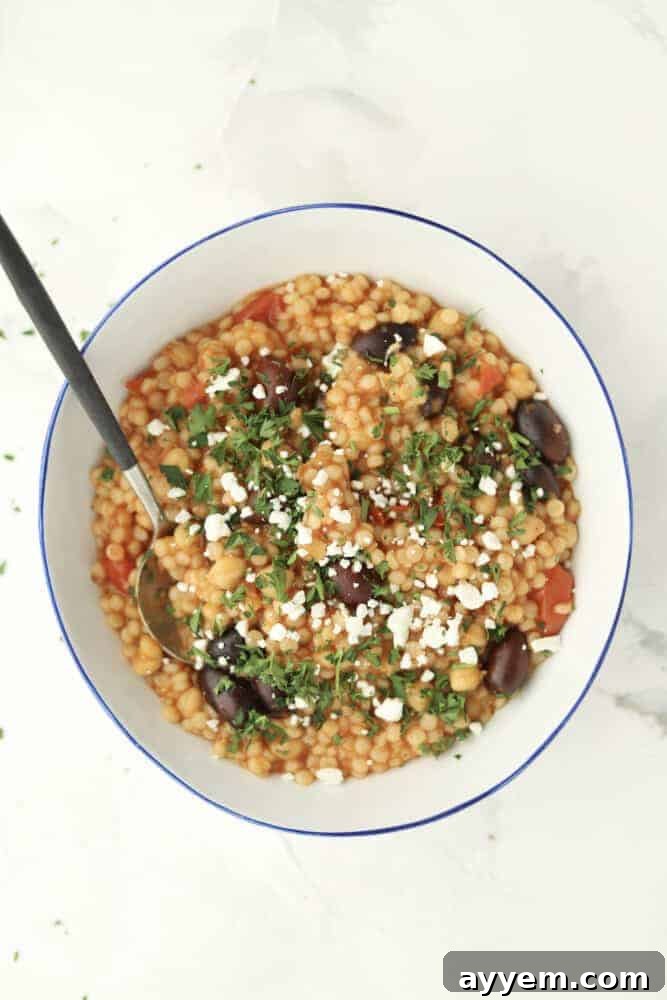
- Once cooked to perfection, remove the pot from the heat. Give it a gentle stir. Serve your One-Pot Greek Couscous immediately, garnished generously with a sprinkle of crumbled feta cheese for a tangy, salty finish (omit for a vegan version) and a scattering of fresh, chopped Italian flat-leaf parsley for a burst of vibrant color and herbaceous freshness. Enjoy!
Storing Your Leftovers: Tips for Freshness
One of the many advantages of this One-Pot Greek Couscous is how well it holds up as leftovers, making it an excellent candidate for meal prep or enjoying convenient meals throughout the week. To store your delicious creation, simply transfer the cooled couscous to an airtight container. It will keep beautifully in your refrigerator for 3-5 days, retaining its flavor and texture.
For longer storage, this dish also freezes exceptionally well. Place it in a freezer-safe, airtight container, and it can be stored in your freezer for up to 3 months. When you’re ready to enjoy it again, simply thaw it in the refrigerator overnight or use your microwave’s defrost setting.
A helpful tip for reheating pasta or couscous dishes: always add a tablespoon of water (or a splash of broth) per serving anytime you reheat it. This small addition is key to preventing the sauce from drying out and ensures your couscous remains deliciously moist and flavorful, just as it was when freshly made.
Common Questions about One-Pot Greek Couscous
While this dish is wonderfully hearty and satisfying enough to stand alone as a complete meal, it pairs beautifully with several accompaniments. Consider serving it with a crisp, fresh Greek salad featuring cucumbers, tomatoes, red onion, and a lemon-oregano vinaigrette. Warm pita bread is excellent for scooping up every last bit of delicious sauce, or offer a side of creamy homemade or store-bought tzatziki sauce for a cool, tangy contrast.
Absolutely! This recipe is inherently very vegan-friendly. To ensure it remains entirely plant-based, simply omit the feta cheese garnish or opt for a high-quality plant-based feta alternative, which are now widely available. Ensure that any additional proteins you choose to incorporate (like tofu or tempeh) are also vegan-friendly.
This recipe is incredibly versatile and welcomes a variety of vegetables. To enhance its nutritional value and flavor, feel free to get creative! Excellent additions include diced bell peppers (red, yellow, or green), sliced zucchini, fresh spinach (stirred in at the very end until wilted), or thinly sliced red onions. Artichoke hearts or sun-dried tomatoes (chopped) also make wonderful, flavorful additions that complement the Greek theme.
Certainly! For an even heartier version that’s perfect for a substantial lunch or dinner, feel free to toss in your favorite protein. Grilled or shredded chicken, cooked shrimp, or pan-fried tofu cubes are all fantastic choices. If adding cooked protein, stir it in during the last few minutes of cooking or fold it in just before serving to ensure it’s heated through without overcooking.
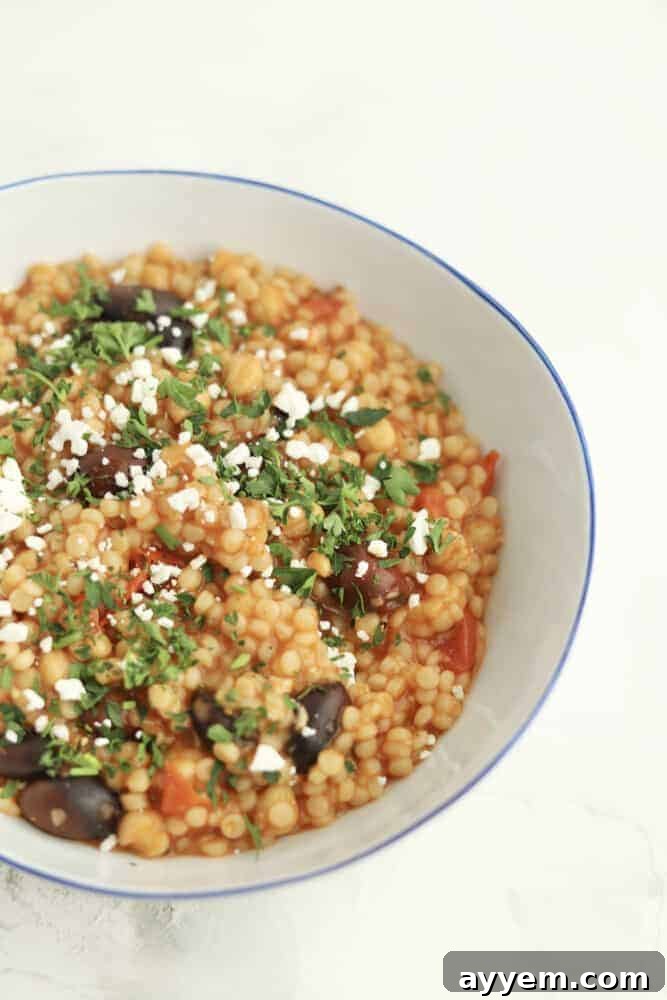
One-Pot Greek Couscous
Print Recipe
Email Recipe
Ingredients
- 16 ounces pearl couscous or any small pasta shape
- 1 1/4 cup grape tomatoes
- 15.5 ounces canned chickpeas, rinsed and drained
- 1 teaspoon ground cumin
- 1 teaspoon kosher salt, to taste
- 1/2 teaspoon ground black pepper, to taste
- 1 cup pitted Kalamata black olives
- 8 ounces tomato sauce
- 3 cups low-sodium vegetable broth
- feta crumbles for garnish (omit for vegan recipe)
- 1/2 cup chopped Italian flat leaf parsley
Instructions
- Add couscous to a medium stock pot, followed by the tomatoes, chickpeas, cumin, salt, pepper, olives, tomato sauce, and broth. Bring the liquid up to a simmer.
- Cover and cook over medium heat until the liquid is mostly absorbed. This will cook in approximately 10-12 minutes. You don’t want it to be fully dry though, since this will become your sauce!
- Serve with a sprinkle of feta and parsley!
Video
Equipment
Nutrition Facts
Nutrition information is automatically calculated, so should only be used as an approximation.