
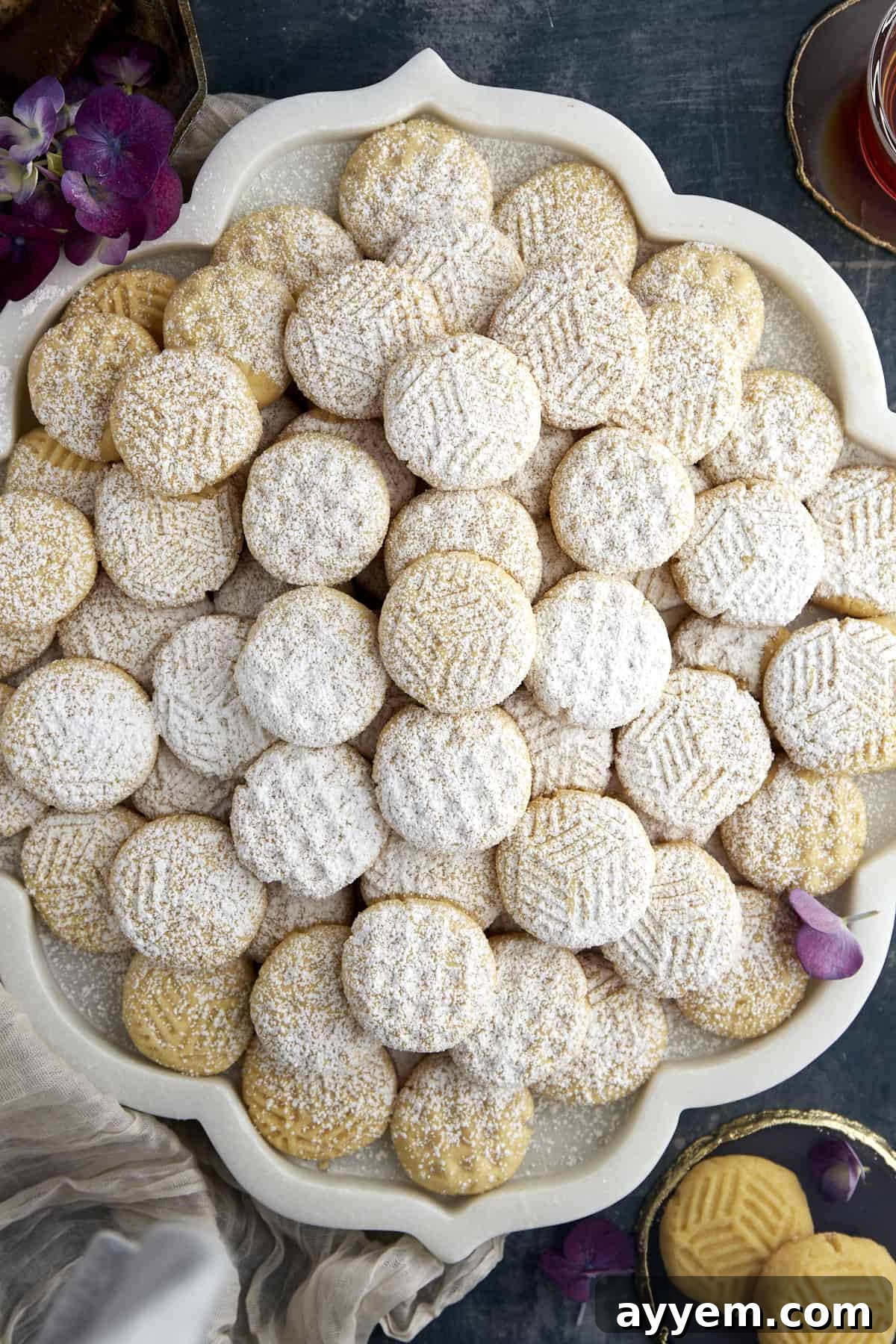
Kahk Cookies, often lovingly referred to as Eid Cookies, are more than just a sweet treat; they are a cherished emblem of celebration, marking the joyful conclusion of Ramadan. These rich, tender, and intensely buttery shortbread-like biscuits share a delightful kinship with the crumbly textures of Mexican Wedding Cookies or Snowball Cookies. With a versatility that allows for a wide array of flavors and intricate fillings, Kahk caters to every palate and adds a special touch to festive gatherings. While traditional Kahk preparation can be quite elaborate, our carefully simplified recipe distills the essence of this classic dessert, delivering all the authentic, sugary goodness with significantly less effort. Prepare to embark on a delightful baking journey that brings the taste of Eid straight to your kitchen.
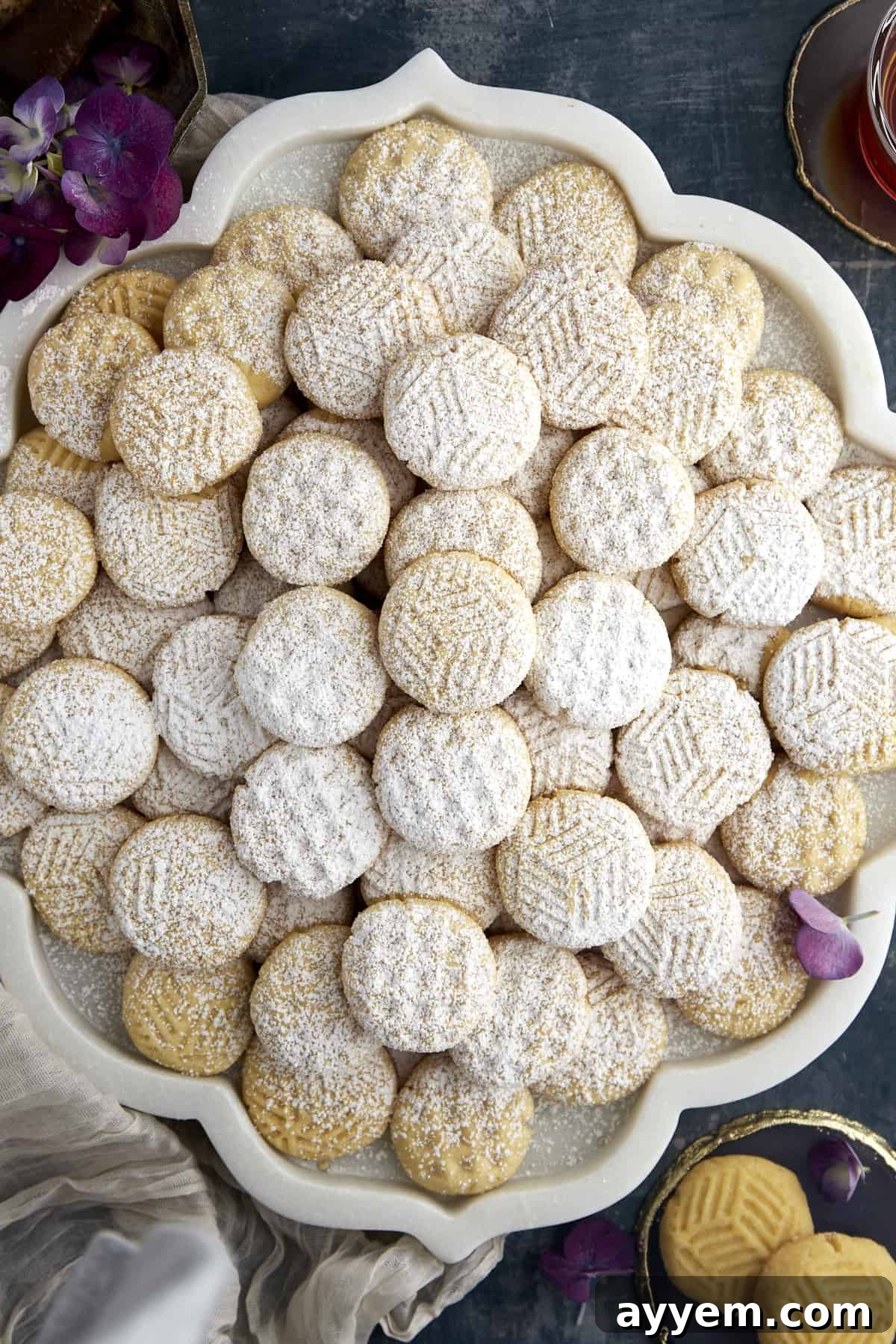
As the blessed month of Ramadan draws to a close, anticipation builds for Eid al-Fitr, a time of immense joy and celebration. While we cherish all the popular Ramadan recipes that grace our tables, nothing quite signals the arrival of Eid like a freshly baked batch of our beloved Kahk Cookies!
For those unfamiliar, Eid al-Fitr, meaning “The Festival of Breaking the Fast,” is a significant Islamic holiday that spans three days. It’s a period brimming with happiness, marked by unique traditions such as the exchange of thoughtful gifts, adorning oneself in new, often extravagant attire, and, of course, indulging in lavish feasts! After a month of dedicated fasting, it’s only natural to celebrate with an abundance of delicious food, reconnecting with loved ones over shared meals and delightful treats.
During this festive time, kitchens come alive with the aroma of countless dishes and an endless variety of sweets, designed to replenish and rejoice. Among the most cherished desserts are Ghraybeh, delicate Petit Fours, and the undisputed star of the Eid table: Kahk. These buttery, melt-in-your-mouth biscuits hold a special place in the hearts of many, embodying the spirit of communal celebration and culinary artistry.
In Egypt, it would be a rare find indeed to encounter a family not enjoying Kahk Cookies during Eid. Their irresistible flavor is a major draw, but beyond taste, Kahk offers a wonderful excuse for families and friends to gather for a full day of collaborative baking. The traditional preparation of Kahk can be somewhat intricate, making it a perfect activity where many hands make light work, transforming the baking process into a joyous communal event. Children especially adore the opportunity to participate, from rolling the dough to decorating the cookies with unique stamps. We cherish this tradition deeply and make them every year with our own children, creating lasting memories along with delicious treats.
Thus, Kahk cookies become the quintessential way to honor the end of the holy month. They bring everyone into one space, fostering laughter, conversation, and fun activities. While each family proudly boasts its own unique spin on these Eid Cookies, they are frequently exchanged as gifts between households, a sweet gesture of goodwill. Regardless of how they’re prepared or how many you manage to enjoy, Kahk remain a highly anticipated and universally loved treat.
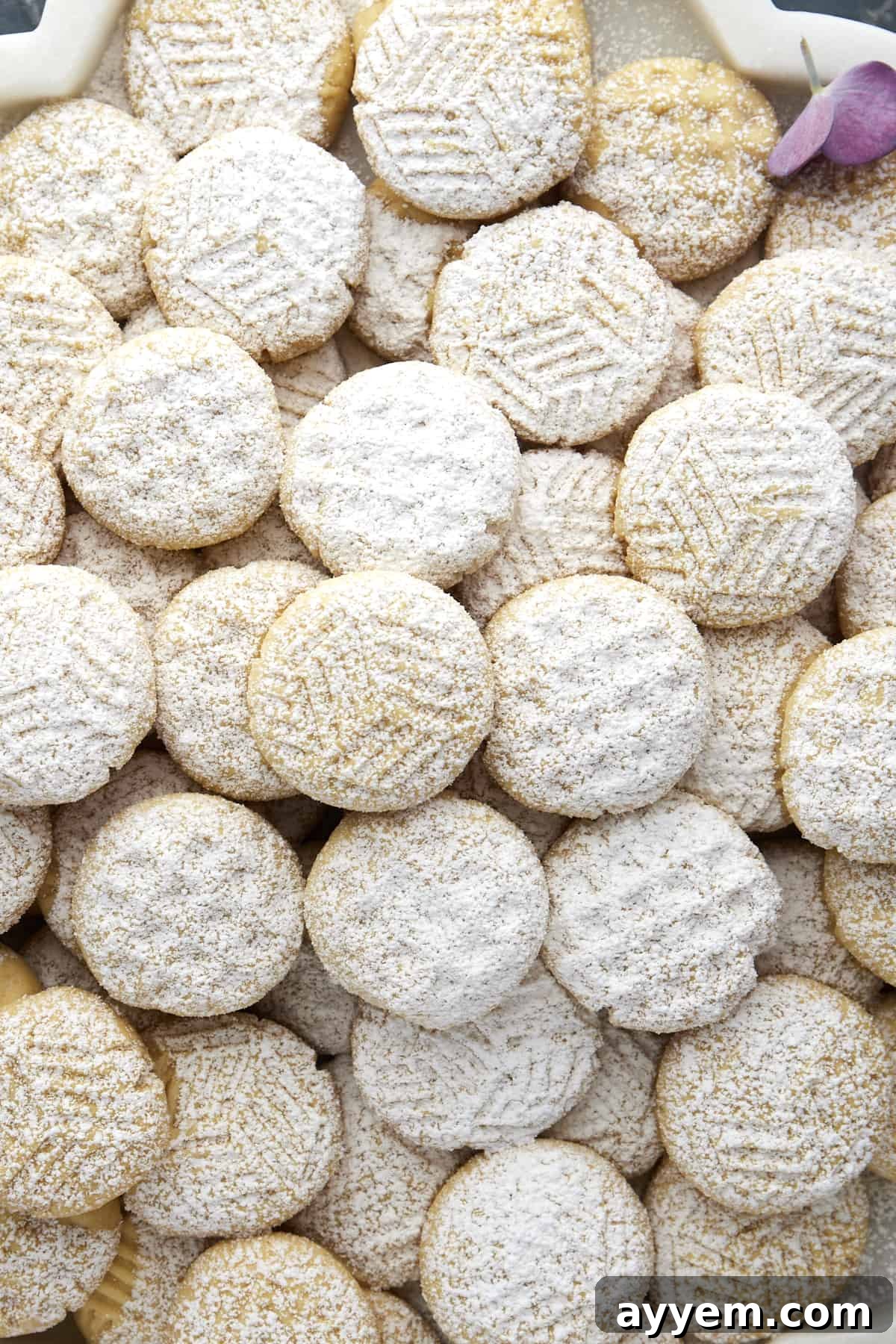
What Are Kahk Cookies?
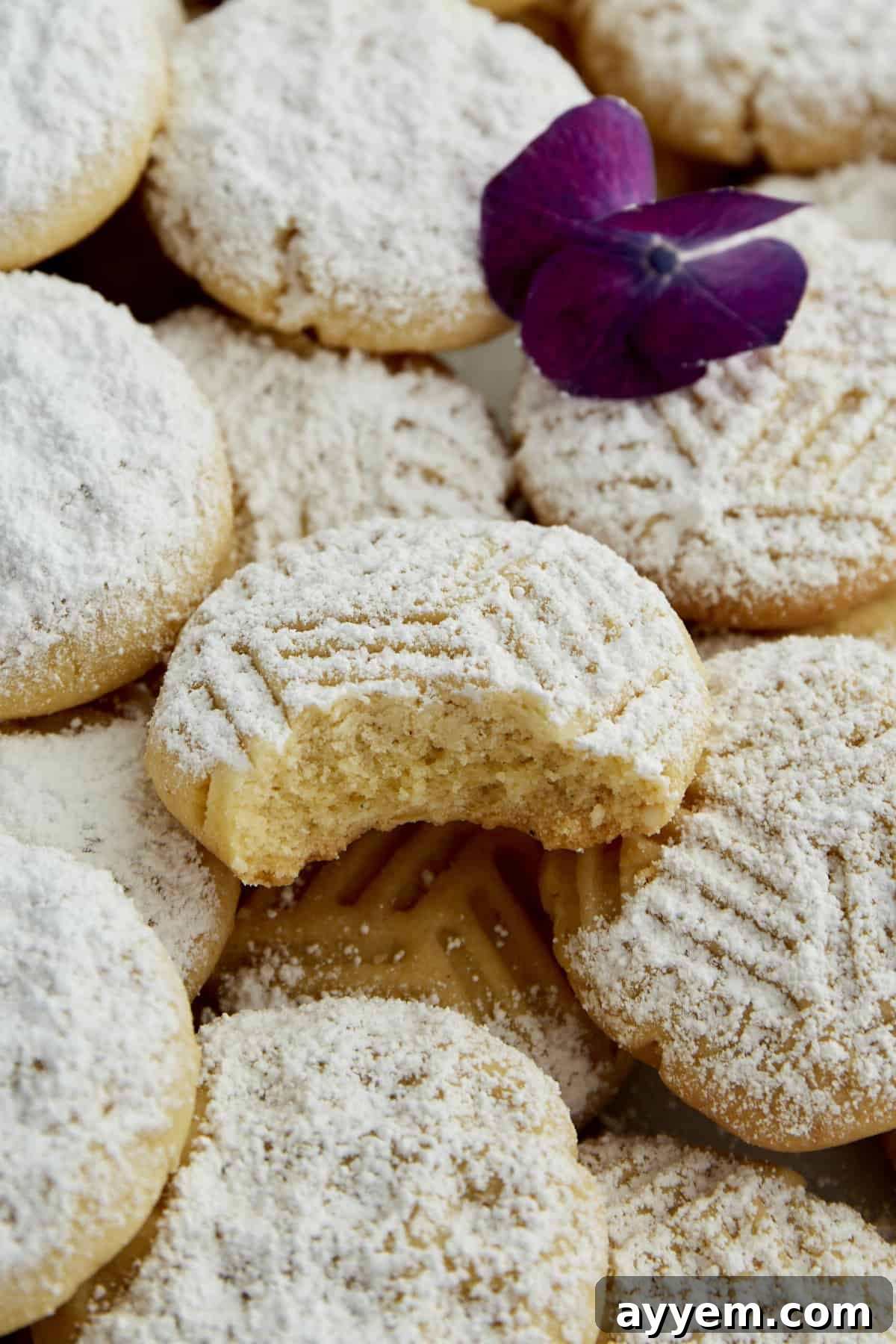
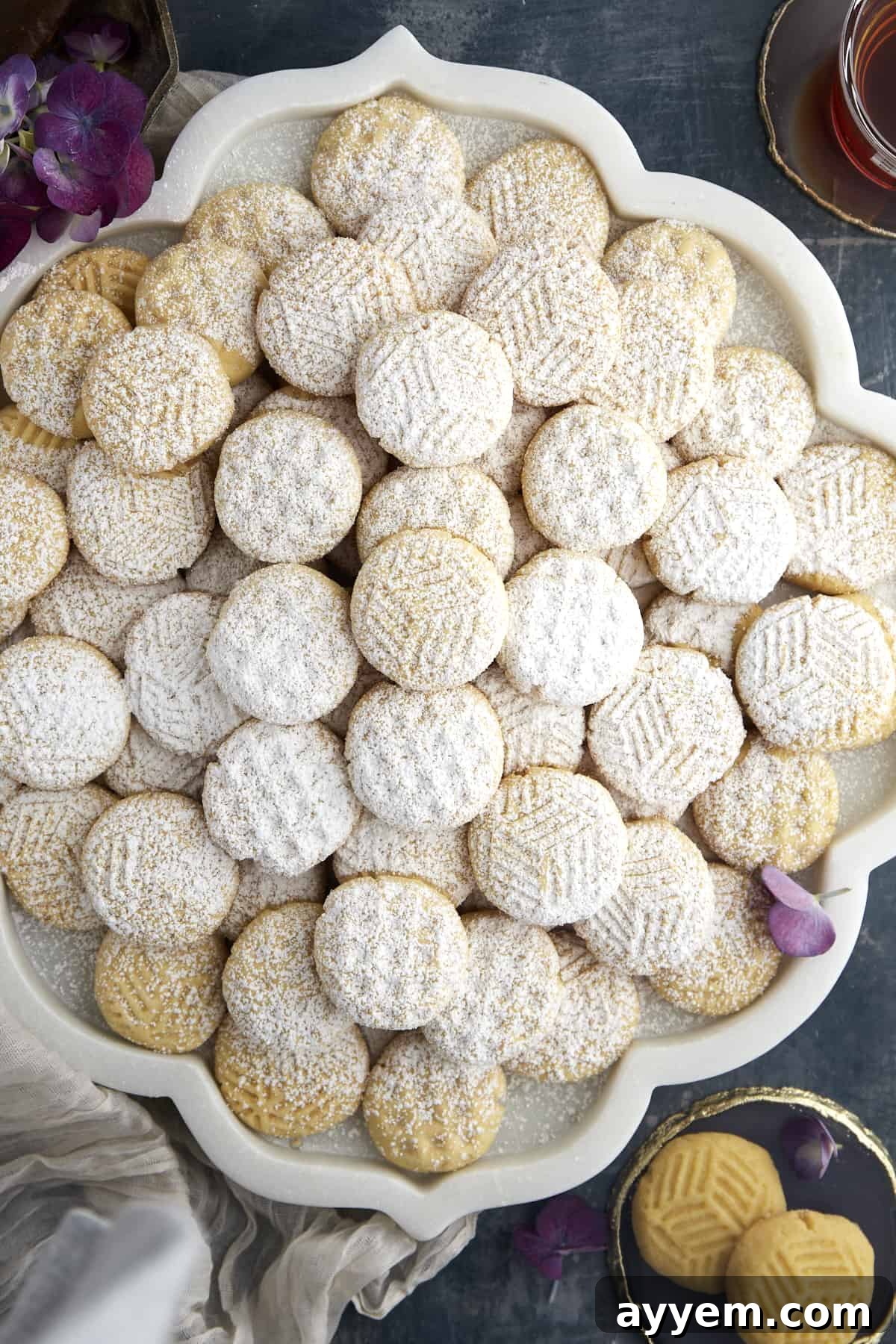
At their core, Kahk Cookies are wonderfully simple yet deeply satisfying buttery biscuits, bearing a resemblance to classic shortbread cookies or even delicate Pecan Sandies. They are typically circular in shape and are almost universally finished with a generous dusting of fine powdered sugar, which adds a beautiful snowy appearance and a burst of sweetness. What truly distinguishes Kahk, however, are the incredible variety of fillings they can harbor and the intricate decorations that adorn their surfaces. Crafted with special stamps or tools, these designs not only add visual appeal but also create texture, helping the powdered sugar cling beautifully to the cookie. This thoughtful combination of a rich, simple dough, optional flavorful fillings, and artistic embellishments transforms an average biscuit into an extraordinary, super-sweet dessert that delights both the eyes and the palate.
Origins Of Eid Cookies
The history of Kahk Cookies is as rich and fascinating as their flavor, deeply rooted in ancient Egypt. Archaeological evidence points to their venerable past; carvings depicting people making Kahk have been discovered within the ruins of ancient temples in places like Memphis and Thebes, suggesting a tradition that dates back thousands of years. Over the millennia, the beloved custom of making Eid Cookies persisted, evolving and eventually weaving its way into the fabric of Islamic culture, where it became intrinsically linked with Eid celebrations.
During the Toulounid dynasty, for instance, bakers were known to shape Kahk into special packets. These packets were given the evocative name kul wishkur, a phrase that translates to “eat and say thank you,” beautifully capturing the spirit of gratitude and sharing associated with these treats. It wasn’t long before these delightful cookies became firmly associated with the joyous occasion of Eid al-Fitr.
Originally, Kahk were formed into various geometric shapes, showcasing early craftsmanship and artistic expression. As the tradition evolved, intricate geometric markings, meaningful sayings, and symbolic signs were meticulously carved onto their tops, adding another layer of cultural and artistic significance. There’s also a captivating legend that suggests Kahk cookies were once prepared by palace kitchens and, in an extravagant display, were occasionally stuffed with gold coins. Over time, these precious coins were replaced by the diverse and equally cherished edible fillings we know today, transforming a royal indulgence into a universally accessible and beloved delicacy. Regardless of the specific nuances of their ancient origins, one truth remains constant: Kahk have always been a communal treat, crafted with love and shared with joy to bring friends and family closer together. You can delve deeper into the fascinating origins and evolution of this cherished recipe here.
Crafting Your Kahk: The Essential Ingredients
Embark on the enchanting journey of making Eid Cookies, where a minimalist approach to ingredients yields maximum deliciousness! With just a handful of readily available pantry staples, you can conjure a dough that transforms into these heavenly biscuits. Here’s your complete guide to the simple yet crucial ingredients that will lead you to cookie bliss:
- Butter or Ghee: The heart and soul of Kahk. Traditional recipes overwhelmingly call for ghee (clarified butter), which imparts an incredibly deep, rich, and distinctly nutty flavor that is unparalleled. However, if ghee is not readily available, high-quality clarified butter makes an excellent substitute, providing a similar buttery richness, though perhaps with a slightly less intense flavor profile. Using it at room temperature ensures a smooth, creamy dough.
- Vanilla Extract: A touch of vanilla helps to enhance the overall sweetness and provides a comforting, aromatic warmth that complements the buttery flavor beautifully.
- All-Purpose Flour: The structural foundation of our Kahk. It creates the delicate, crumbly texture that Kahk is famous for. Please note: We have not tested this recipe with gluten-free flour alternatives, and we cannot guarantee the desired texture if substitutions are made.
- Sea Salt: Just a pinch of sea salt is essential to balance the sweetness and bring out the full depth of flavor in the cookies, preventing them from tasting flat.
- Baking Powder: A leavening agent that gives the Kahk a light, slightly fluffy lift, contributing to its signature melt-in-your-mouth quality without making it dense.
- Instant Yeast: This is a secret to our simplified recipe, making the process incredibly quick and easy. Unlike active dry yeast, instant yeast doesn’t require activation, allowing the cookies to achieve their desired fluffiness with minimal effort on your part.
- Reheet Il Kahk (Kahk Spice Mix): This special spice blend is truly what gives Kahk its recognizable, signature Middle Eastern flavor profile. It’s a unique aromatic mixture that might be challenging to find in Western markets. If you can’t source it, don’t despair! You can either omit it for a more classic buttery taste or create your own approximation with tiny pinches of ground cinnamon, cardamom powder, and nutmeg. Some traditional blends also include mahlab, an aromatic spice derived from cherry pits, which adds a subtly sweet and slightly bitter almond-like note.
- Sesame Seeds: While optional, adding sesame seeds to the dough provides a wonderful nutty flavor and a delicate crunch that contrasts beautifully with the soft cookie. We personally prefer our Kahk without them to keep the focus purely on the buttery dough, but they are a fantastic traditional addition if you enjoy their texture and taste.
- Water: A small amount of room temperature water is used to bring the dough together, ensuring it reaches the perfect consistency for rolling and stamping.
Filling Options for Kahk
While we confess to being purists who adore the simple, unadulterated buttery taste and melt-in-your-mouth texture of plain Kahk, we understand that for many, a filled Kahk is the ultimate indulgence. Indeed, some might even consider plain Kahk a culinary oversight! However, the beauty of these Eid Cookies lies in their versatility. If you’re inclined to add an extra layer of flavor and surprise, by all means, explore the world of Kahk fillings! Here are some of the most popular and delightful options that elevate these cookies to new heights:
- Agameya (Date Filling): A truly classic choice, Agameya is a rich, sweet date filling, often flavored with ghee and sometimes a hint of spices. It offers a wonderfully chewy texture and a deep, caramel-like sweetness that perfectly complements the delicate cookie.
- Turkish Delight: For a floral and subtly sweet surprise, small cubes of Turkish Delight (lokum) can be nestled within the dough. As the cookies bake, the Turkish Delight softens into a fragrant, jelly-like center, offering a delightful chewiness and exotic aroma.
- Agwa (Date Paste): Similar to Agameya but often a simpler, pure date paste, Agwa provides a concentrated burst of natural sweetness and a soft, pliable texture. It’s a wholesome and traditional filling that’s universally loved.
- Nuts (Walnuts or Pistachios are most common): Finely chopped nuts, particularly walnuts or pistachios, are a popular crunchy filling. They are often mixed with a touch of sugar and cinnamon, providing a delightful textural contrast and a rich, nutty flavor that pairs wonderfully with the buttery Kahk dough.
How to Make Easy Kahk Cookies
Kahk cookies sometimes carry an undeserved reputation for being challenging to prepare. In our experience, this is a bit of an exaggeration. If you can master a simple shortbread like Ghraybeh, you are more than capable of creating delicious Eid Cookies! We’ve taken the traditional recipe and streamlined it, making it essentially foolproof without sacrificing any of the authentic, delectable taste. Get ready to bake a batch of these beautiful cookies with ease!
- Prepare Your Workspace: Begin by preheating your oven to 325 degrees Fahrenheit (160°C). Line a large baking sheet with parchment paper. This step prevents sticking and ensures even baking. Set the prepared sheet aside.
- Combine Dry Ingredients: In a spacious mixing bowl, whisk together the all-purpose flour, baking powder, instant yeast, sea salt, and any optional additions like sesame seeds or the Kahk spice mix. Ensure these ingredients are well combined, then set the bowl aside.
- Cream Wet Ingredients: Using the bowl of a stand mixer fitted with the paddle attachment, beat the room temperature clarified butter (or ghee), vanilla extract, and powdered sugar together until the mixture becomes wonderfully smooth and creamy. Scrape down the sides of the bowl as needed to ensure everything is incorporated.
- Form the Dough: With the mixer running on a low speed, gradually add the dry ingredients to the wet mixture. Mix just until they are barely combined. Next, increase the mixer speed to high and add the room temperature water. Continue to beat the mixture until it comes together to form a cohesive dough. The final texture should be pliable, similar to modeling clay.
- Portion and Shape: Use a small cookie scoop (approximately 1-inch in diameter) or a small ice cream scoop to portion out uniform balls of dough. Roll each portion smoothly between your palms to create perfectly round balls. Place these dough balls onto your prepared baking sheet, ensuring they are spaced about 1 inch apart to allow for proper airflow during baking.
- Stamp and Decorate: This is where the fun begins, especially for little helpers! Use a decorative cookie stamp to gently press down on each dough ball, creating intricate patterns on top of your Kahk cookies. This step not only adds to their beauty but also helps the powdered sugar adhere later.
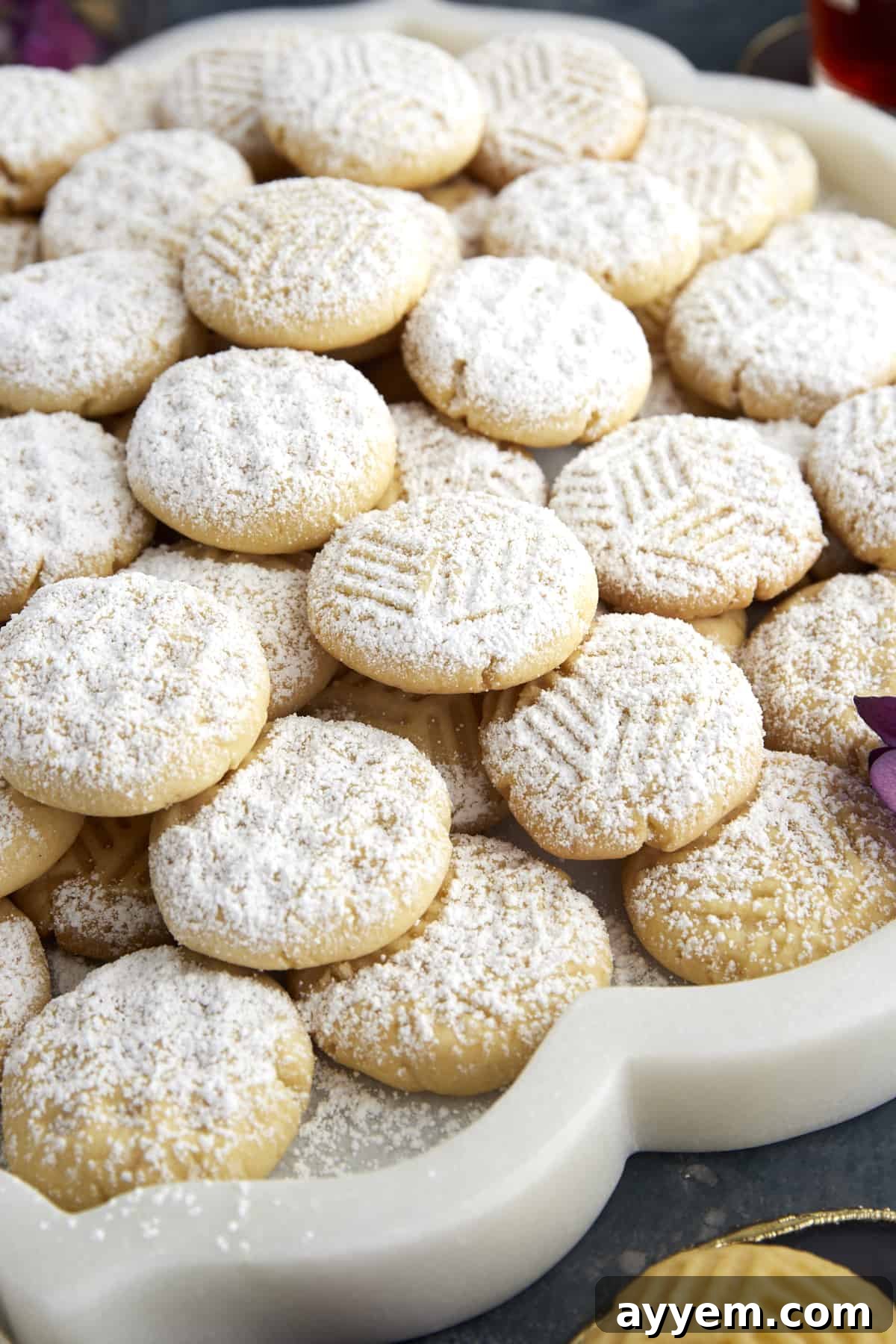
- Bake to Perfection: Carefully transfer the baking sheet to your preheated oven. Bake the cookies for approximately 17-19 minutes. Keep a close eye on them; they are done when their bottoms turn a light golden brown, while the tops should remain a delicate blonde color, much like perfectly baked sugar cookies. Avoid overbaking to maintain their tender texture.
- Cool and Dust: Once baked, remove the cookies from the oven and let them cool slightly on the baking sheet for a few minutes to firm up. Then, carefully transfer them to a wire rack to cool completely. This is a crucial step! Just before serving, dust the completely cooled Kahk Cookies generously with a heavy hand of powdered sugar. Enjoy your homemade Eid Cookies!
Tips for Success
To ensure your Kahk Cookies turn out perfectly every time, follow these expert tips that will help you achieve that coveted melt-in-your-mouth texture and irresistible flavor:
- Avoid Overmixing: This is a golden rule for many baked goods, and Kahk are no exception. Once you’ve combined your wet and dry ingredients, mix just until a cohesive dough forms. Overworking the dough develops too much gluten, which can result in a dense, tough cookie rather than the desired delicate and crumbly texture. A light hand yields the best results.
- Don’t Overbake: Precision in baking time is key to Kahk’s tender crumb. Keep a vigilant eye on your oven, and remove the cookies as soon as the very bottom edges begin to turn a light golden brown. The tops should still appear pale or “blonde.” It’s common for them to look slightly underdone when you pull them out, but trust the process – they will continue to cook and set beautifully as they cool on the baking sheet and then on the wire rack.
- Decorate As You Please: While traditional Kahk often features stunning stamped designs, don’t stress if you don’t own a specific cookie stamp. The beauty of homemade baking is its flexibility! You can get creative and use everyday kitchen tools to create charming patterns. A fork, like you might use for peanut butter cookies, or even the back of a small spoon can create lovely textures. Small tweezers can be used for more intricate, hand-pinched designs, adding a unique, personal touch to each cookie.
- Cool Completely Before Dusting: This tip is paramount for achieving that iconic, snowy powdered sugar finish. Resist the temptation to dust your Kahk while they are still warm! If you apply powdered sugar to warm cookies, it will simply melt and absorb into the cookie, disappearing entirely and leaving a sticky surface. For the best presentation and taste, ensure the cookies are completely cool to the touch before dusting. In fact, for optimal freshness and a beautiful, abundant coating, we recommend dusting your Kahk just before you plan to serve them. This prevents the sugar from absorbing moisture or falling off during storage, guaranteeing plenty of delightful sweetness in every single bite!
How to Store Kahk Cookies
After a month of dedicated fasting during Ramadan, the sheer magic of Kahk Cookies often means they vanish almost instantly from our tables. But here’s a little secret for fellow Kahk enthusiasts: our profound love for these cookies knows no seasonal bounds, prompting us to whip up batches throughout the entire year! Whether it’s for holidays, special celebrations, or simply “just because,” there’s truly never a wrong time to let the delightful taste of Kahk Cookies grace your table and bring a smile to your face.
To keep your precious Kahk fresh and delicious for as long as possible, ensure they are completely cooled before storing. Then, transfer them to an airtight container. At room temperature, they will maintain their exquisite flavor and delicate texture for up to 1 week. For extended freshness, you can store them in the refrigerator for up to 1 month. The cold environment helps preserve their buttery quality. Alternatively, if you’re planning to make a large batch or enjoy Kahk over several months, they freeze beautifully! Simply place them in an airtight, freezer-safe container or bag, and they will stay fresh in the freezer for up to 6 months. When you’re ready to indulge, thaw them gradually in the refrigerator overnight, then allow them to come to room temperature before serving for the best possible experience.
Common Questions about Kahk Cookies (Egyptian Eid Cookies)
Kahk cookies are delightfully melt-in-your-mouth crumbly, a characteristic owed to their rich, ghee-infused dough. Imagine a tender, buttery texture that practically dissolves as you eat it, leaving behind a subtle sweetness. They are the epitome of delicate and airy, not chewy.
Absolutely! Unfilled Kahk is a classic and equally cherished variation. Many, like us, prefer the pure, simple buttery flavor of the plain dough. They still receive that iconic dusting of powdered sugar, making them a fantastic option if you wish to keep things simple while fully enjoying all the traditional flavors and textures.
Kahk cookies are not overly sweet in their base dough. Most of their sweetness comes from the generous layer of powdered sugar dusted on top or from any delicious fillings you might choose to add. This balance gives them a more subtle sweetness compared to many other cookies, which is a significant part of their unique charm and widespread appeal.
While a traditional Kahk mold or stamp (called a “minqash”) helps create those beautiful, intricate stamped designs, it’s not strictly necessary. These designs add to their visual appeal and help the powdered sugar adhere. However, if you don’t have one, you can easily decorate them with the tines of a fork, or even leave them plain and simply dusted with powdered sugar. They will still taste absolutely amazing and bring joy to your celebration!
Kahk Cookies Recipe
Pin Recipe
Print Recipe
Email Recipe
Learn how to make an easy version of classic Kahk Cookies for the perfect dessert to celebrate Eid and all your favorite holidays!
Ingredients
- 2 cups all-purpose flour
- 1/2 teaspoon baking powder
- 1/2 teaspoon instant yeast
- 1/8 teaspoon sea salt
- Optional: 2 Tablespoons sesame seeds
- Optional: 1 teaspoon reheet il kahk (kahk spice mix)*
- 1 cup clarified butter or ghee (room temperature)
- 1 teaspoon vanilla extract
- 1/4 cup powdered sugar (plus extra for dusting)
- 1 tablespoon water (room temperature)
Instructions
- Preheat the oven to 325 degrees Fahrenheit (160°C). Line a baking sheet with parchment paper, and set aside.
- In a bowl, combine the flour, baking powder, yeast, salt, sesame seeds (if using), and spices (if using). Set aside.
- In the bowl of a stand mixer, beat the butter or ghee, vanilla extract, and powdered sugar until creamy.
- Turn the mixer on low, and add the dry ingredients, mixing until just combined. Increase the speed to high, add the water, and beat until the ingredients come together as a pliable dough. It will have a similar texture to playdough.
- Use a small ice cream scoop to portion out 1-inch balls of dough. Roll them between two palms, and place them on the prepared baking sheet, 1-inch apart. Stamp the cookies down with a cookie stamp or decorate with a fork.
- Bake for 17-19 minutes. The cookies will be blonde on top and the bottom should be a light golden brown color.
- Let the cookies cool slightly on the baking sheet before transferring them to a wire rack to cool completely.
- Dust generously with powdered sugar just before serving, and enjoy!
- Store at room temperature for up to 1 week or in the fridge for up to 1 month.
Equipment
Nutrition
Calories: 65kcal |
Carbohydrates: 5g |
Protein: 1g |
Fat: 5g |
Saturated Fat: 3g |
Polyunsaturated Fat: 0.3g |
Monounsaturated Fat: 1g |
Cholesterol: 11mg |
Sodium: 12mg |
Potassium: 10mg |
Fiber: 0.2g |
Sugar: 1g |
Vitamin A: 0.03IU |
Vitamin C: 0mg |
Calcium: 7mg |
Iron: 0.3mg
Nutrition information is automatically calculated, so should only be used as an approximation.
More Desserts to Make for Eid (Or Anytime, Really!)
Looking for more exquisite Middle Eastern recipes to tantalize your sweet tooth? Explore our collection of favorite desserts that are perfect for Eid celebrations or any occasion that calls for a touch of sweetness and tradition!
- Muhallebi Amardeen Pudding
- Easy Mahalabia (Milk Pudding)
- Coconut Rice Pudding
- Easy Basbousa (Semolina Cake)
- Ghraybeh (Middle Eastern Shortbread Cookies)