
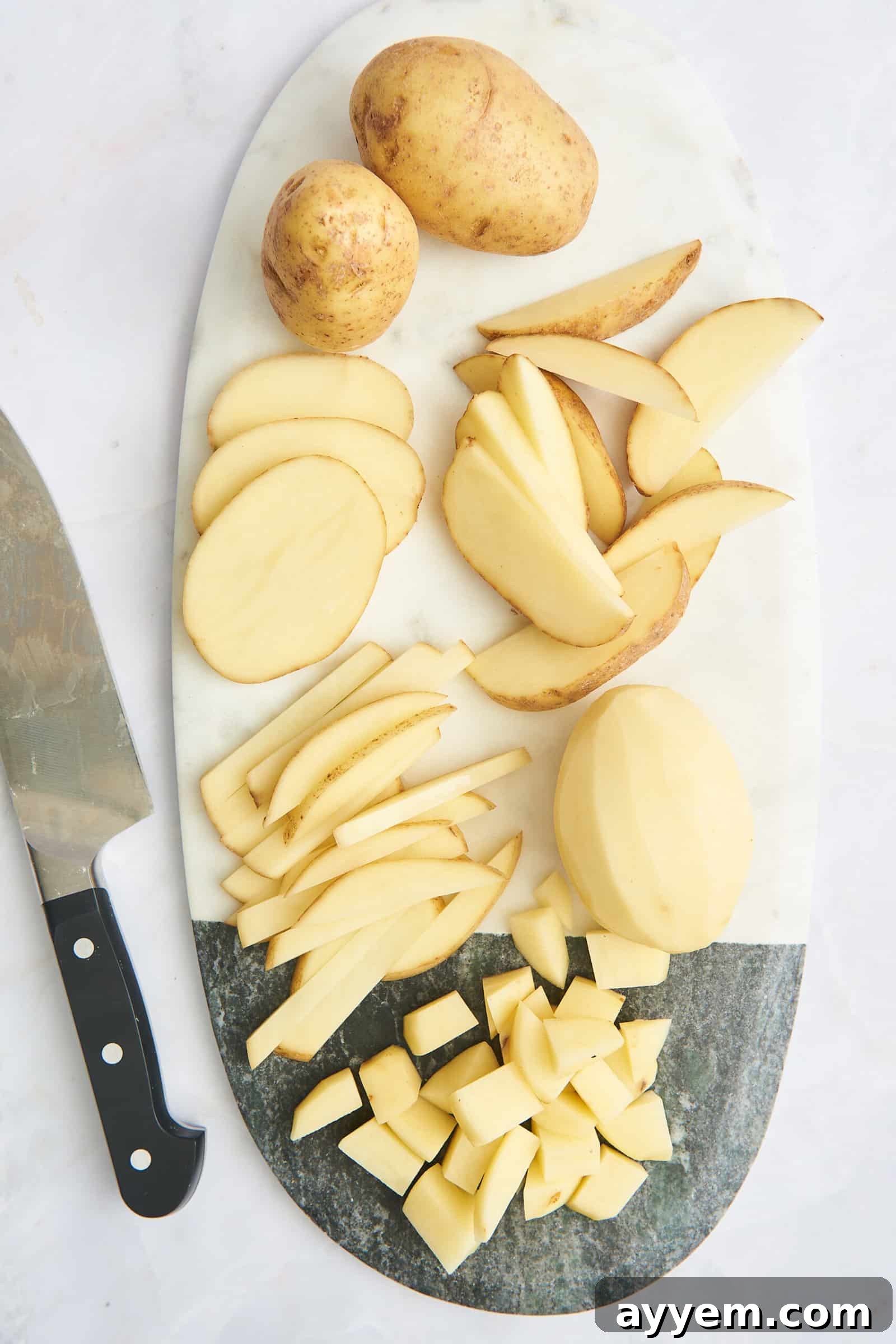
Unlock the secret to perfect potato preparation and elevate your culinary skills by mastering the art of cutting potatoes into an array of shapes: wedges, slices, fries, and cubes. Say goodbye to overpriced, pre-cut options from the grocery store and embrace the satisfaction of preparing fresh, perfectly shaped potatoes for any dish. This comprehensive guide will walk you through each cutting technique with clear, simple instructions, making it easy and enjoyable to transform a humble potato into a versatile ingredient for countless recipes.
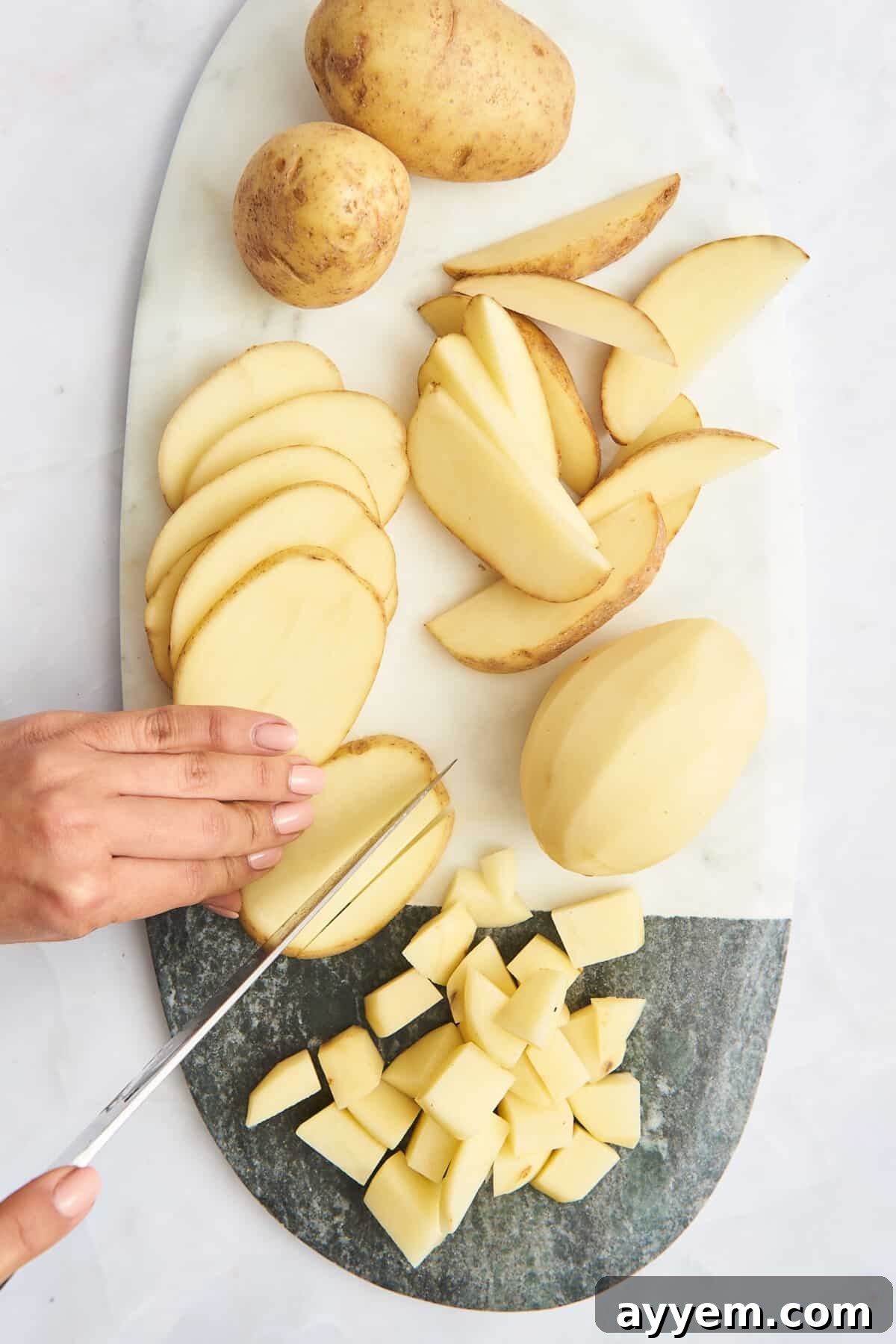
Potatoes are a global staple, consumed by over a billion people worldwide, and their immense popularity is well-deserved. Beyond their incredible versatility in dishes ranging from creamy cheesy mashed potatoes to crispy smashed potatoes, potatoes are also remarkably nutritious. They are an excellent source of dietary fiber, which is crucial for digestive health, and a significant provider of Vitamin C, an essential antioxidant. Furthermore, potatoes offer a good amount of potassium, an important electrolyte, and B vitamins like B6. Recent studies have even highlighted that white potatoes can provide a greater sense of satiety compared to other starchy carbohydrates, making them a smart choice for a balanced diet.
Given their health benefits, affordability, and adaptability, potatoes are a regular feature in kitchens across the globe. Through years of culinary exploration, we’ve refined the most efficient and effective methods for cutting potatoes, ensuring perfect results every time. Forget the frustration of unevenly cut fries or inconsistent chunks; we’re here to equip you with all the knowledge and techniques needed to effortlessly prepare potatoes for any gastronomic adventure.
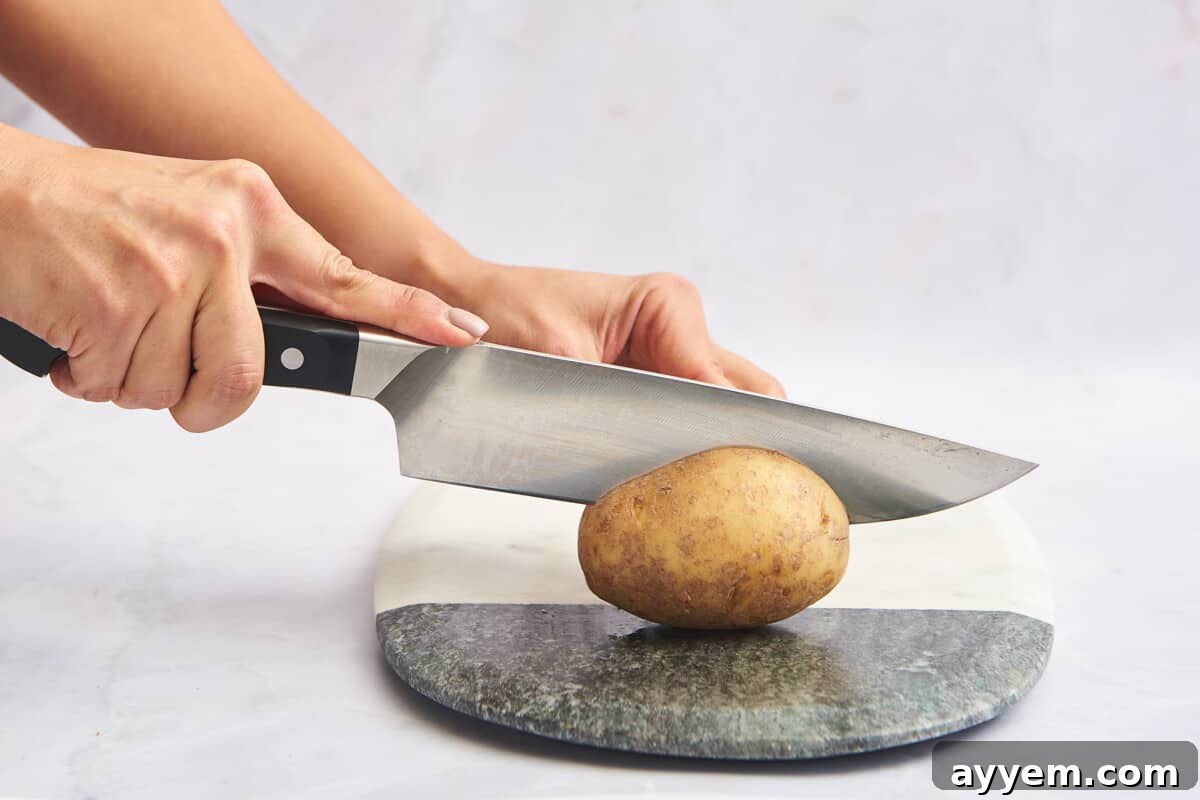
Essential First Step: How to Thoroughly Clean Potatoes
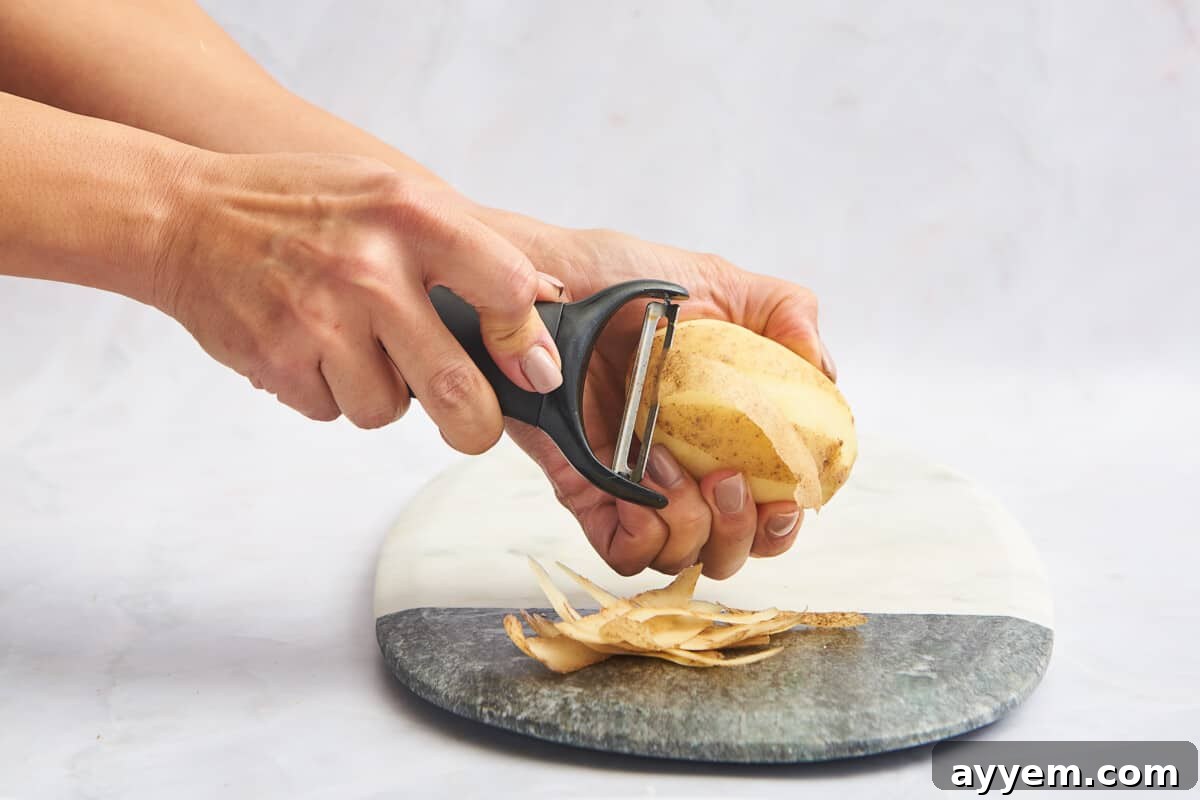
Before you even think about slicing or dicing, the absolute first and most crucial step is to meticulously clean your potatoes. This applies regardless of whether they are conventionally grown or organic. Unwashed potatoes can carry residual dirt, soil, and even pesticide traces, which can significantly impact their flavor and pose health risks. A proper wash ensures your potatoes taste clean and fresh, ready to absorb the delicious flavors of your cooking.
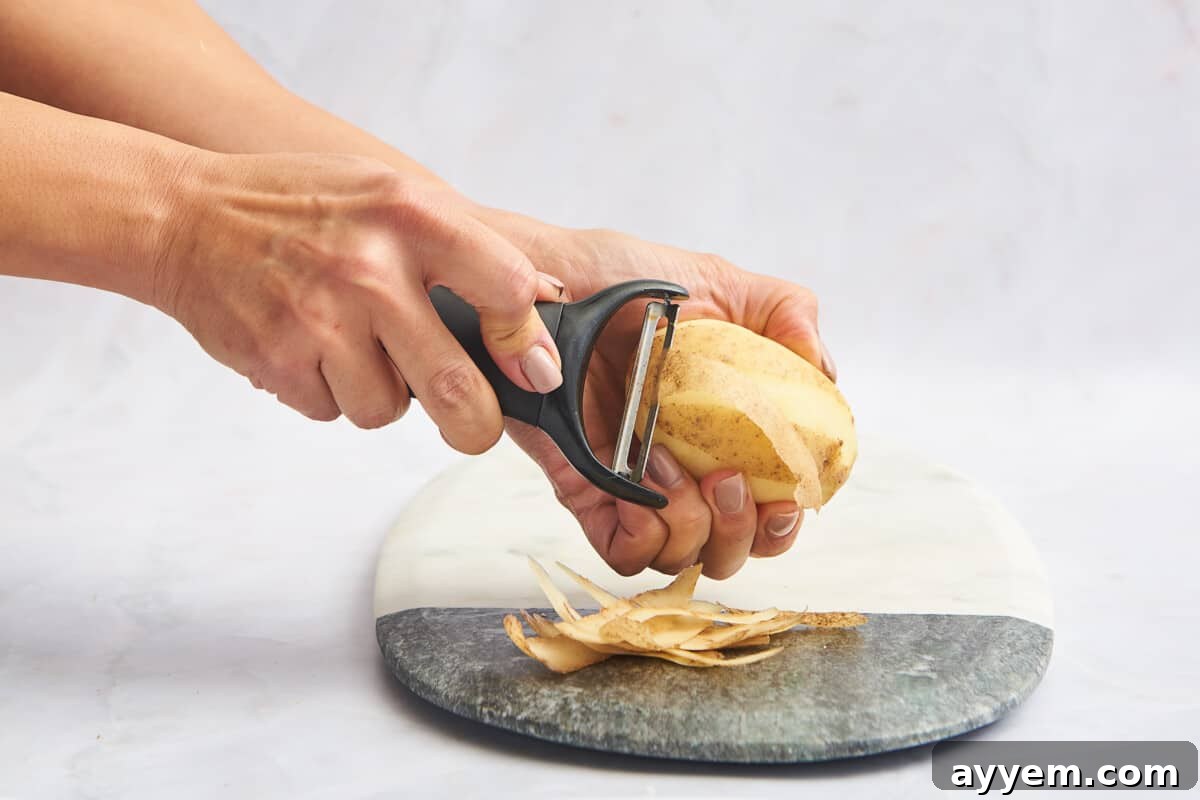
To ensure a thorough clean, follow these simple steps: First, rinse the potatoes well under cool, running water. As you rinse, use a dedicated vegetable brush or a clean, sturdy dishcloth to gently yet firmly scrub away any visible dirt, debris, or sprouts. Pay special attention to any crevices or ‘eyes’ where dirt might accumulate. Once scrubbed, rinse them one last time to remove any loosened particles. Finally, dry them off thoroughly with a clean kitchen towel. Excess moisture can make them slippery and harder to cut safely. Once dry, your potatoes are perfectly primed for cutting and ready for your chosen culinary transformation.
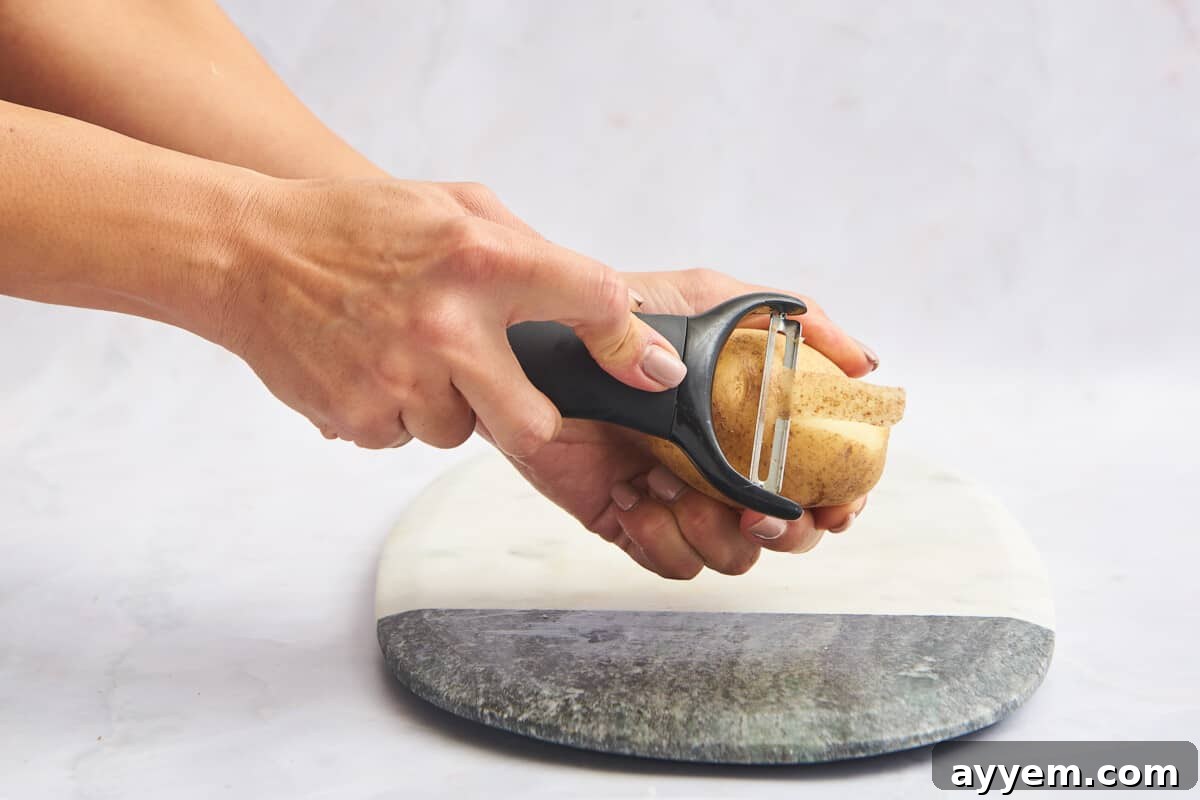
Mastering the Cuts: How to Cut Potatoes into 4 Essential Shapes
Potatoes offer incredible versatility in the kitchen, and the way you cut them often dictates their texture, cooking time, and suitability for various dishes. Understanding these fundamental cutting techniques will open up a world of culinary possibilities. Here, we delve into the four most common and useful potato cuts to meet all your cooking needs, from hearty stews to crispy side dishes.
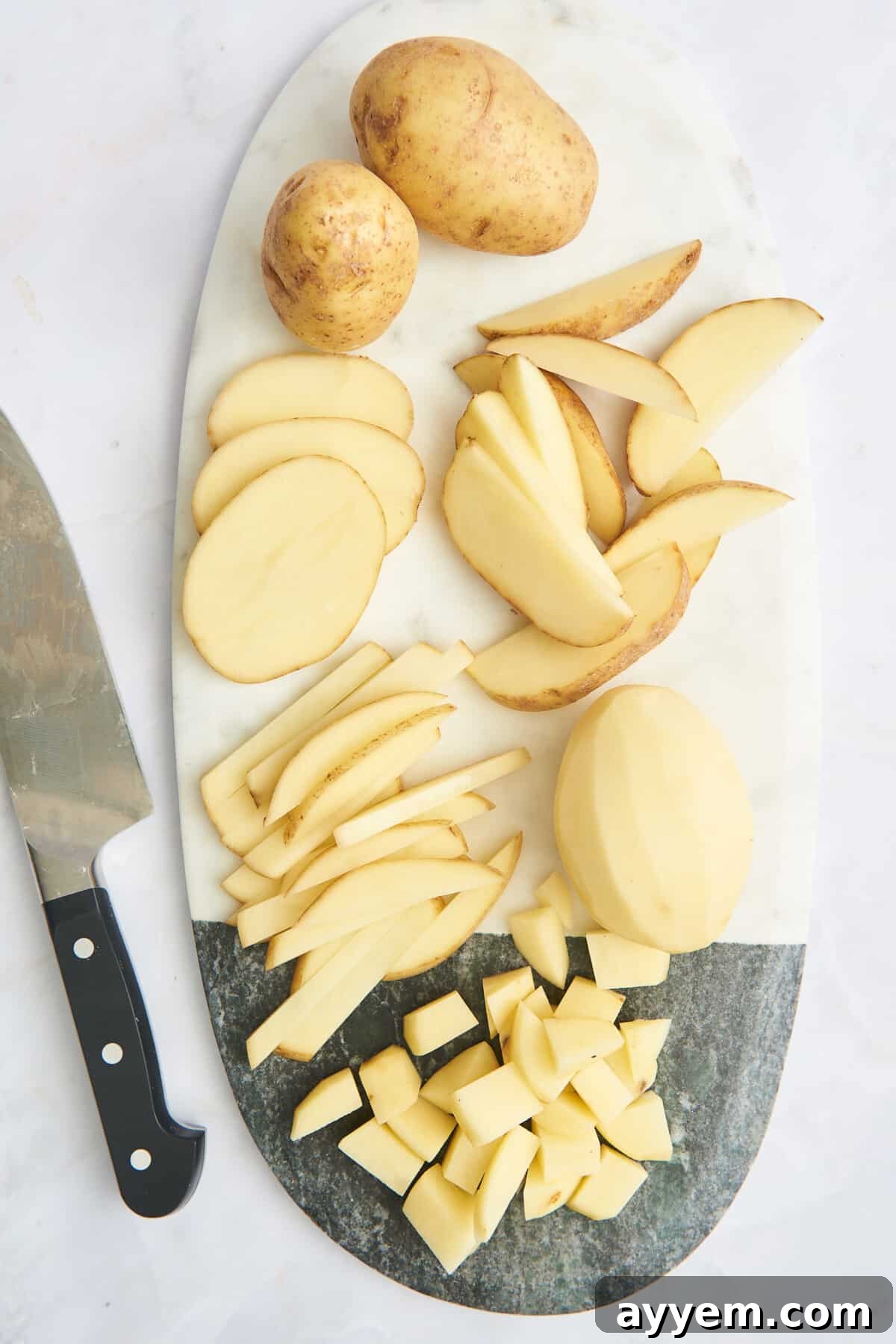
1. Wedges
Potato wedges are beloved for their crispy exteriors and fluffy interiors, making them perfect for roasting, baking, or air frying. Their substantial size means they hold up well to robust seasonings and high-heat cooking.
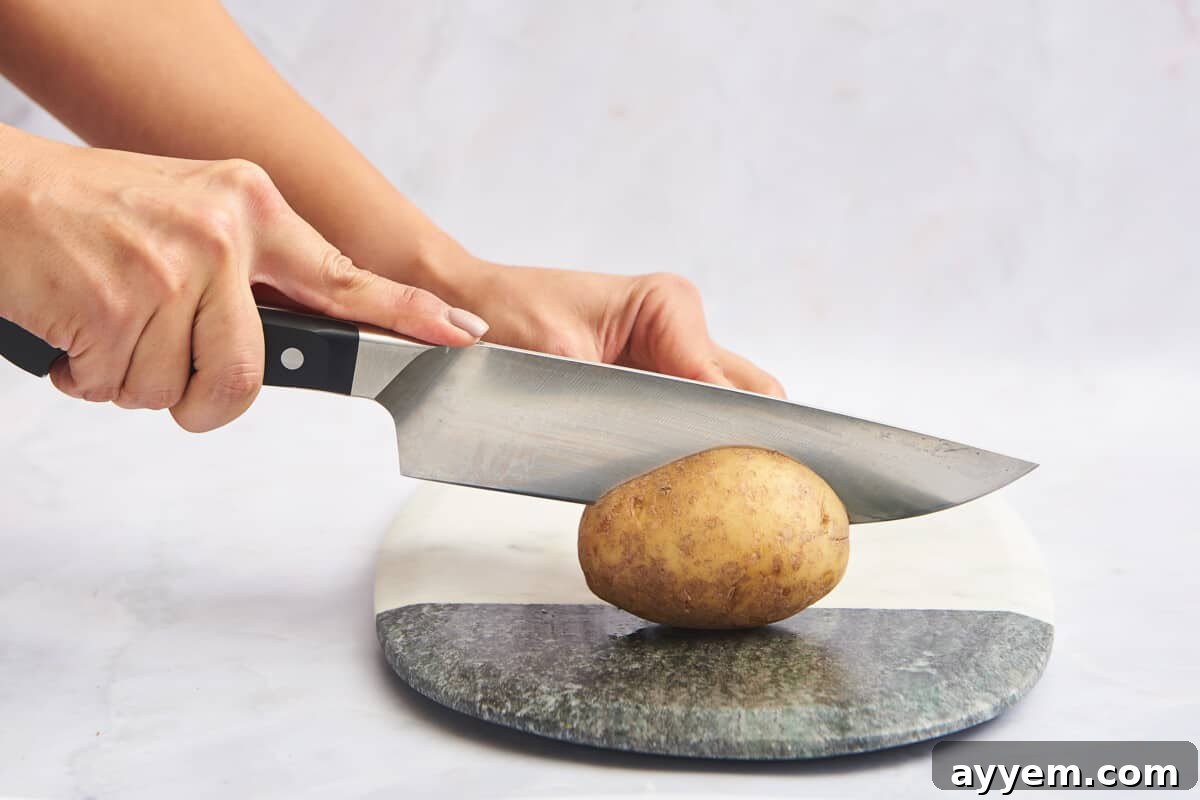
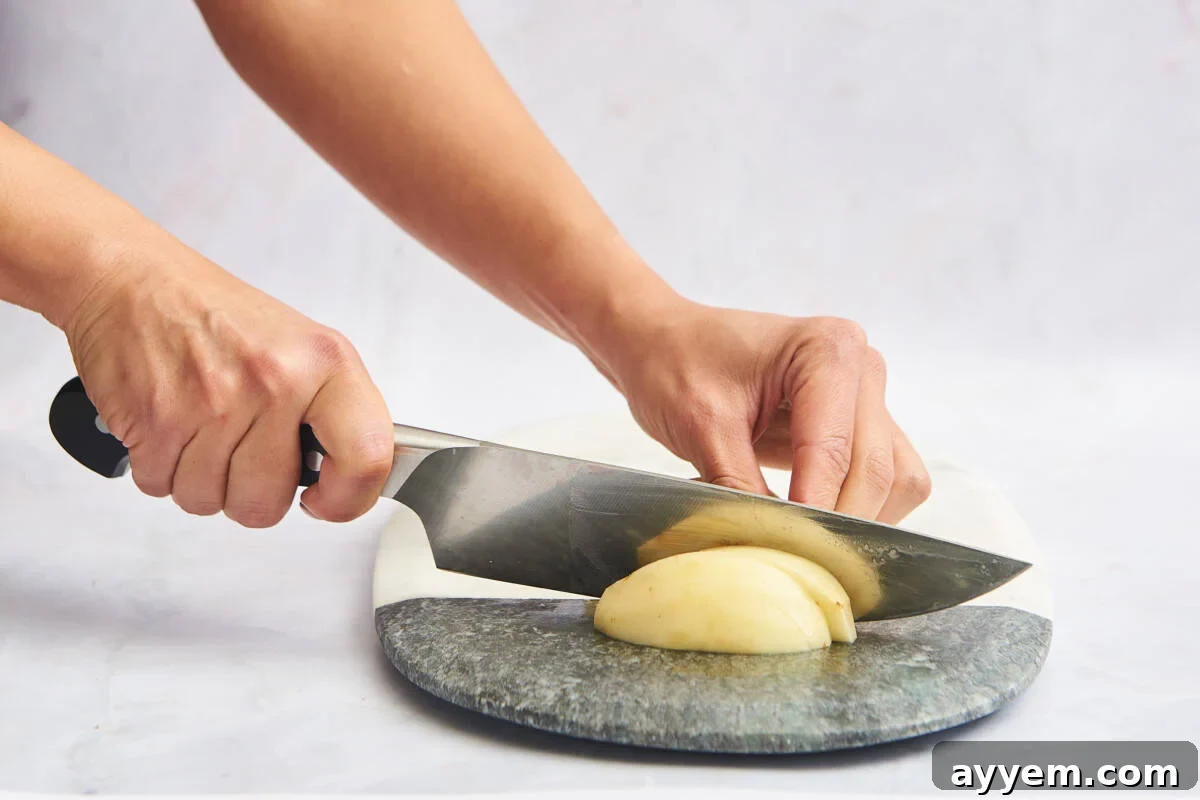
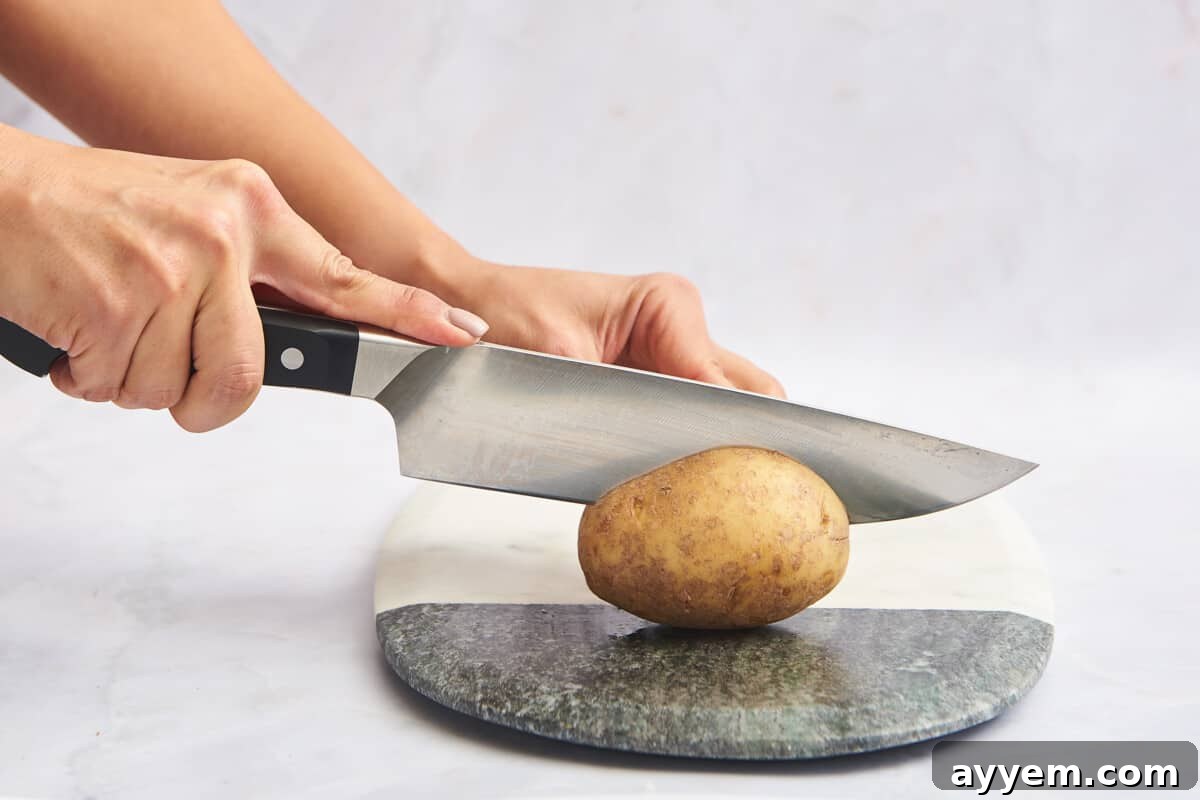
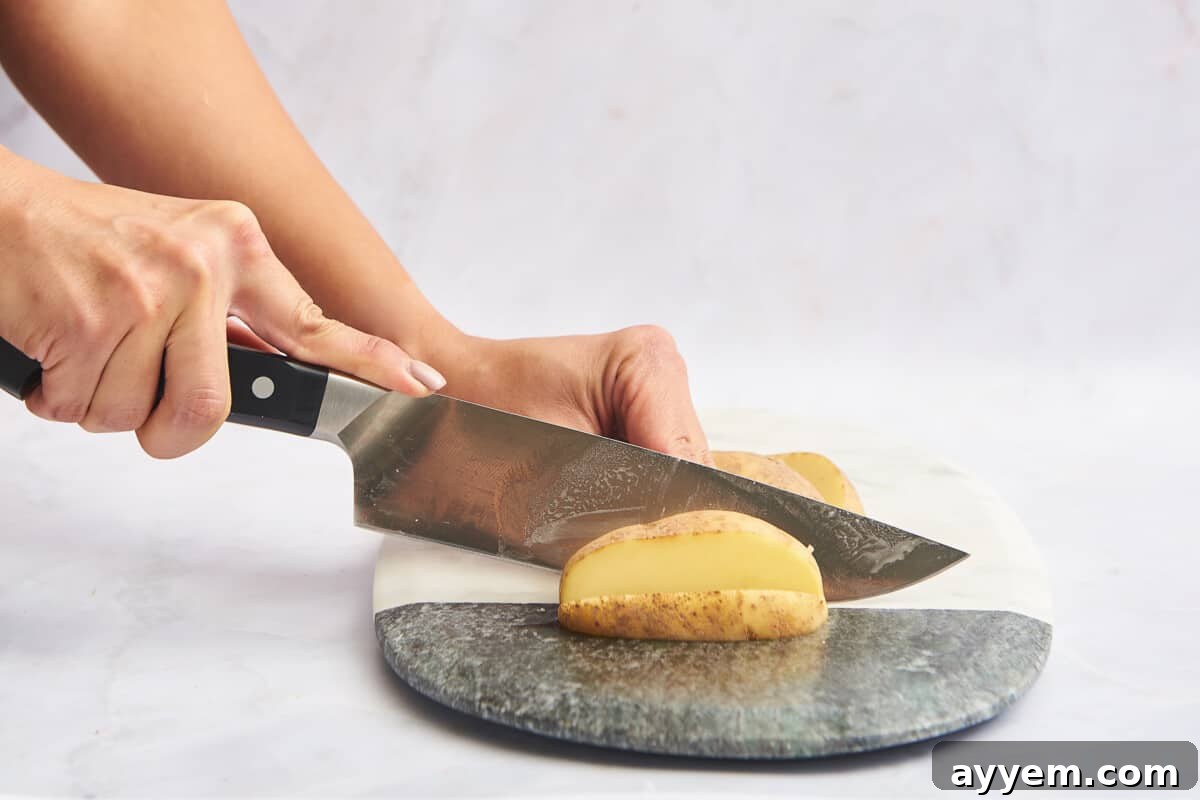
- Begin by placing a clean, dry potato lengthwise on a stable cutting board. Carefully slice the potato in half lengthwise, creating two elongated halves.
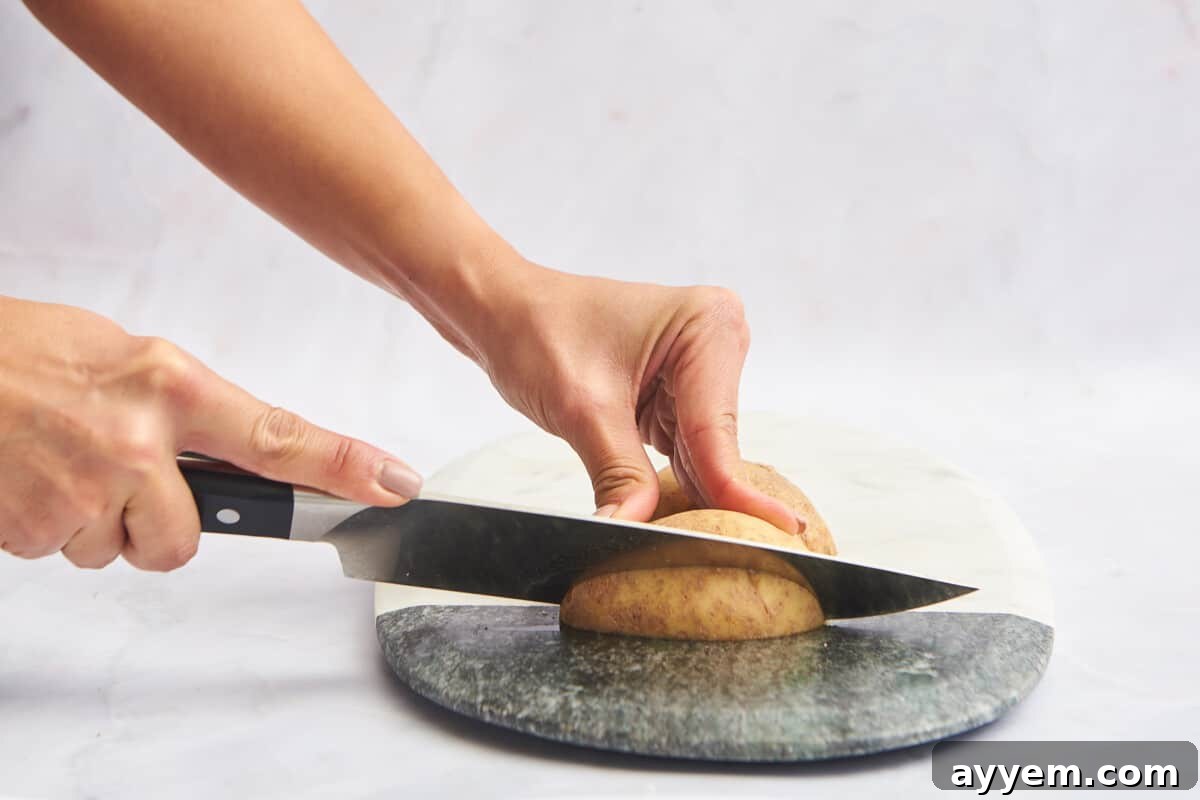
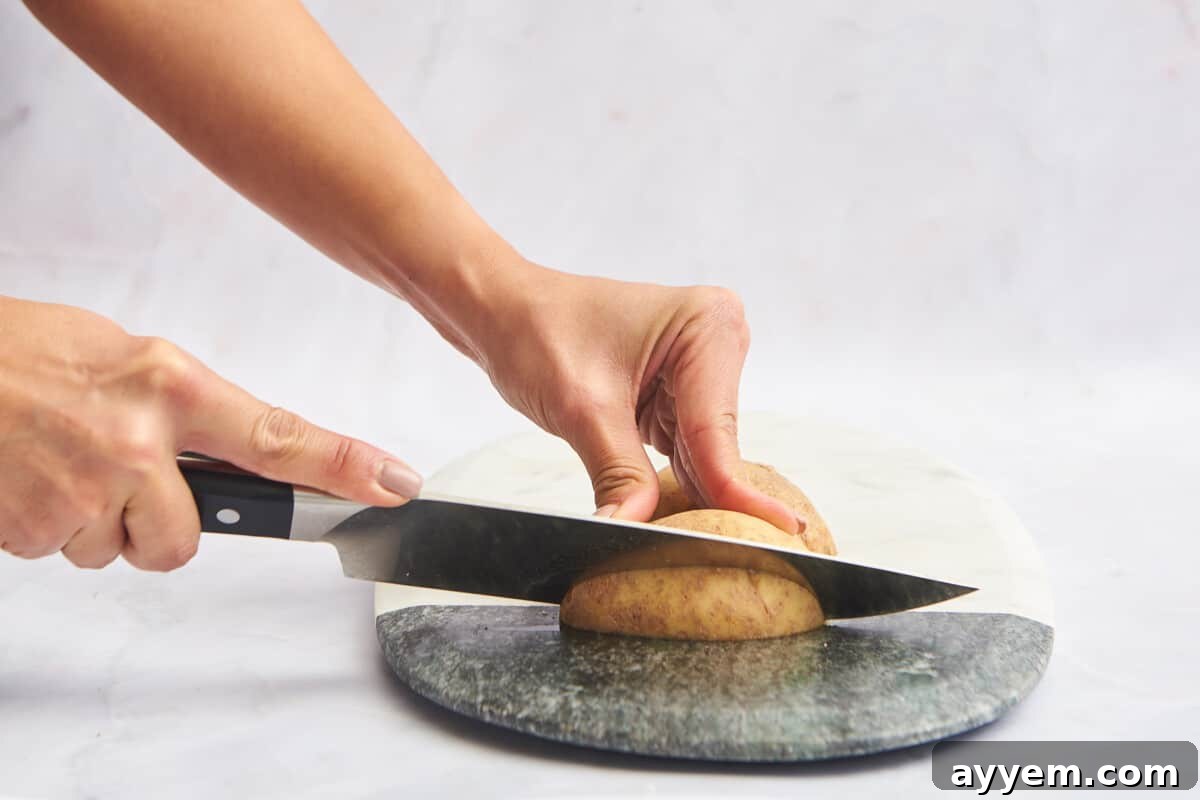
- Next, place each cut side down on the board to provide a flat, stable surface. Slice each half in half again lengthwise, resulting in four quarters.
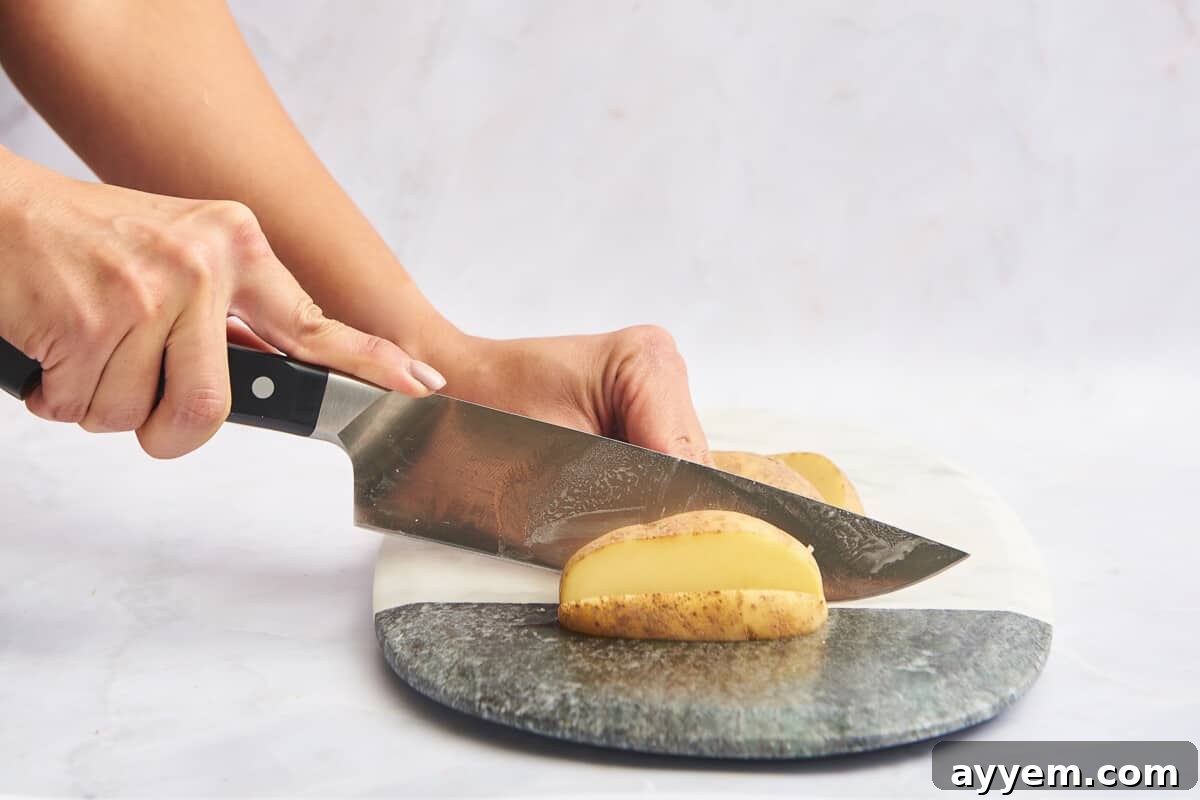
- Depending on the desired size and thickness of your wedges, cut each quarter in half lengthwise once or twice more. For smaller potatoes, one additional cut per quarter might suffice, yielding 8 wedges from a medium potato. For larger potatoes or thicker wedges, two additional cuts could produce 12-16 wedges. Aim for uniform size to ensure even cooking.
2. Slices
Potato slices are incredibly versatile, ideal for gratins, scalloped potatoes, potato chips, or simply pan-frying. The thickness of your slices will greatly influence the texture and cooking time of your final dish.
- To create slices, first stabilize your potato by slicing a thin piece off one side to create a flat base. This prevents the potato from rolling, ensuring safer and more uniform cuts.
- Place the flat side down on your cutting board. Then, make slices all the way across the potato. You can slice either widthwise or lengthwise, depending on the desired shape and size for your recipe.
- Adjust the thickness according to your needs: very thin slices are perfect for delicate dishes like potato chips or crispy gratins, while thicker slices are excellent for heartier dishes like roasted potato rounds or grilled potato steaks. Consistency in thickness is key for even cooking.
3. Fries
Homemade fries offer an unbeatable taste and texture that store-bought versions often can’t match. Whether you prefer thin shoestring fries or thick-cut steak fries, this method allows for complete customization.
- Start by squaring off your potato: trim off a small portion from each of the four sides to create a block-like shape. This ensures your fries will be of consistent length and shape.
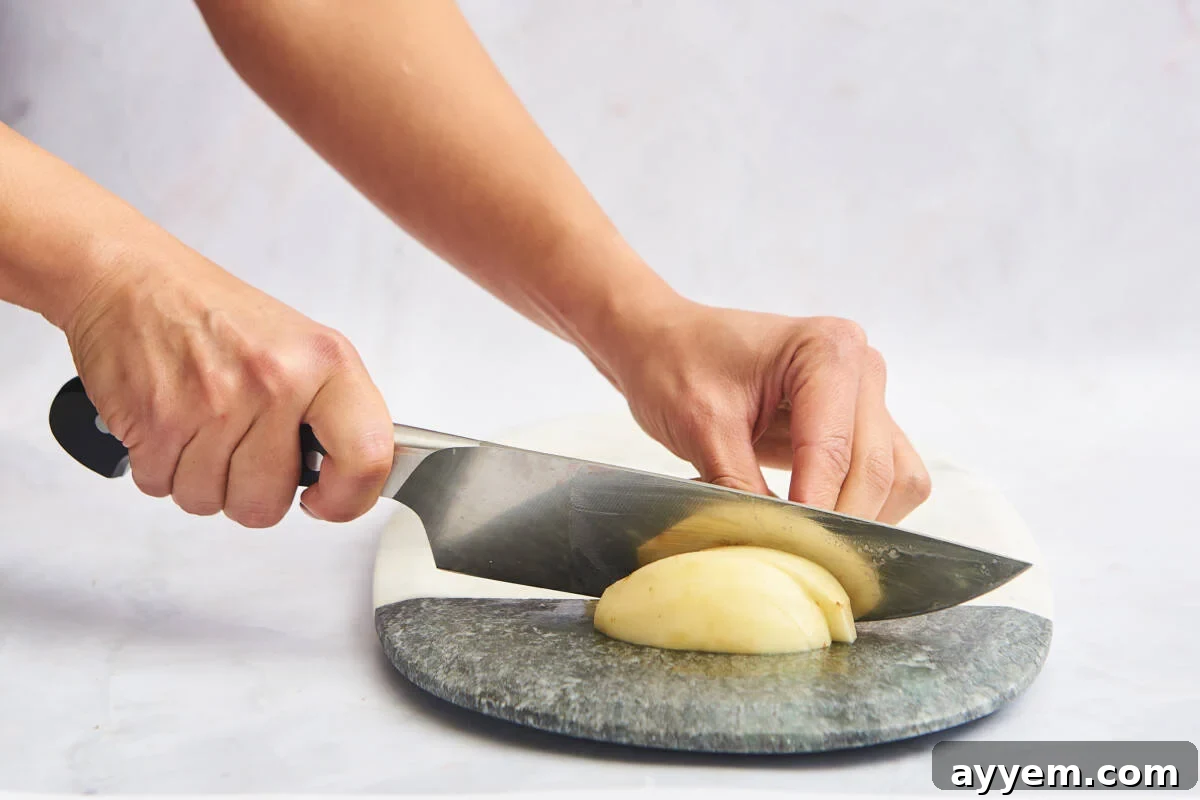
- Next, place the squared potato on its flat side. Slice the potato lengthwise into pieces that are roughly ½ inch thick. These will be your “slabs” for the fries.
- Carefully stack these ½-inch slabs on top of each other. Then, cut lengthwise again through the stack, creating your desired fries. You can make them as thick or as thin as you like. For classic French fries, aim for approximately ¼ to ⅜ inch thickness. For thicker steak fries, maintain the ½-inch thickness from the initial slice.
4. Cubes
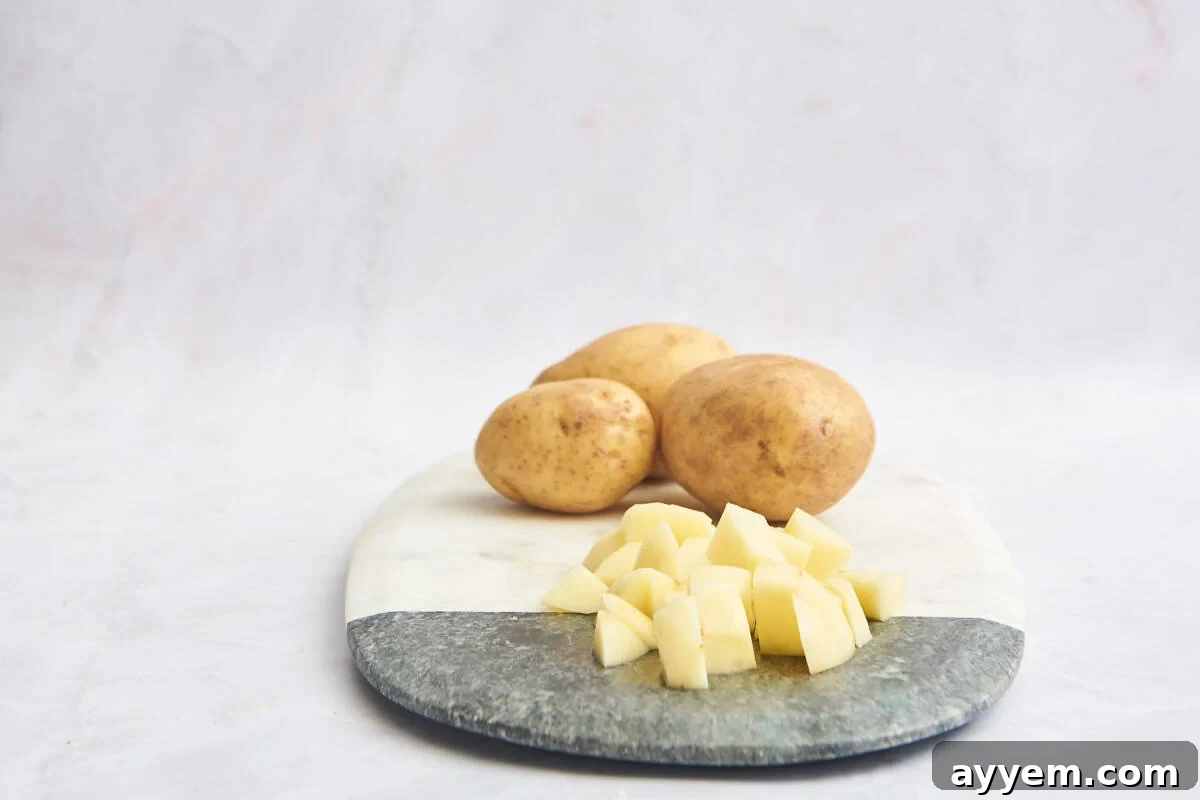
Cubed potatoes are incredibly versatile, perfect for stews, soups, potato salads, hash, or roasting. Their uniform size ensures they cook evenly and integrate beautifully into mixed dishes.
- To achieve perfectly sized cubes, begin by cutting your potato into fries using the method described above. Aim for fries that are roughly ½ inch thick.
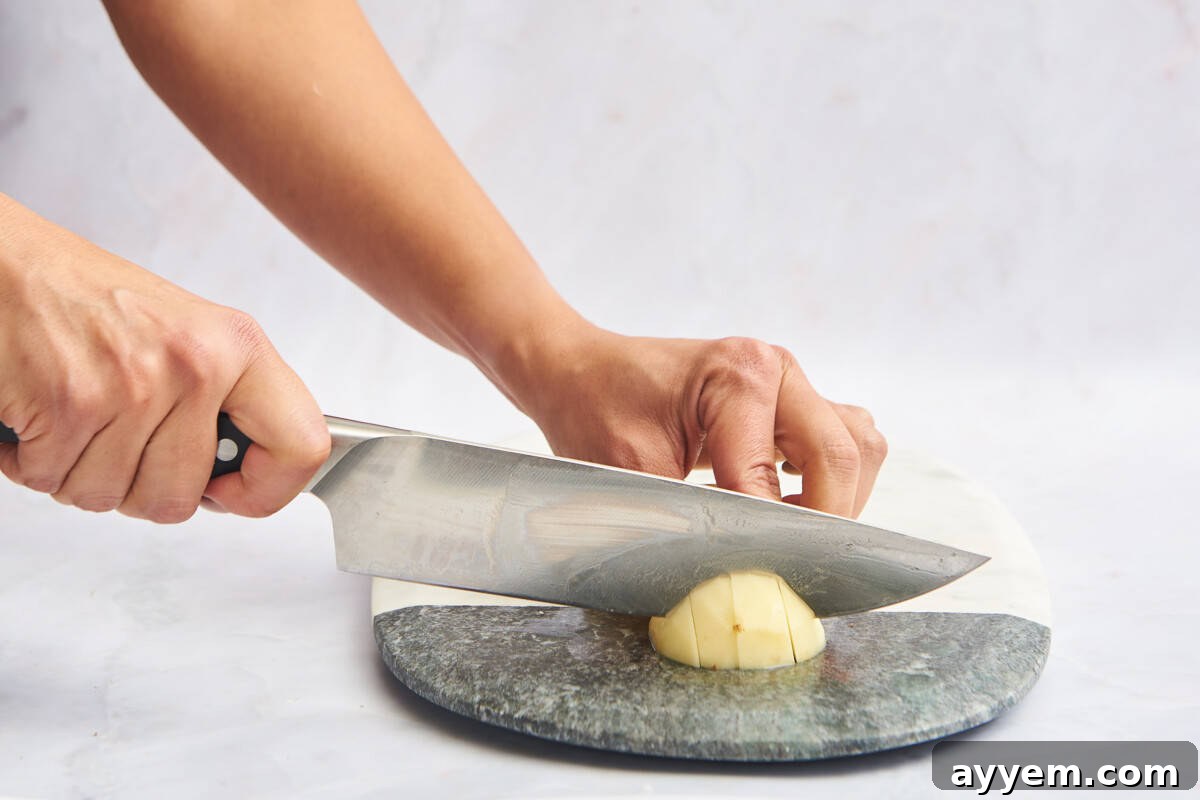
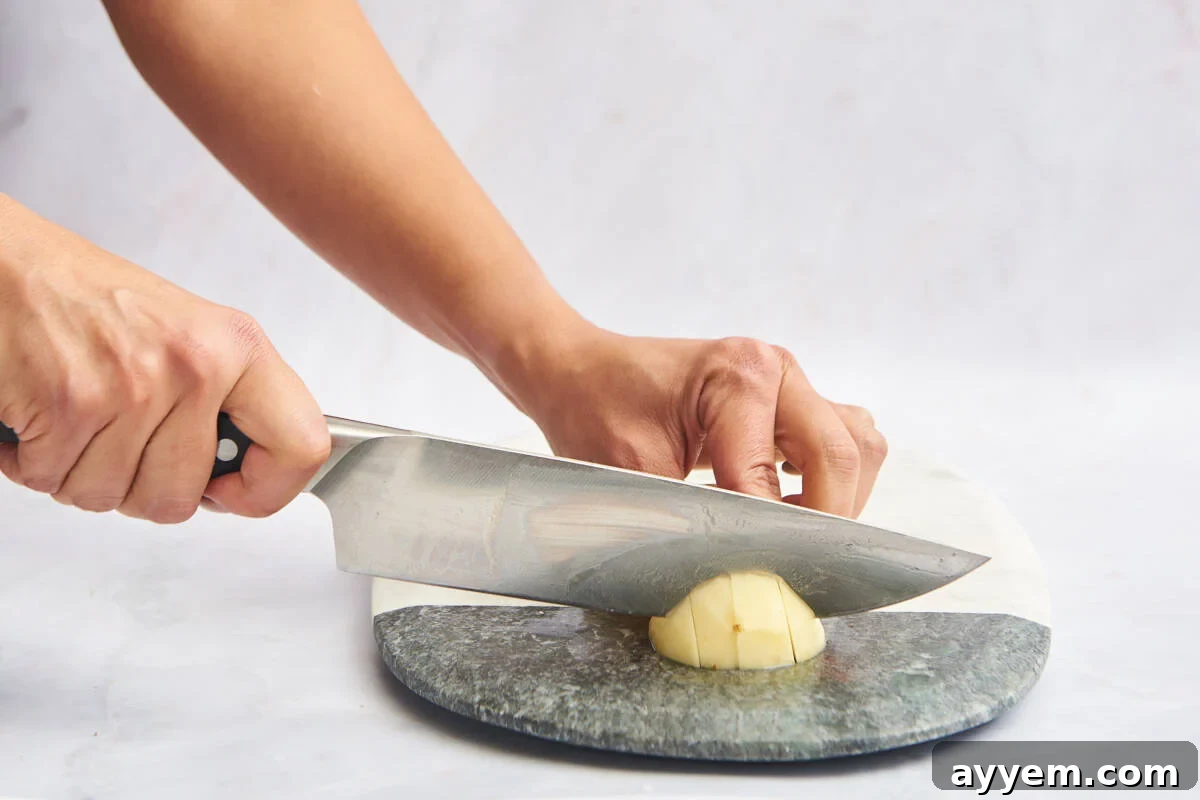
- Once you have a batch of potato sticks (fries), gather a few together and align them. Then, cut across widthwise, creating equal-sized cubes. For example, if your fries are ½ inch wide and tall, cut them into ½-inch lengths to form perfect ½-inch cubes.
- This two-step process (first into sticks, then into cubes) is the most efficient way to achieve uniform cubes, which is essential for consistent cooking and a professional presentation.
Creative Ways to Use Your Perfectly Cut Potatoes
Once you’ve mastered these fundamental potato cutting techniques, a world of delicious recipes awaits! The shape of your potato can significantly impact the cooking method and the final dish’s texture and flavor profile. Here are some of our favorite recipes that truly highlight the versatility of expertly cut potatoes:
- Lemon Greek Potatoes Recipe: These often feature roasted potato wedges or larger cubes, soaking up bright lemon and herb flavors until tender and golden.
- Oven Baked Chicken Drumsticks with Potatoes: A classic one-pan meal typically uses hearty potato chunks or wedges that roast alongside the chicken, absorbing savory juices.
- Za’atar Air Fryer Potato Wedges: The wedge cut is ideal for air frying, creating maximum crispness with a fluffy interior, perfectly seasoned with aromatic Za’atar.
- Garlic Parmesan Air Fryer Potato Wedges: Similar to the above, potato wedges provide the perfect canvas for a flavorful garlic and parmesan coating, getting beautifully crispy in the air fryer.
- Parmesan Potatoes: These can be made with various cuts, but often feature small cubes or thinly sliced potato rounds baked until tender and cheesy.
- Air Fryer Golden Potatoes with Harissa Sauce: Small cubes or chunky potato slices work wonderfully here, achieving a golden crispness in the air fryer, ready to be tossed in a spicy harissa sauce.
Experimenting with different cuts can completely transform a dish, so don’t be afraid to try new shapes with your favorite potato recipes!
Common Questions When Learning How to Cut Potatoes
Whether you’re a seasoned chef or a beginner in the kitchen, you might have some common questions about preparing and storing potatoes. We’ve compiled answers to frequently asked questions to help you become a potato-cutting pro.
How do you store cut potatoes?
The best way to store cut potatoes is to immediately submerge them in a bowl of cold water in the refrigerator. This prevents them from oxidizing and turning brown, and also helps to remove excess starch, which can result in crispier fries or roasted potatoes. Ensure the potatoes are fully covered by water.
Can you freeze cut potatoes?
Raw, uncooked potatoes should not be frozen directly, as their high water content will cause them to become mushy and grainy upon thawing. However, you can prepare them for freezing by first blanching them (briefly boiling) in hot water, then rapidly cooling them. After blanching, pat them thoroughly dry, flash-freeze them in a single layer on baking sheets, and then transfer them to an airtight, freezer-safe container or bag for long-term storage. This process helps preserve their texture.
How long can you keep potatoes in water?
You can safely store cut potatoes submerged in cold water in the refrigerator for up to one day before cooking. For optimal freshness and to prevent any potential bacterial growth, it’s recommended to change the water at least once if storing for more than a few hours. Always ensure they are kept chilled.
How do you soften potatoes for cutting?
If you encounter a particularly hard potato that’s difficult to cut, you can gently soften it to make it more manageable. Try poking several holes into the potato with a fork and microwaving it for one to two minutes. This brief exposure to heat will slightly soften the flesh without cooking it through. Always allow the potato to cool completely before attempting to cut it to ensure safety and a firm grip.
Should I peel potatoes before cutting?
Peeling potatoes before cutting is entirely a matter of preference and depends on your recipe. You can certainly peel them, but it’s not always necessary. Potato skins are surprisingly nutritious, packed with fiber, vitamins, and minerals. Leaving the skin on can also add a delightful rustic texture and extra flavor to many cooked potato dishes, such as roasted potatoes or wedges. For recipes like mashed potatoes where a smooth texture is desired, peeling is usually preferred.
More Essential Kitchen Cutting Guides
Honing your knife skills extends beyond just potatoes. Explore our other helpful guides to master various fruit and vegetable cutting techniques and boost your kitchen confidence:
- How to Cut Sweet Potatoes (4 Ways)
- How to Cut a Cantaloupe (3 Ways)
- How to Cut a Lime
- How to Cut a Papaya
- How to Cut a Kiwi
- How to Cut Green Onions
- How to Cut a Tomato (3 Ways)
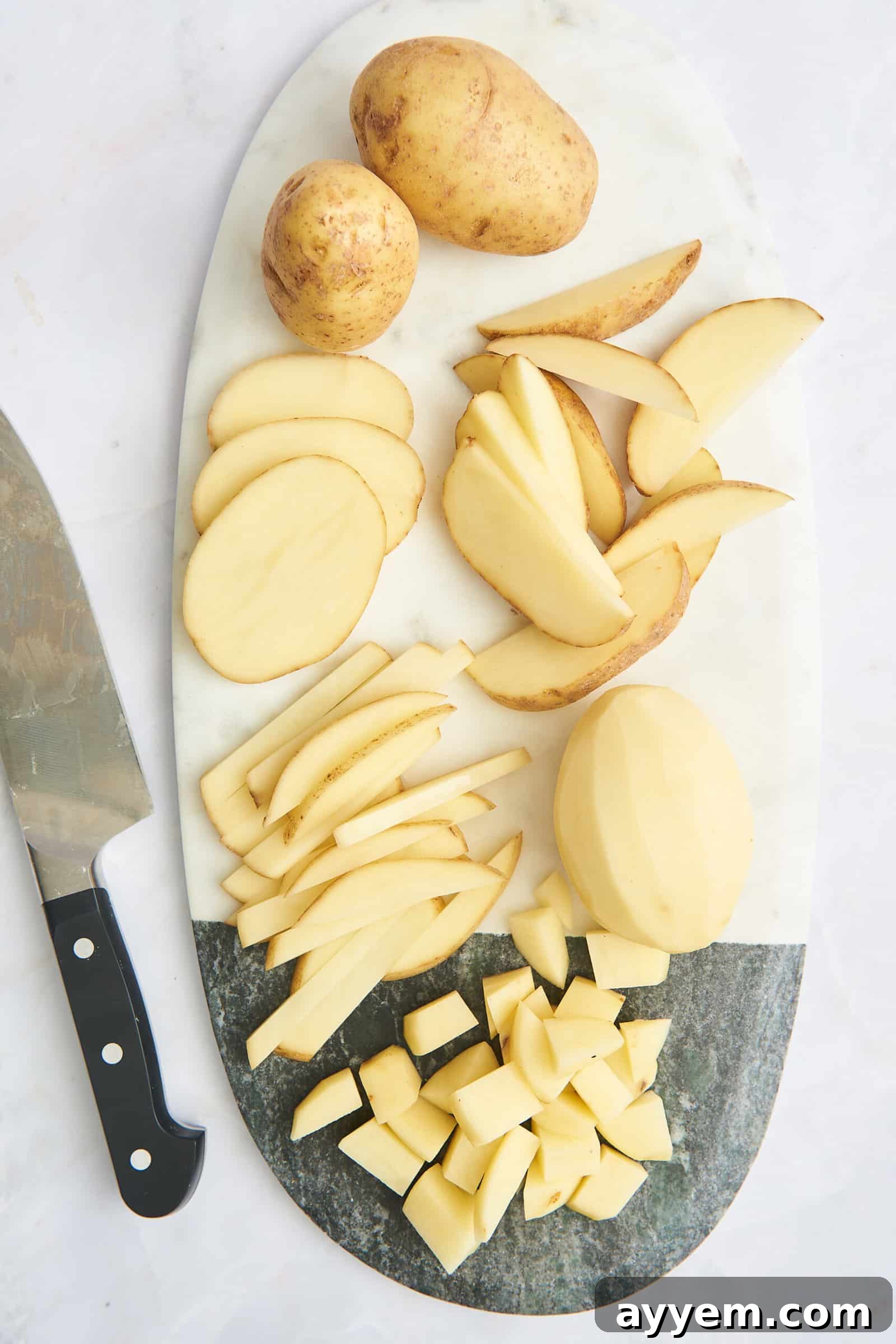
How to Cut Potatoes (4 Ways)
Food Dolls
1 serving
10 mins
10 mins
Ingredients
- 1 large potato
Instructions
-
Wash and peel the potato, if desired.1 large potato

Wedges
-
Place the potato on a cutting board, and slice it in half lengthwise.
-
Place the cut sides down, and slice in half again lengthwise.
-
Cut each quarter in half lengthwise once or twice more to create wedges.
Slices
-
Make slices as thin or thick as desired all the way across the potato either width or lengthwise, depending on the size needed.
Fries
-
Slice the potato into roughly ½ inch pieces lengthwise.
-
Stack the slices on top of each other, and cut lengthwise again, creating fries as thick or as thin as desired.
Cubes
-
Cut the potato into fries, using the method above.
-
Cut across widthwise, creating equal sized cubes.
Equipment
Nutrition
Nutrition information is automatically calculated, so should only be used as an approximation.
By mastering these basic potato cutting techniques, you unlock a world of culinary creativity and efficiency in your kitchen. From quick weeknight meals to impressive holiday spreads, perfectly prepared potatoes are now well within your grasp. Enjoy the journey of cooking and savor the delicious results!