
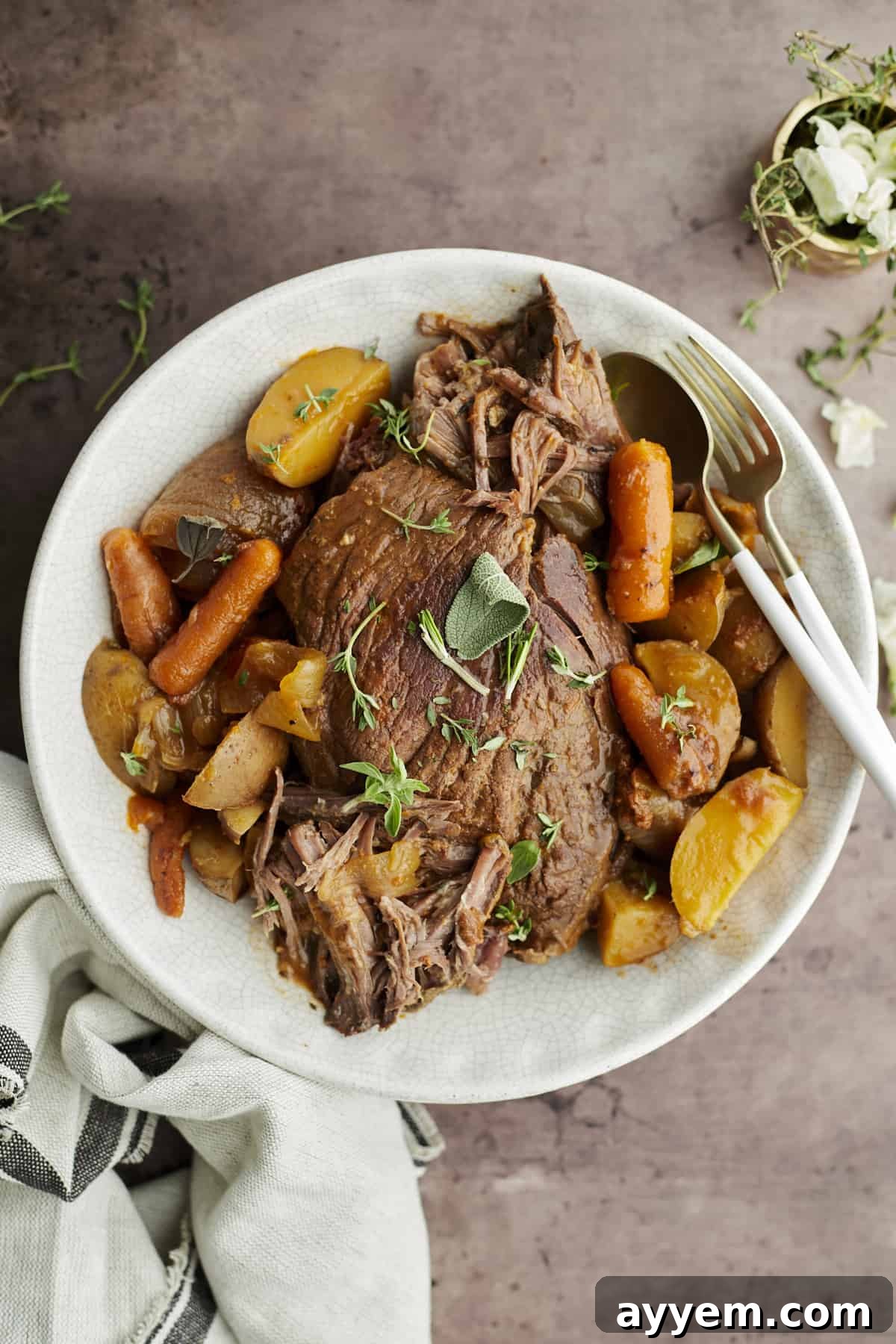
Welcome to the ultimate guide for creating the most incredibly easy and satisfying Slow Cooker Beef Pot Roast. This recipe is designed to deliver a fall-apart tender, deeply flavorful, and wonderfully aromatic beef pot roast that serves as the perfect comfort food for chilly evenings or a hearty centerpiece for any family gathering. Forget complicated preparations; our crock pot beef roast simplifies the cooking process, allowing you to enjoy more time with loved ones and less time in the kitchen. Prepare to be amazed by how effortlessly this dish comes together, leaving you feeling warm, cozy, and utterly satisfied!
Understanding Slow Cooker Beef Pot Roast: A Culinary Classic
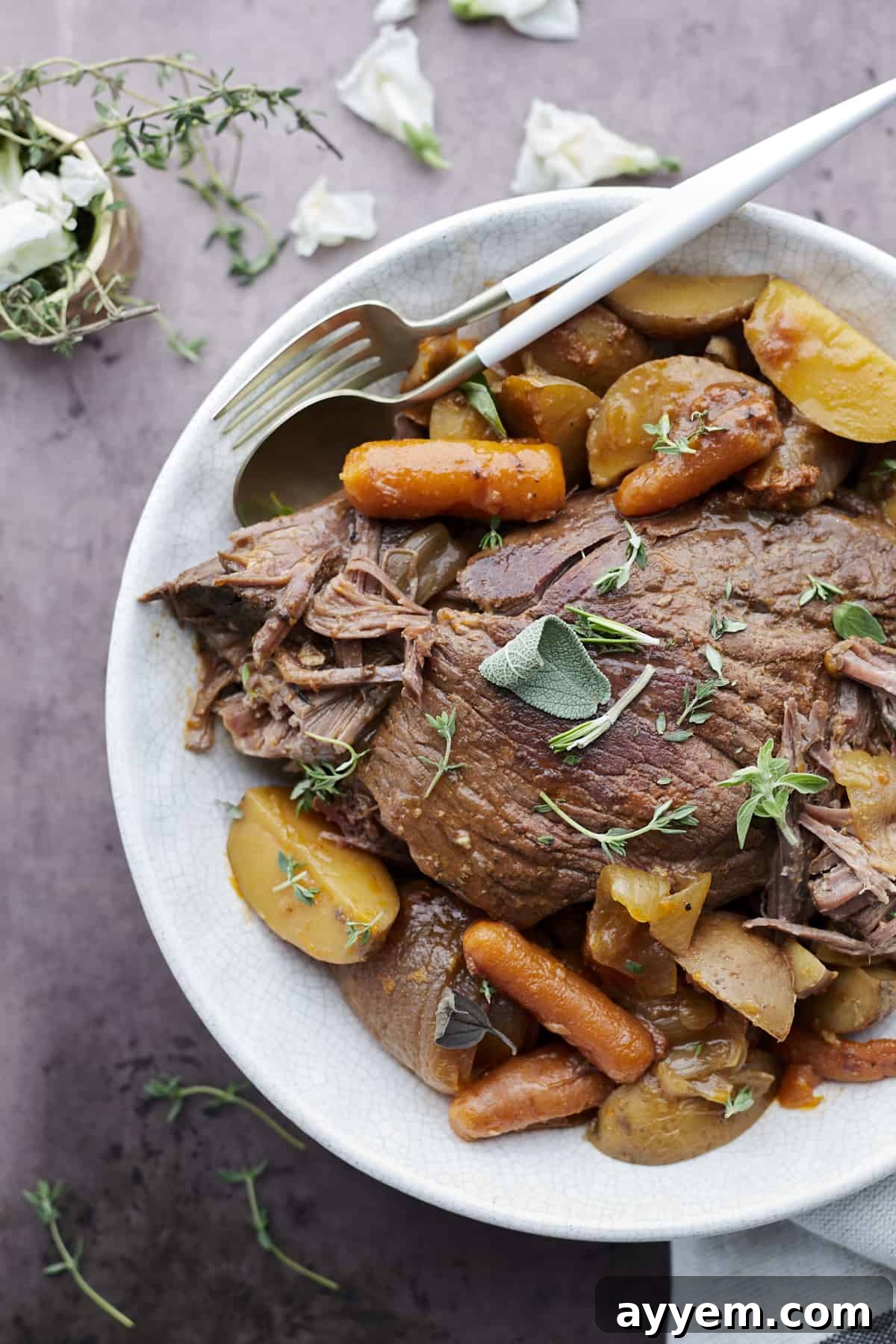
At its core, a slow cooker beef roast is a testament to the power of low and slow cooking. This method typically involves a robust cut of beef, such as a chuck roast or brisket, combined with a medley of aromatic vegetables, savory herbs, rich spices, and a flavorful liquid base. The magic happens over several hours as the gentle, consistent heat of the slow cooker gradually breaks down the tough muscle fibers in the meat.
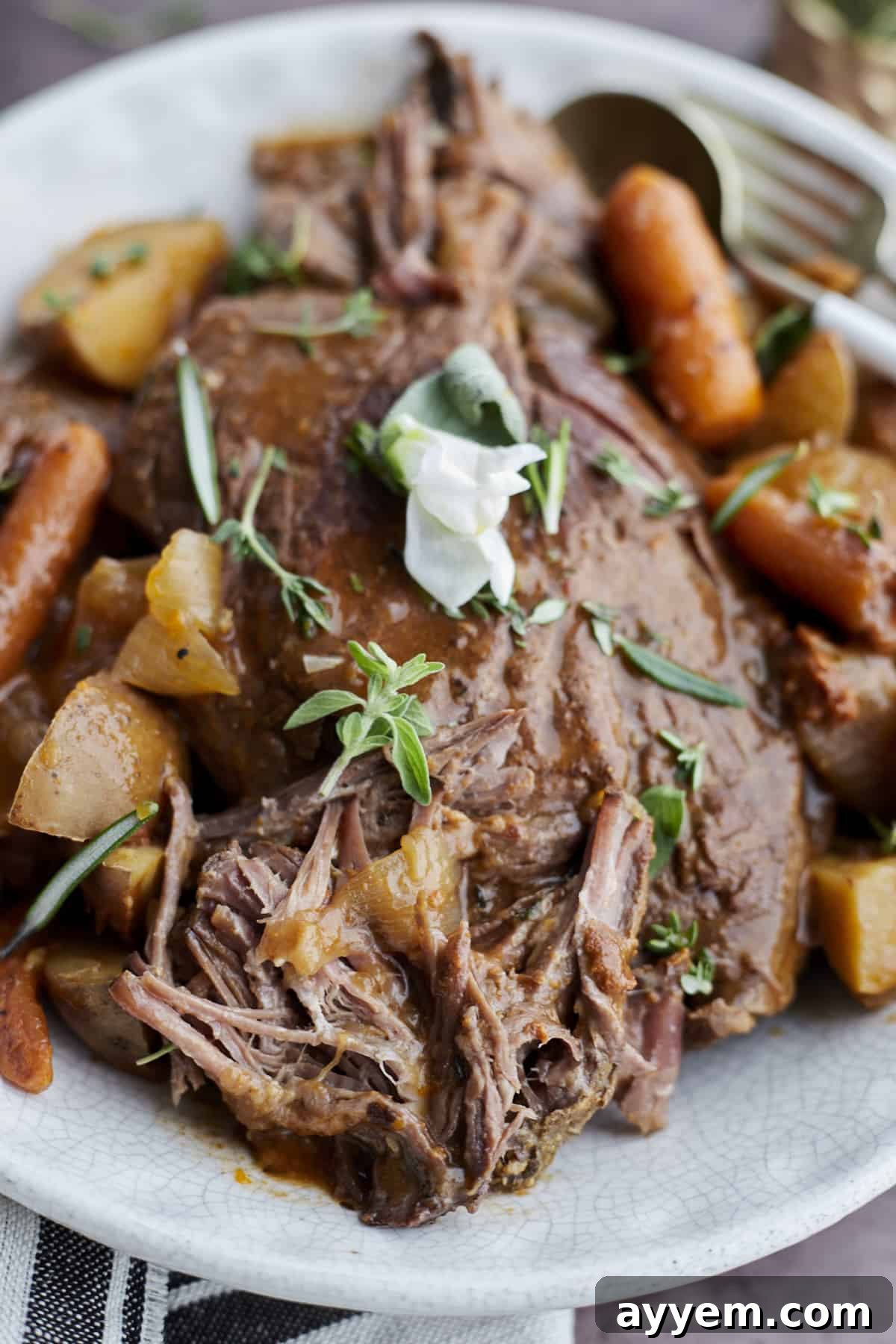
The result is nothing short of culinary perfection: a succulent, melt-in-your-mouth tender beef that you can easily pull apart with a fork. As an American classic, beef pot roast is cherished for its straightforward preparation and its consistently rich, savory, and profoundly comforting flavor profile. It’s more than just a meal; it’s a nostalgic experience that brings warmth to any home.
What makes this slow cooker version even more appealing is its incredible convenience. Everything cooks together in a single crock pot, significantly reducing both prep time and cleanup efforts. Furthermore, any leftovers are a true bonus, as the flavors often deepen and meld even more beautifully overnight, making the next day’s meal just as delicious, if not more so!
Why You’ll Adore This Easy Slow Cooker Beef Pot Roast Recipe
There are countless reasons to fall in love with this particular slow cooker beef pot roast recipe, and we are confident you’ll discover them all. Its simplicity and ease of preparation make it a versatile dish, suitable for everything from busy weeknight dinners to special holiday gatherings. Here’s why slow-cooking your beef roast is truly the superior method:
- Effortless Meal Prep & Abundant Leftovers: One of the greatest advantages is the generous yield. This recipe consistently provides you with ample leftovers, meaning you can enjoy quick, delicious, and nutritious meals for several days without additional cooking. It’s perfect for
meal prep , ensuring wholesome meals are always within reach. - Minimal Hands-On Time: The beauty of a slow cooker is its “set it and forget it” nature. After a brief initial preparation, you simply add the ingredients to your crock pot and let it work its magic. This frees up your precious time and energy, allowing you to focus on other tasks or simply relax. We promise, your future self will thank you for this time-saving marvel!
- Simple Yet Robust Flavors: While you are always welcome to customize your roast with your favorite spices and herbs, this particular recipe requires only a few key ingredients to create an incredibly flavorful and satisfying meal. The slow cooking process itself extracts and concentrates the natural richness of the beef and vegetables, creating a symphony of taste that’s both complex and comforting.
Essential Ingredients for Your Perfect Pot Roast
Crafting an outstanding slow cooker beef pot roast begins with selecting the right ingredients. Each component plays a vital role in achieving that desirable tender texture and rich, savory flavor. Here’s a detailed look at what you’ll need:
- Beef Roast: For unparalleled tenderness and flavor, we highly recommend a four-pound chuck roast. This cut, sourced from the shoulder, is inherently fatty and muscular. However, when subjected to the long, slow cooking process, its connective tissues break down beautifully, transforming into incredibly tender, melt-in-your-mouth beef.
- Olive Oil: A small amount of olive oil is used primarily for searing the beef. Searing creates a beautiful brown crust, locking in moisture and adding a crucial layer of deep, caramelized flavor to the meat before it goes into the slow cooker.
- Aromatics: Fresh yellow onions and garlic cloves are the foundation of flavor for this pot roast. These aromatics slowly release their sweet and pungent notes as they cook, creating a deeply savory base that permeates the entire dish. Using fresh garlic, as opposed to garlic powder, makes a significant difference in depth and vibrancy.
- Paprika: Just a pinch of paprika adds a subtle warmth and a beautiful reddish hue, enhancing the visual appeal and contributing to the overall depth of flavor without overpowering the other ingredients.
- Mustard Powder: This secret ingredient is a game-changer. Mustard powder provides a slight tanginess that expertly cuts through the richness of the beef, preventing the dish from becoming too heavy. More importantly, it acts as a flavor enhancer, helping to lock in and amplify the savory notes of the roast.
- Potatoes: We specifically recommend Yukon Gold potatoes for their naturally soft, creamy texture and buttery taste. They hold their shape well during slow cooking and absorb the delicious broth. However, feel free to use any waxy potato you have on hand, keeping in mind that the final taste and texture may vary slightly.
- Carrots: Whole carrots offer a superior flavor and a more substantial texture that stands up well to long cooking. If whole carrots aren’t available, baby carrots can be used as a convenient alternative, though they might become softer more quickly.
- Tomato Sauce: The acidity in tomato sauce works wonders by further tenderizing the beef and contributing to the creation of a tangy, savory, and robust broth that enriches every bite.
- Fresh Herbs: Sprigs of fresh thyme and rosemary are essential for imparting a fragrant, herbaceous aroma and taste that perfectly complements the rich beef. These herbs release their essential oils slowly, infusing the entire dish with a fresh, earthy dimension.
- Broth: Low-sodium beef broth is crucial for providing the necessary liquid to keep the beef moist and tender throughout the long cooking process, as well as forming the base of your delicious gravy.
- Flour: Regular all-purpose flour is used both for dusting the beef before searing to create a delicious crust and later to help thicken the gravy. For those with dietary restrictions, a 1:1 gluten-free flour blend can be substituted effectively.
- Salt and Pepper: These fundamental seasonings are added to taste, allowing you to perfectly balance the flavors of the dish according to your preference.
Chef’s Pro-Tip: For an even more robust and sophisticated flavor, consider adding ½ cup of dry red wine (such as Cabernet Sauvignon or Merlot) to your broth mixture. The wine’s tannins and complex notes will deepen the savoriness of the gravy.
Selecting the Best Cut of Beef for Your Slow Cooker Pot Roast
One of the most frequently asked questions when preparing a pot roast is about the ideal cut of beef. For a truly exceptional slow cooker pot roast, a thick, fatty cut is always your best choice. These cuts are often tougher and more economical but become incredibly tender and flavorful with the long, moist heat of a slow cooker. We highly recommend chuck roast, but brisket and round roast cuts are also excellent alternatives, each offering unique characteristics:
- Chuck Roast: This cut comes from the cow’s shoulder and neck region. It’s often marbled with fat and contains a good amount of connective tissue, which, when slow-cooked, renders down into gelatin, creating an incredibly tender and flavorful roast. The fat contributes significantly to the richness and succulence of the final dish. Be aware that because it becomes so tender, chuck roast may be more challenging to slice neatly after it cools, often preferring to be shredded or pulled.
- Brisket: Originating from the breast or lower chest of a cow, brisket is known for its distinctive two muscles and a prominent fat cap. Unlike chuck roasts, which typically have fat marbled throughout, brisket cuts often feature a ring of fat circling their edges. Brisket yields a slightly firmer, yet still wonderfully tender, roast, making it a great choice for those who prefer a pot roast with a bit more structural integrity than the melt-away chuck.
- Round Roast: Sourced from the lean rear legs of the cow, round roast is the leanest option among these three. It contains less fat and connective tissue, resulting in a slightly less rich flavor compared to chuck or brisket. However, its leaner nature makes it the easiest to slice cleanly once cooked. Round roast is the perfect selection if you enjoy adding more seasonings and flavorings to your meat, as it provides a delicious canvas for your culinary creativity. While it may require a bit more attention to ensure it doesn’t dry out, the slow cooker minimizes this risk by providing a moist cooking environment.
Achieving an Extra Tender Slow Cooker Pot Roast: Step-by-Step Guide
This slow cooker beef pot roast recipe truly embodies the “set-it-and-forget-it” philosophy, making it the ultimate time-saving dinner idea that doesn’t compromise on flavor or tenderness. Follow these simple steps for a truly memorable meal:
- Prepare the Roast for Searing: Begin by patting your beef roast thoroughly dry with clean paper towels. This crucial step helps achieve a better sear. Once dry, generously season the entire surface of the meat with salt and freshly ground black pepper. In a large, heavy-bottomed pan (like a Dutch oven or a sturdy skillet), heat a tablespoon of olive oil over medium-high heat until shimmering. Carefully place the seasoned beef into the hot pan and sear it on all sides for 1-2 minutes per side, or until a rich, golden-brown crust develops. This searing step is not mandatory but highly recommended as it adds a magnificent depth of flavor and color to your pot roast. Once seared, remove the beef from the pan and set it aside.
- Craft the Flavorful Broth Base: While your beef is resting, it’s time to prepare the flavorful liquid that will tenderize and season your roast. In a small mixing bowl, create a slurry by whisking together two tablespoons of all-purpose flour with ¼ cup of the beef broth until completely smooth and lump-free. This slurry will help thicken your gravy later. Now, pour this slurry into the bottom of your slow cooker. Add the remaining beef broth, tomato sauce, peeled garlic cloves, fresh thyme and rosemary sprigs, paprika, mustard powder, and additional salt and pepper to taste. Stir all these ingredients thoroughly to combine, ensuring the flavors are well integrated.
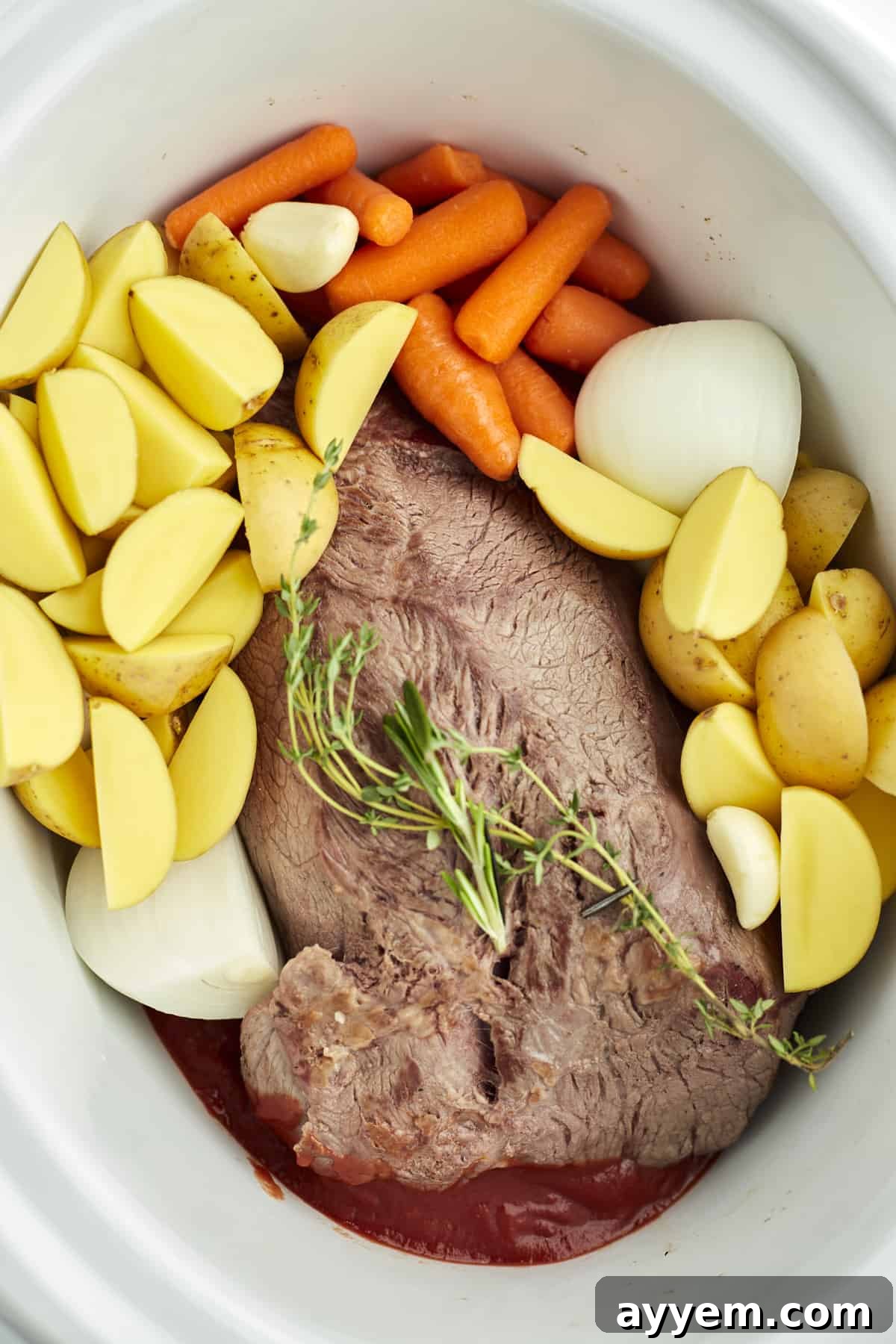
- Assemble and Slow Cook to Perfection: Gently place the seared beef roast into the slow cooker on top of the broth mixture. Then, add the chopped carrots, onions, and quartered potatoes around the beef. Give everything a gentle stir to ensure all the vegetables and beef are coated with the rich broth. Cover the slow cooker tightly with its lid. Set your slow cooker to the HIGH setting for 4-6 hours or the LOW setting for 8 hours. The longer cooking time on LOW heat is generally preferred for maximum tenderness, as it allows the connective tissues to break down more gradually. The beef is fully cooked when it easily pulls apart with a fork and reaches an internal temperature of at least 145 degrees Fahrenheit (63 degrees Celsius). If you notice any browned bits stuck to the bottom of the slow cooker during the initial cooking, gently scrape them up and stir them into the liquid; they add extra flavor.
Important Note on Temperature and Tenderness: For the most exceptionally tender piece of meat, cooking on a lower heat setting for a longer duration is always preferable. While cooking on HIGH will get the job done faster, the meat may be slightly less fall-apart tender. The extended cooking time at medium to low temperatures allows for a gradual breakdown of tough fibers, resulting in a silkier, more succulent texture.
Mastering the Art of Thickening Your Pot Roast Gravy
The rich, savory gravy is arguably one of the most beloved components of a perfect pot roast. It beautifully balances the flavors of the meat, juices, and seasonings, tying the entire dish together within the slow cooker. The ideal thickness of the gravy is a matter of personal preference, but we find that a fairly thick gravy is best for coating the meat and vegetables, ensuring a juicy, flavorful mouthful with every bite.
To thicken the gravy to your desired consistency, you have a couple of effective methods:
- Flour Slurry Method (Adjusting Thickness): If you find the gravy is too thin after cooking, you can easily thicken it further. In a separate small mixing bowl, combine one or two additional tablespoons of all-purpose flour with a small amount (about ¼ to ½ cup) of the hot broth from the slow cooker. Whisk this mixture vigorously until it forms a smooth, lump-free slurry. Slowly pour this slurry into the slow cooker with the rest of the broth, herbs, aromatics, and seasonings, stirring constantly. Continue to cook on high for an additional 15-30 minutes, or until the gravy reaches your desired thickness. The heat will activate the flour, causing the gravy to thicken.
- Cornstarch Slurry for Extra Thick Gravy: For an even thicker and glossier gravy, you can use cornstarch. In a small bowl, whisk together one tablespoon of cornstarch with one tablespoon of cold water until a smooth paste forms. This is your cornstarch slurry. Slowly stir this slurry into the hot gravy in the slow cooker. Cook for another 10-15 minutes on high, stirring occasionally, until the gravy thickens to your liking. Cornstarch thickens more powerfully and creates a slightly clearer gravy than flour.
Always taste and adjust seasonings after thickening, as the addition of flour or cornstarch can subtly alter the flavor profile.
Perfect Side Dishes to Complement Your Pot Roast
While this slow cooker beef pot roast is undoubtedly juicy, filling, and nutritious enough to be a standalone meal, especially with the inclusion of potatoes and carrots, adding a few complementary side dishes can elevate your dining experience, whether you’re cooking for yourself or hosting a feast. The best sides for pot roast typically include comforting carbohydrates and fresh vegetables that can soak up the rich gravy and add textural contrast.
Here are some of our favorite pairings:
- Crusty Bread or Dinner Rolls: Essential for soaking up every last drop of that incredible gravy. A warm, crusty baguette or soft dinner rolls are always a hit.
- Creamy Mashed Potatoes: Beyond the potatoes already in the pot roast, a separate serving of extra creamy mashed potatoes provides a luxurious texture and another excellent vehicle for the gravy. You can also try Cheesy Baked Mashed Potatoes for a twist.
- Crispy Smashed Potatoes: For a delightful textural contrast, serve alongside Crispy Smashed Potatoes, offering a crunchy exterior and fluffy interior.
- Fluffy Rice: A simple bowl of white or brown rice can be a wonderful, neutral base for the rich pot roast and gravy. Explore options like Vermicelli Rice for added flavor.
- Nutritious Quinoa: For a healthier, protein-packed grain option, quinoa makes an excellent accompaniment, offering a slightly nutty flavor and satisfying texture.
- Roasted Broccoli or Green Beans: Simple roasted green vegetables provide a fresh, slightly bitter counterpoint to the richness of the meat, adding essential vitamins and a pop of color.
- Oven-Roasted Carrots: If you love carrots, an additional side of Oven-Roasted Carrots, perhaps with a touch of honey or herbs, can amplify their natural sweetness.
These are just some common and beloved pairings to serve alongside your pot roast. Feel free to mix and match or explore any other side dishes you enjoy most – the beauty of this dish is its versatility.
Storage and Reheating Options for Your Pot Roast
One of the many benefits of making a slow cooker pot roast is how wonderfully it adapts to meal prep and future enjoyment. It’s an excellent dish to prepare ahead of time, ensuring you have delicious, ready-to-eat meals throughout the week. Follow these simple tips to keep your leftovers fresh and flavorful:
- Refrigeration: Allow the beef pot roast to cool completely to room temperature before storing. Transfer the cooled roast, along with its gravy and vegetables, into a shallow airtight container. Stored properly in the refrigerator, it will remain fresh and delicious for up to four days.
- Freezing: For longer storage, the cooled beef roast freezes exceptionally well. Portion the roast and gravy into freezer-safe bags or airtight containers. This method allows you to enjoy your pot roast for up to four months. When you’re ready to enjoy it, simply thaw the frozen pot roast in the refrigerator overnight before reheating.
- Reheating: There are several convenient ways to reheat your beef pot roast, ensuring it retains its tenderness and flavor:
- Microwave: For a quick reheat, place a portion of the pot roast and gravy in a microwave-safe dish. Cover and heat on medium power, stirring occasionally, until thoroughly heated through.
- Oven: For larger portions or to prevent drying, reheat the pot roast in the oven. Transfer the leftovers to an oven-safe dish, add a splash of extra beef broth if needed to maintain moisture, cover tightly with foil, and bake at 300°F (150°C) for 20-30 minutes, or until hot.
- Slow Cooker (Warm Setting): If you have a significant amount of leftovers, you can gently reheat them in your slow cooker on the “warm” setting. This method is excellent for maintaining moisture and tenderness over a longer period, especially if serving a crowd.
Common Questions About This Slow Cooker Pot Roast Recipe
While searing the beef before placing it in the slow cooker isn’t strictly mandatory, it is a highly recommended step. Searing creates a rich, caramelized crust on the exterior of the meat, which locks in juices and adds a profound layer of savory flavor to the dish. This extra step significantly deepens the overall taste and complexity, making your pot roast even more delicious and visually appealing.
Preventing a dry pot roast is key to its success. Ensure there’s always enough liquid in the slow cooker to surround the meat, such as beef broth, tomato sauce, or even a splash of red wine. This liquid creates a moist environment that tenderizes the beef and prevents it from drying out. Additionally, avoid lifting the lid frequently during cooking. Each time the lid is removed, heat escapes, extending the cooking time and potentially allowing moisture to evaporate, which can lead to a drier roast.
It is generally best practice and recommended for food safety and optimal results to thaw your beef completely before slow cooking. Placing frozen meat directly into a slow cooker can lead to uneven cooking, where the exterior cooks too quickly while the interior remains undercooked. This also keeps the meat in the “danger zone” temperature for longer. Thawing ensures that the beef cooks evenly and reaches a safe internal temperature throughout.
No, there’s no need to flip the beef roast while it cooks in the slow cooker! The slow cooker is designed to work its magic by evenly cooking the roast. The constant heat and moisture circulating within the sealed pot ensure that all sides of the beef are thoroughly and gently cooked, resulting in consistent tenderness without any intervention from you.
Discover More Family-Friendly Slow Cooker Recipes
If you’re craving more easy-to-make crock pot recipes that are bursting with flavor and perfect for feeding the whole family, you’re in luck! The slow cooker is a versatile tool for creating hearty, hands-off meals. Check out more of our favorite recipes that will simplify your cooking and delight your taste buds:
- Crock Pot Chicken Fajitas: Effortless fajitas with tender chicken and vibrant peppers.
- Middle Eastern Crock Pot Beef Stew: Aromatic and rich stew with exotic spices for a comforting meal.
- Slow Cooker Po’ Boy with Beef: Tender beef, perfect for hearty sandwiches.
- Slow Cooker Pasta and Beans Soup: A warming and wholesome soup, ideal for a cozy dinner.
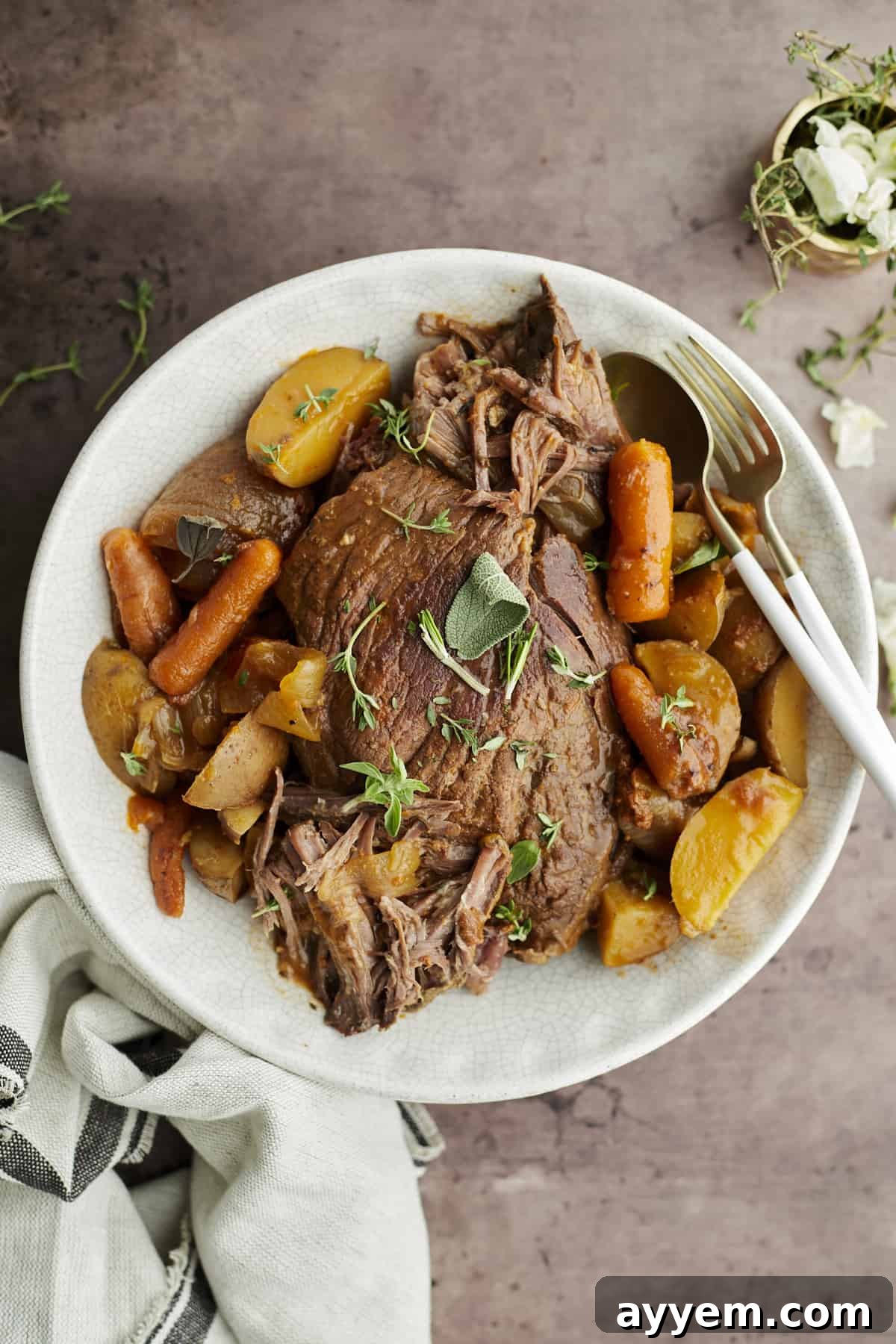
Slow Cooker Pot Roast Recipe
Food Dolls
16 servings
15
6
6 15
Pin Recipe
Print Recipe
Email Recipe
Ingredients
- 4 pounds chuck roast boneless, fat trimmed
- Salt to taste
- Black pepper to taste
- 2 Tablespoons all-purpose flour
- 1 1/4 cups low-sodium beef broth divided
- 1/4 cup tomato sauce
- 4 cloves garlic peeled
- 1 sprig fresh thyme
- 1 sprig fresh rosemary
- 2 teaspoons paprika
- 1 teaspoon mustard powder
- 4 large carrots chopped
- 1 large onion chopped
- 1 pound Yukon gold potatoes or Yukon gold baby potatoes, quartered
Instructions
-
Thoroughly dry the chuck roast with a paper towel. Season both sides generously with salt and pepper.
-
Heat a small amount of oil in a pan over high heat. Once hot, sear both sides of the roast for 1-2 minutes or until evenly browned. Remove from pan.
-
In a mixing bowl, combine the all-purpose flour and ¼ cup of beef broth, whisking until the mixture is completely smooth.
-
Pour the flour mixture into the bottom of the slow cooker. Add the remaining broth, tomato sauce, garlic cloves, thyme, rosemary, paprika, mustard powder, salt, and pepper. Stir well to combine all ingredients.
-
Add the seared beef, chopped carrots, onions, and quartered potatoes to the slow cooker. Stir gently to ensure everything is coated with the broth mixture.
-
Cover the slow cooker with its lid. Cook on the HIGH setting for 4-6 hours, or on the LOW setting for 8 hours, until the beef is fork-tender.
-
Store any cooled leftovers in an airtight container in the fridge for up to 4 days, or freeze for up to 4 months.
Video
For a visual guide, please check out the recipe video on our website.
Equipment
Nutrition
- Serving:
- 1 serving
- Calories:
- 244 kcal
- Carbohydrates:
- 9 g
- Protein:
- 23 g
- Fat:
- 13 g
- Saturated Fat:
- 6 g
- Polyunsaturated Fat:
- 1 g
- Monounsaturated Fat:
- 7 g
- Trans Fat:
- 1 g
- Cholesterol:
- 78 mg
- Sodium:
- 159 mg
- Potassium:
- 619 mg
- Fiber:
- 1 g
- Sugar:
- 2 g
- Vitamin A:
- 3062 IU
- Vitamin C:
- 9 mg
- Calcium:
- 33 mg
- Iron:
- 3 mg
Nutrition information is automatically calculated and should only be used as an approximation.
Like this recipe?
Please leave a comment below and share your thoughts!